 For my birthday, Naoto signed me up for a Japanese calligraphy class. After an online search he found Koomon, located in Tokyo’s Nihonbashi neighborhood. Koomon offers several classes to sample traditional Japanese culture: calligraphy, tea ceremony, flower arrangement, kimono, origami and other traditional skills. The staff and Koomon was warm and welcoming and my lesson was a lot of fun.
  The lesson started out with Yukiko, our English speaking guide at Koomon, giving us an explanation of the tools and techniques of Japanese calligraphy. Then we watched a master calligrapher demonstrate the different styles of Japanese writing. She showed block style and script and also how a calligrapher can add their own artistic elements to the writing. Her calligraphy was gorgeous as you can tell from above. Yukiko and the calligrapher spoke a lot about the beauties of imperfection in the art of Japanese calligraphy and how special it is that no stroke can ever be recreated exactly.
  Our calligraphy teacher demonstrated character-by-character the phrase that I chose to write, “Fall down seven times, stand up eight.” In hindsight, I wish I had just focused on a single word instead of a phrase so I could focus on mastering a character or two instead of six. But I love that proverb, so I’m glad I tried it.
 We all decided that the script calligraphy was a little bit too challenging, so I focused on the block-style. It was really difficult for me to get super comfortable with the brush because I was focusing on learning the shape of the characters and the proper stroke order all at the same time. Yukiko and the calligraphy teacher watched me and gave me pointers throughout my practice. One major thing I learned is to really load up the brush with ink. I tend to only put ink on the tip of the brush, but to make beautiful characters, you need to use the entire brush to get variety in your strokes.
  Because Naoto was with me (and maybe because he had trouble translating some script calligraphy for me when asked) the Koomon ladies encouraged Naoto to practice calligraphy too. I requested the word “sakura” because we were there in the spring.
 I practiced my phrase and specific challenging characters several times and when I was comfortable, I got to work on my “final project” in the tatami room. It felt very special to wear the little apron and write with the progressional calligraphy tools.
 When I was finished, all I could see was the “mistakes” and imperfections in my writing, but the calligraphy teacher pointed out that those are what make the calligraphy special.
  Along the left side of the proverb is my name and if you look closely, there are three red seals (two on the lower left and one on the top right). There were several seals to choose from, each representing a Japanese phrase. I chose ones that said “May your joys be as deep as the ocean and your happiness as high as the mountain.” and “Fortune comes in a merry gate.” and “A carefree life ensures longevity.”
  Isn’t Naoto’s “sakura” calligraphy wonderful?
 Thank you, Naoto, for my excellent birthday gift and thank you to Koomon for a wonderful morning of calligraphy! Taking the class has made me want to practice more so I can paint the characters with reckless abandon!
kimberly ah
kimberly at home
Tag Archives: crafts
Hasegawa Happy Hour Mail
 A couple of weeks ago, I got this beautiful letter from Xenia of Saturday Morning Vintage. Even if it had just been a quick note, I would have been over the moon. What a creative envelope!
 But when I opened the envelope, a few pieces fell out of the card. You can see them above. They are vintage liquor labels and slips from a bartender’s order pad. Aren’t they amazing? In her note, Xenia mentioned seeing my Hasegawa Happy Hour posts and pictures on Instagram, so she thought I might enjoy these vintage bits. They made me super happy and inspired me to get started on a mini-book of our happy hour adventures for 2014. I’m picturing a tiny something with paper bits, photographs and some recipes (both cocktails and snacks). Hmmm…maybe a complete one for us and a well-edited one can be made into a zine…
Thank you, Xenia, for the mail and the inspiration!
Empty Bowls
 A couple of weeks ago, I attended Empty Bowls, a fundraiser hosted by Oak Park-River Forest High School and its Wheel Throwing Club. Empty Bowls raises money to help West Suburban PADS (a shelter program) and the local food pantry. For $15 you get a handmade bowl and some soup and bread. The bowls are made and donated by OPRF students and the soup is made and donated by local grocery stores and restaurants. The event feels very community-driven. My friend Karen goes every year and this year Jackie and I joined her. I’m only sad I didn’t know about it sooner. Many communities host Empty Bowls, so I highly recommend seeing if there’s one near you.
 There were hundreds of bowls to choose from–big ones, little ones, well-made ones, imperfect ones, colorful ones, natural ones–it was seriously hard to choose. I think we each swapped out our choices at least once. Jackie ended up with a blue spotted bowl and Karen’s was a green ombre. My bowl (bottom center) is speckled white. It reminds me of a bird’s egg. Taking your bowl home serves “as a gentle reminder of the many empty bowls that need filling world wide.” (Quote taken from the Empty Bowls website.)
 During the fundraiser, my bowl held a hearty portion of chicken noodle soup. Today it’s sitting on my desk reminding me that I have enough.
The Four Treasures: Ink Stone
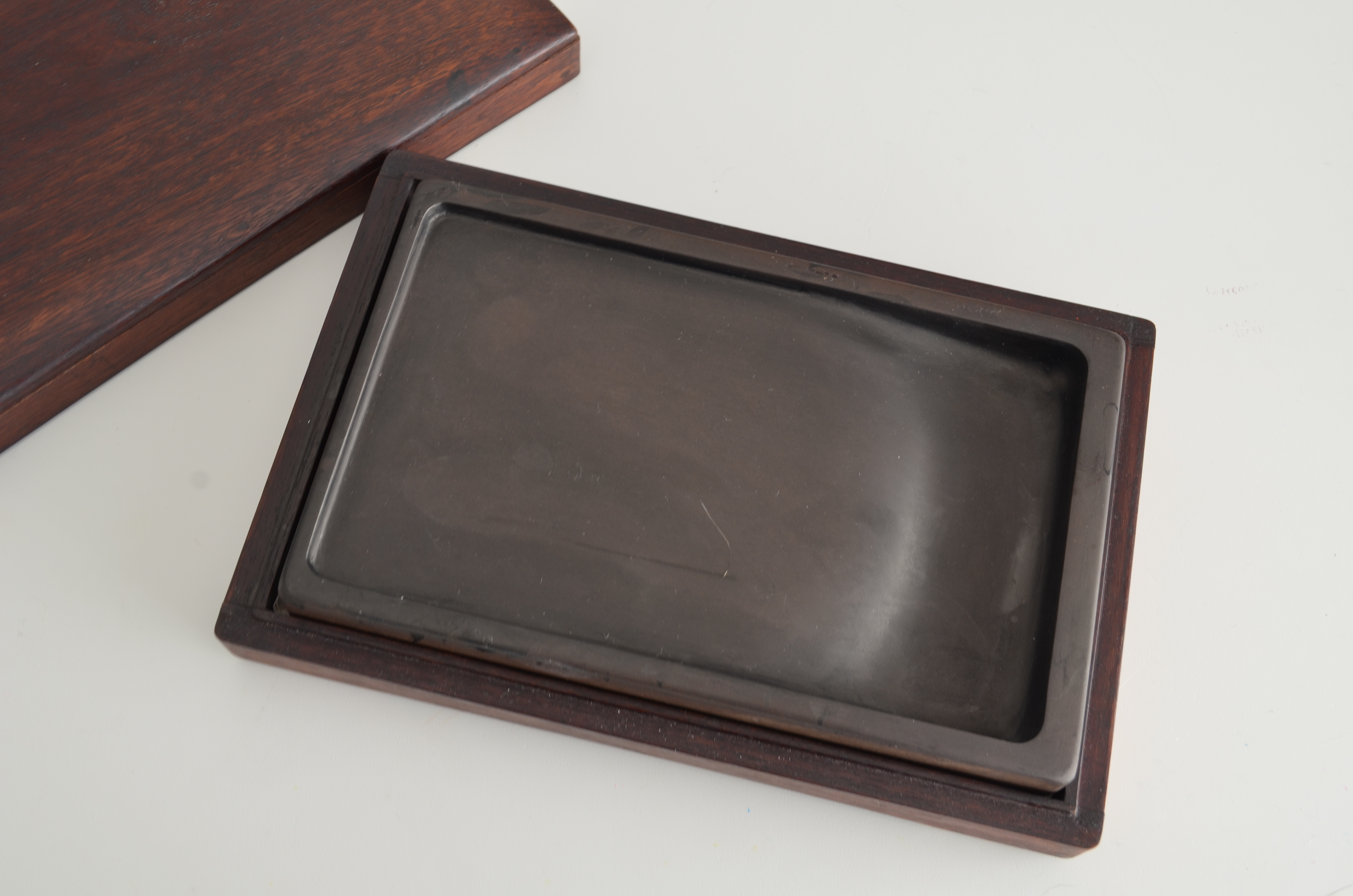 The last of the four treasures is the ink stone. Handmade from slate, ink stones are smooth, very heavy and made to last forever. The ink stone is designed for ink making in batches. There is a raised part that slopes downward into a well. Ink is mixed at the top and pushed down into the well.
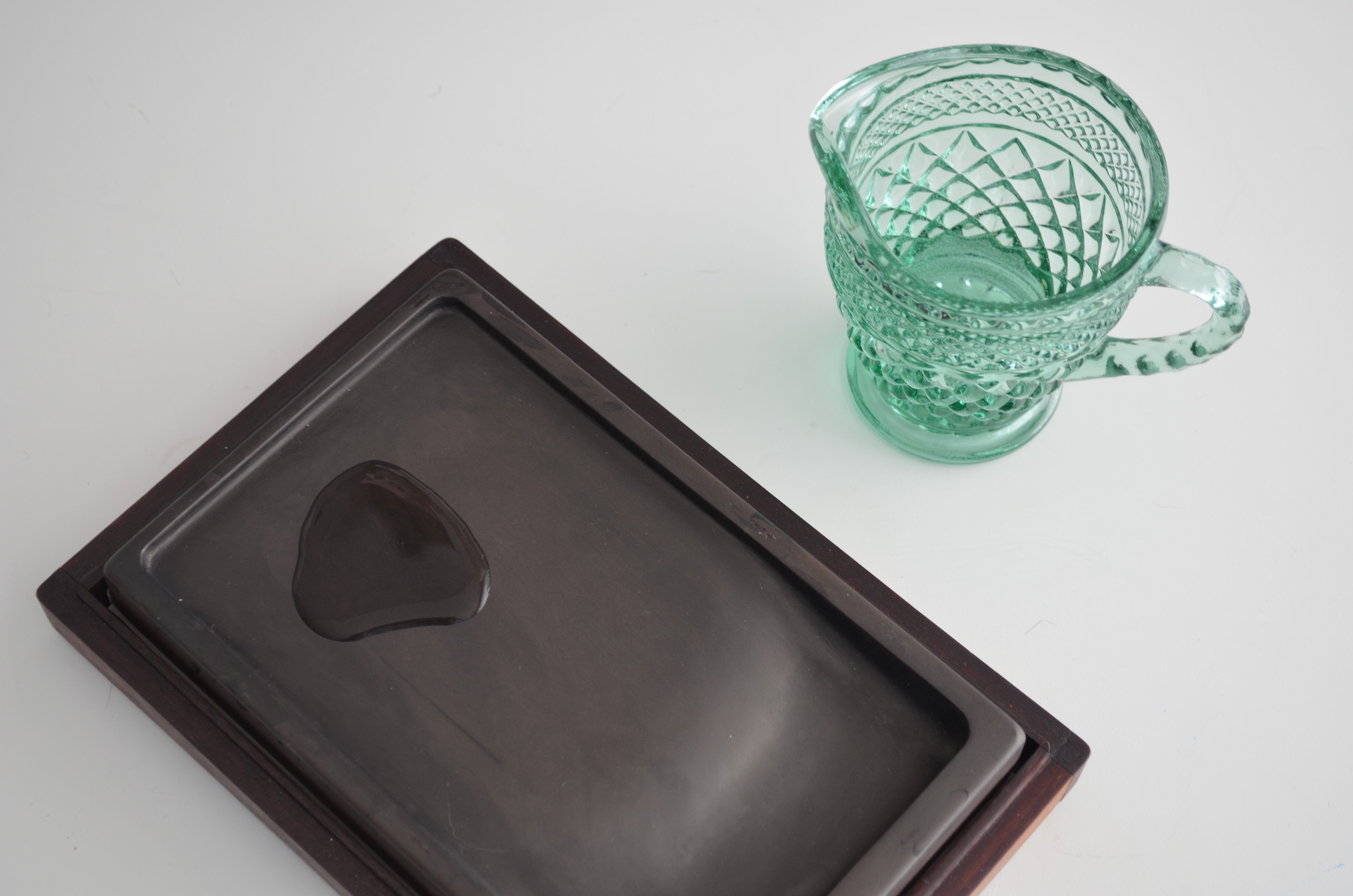 To make the ink, you start with a bit of water at the top of the stone.
 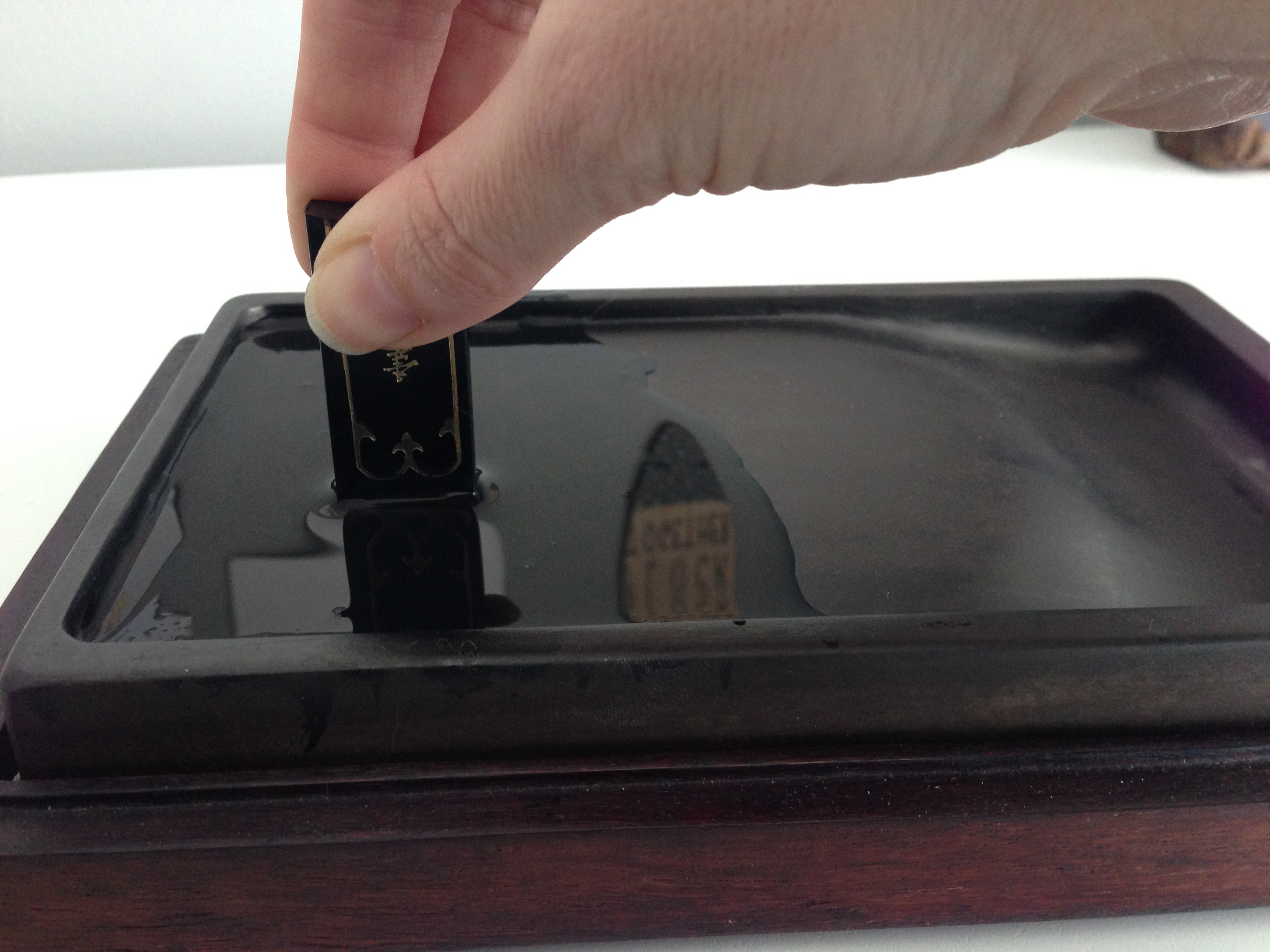 Then, place the ink stick in the water and “grind” the ink. Grinding the ink is a slow, meditative act. Passing the smooth ink stick across the smooth ink stone is soothing and repetitive. The earthy scent of the ink permeates the air. It’s extremely relaxing and calming. This slow preparation allows the mind and the body to become centered and ready to write.
 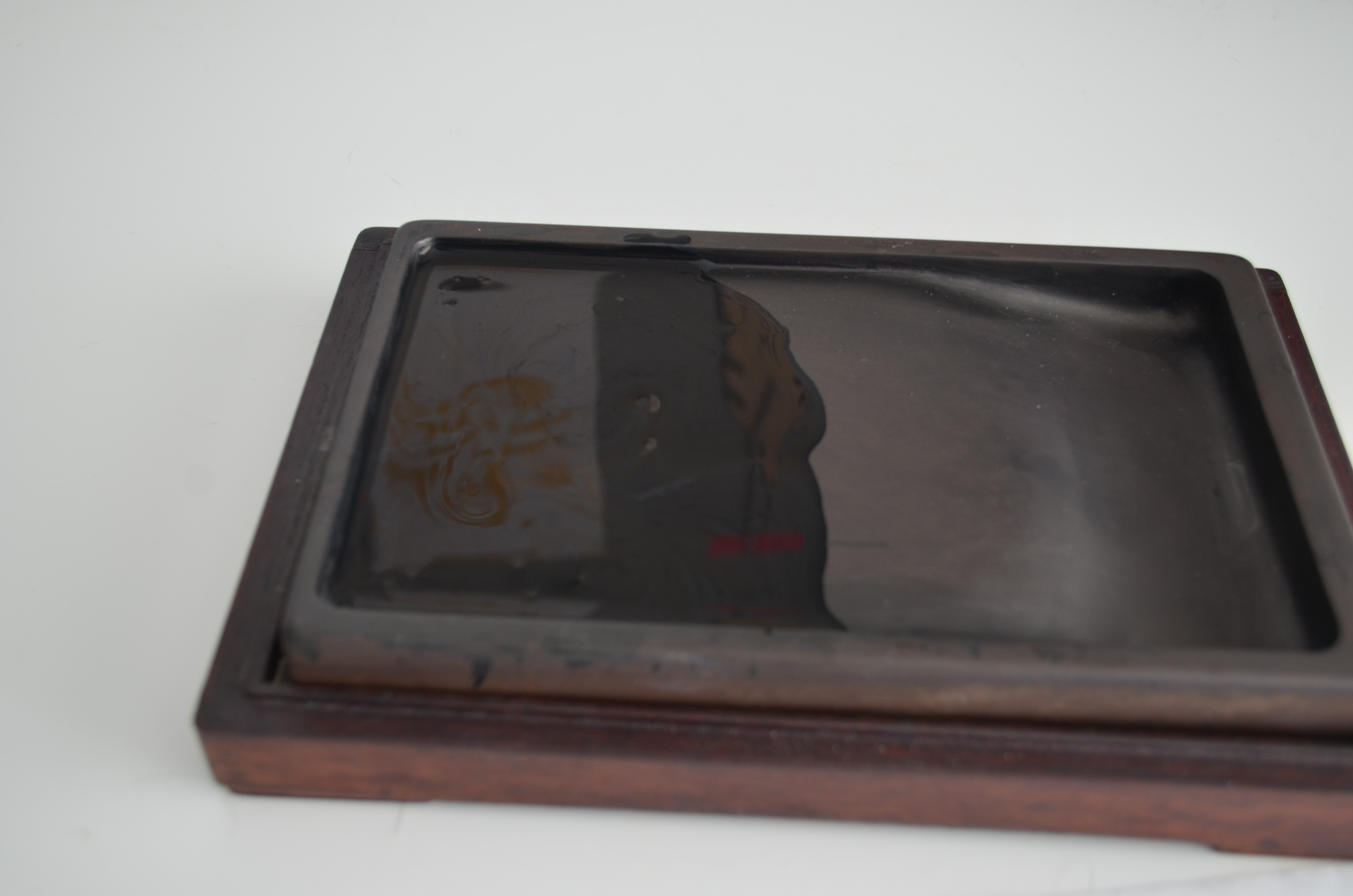 It takes a lot of time and experience to know when the ink is ready. (Our ink was not the right consistency when we had our practice session. You can tell it wasn’t mixed long enough because it was gray and a bit watery. We need more practice!)
When the first small batch of ink is ready, you push it down (using the end of the ink stick) into the well of the ink stone. Then, add a bit more water to the top of the ink stone and continue mixing more with your ink stick. Repeat this process until you have enough for your project. 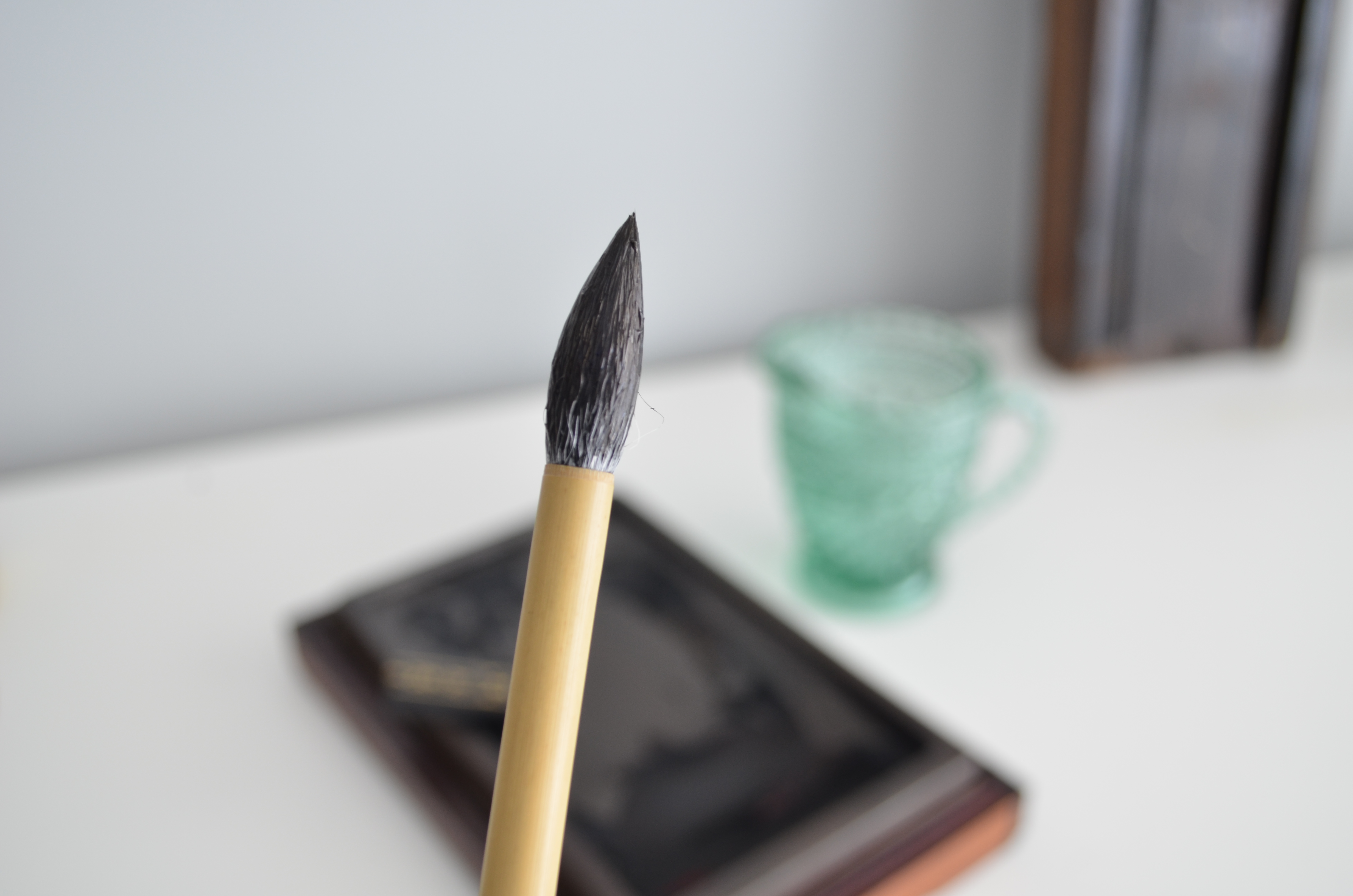 If the ink is prepared correctly, it will be a deep black with a light, almost oily sheen and it will be slightly thicker than water. I’m no expert, but I could feel the difference between our hastily mixed ink last week and this ink, which I ground ten times longer. You really can’t take shortcuts.
 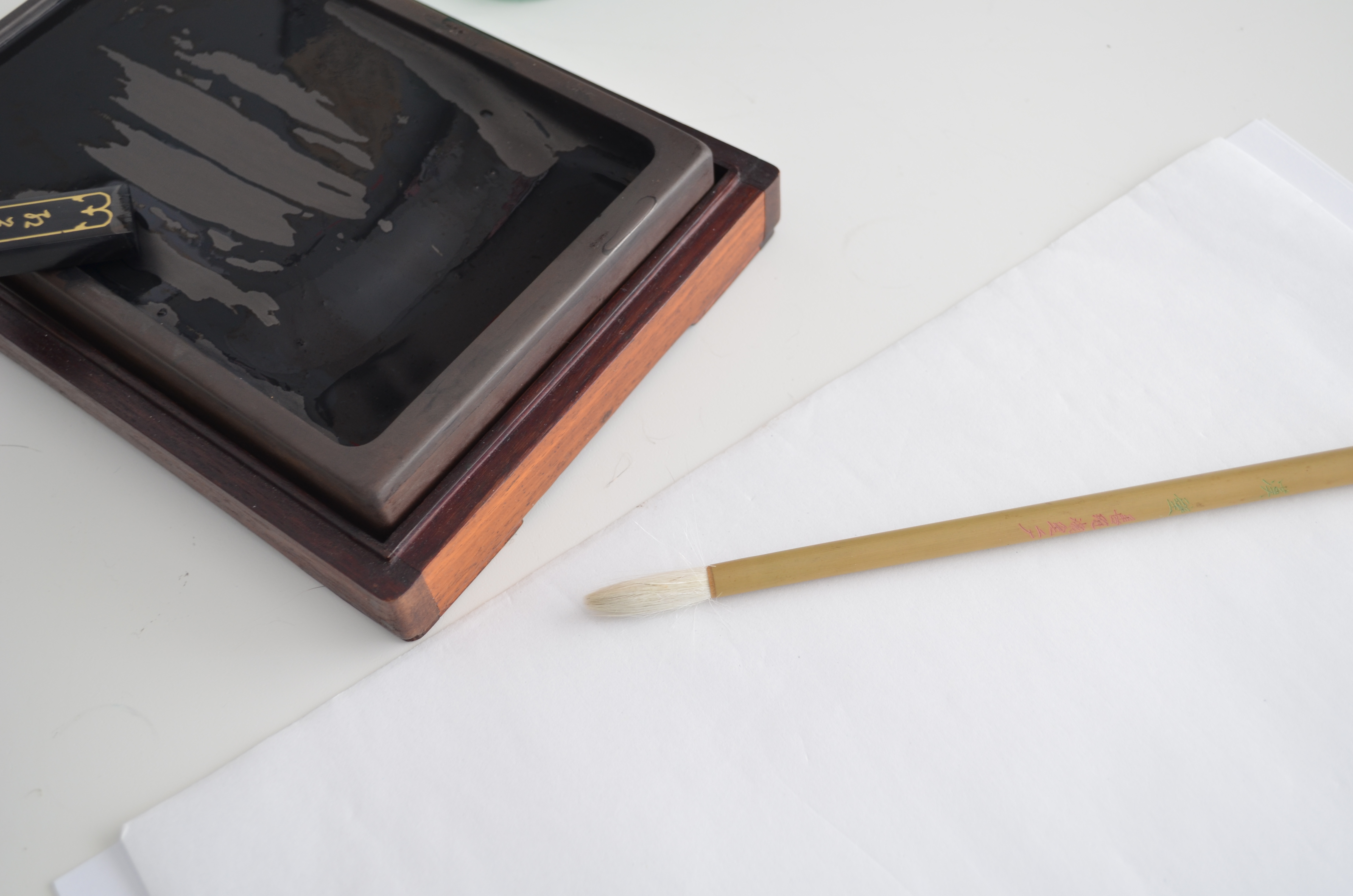 I have a small ink stone that I bought for my class, but the ink stone pictured today is from Naoto’s aunt’s collection. It is six by nine inches large and it is heavy. (We carried it all over Japan on the train after his mom gave it to us. Actually, I should say Naoto carried at all over Japan.) Because it is in such a lovely wooden box, I keep it on the table in the living room. But I have to admit it is much more fun to actually use the ink stone. Hopefully when I get back from Japan I will be a little bit more skilled at using these family treasures.
The Four Treasures: Ink
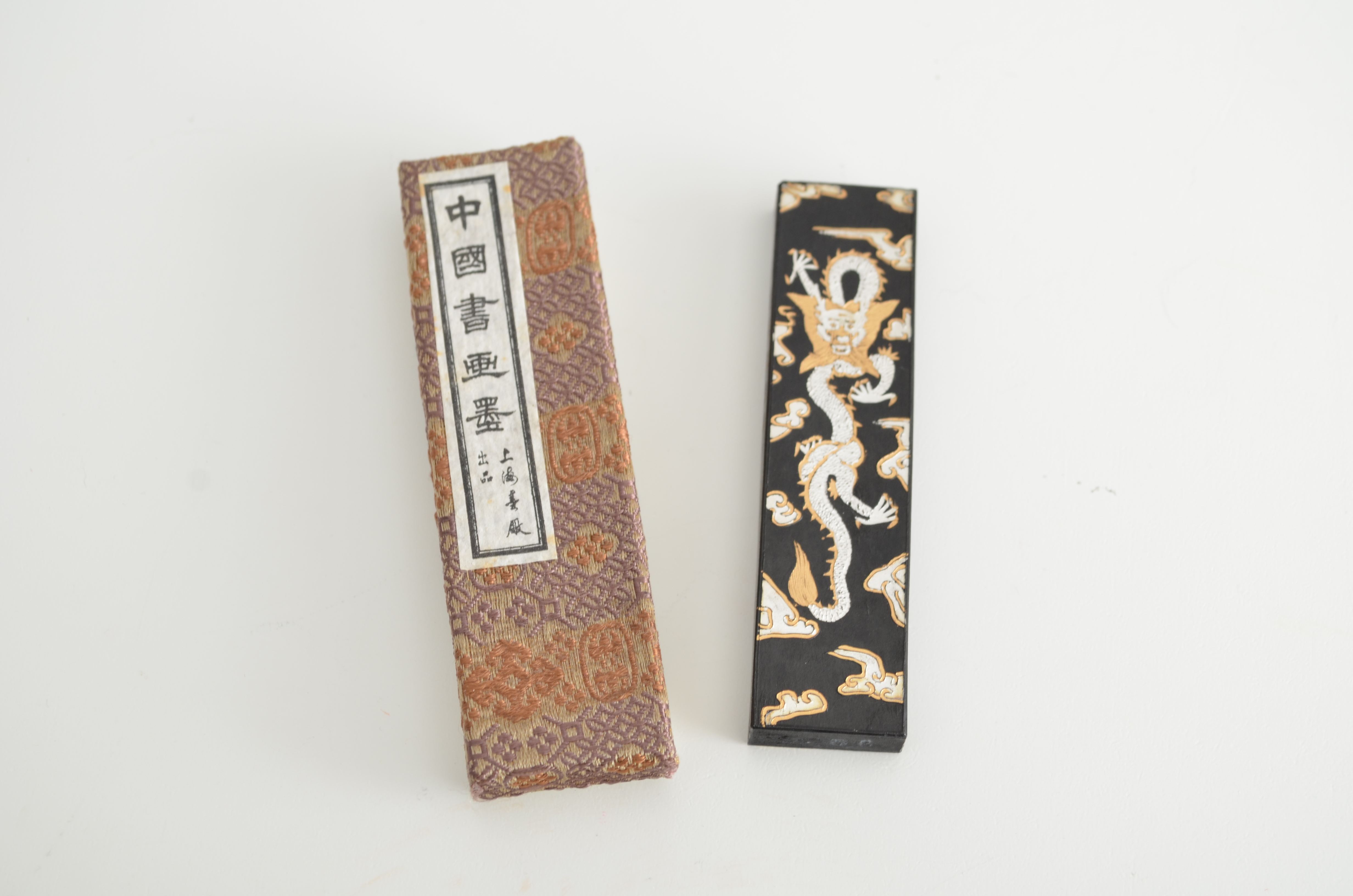 The third treasure is ink. Traditionally, ink is ground from an ink stick before each calligraphy session. The stick (shown above on the right) is mixed with water and ground on an ink stone (spoiler alert: that’s the fourth treasure and I’ll be talking about it on Monday). Just like paper, the ink stick is made from natural materials. Pine branches are burned with natural oils and the soot is blended by hand with animal bone glue and made into the ink sticks. The kneading of the soot and glue requires great strength and the process has been handed down through generations. The sticks are dried and aged, then polished and decorated, like the one you see above. It is a slow process and, just like with paper, the seasons play a role in the creation of the ink. The humidity and temperature are critical to the drying and aging processes.
 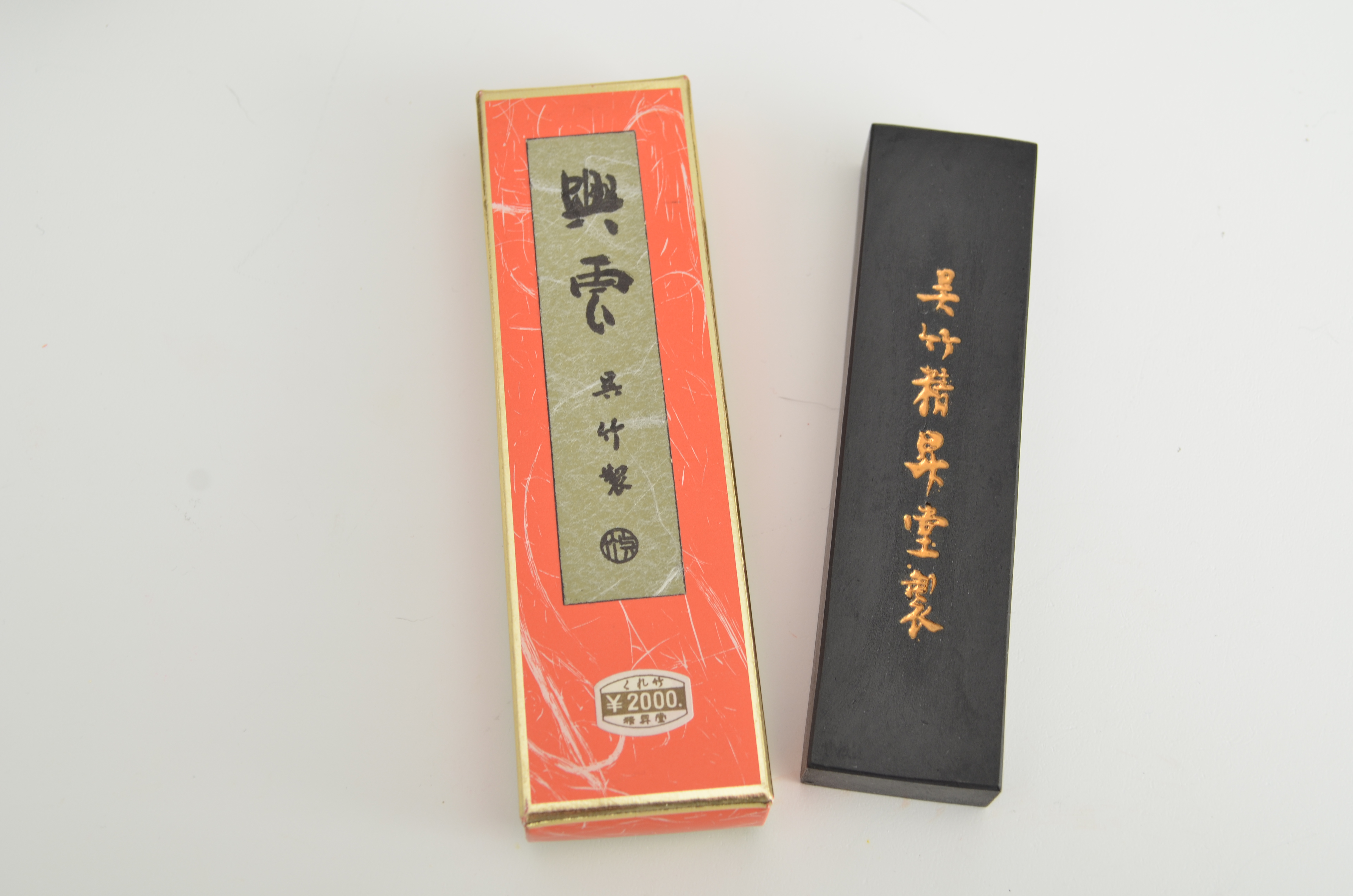 The ink sticks have a very earthy scent. They remind me of spring when the earth thaws and you can smell the soil again. I’ll talk more on Monday about grinding the ink stick and making the ink.
 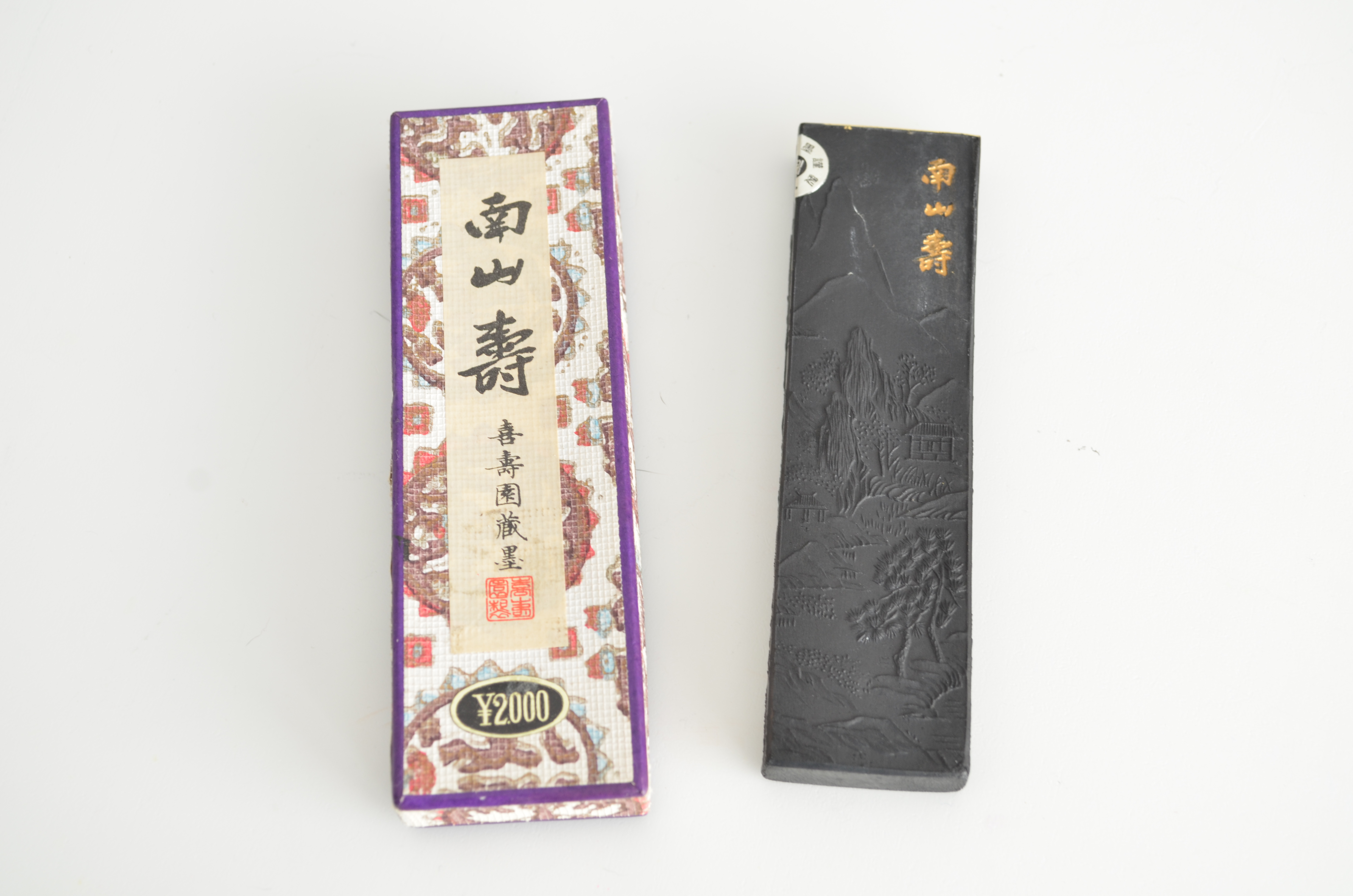 All of the ink sticks I’m sharing on today’s post are from Naoto’s aunt’s collection. I do not believe any of them have been used. (I’ve been using an ink stick I picked up at Blick’s when I took the art class.) The one above is my absolute favorite. There is a gorgeous scene on both sides.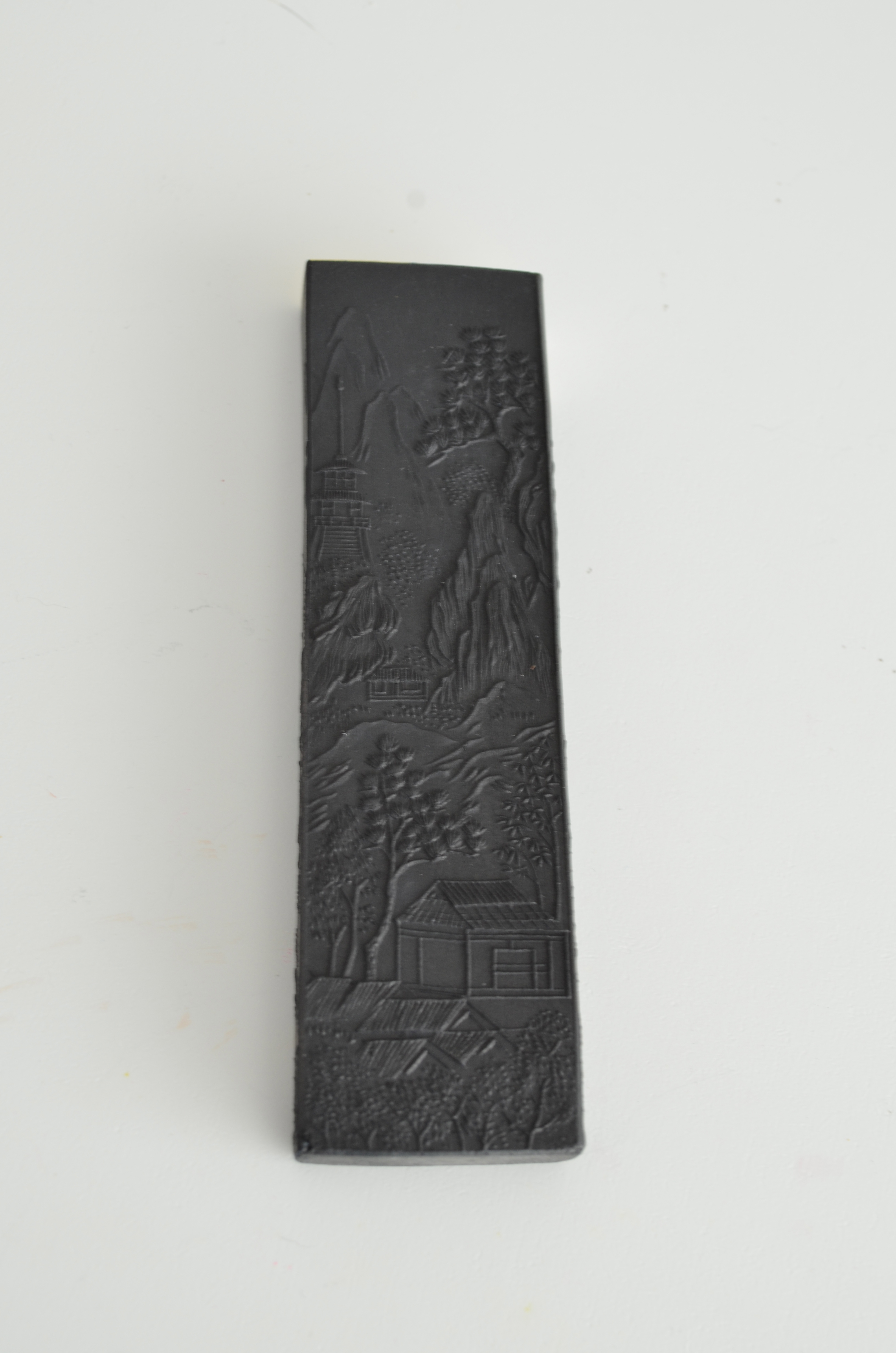
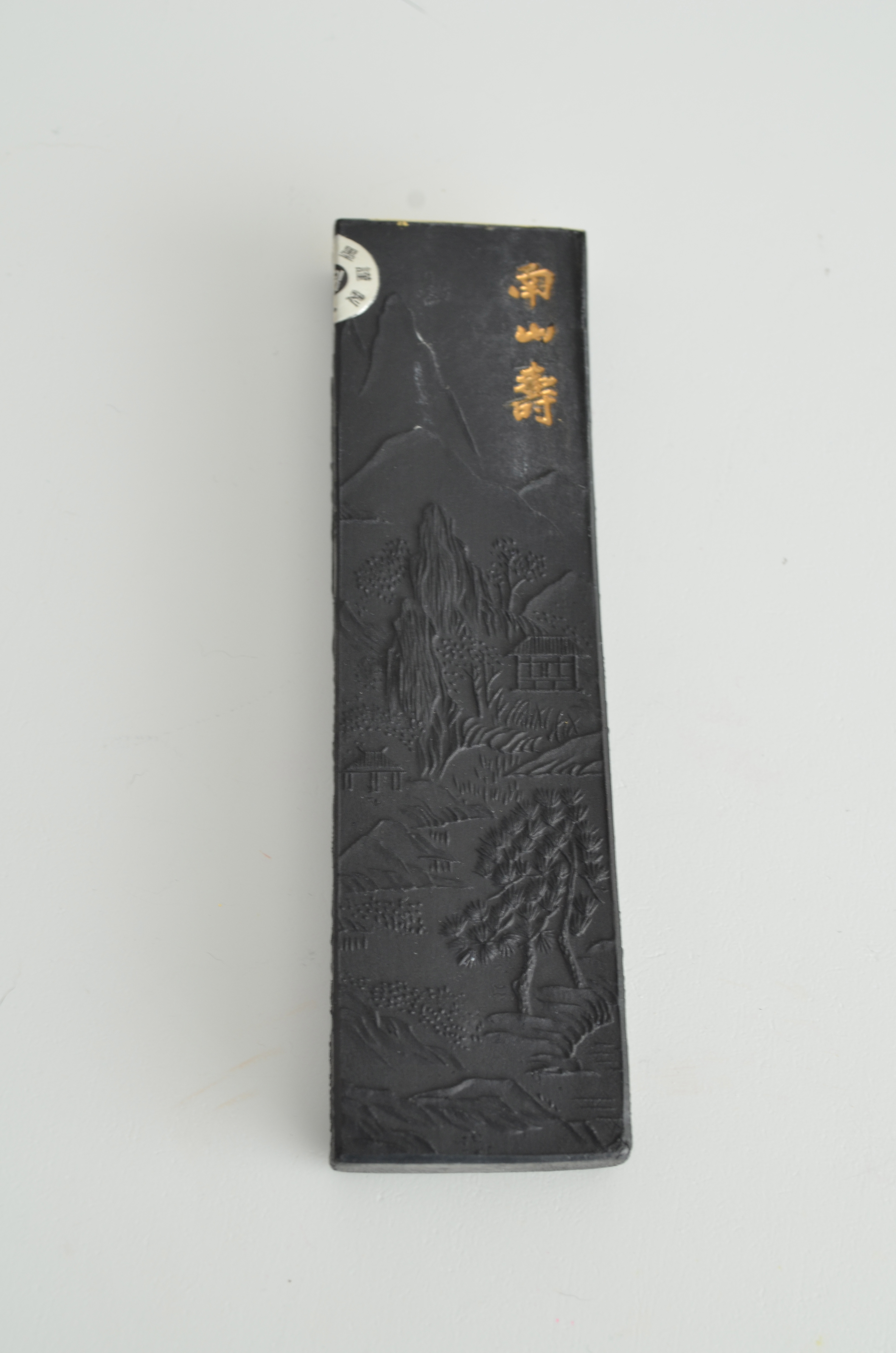 I really want to display that one in our home somehow. It seems like a shame to leave it in the closet it its box… I would like to use the ink stick in the middle to see how it compares with my current ink stick.
You can also buy bottled ink for sumi-e painting and calligraphy. The bottled ink is convenient because you don’t have to make your own ink every time you want to write. It is also more consistent since the bottlers are using a “recipe” that you could never perfect by grinding your own ink at home. However, by buying bottled ink, you lose some of the sheen and nuance that come from the ink stick. And, as I’ll talk more about on Monday, there is a mental preparation that comes only from grinding the ink. Sometimes it pays to take the long road.
The Four Treasures: Paper
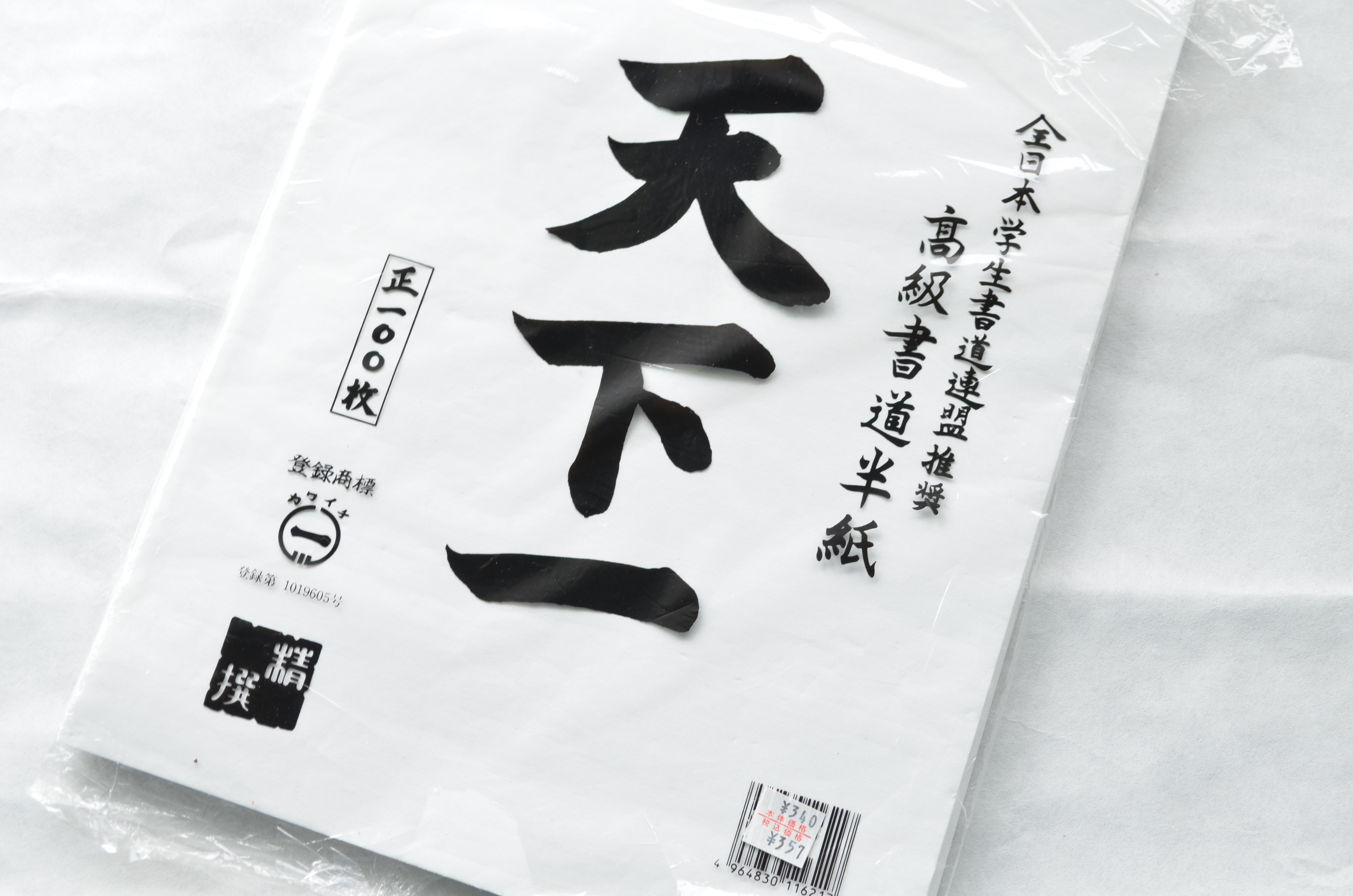 Most calligraphy paper is made from mulberry, though some are made with gampi or mitsumata (both Japanese bushes). Paper makers use the seasons to guide their making because temperature and humidity affect the fibers of the paper, which in turn affects the way the ink absorbs into the paper. I love that the process is so reliant upon nature…
Since paper is natural and doesn’t last forever, it adds a bit of wabi-sabi, beauty in impermanence and imperfection, to the practice of calligraphy.
This paper is from Naoto’s aunt’s collection. It is washi paper, but it is not so precious that it needs to be saved for special occasions. When we did our calligraphy practice last week, we used plain printer paper (just because we have an endless supply of that and no printer). Once I got a little bit better, I tried writing on the washi…the brush moves more beautifully and the ink absorbs much differently than on printer paper.
Update: Naoto found a calligraphy class in Tokyo for me! I am so excited! Hopefully I will have a follow-up to the Four Treasures series soon!
The Four Treasures: Brushes
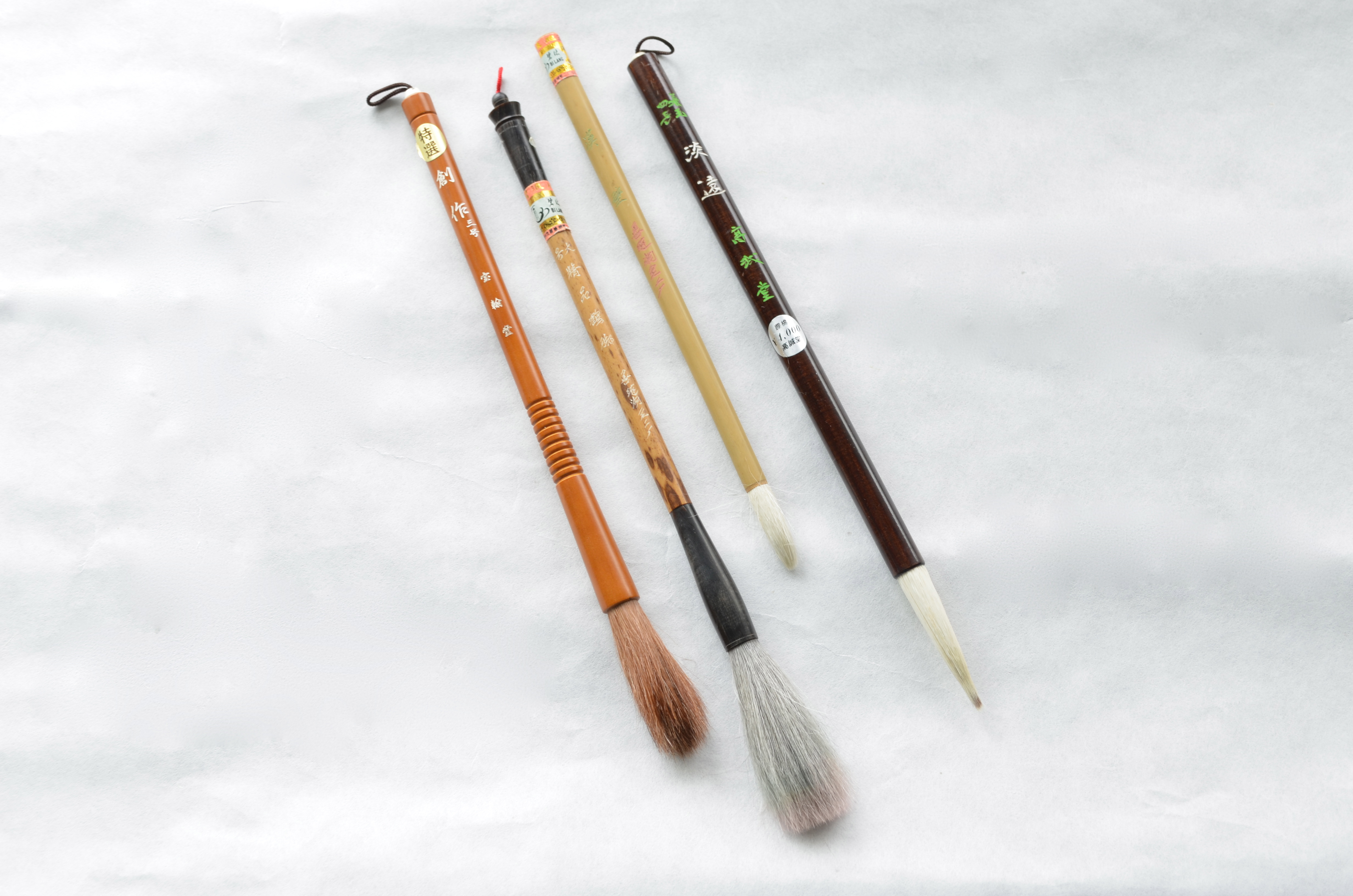 The first and most important of the “four treasures” of calligraphy is the brush. The brush is an extension of the calligrapher. It is said that the writing comes from the calligrapher’s soul, rather than from the stroke of the brush. I think this is a crazy beautiful sentiment, even though, from looking at my brushstrokes, you can tell my soul is intensely nervous and unsure about calligraphy. A calligraphy brush is held much higher on the handle than a “normal” paintbrush. The thinking behind this is that the calligrapher isn’t controlling the brush, but kind of letting the image or the strokes come from within. So much about Japanese calligraphy and sumi-e is about centering the inner self and being at peace and not having control. I think this is why I find it so beautiful yet so frustrating. (I like control.)
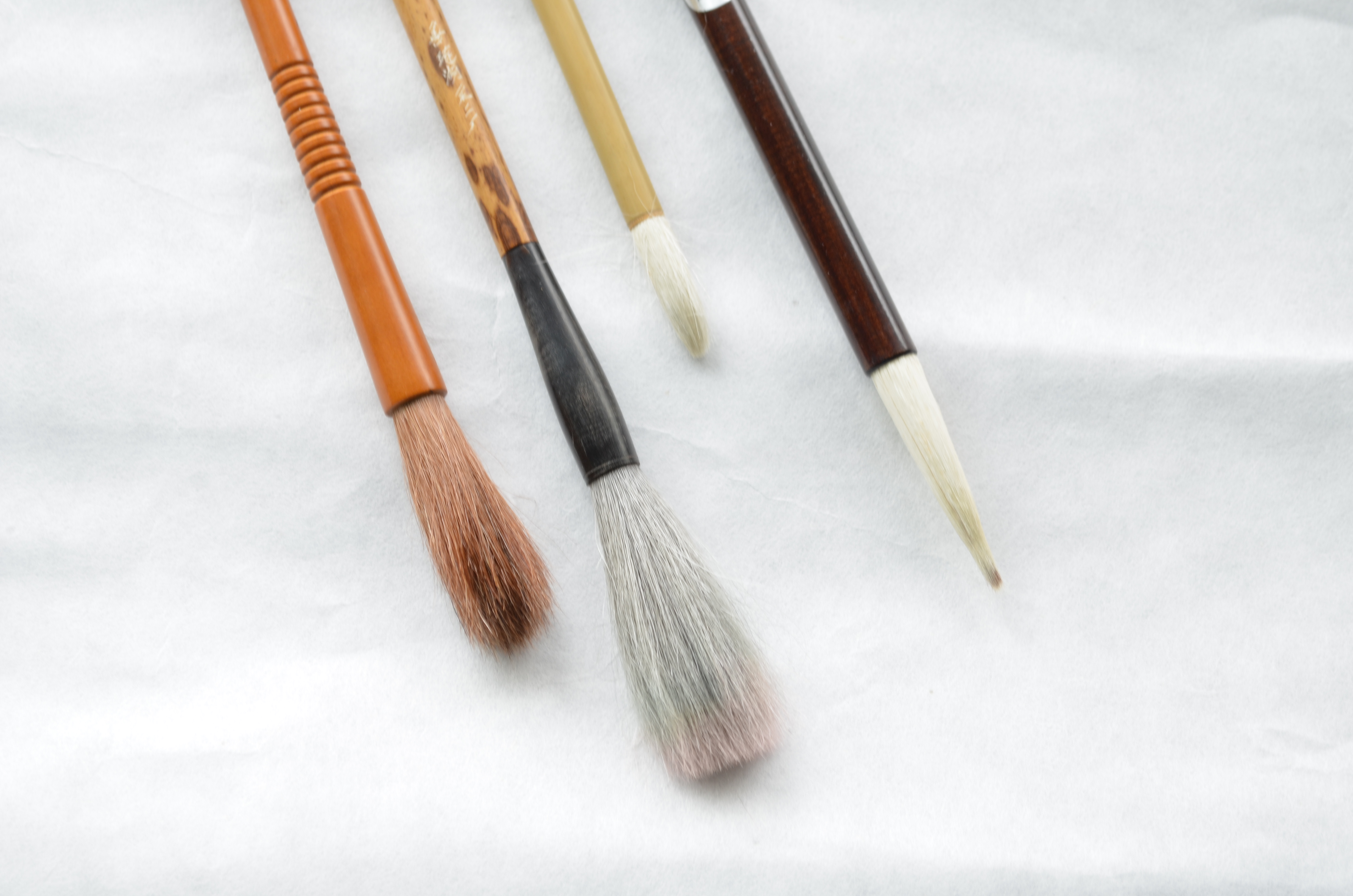 Naoto’s mom gave us several brushes from his aunt’s collection. Some of them are very worn…the ones with bushy bristles aren’t really useful anymore because to do calligraphy well, the brush ends need to come to a nice point. I still use the bushy brushes to do color washes when I’m playing around with watercolors. (Although, I’ve recently learned a calligraphy brush should never be used with anything but calligraphy ink because the bristles are chosen and made to work with those specific inks. Other inks can spoil the bristles. But, since these particular brushes are no longer useful in the calligraphy world, I think it’s nice to use them for something else.)
 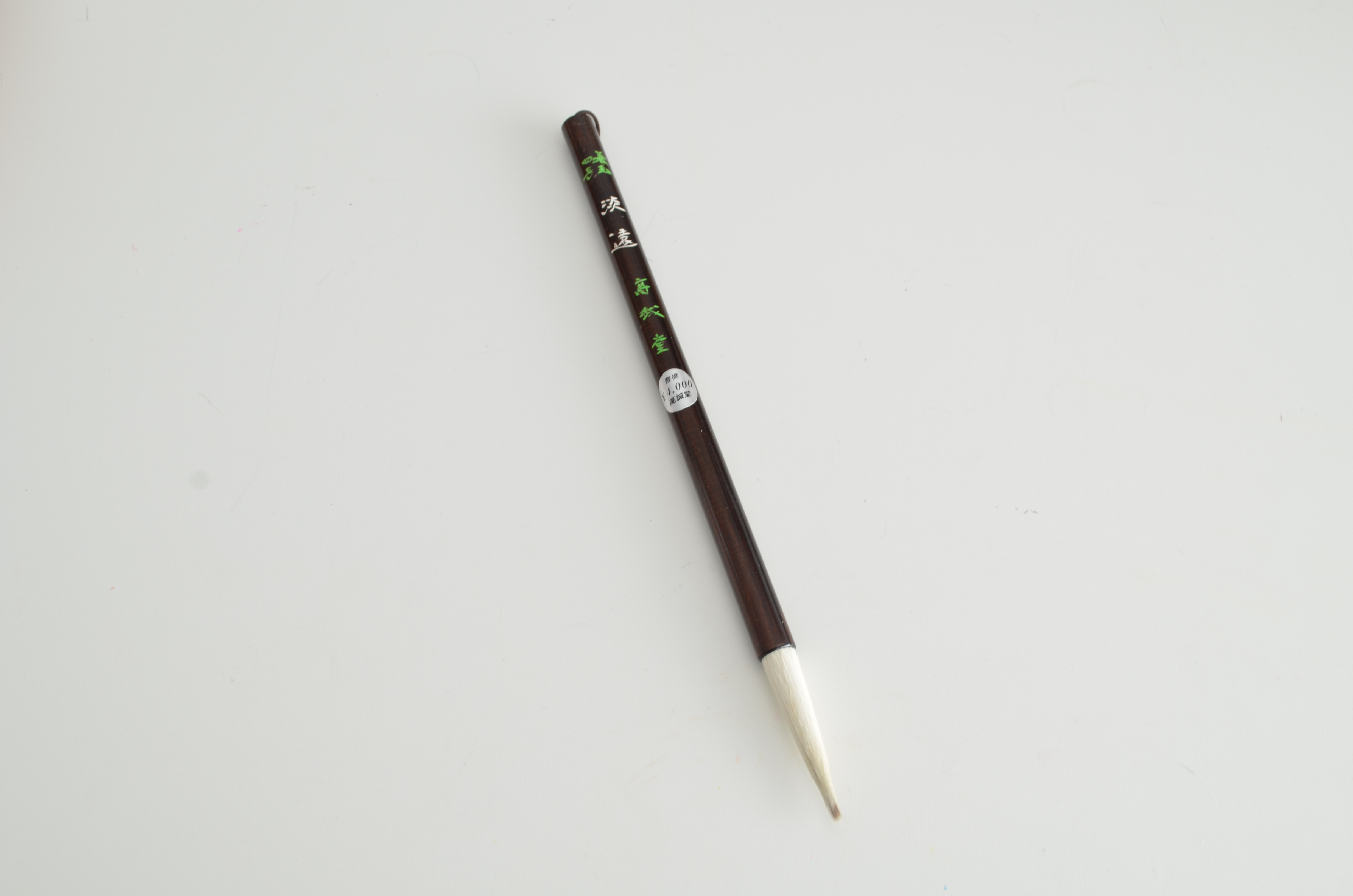 This particular brush is my favorite. I love its dark wooden handle. It’s a lovely brush that has never been used. Naoto discouraged me from using it (he and I both suffer from a fear of using lovely things) until now. I’ve been doing some research on how to prepare a new brush and how to care for a brush properly so I can make sure this one can be used for a long time. Once I feel properly informed and responsible, I’ll start using it.
Family Calligraphy Tools
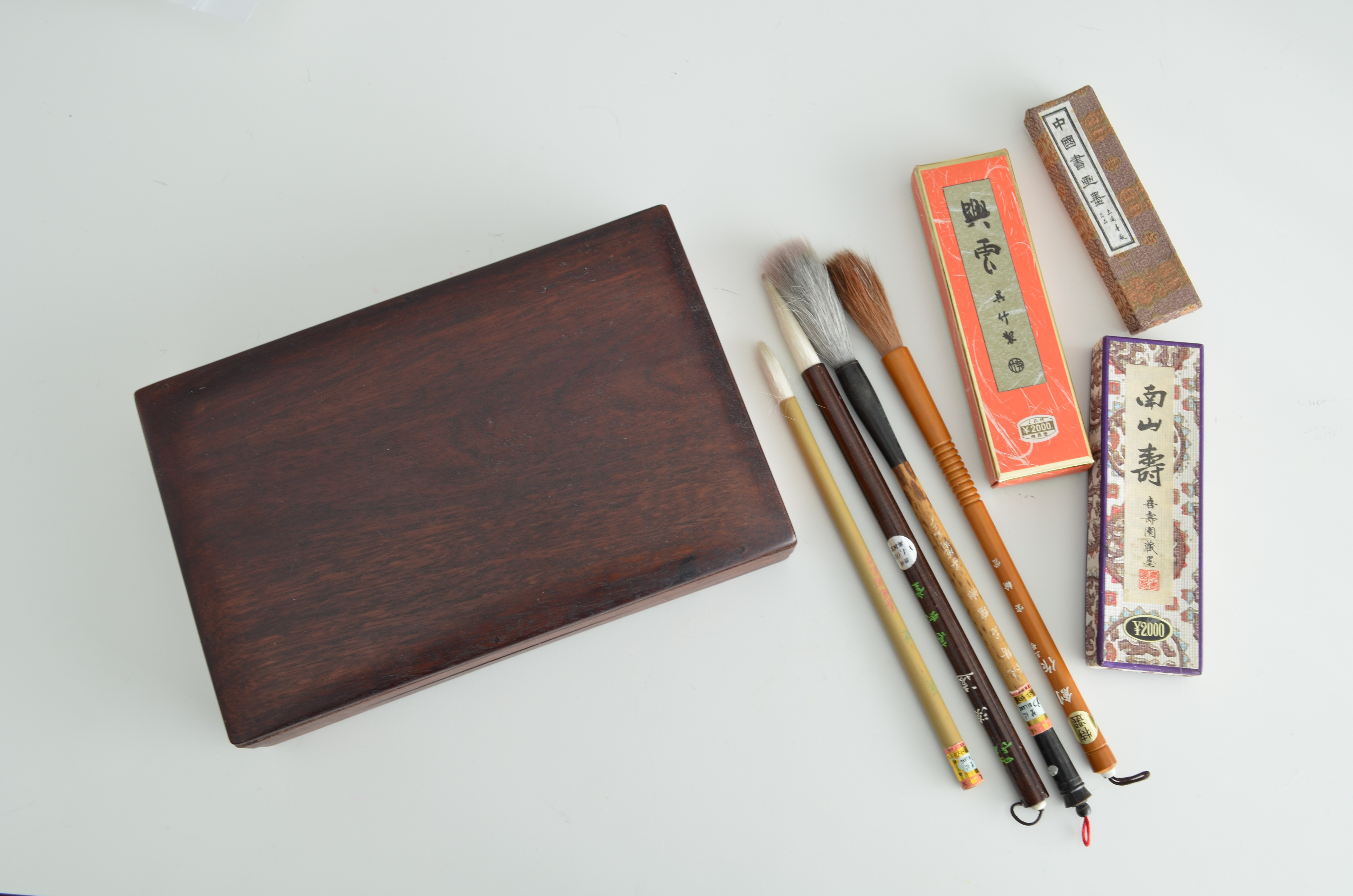 The first time we went to Japan together, Naoto told his mom that I’d taken an art class and was introduced to sumi-e painting. Sumi-e is “ink wash painting” using only black ink and simple brush strokes. The goal is to interpret an object with the fewest strokes possible. For example, you wouldn’t draw a cat and include all of its fur and whiskers and stripes and claws. You would convey the feeling of the cat, maybe its shape and its curiosity (perked ears for example). When I first learned about sumi-e, I was really excited. I am terrible at drawing, so I thought it would be easy to do these simple line paintings of things… Oh no…not easy at all. “Capturing the essence” is majorly difficult and controlling the brush to get variations in the depth color in the black ink is frustratingly challenging. But it’s fun to try…
Back to my mother-in-law…when Naoto told her about my sumi-e painting, she went into her closet and brought out the supplies pictured above. Her sister had been a calligraphy teacher and she left all of her calligraphy tools in her care. Sumi-e and calligraphy use similar tools and so Naoto’s mom gave them to me. I feel honored and humbled to have these tools in my possession…I know I will never be able to use them to their potential, but again, I can try…
The basic calligraphy tools are known as the “four treasures” (paper, inkstone, ink and brush). For the rest of the week, I will be sharing more about these tools and what makes them so special.
Japanese Calligraphy Lessons
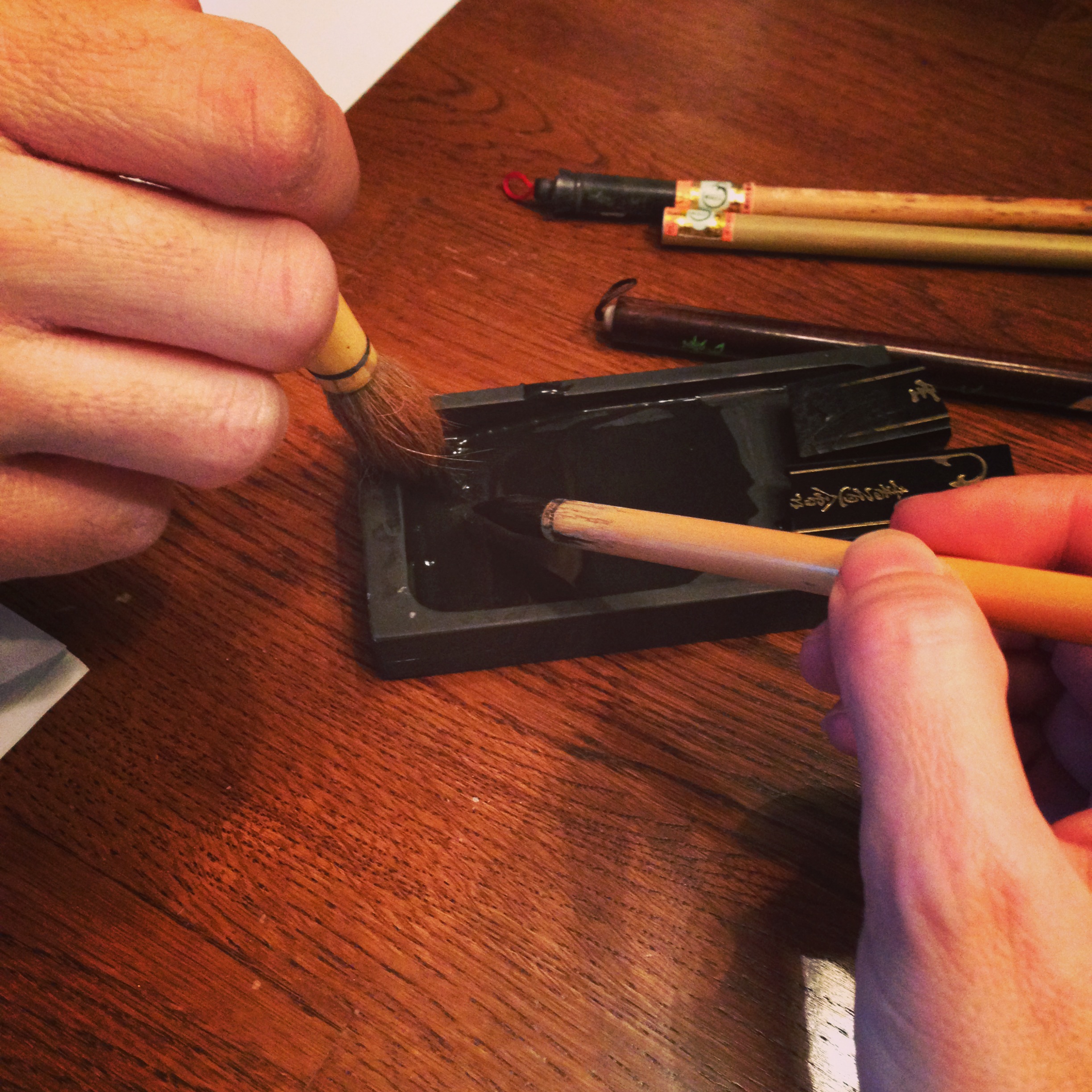 I’ve had a phrase stuck in my head for awhile now that I’ve been wanting to write in Japanese calligraphy. The trouble is, I don’t know how to write Japanese characters and Naoto–my live-in teacher–works all the time. So when he came home from work unexpectedly early last Thursday afternoon, I jumped at the chance to break out my calligraphy supplies. Naoto was really excited. (Not really, but he was a good sport…and in the end, I think he had a good time, too.)
 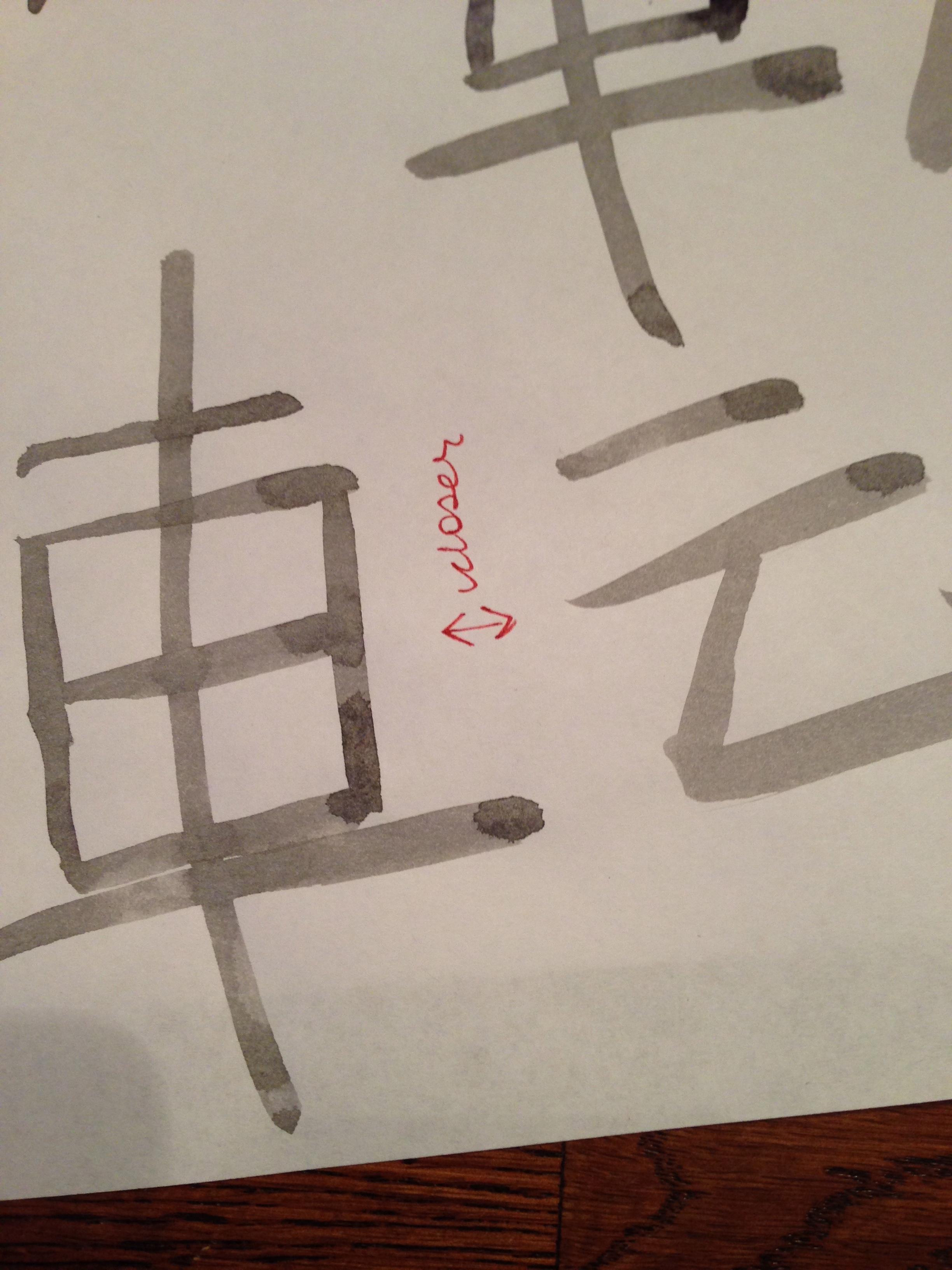 Naoto gave me tips on making my characters look better and left me with a good reference to work from. Over the weekend, I put away the brushes and inks and instead practiced with markers. I need to focus on confidently forming the characters so that eventually I will be able to focus on controlling the brush strokes. It’s a lot harder than it looks! Naoto makes it look so easy–it’s not!!
 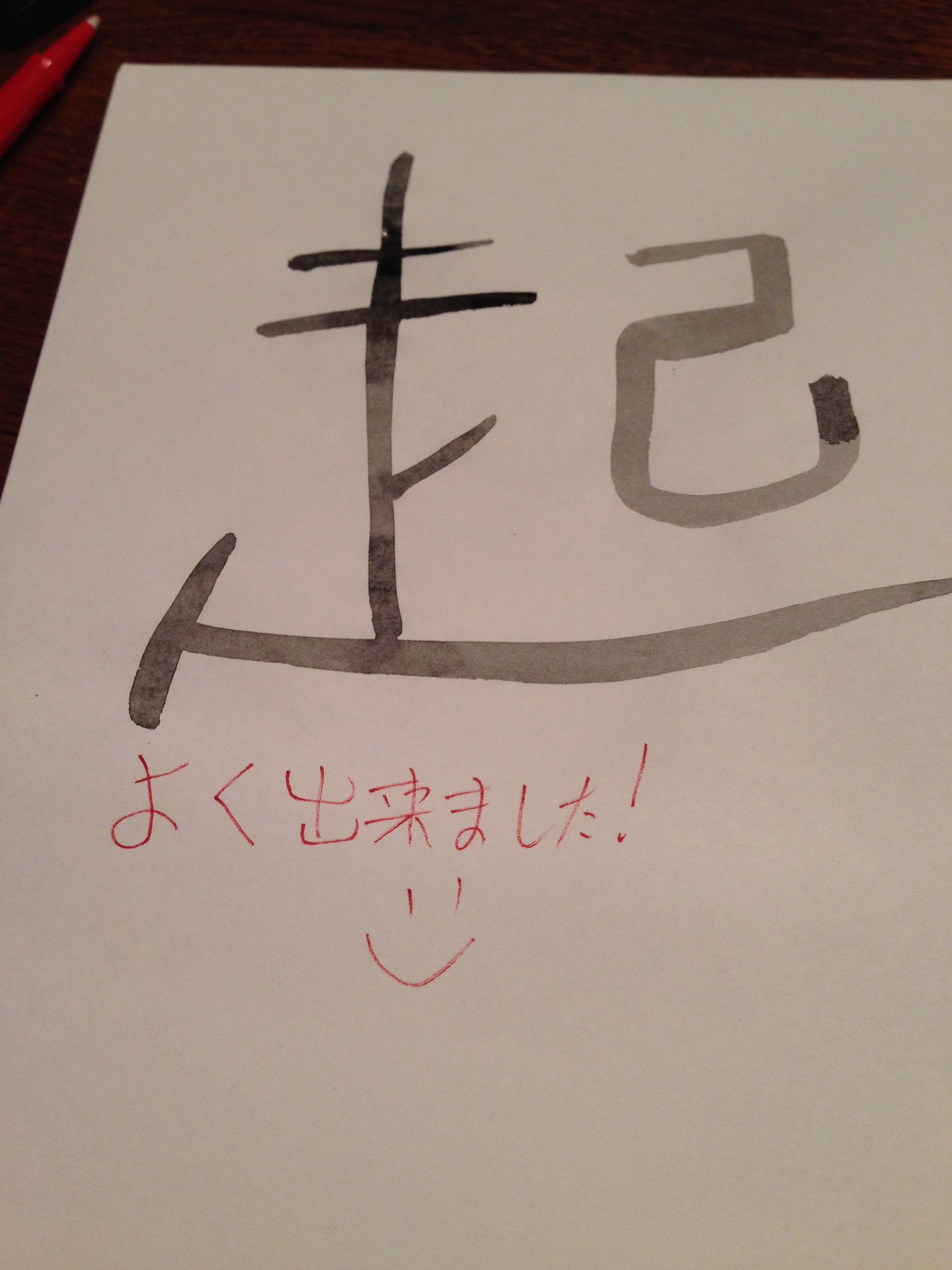 Even though my characters were far from perfect, Naoto wrote encouraging messages on my work and we have another lesson planned soon.
Tomorrow, I’ll share a little bit about our calligraphy supplies. Most of them are handed down from Naoto’s mom whose sister was a calligraphy teacher.
The End of Another Letter Month


 Yesterday marked the end of Letter Month. Last year, I felt a little bit burnt out at the end. This year, I feel re-energized about letter writing. I don’t really think it’s due to Letter Month though. I think it’s mostly due to meeting so many of my letter writing friends and feeling inspired by the mail people I met at Ex Postal Facto.
In total, I sent forty-three pieces of mail–two more than I sent last year. While I did write a letter every single day, there were some days that I didn’t make it to the mail box (which is sad because we have one in our building!) because of forgetfulness (or hibernation). But the act of writing happened every day and I hope to continue that to some extent beyond Letter Month. I did spend out some stationery I’ve kind of been hoarding, but I did not expand my mail art skills at all…mainly sticking with the usual washi tape and rubber stamps… There’s always room for improvement next year!
 Thanks to everyone who filled my mailbox this month!

