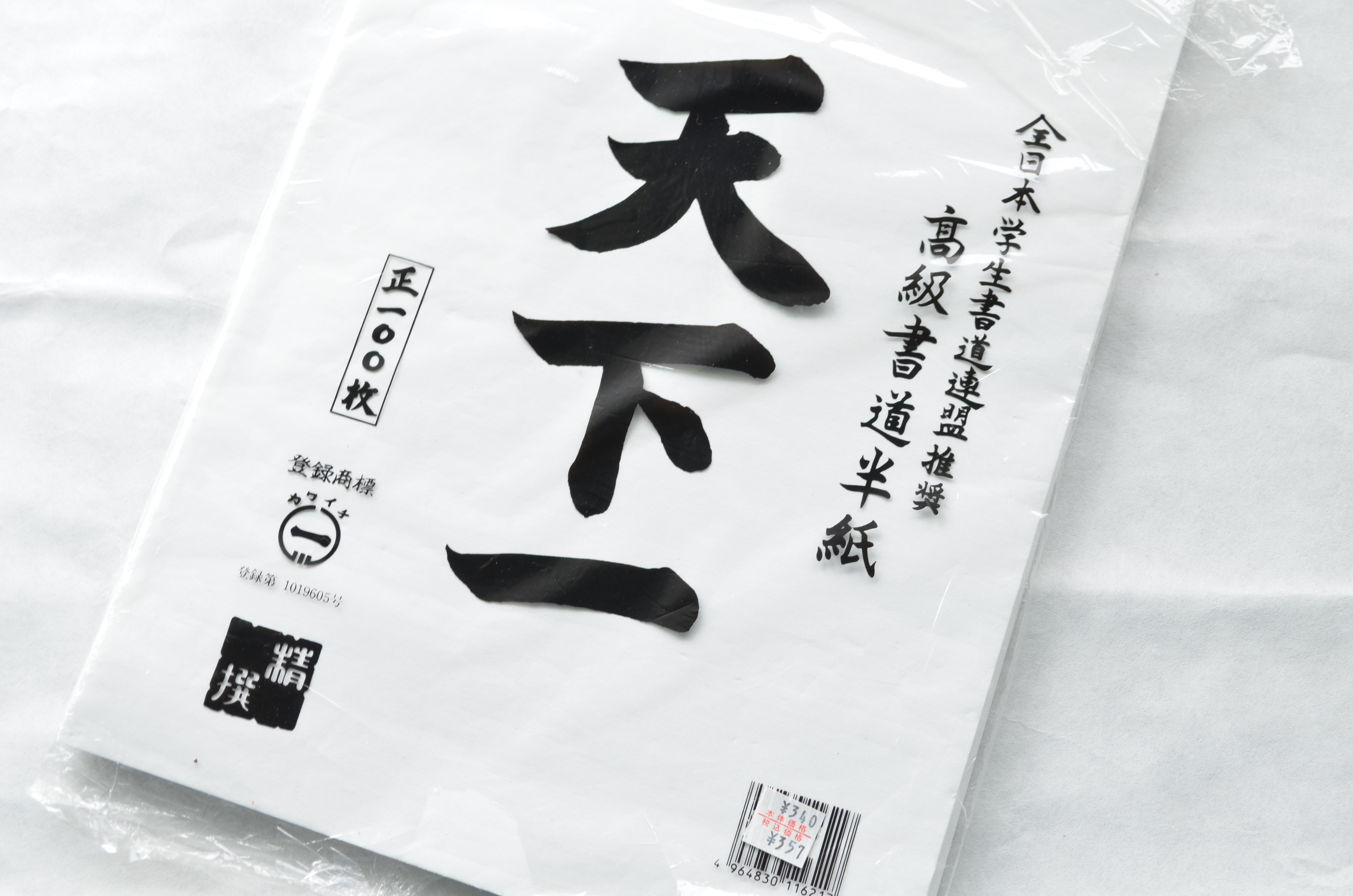
 Most calligraphy paper is made from mulberry, though some are made with gampi or mitsumata (both Japanese bushes). Paper makers use the seasons to guide their making because temperature and humidity affect the fibers of the paper, which in turn affects the way the ink absorbs into the paper. I love that the process is so reliant upon nature…
Since paper is natural and doesn’t last forever, it adds a bit of wabi-sabi, beauty in impermanence and imperfection, to the practice of calligraphy.
This paper is from Naoto’s aunt’s collection. It is washi paper, but it is not so precious that it needs to be saved for special occasions. When we did our calligraphy practice last week, we used plain printer paper (just because we have an endless supply of that and no printer). Once I got a little bit better, I tried writing on the washi…the brush moves more beautifully and the ink absorbs much differently than on printer paper.
Update: Naoto found a calligraphy class in Tokyo for me! I am so excited! Hopefully I will have a follow-up to the Four Treasures series soon!
 kimberly ah
A Japanese calligraphy class, you lucky woman…, with a husband like that I mean:)
Naoto is so flattered by your comment, Cath. I am excited for the class, even though I have no expectations on becoming a master in one lesson 😉
I’m looking forward to more of your Japanese writing! A calligraphy class in Tokyo would be awesome.
Thanks, Julia! I plan to show the whole proverb once I’m fully practiced. Right now, my characters could be likened to a child’s writing 😉