Tag Archives: Japan

Kyoto Part 2: Nijō Castle + Staying at the Sakura Inn

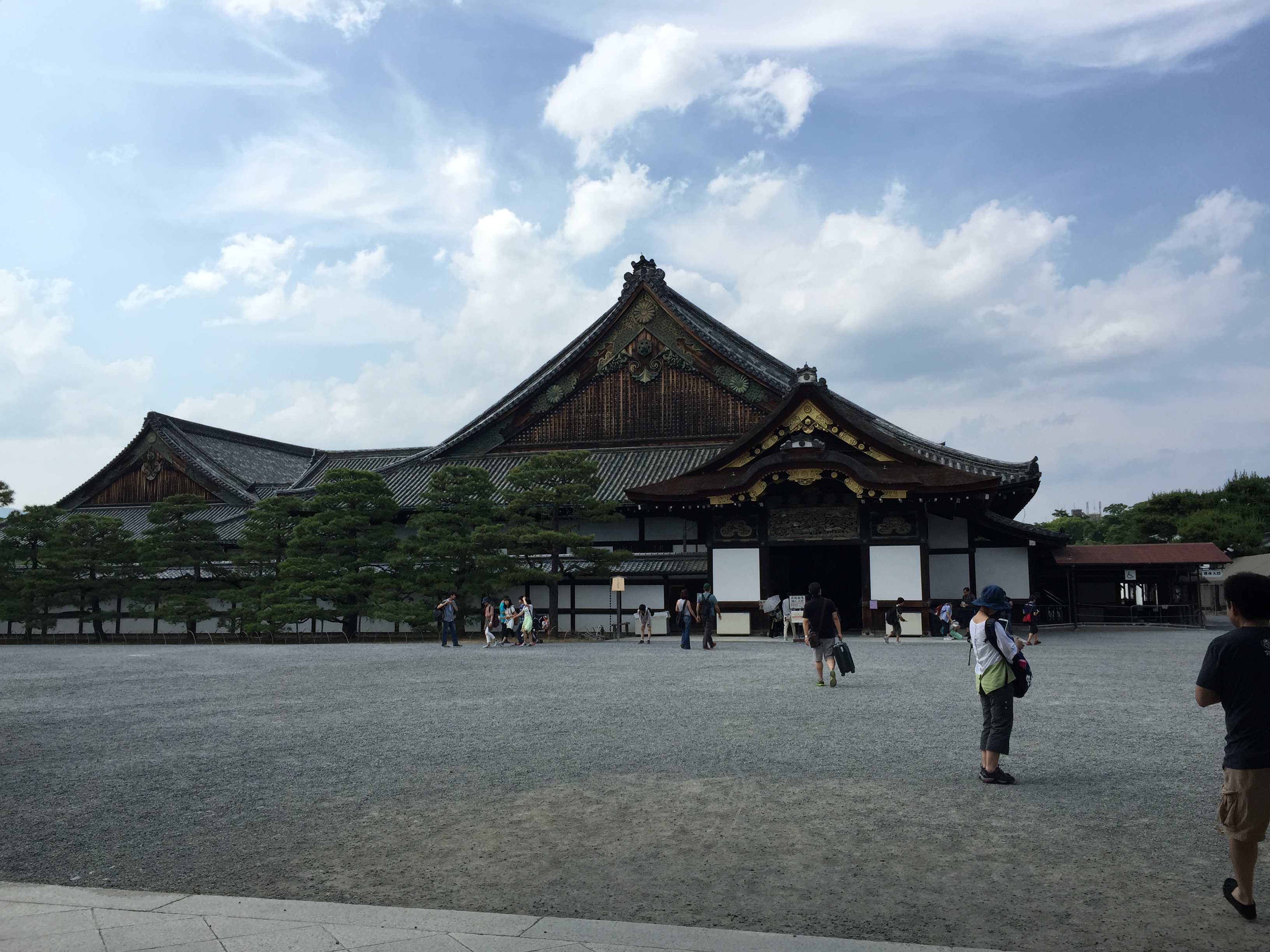
Nijo Castle, Kyoto JapanNijō Castle is the last site we saw on our first day in Kyoto. By the time we got there, my feet were killing me and I was tired and hungry, but when you only have three days in Kyoto, you power through. I remembered Nijō from my first trip to Japan, but I wanted to see it again. They don’t allow photographs of the inside of the castle, which is a shame because there are amazing murals and details in there. detail of Nijo castle When you go inside the castle, you are asked to take off your shoes. The first time I went it was winter and we were given little slippers to wear. This time, I was barefoot, which made walking on the old, wooden floors a little unnerving. (Splinters!) But the floors are the most interesting part of Nijō Castle. Known as “nightengale floors”, the floor boards chirp when you walk on them. You can hear a little sample of how they sound on this Wikipedia page. The nightengale floors were an old form of a security system because the noise alerted the shogun if someone was sneaking into the castle. It really noisy in the castle with all of the tourists walking around.
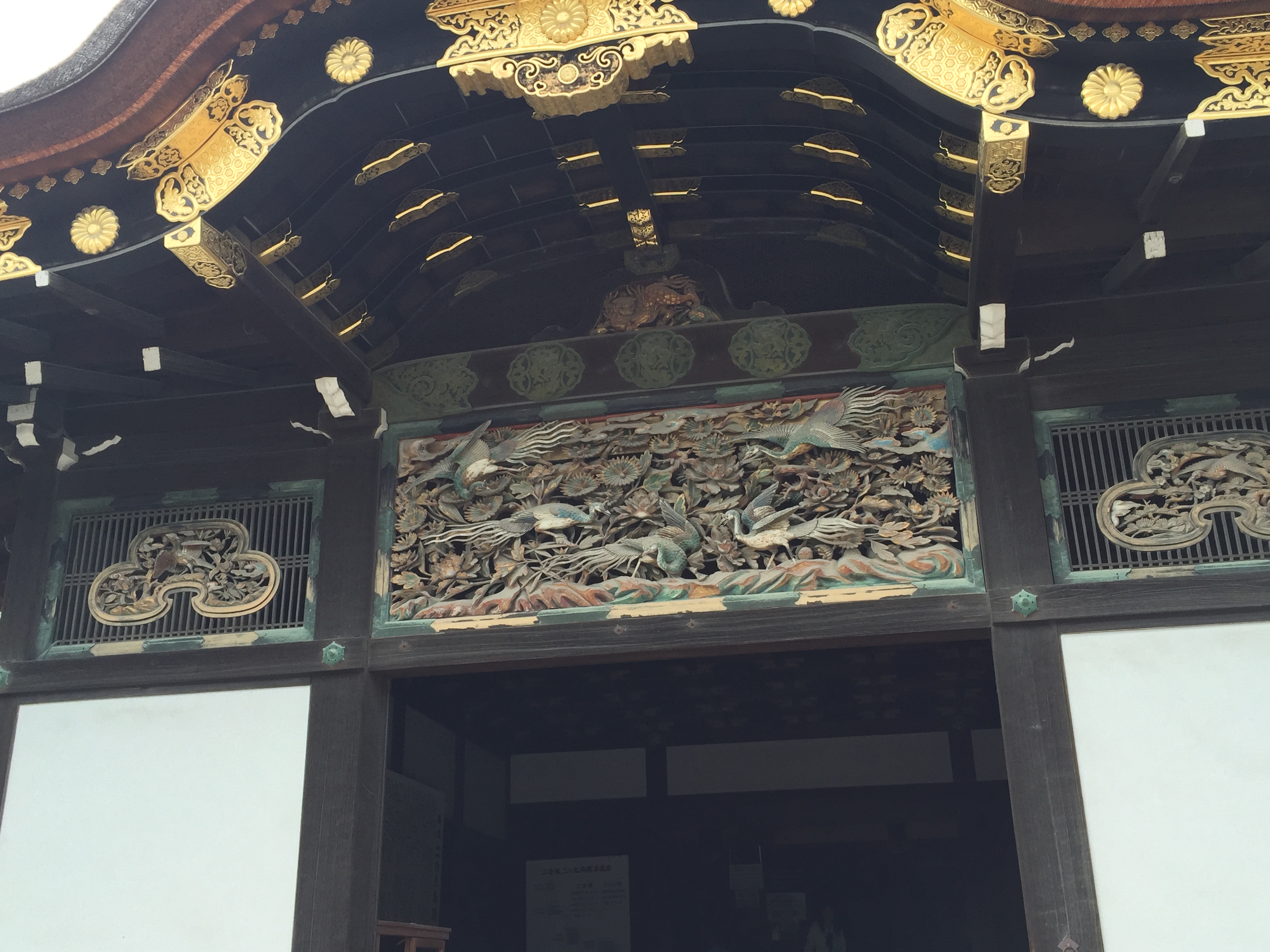
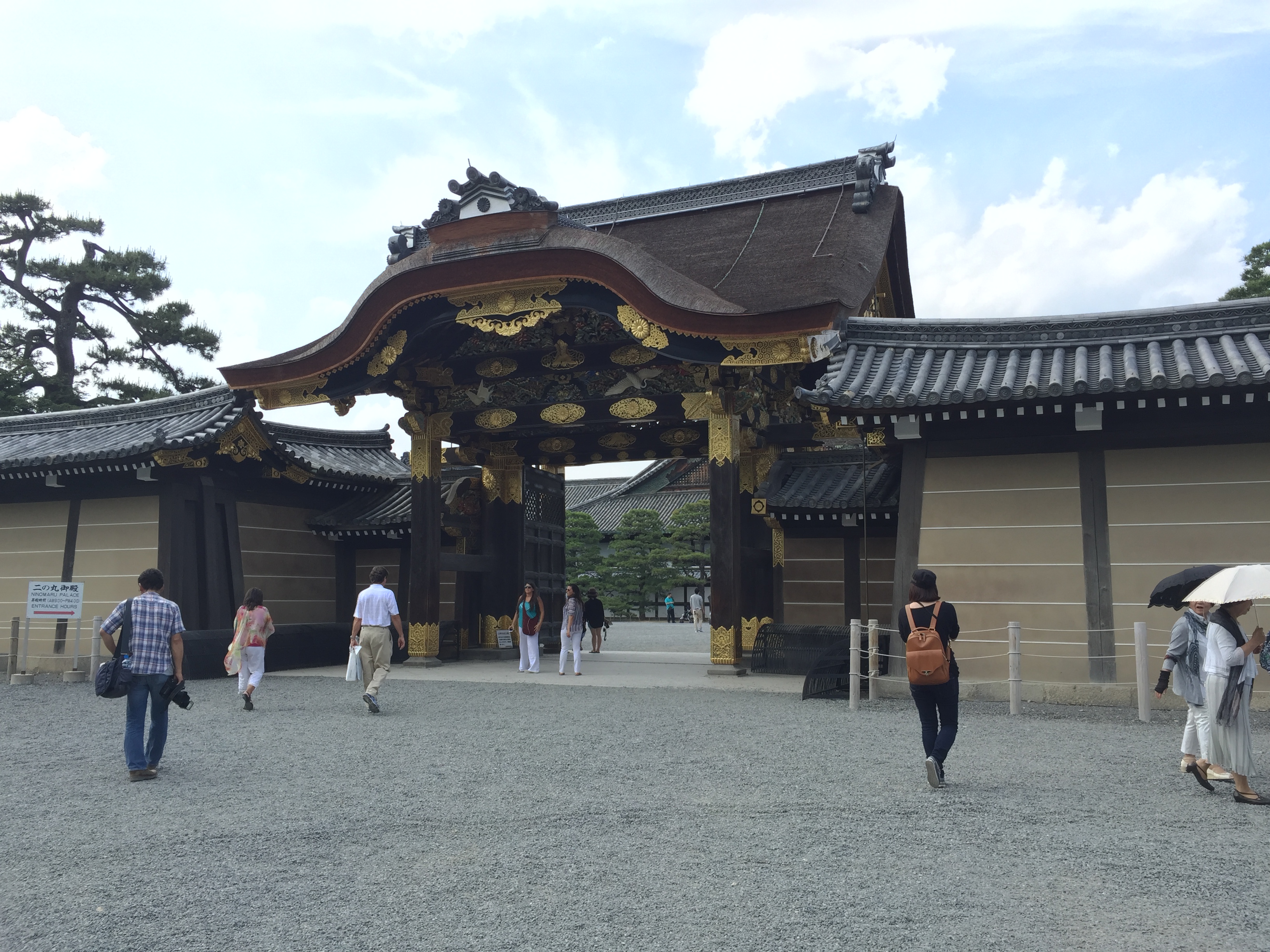
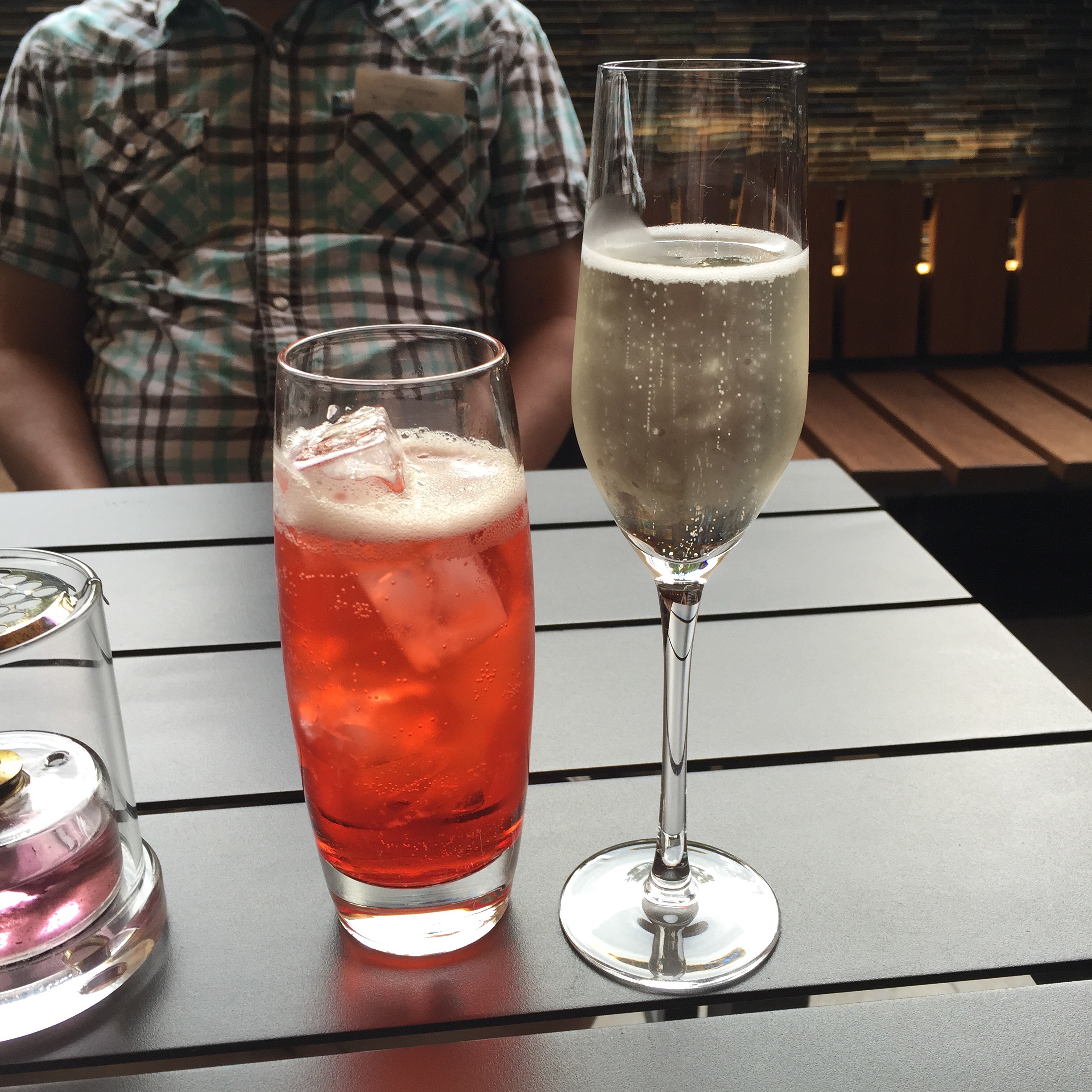
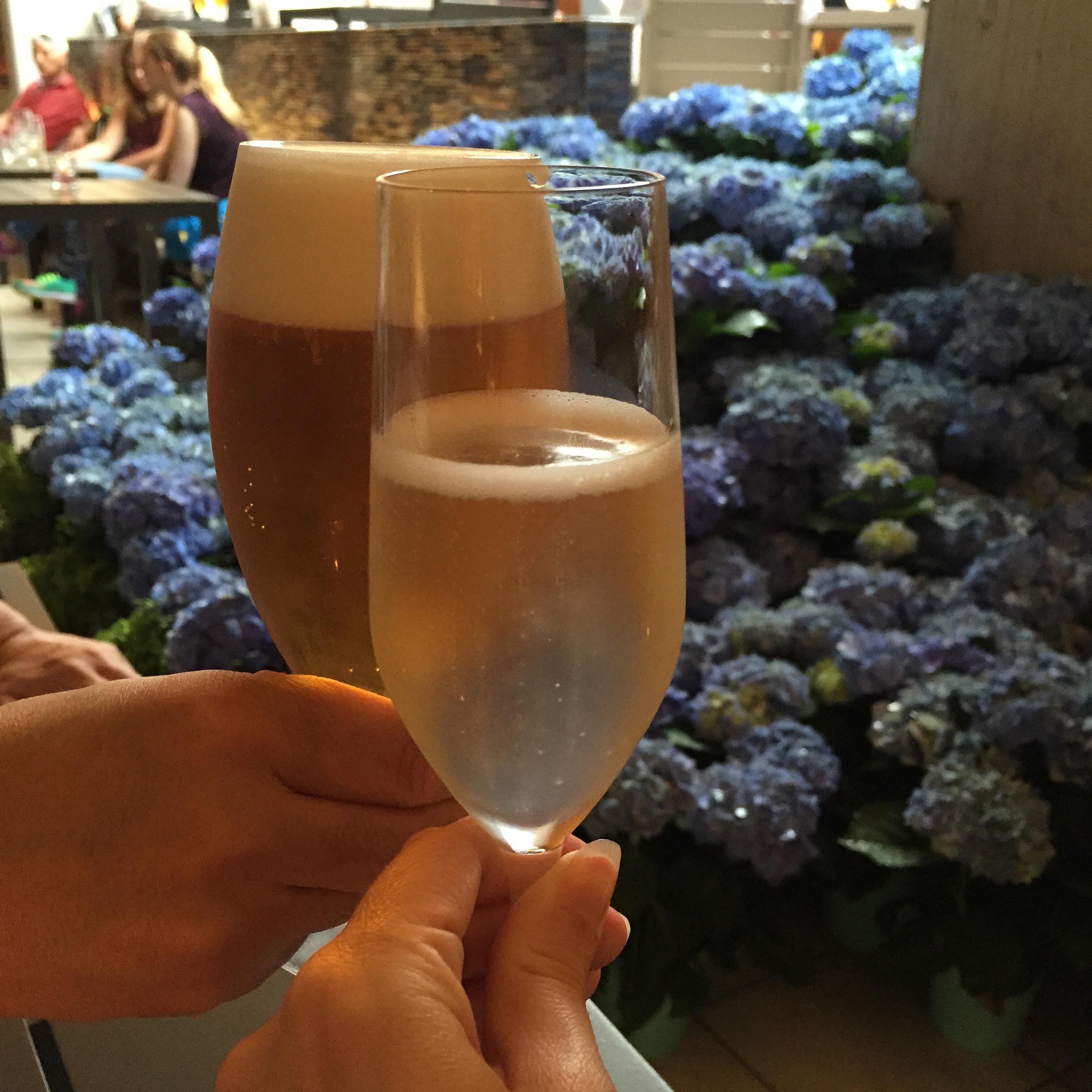
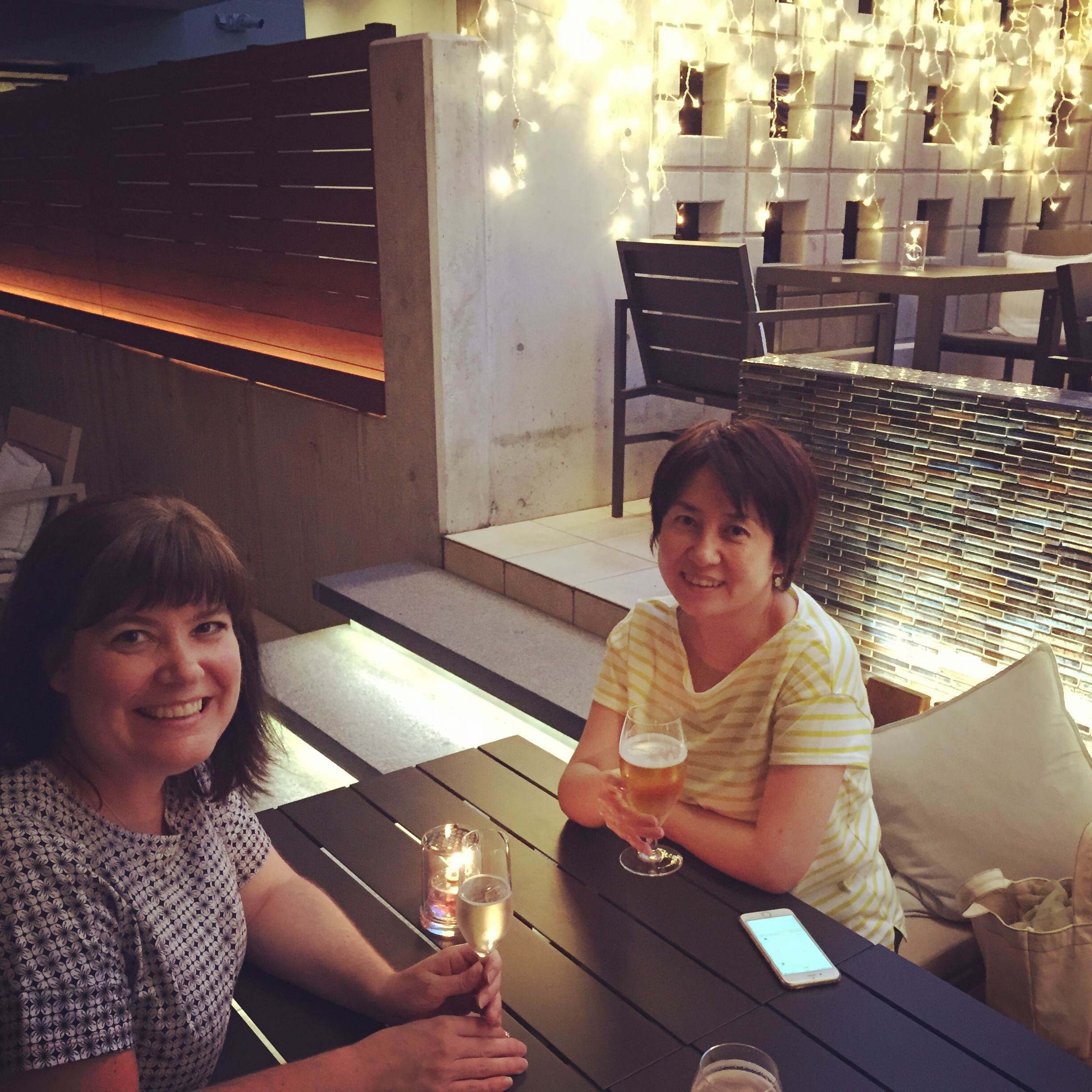
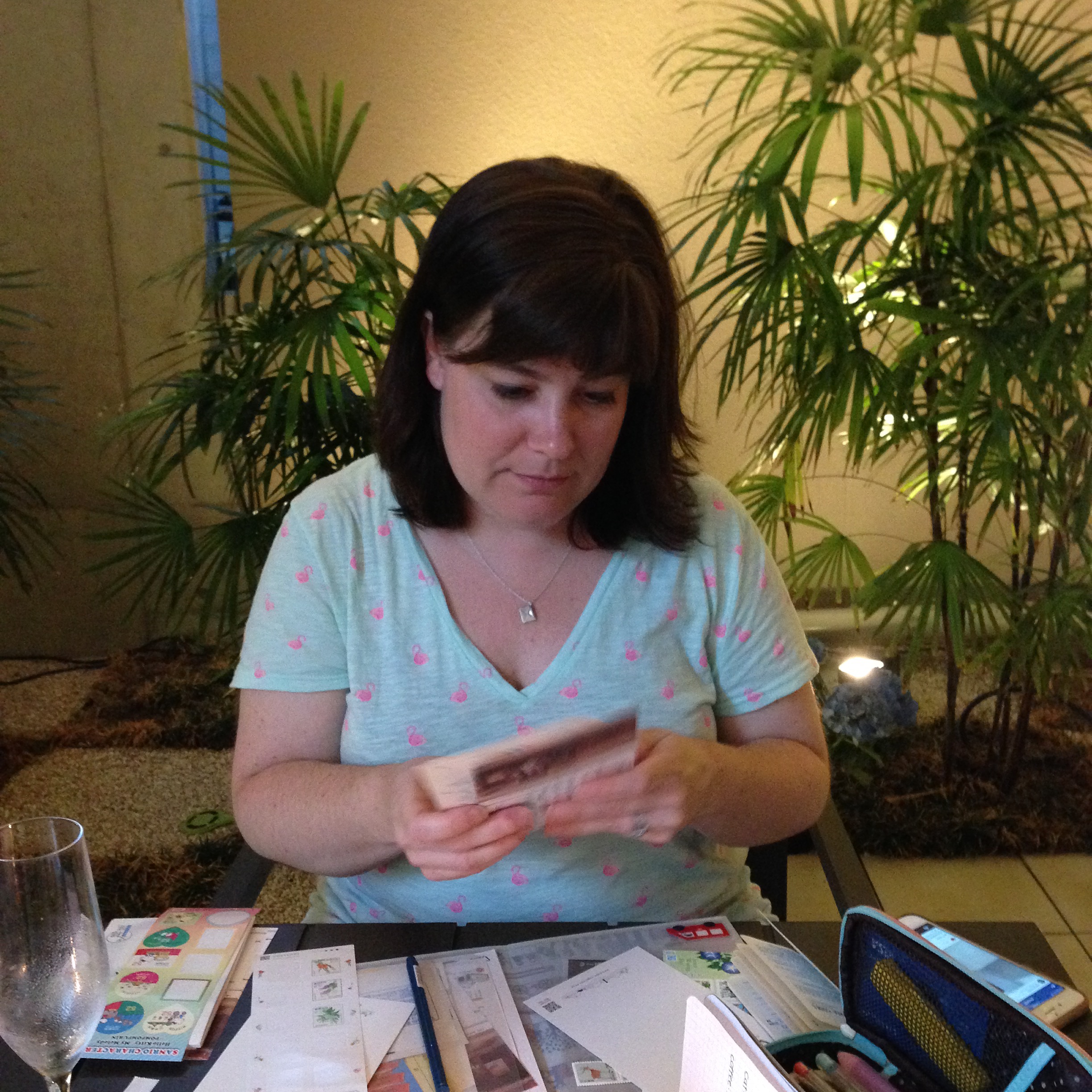
Nijo Castle EntranceLike most castles and shrines in Japan, the Nijō Castle is surrounded by amazing gardens. They have a chart on their website that notes the flowering trees you can view during the year. I’m really sure that there’s not a time in Japan when things aren’t beautiful. Sakura Inn Happy Hour, Kimberly and HisaeWhile we were in Kyoto we stayed at the Sakura Terrace. It was super close to Kyoto Station (maybe a ten minute walk) so we were able to catch a train or a bus quite easily. There is also a Mister Donut in Kyoto Station, so we were able to continue our Misdo mornings while we were away from Tokyo! The rooms at Sakura Terrace were simple and lovely, but the best part was the free (one drink) happy hour every night after 6pm. IMG_0479 IMG_3341Sakura Inn Happy HourWe enjoyed sitting on the terrace, chatting, writing postcards, and toasting to a great vacation among the hydragea every night during our stay. It was a perfect way to recover from walking all around the city all day and to gear up for dinner. Naoto enjoyed a daily dip in the Japanese baths, which is probably why he booked this hotel in the first place.
A few more Japan posts to go…are you still hanging in there?
Tagged , , ,

Inoda Coffee

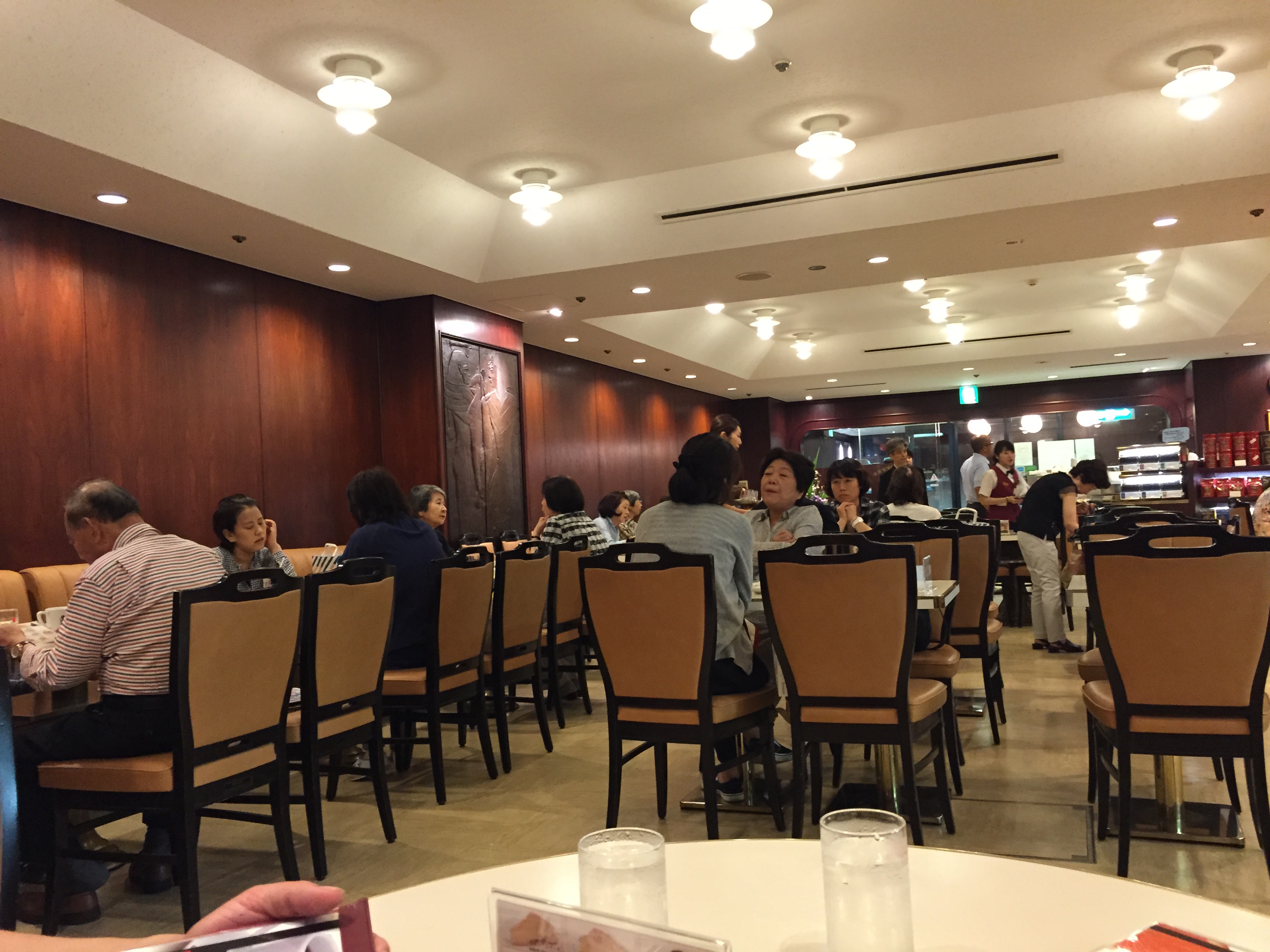
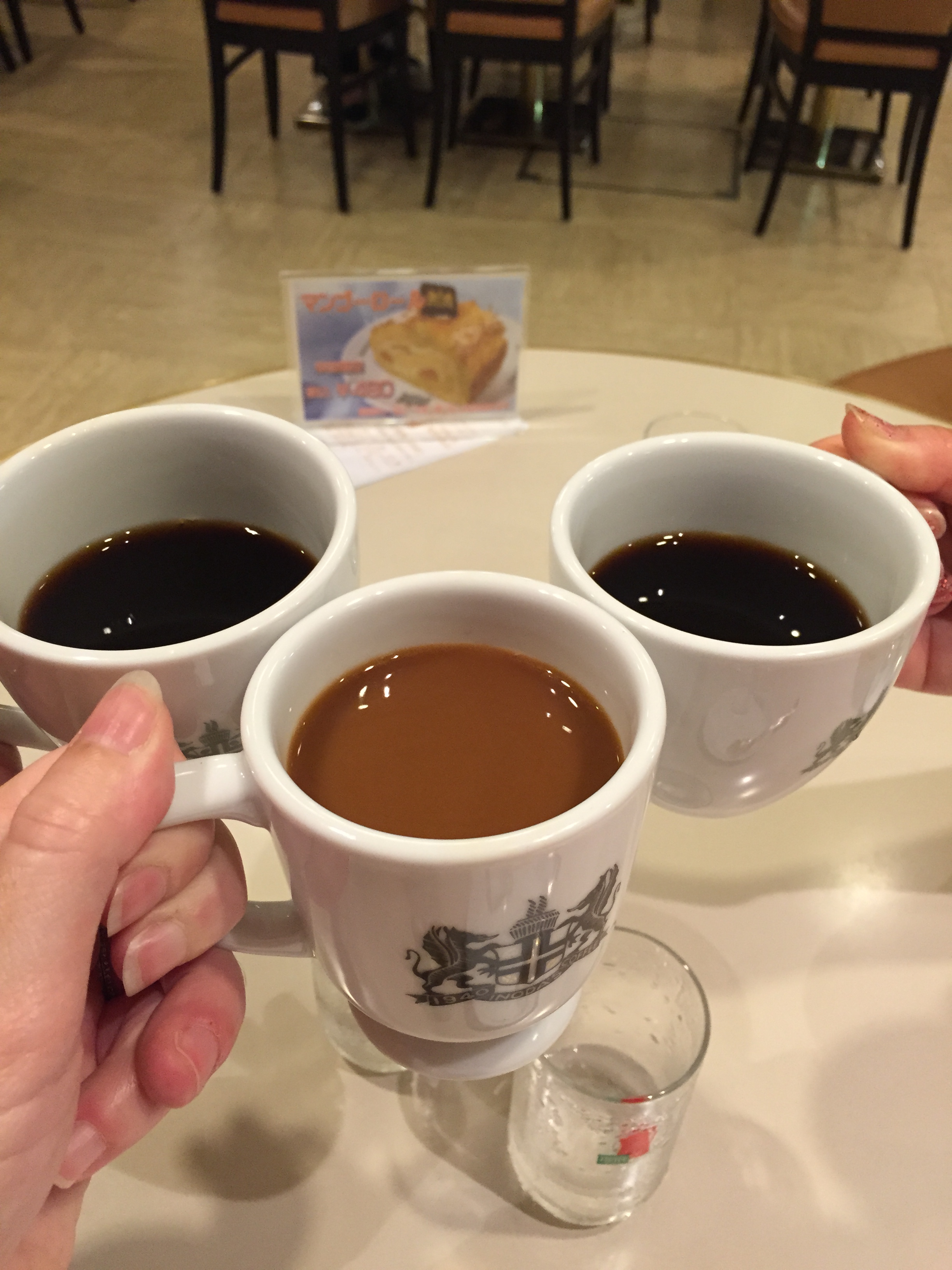
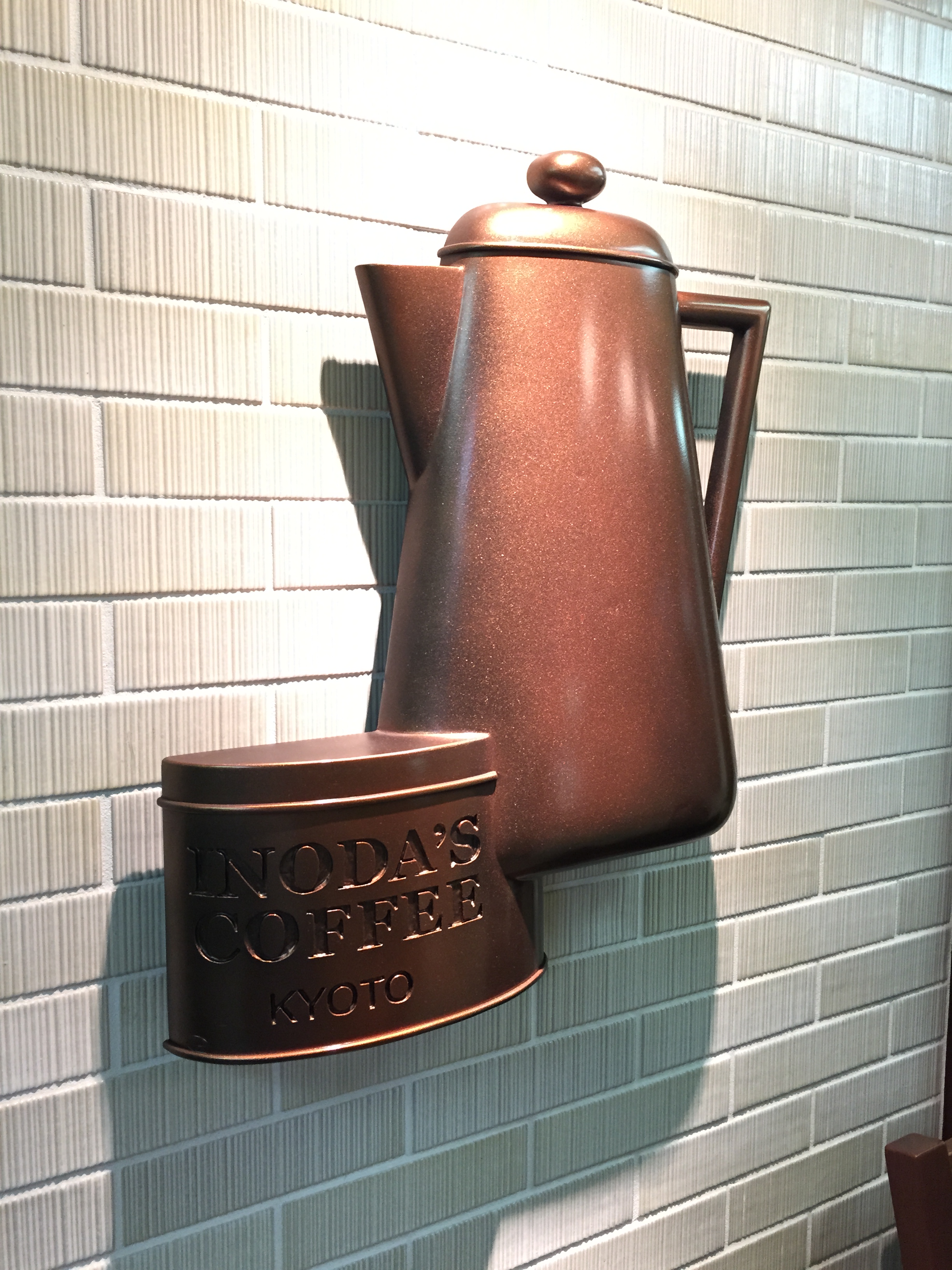
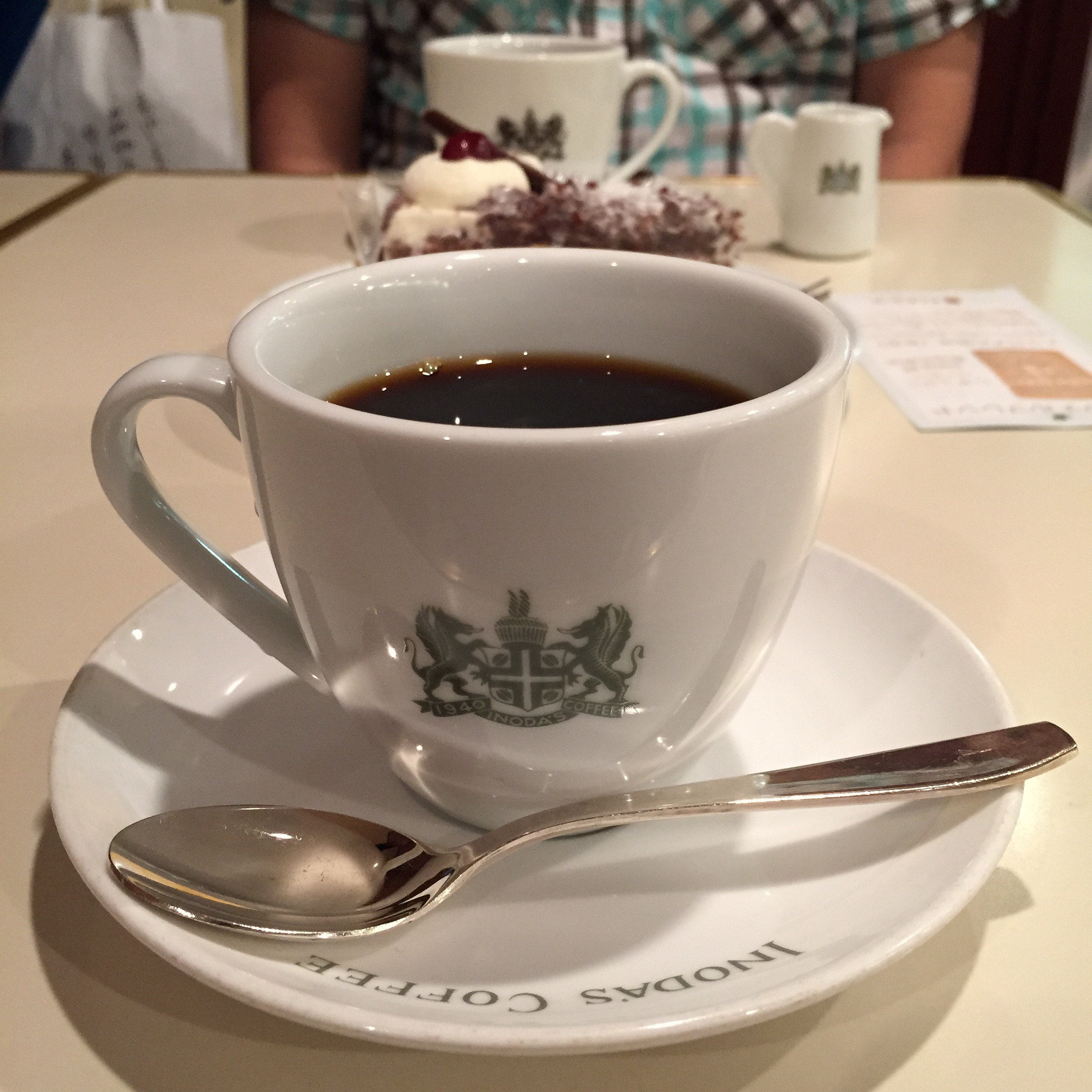
Inoda Coffee and DessertInoda Coffee is another classic coffee shop in Japan. My sister-in-law, Hisae, took us there and then Naoto and I stopped in later for a quick cup of coffee and a snack after a long day of craft shopping. Inoda Coffee InteriorInoda has been around since the 1940s and when you visit, it feels like not much has changed since then. The shops feel very old-school and luxurious with comfy leather chairs, classic china, and impeccable service. The servers have omotenashi (Japanese hospitality) perfected with their polite, efficient service. There are no frappes, macchiatos, or mochas here. Though they do offer a latte and “coffee with ice cream”, most of the menu is devoted to different varieties of plain ol’ (but very delicious and strong!) coffee. Inoda Coffee, Kyoto, 3 cupsApparently, they will prepare your coffee with the perfect amount of cream and sugar. Back in the day the owner noticed that customers were lingering over their coffees, thinking or chatting with friends, and letting their coffee get cold before they had a chance to add the cream and sugar. Then the cream and sugar wouldn’t blend properly, making the coffee less enjoyable. So he decided that the staff should add the cream and sugar so the coffee could be enjoyed immediately without interrupting the customers’ thoughts and conversation. Inoda Coffee SignThere are several branches of Inoda all over Kyoto and we visited two of them, but not the “honten” (main branch). Next time!

If you want to learn more about Kyoto’s coffee culture, this episode of Core Kyoto is really good! They talk about Inoda and a few other local favorites. And while you’re on the NHK World website, this episode of Great Gear is super hokey, but it’s about the International Washoku (Japanese Cuisine) Show and some of the new food technology is really fun! (Both episodes are only available until September 2.)

Tagged , , , ,

Kyoto, Part 1: Yasaka Shrine + Kiyomizu Temple

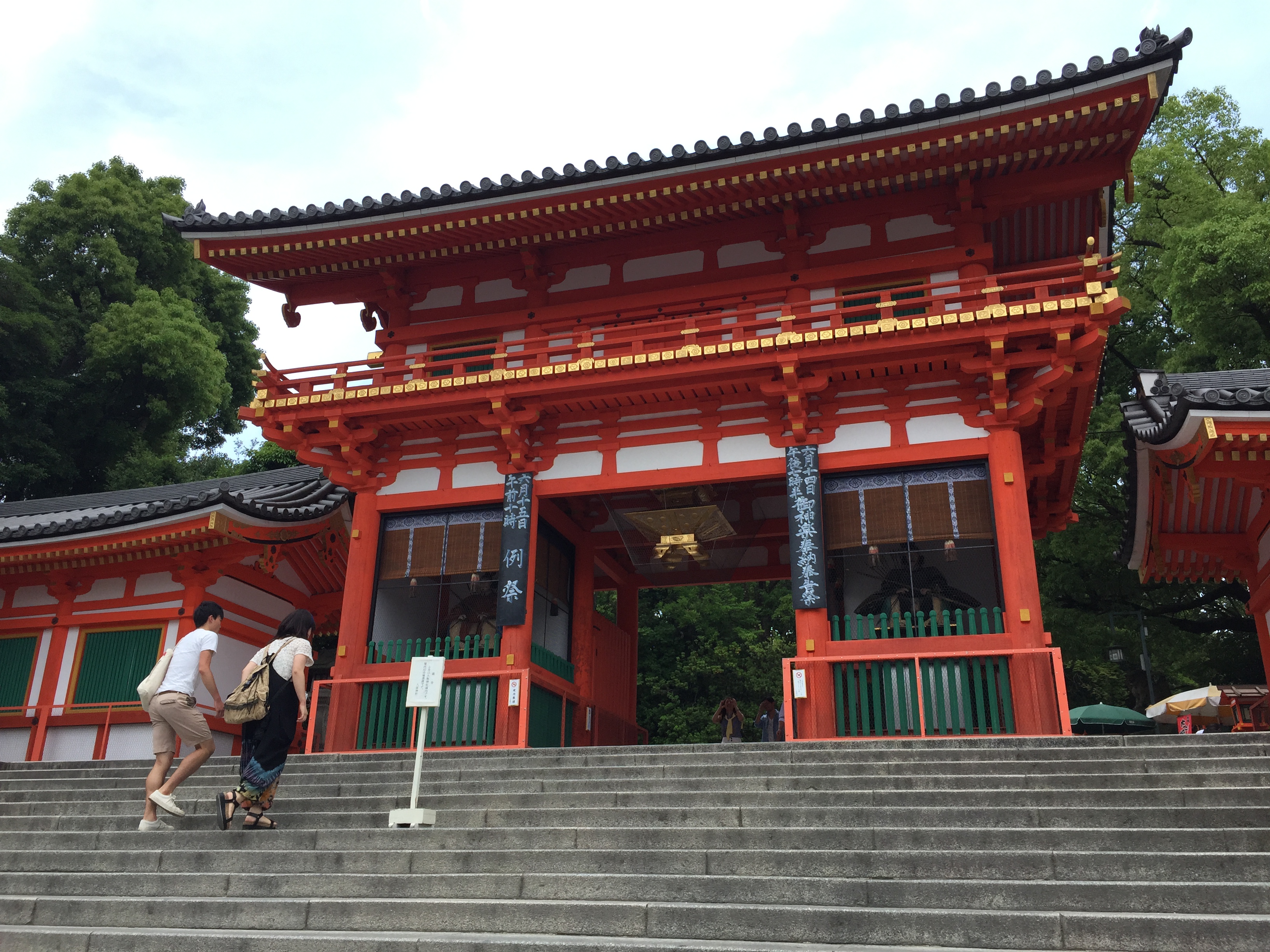
Yasaka Shrine, Kyoto, Japan

Yes, I am still posting about our three month old trip to Japan…

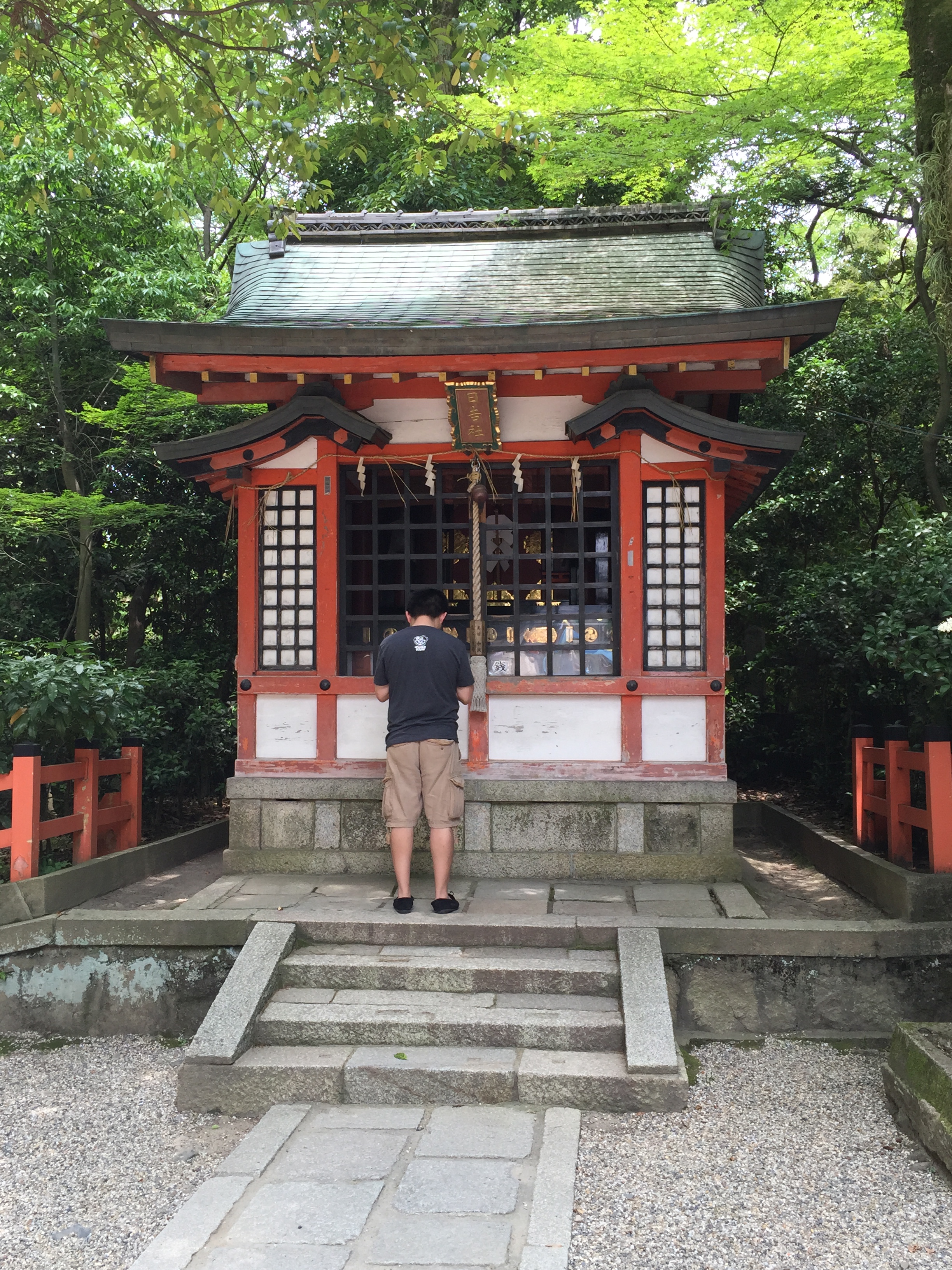
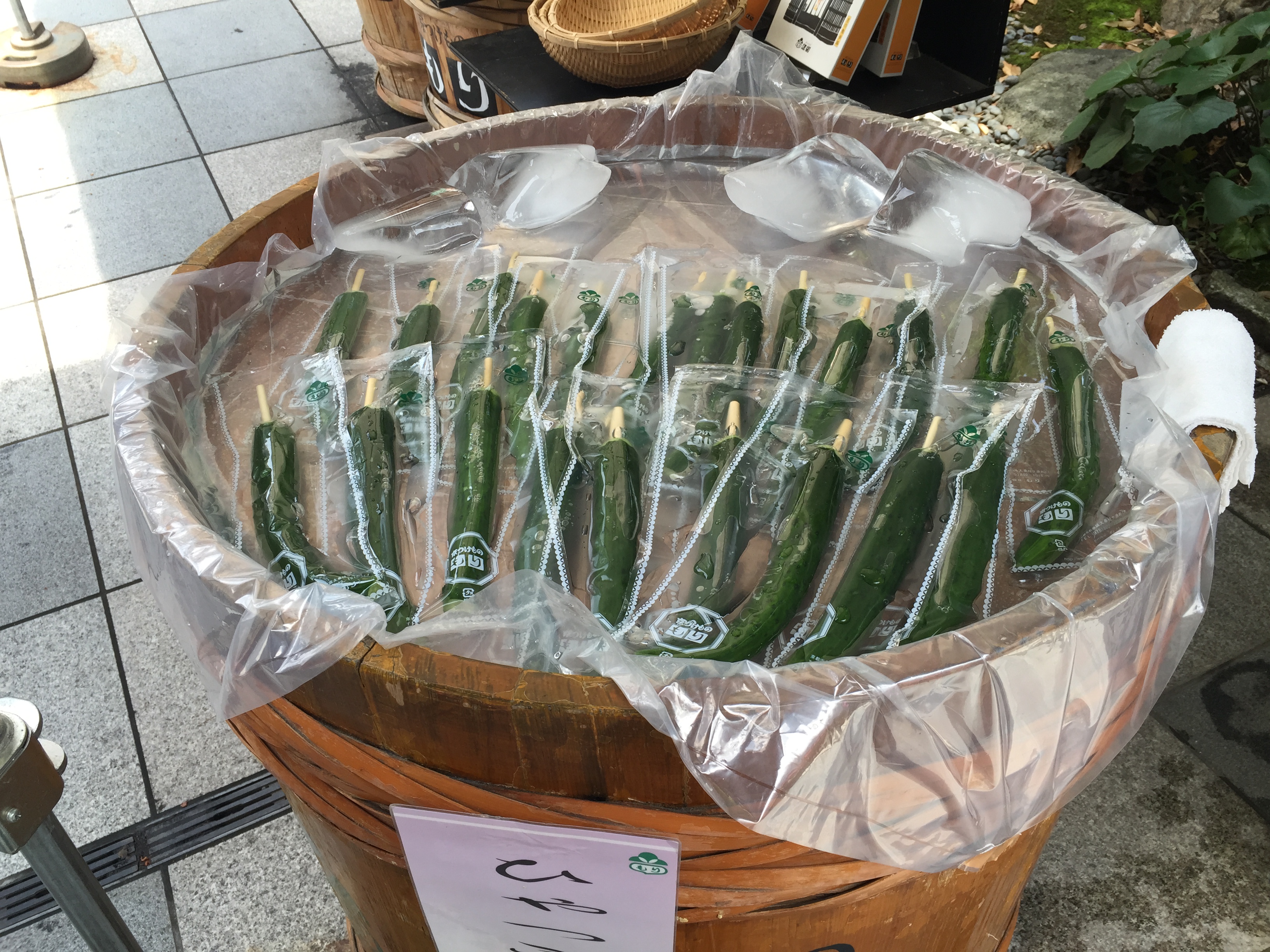
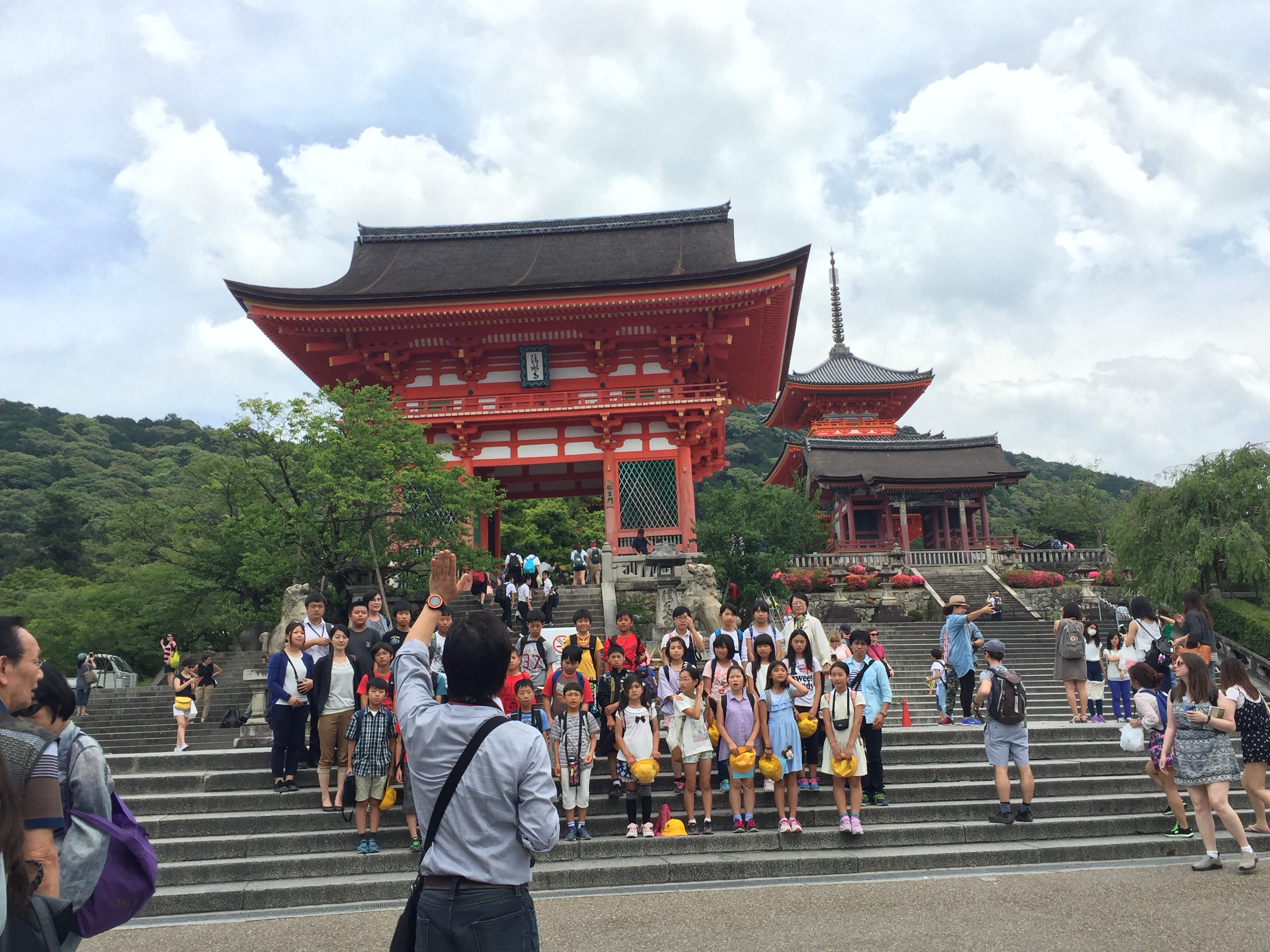
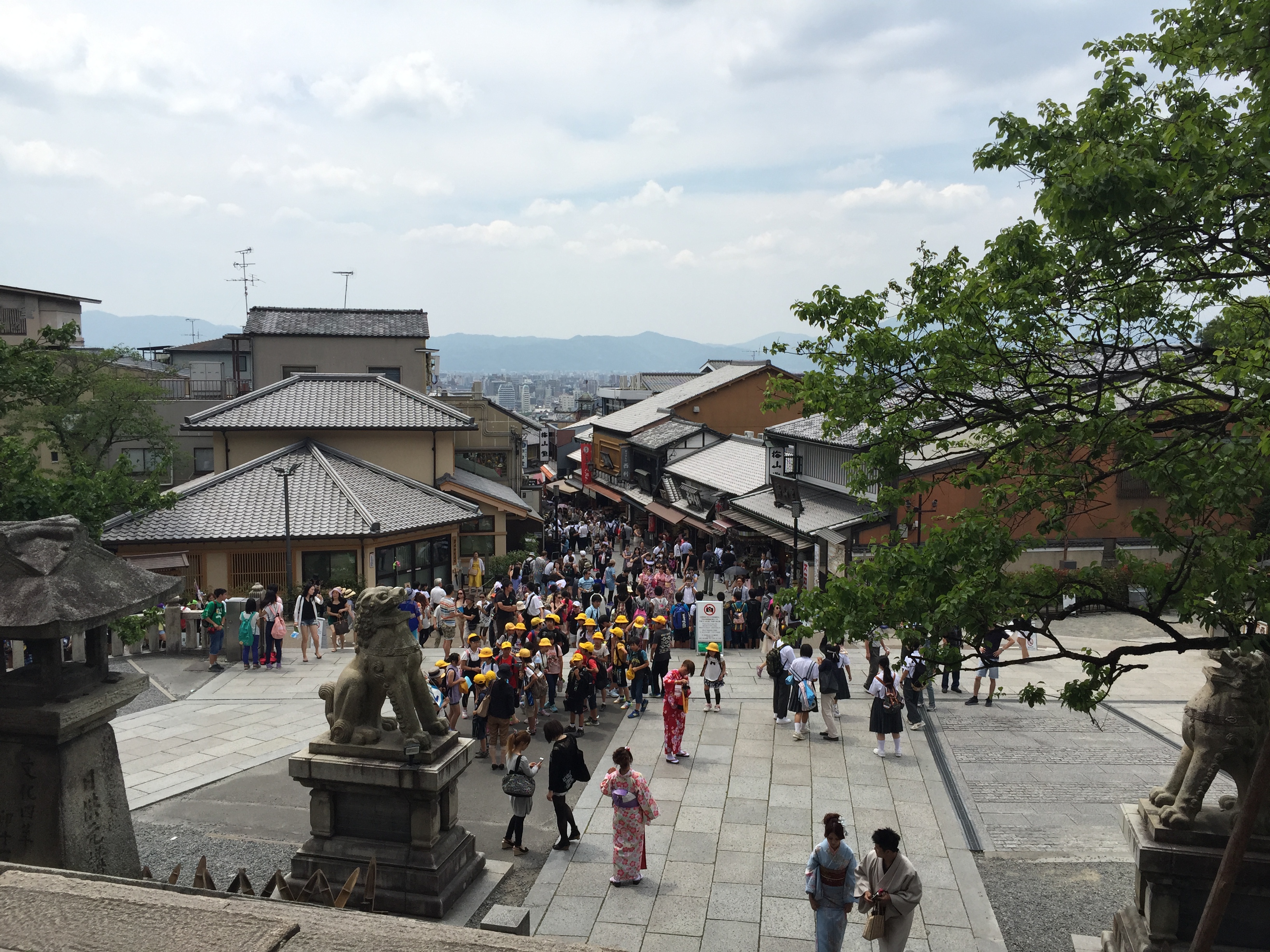
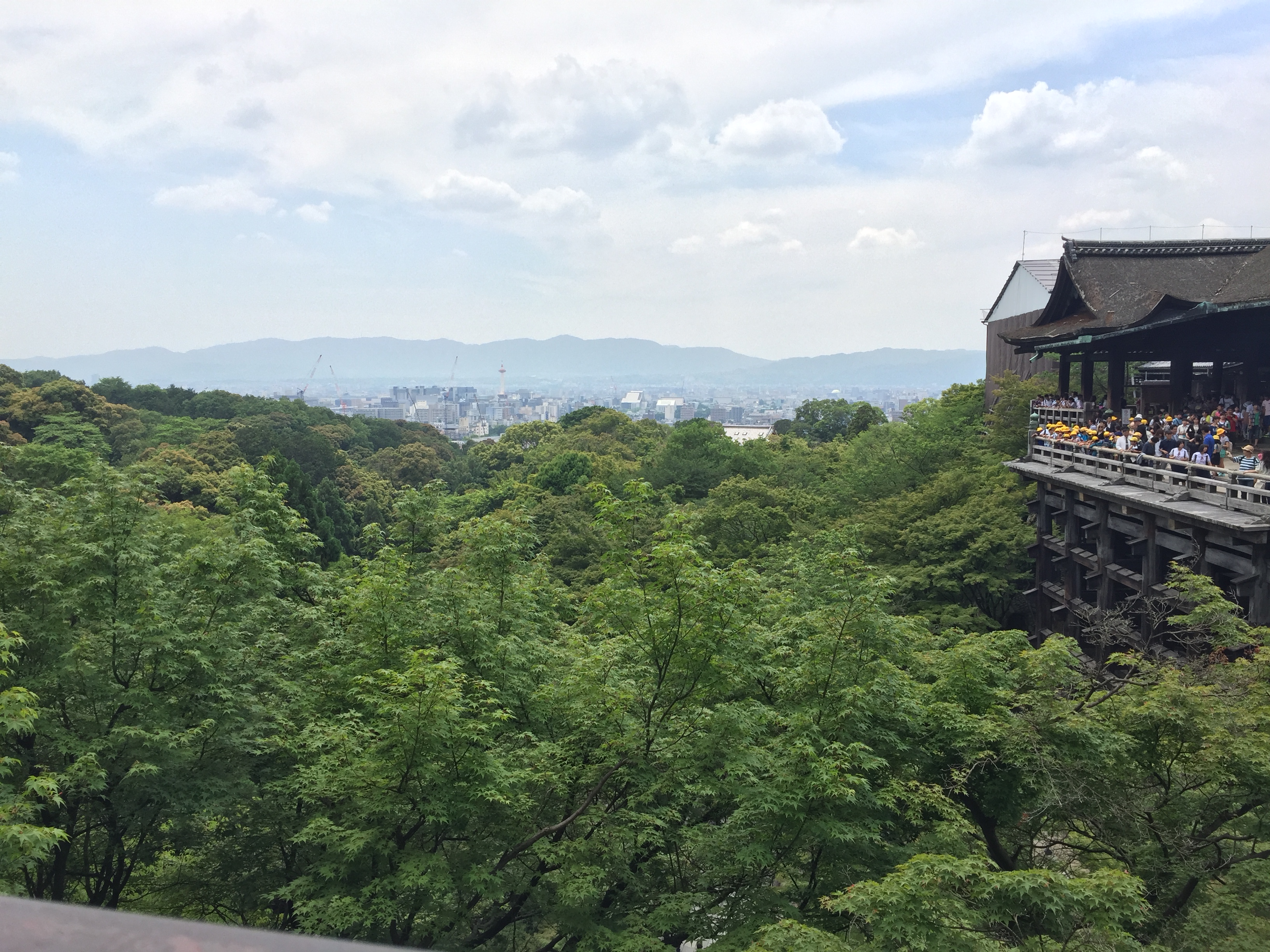
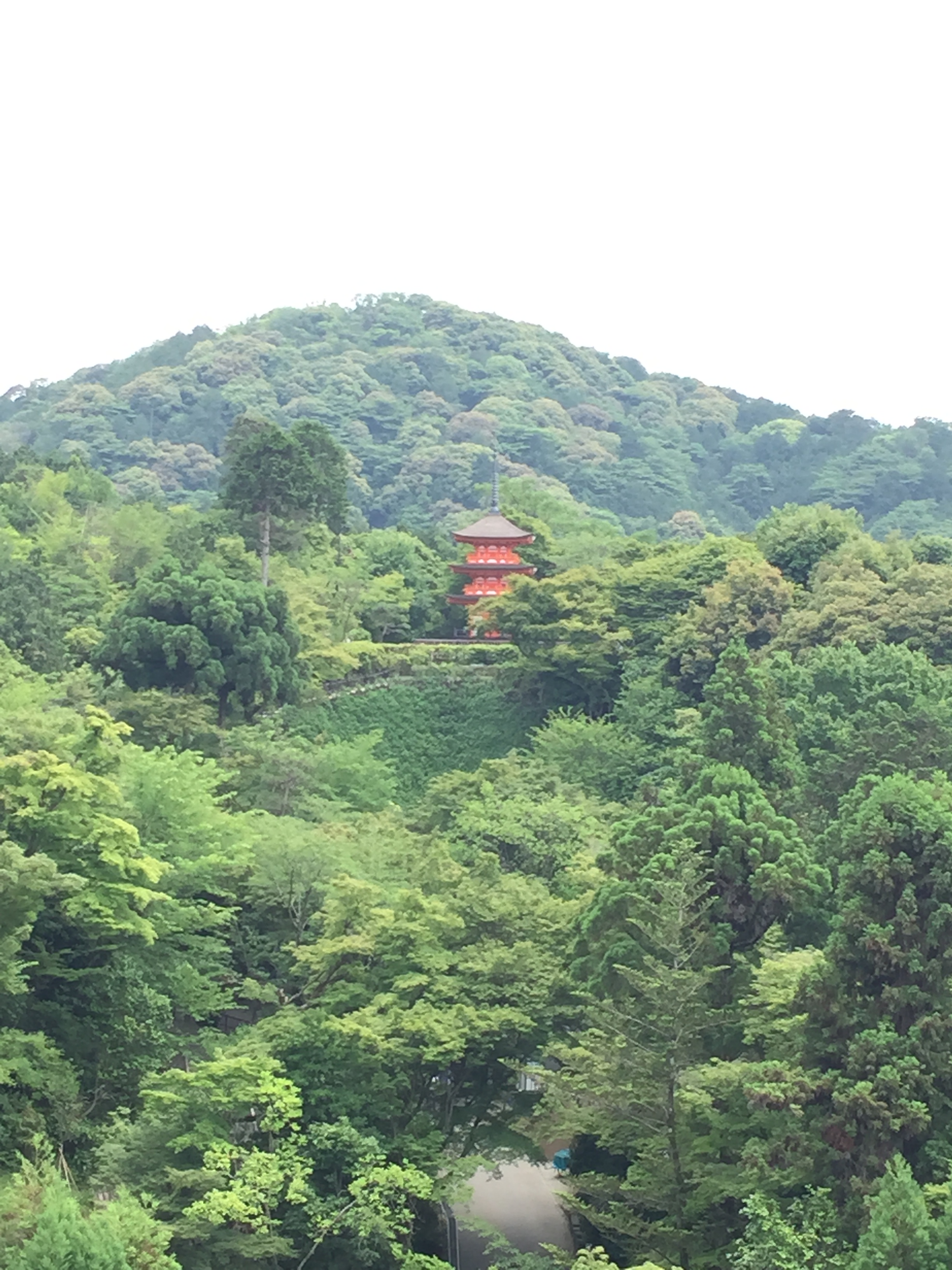
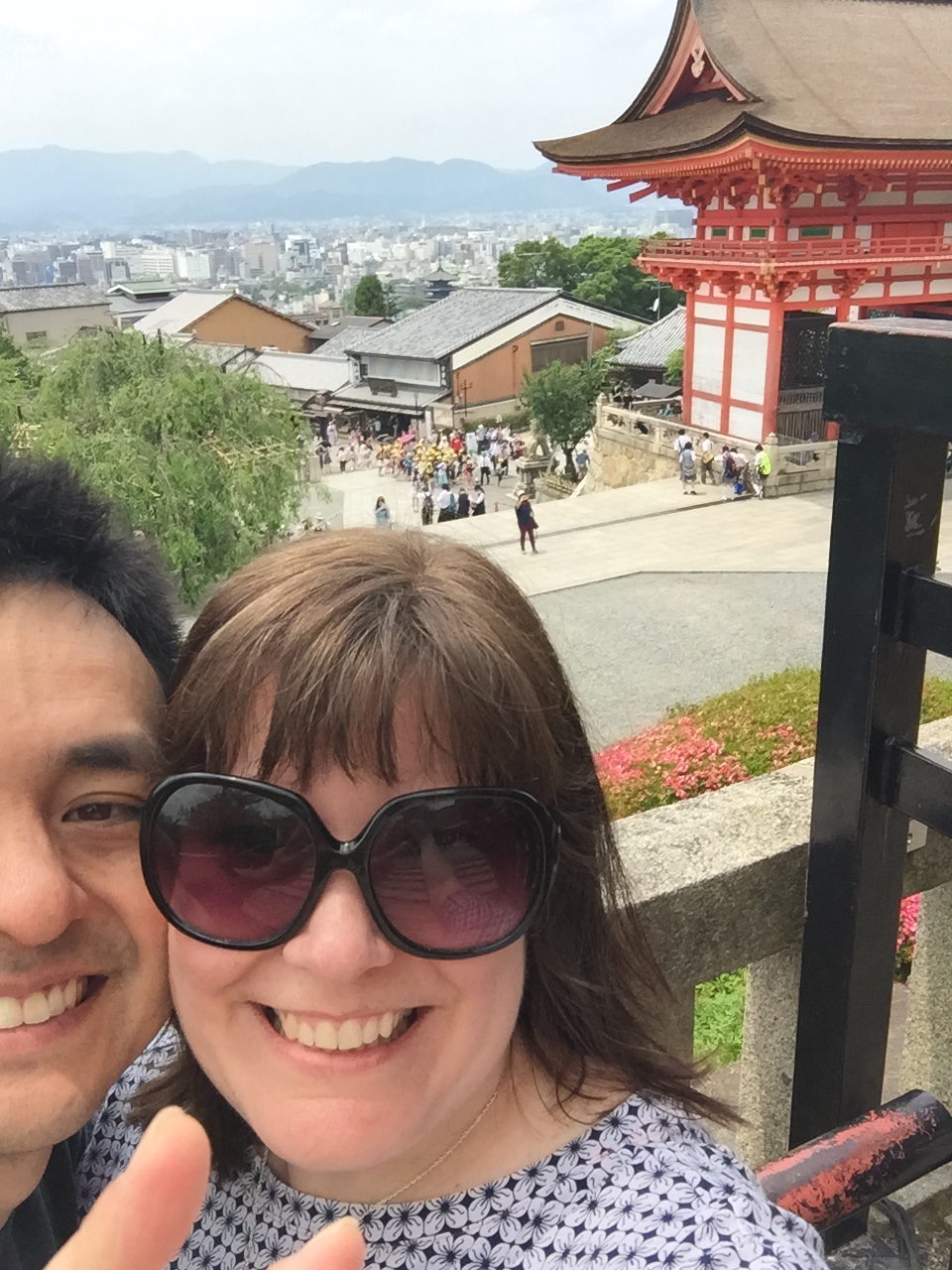
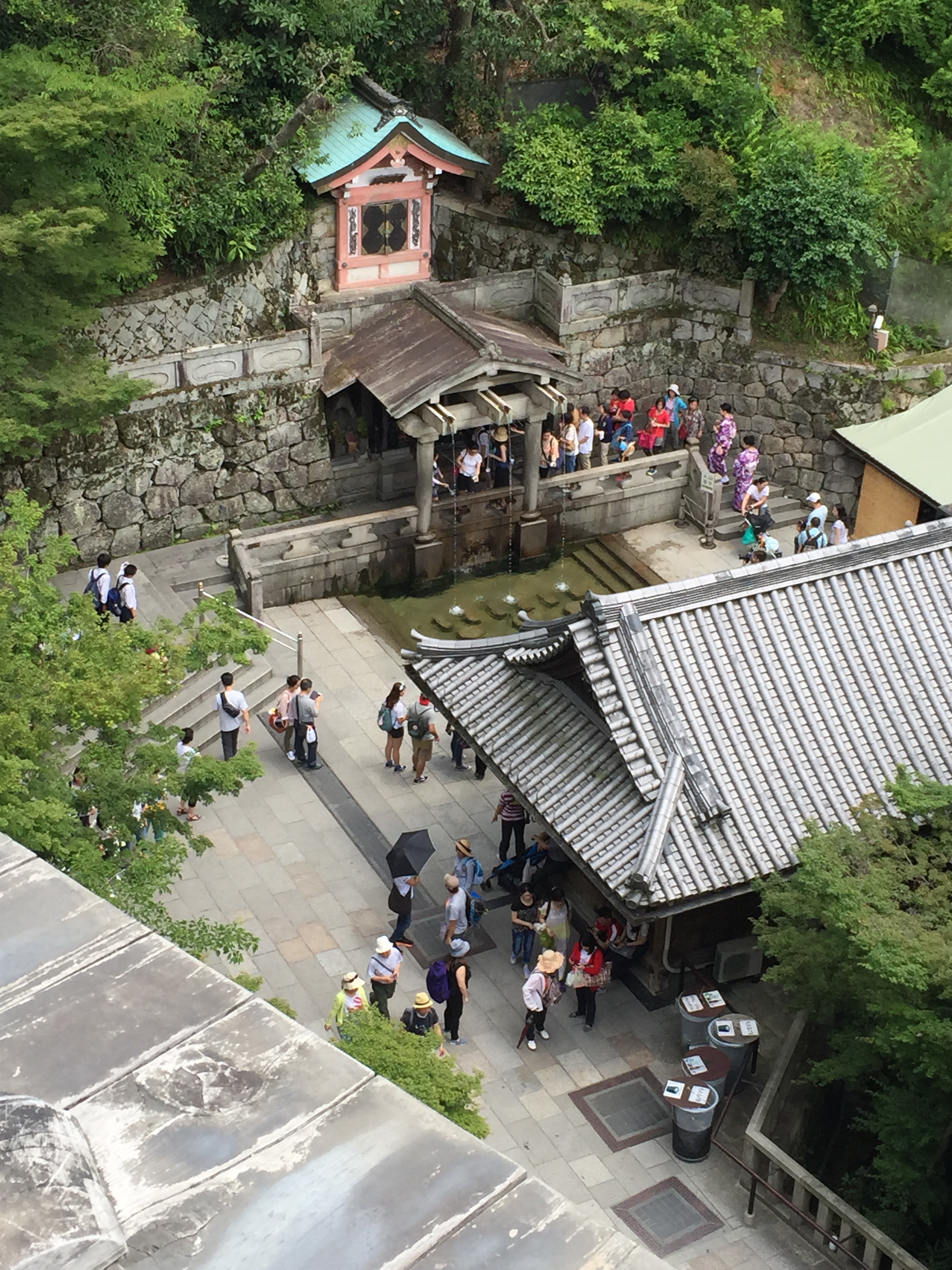
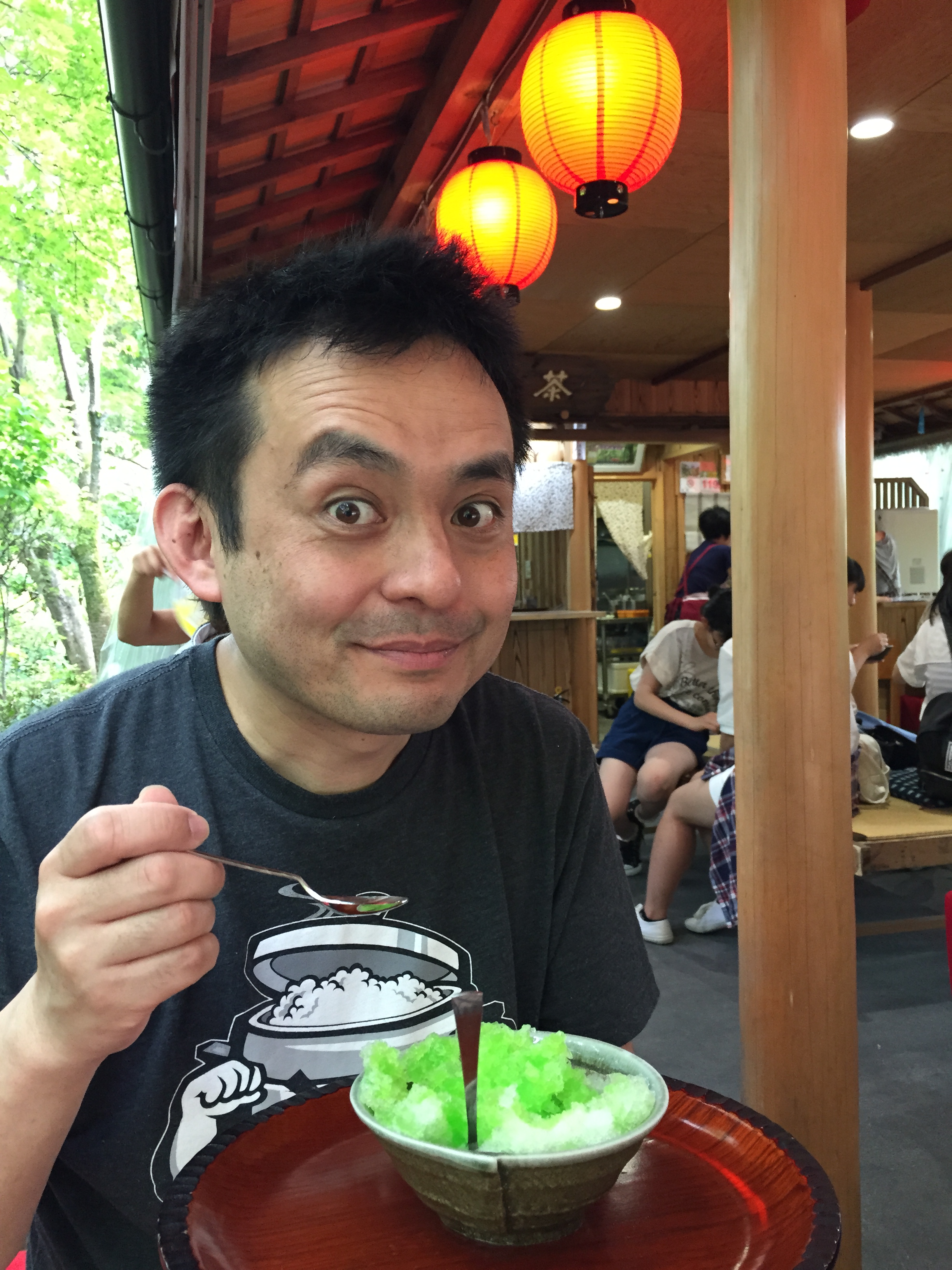
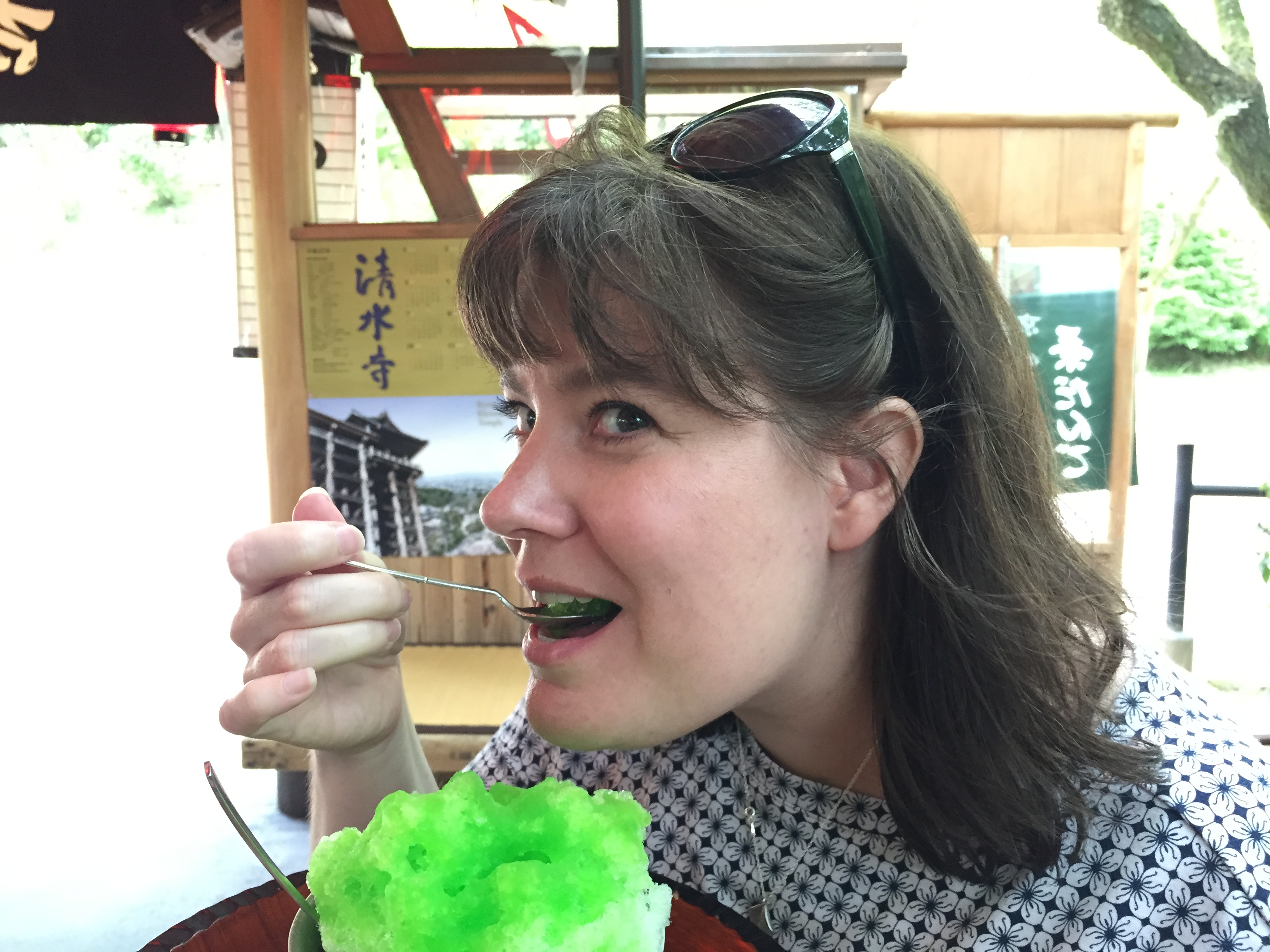
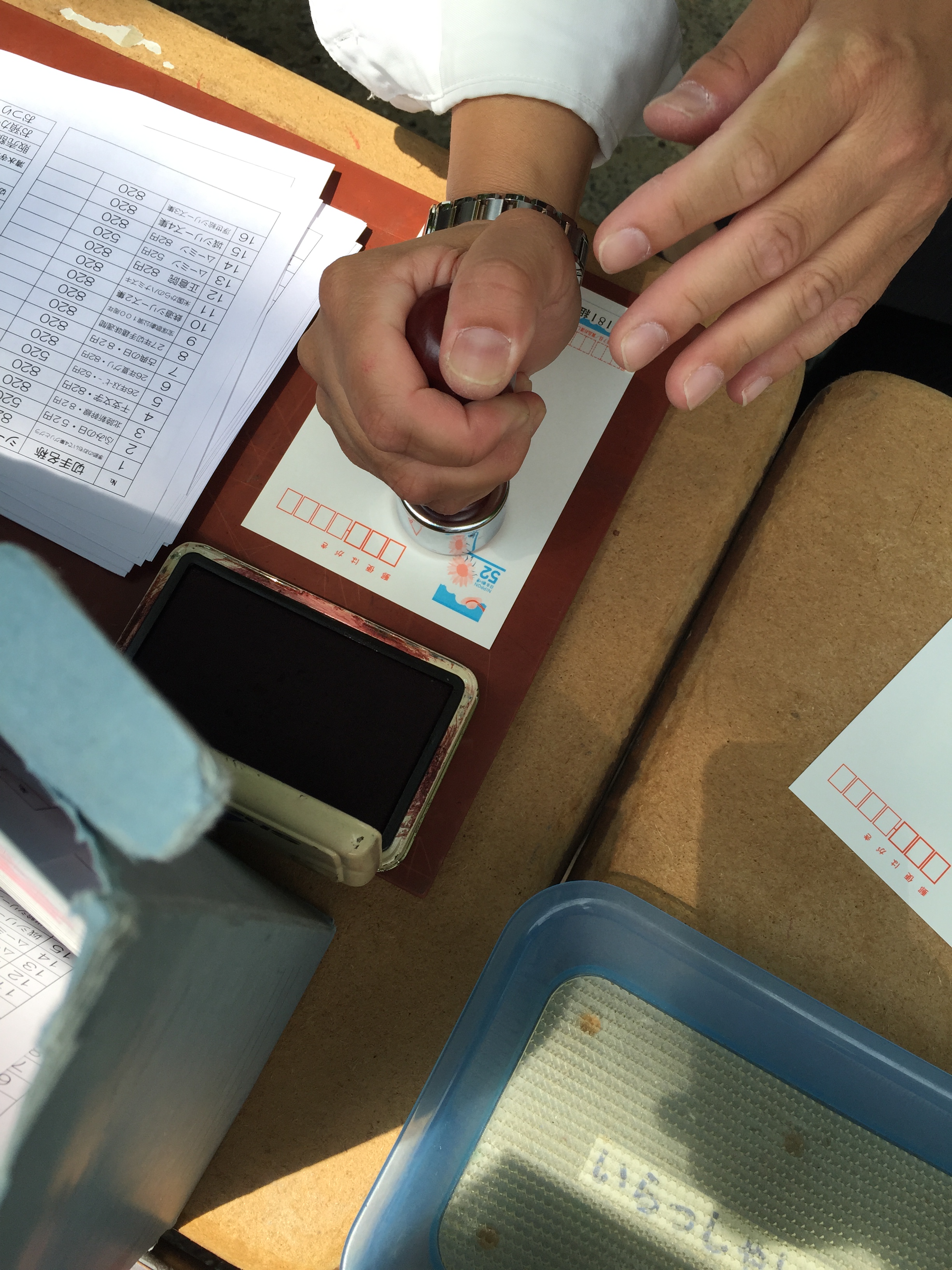
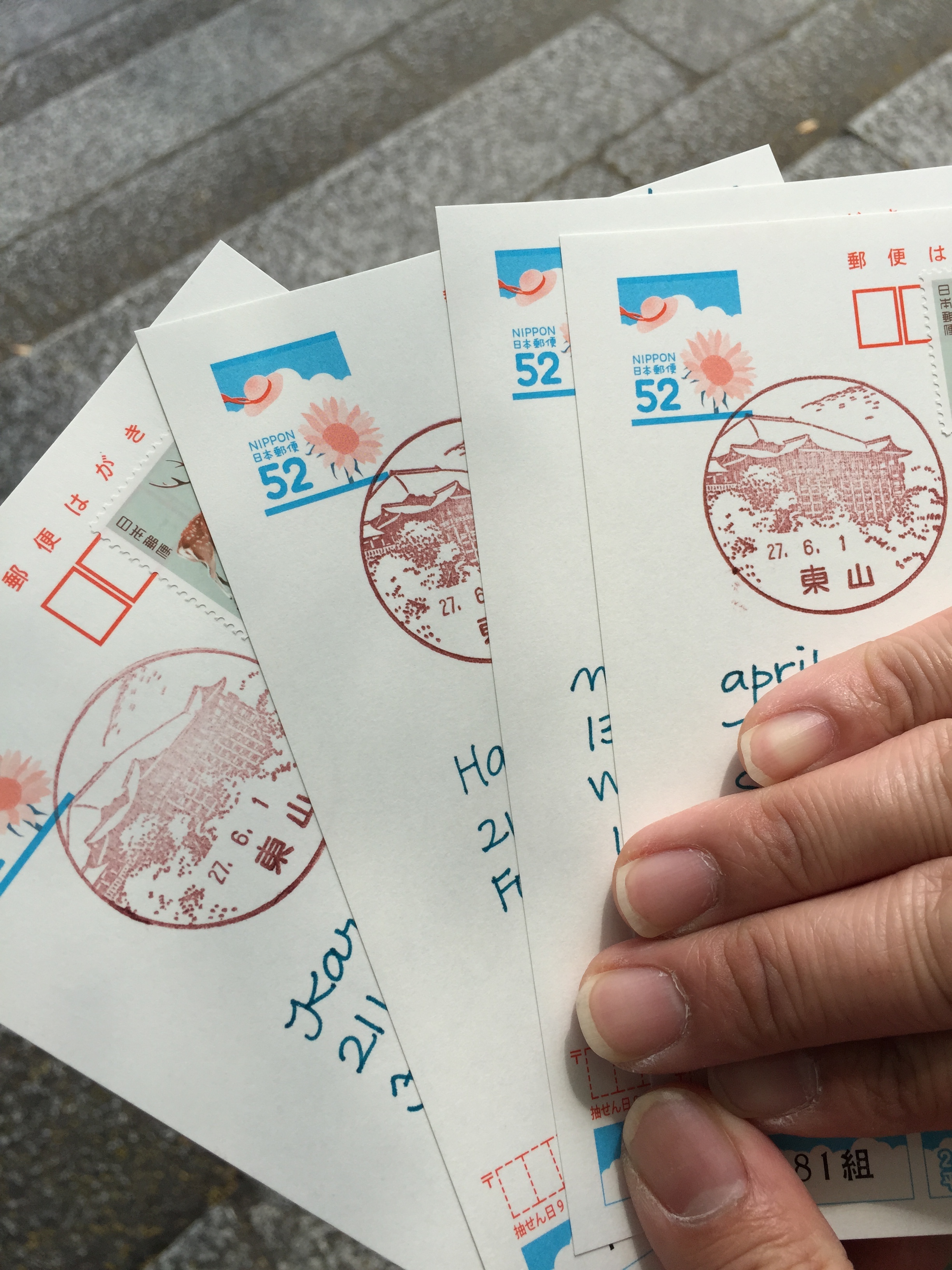
In between the Ramen Museum and the baseball game, Naoto and I took a bullet train to Kyoto. We’ve both traveled to Kyoto before–me for work in 2008 and him for a vacation in 1988–so we had done a lot of the touristy must-sees before. But we decided to do them all again, because, well, you can’t go to Kyoto and just eat and shop at the craft stores. (More on those later.) Naoto at shrineI really love Kyoto. It’s older, smaller, and much quieter than Tokyo. It felt like a nice break from the crushes of people and cars and trains in Tokyo. But, it was also a little bit weird. I felt like I was in a town of fellow tourists. I know that there are millions of tourists in Tokyo, but they must be drowned out by the sheer number of Japanese people living there. Or we don’t do enough touristy things in Tokyo? Naoto walking up to Kiyomizu TempleOn our first day, we knocked out some major tourist attractions. We went to Gion, the “Geisha District” of Kyoto and saw the Yasaka Shrine. (See the top two pictures…not a lot to say because “you’ve seen one shrine, you’ve seen them all”.) The we started the long, uphill stroll to the Kiyomizu Temple, which offers amazing views of Kyoto. cucumbers on a stick, Kiyomizu Temple, Kyoto Kiyomizu Temple, KyotoKiyomizu Temple viewOn the way up to the temple there are hundreds of little shops offering souvenirs and snacks (including cucumbers-on-a-stick!) and waving school children to keep you entertained. Oh, and tourists dressed in full kimono-wear are a common sighting all over Kyoto. For about $35 you can rent a kimono and have your hair and make-up done. (You couldn’t pay me $35 to walk around in a hot kimono and wooden flip flops.) views from Kiyomizu Temple views from Kiyomizu Temple kimberly and naoto, views from Kiyomizu TempleSelfie sticks were everywhere in Kyoto and several times we wished we had one. So many cut-off heads in our Kyoto pictures! Otowa waterfall at Kiyomizu TempleAt the end of the walk down from the Temple there is the Otowa waterfall. According to legend, if you make a wish and sip the water, your wish will come true. I did this when I visited in 2008 and my wish did come true. I sort of regret not waiting in line to make a new wish with Naoto. naoto eating kakigori, Kyoto, Kiyomizu Temple kimberly eating kakigori, Kyoto, Kiyomizu TempleOn the way back, we stopped at a little stand and shared a melon kakigori (shave ice–a must-eat when you are in Japan in the summer!). It was so refreshing on such a hot day! special Kyoto postmark at Kiyomizu TempleAs we were leaving the Temple, we happened upon a mobile post office!! (Now you know why I was so excited for the possibilities of a mobile post office here at home!) They were selling stamps and summer edition postcards and offering a special Kiyomizu Temple postmark! special Kyoto postmark at Kiyomizu TempleI had to write the postcards right then and there in order to get the fancy postmark, so I could only write a few since we were hot, tired, and hungry. But what wonderful serendipity to happen upon the Japan Post!

Tagged , , ,

Japan Does It Better 23: Line Drying Laundry

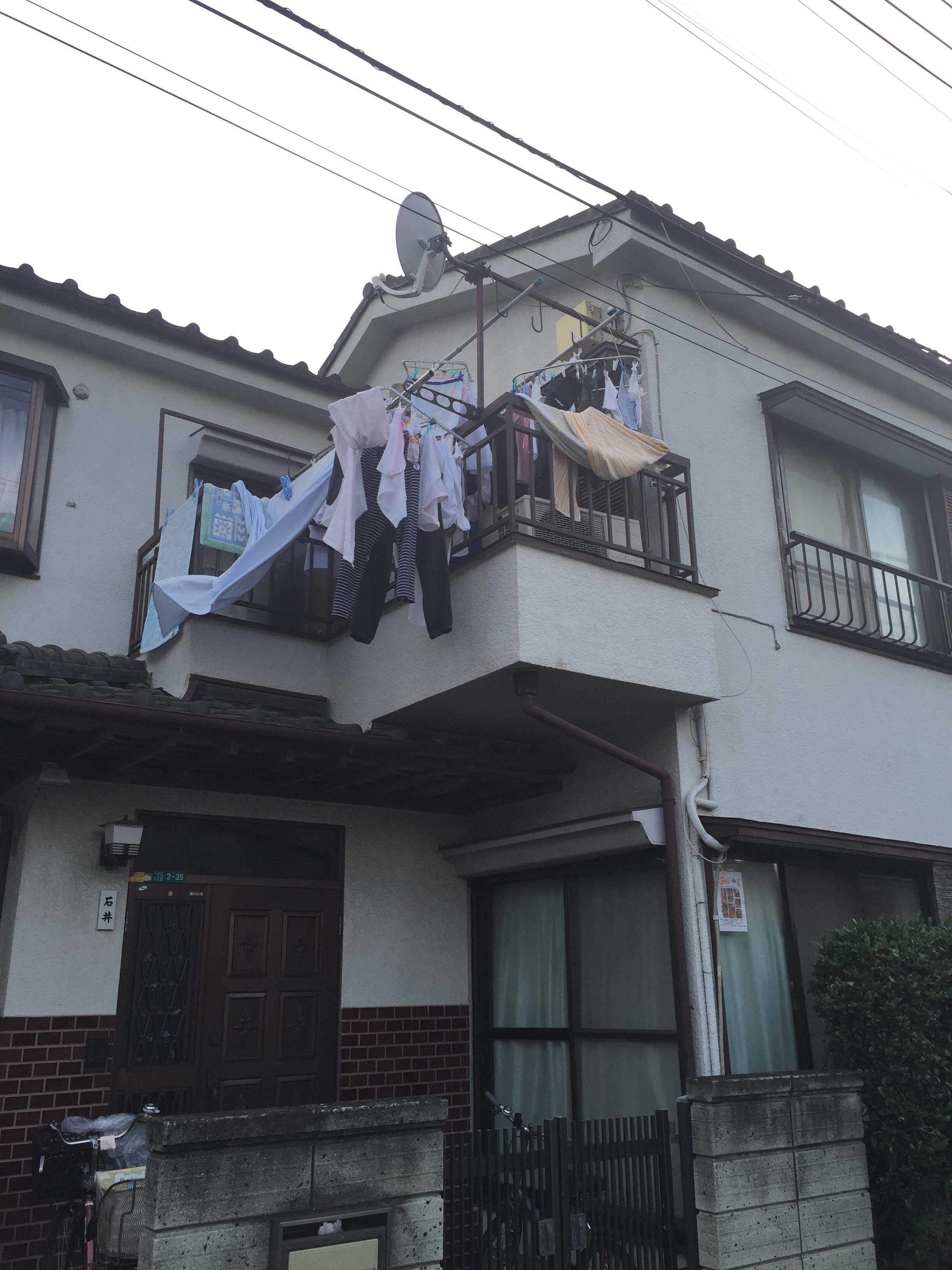
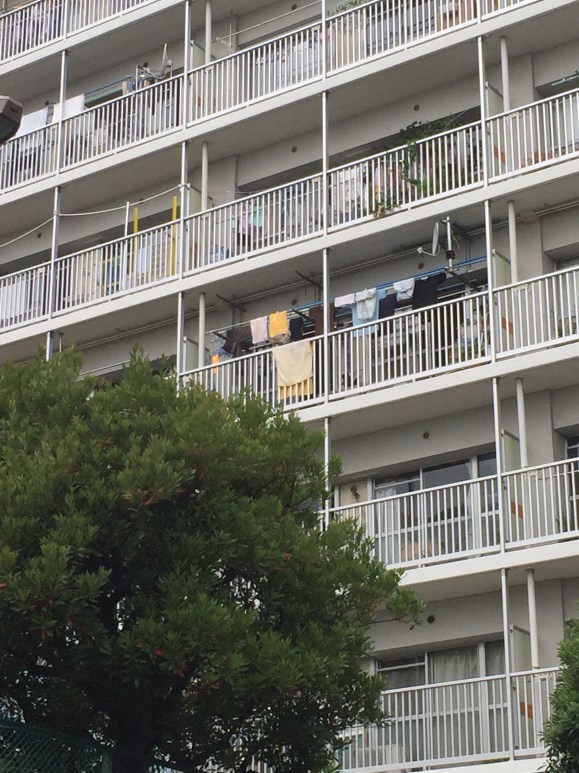
clothes drying outdoors in JapanIn Japan, it is common to see loads of laundry danging from balconies, billowing in the breeze. (Or in the winter, hanging stiff as a board.) It seems like everyone in Japan hangs out their laundry. It’s the complete opposite here in America. Hardly anyone hangs their clothes. Growing up, my mom had a giant clothesline that was always full in the summer. As a teenager, I would die of embarrassment at the thought of my underwear and bras on display in the back yard. But there really isn’t anything like putting on a shirt that’s been drying in the sun all day.

I know my mom is in the minority though, even in her small town that doesn’t scoff at “unsightly” clothing hanging in the backyard. Where I live, our condo association has rules against drying clothes on our balconies. (I’ve started breaking this rule a bit, putting small bits of laundry outside draped across a chair or on my drying rack. Unfortunately, I don’t have room to hang all of my laundry discreetly.) Most cities or associations have similar rules, making us slaves to our dryers. It’s sad for the environment, really. And I’m not really sure what’s so offensive about hanging laundry. clothes drying outdoors in JapanNaoto said his mom always preferred to hang out her laundry, especially the futon and other bedding, because the sun and cold air would kill the germs.
Because air drying the laundry is so common in Japan, they have the best little tools for doing it. From circular hangers for socks and lingerie, to heavy duty clamps for blankets and towels, and even cut cat-shaped pins, they have really perfected the art of laundry!

To see all of the Japan Does It Better (JDIB) series, go here.

Tagged , , , ,

Naoberly’s Noodle Tour: Fujishiro

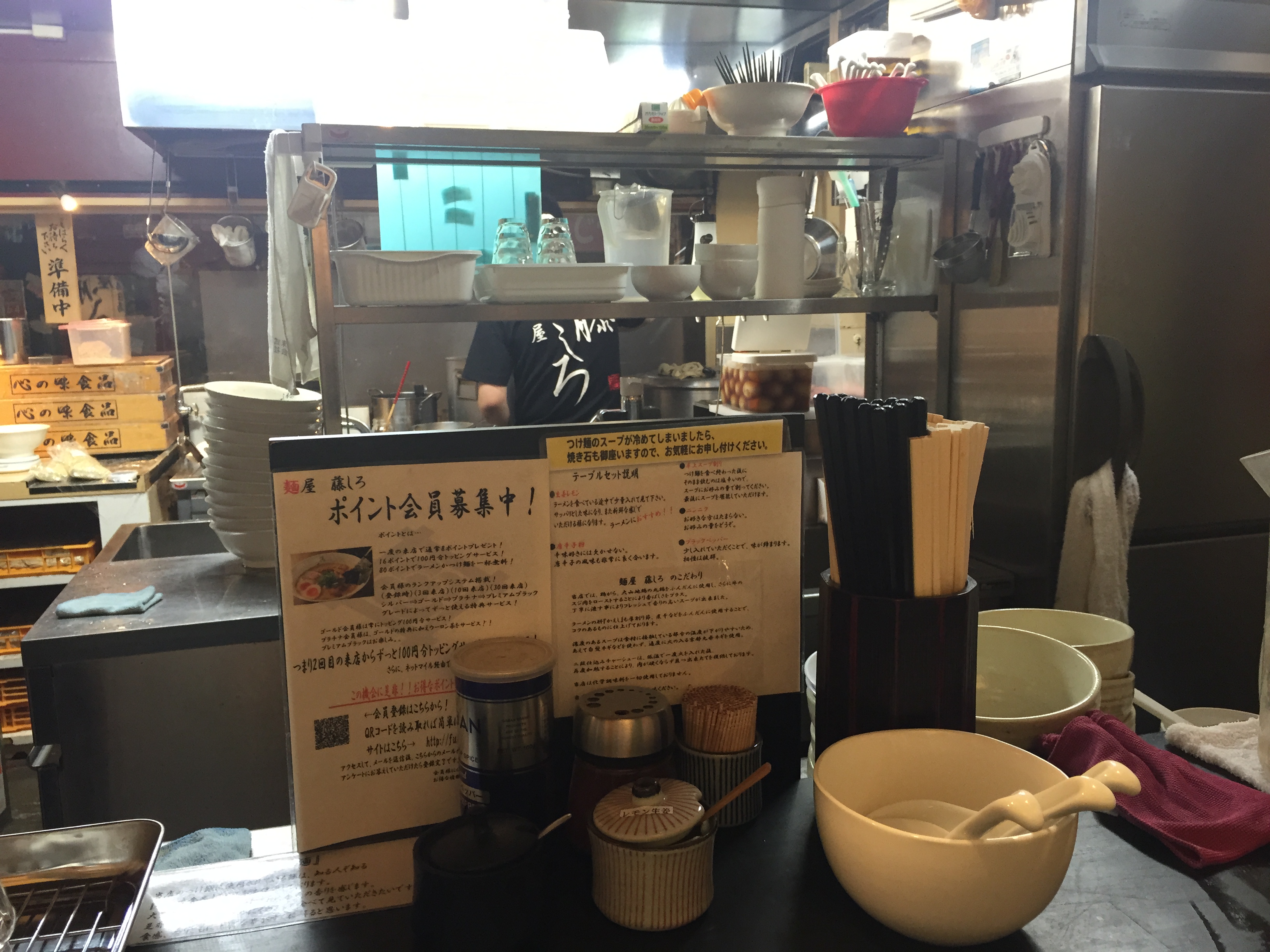
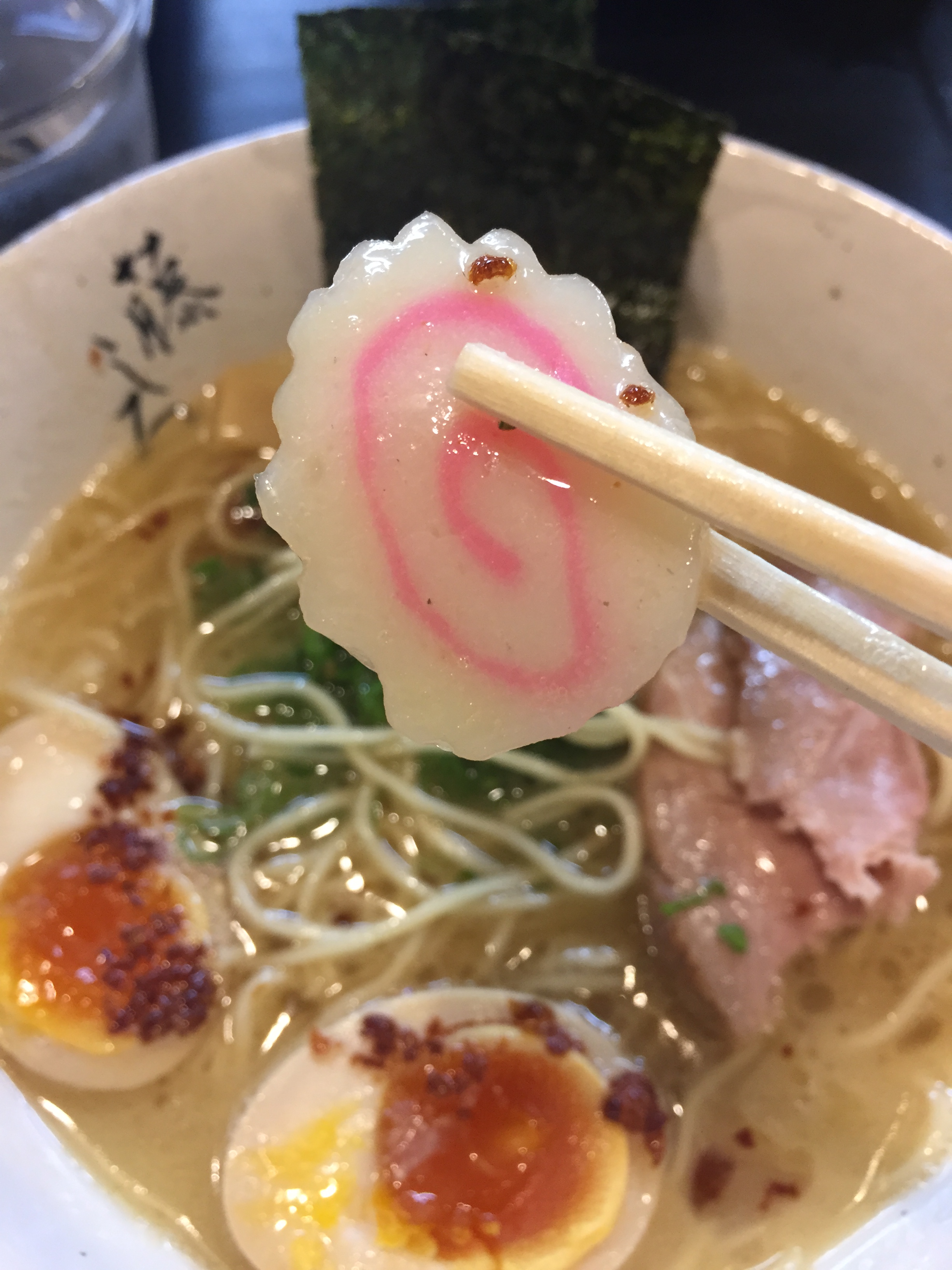
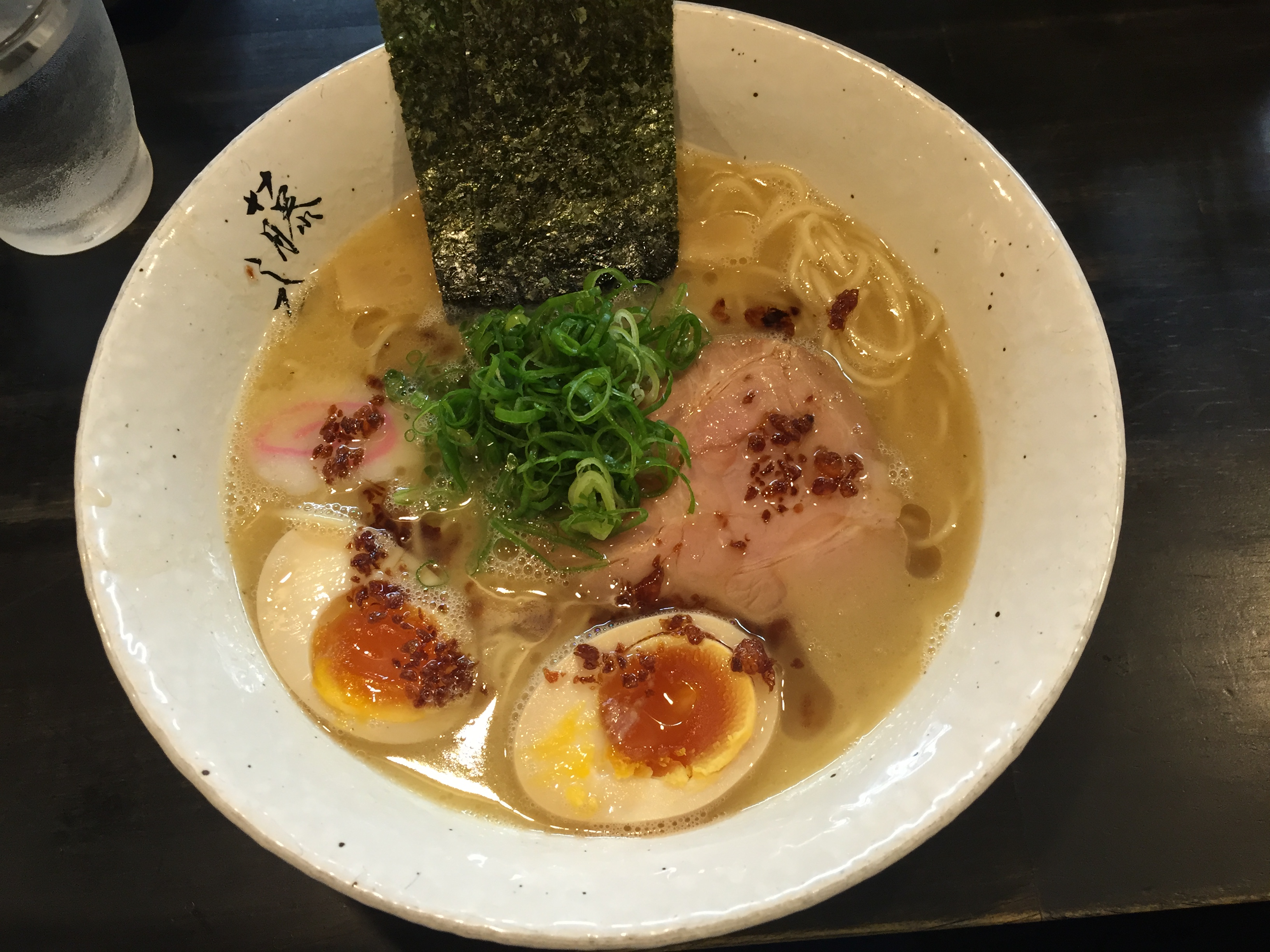
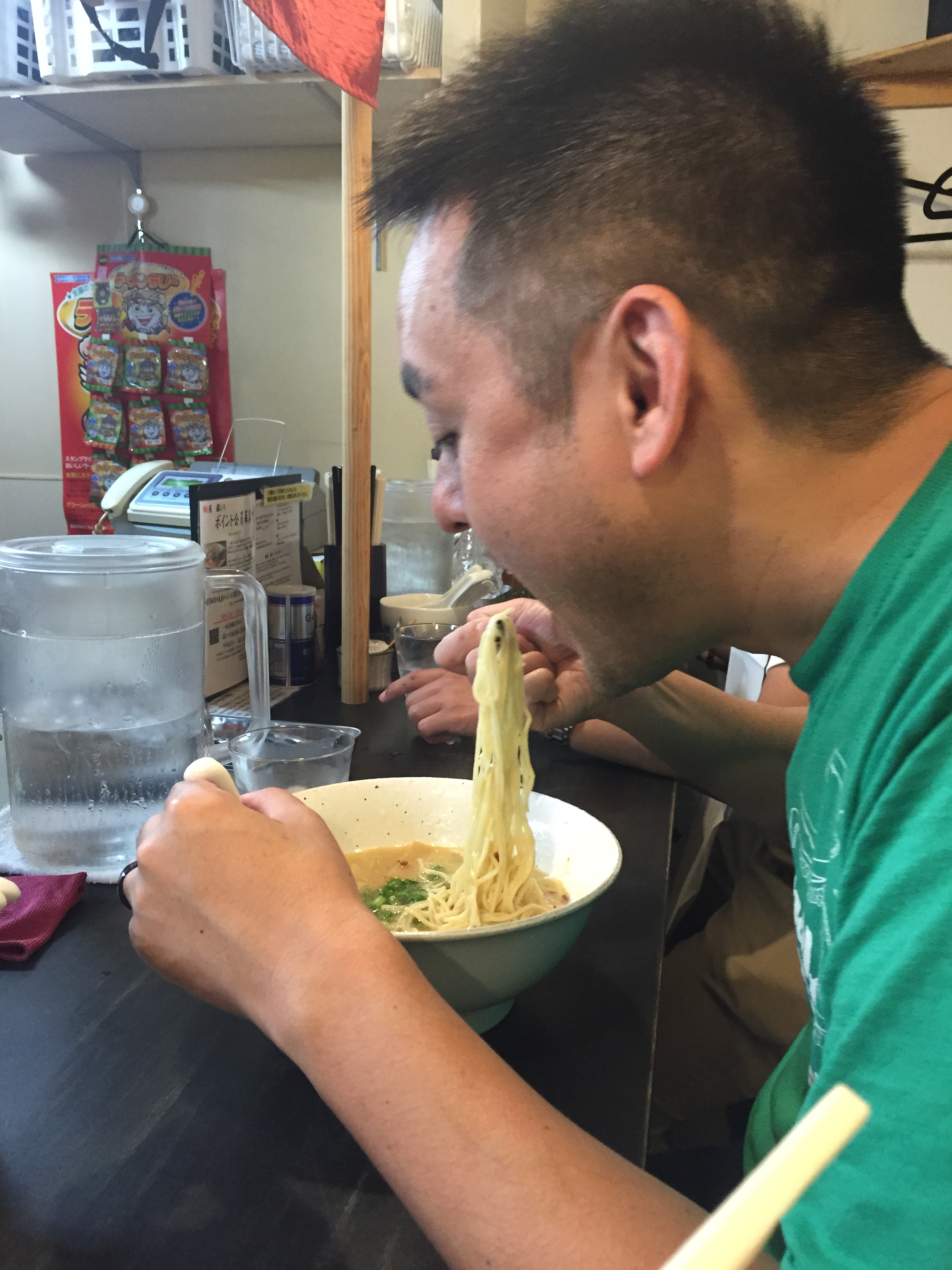
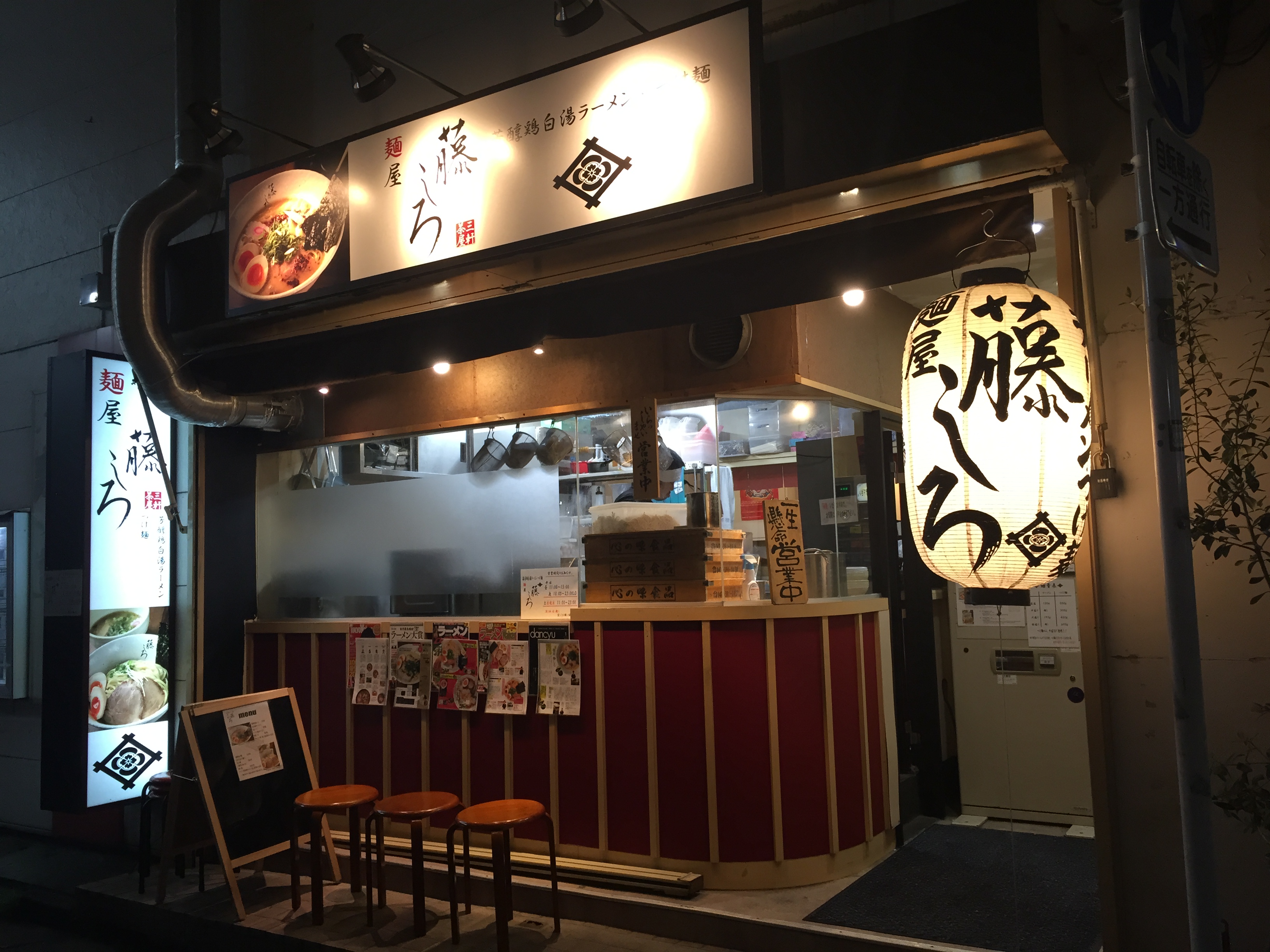
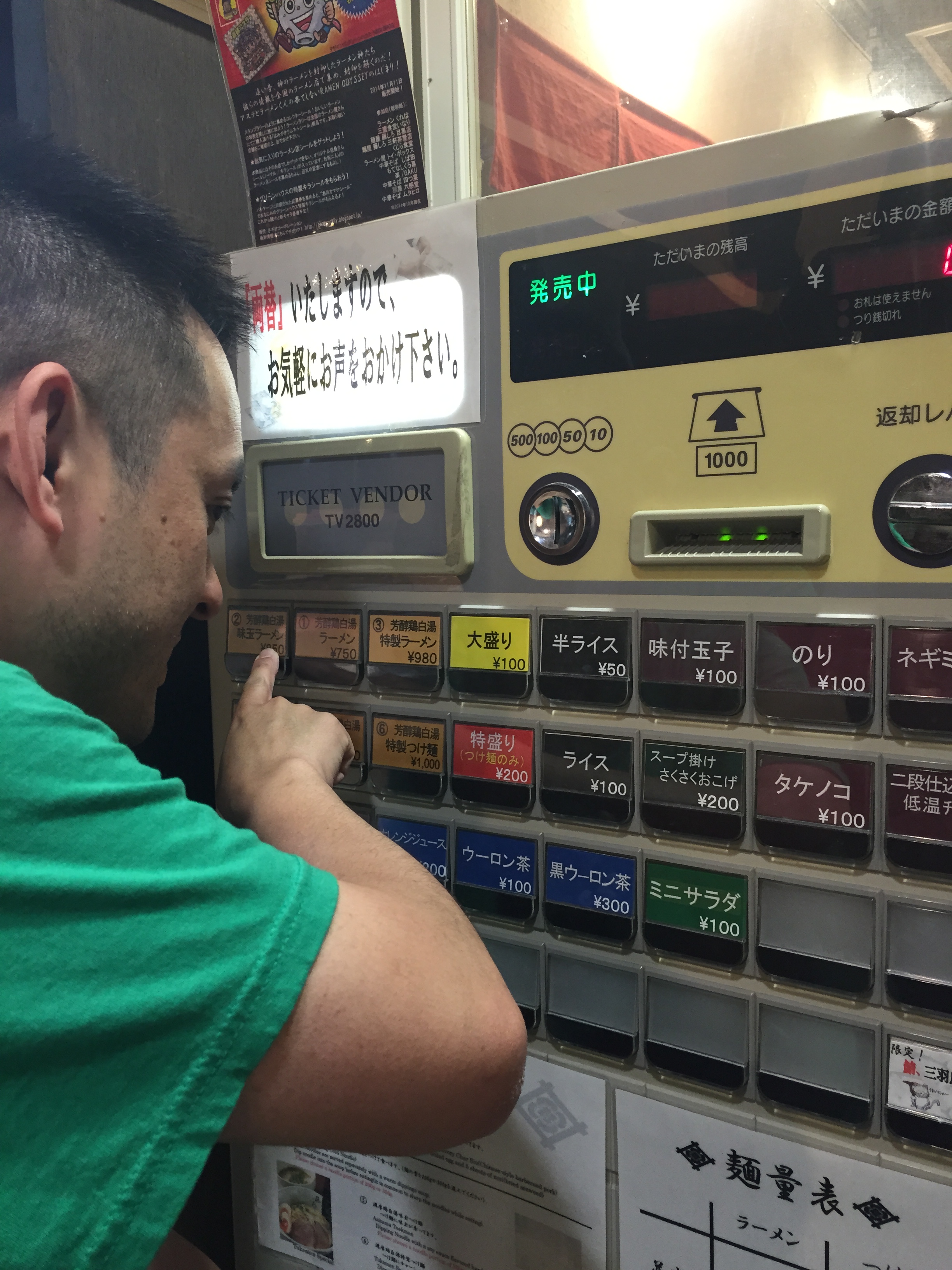
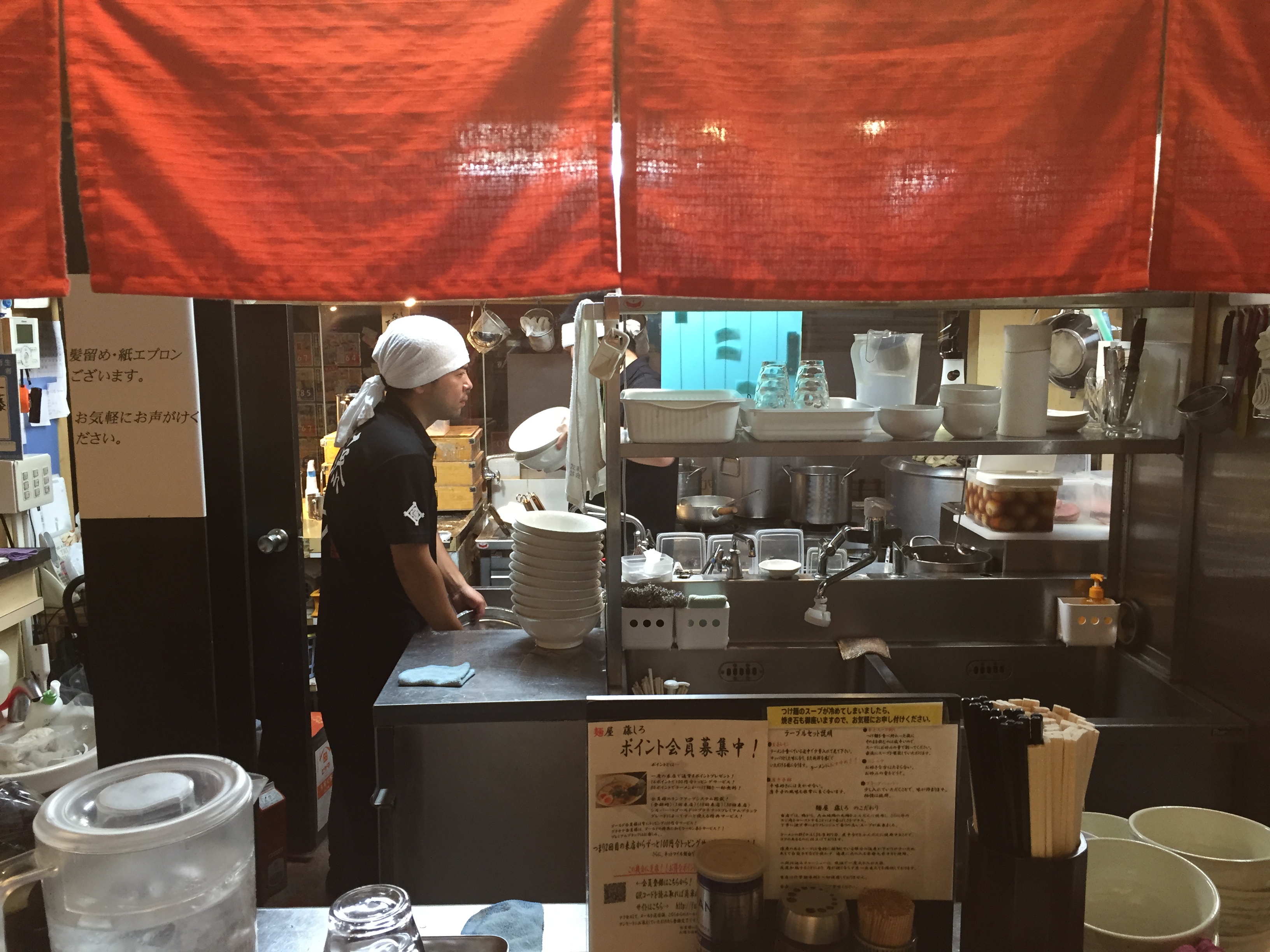
Fujishiro in sangenjayaOn our last night in Japan, we finally ate ramen in a neighborhood shop. After our happy hour in Carrot Tower, we walked though the winding streets on a hunt for dinner. We found so many little ramen shops, but it was hard to choose which one would be tastiest. Fujishiro was tiny and crowded and it had recently been featured in a Tokyo magazine, so we figured it was good.Fujishiro in sangenjaya, ramen ticket, ramen in Tokyo We made our choices using the ramen ticket machine outside the shop and then we sat and waited on little stools outside for seats to open up inside. Fujishiro in sangenjaya, place settings, Tokyo ramen shops Fujishiro in sangenjaya, place settings, Tokyo ramen shopsOnce we got inside, Naoto gave our tickets to the guys behind the counter and they started making our ramen. One guy focused on the noodles, the broths, and the grilled meat and the other interacted with customers and built the bowls of ramen. Chopsticks, spoons, spices, and pitchers of water were on the counter so we could help ourselves. It was a no-frills kind of place. There were six other people filling the restaurant with us, mostly salary men, but also another couple enjoying noodles together. Fujishiro in sangenjaya, tonkotsu ramen, Tokyo ramen shops, fishcake Fujishiro in sangenjaya, tonkotsu ramen, Tokyo ramen shops I ordered the tonkotsu ramen. It had a meaty broth and nice, chewy noodles topped with pork, egg, scallions, nori (seaweed), and fishcake (that pink and white thing in the picture above). Simple, but delicious. Fujishiro in sangenja, shoyu ramen, Tokyo ramen shopsNaoto had the store special ramen*, ajitama ramen. It was similar to mine but it had two marinated soft boiled eggs (ajitama) in it. He enjoyed every bit of it and part of mine! It was the perfect end to our vacation!
*Ramen Tip: If you go to a local ramen shop that uses a ramen ticket machine, the shop’s special ramen will often be on the top left corner. It’s a fun way to try unique ingredients or preparations!


Tagged , , ,

Carrot Tower

Carrot Tower, SangenjayaContinuing our exploration of Sangenjaya…

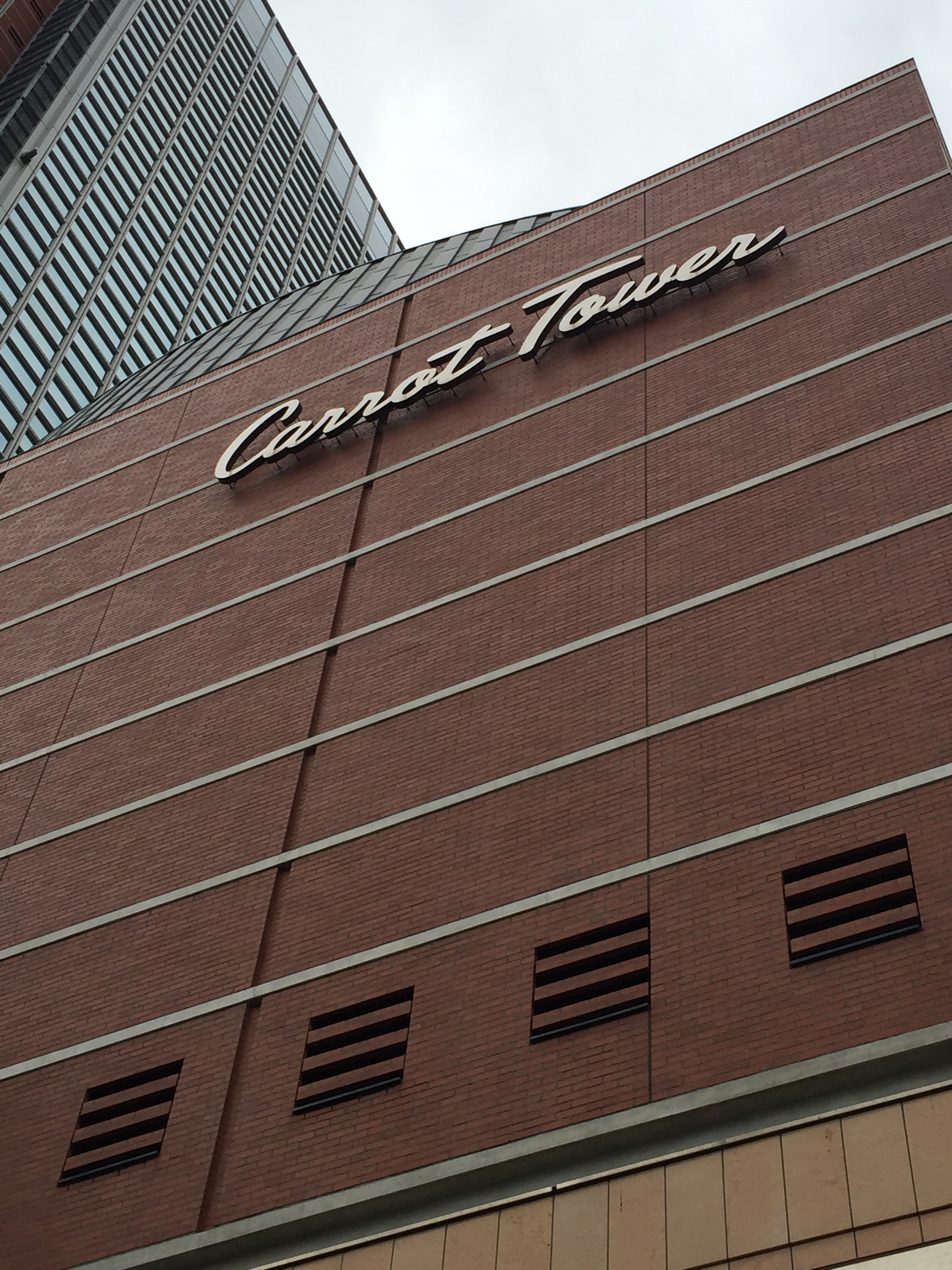
We’ve walked by Carrot Tower a number of times without giving it much attention. It’s across from the Sangenjaya Post Office, it’s on a busy corner, it’s very tall…but it looked like an office building with a couple of street level shops. On our last day, Naoto wanted to go to a book store to get a magazine and a Kanji character dictionary, so we ventured in.

First though…how cute is the name? I learned from Wikipedia that it was named by local school children. The only thing that could make it better is if there were a carrot mascot greeting you at the door.

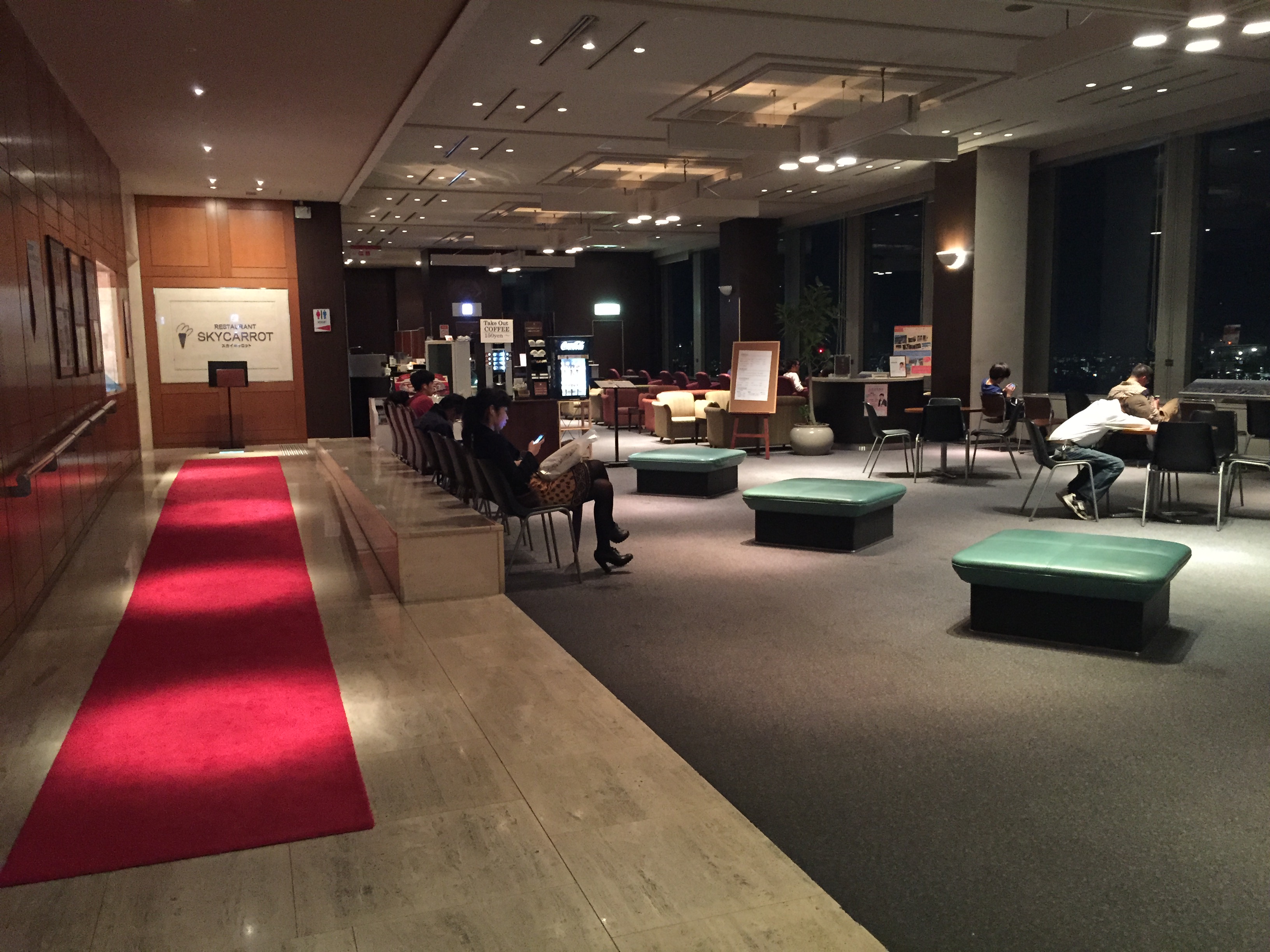
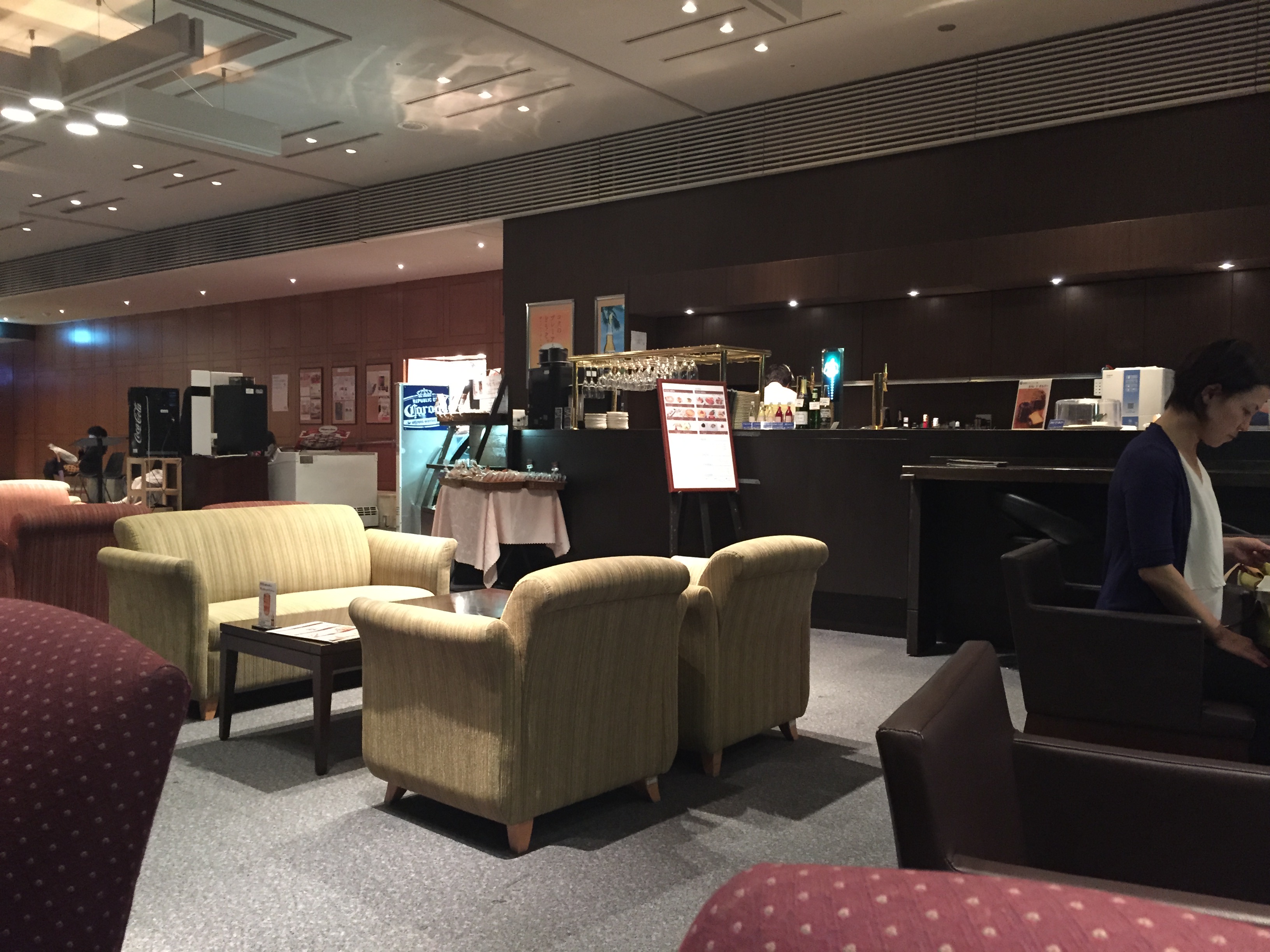
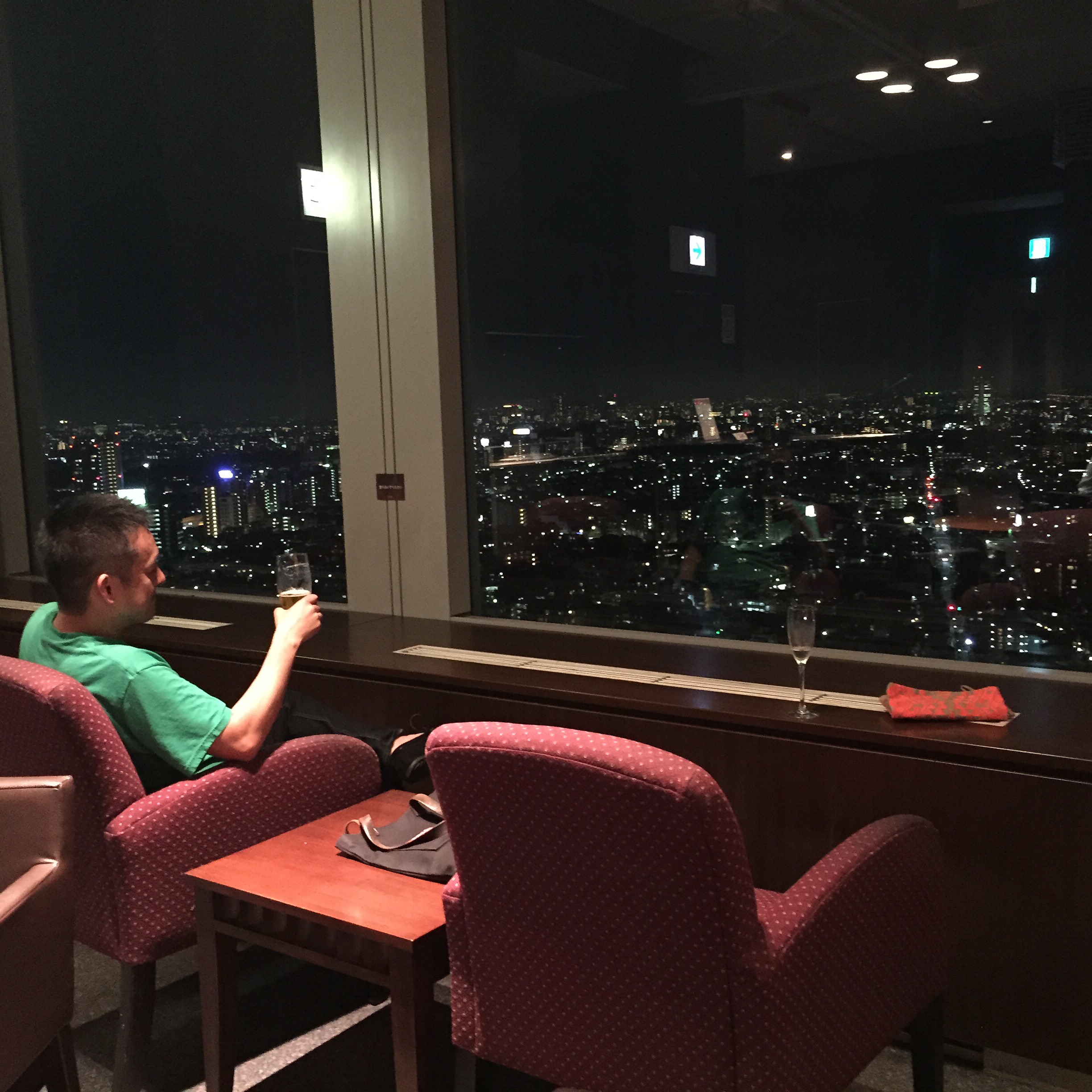
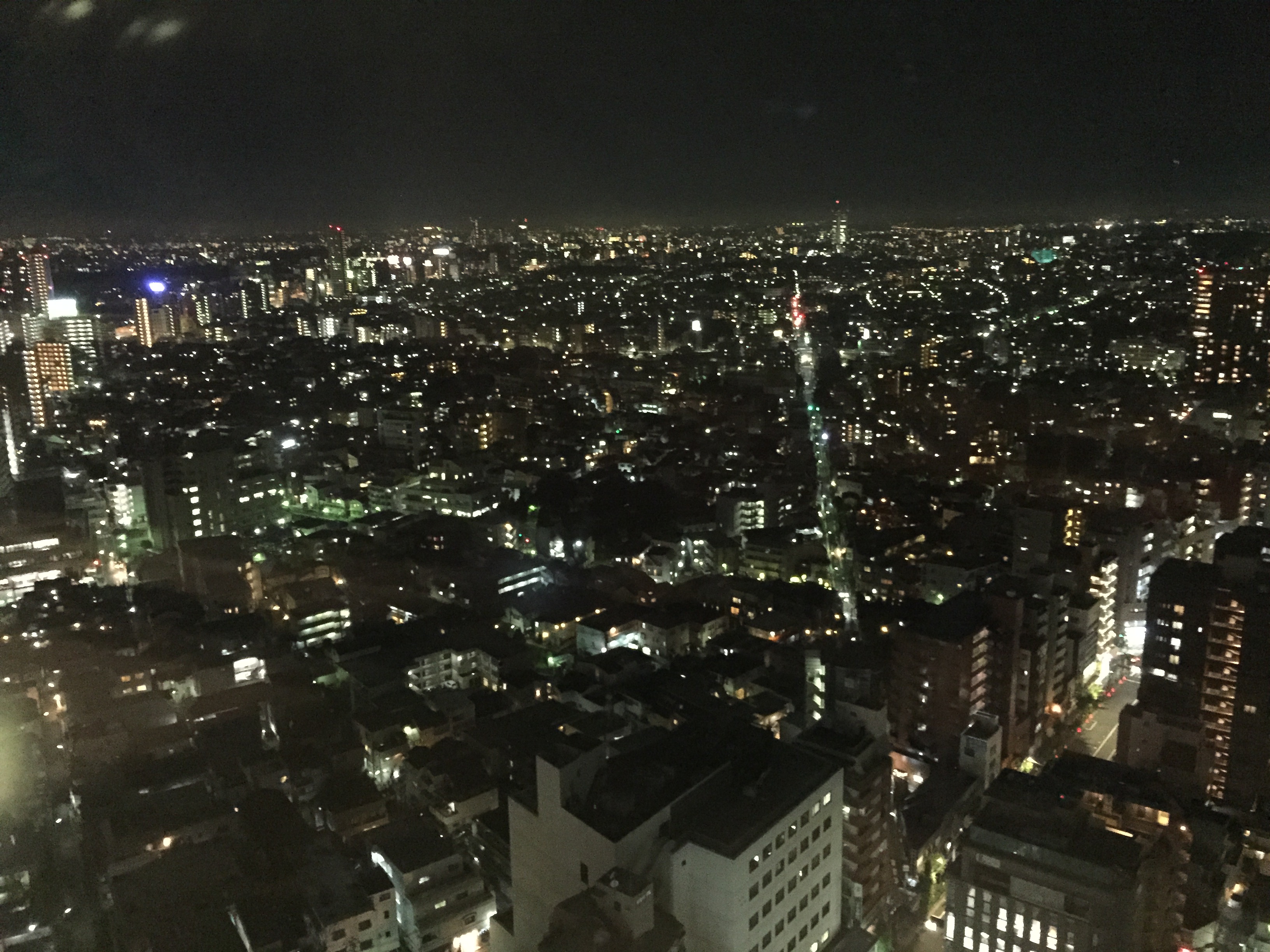
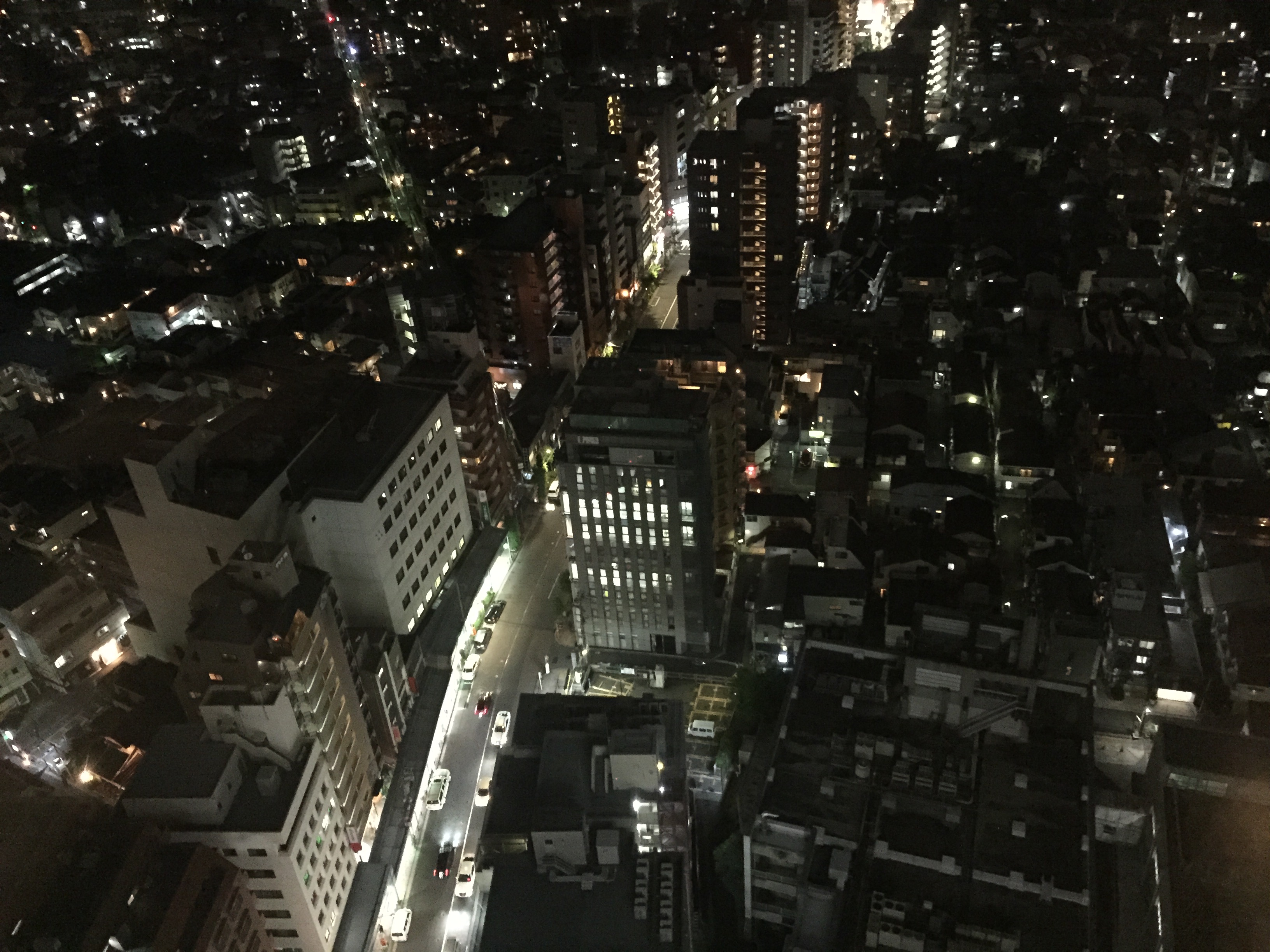
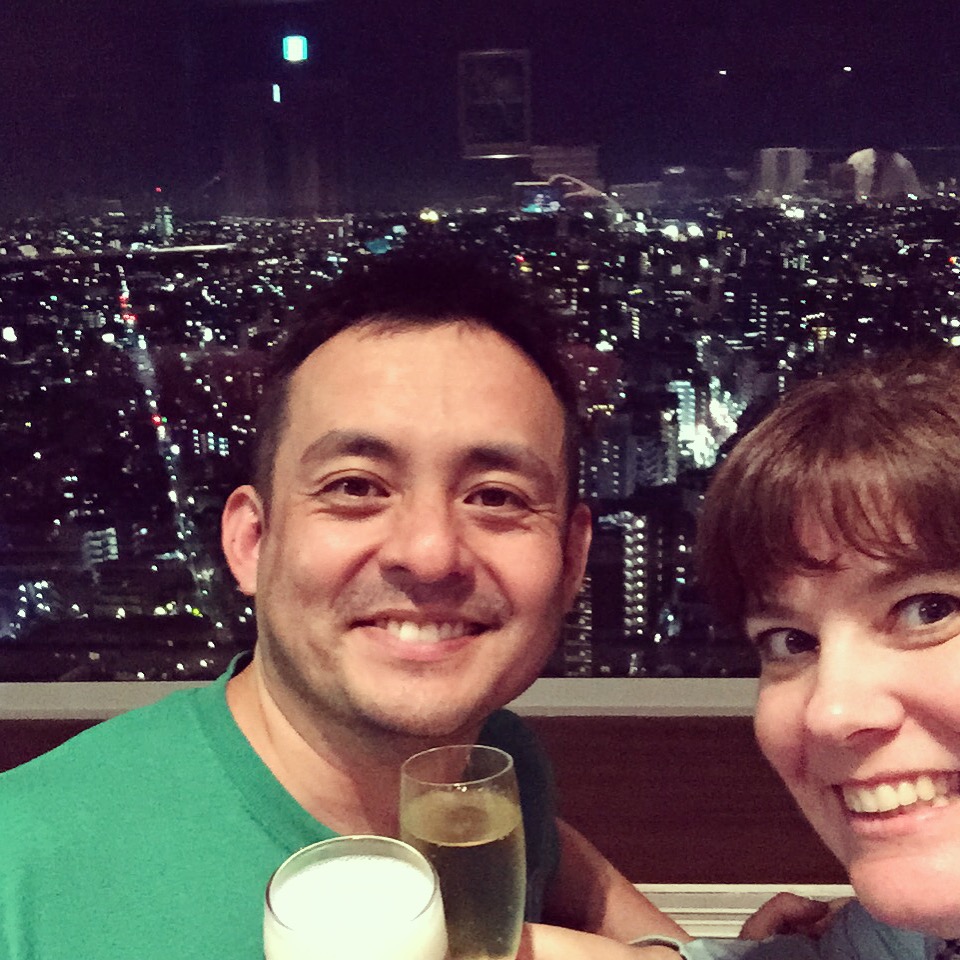
ambiance in Carrot TowerThe first floor is an open shopping area where you can buy Japanese pottery, stationery, souvenirs, pastries, flowers…I bought stationery. And the other floors are dedicated to the bookstore, a theater, and office space. But, at the very top, there’s a restaurant and an observation deck. We decided to go up to see what the observation deck was all about. The red carpet leads you to Sky Carrot, the restaurant and then the space to the right is the observation/banquet area. It was SO WEIRD! Some people were sitting quietly and reading. Others were chatting at tables. There was a small family with young children just hanging out. We saw vending machines and an ice cream freezer. ambiance in Carrot TowerKimberly & Naoto from Carrot TowerThen we ventured further and found the bar. It felt a little bit like a hotel bar with plush chairs and a few tables. There was a grand piano in the corner. And there were comfy seats facing the view, so we decided to stay awhile. The bar offered a few simple cocktails, beer and, and wine and it was so cheap! (¥500 for sparkling wine and even less for a beer!) view from Carrot Tower IMG_3769At twenty-six stories, Carrot Tower is no SkyTree, but the views were still pretty and it was fun to see Sangenjaya from a new perspective. Kimberly & Naoto from Carrot TowerCheers from the Carrot!

Tagged , , ,

Hoshino Coffee

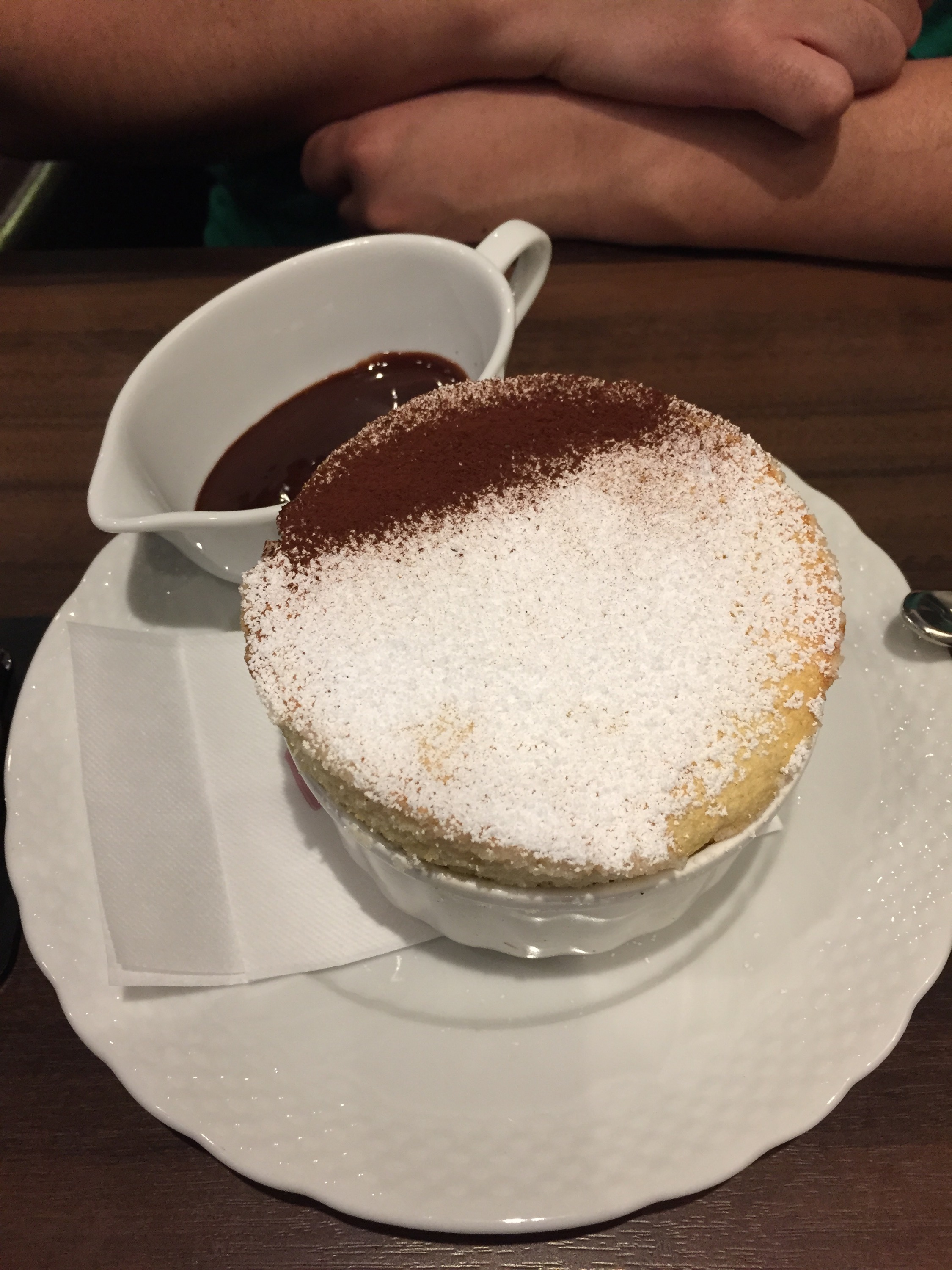
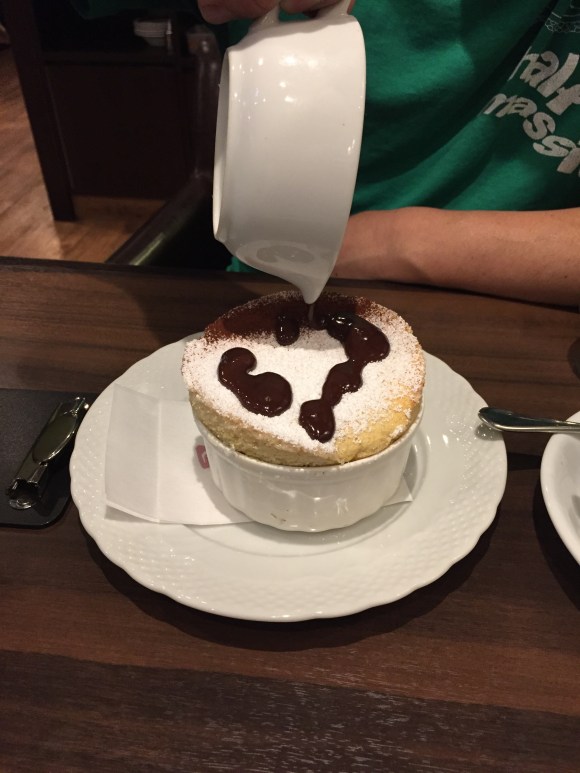
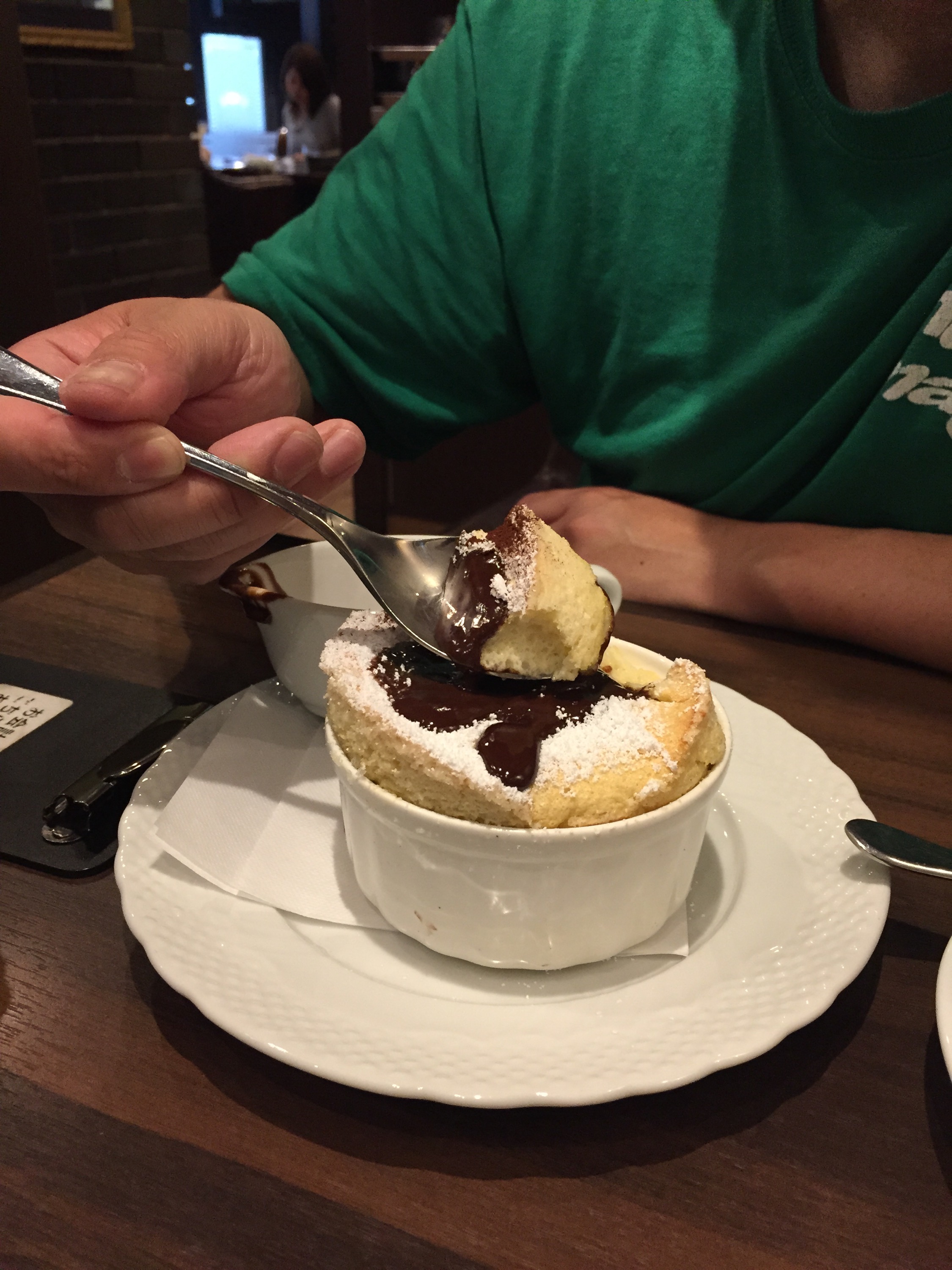
Hoshino Coffee, SangenjayaOn our last full day in Tokyo we decided to explore Sangenjaya, the neighborhood where we stay each time we visit.  We are ashamed to say that we’ve missed out on SO MUCH good stuff! Next time, I’m going to have to remember that there’s more to Sangenjaya than Mister Donut and our hotel street! For the rest of the week, I’ll be sharing some gems from the neighborhood. IMG_3752Hoshino Coffee was one of our final hour discoveries. You can find Hoshino shops all over Japan (and even in Singapore). The Hoshino in Sangenjaya happened to be just three blocks away from our hotel. They are famous for their hand-poured coffees and their soufflé pancakes. I had the Charcoal Roast Coffee. It was STRONG, but really delicious. (It seems like all of the fancy coffee in Japan is strong.)  IMG_3753Naoto ordered a soufflé. To say it was heaven in a ramekin is an understatement. I’ve never tasted something so light and sweet and buttery. The thick chocolate syrup was rich and just bitter enough to balance the sweetness of the soufflé. IMG_3754 IMG_3757The trouble with Japan is that there are just too many good things to eat!

Tagged , , , ,

Kayaba Coffee

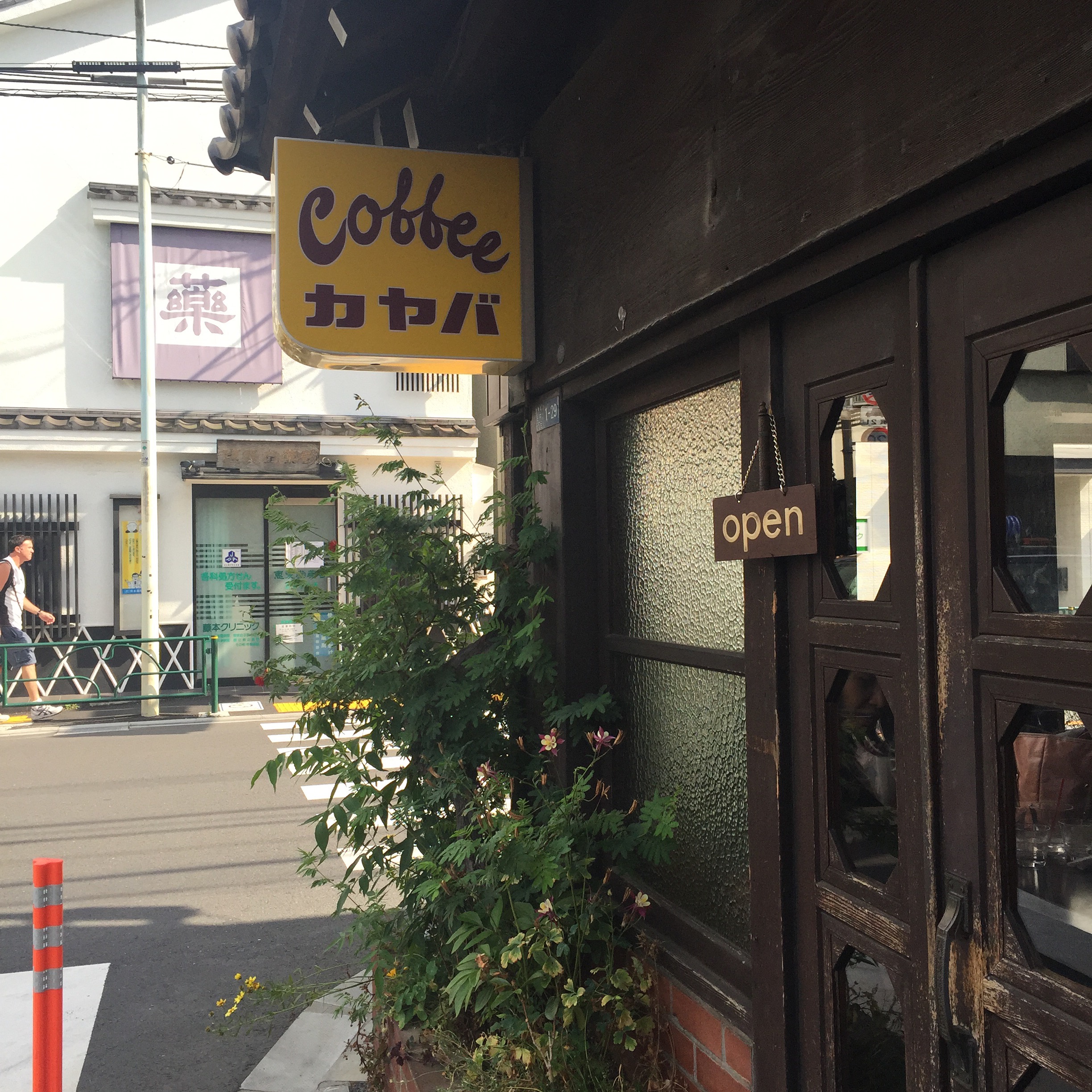
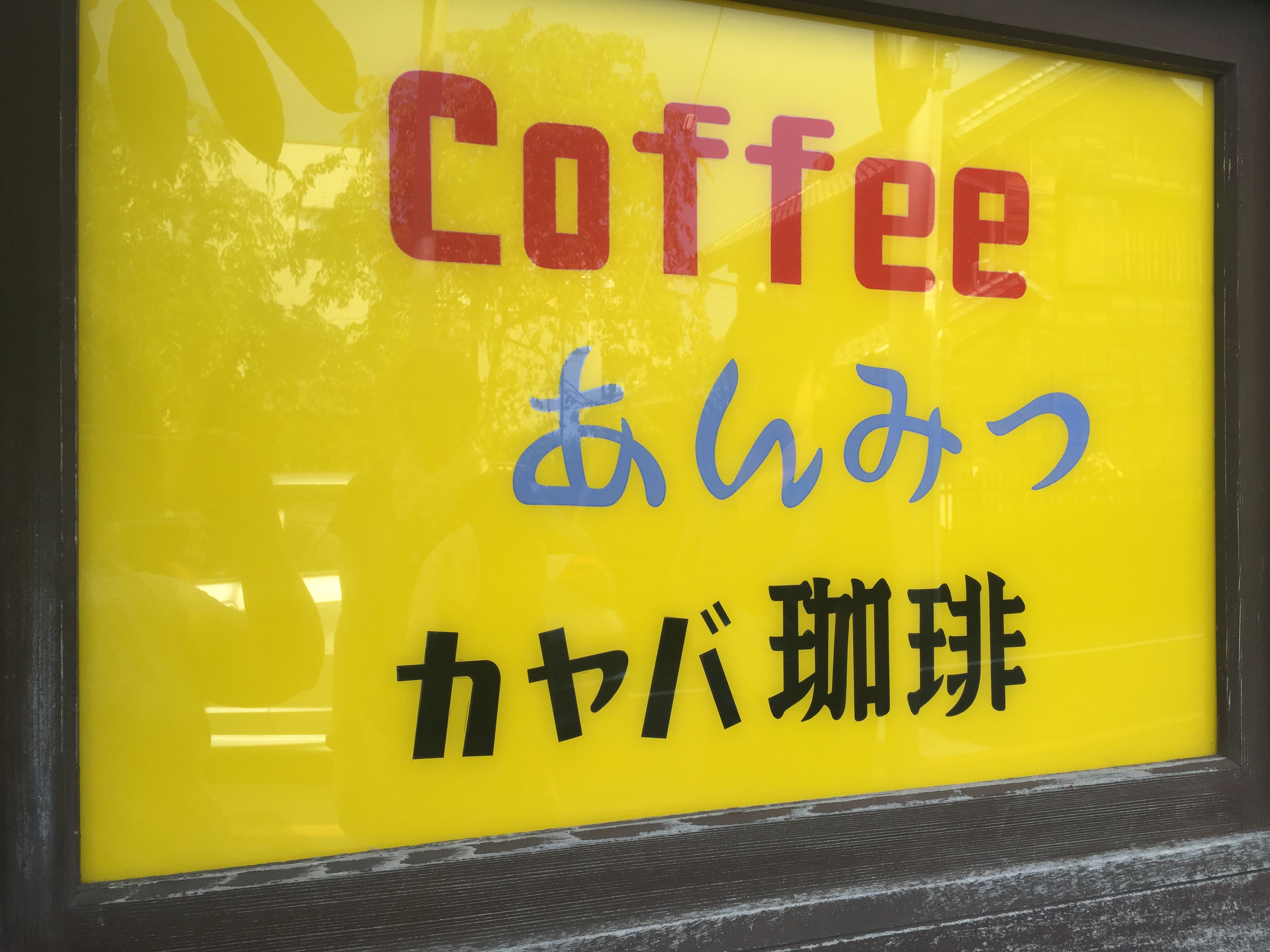
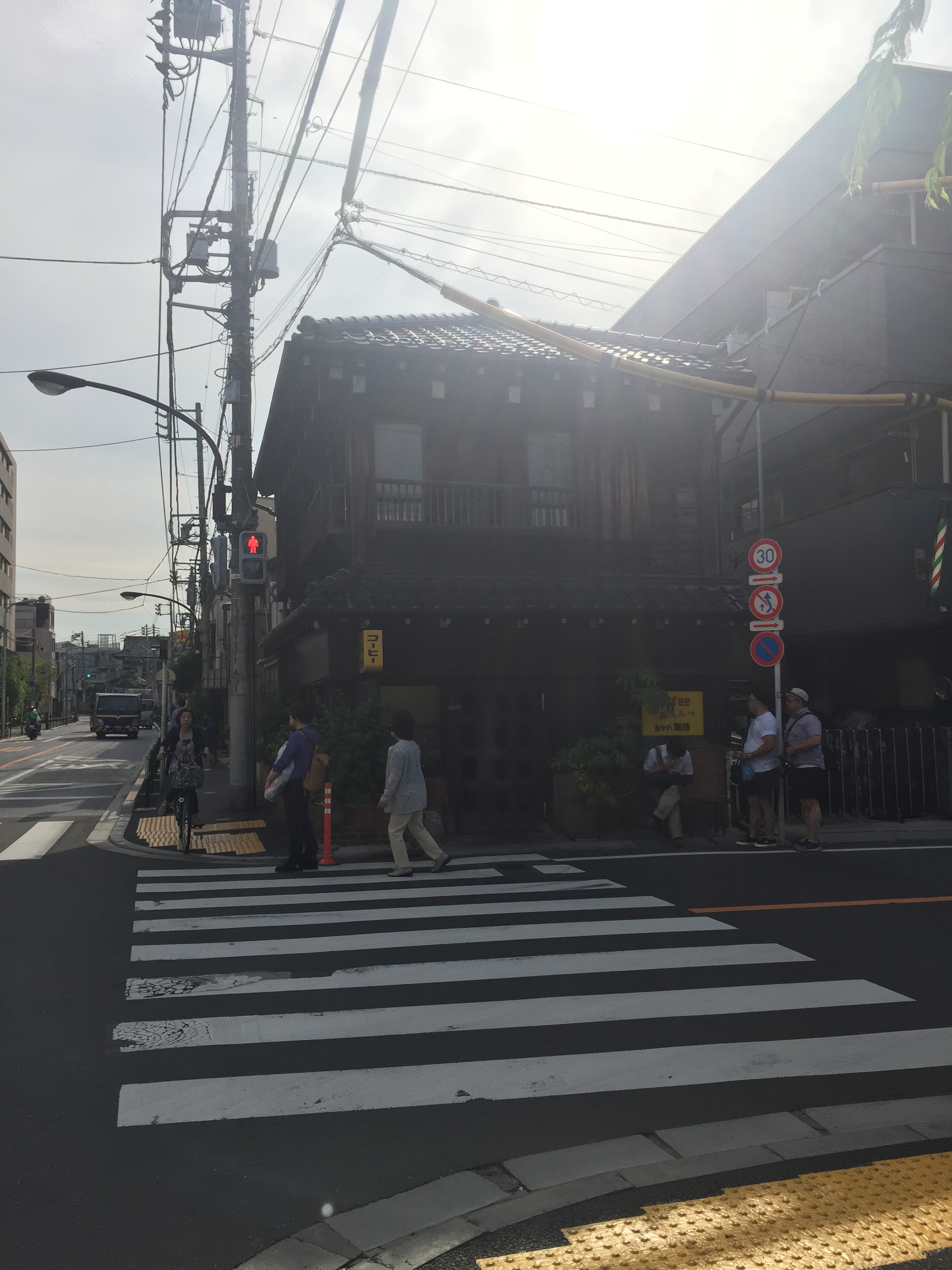
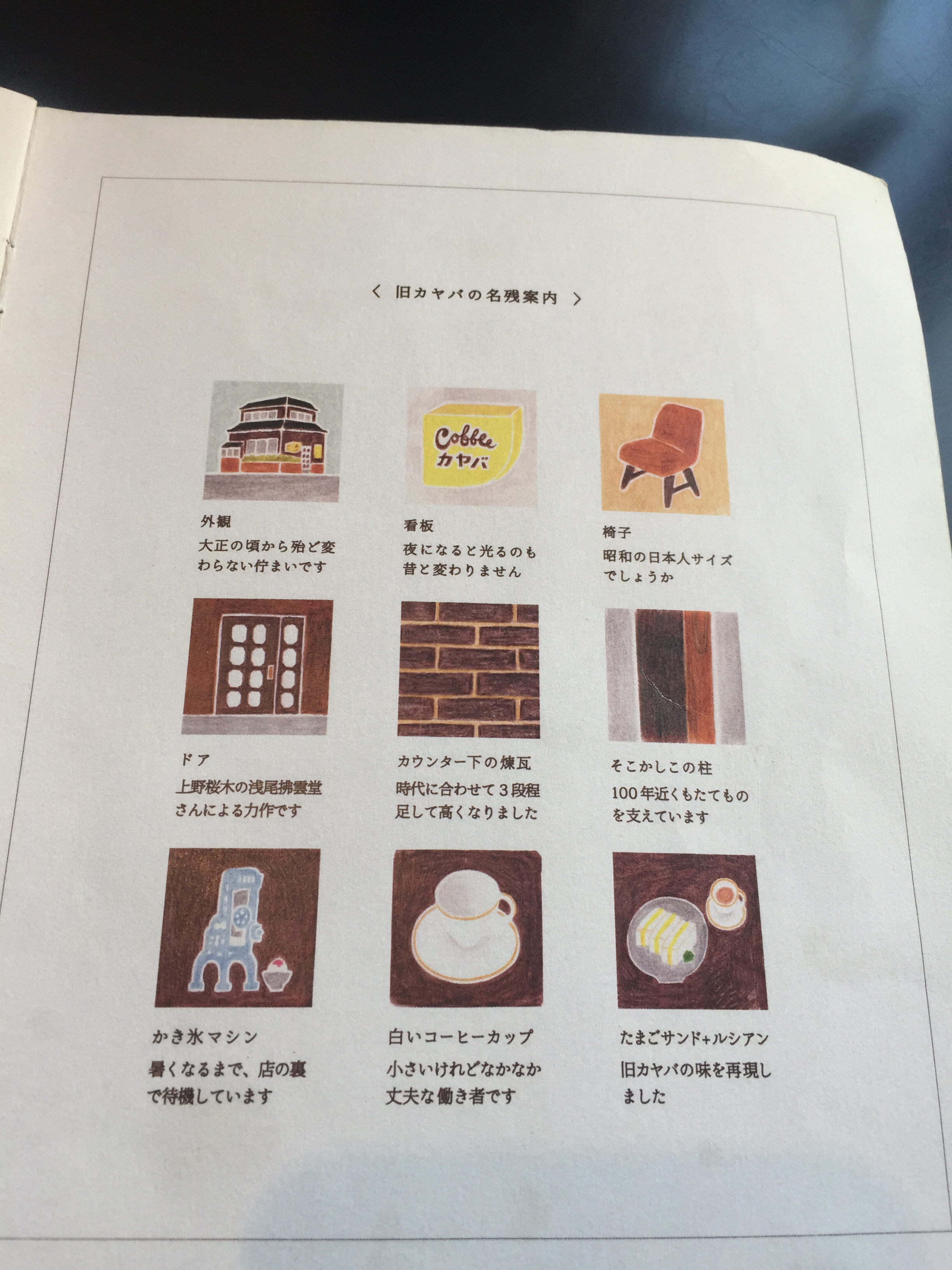
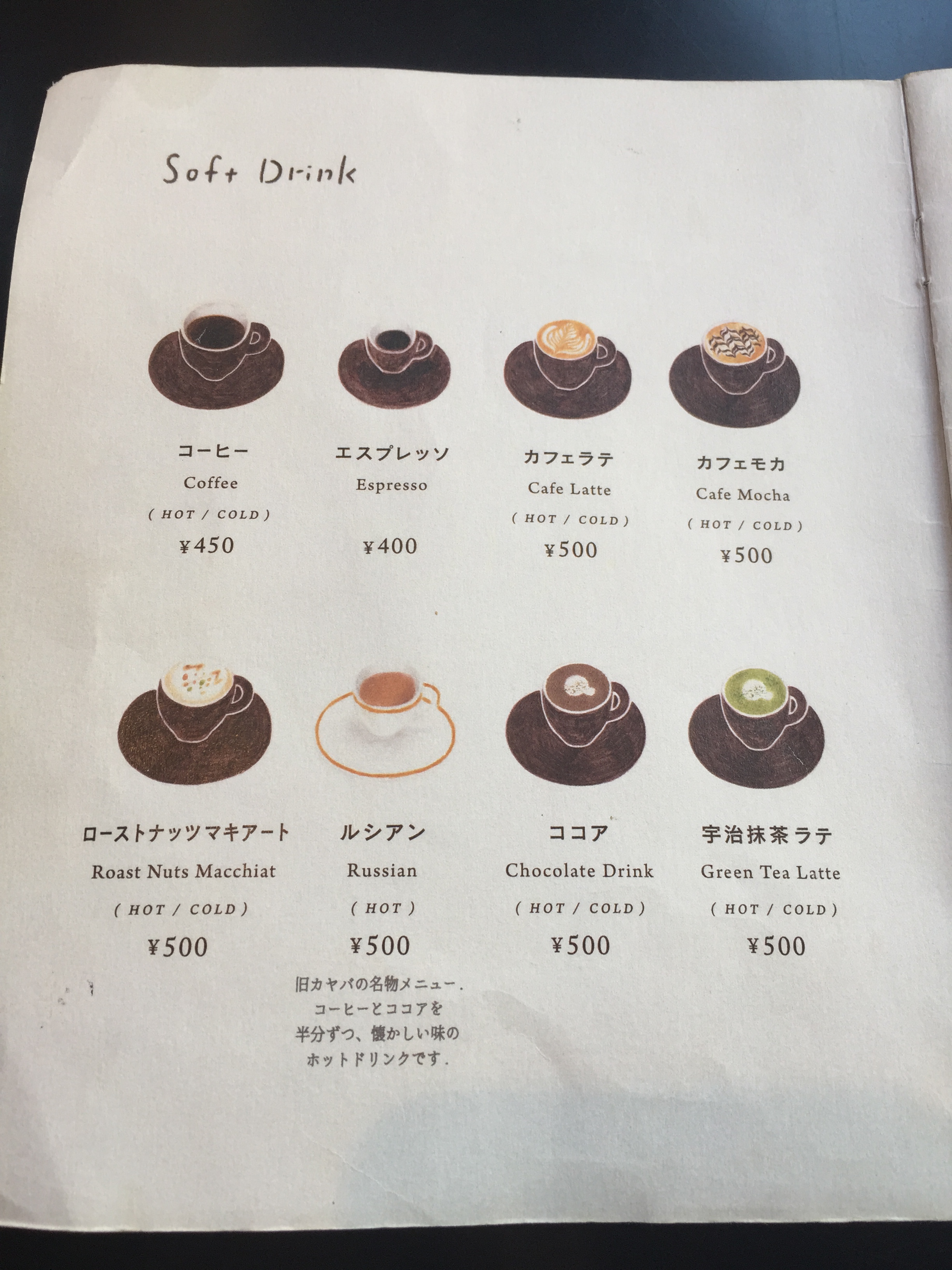
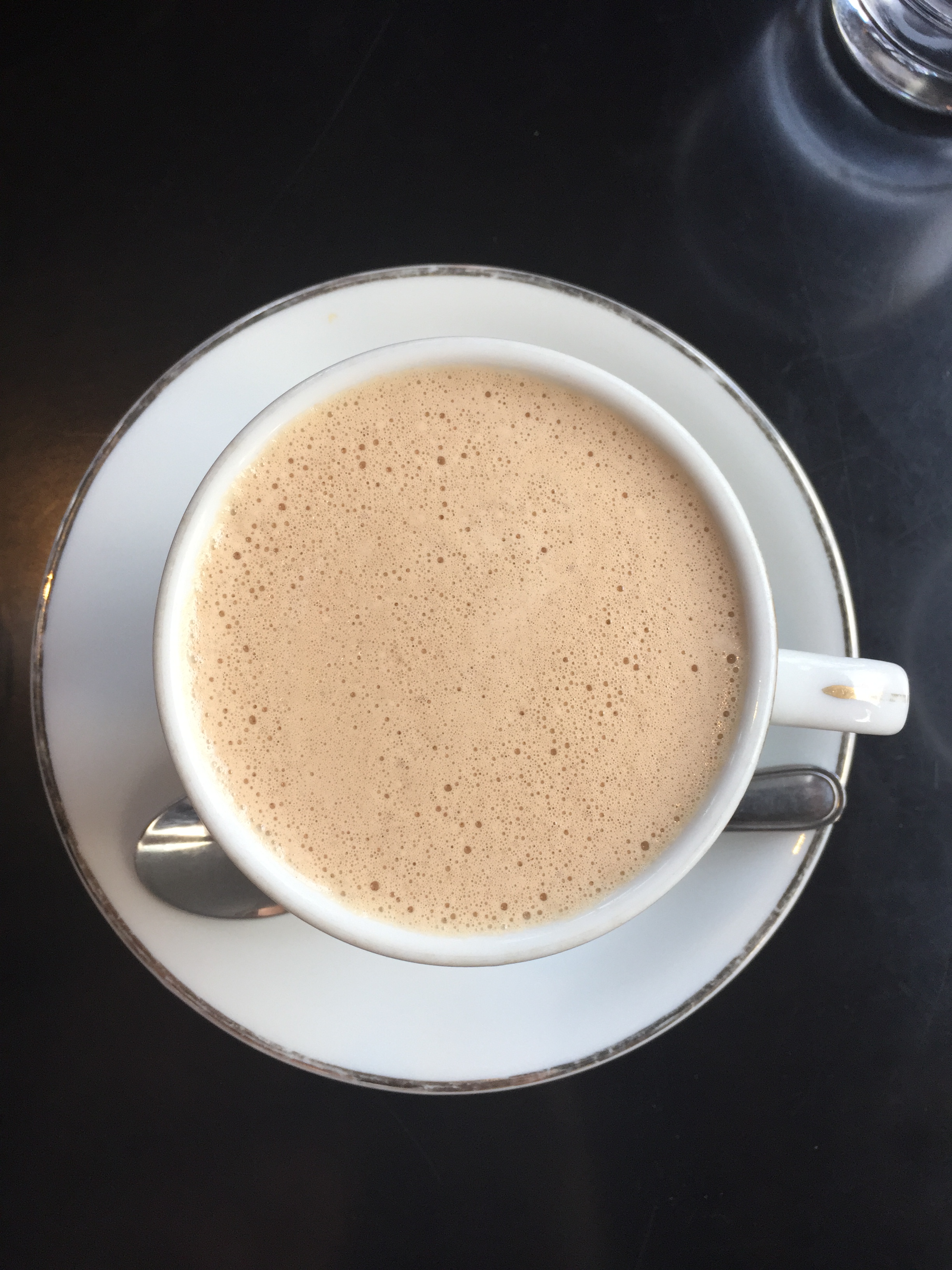
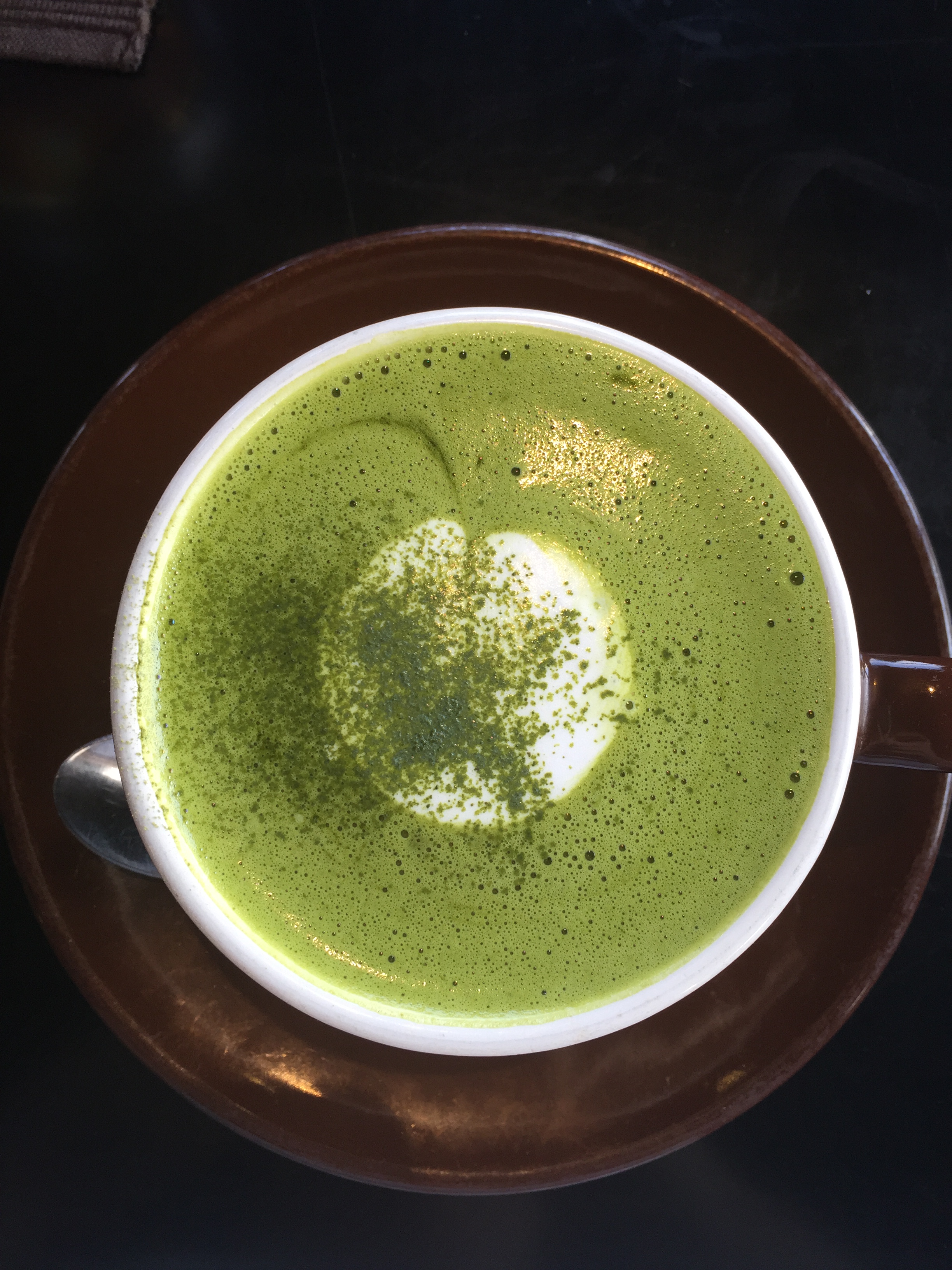
IMG_2969Before we enjoyed Hasegawa Happy Hour at the Suzukis, we spent the day together shopping in Asakusa and having lunch and coffee in the Taito Ward of Tokyo. We went to this charming old coffee shop called Kayaba Coffee. Kayaba Coffee signKayaba Coffee building from 1917The building that holds Kayaba was built in 1917 as a house. In 1938 the Kayaba family turned the house into a coffee shop that Mrs. Kayaba and her daughter Sachiko ran for almost 70 years until Sachiko died in 2006. When Sachiko died, Kayaba closed until 2009 when it was renovated and reopened. The outside of the building has remained the same since 1917 and much of the inside–the ambiance, chairs, signage, and china–are true to the past. The chairs are super-short, designed for Japanese people in the 1930s, but they were surprisingly comfortable. (Of course, I’m short, so…)history of Kabaya coffee shopIMG_2920The menu is filled with drawings of the key historical points of the Kayaba building and history, and of the drink and food choices. They offer a huge variety of hot and cold drinks and food. (The egg salad sandwich is crafted to emulate the original recipe. I want to try it the next time we go!) IMG_2924Naoto had a Russian, a classic Kayaba drink made from half hot chocolate and half coffee. It was rich and delicious. IMG_2923I had a matcha latte and it was life-changing. The matcha, the foam, and the subtle sweetness were all perfection. And, it was stunning.

America, we need to up our matcha latte game!

Tagged , , ,

Hasegawa Happy Hour: Mixology in Tokyo

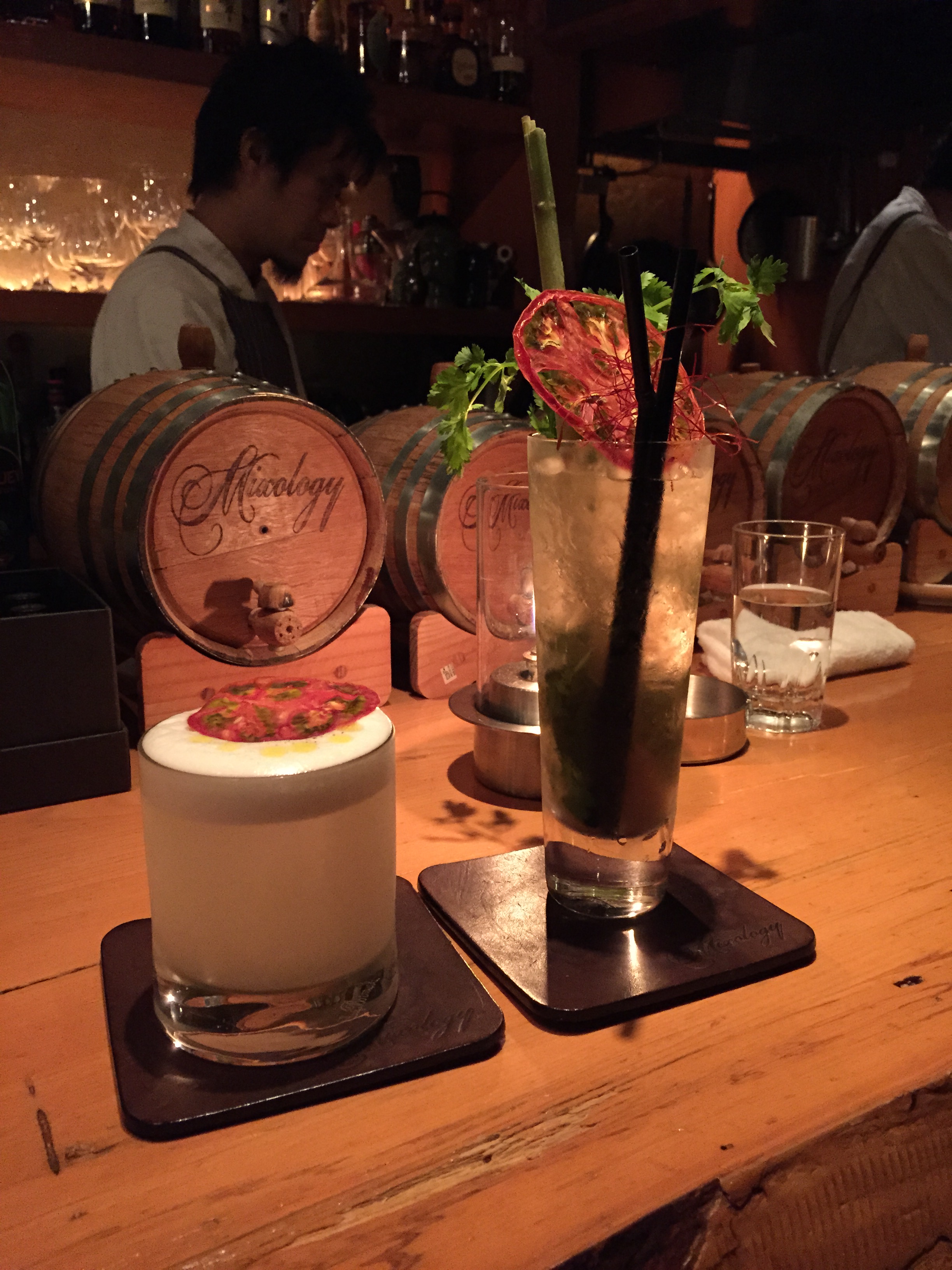
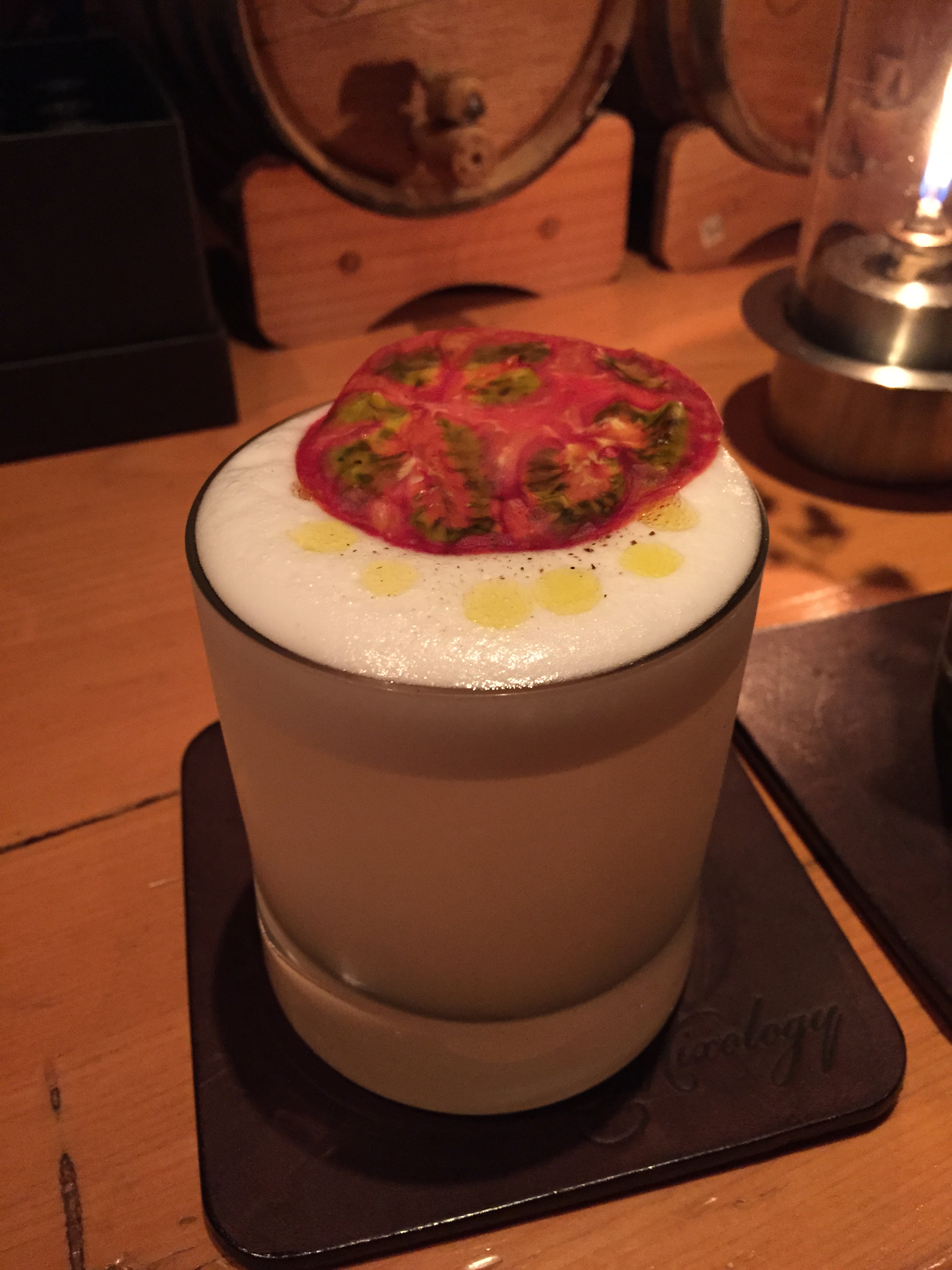
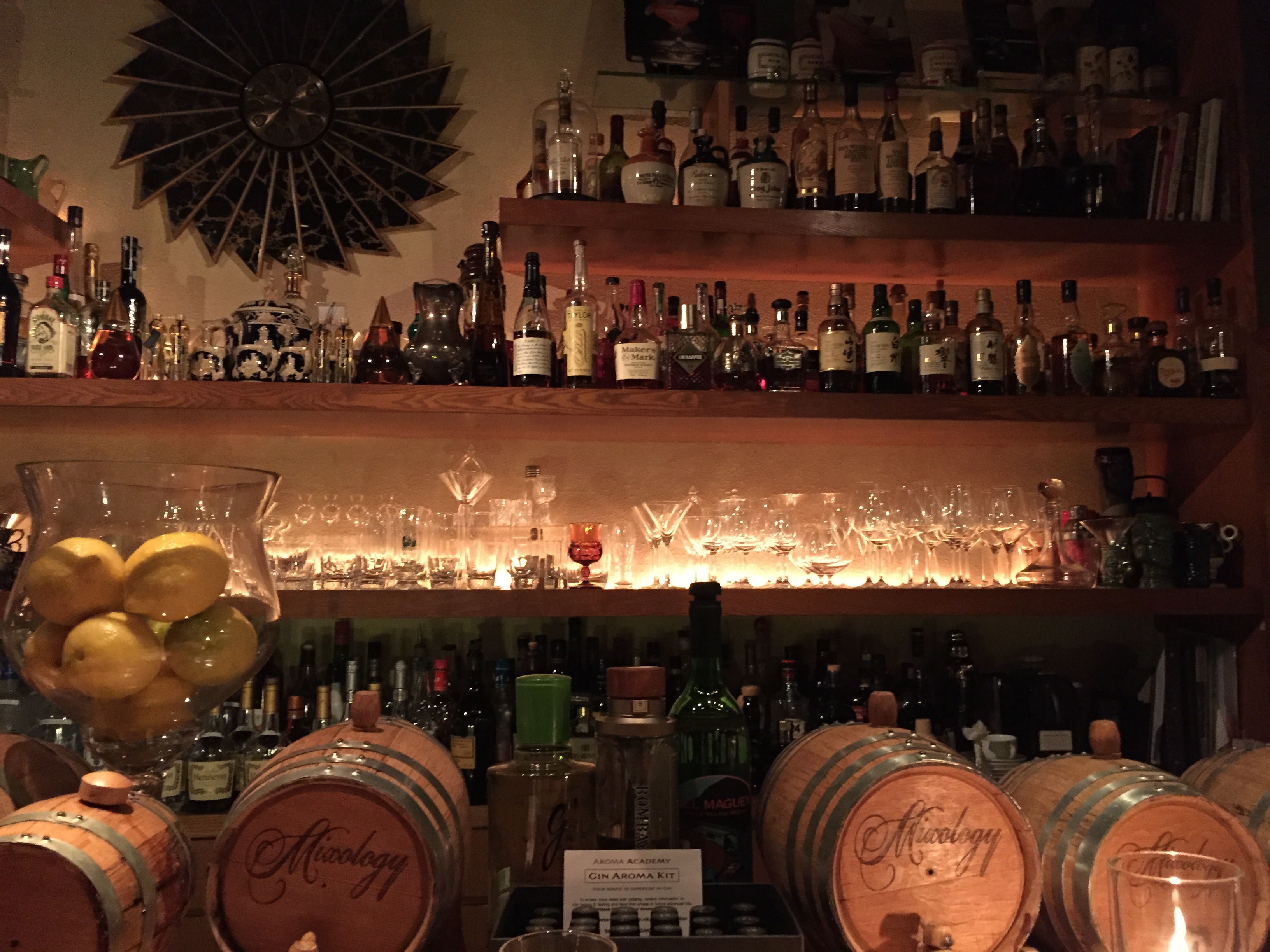
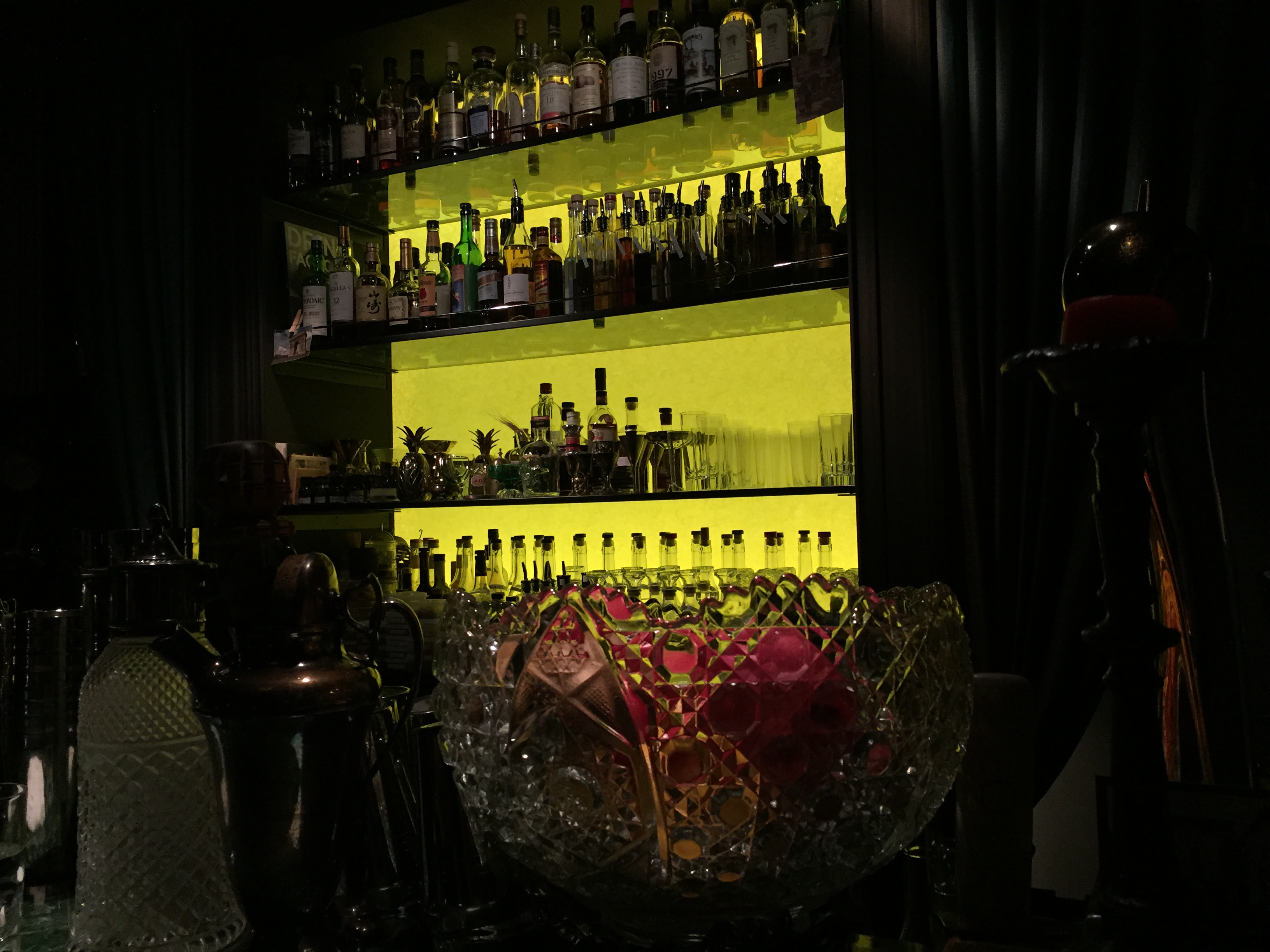
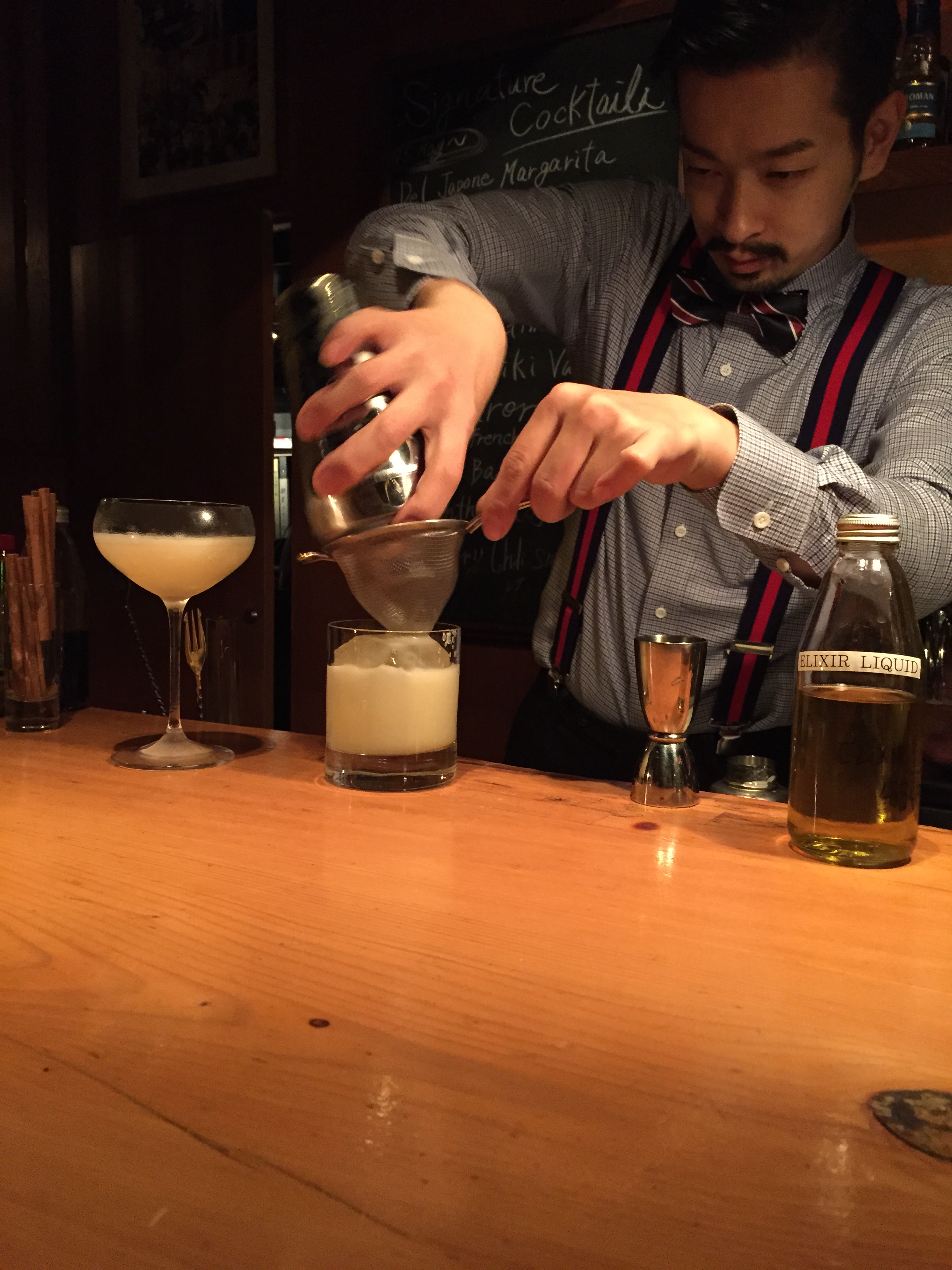
IMG_3542 Craft cocktails are still a new thing in Tokyo. Most bars are still the izakaya style where copious amounts of beer and simple cocktails are served alongside fried foods, meat, and noodles. There are only a handful of actual cocktail bars in Tokyo, four or five mixologists are paving the way in their own little pockets of the city. I found this article in Time Out Tokyo and added a visit to one of these cocktail bars to our must-do list. IMG_3544We decided to go to Codename Mixology since it’s only a few steps away from Tokyo Station and its wonderfully stocked post office. The cocktails here are developed in a “lab” and using unique combinations and uniquely developed liquors. They offer a whole menu of cheese-infused martinis, foie gras vodka, and gins distilled with hinoki (Japanese cedar), blue cheese, and other unusual flavors. We had read about the Tomato Cocktail and the Tom Yum Cooler in the article and decided to start with those. The tomato cocktail (pictured above) was lovely. It was garnished with drops of olive oil and a dried tomato and had a subtle tomato flavor. The Tom Yum Cooler stole the show though. I’m not a huge fan of Tom Yum soup, but the flavors in the cooler were exploding! Lime, balsamic vinegar, and tamarind–it was at once sweet and savory and tart.

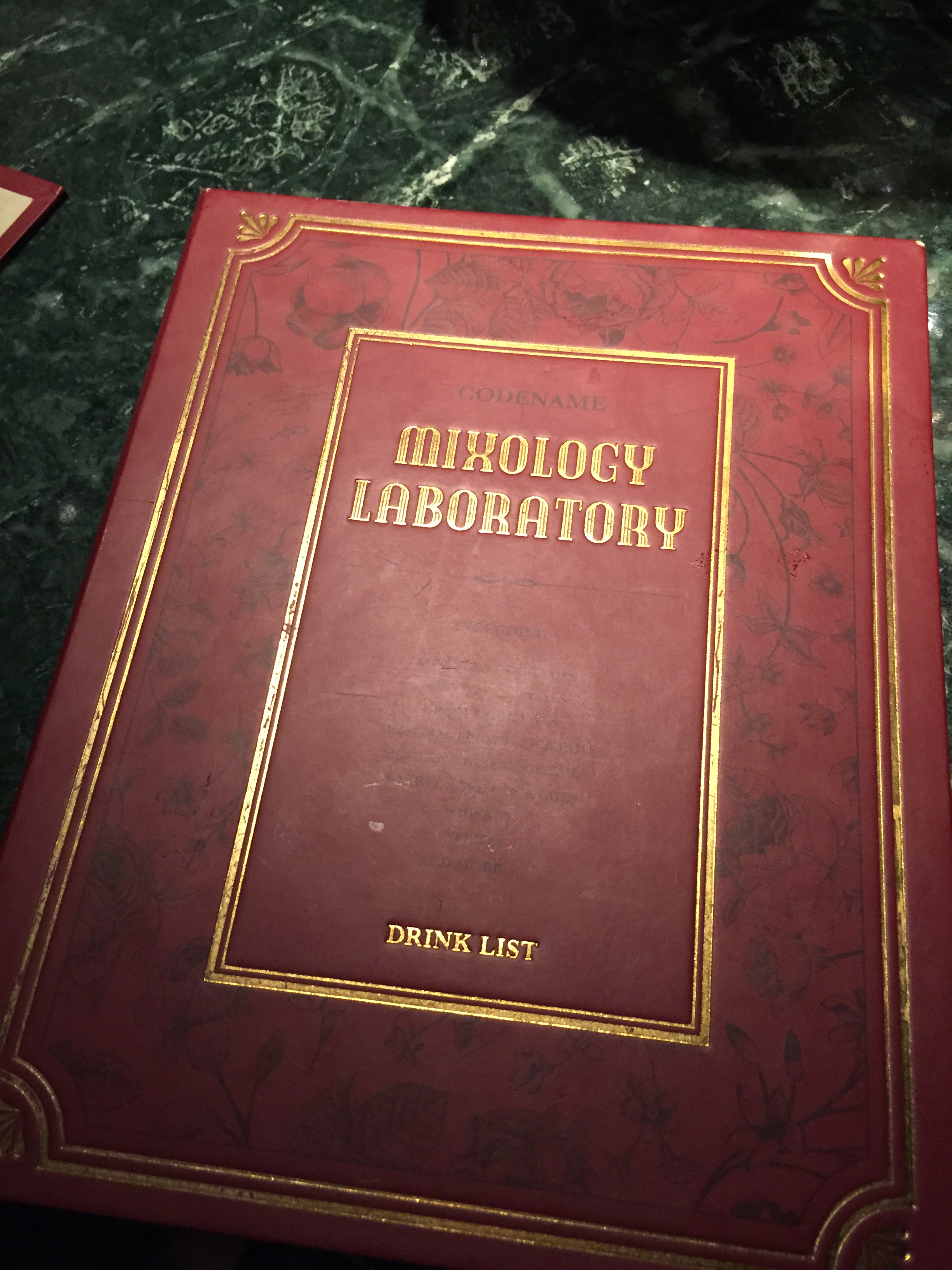
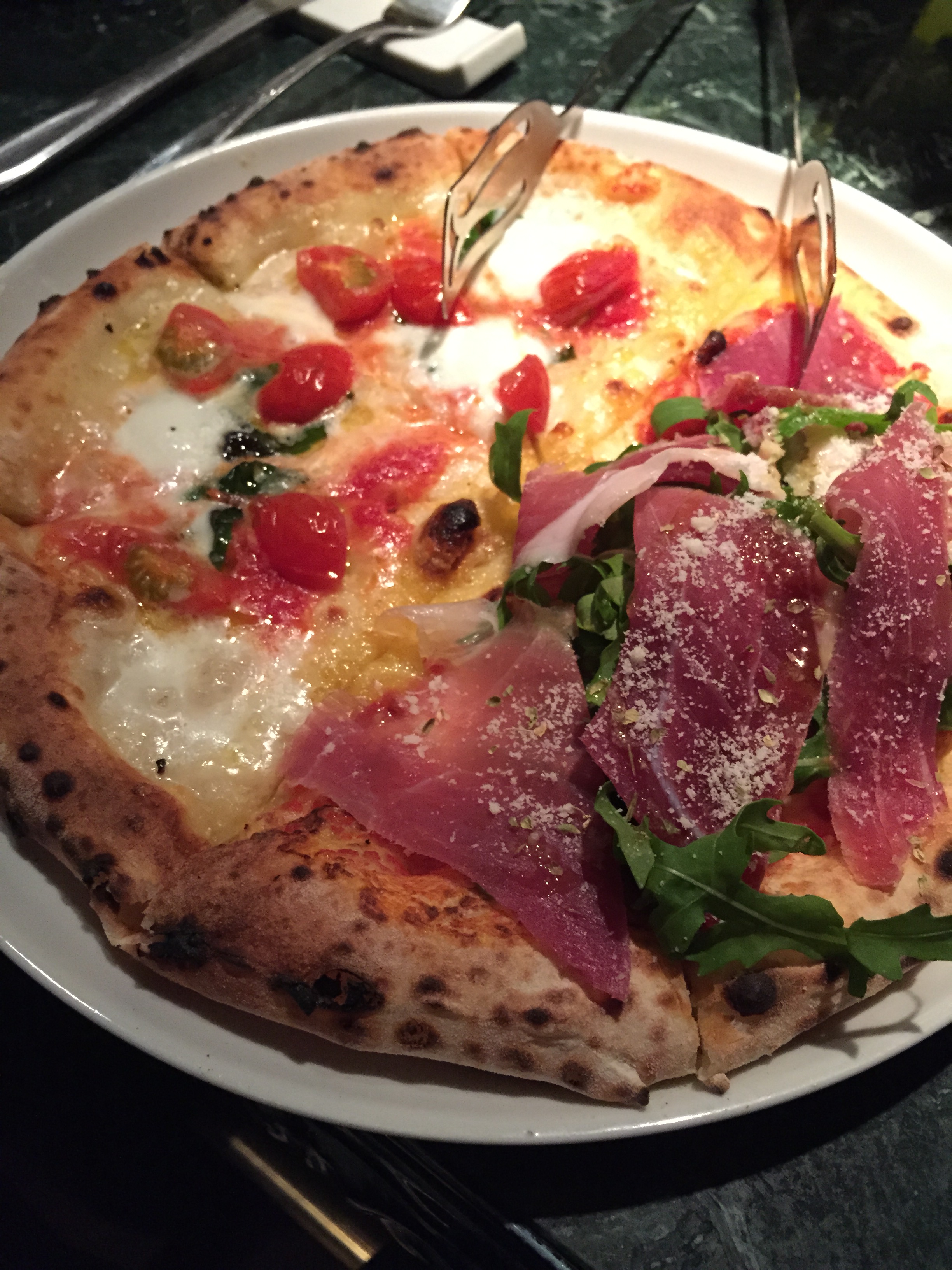
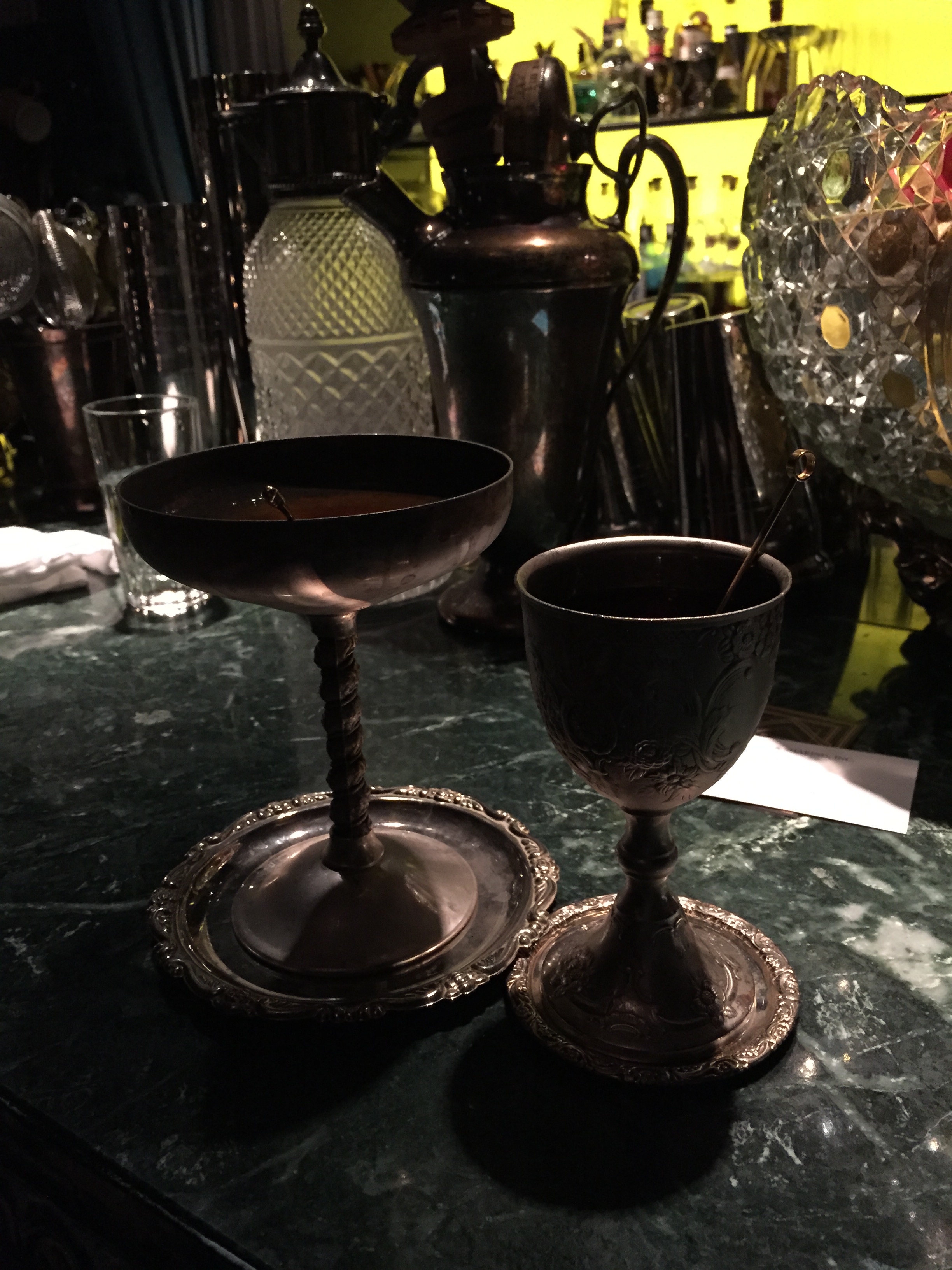
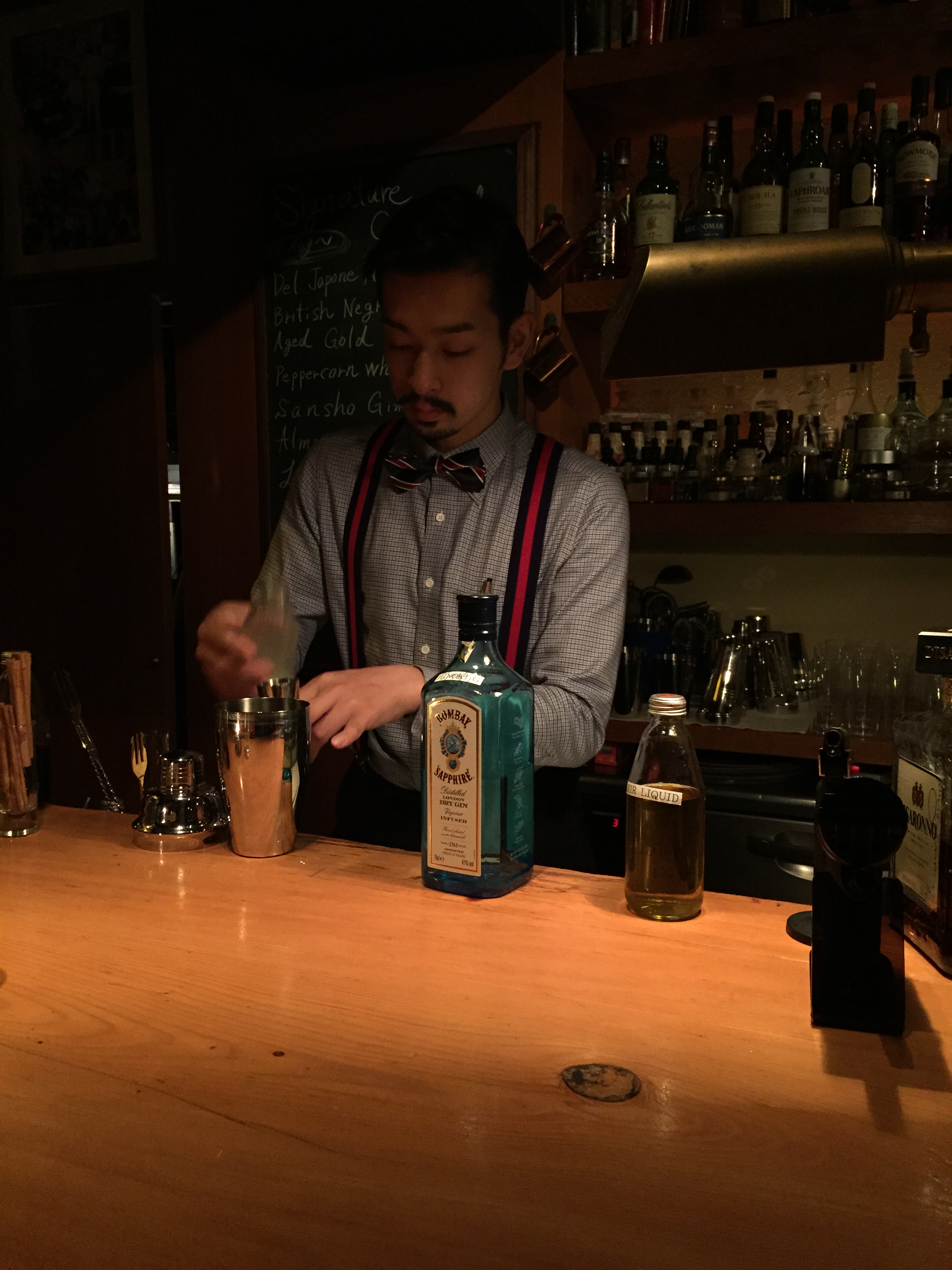
Our bartender, Ohba-san let us taste some of the weird gins and told us about the behind-the-scenes development of the cocktails. IMG_3545 Even though we had planned to drink just one cocktail, we decided to go upstairs to Codename Mixology Laboratory, a prohibition themed speakeasy. Ohba-san walked us upstairs, punched in the code, and introduced us to the bartender upstairs. Everyone else who entered the Laboratory after us knew the code. It felt like a secret society in there! IMG_3547Mixology Laboratory pizzaIMG_3550 IMG_3552 The menu upstairs was very similar to the menu downstairs, but the atmosphere felt more dark and moody. We ordered a pizza–which was so good! One half was Margherita and the other was prosciutto and arugula. We ordered specialized versions of familiar drinks, a Manhattan and I can’t remember what Naoto had. (Sorry!) There was less “showmanship” upstairs, but the presentation of the cocktails was superb. Both of ours were served in pewter goblets with matching coasters.

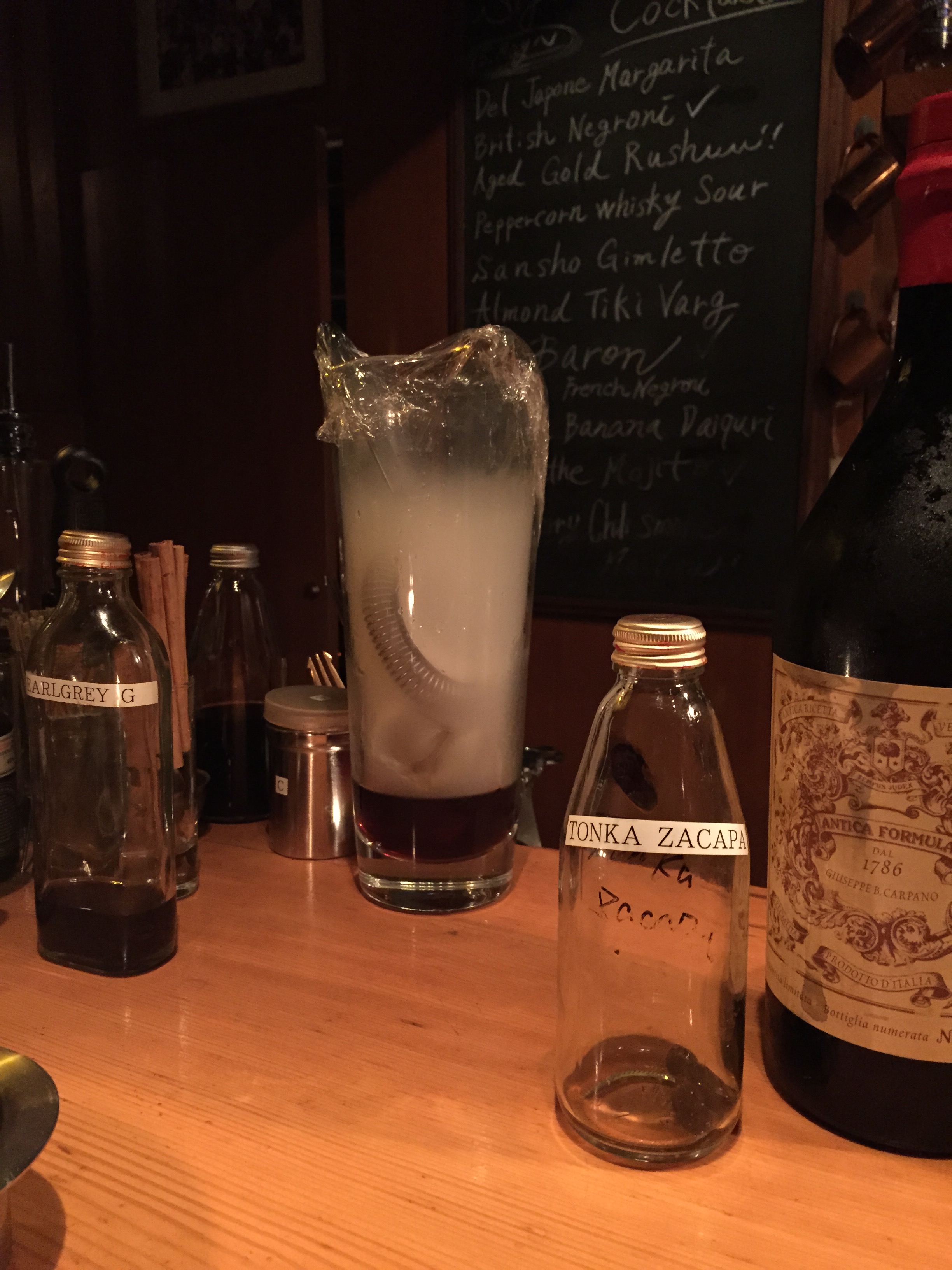
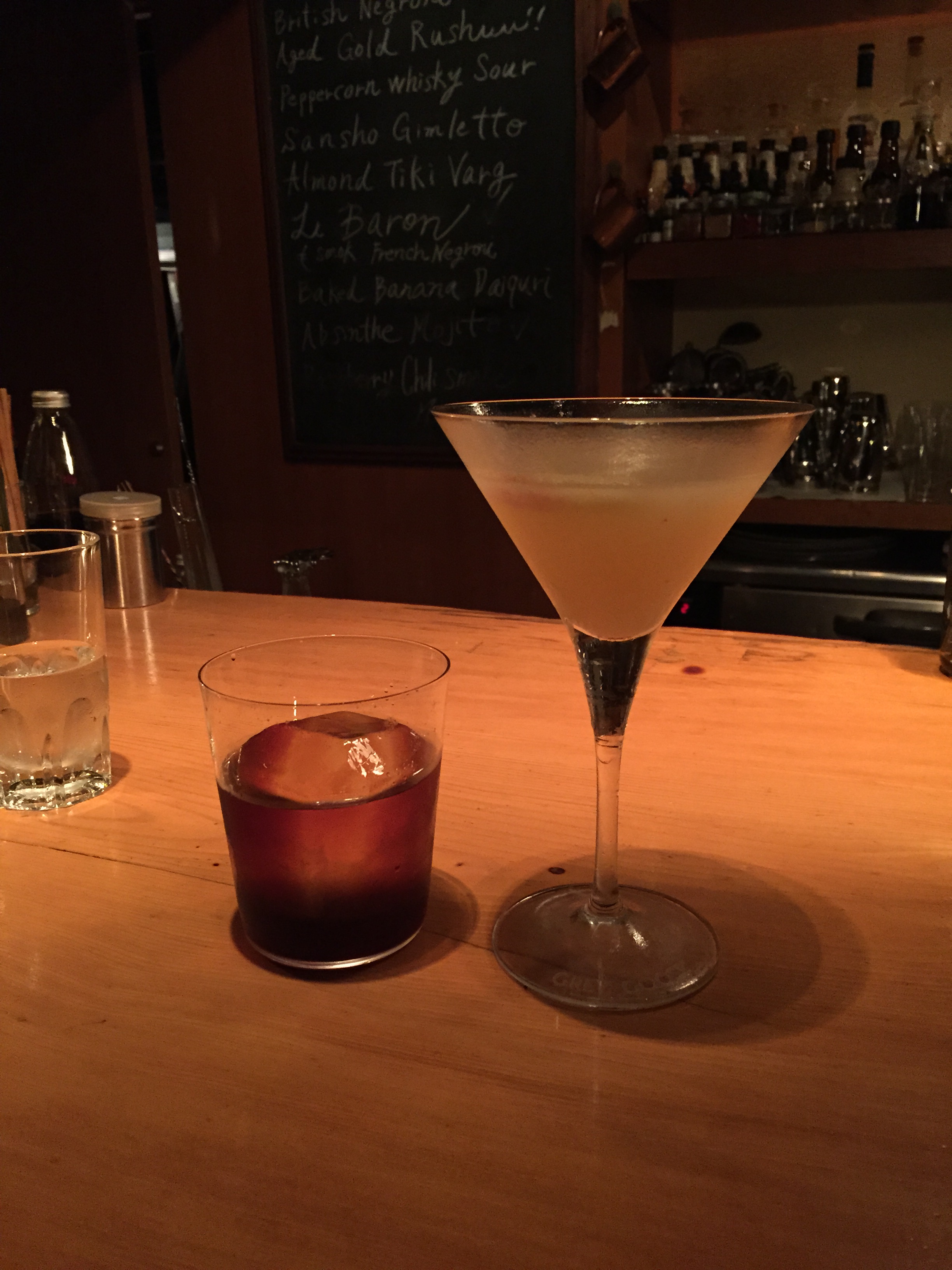
I made a quick little video so you can hear the music and the quiet chatter at the bar. The 1930s and 40s music really set the tone in the room. IMG_3558IMG_3564After dinner, we ventured back downstairs for another drink. Watching Ohba-san masterfully create these crazy cocktails was well worth the bar tab! IMG_3572 IMG_3574To end the night, I had a Smoked Negroni and Naoto had a Peach Wasabi Martini. (Truth be told, I had ordered the martini, but I liked the Negroni better, so we switched.) At first the Negroni seemed like just an average Negroni, but the smoky finish made it special. And Naoto’s martini was fruity with a slow burn from the wasabi vodka…delicious!

We are looking forward to exploring more craft cocktail bars on our next trip!

Tagged , , , ,

Spending the Yen 8: Ramen Souvenirs

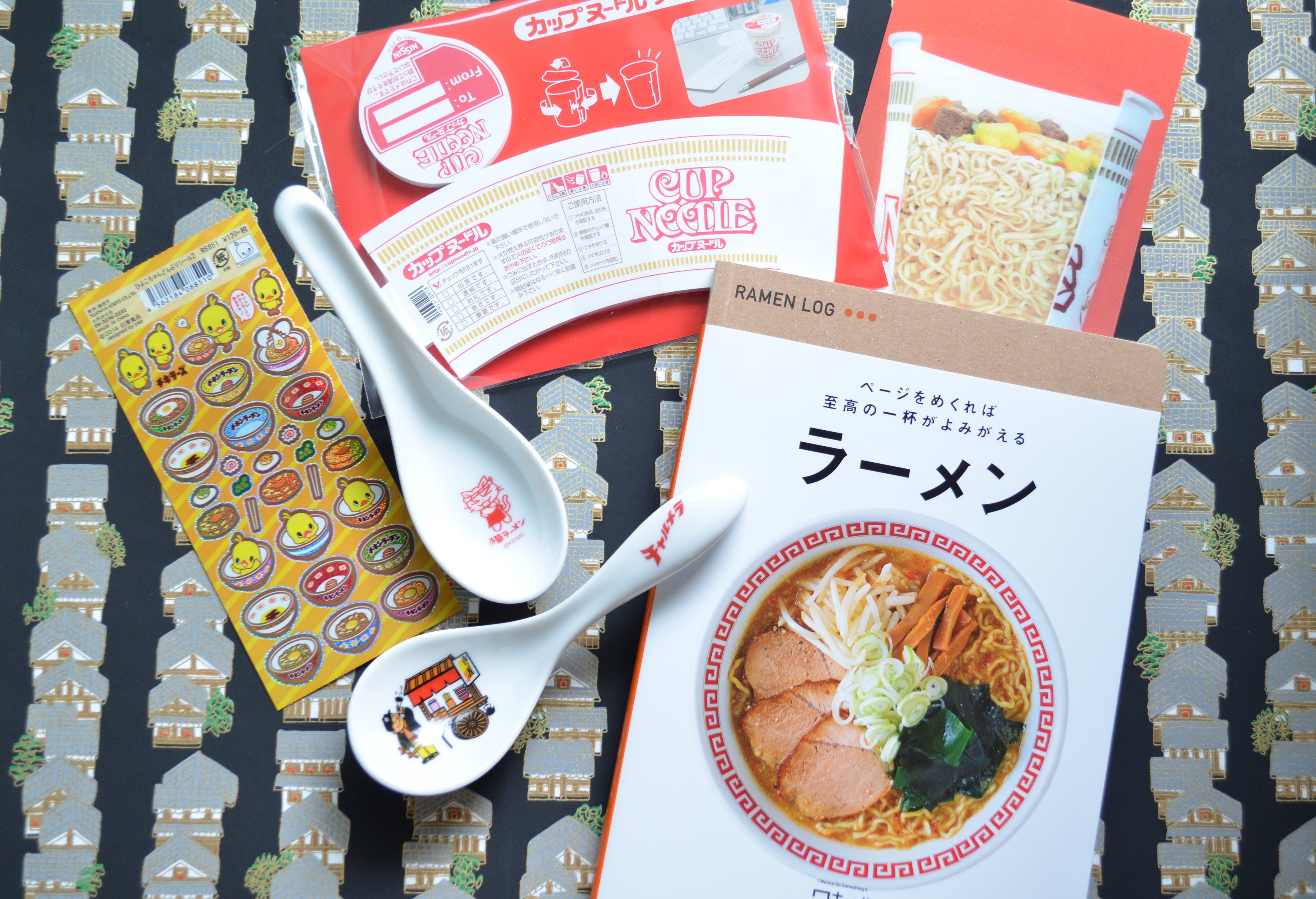
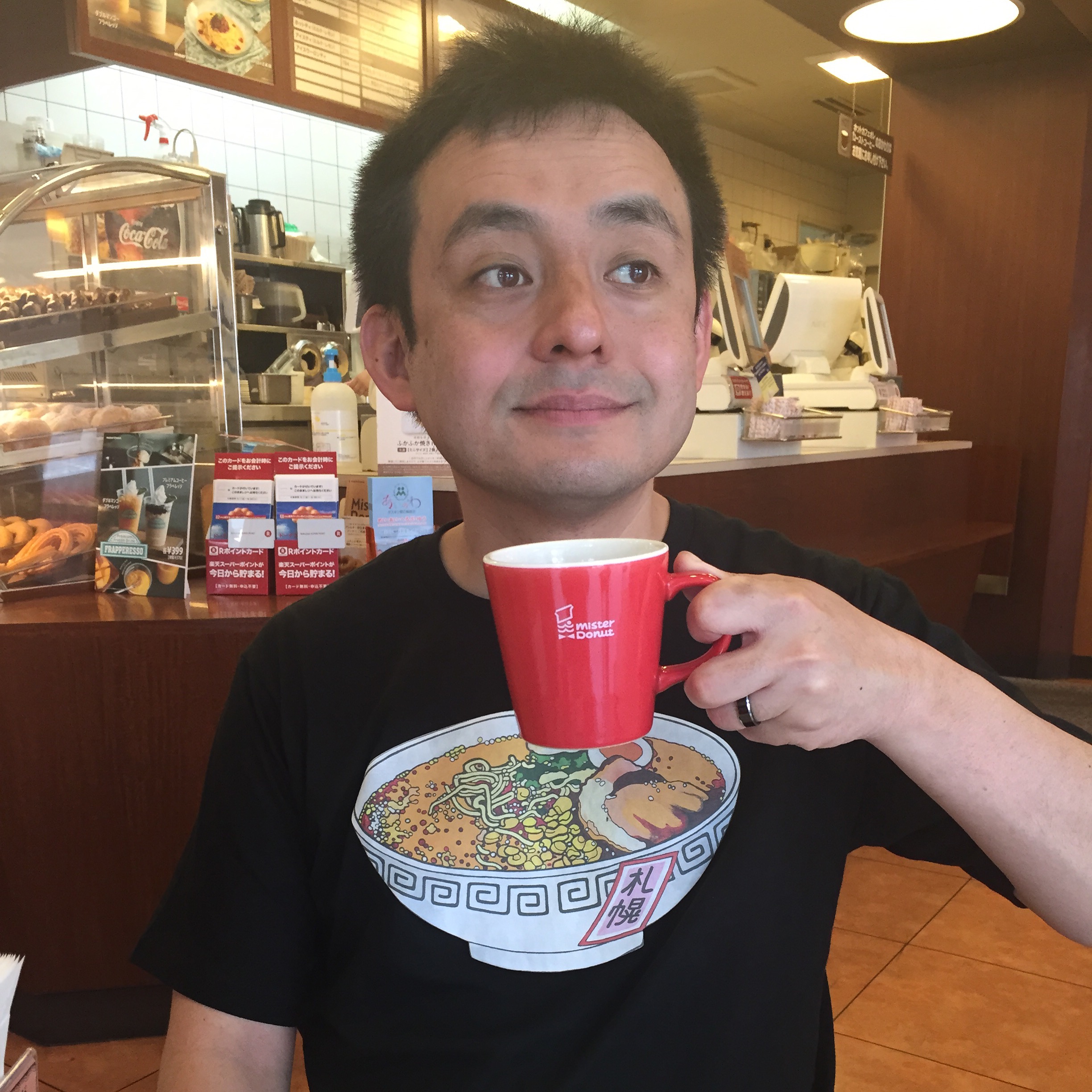
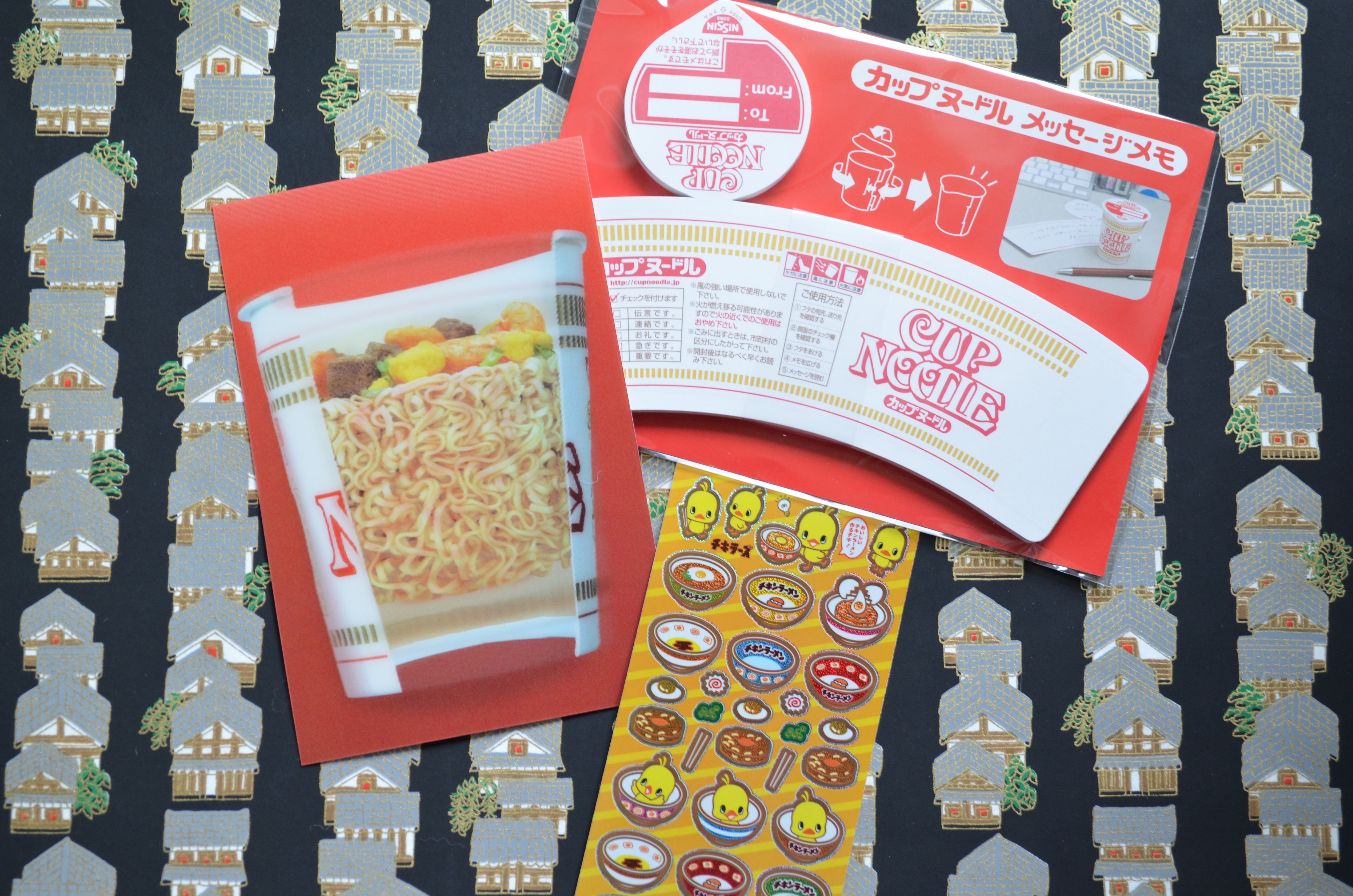
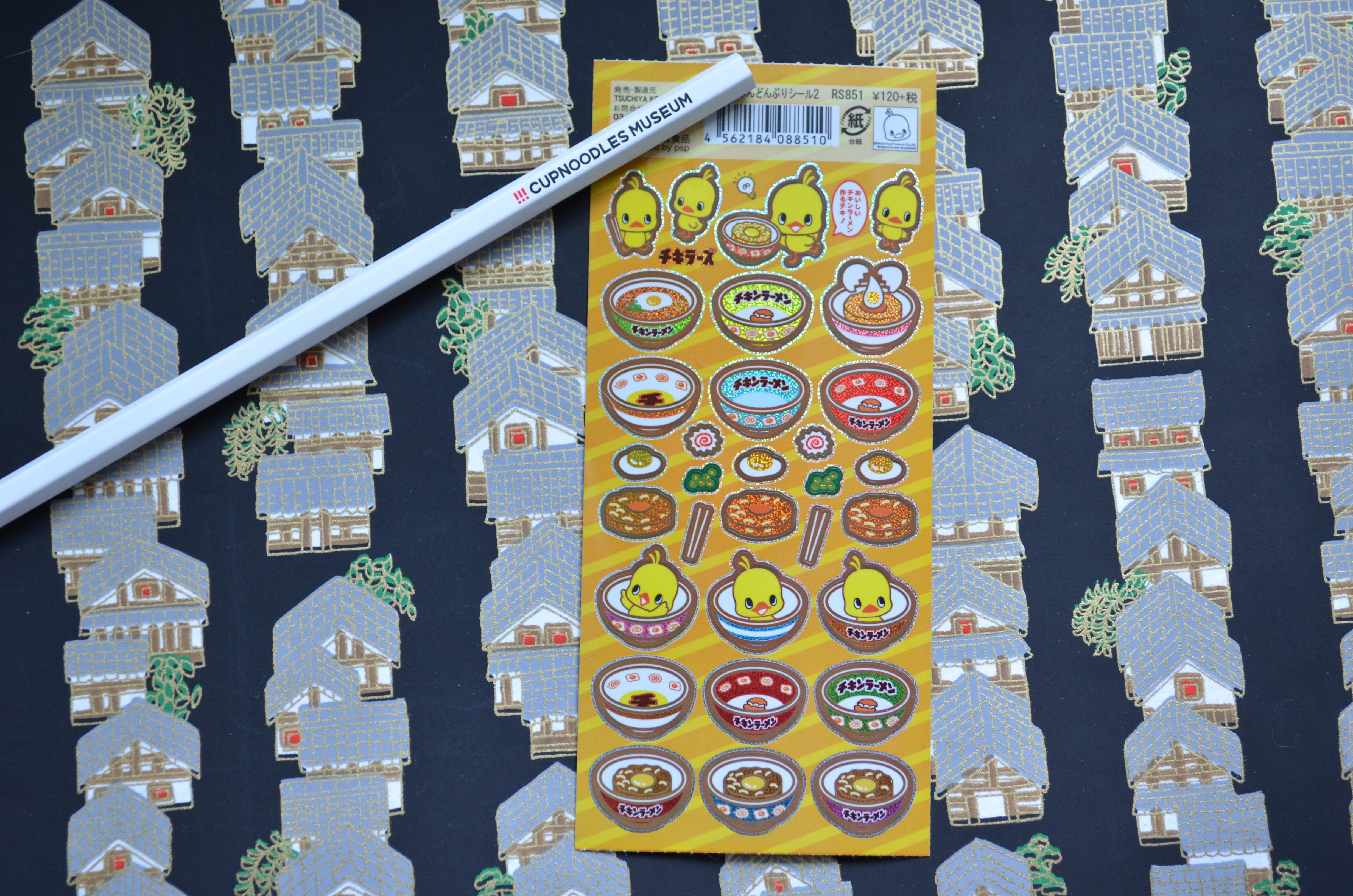
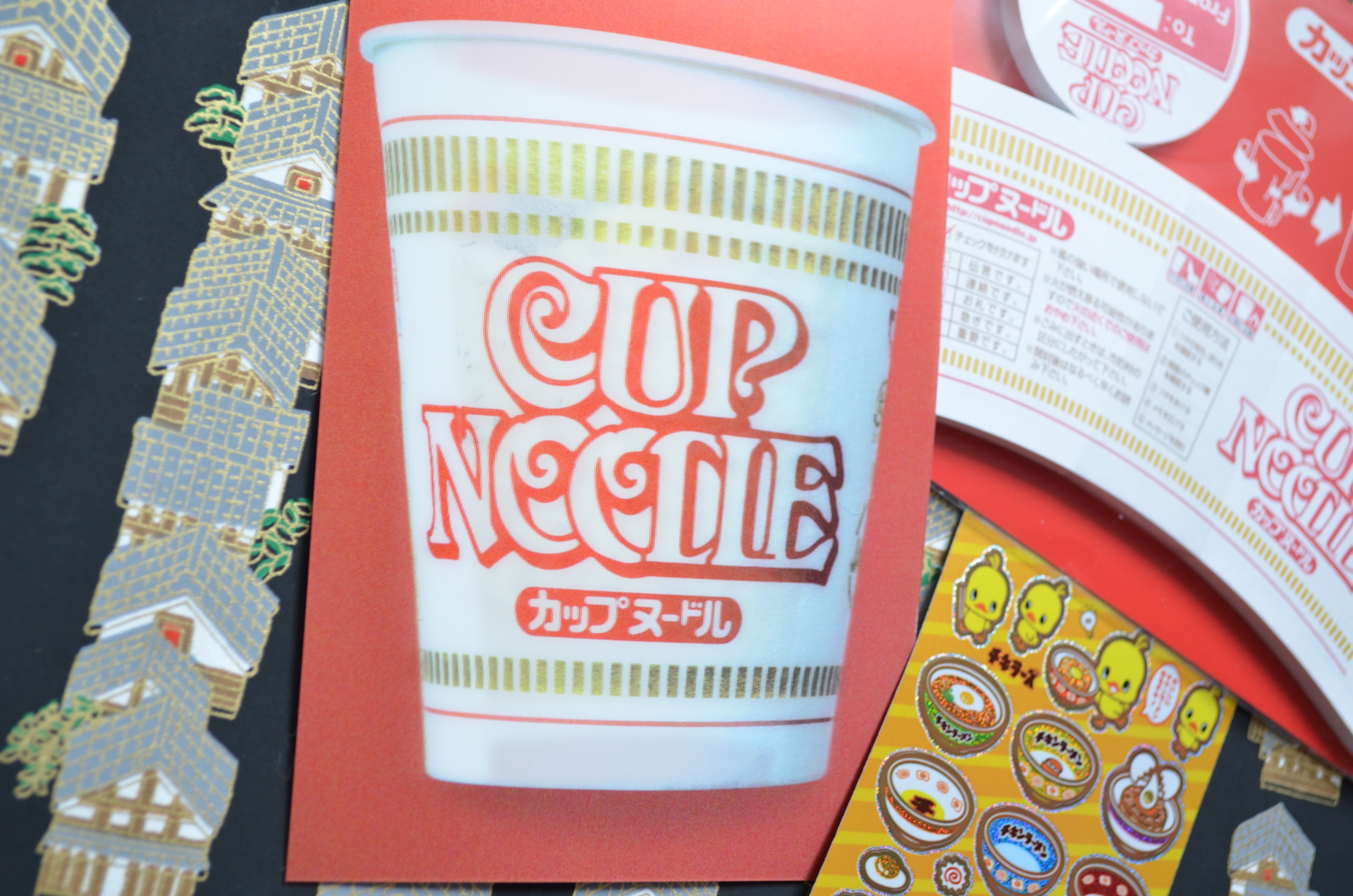
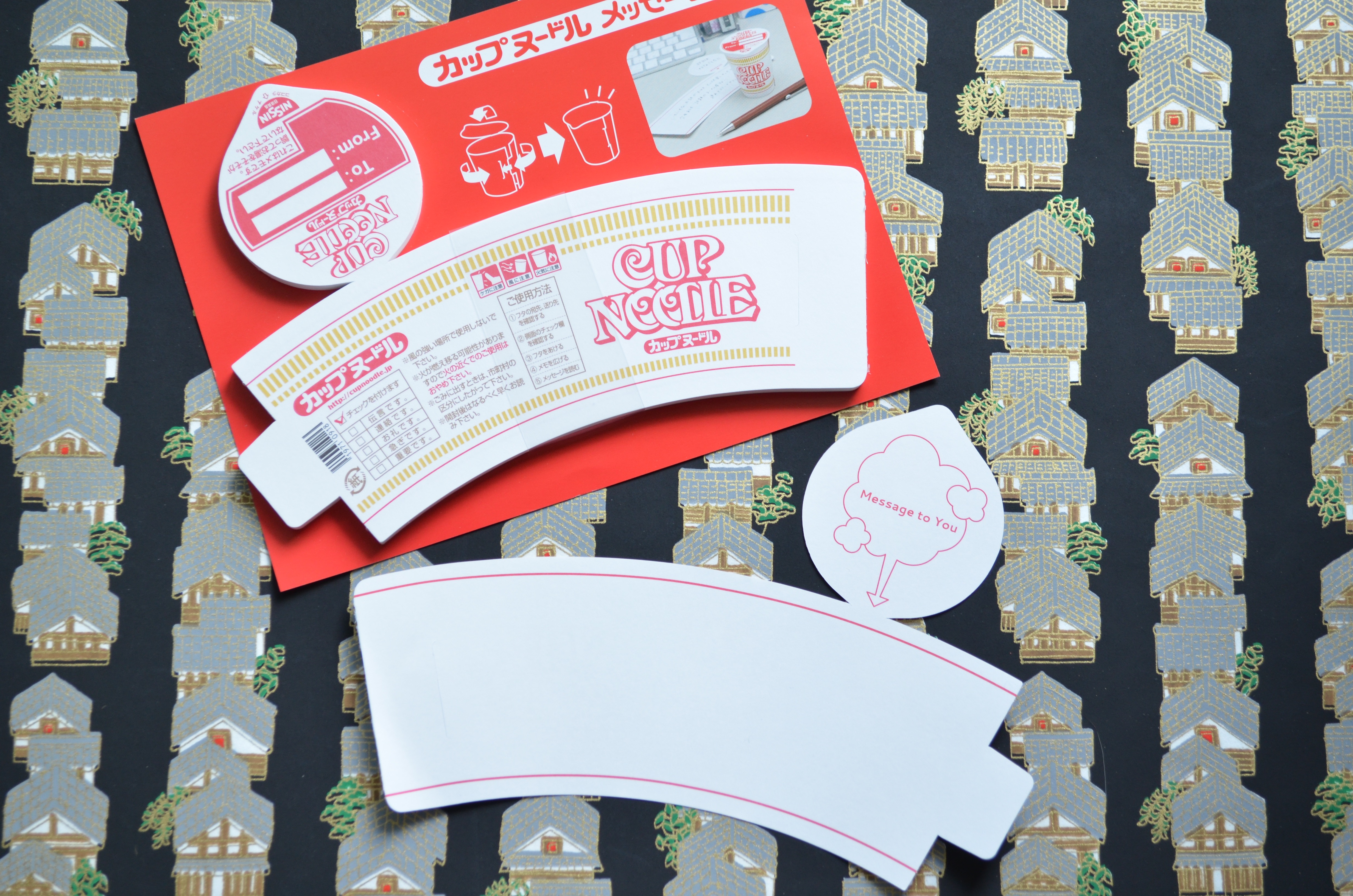
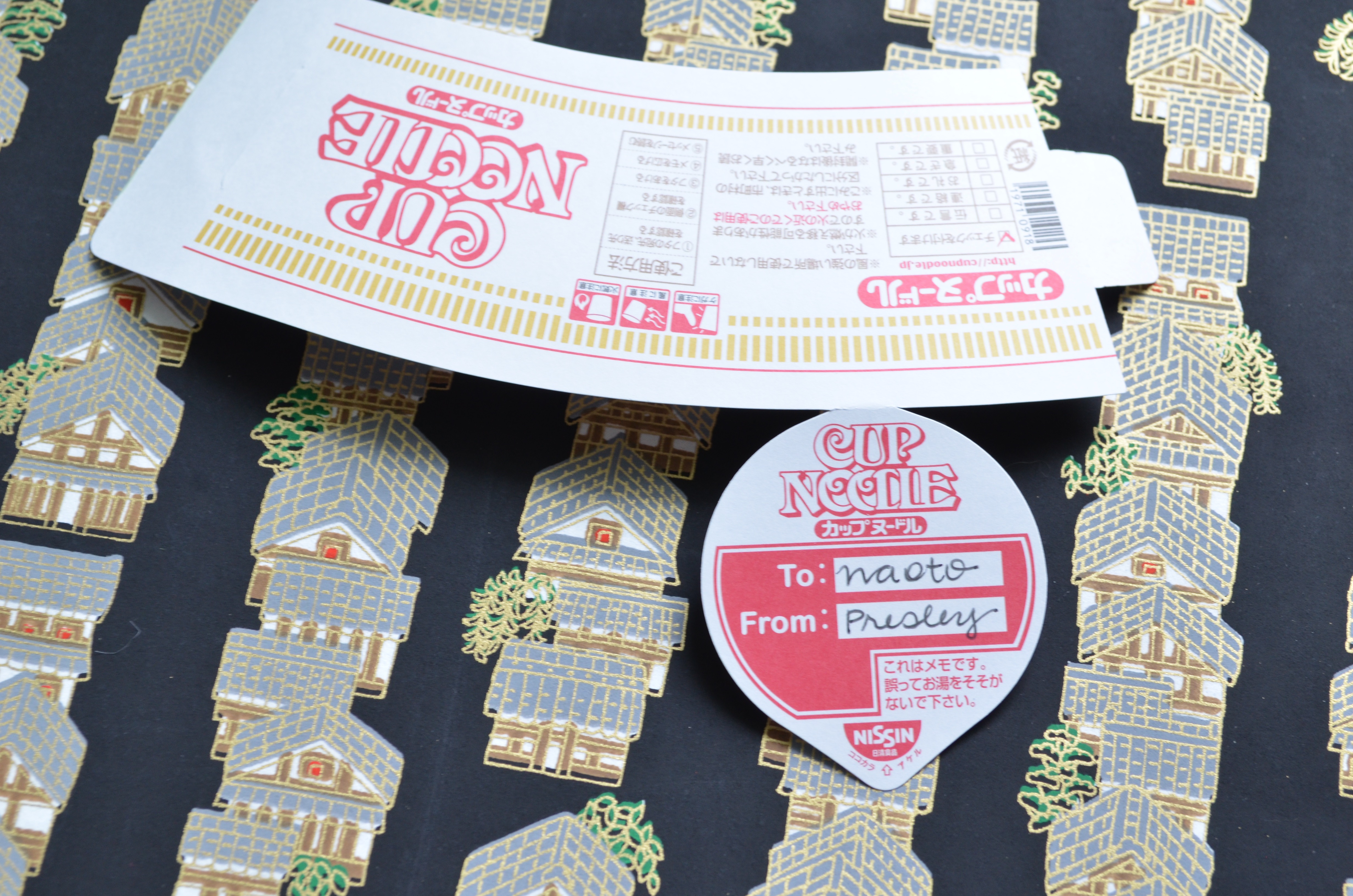
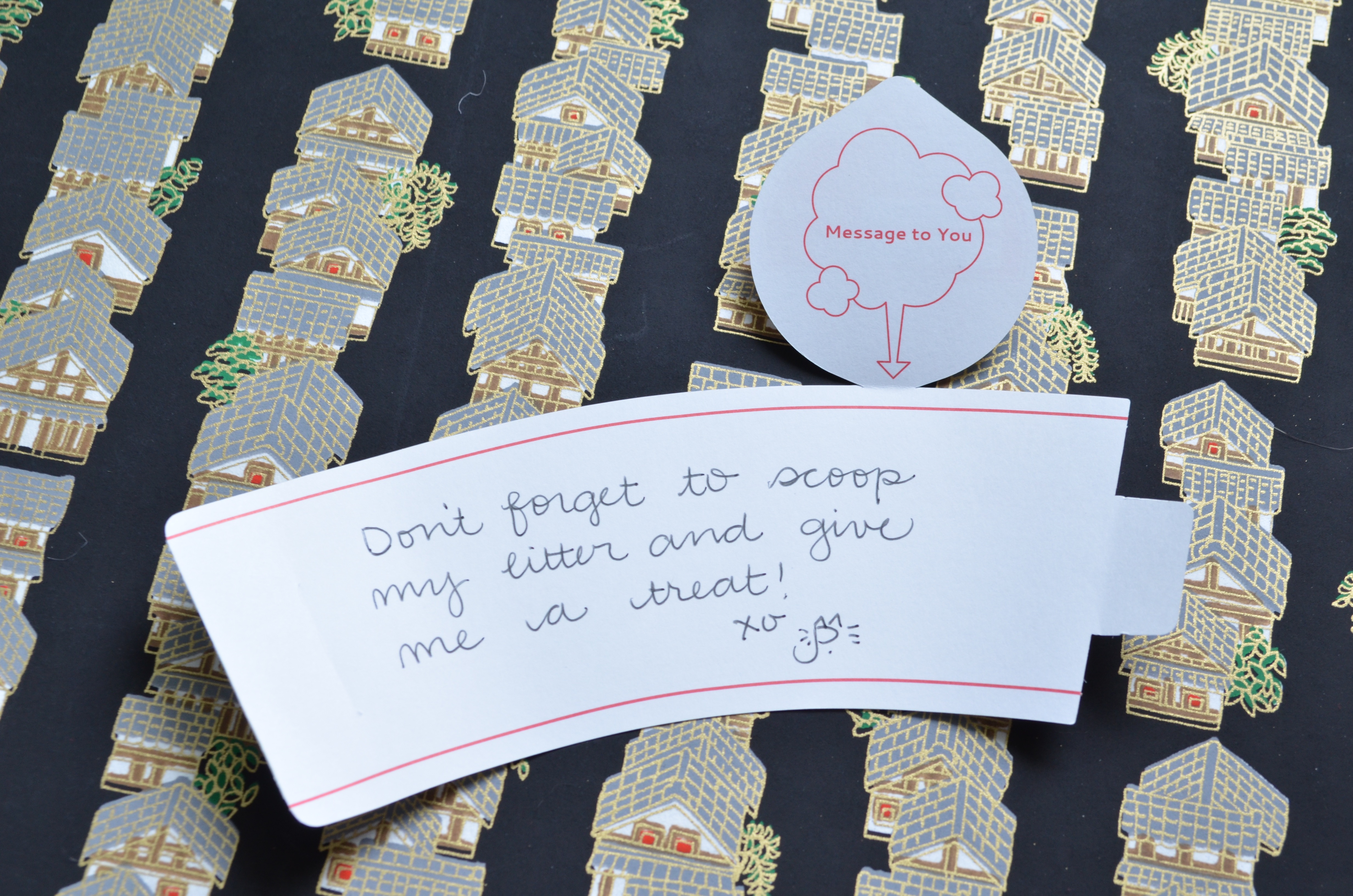
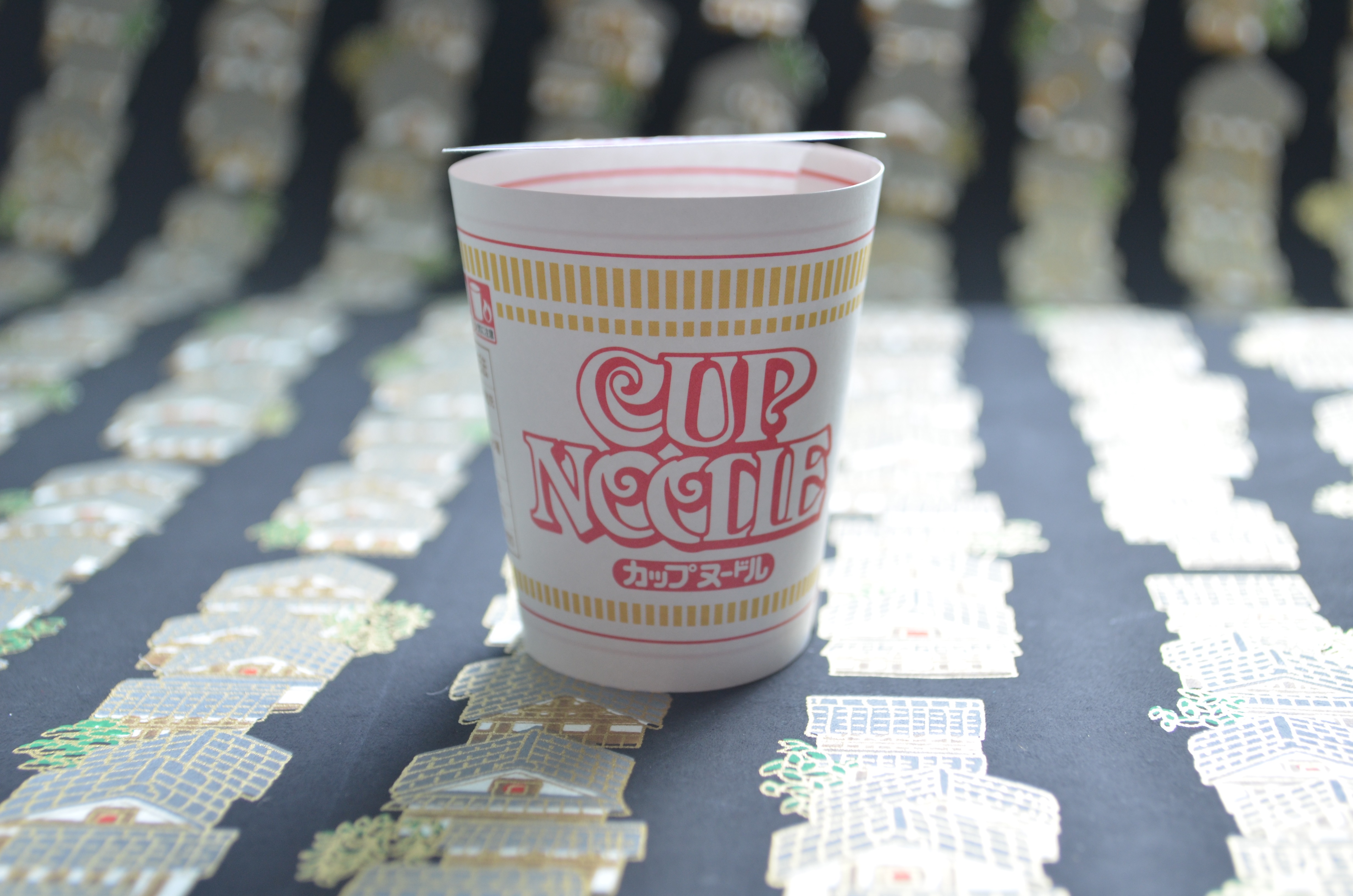
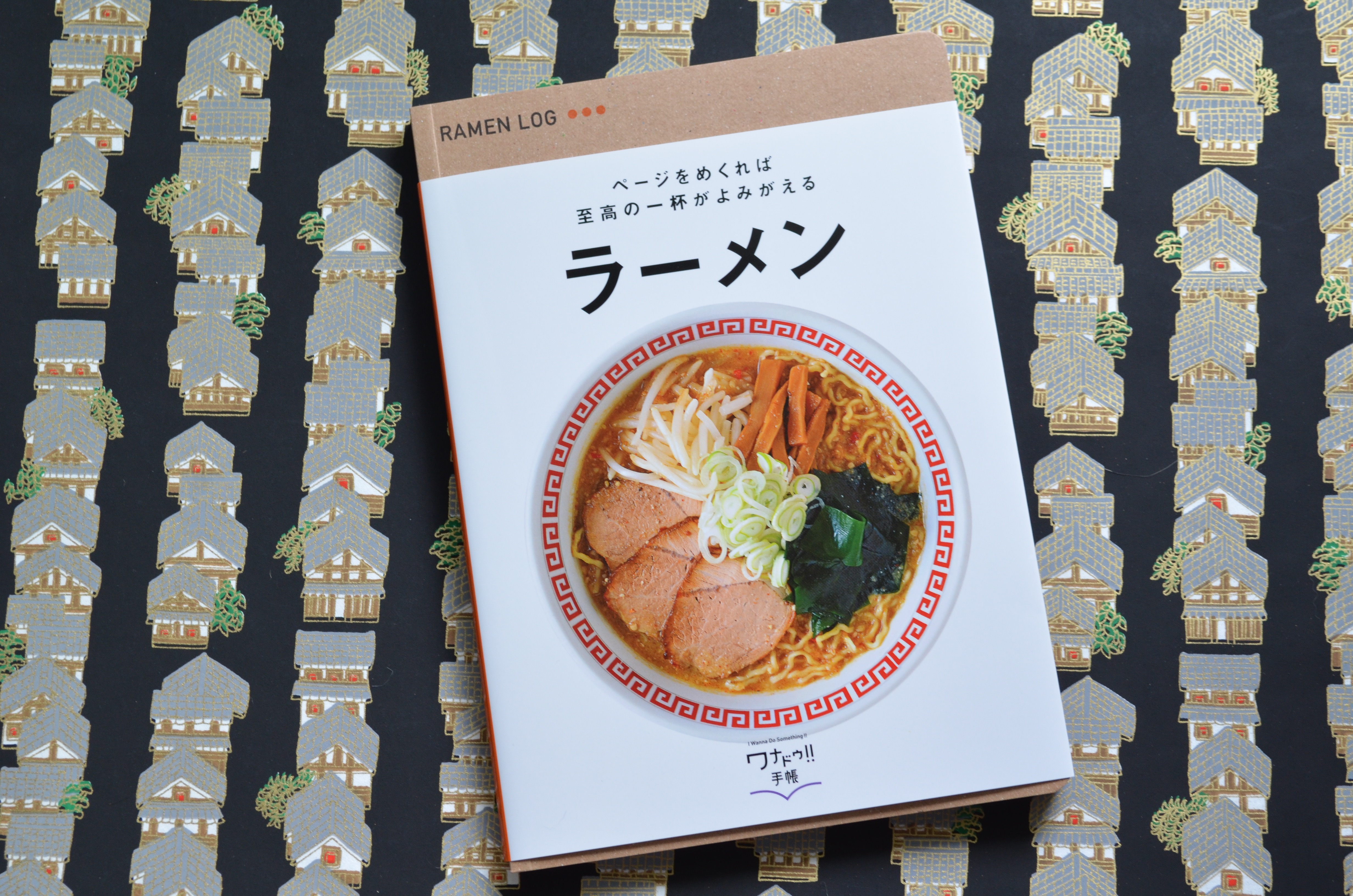
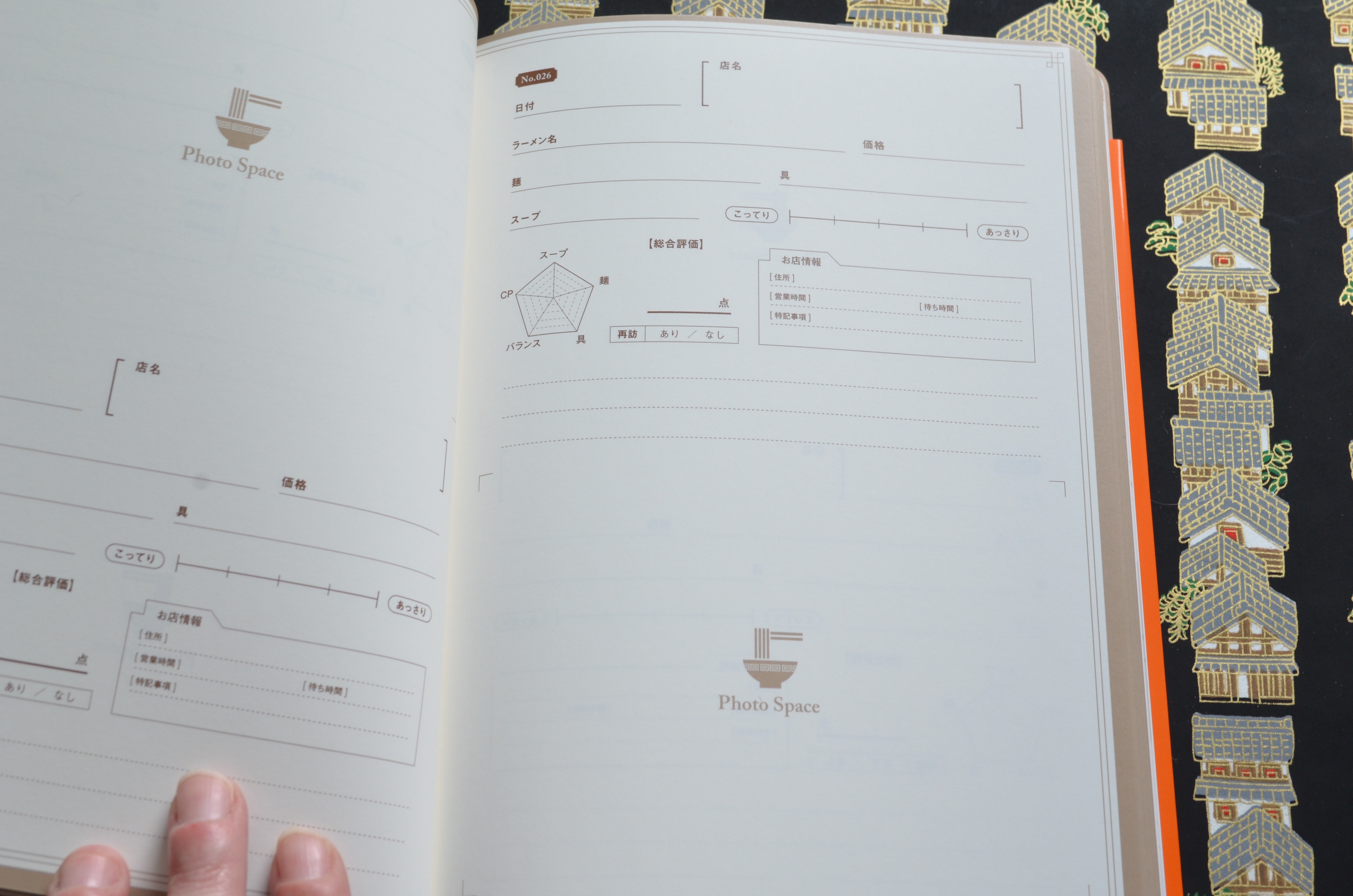
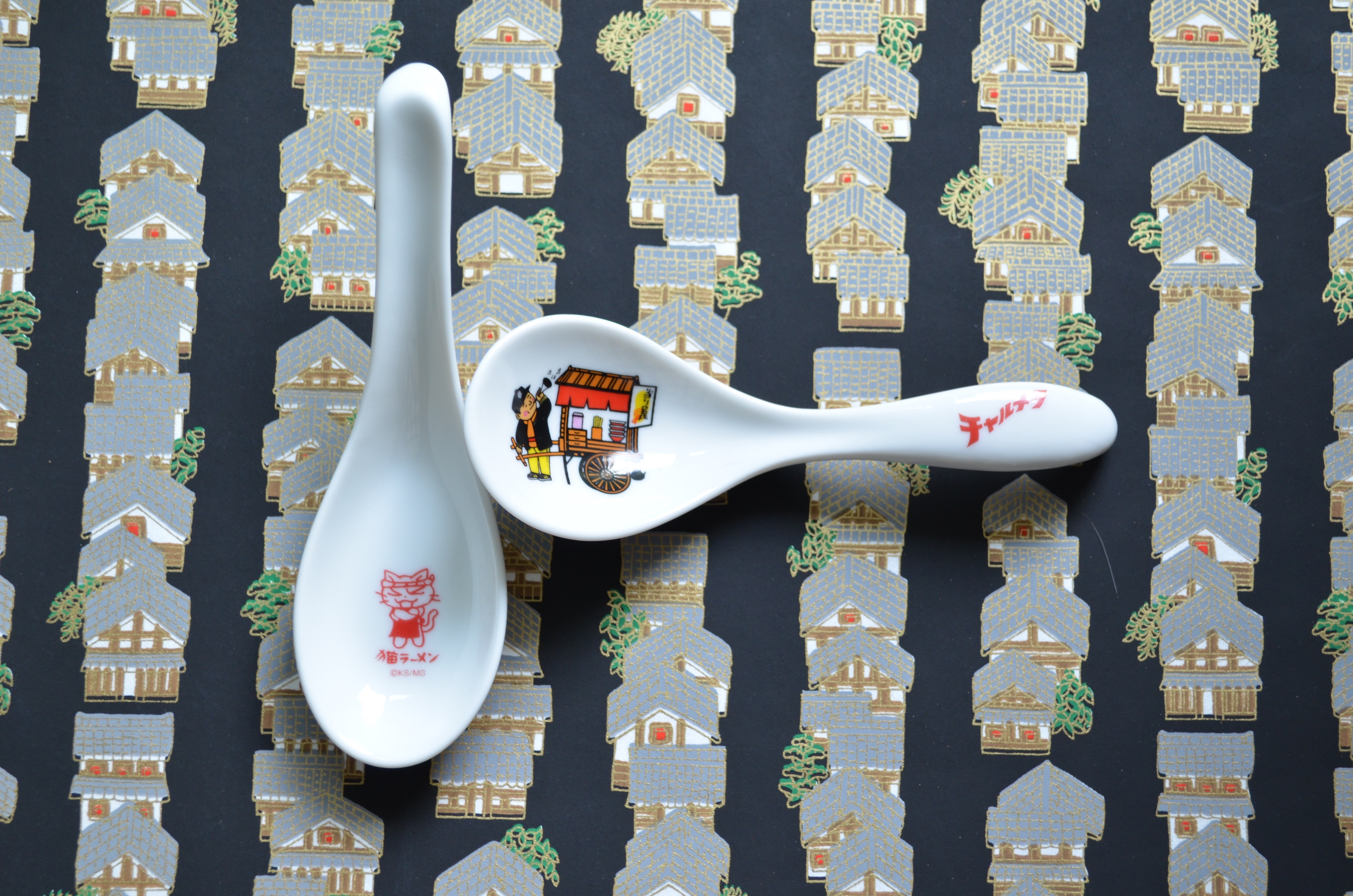
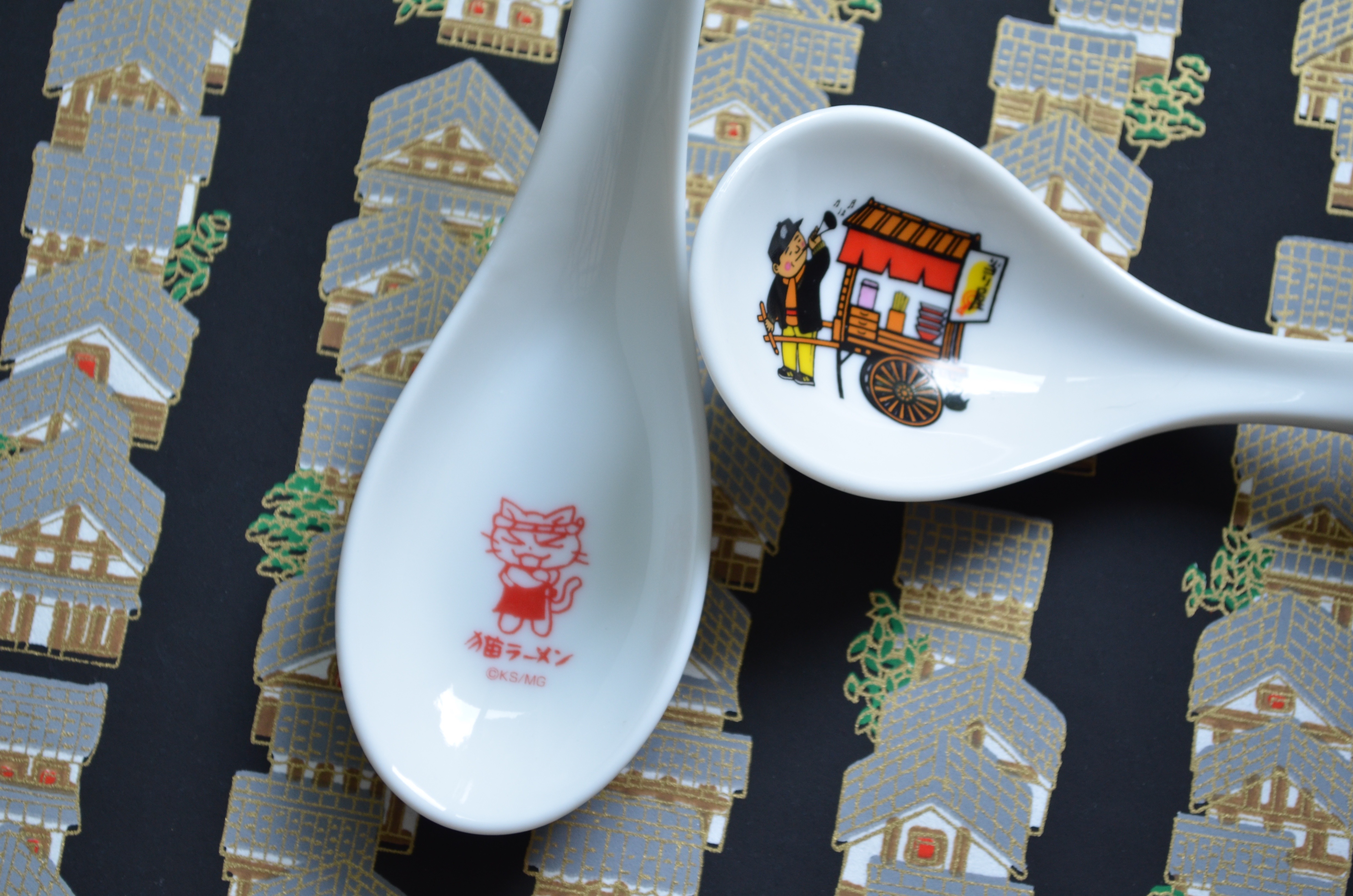
Ramen Souvenirs, Japan, Naoberly Noodle TourWe picked up a few silly treats during our visits to the Ramen Museum and the Cup Noodles Museum. I’m a sucker for a good gift shop and both museums had few offerings but some really fun stuff. I try to get something useful or something we can use up, but I don’t always succeed. Ramen Spoons, vintage ramen shop, Ramen MuseumWe each chose a porcelain ramen spoon at the Ramen Museum. We will most likely use them as soup spoons, but maybe they will inspire us to make ramen at home? They also sold ramen bowls, but spoons took up much less space in our suitcase! Ramen Spoons, vintage ramen shop, Ramen MuseumThe images on the spoons are logos from old Japanese ramen shops. We thought the ramen cart was classic and of course, I chose the ramen chef cat. Naoto in his Ramen Museum t-shirt, Naoberly Noodle Tour, Ramen MuseumNaoto got a ramen t-shirt (he’s sporting it at Mister Donut in the picture above). Hisae told him he looked like an American tourist because Japanese men do not wear t-shirts with pictures on them…I guess that’s why we had to sit in the English-speaking room at Maisen!Cup Noodle note, Cup Noodles stickers, Cup Noodles postcard,  Cup Noodles MuseumThe Cup Noodles Museum had a few paper-y delights for me. Cup Noodles Museum pencil and stickers (2)I picked up a few pencils while I was in Japan this time. The Cup Noodles Museum logo pencil was one of them and I thought these build-your-own-ramen stickers were cute. Cup Noodle postcard, Cup Noodles MuseumThe only postcard the Cup Noodle museum sold was this hologram one. Depending on how you look at it, you can see the cup noodle or a cross-section of the ingredients (top pictures). Cup Noodle note, Cup Noodles MuseumThese little Cup Noodle notes are my favorites. They’re 3-D! Cup Noodle note, Cup Noodles MuseumOn the top, there’s a place to address the note. Cup Noodle note, Cup Noodles MuseumAnd inside, there’s a place for the message. Cup Noodle note, assembledThen, roll it up, tuck in the tab and place the Cup Noodle on the recipient’s desk…a Cup Noodle note cannot be missed! (Just ask Presley. She got her treat last night!)Ramen journal, Ramen log, Naoberly's Noodle TourI purchased this Ramen Log at Loft. I have a failed history with book logs, movie logs, dream logs…pretty much all logs, but for some reason, I was compelled to buy a ramen log. I’m hoping, with the team effort of Naoberly’s Noodle Tour, we can keep up with it. Ramen journal inside pagesl, Ramen log, Naoberly's Noodle TourInside, there pages and pages where you can rate the broth, noodles, and toppings and there’s a place for photos. I’m looking forward to filling up the pages with our past and future ramen stops!

Do you have favorite souvenirs?

Tagged , , , , ,