This was our second rainy season in Japan and I don’t regret repeating a season. I think I’ve said it before, but I’ll say it again: If you can’t go to Japan during sakura season, go for the rainy/hydrangea season and you’ll hardly miss those delicate pink blooms!
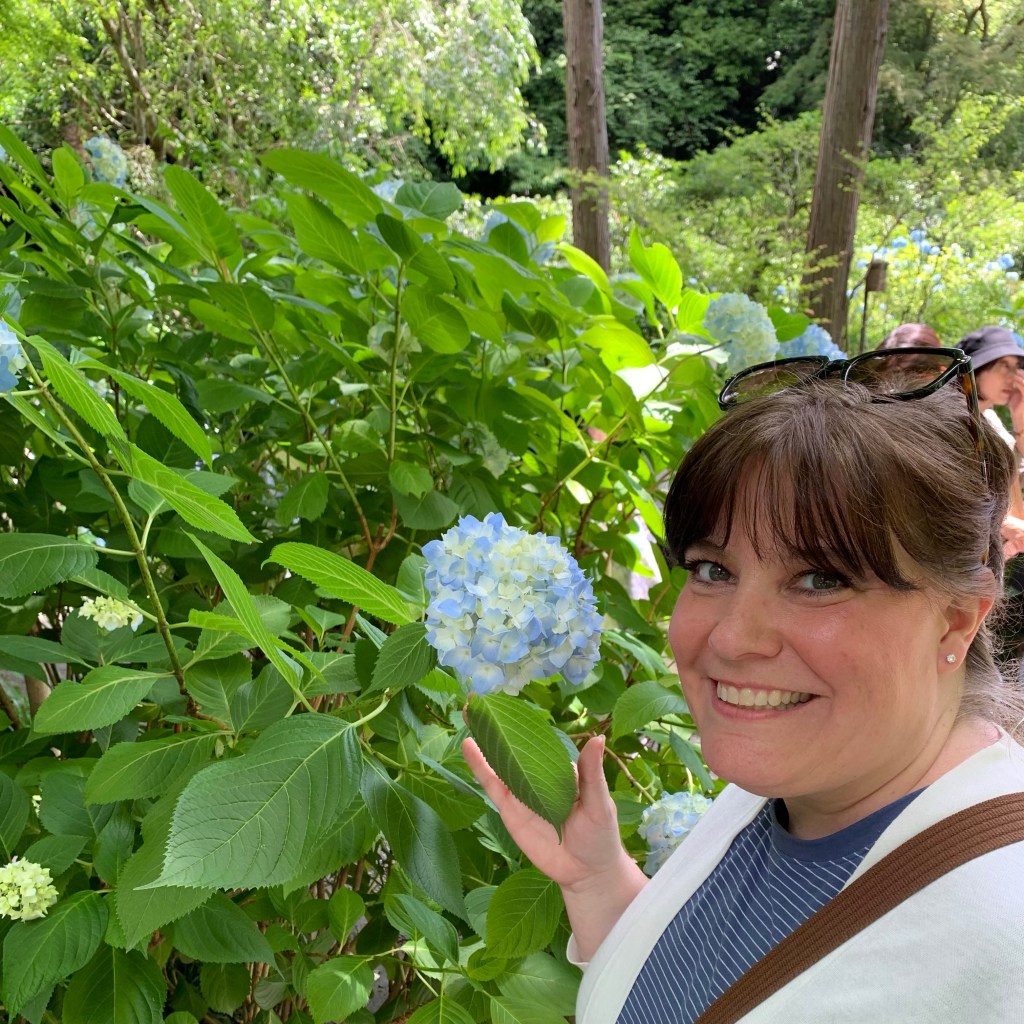
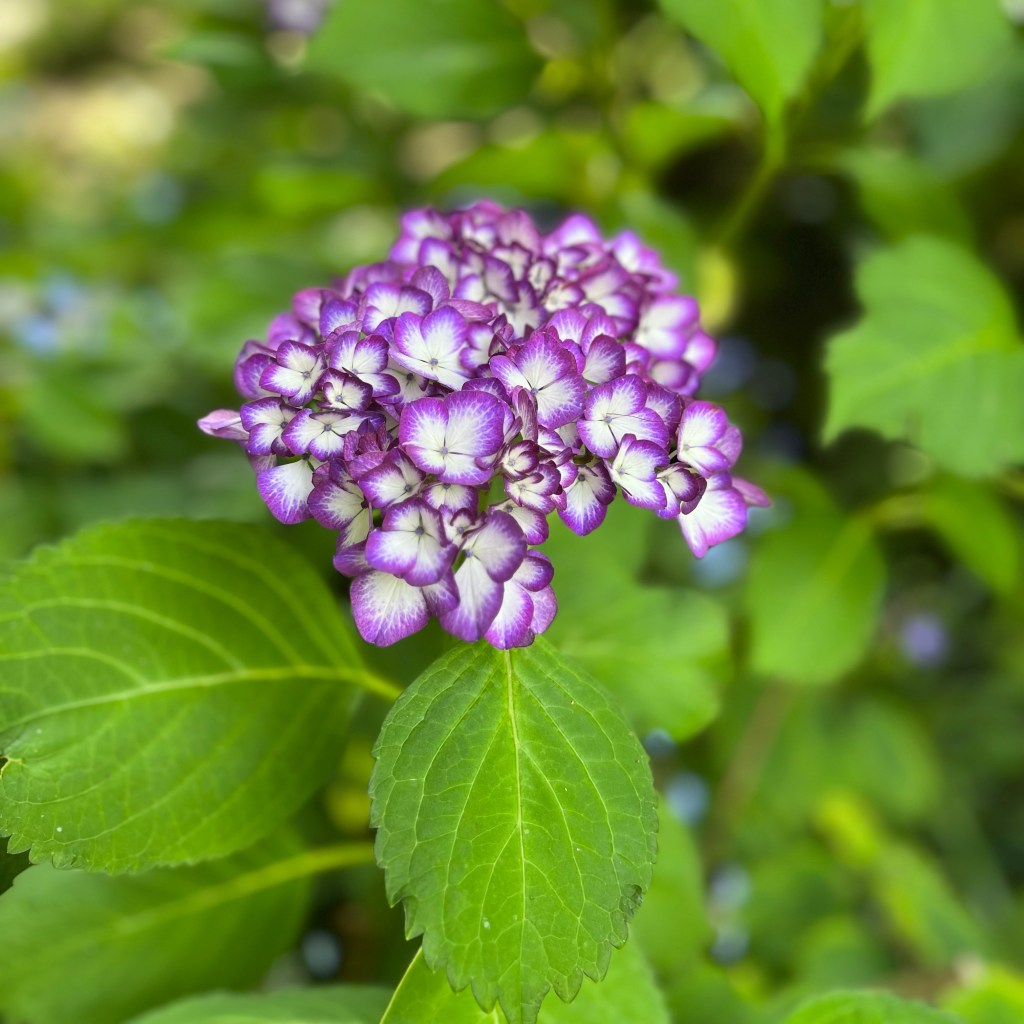
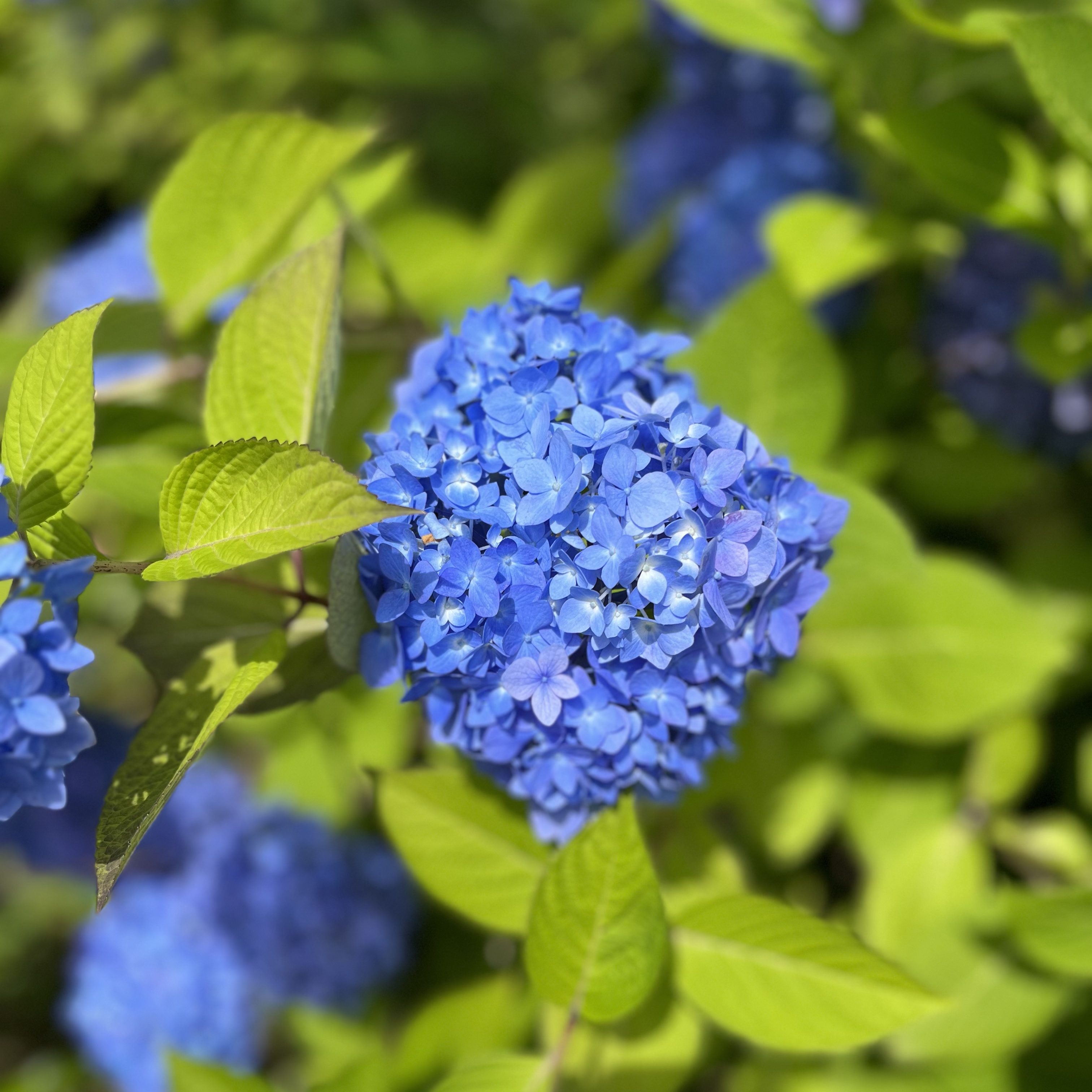
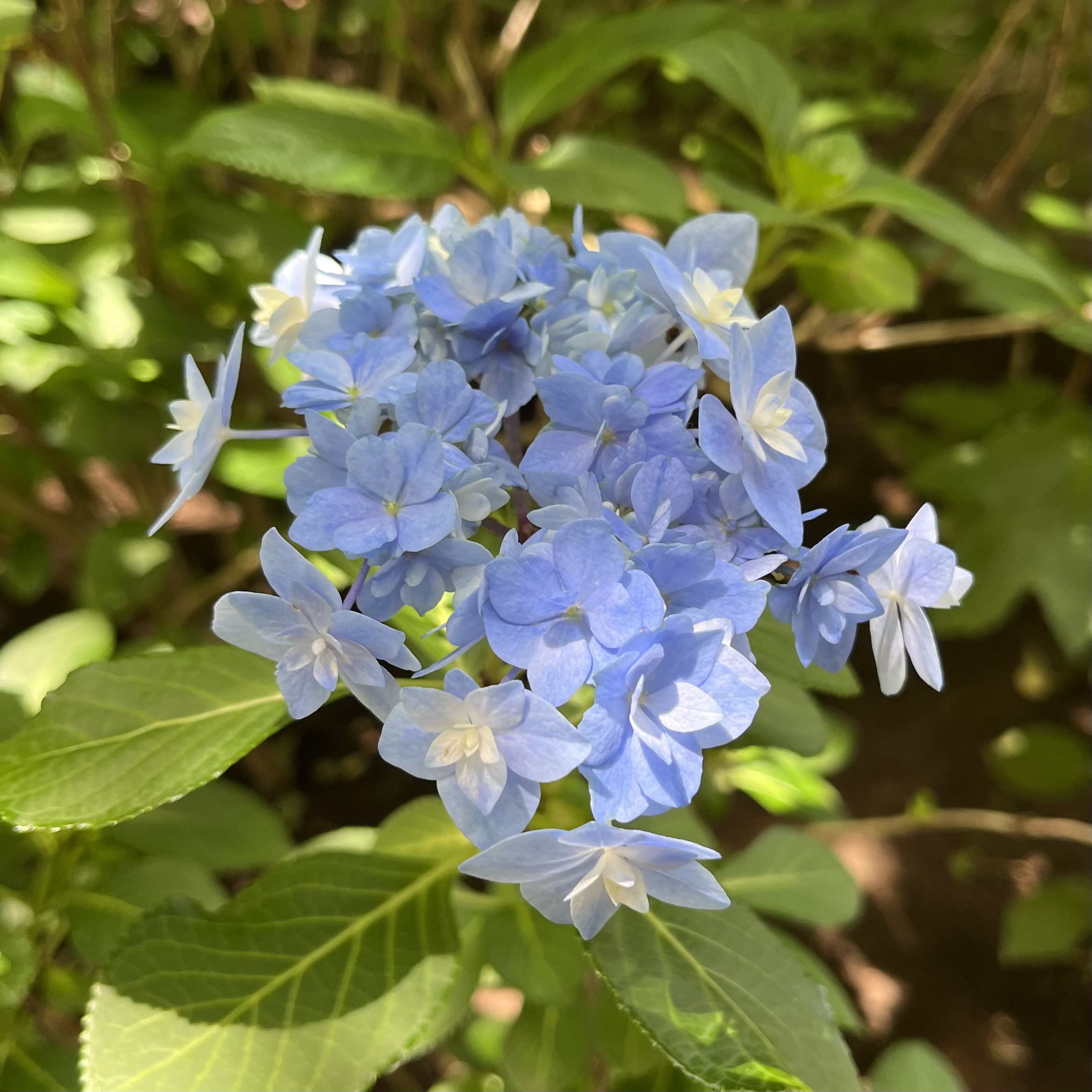
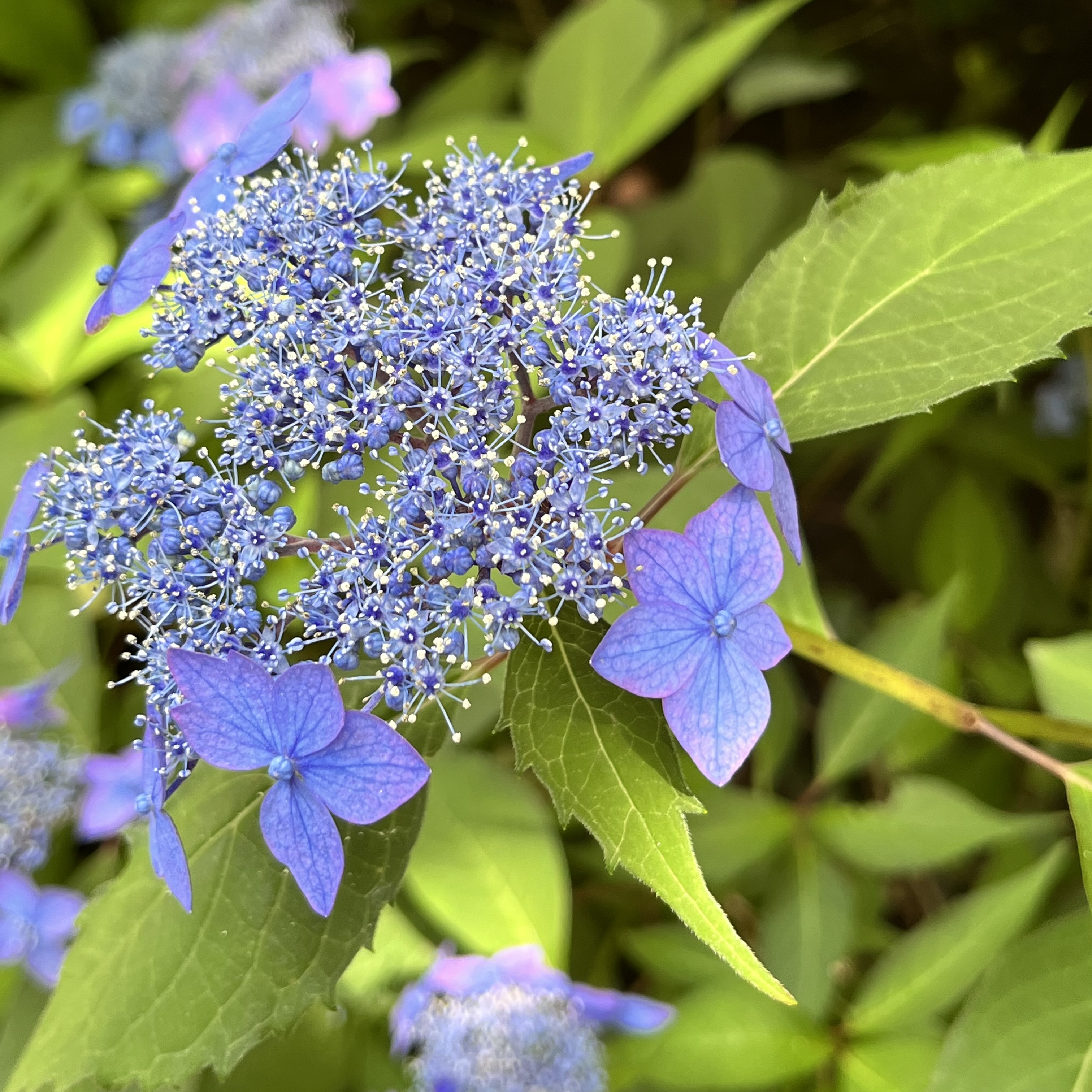
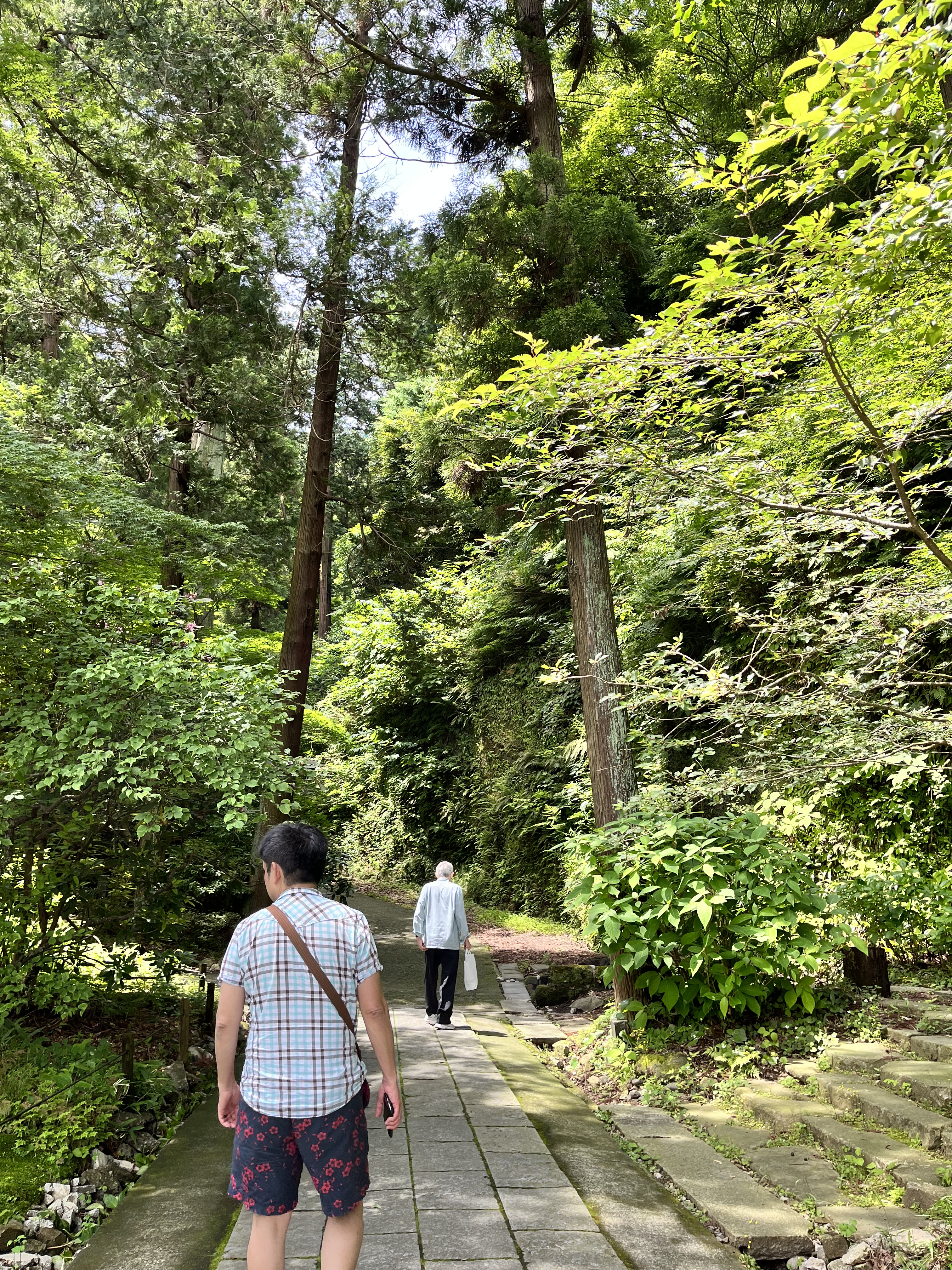
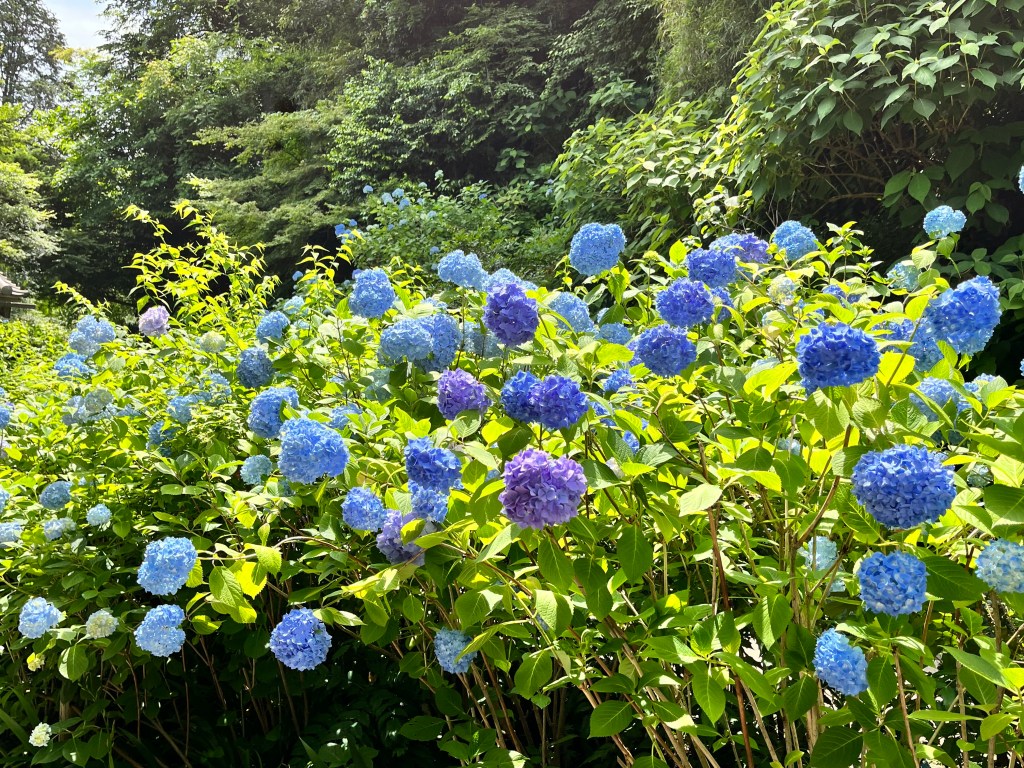
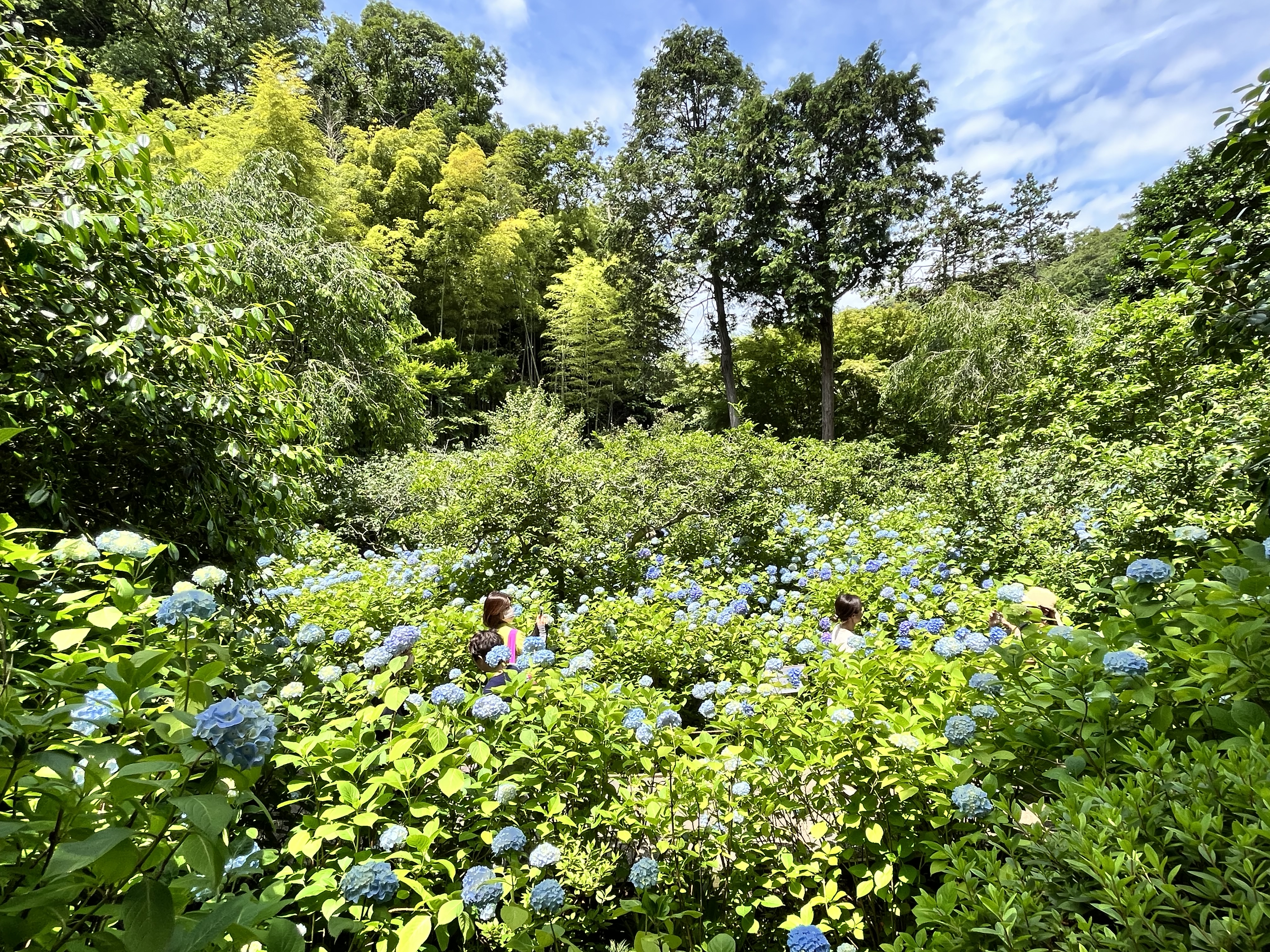
We spent a day in Kamakura visiting three temples that are known for their hydrangea blooms. Japan has so many varieties of hydrangea and it’s always fun to see the different colors, shapes, and sizes.
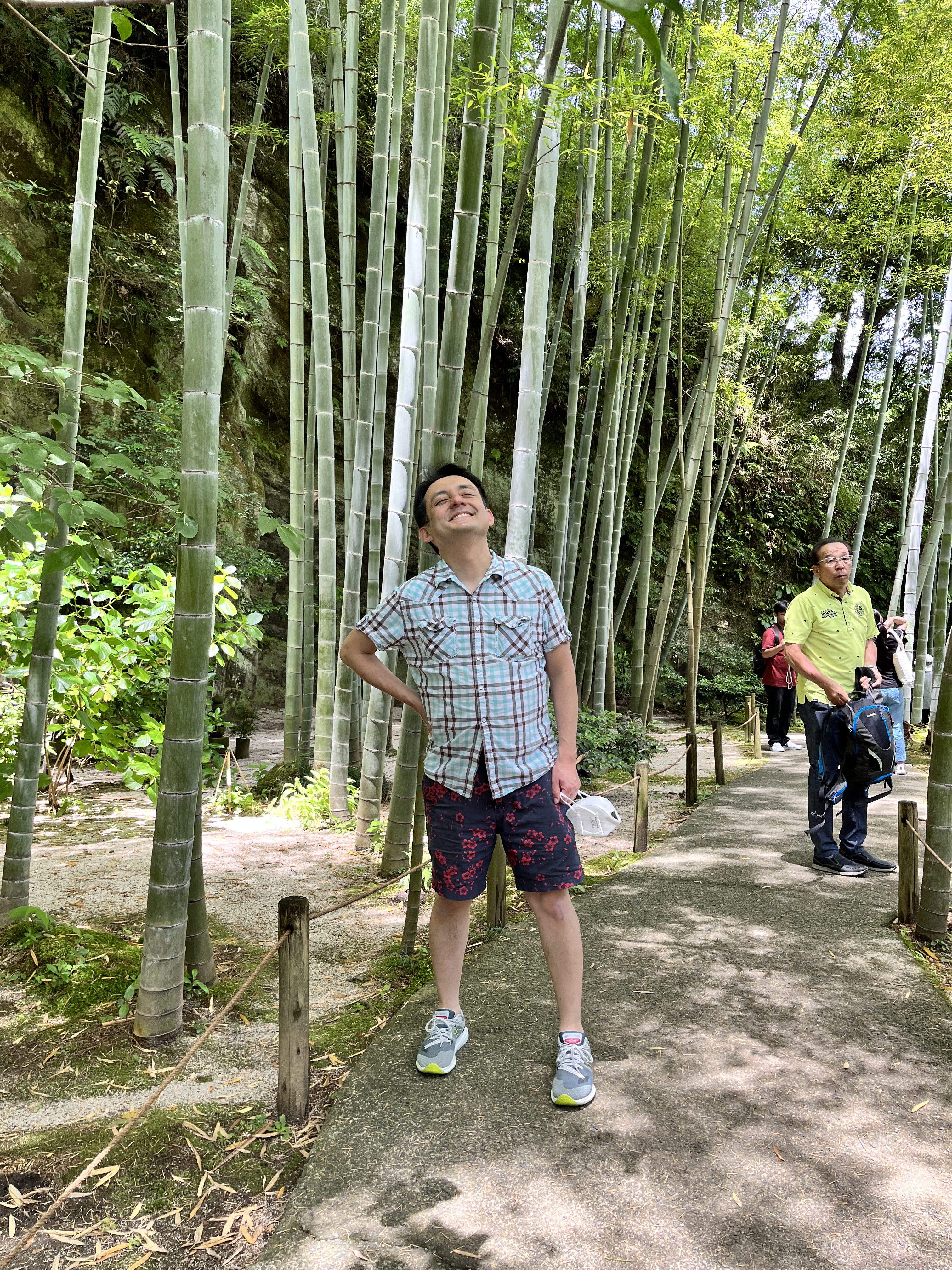
Naoto, who was clearly in charge of his own packing, was basking in the bamboo forest and enjoying the blooms almost as much as I was.
I think we were a little early for peak hydrangea season on this particular day, but it wasn’t too hot and humid and it wasn’t raining so I think we planned it perfectly, even if by accident!
Ok, how about a little break from the present day? Let’s go back to Japan where we ate this meal a year ago today!
On our first day in Tokyo last spring, we decided to go to Tokyo Station where we could go to the Travelers store and to the post office in Kitte (a shopping center just across the street from the station.) We visit Kitte almost every trip (I’ve talked about it before here.) because the post office usually has the best stamp and merchandise selection. And in the mall area, there’s a great tenugui store. (I should probably talk about my little seasonal tenugui collection sometime!)
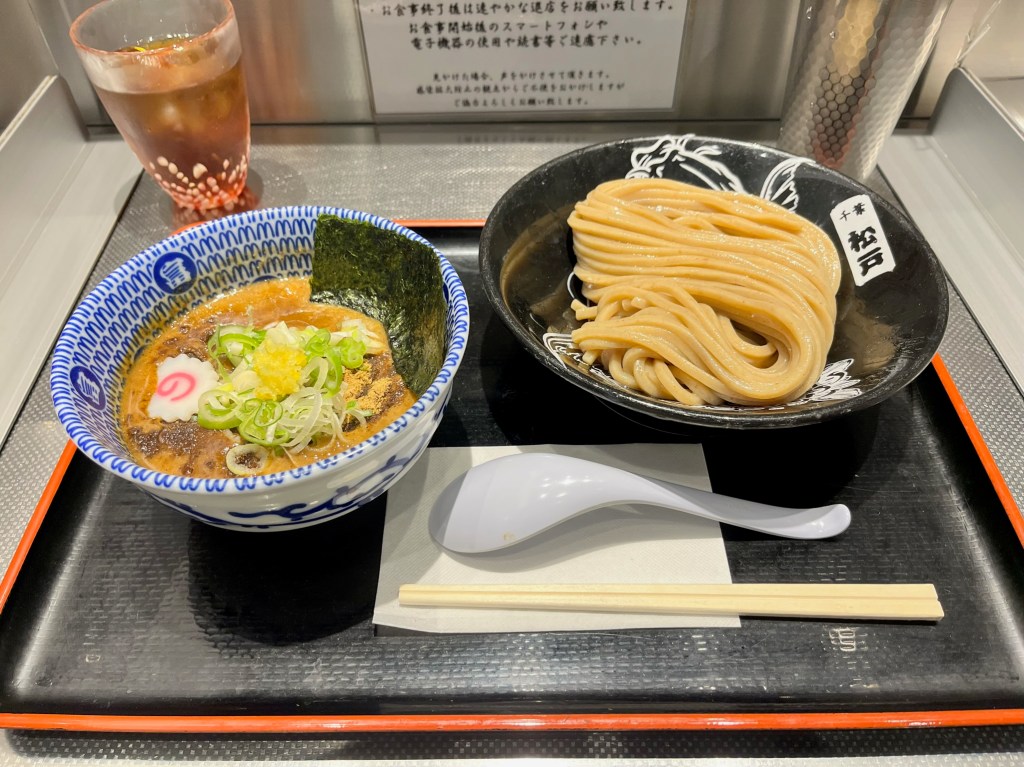
We knew we wanted some kind of noodles for lunch. One of Tokyo’s most famous ramen places is at Tokyo Station but like last time, the line was too long for us to wait. So, Naoto asked the woman working at Travelers if she had any recommendations and she pointed us back to Kitte for tsukemen. (If you don’t know what tsukemen is, this post might help! It’s similar to ramen except the noodles are served separately and cold and they are dipped in the thick soup broth. To me, they are the perfect way to eat a ramen-like meal in the summer!) Naoto looooves taking recommendations from people, so we decided to take her suggestion and go to Matsudo Tomita Memban.
When we got there, the shop wasn’t open yet, so we debated about getting in line, but we did. Fortunately, we were second in and beat the huge rush of people who lined up behind us! Unfortunately, we were second in line behind some know-it-all from New York who tried to impart his Japanese traveling knowledge upon us. He was one of those people who talks at you and he just assumed we had never been to Japan before based on…nothing. He had read about this noodle shop in on a travel website and couldn’t stop trying to tell us where else we should go in Tokyo. I checked out of the conversation almost immediately and Naoto did a lot of nodding and smiling. Needless to say, the New Yorker was quite surprised when Naoto started speaking to the chef in Japanese and carrying on a conversation with our server.
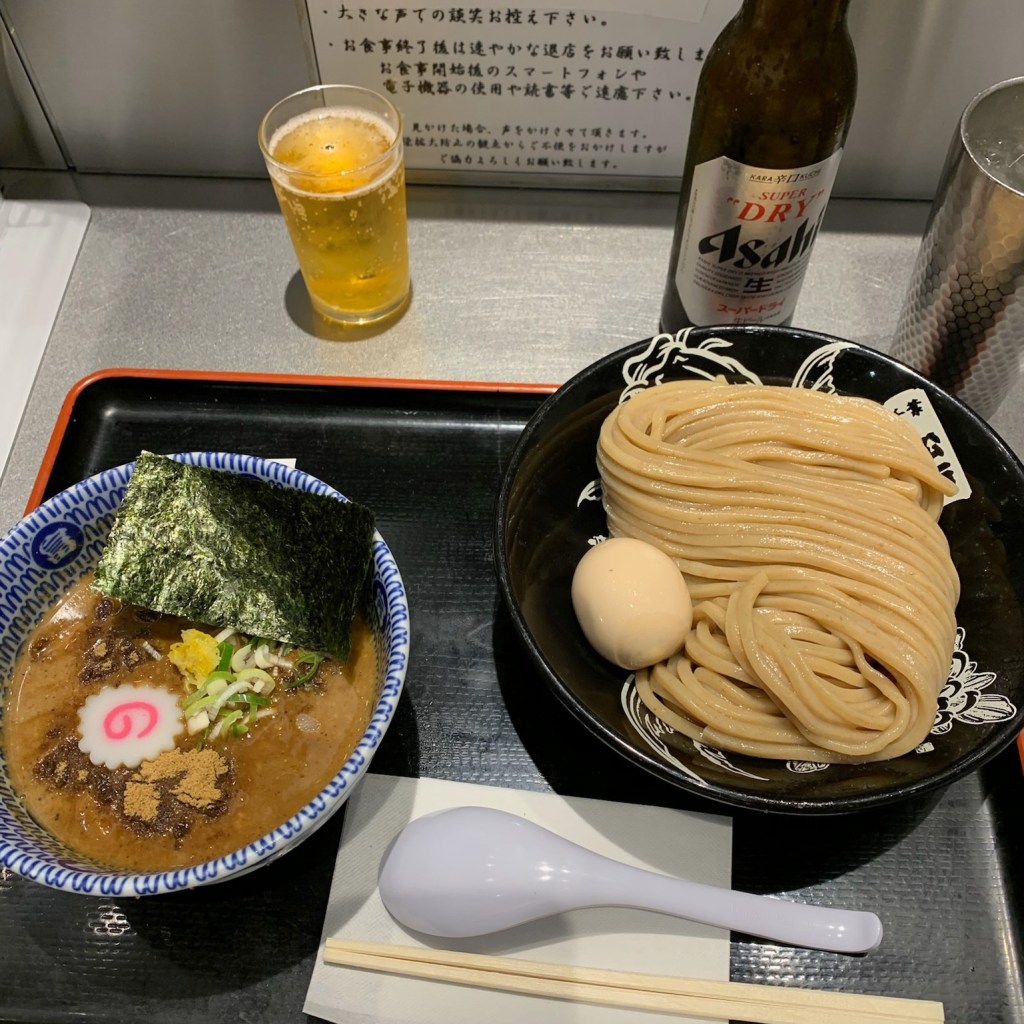
We both got tsukemen. In the broth was a slice of char sui (pork), bamboo shoots, fish cake, and seaweed, but you could add on additional toppings. (Naoto got additional toppings and a larger serving!) The noodles were perfect–chewy and delicious and the thick, salty broth clung to them for the perfect bite every time. We were so pleased with our lunch, Naoto went back and thanked the Travelers woman for her recommendation.
I should also mention that this is an English friendly place to visit–you order at a ticket machine that has an English option so no worries about translations. It was all very seamless, even if I didn’t have my own personal translator by my side!
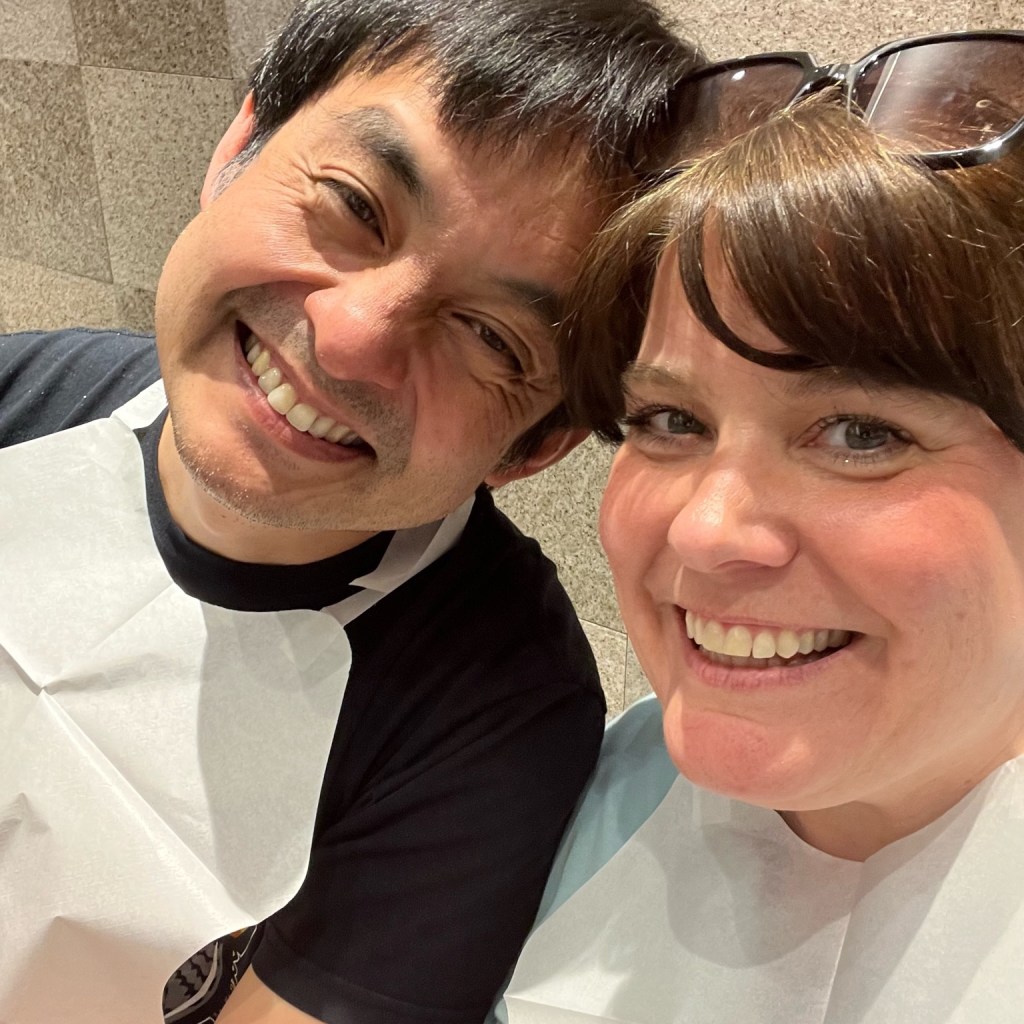
How cute are we in our little slurping noodle bibs?!
It wasn’t until we got back to the hotel that night that we realized how famous the noodle shop was! It’s the Tokyo version of a very popular tsukemen restaurant in Chiba, Chuka Soba Tomita, considered Japan’s #1 ramen shop, where people line up for the tsukemen at 7am! Owner Chef Osamu Tomita trained at Japan’s original Tsukemen restaurant, Taishoken in Tokyo, and he’s featured in the documentary Ramen Heads, which I highly recommend if you like ramen and food journeys. Kitte recruited him for their “ramen street” in the basement of the mall. What a lucky get for them–and for us!
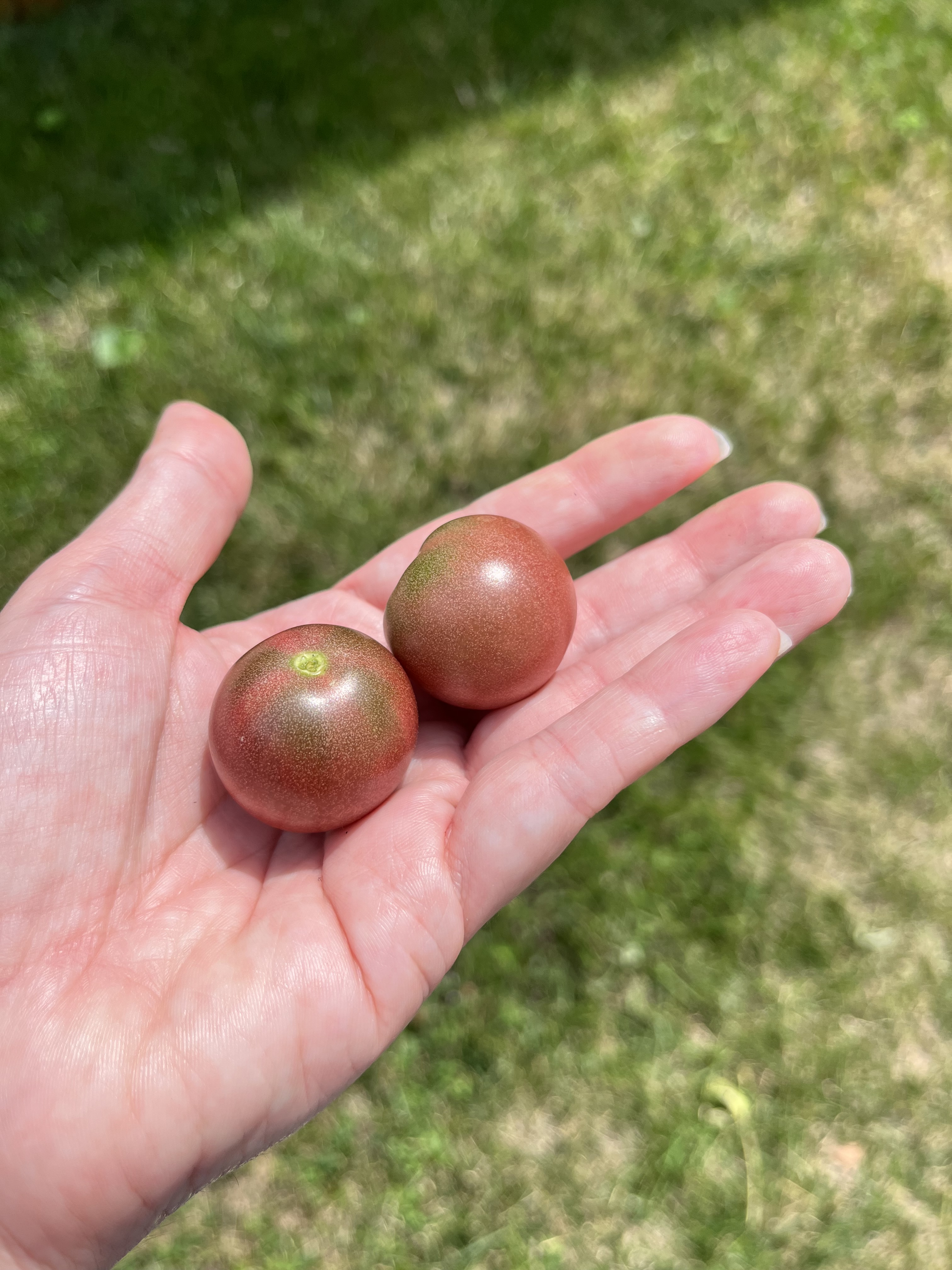
Hello from the Housegawa Garden! I picked my first tomatoes this week, on the exact same day I picked my first tomatoes last year! These are “advanced” Black Cherry Tomatoes (also the same variety I picked last year!) because the rest are green on the vine. I have no idea why two ripen much sooner than the rest!
I have so much to share! Naoto and I spent the first part of the summer in Japan, our first trip back since Covid! It was so great to be back to see Naoto’s family and revisit our favorite places along with some new ones. We took a fun side trip to the gyoza capital of Japan, which I can’t wait to tell you about!
Then, we caught Covid on the plane and spent our first days home sick, quarantining, recovering, and then catching up with everything we missed in June. But now, we’re feeling rested and ready make the most of the rest of the summer. Whew!
So, if you’re still around, HELLO! Please tell me what YOU have been up to!
Since August 6 marks the 75th anniversary of the bombing of Hiroshima, I thought this week might be a nice time to talk about our trip to Hiroshima back in 2016. I fell off blogging when we returned and never got around to writing about this trip. (I missed telling you about so many things!) We spent a few days in the city and visited the major World War II sites, including the A-Bomb Dome and the Hiroshima Peace Memorial Park and Museum. Hiroshima had been on our list for a few years before we went, but we put it off because, well, we knew it would be depressing. Naoto visited the city when he was in grade school and we both knew it was going to be a sobering experience. Boy was it ever. But, Hiroshima is so much more than the bomb sites. We found it to be a vibrant city with a lot of beauty tucked among the sober sites of war. I can’t imagine living in a place where most of the world only knows you for something tragic.
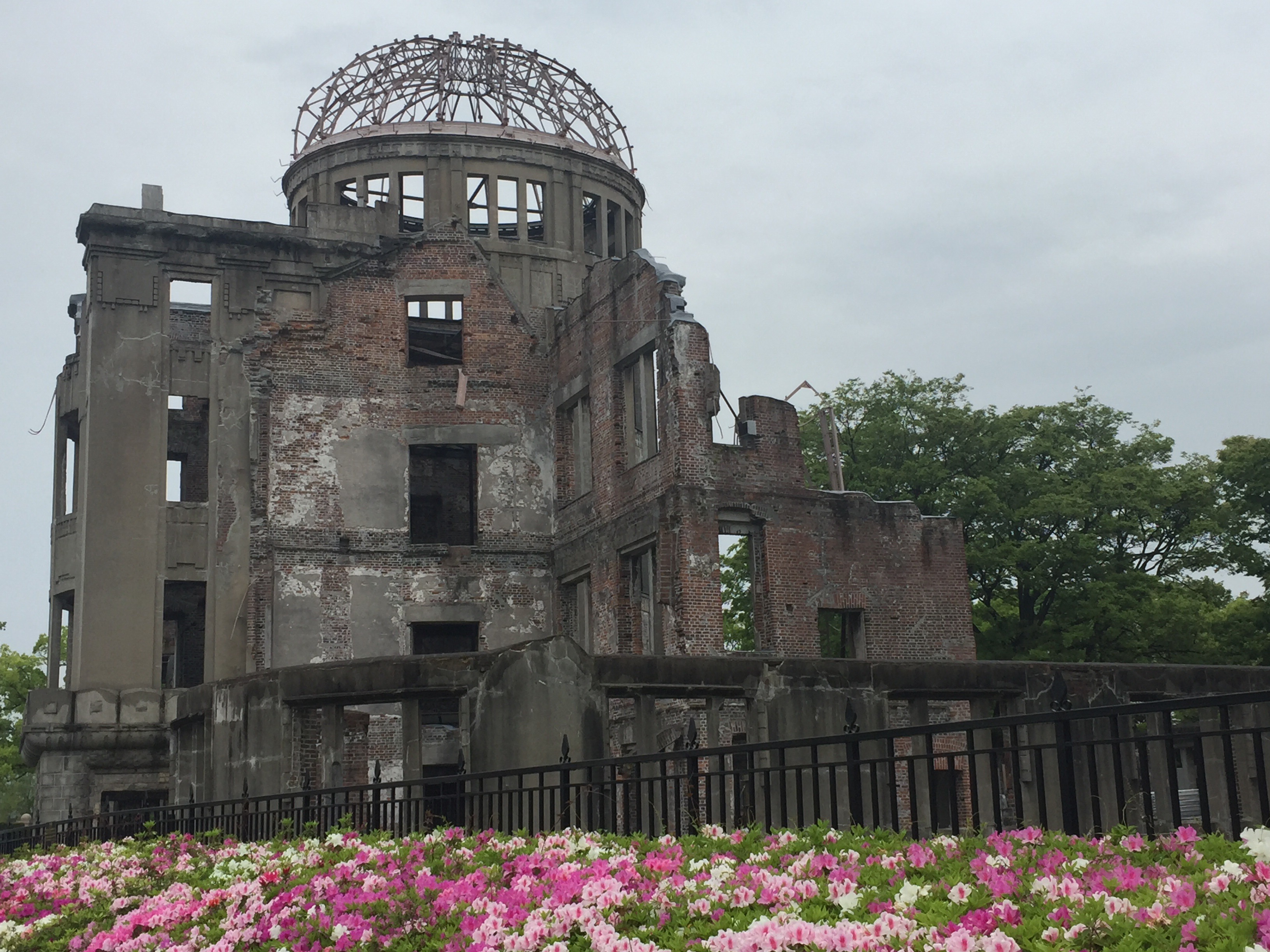
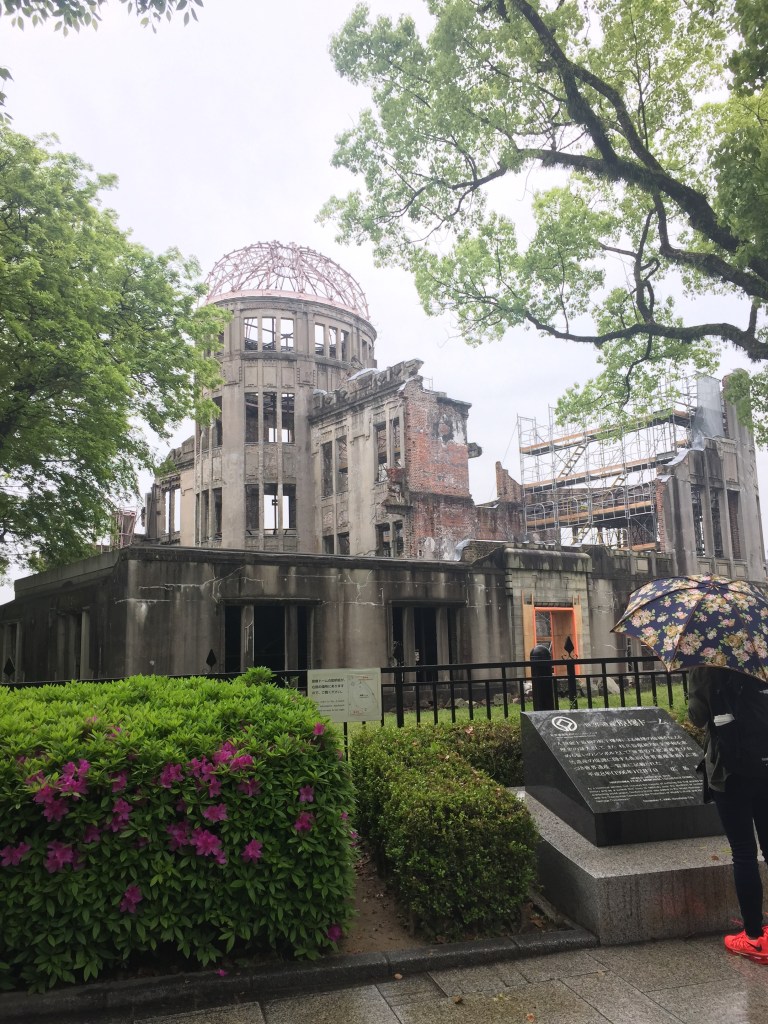
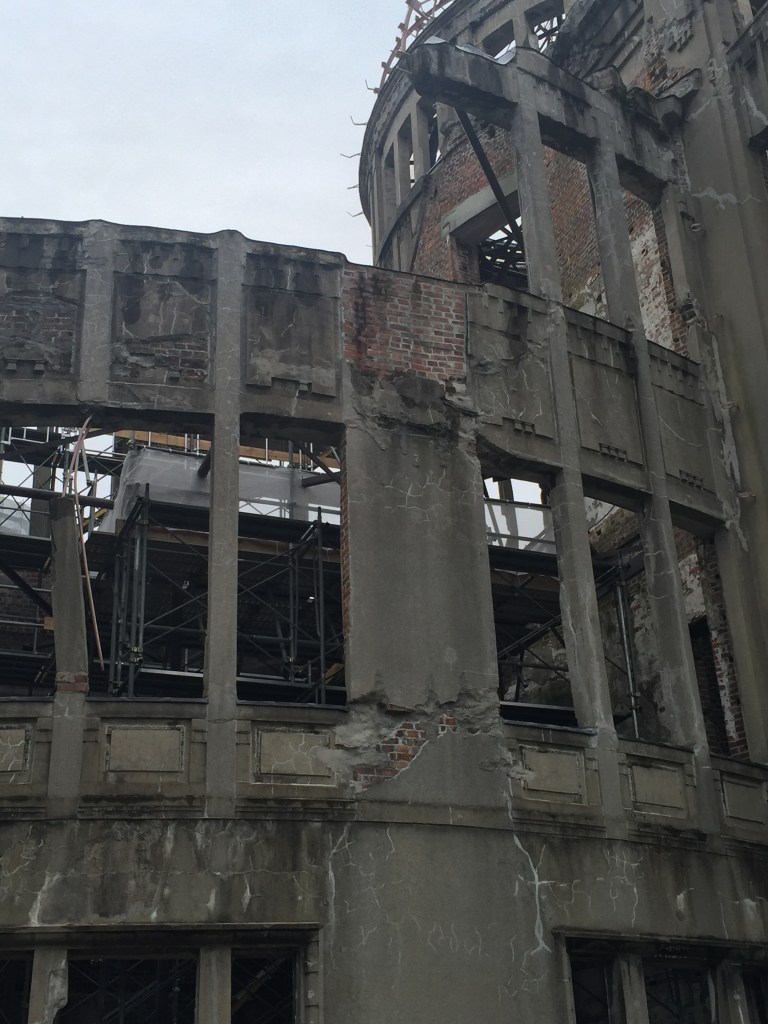
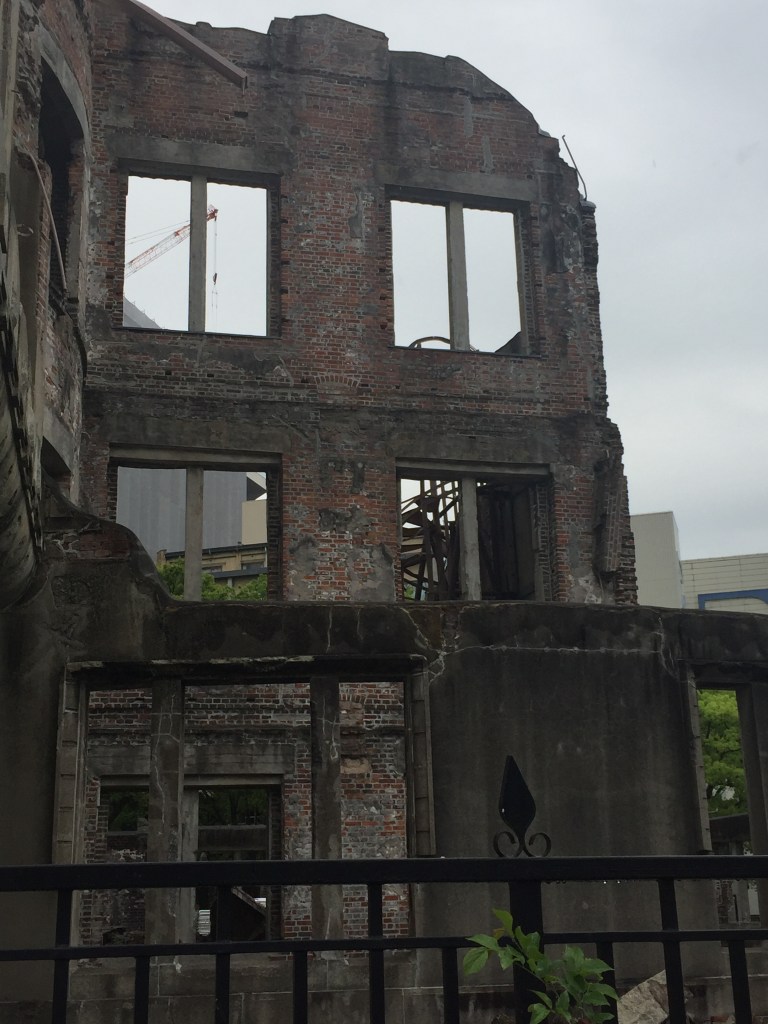
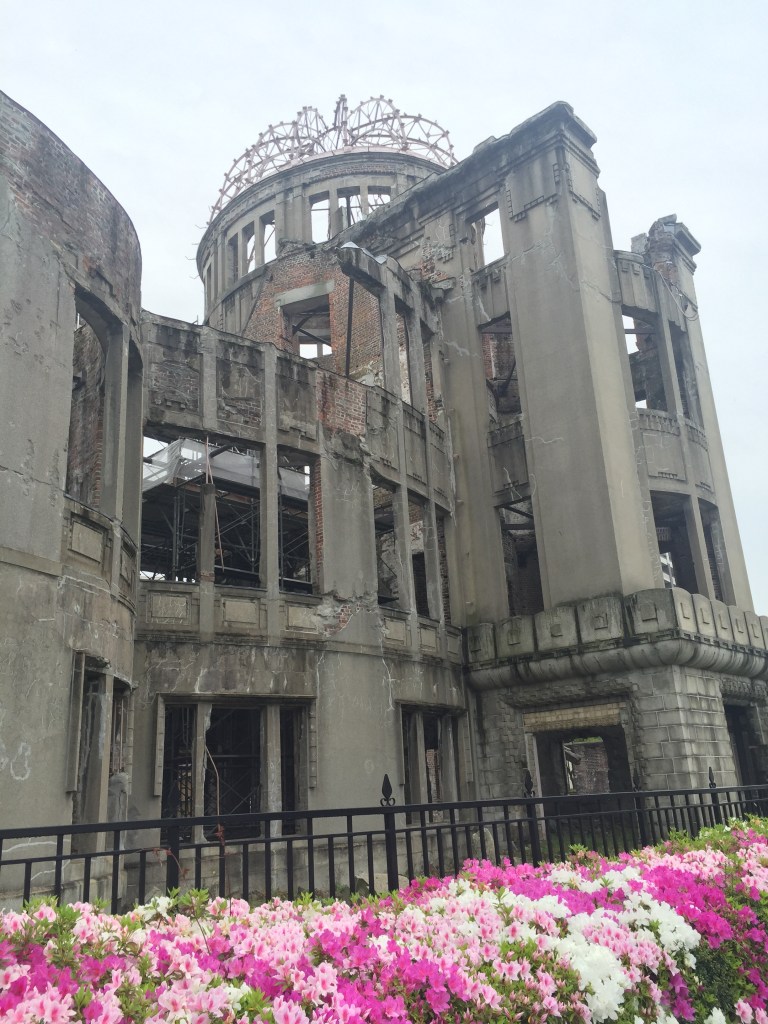
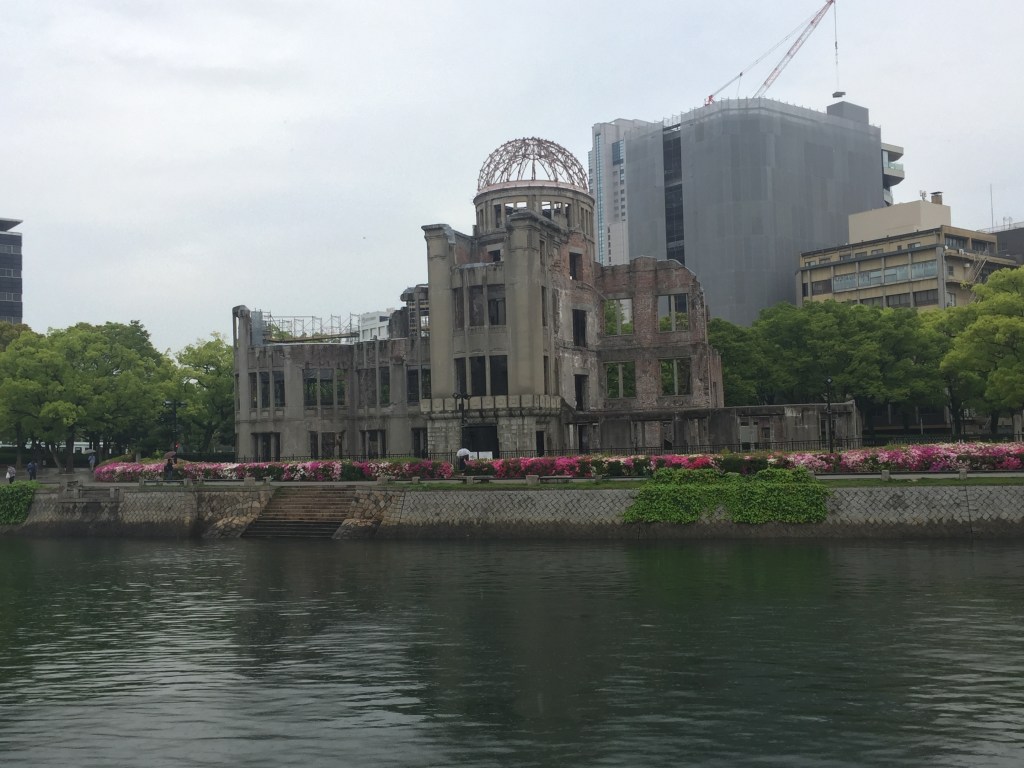
It was pouring on the day we decided to visit the Peace Park and Museum…fitting for the mood of the day. The first thing we saw when we got off the streetcar was the A-Bomb Dome, the remains of a building that was near the epicenter of the bomb. Originally, this was the Hiroshima Prefectural Industrial Promotion Hall. The bomb exploded about 1600 feet away from the building, but about 1900 feet overhead. The interior of the building was completely destroyed by fire and everyone inside died instantly, but the walls and the steel dome frame remained after the fires.
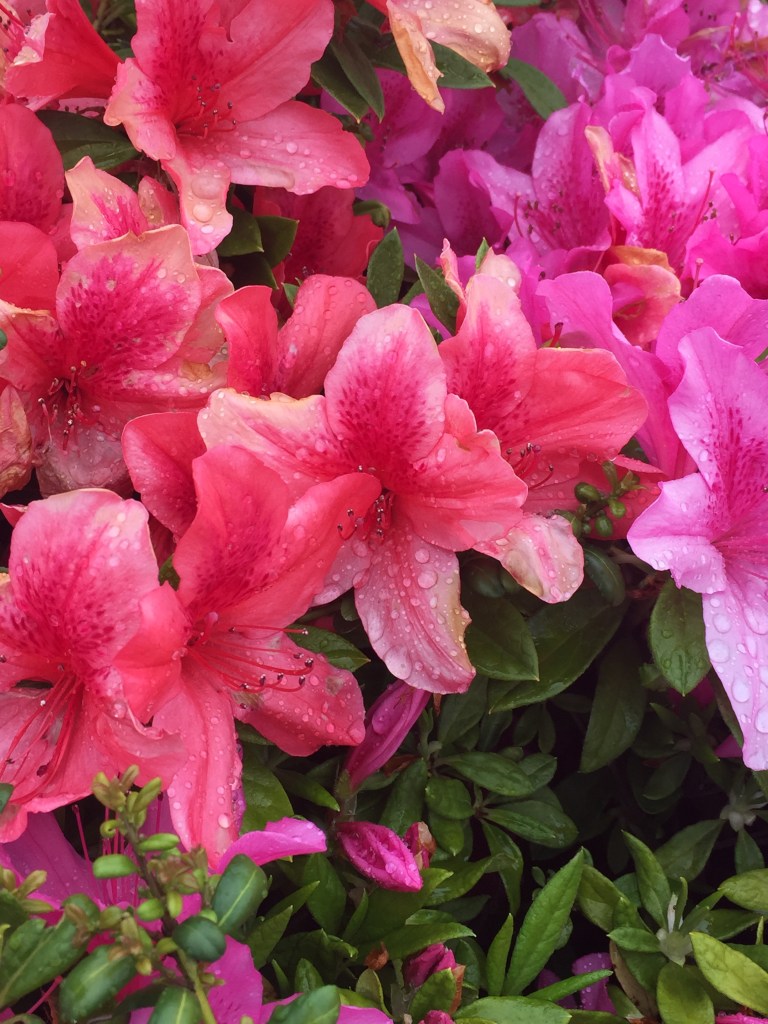
When we went, the azaleas were blooming so beautifully and the contradiction between the vibrant, lively color and this battered building that has stood pretty much unchanged* since 1945 was quite jarring. And, while the area was pretty busy with people milling about, around the A-Bomb Dome, it was practically silent. No one spoke above a whisper.
*Japan is working to preserve the site to the exact “state of destruction” after the bombing. It is a challenge because age and weather are causing deterioration of the building and they need to discreetly protect it from earthquakes.
The Aioi Bridge connects the A-Bomb Dome to the Peace Park (pictured above.)
Here is the view of the A-Bomb Dome from the other side.
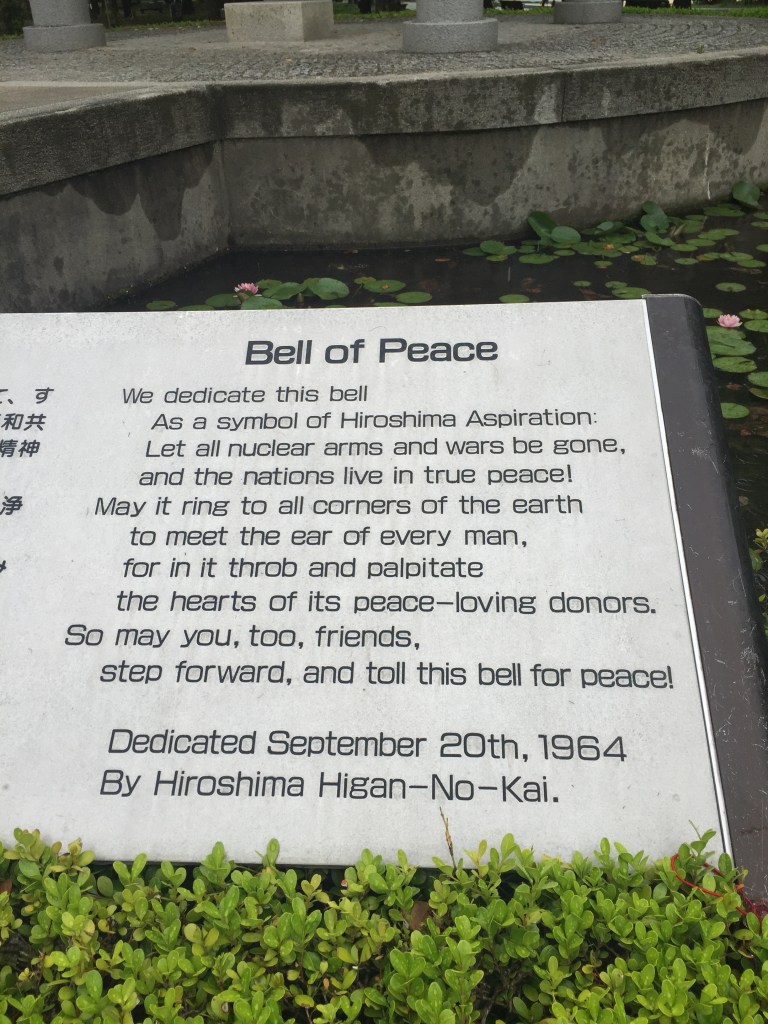
In the Peace Park, there are special memorials to the many victims of the bombing and the war and a couple museums. Here’s Naoto ringing the peace bell.
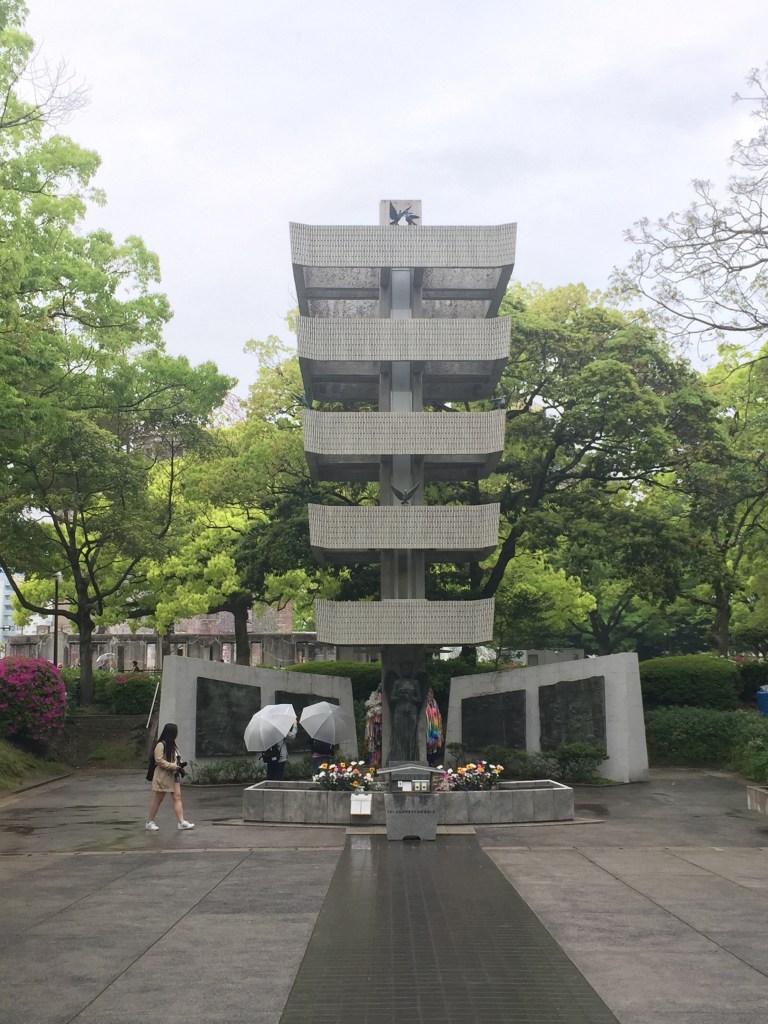
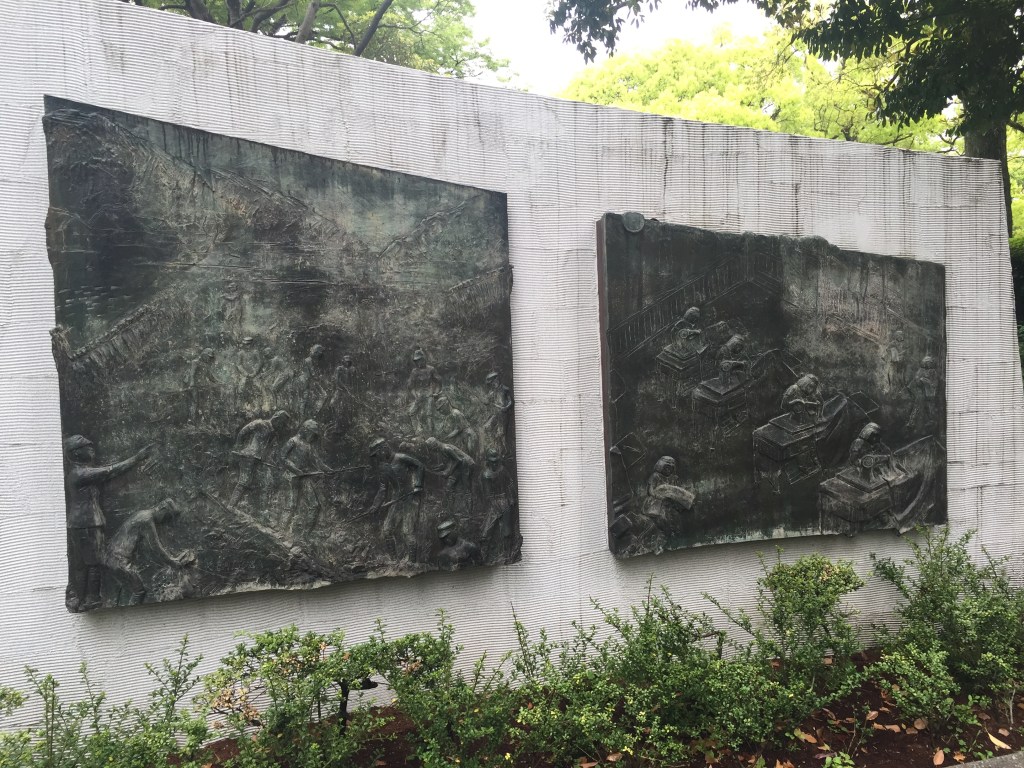
This is the Memorial Tower to the Mobilized Students. The Japanese government “mobilized” students to take part in the war efforts, especially once Japan was facing defeat. Students were “drafted” to work in factories making uniforms and bullets and to work in fields to help with food production. Over 10,000 students were killed by the bombings (atomic and otherwise) during the war.
These huge plaques by the memorial show students working in the field and in a factory contributing to war efforts.
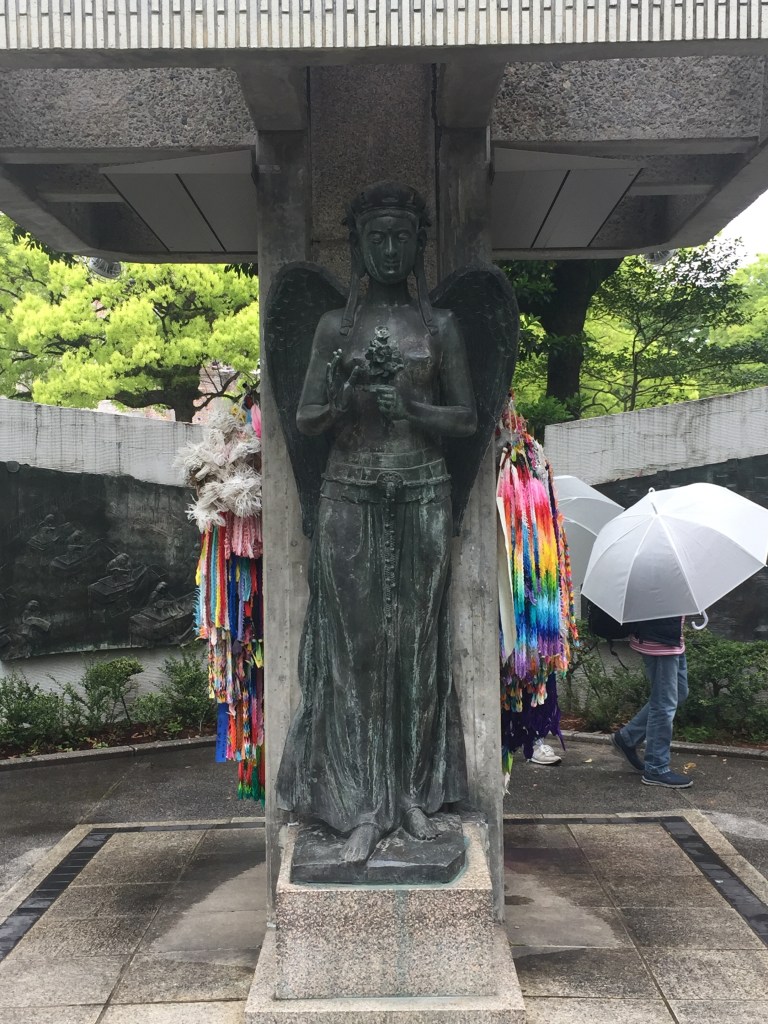
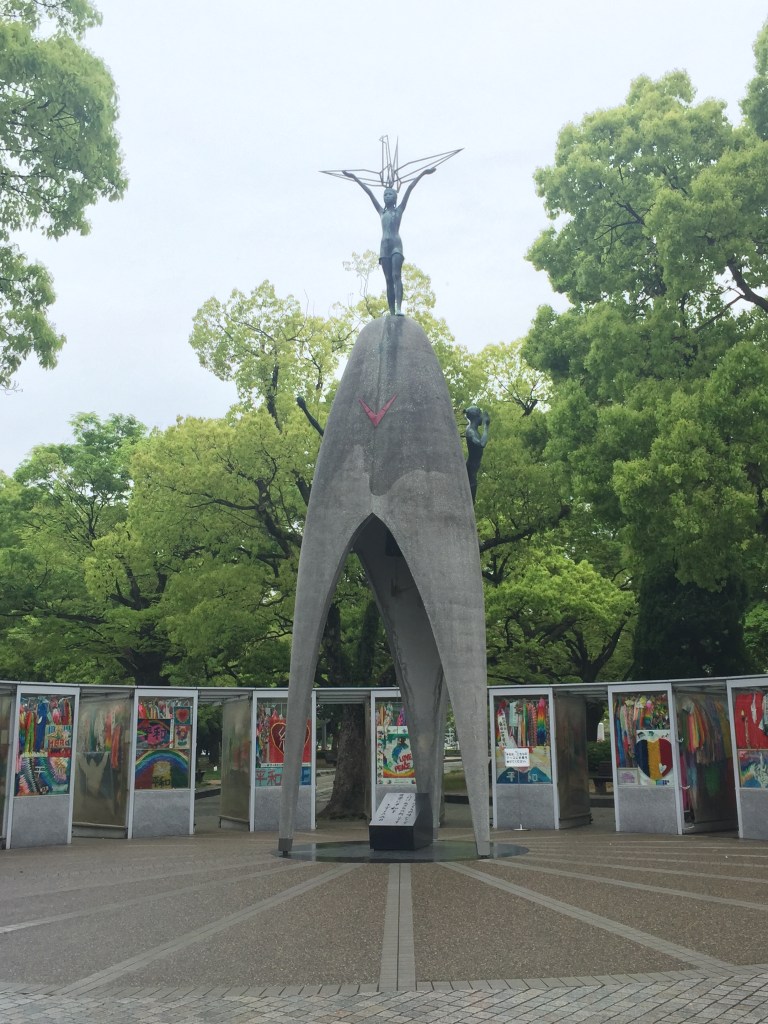
This is the Children’s Peace Monument. Did you ever read Sadako and the Thousand Paper Cranes? Sadako’s classmates and children all over Japan raised money for this monument in honor of her and all the children who died because of the atomic bomb and its aftermath. That is Sadako at the top, holding a wire crane.
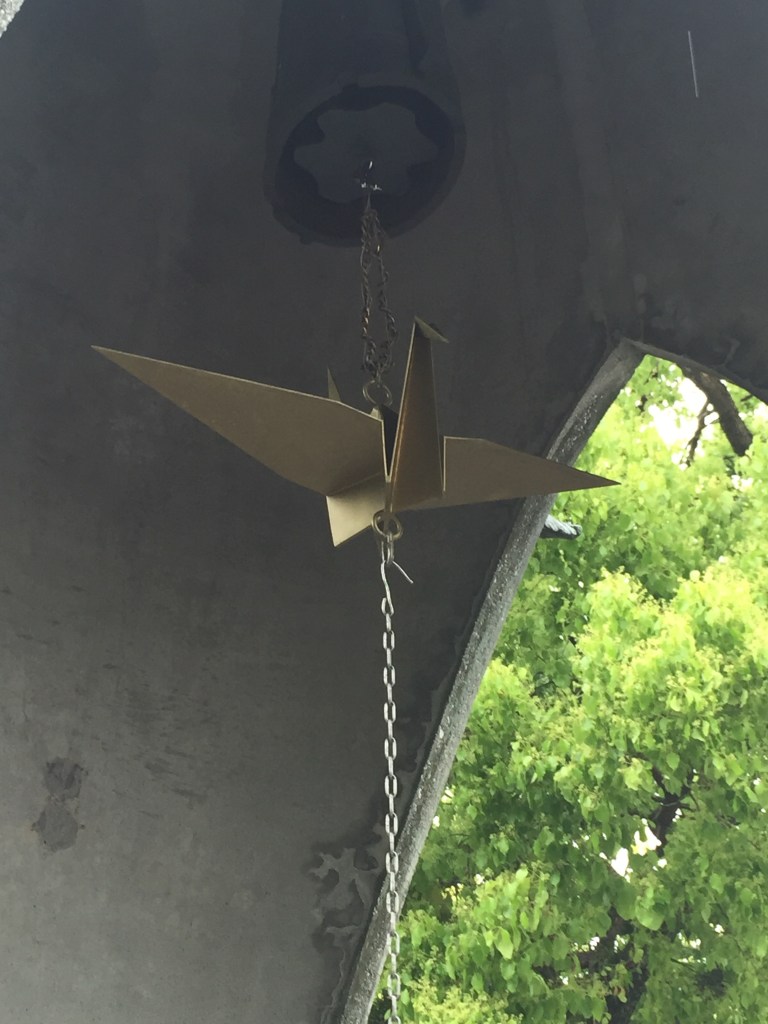
A perfect bronze crane hangs from a bell on the underside of the monument.
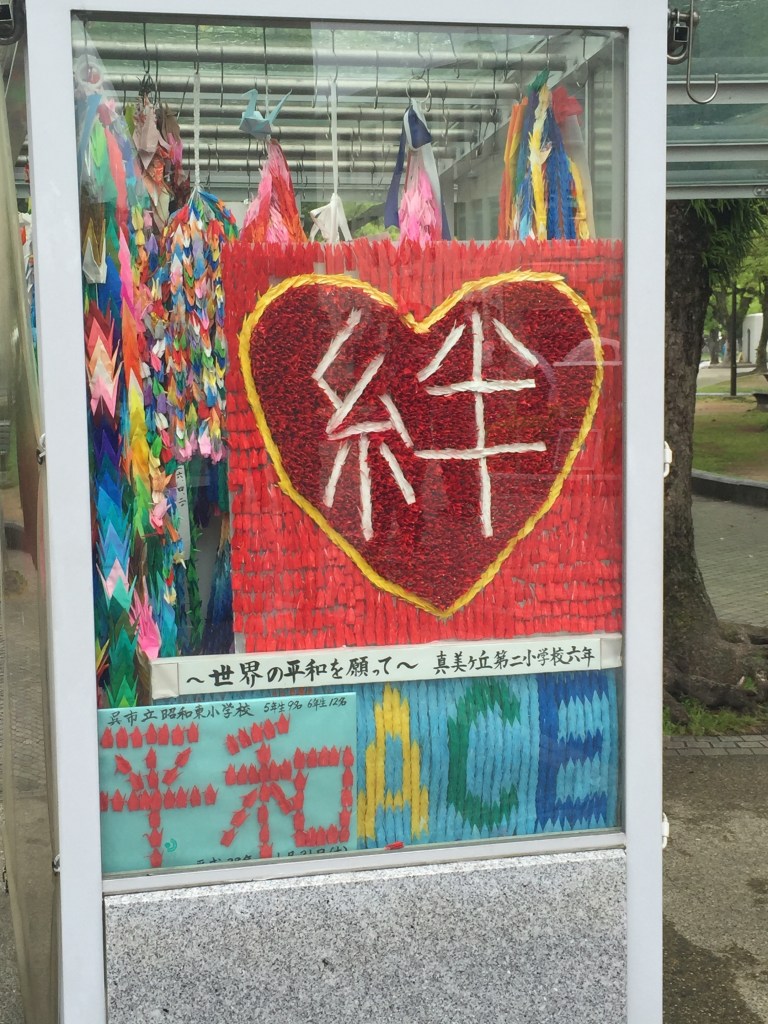
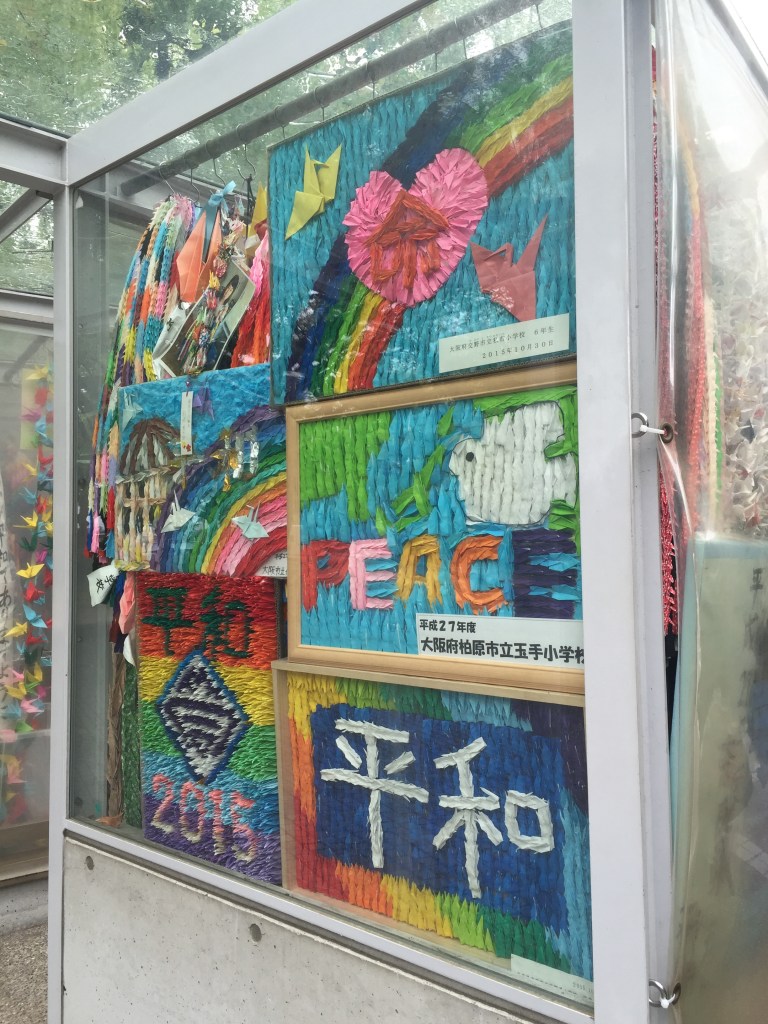
Surrounding the monument are booths that house paper cranes and artwork sent by children from all over the world. Folding 1000 paper cranes feels like a hopeful classroom project, doesn’t it?
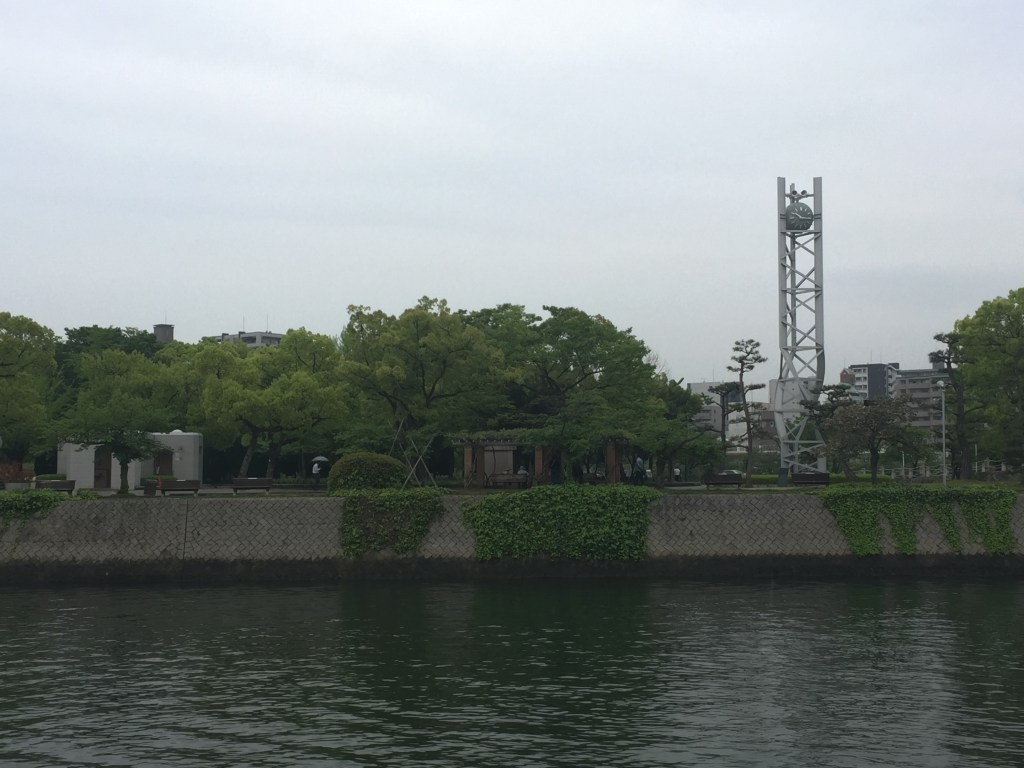
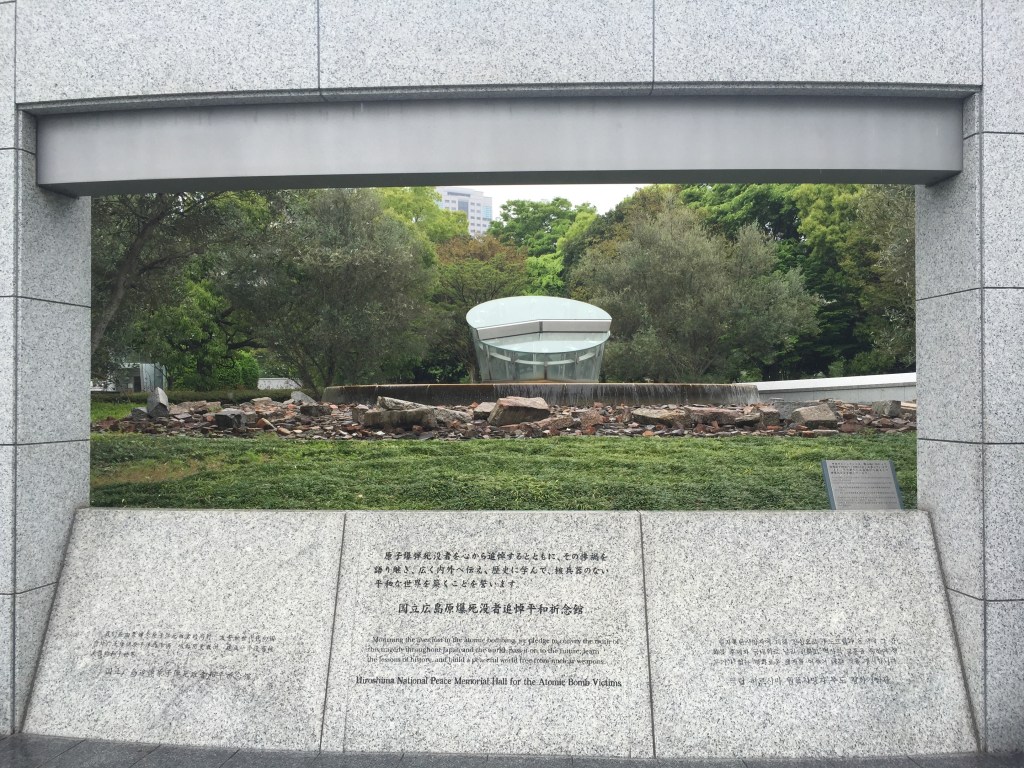
This is the Hiroshima National Peace Memorial Hall. This was incredibly somber place, meant to memorialize all of the souls lost that day and to share the personal stories of the victims and the survivors. On the roof (which is ground level, as the memorial in underground) there is a clock that is frozen at 8:15, the time of the bomb. In the Hall of Rememberance, there is a panoramic recreation of Hiroshima, made with 140,000 tiles, the number of people who died in the attack. Audio recordings of stories from survivors brought me to tears here.
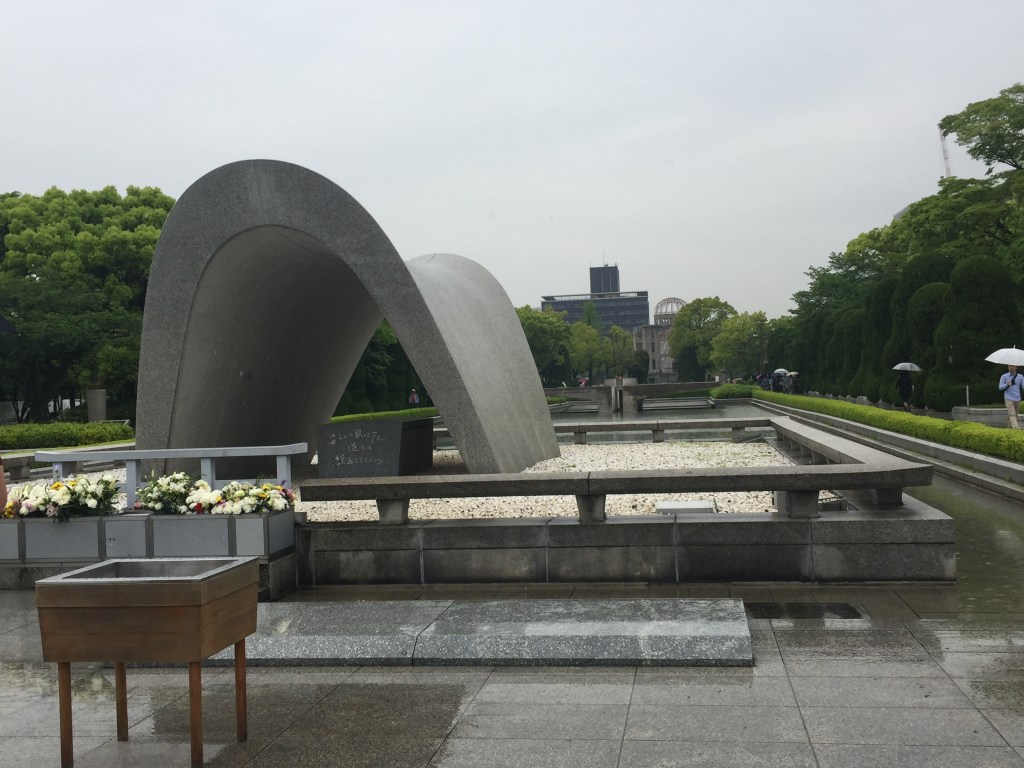
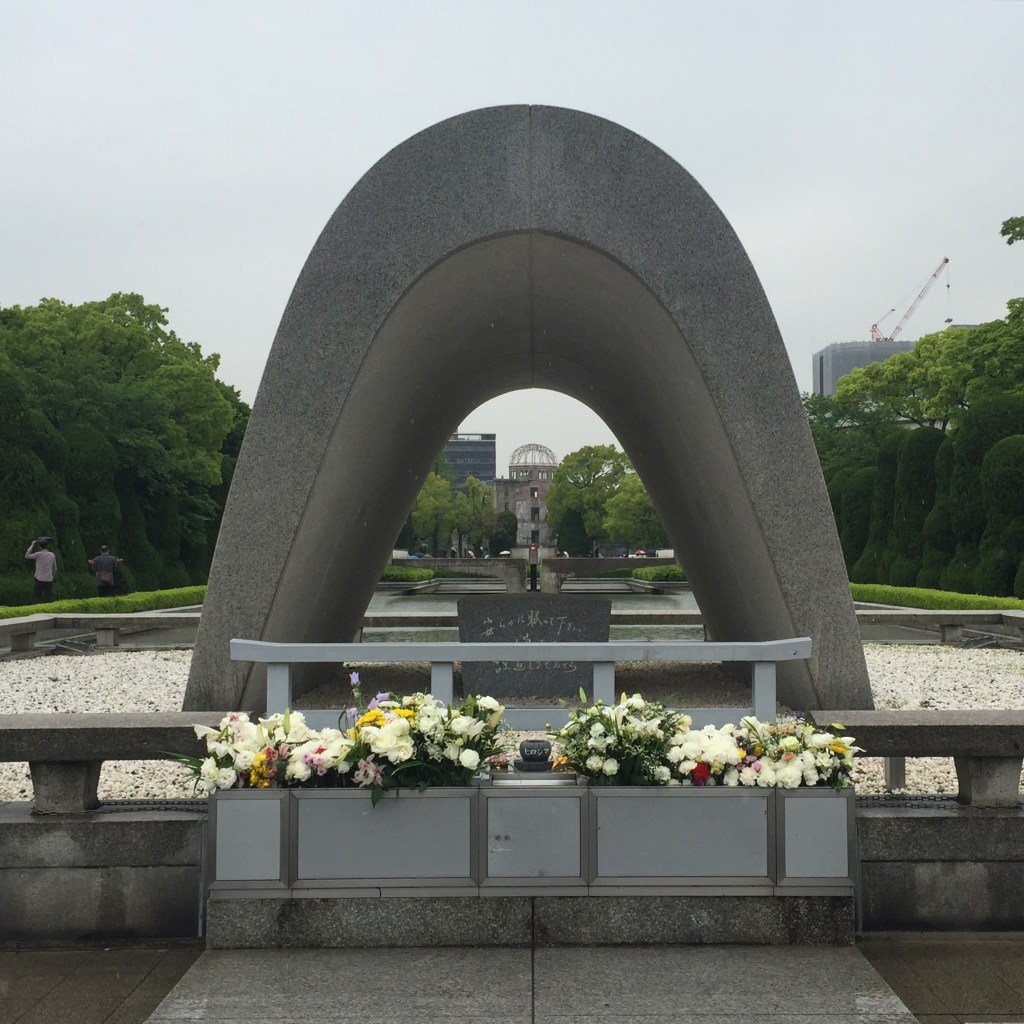
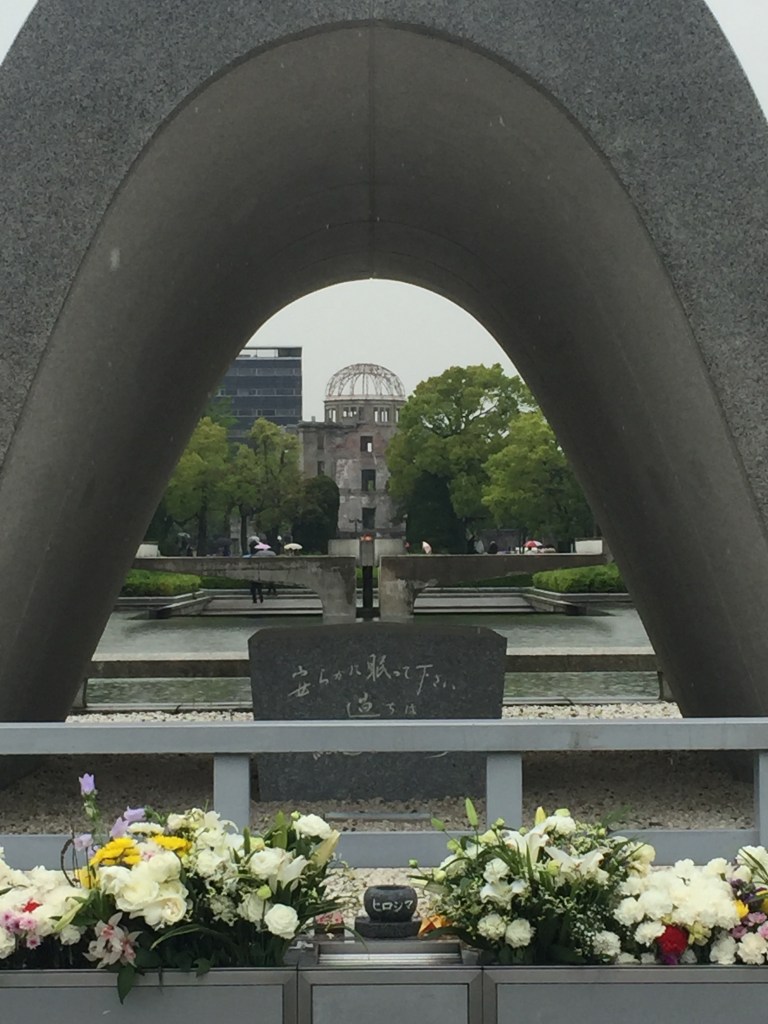
This is the main memorial to the victims. The saddle is meant to shelter the victims’ souls in the empty tomb below. On it reads, “please rest in peace, for [we/they] shall not repeat the error.” (The language is left ambiguous so the victims could be memorialized without making the issue political/blaming the US for the bomb or blaming Japan for pushing the war to the brink of destruction.)
The memorial was designed so it frames the Peace Flame and the A-Bomb Dome.
You can see the Peace Flame a bit better here. The flame was lit in 1964 and will be lit until the threat of nuclear war is eliminated.
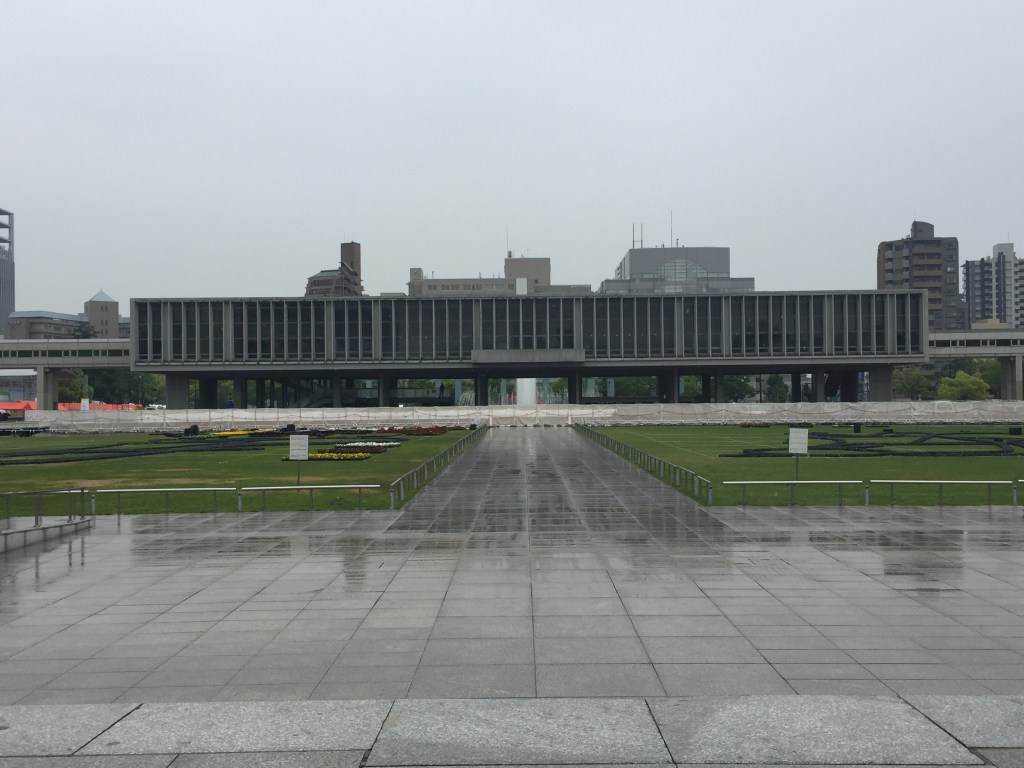
Lastly, the Hiroshima Peace Memorial Museum. Here we saw the history of Hiroshima from before the war and after, as well as the massive destruction caused by the bomb. I didn’t take many pictures inside–just the one below–because it was so somber and there was so much to learn. It was honestly overwhelming. (I haven’t felt so overwhelmed in a museum since I went to the United States Holocaust Memorial Museum in college…) This model was so shocking…to see how far the reach of the bomb was.
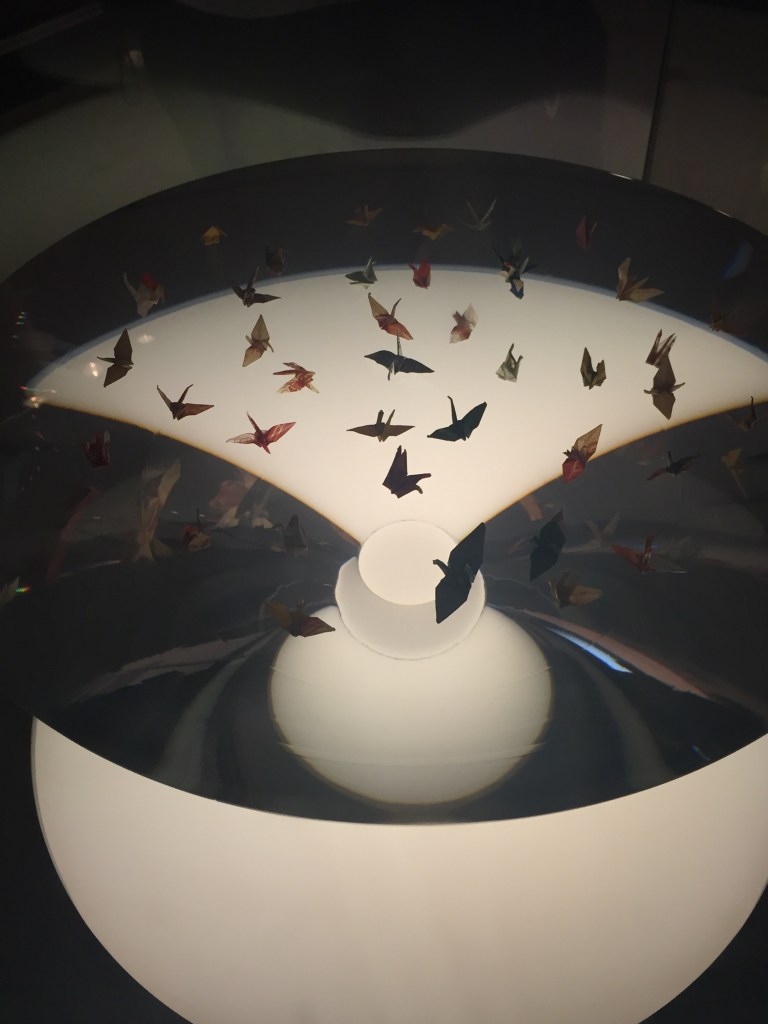
I took a picture of Sadako’s cranes, which are preserved in a climate controlled dome inside the Peace Memorial Museum. The cranes are so, so tiny…the largest ones are about the size of a quarter. It’s so hard to imagine a real little girl folding these tiny cranes, knowing she was dying.
My blog post does not do the city and the memorials justice, but I am so thankful to have witnessed it and I wish I had shared it here sooner. President Obama visited Hiroshima the month after we did. He was the first sitting President to visit the city. I understand that the relationship between the United States and Japan regarding the atomic bombs is fraught with challenges, but man, those challenges aren’t going away without a hard look at history and the destruction of war. I remember that there was so much controversy around whether Obama would apologize or not…the risks of offending American veterans, the risks of offending Japan.
Obama’s speech at Hiroshima was, to me, one of his best. (You can read the transcript here on the New York Times site.) I’ll leave you with his words.
That is why we come to this place. We stand here in the middle of this city and force ourselves to imagine the moment the bomb fell. We force ourselves to feel the dread of children confused by what they see. We listen to a silent cry. We remember all the innocents killed across the arc of that terrible war and the wars that came before and the wars that would follow.
Mere words cannot give voice to such suffering. But we have a shared responsibility to look directly into the eye of history and ask what we must do differently to curb such suffering again.
And then a bit later…
That is why we come to Hiroshima. So that we might think of people we love. The first smile from our children in the morning. The gentle touch from a spouse over the kitchen table. The comforting embrace of a parent. We can think of those things and know that those same precious moments took place here, 71 years ago.
Those who died, they are like us. Ordinary people understand this, I think. They do not want more war. They would rather that the wonders of science be focused on improving life and not eliminating it. When the choices made by nations, when the choices made by leaders, reflect this simple wisdom, then the lesson of Hiroshima is done.
The world was forever changed here, but today the children of this city will go through their day in peace. What a precious thing that is. It is worth protecting, and then extending to every child. That is a future we can choose, a future in which Hiroshima and Nagasaki are known not as the dawn of atomic warfare but as the start of our own moral awakening.
Speaking of ramen…Naoto made homemade broth on Saturday and it was a step-up in flavor from the Furious Spoon version! He is going to try a bunch of different recipes until we find the perfect blend for us! We used this recipe which is chicken based and seemed easy enough for a “quick” broth. It took about four hours from beginning to end and we had enough for our two bowls, and a huge container to freeze for leftovers.
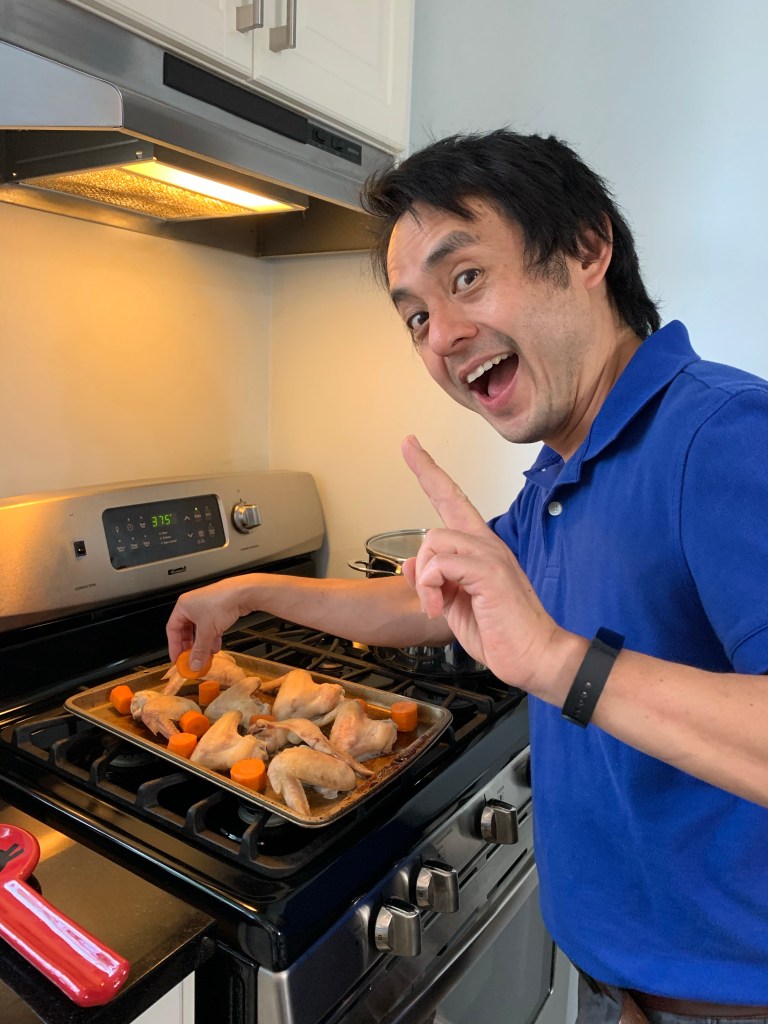
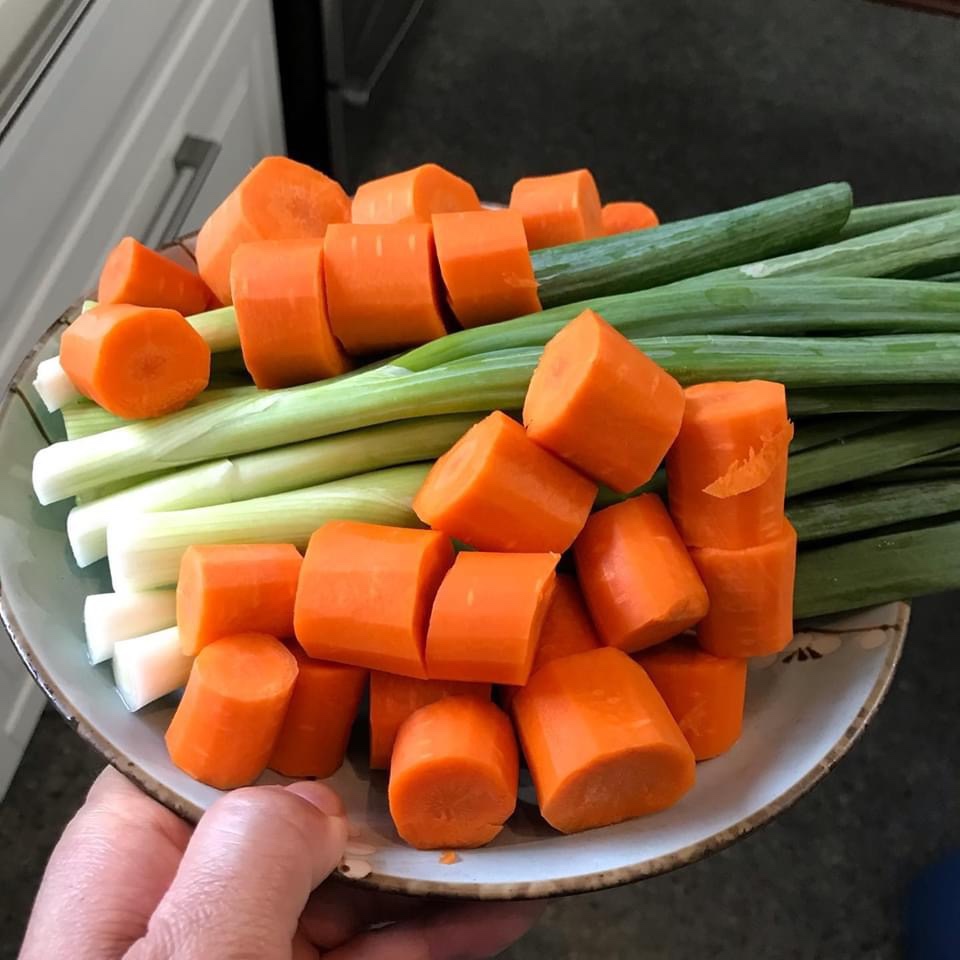
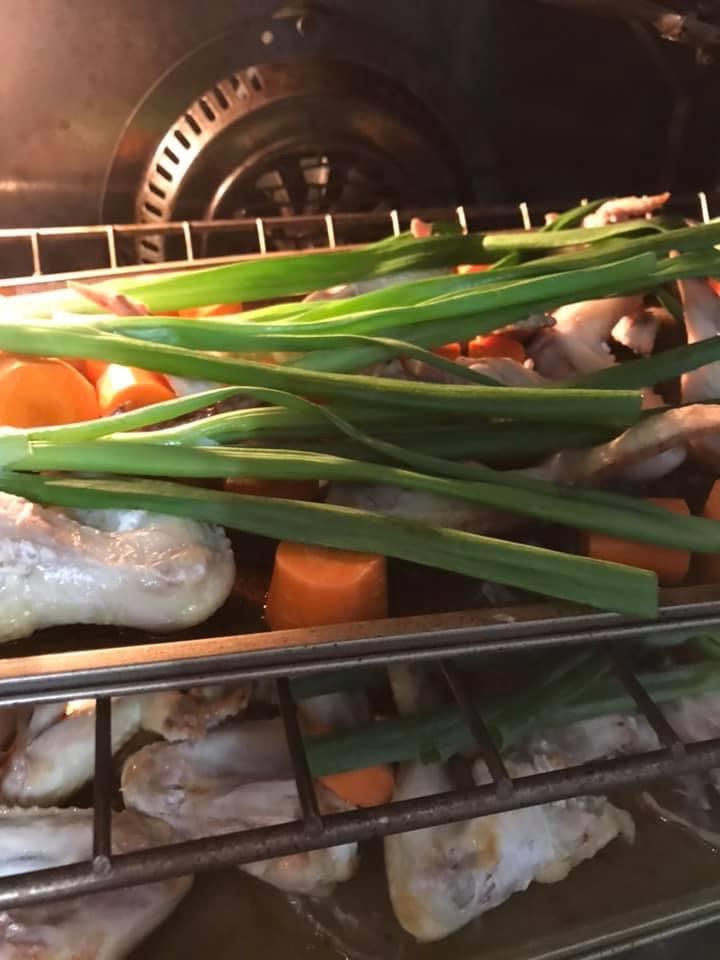
With the broth recipe, you first roast chicken wings and vegetables (to intensify their flavors.)
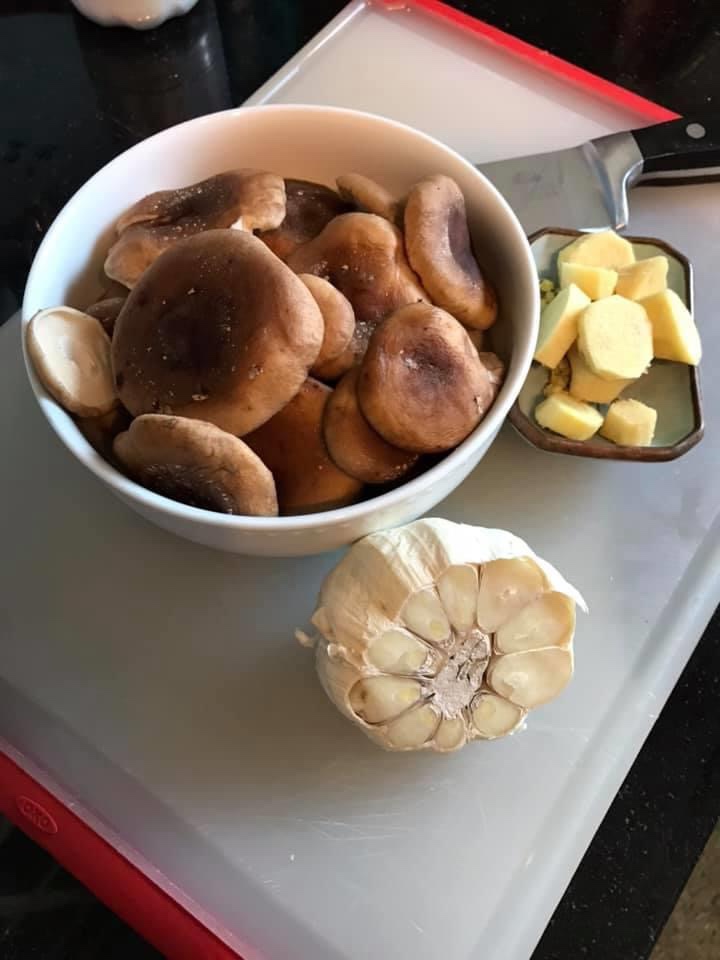
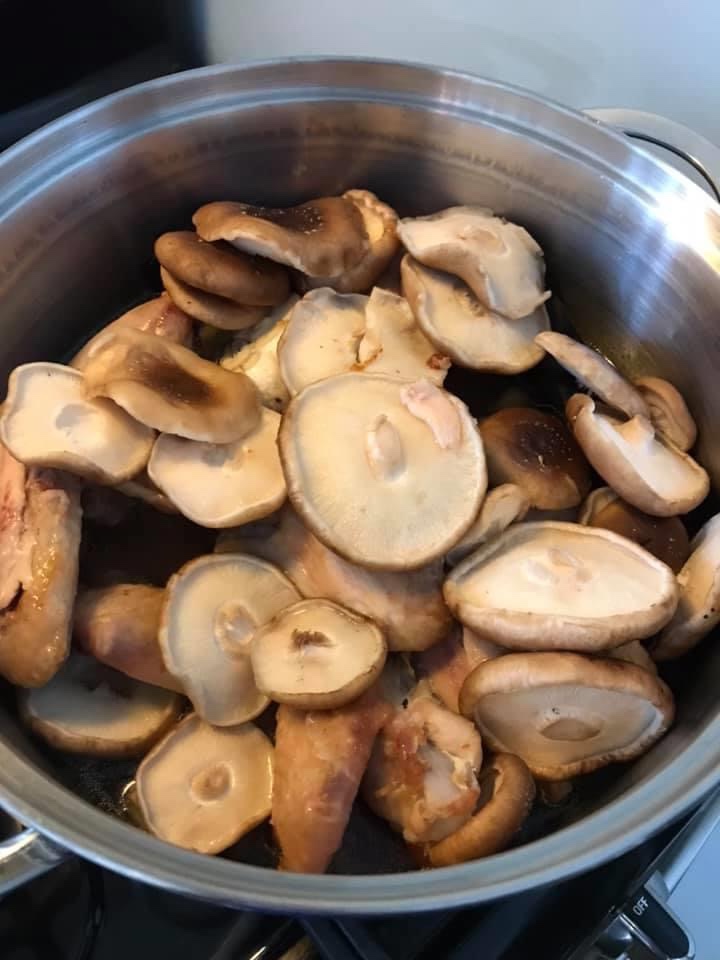
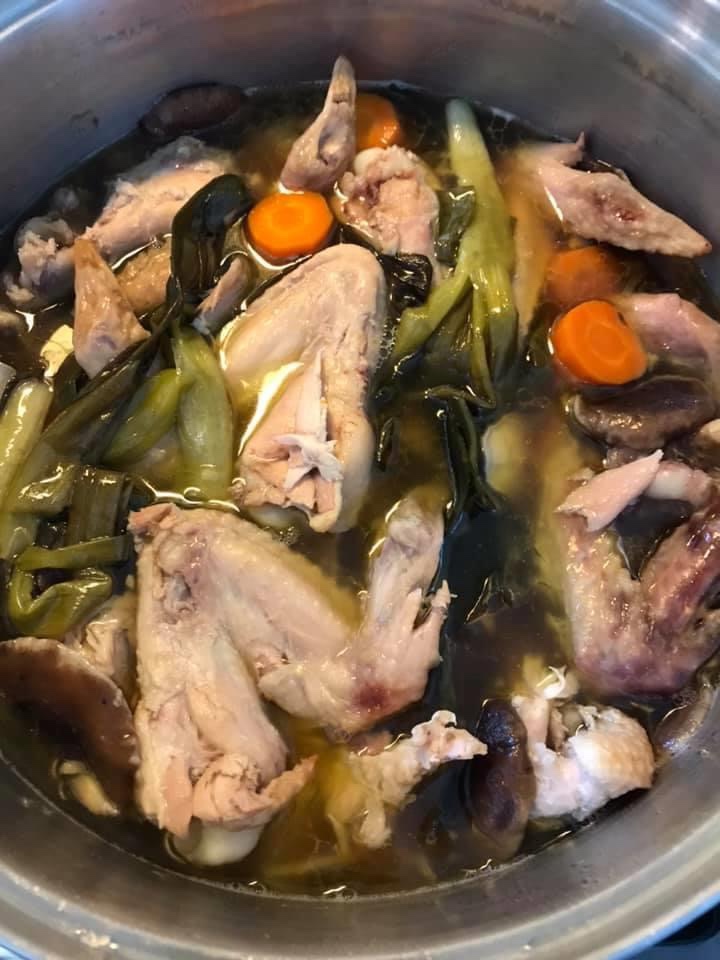
Next, you boil the roasted chicken and vegetables for hours along with shiitake mushrooms and aromatics.
By the end, the meat is falling off the bone and the broth is a deep brown. You’re never supposed to let it boil; it just barely simmers on low for hours. This keeps it from getting cloudy. (No one likes a cloudy broth!)
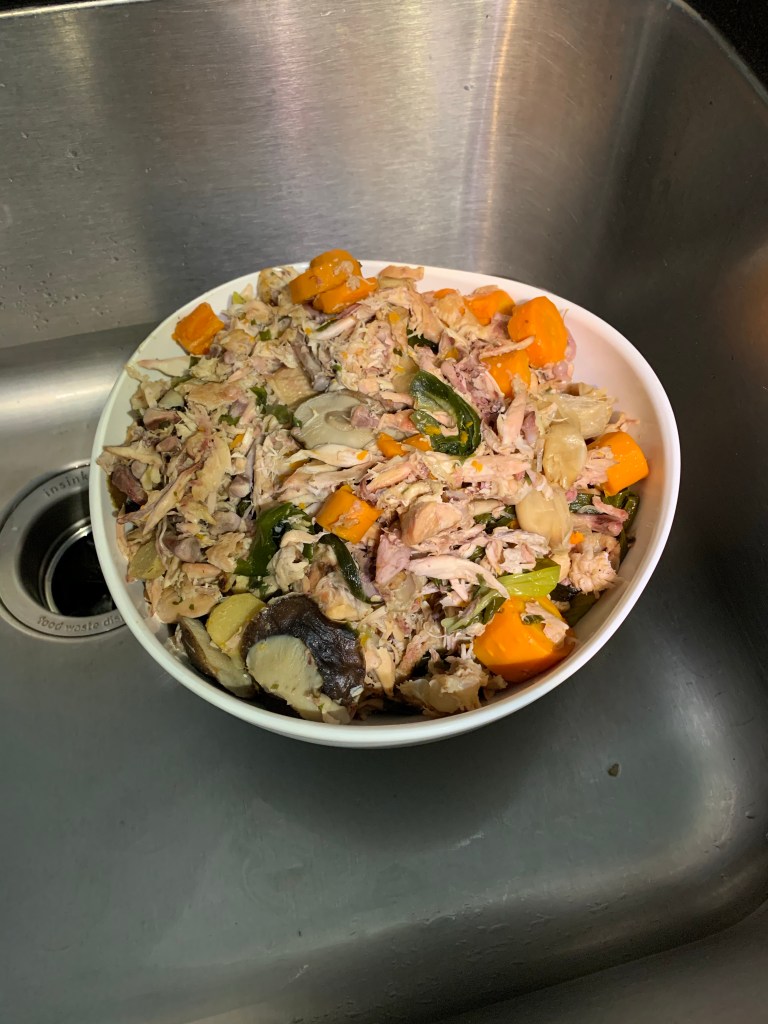
In the end, you strain the broth and you’re left with a giant bowl of spent chicken and vegetables.
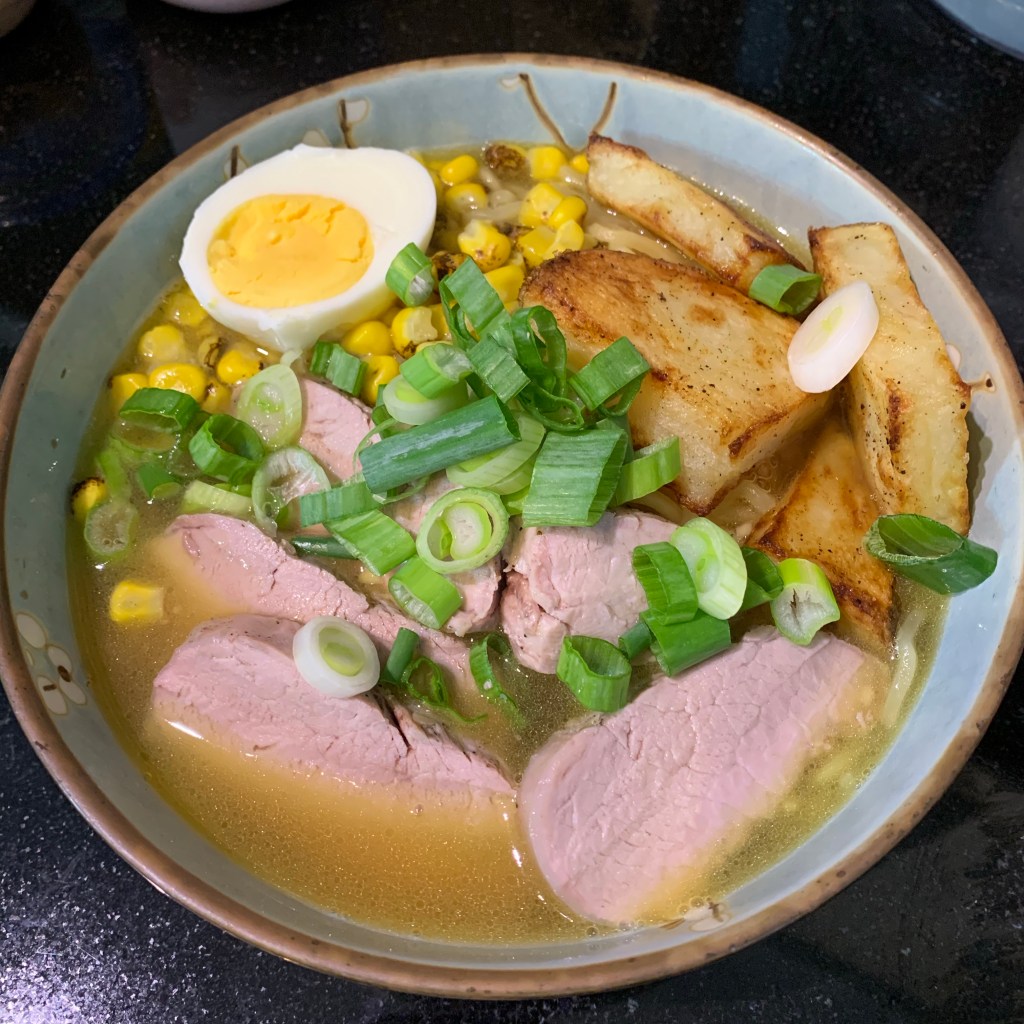
Here’s the final product. We added chashu (using the Furious Spoon recipe,) a soft-boiled egg (that was a little overdone,) and scallions. I love the Hokkaido-style ramen at Misoya so Naoto made buttered corn and roasted potatoes to add to mine. It was a fun experiment for a Saturday! I kind of wish we’d started this earlier in the pandemic! There’s time to perfect Hasegawa Ramen before winter!
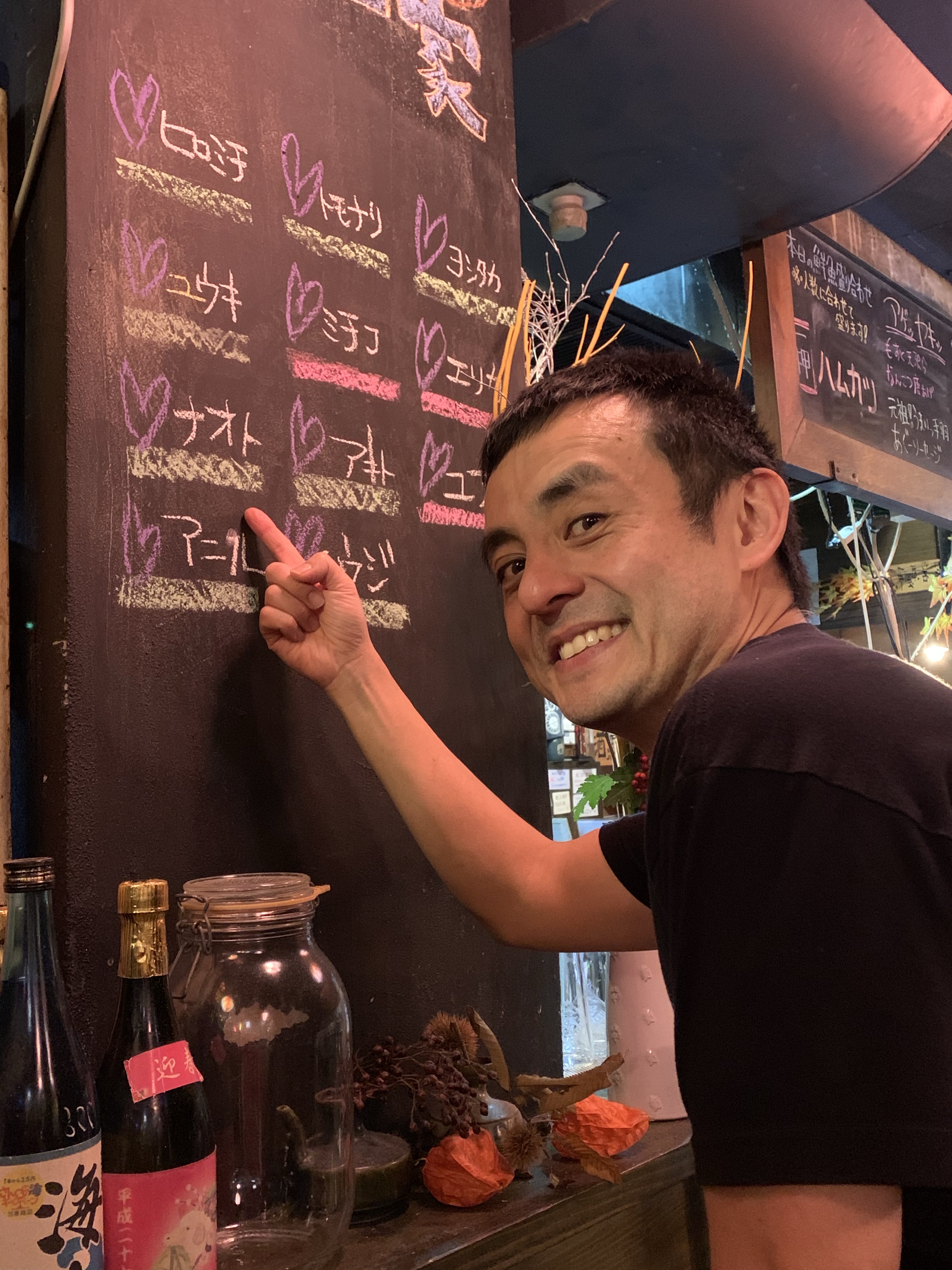
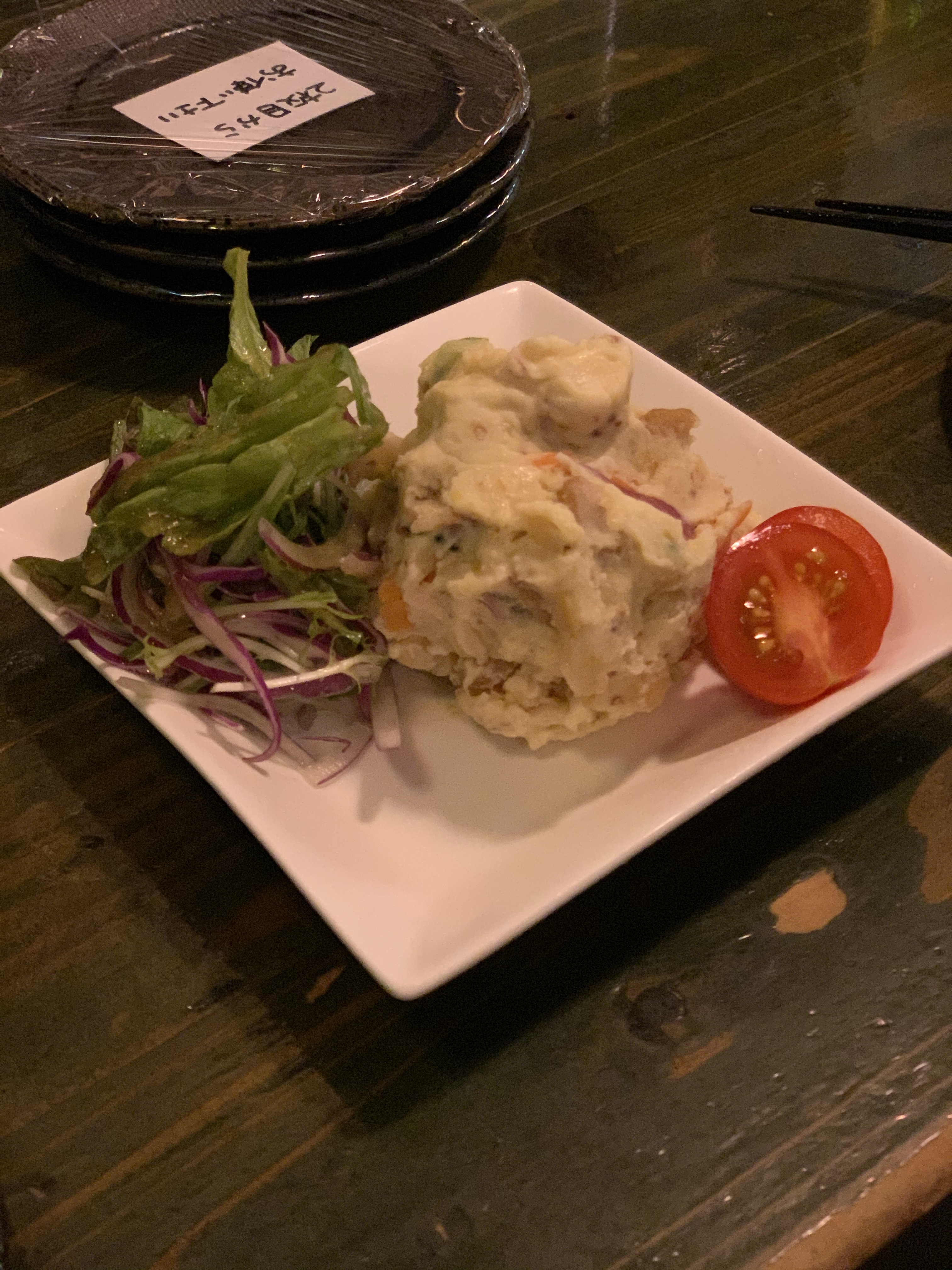
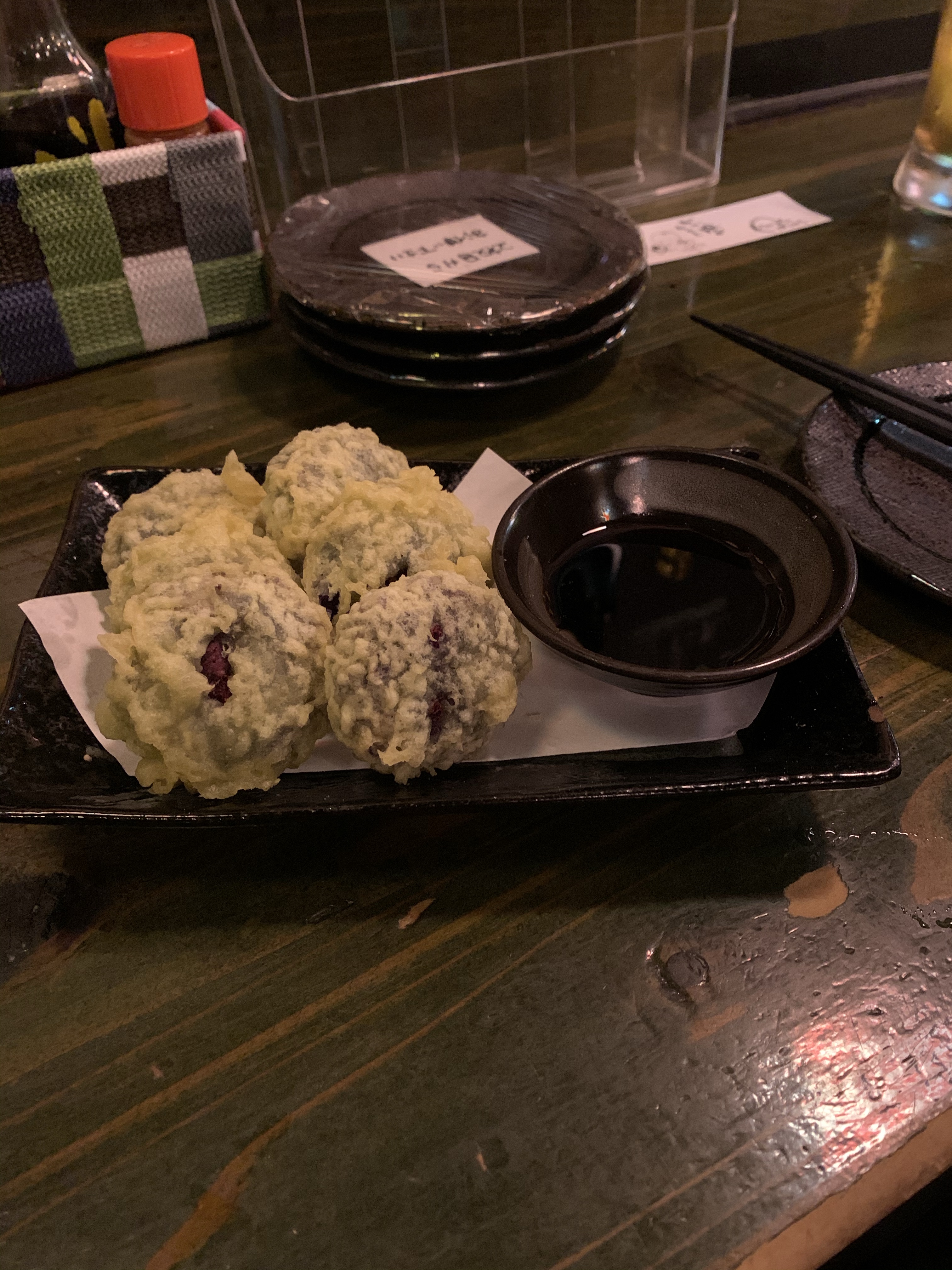
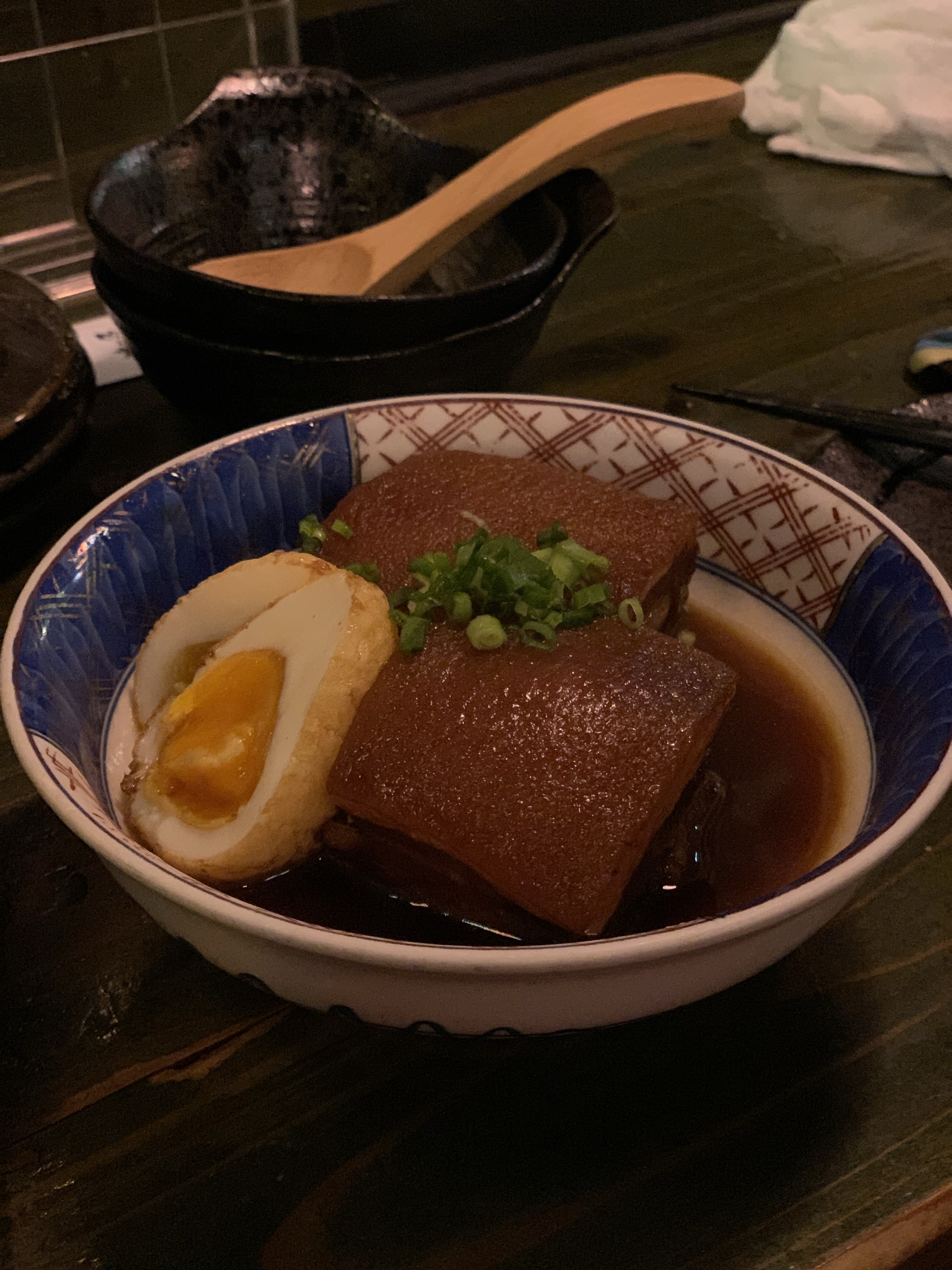
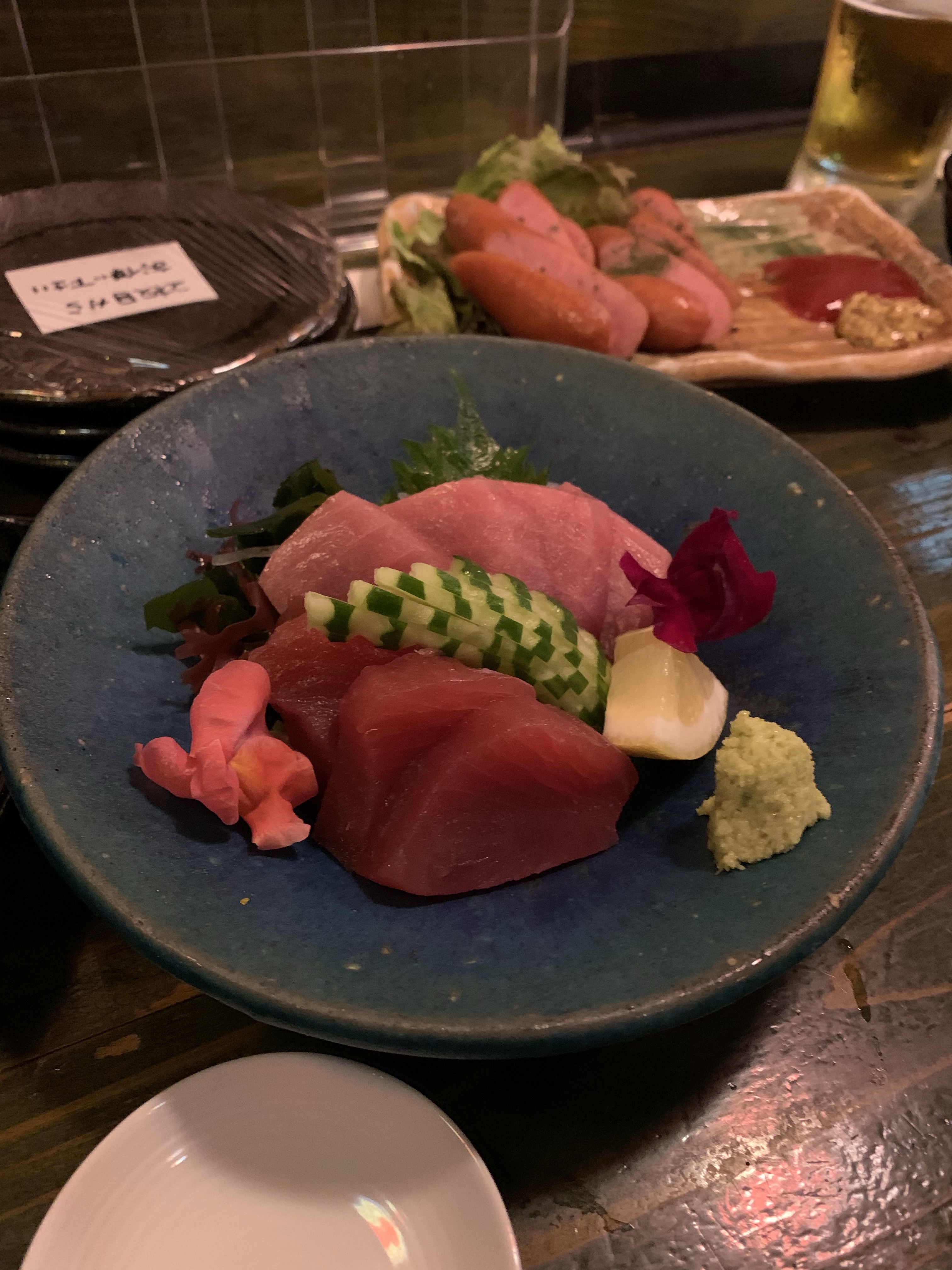
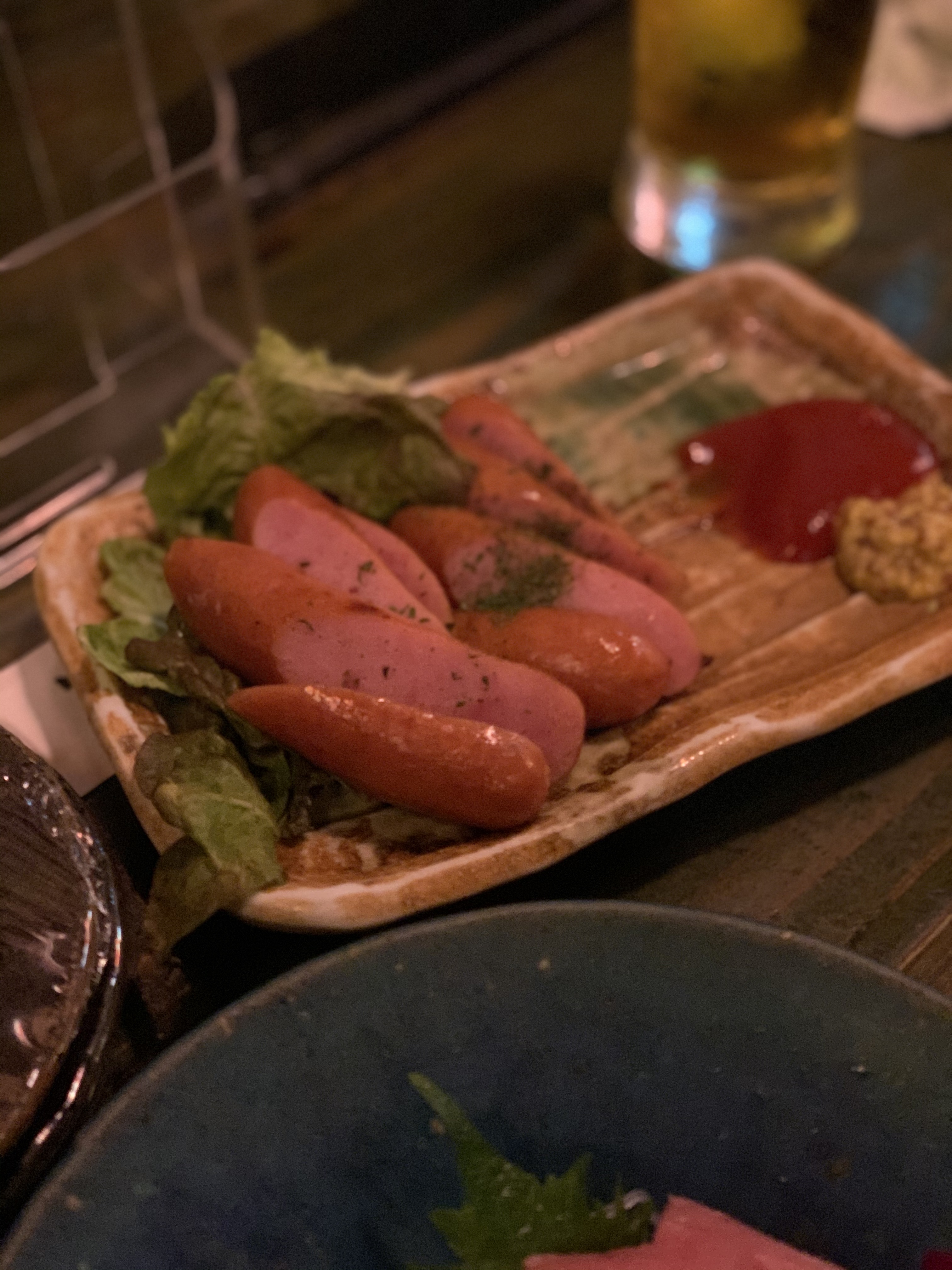
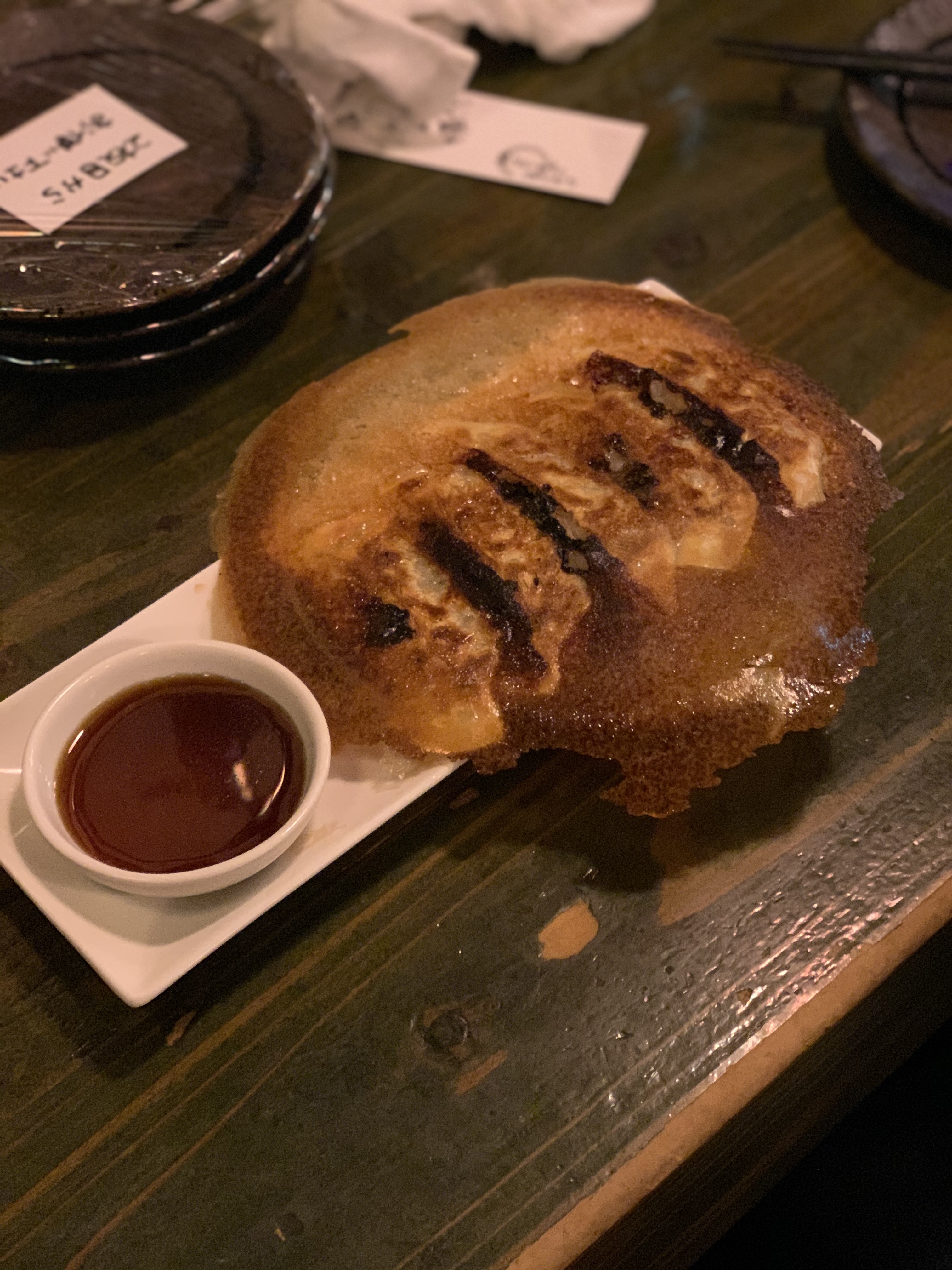
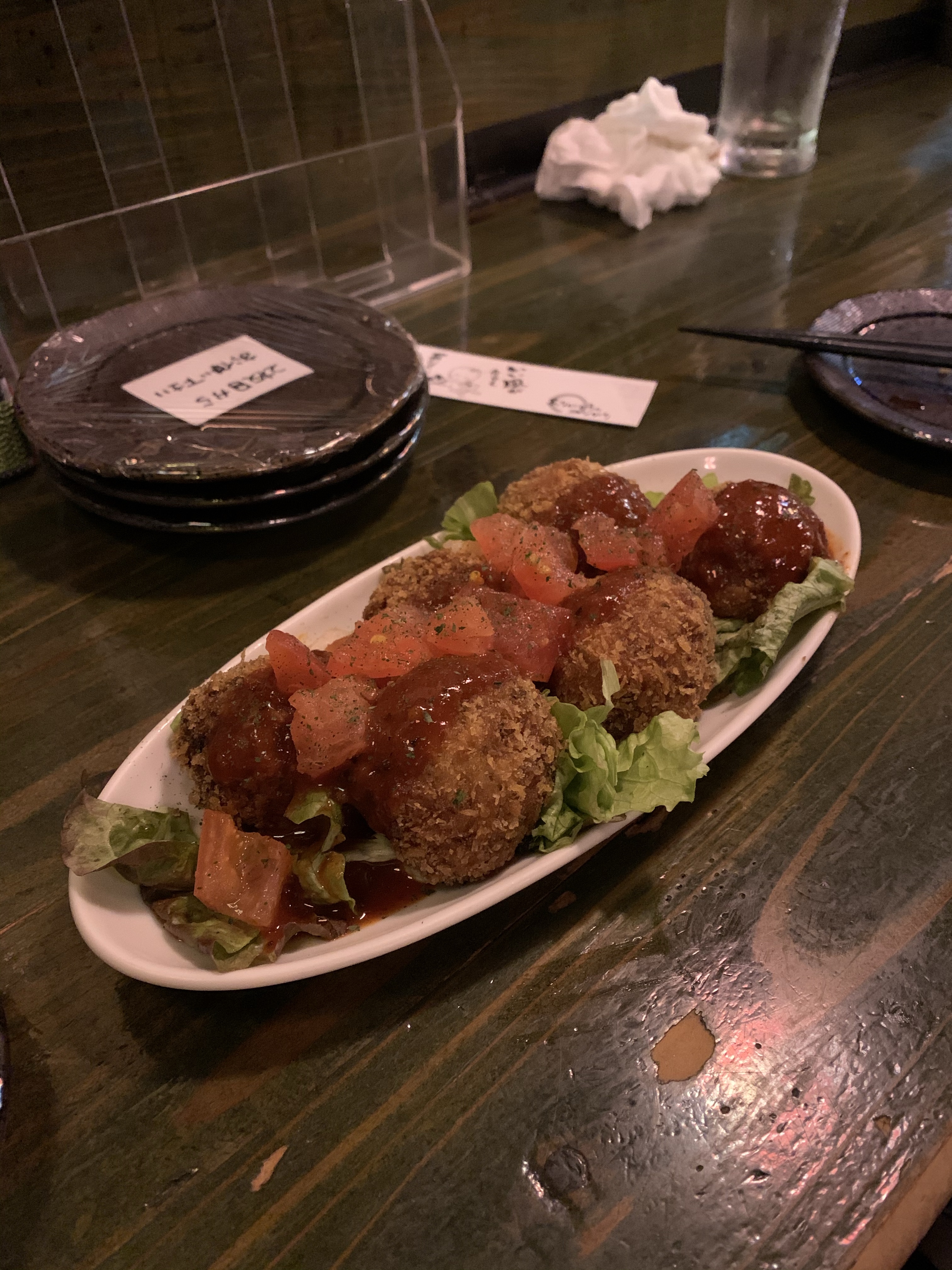
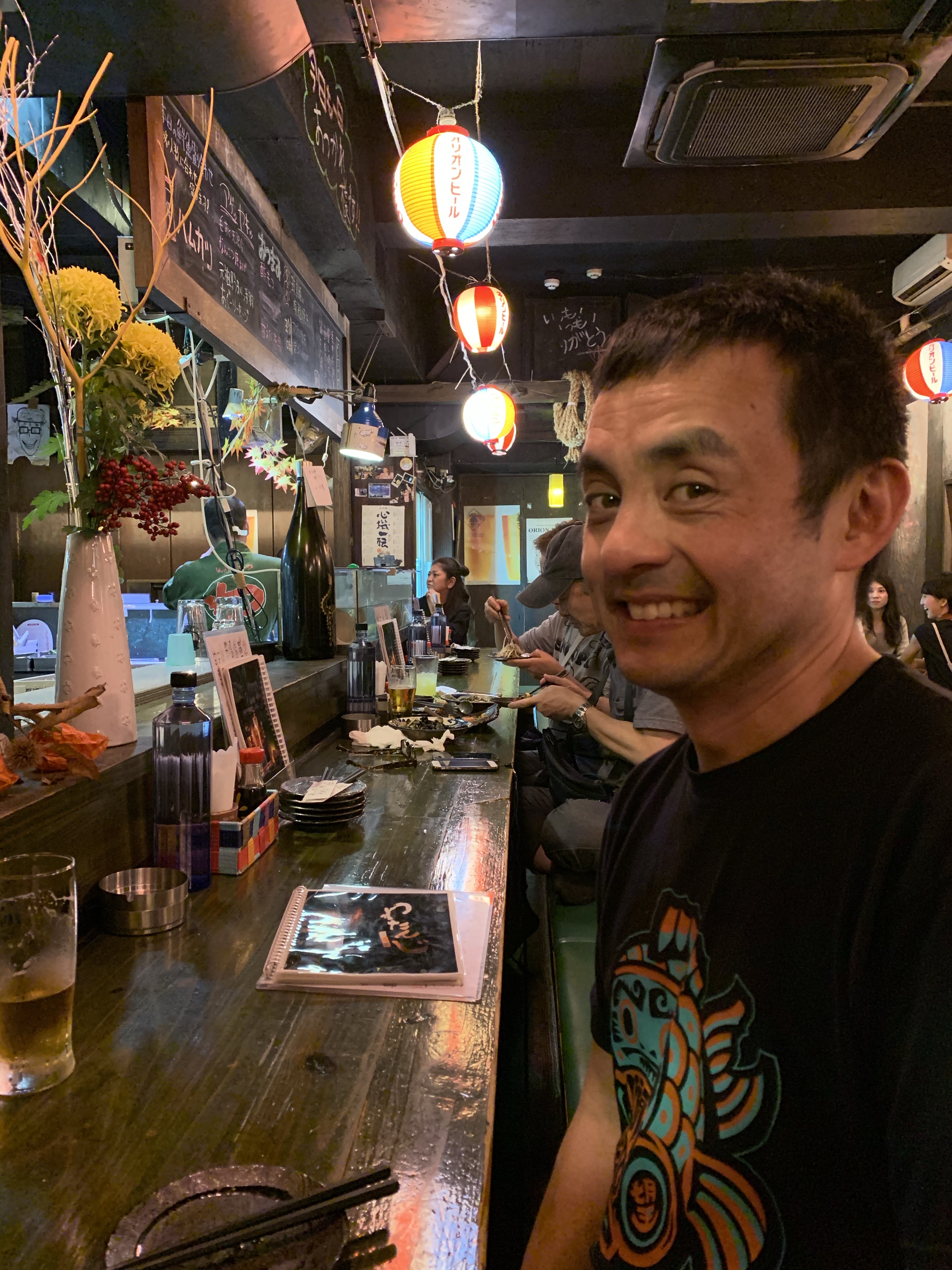
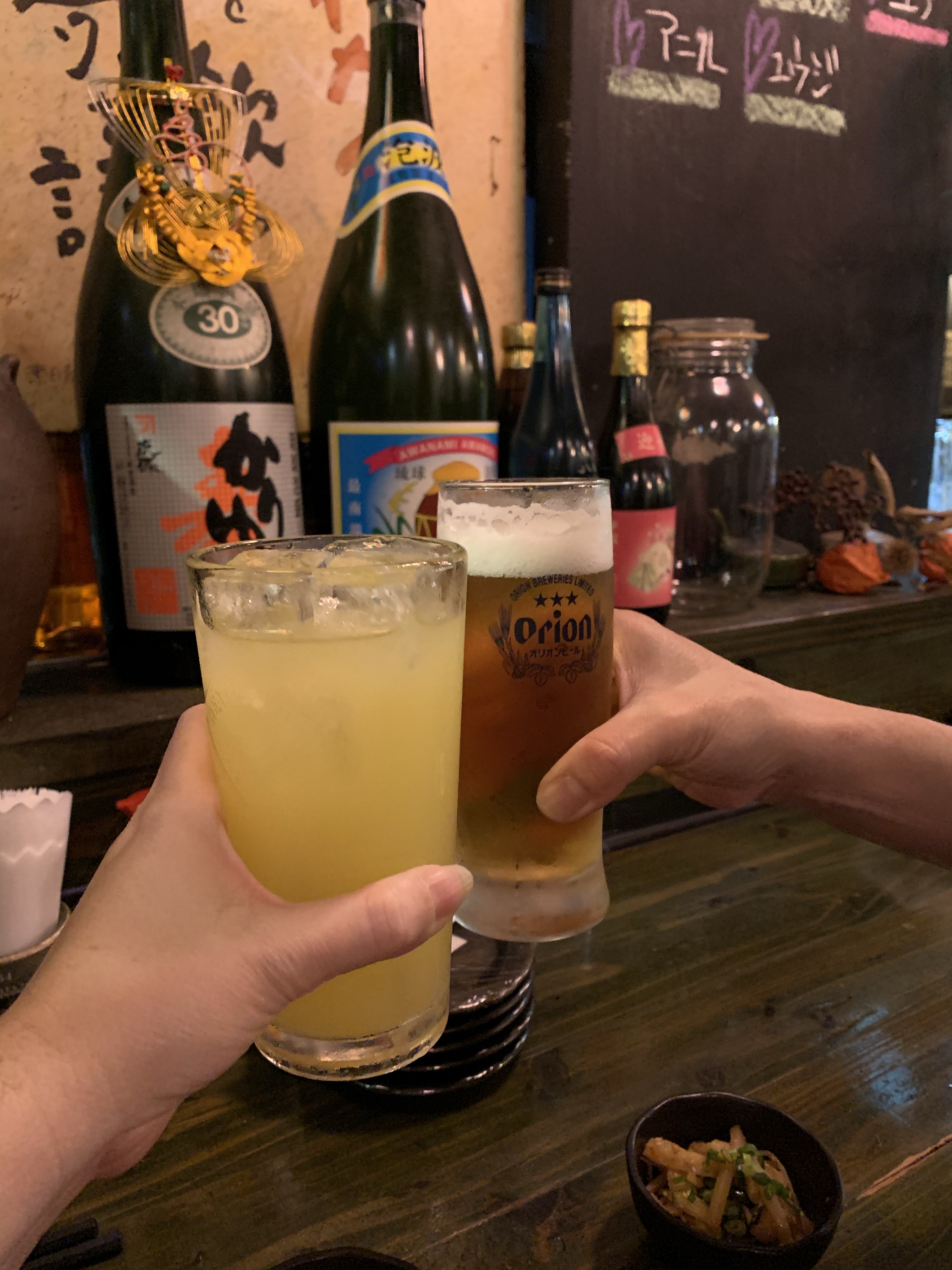
We found a great izakaya near our hotel in Naha while we visited Okinawa. Watanji was a great local spot that had different spins on Okianawan favorites. Above is Naoto pointing out his name on the chalkboard. Apparently one of the servers shared his name. In true izakaya style, we got a bunch of small plates to sample. One of my favorite dishes was this smoky potato salad. We also had Okinawan yam tempura (dipped in honey!)This was Okinawan pork in soy broth. It was soooo delicious, once I pulled off the layer of fat. Japanese eat a lot of fatty meats, something I never can do. I know there’s a lot of flavor there, but man…texture issues! We lightened things up next with some fresh tuna. And then hopped back into the heavier foods with these Okinawan pork sausages!Then we had gyoza with lots of extra crispy bits. And finally…deep fried taco rice with the most amazing taco sauce on top. It was all of the ingredients of taco rice, packed into a little ball and fried! I want to recreate this so badly. The izakaya was very local but the staff was very welcoming, as with most places in Japan. Naoto stuck with Orion beer and I did a shikuwasa and soda…so refreshing!
I think I have one final Japan post…though I probably have plenty of other stationery things to share. Stay tuned! And happy weekend!
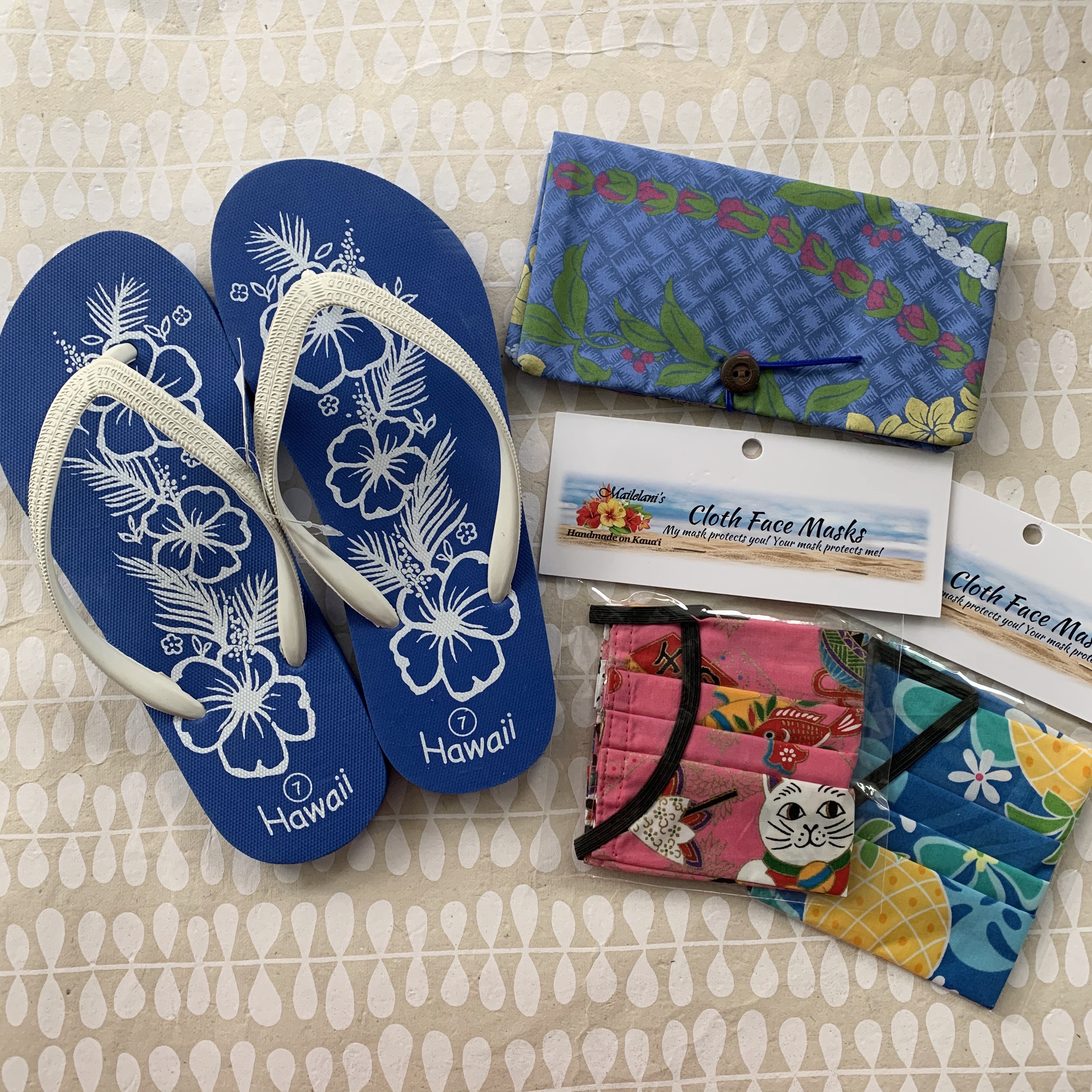
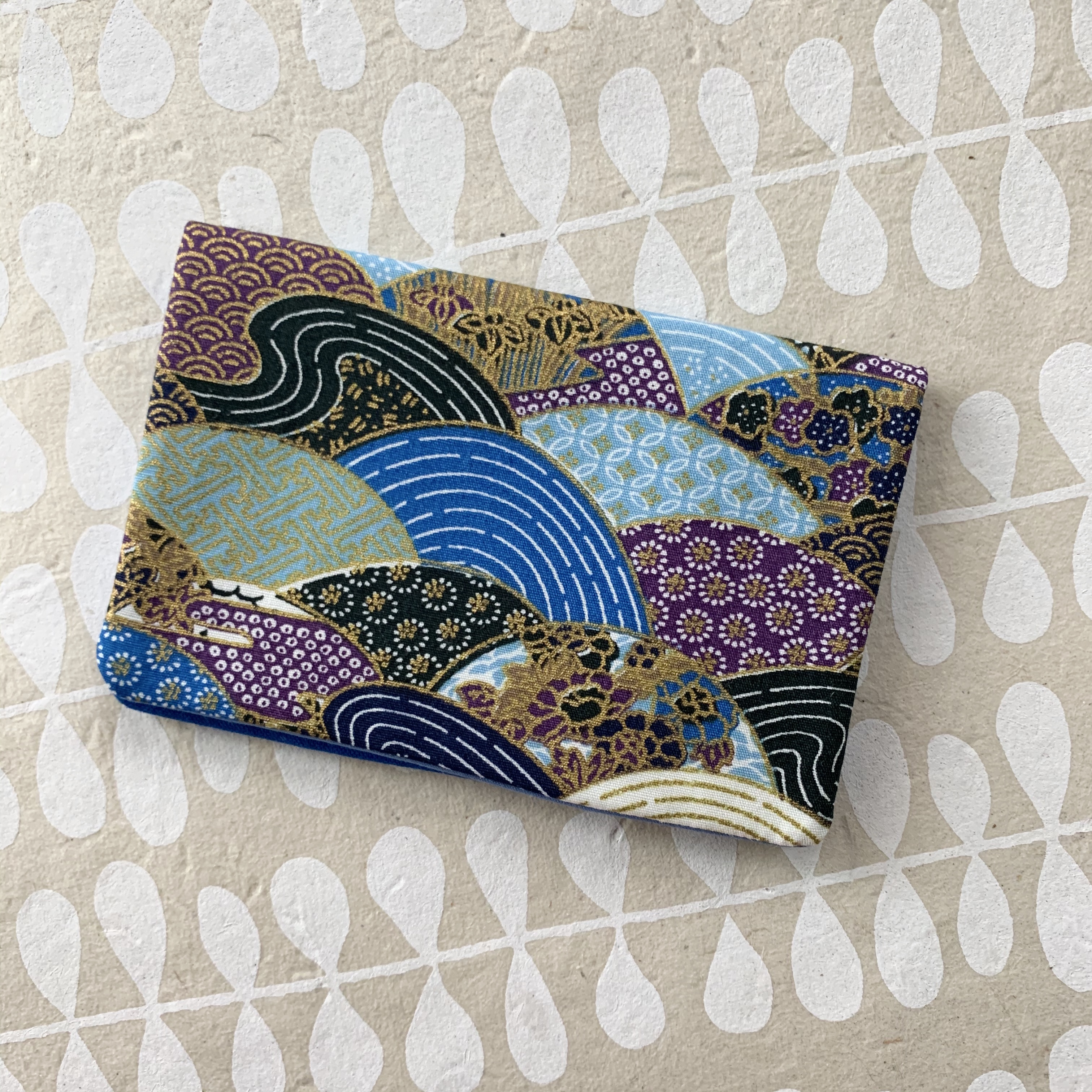
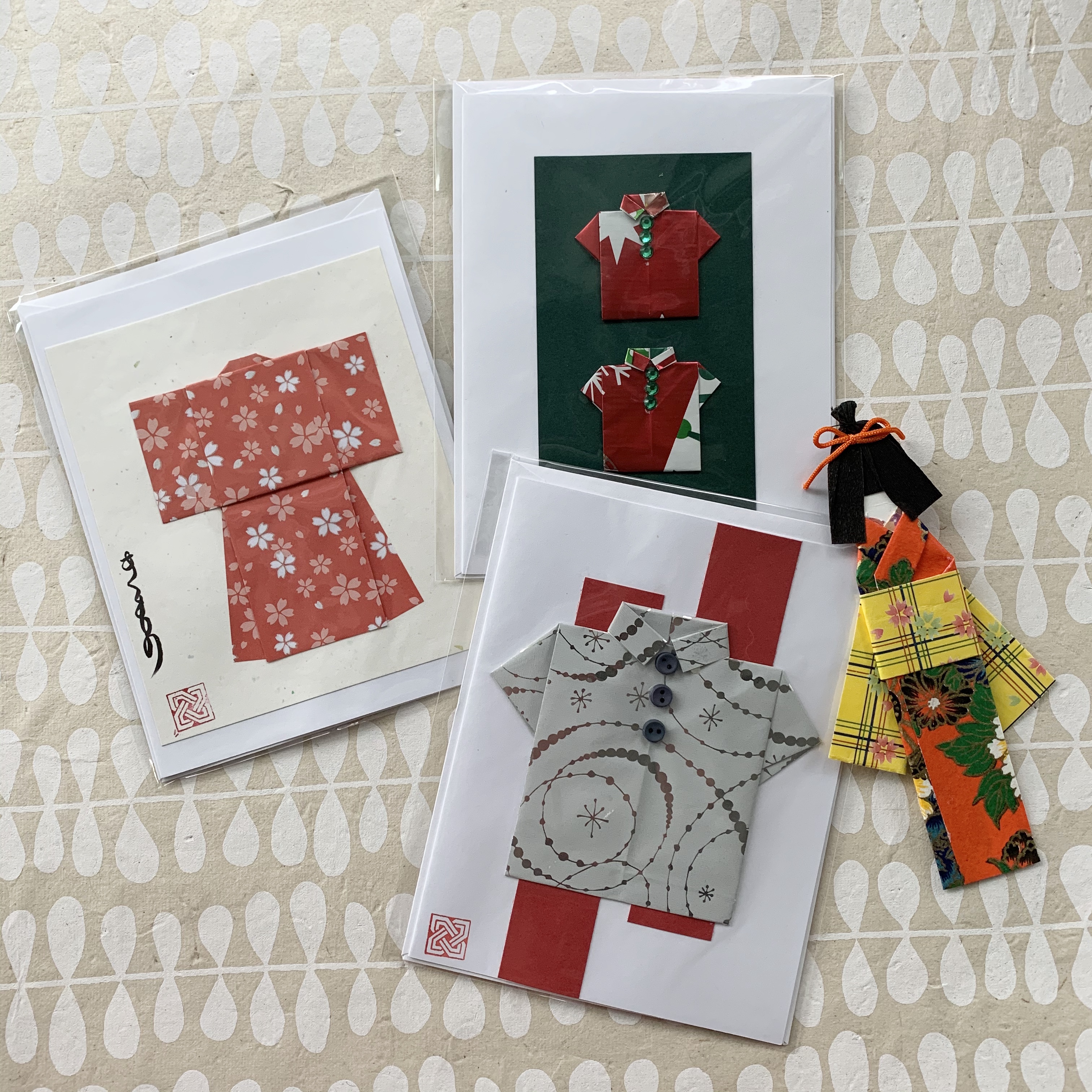
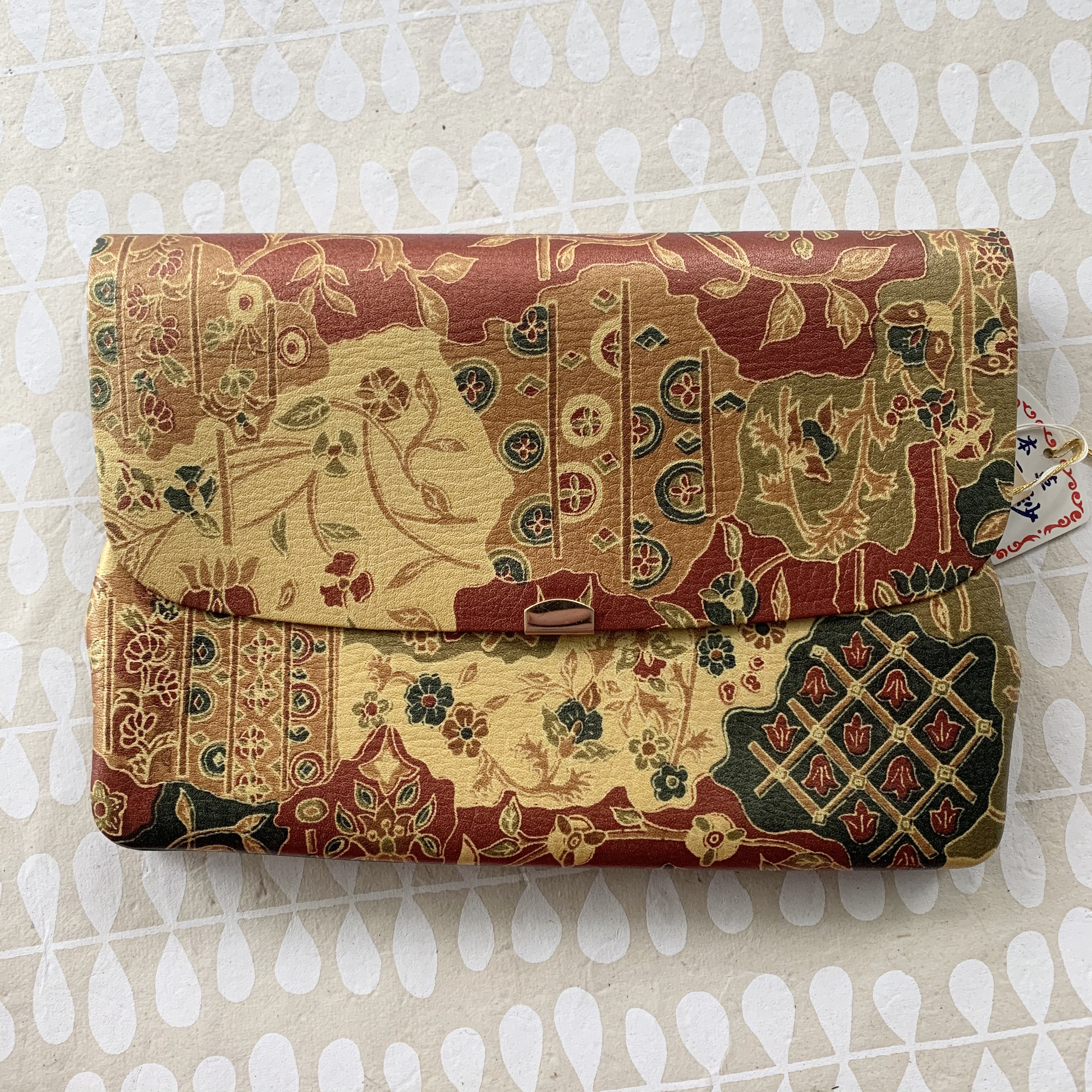
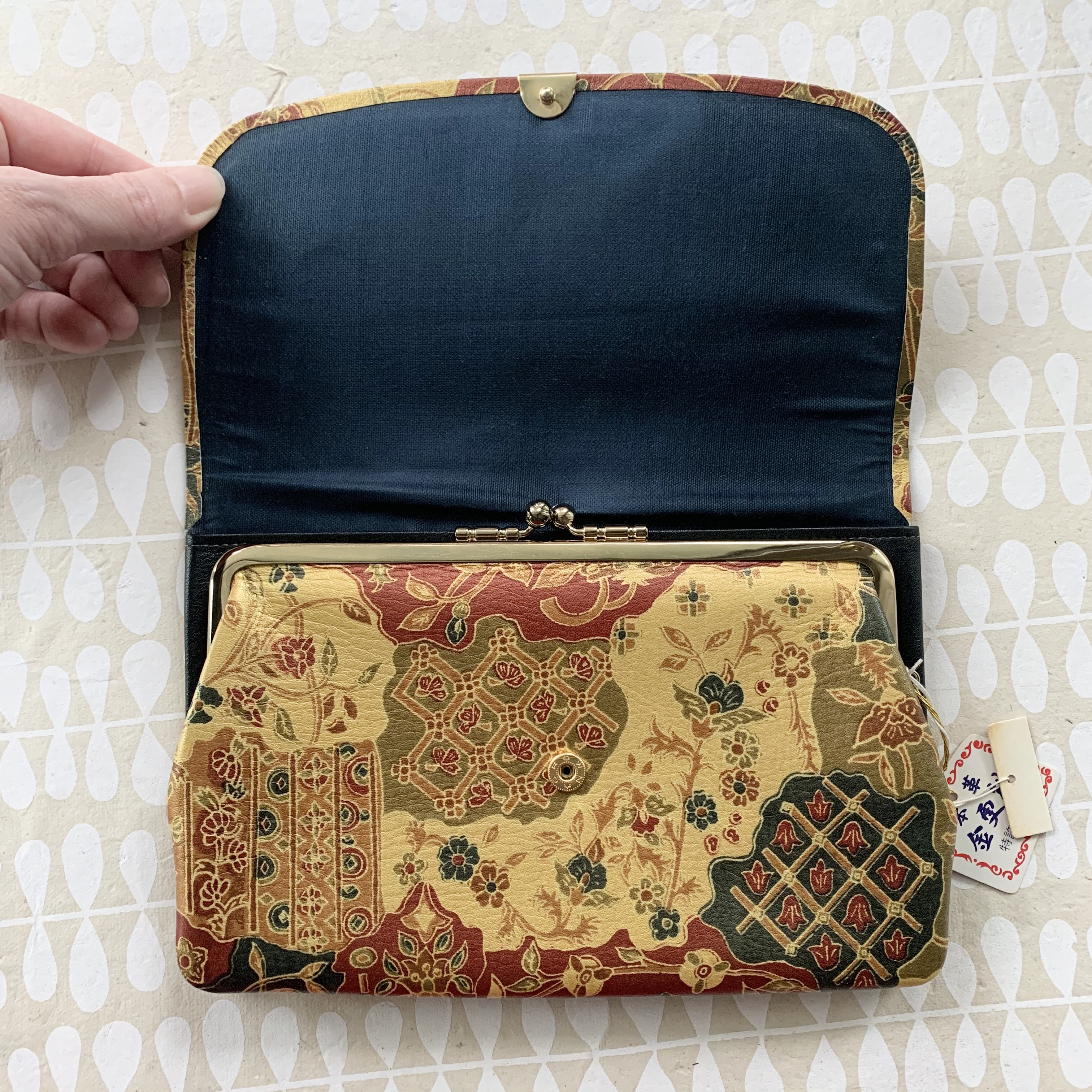
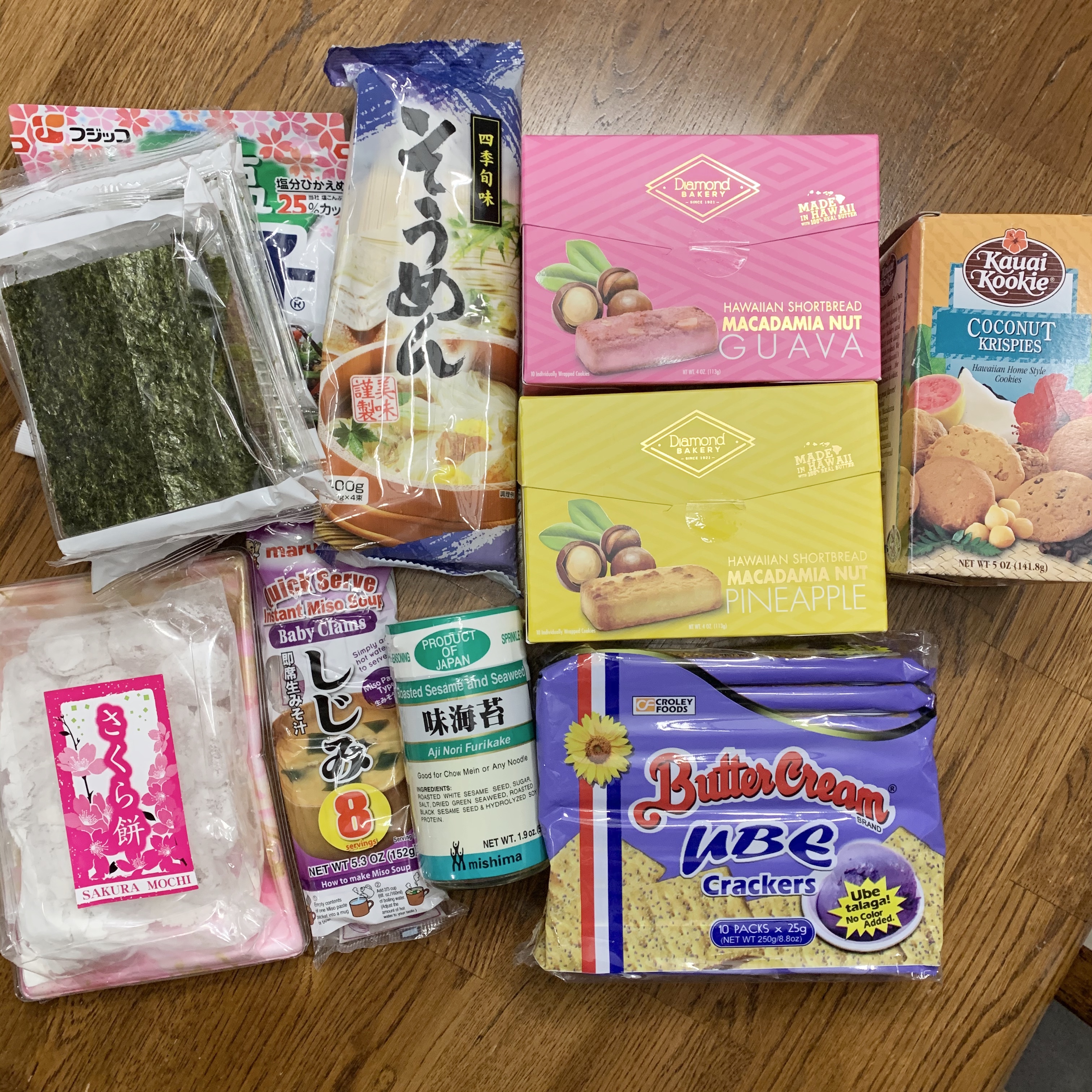
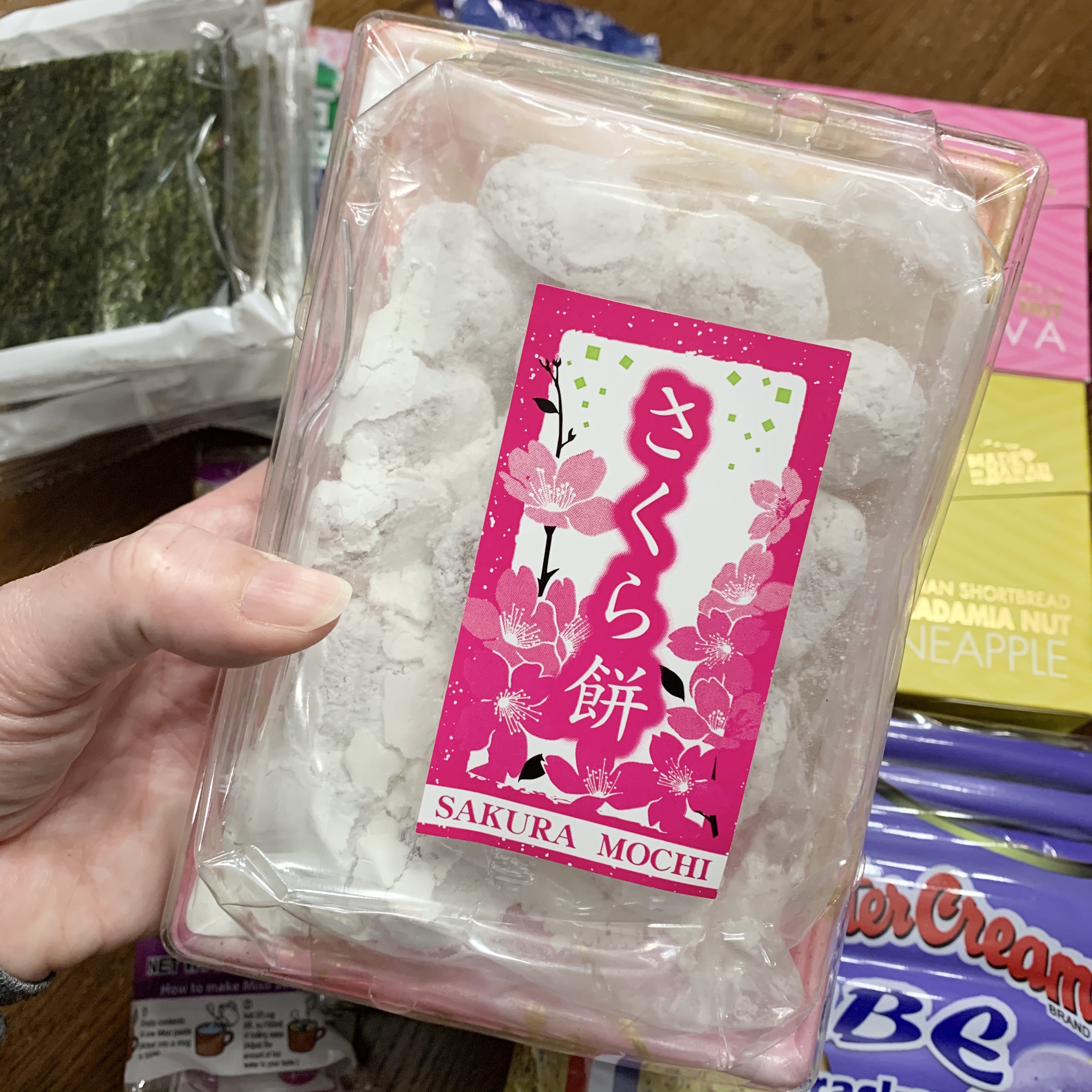
Naoto’s host family in Hawaii sent us a care package last week and it was so full of Aloha goodness! I got some new flip flops (or slippahs) for lounging on the lanai, a wallet that I can use for my cash at craft shows, and some very kawaii face masks! Naoto is going to wear the blue one to Trader Joe’s! There was also this sweet little wallet made from Japanese fabric. It will make a nice stamp or business card holder. (One cannot have too many traveling stamp options!) And there were these fun handmade cards and a Japanese bookmark. And…my favorite–this Japanese clutch. Isn’t it so fun? It has a large pocket behind the kiss clasp section and is more than big enough for my phone. I am so excited to leave my home again someday just so I can carry this. Along with those treats, they sent all sorts of Hawaiian snacks. (And some Japanese snacks for Naoto, including baby clam instant miso soup.) I have mixed feelings about mochi, but we are really enjoying this sakura mochi this weekend.
Naoto is so excited to have a little taste of Hawaii at home and as always, I love a good surprise in the mail.
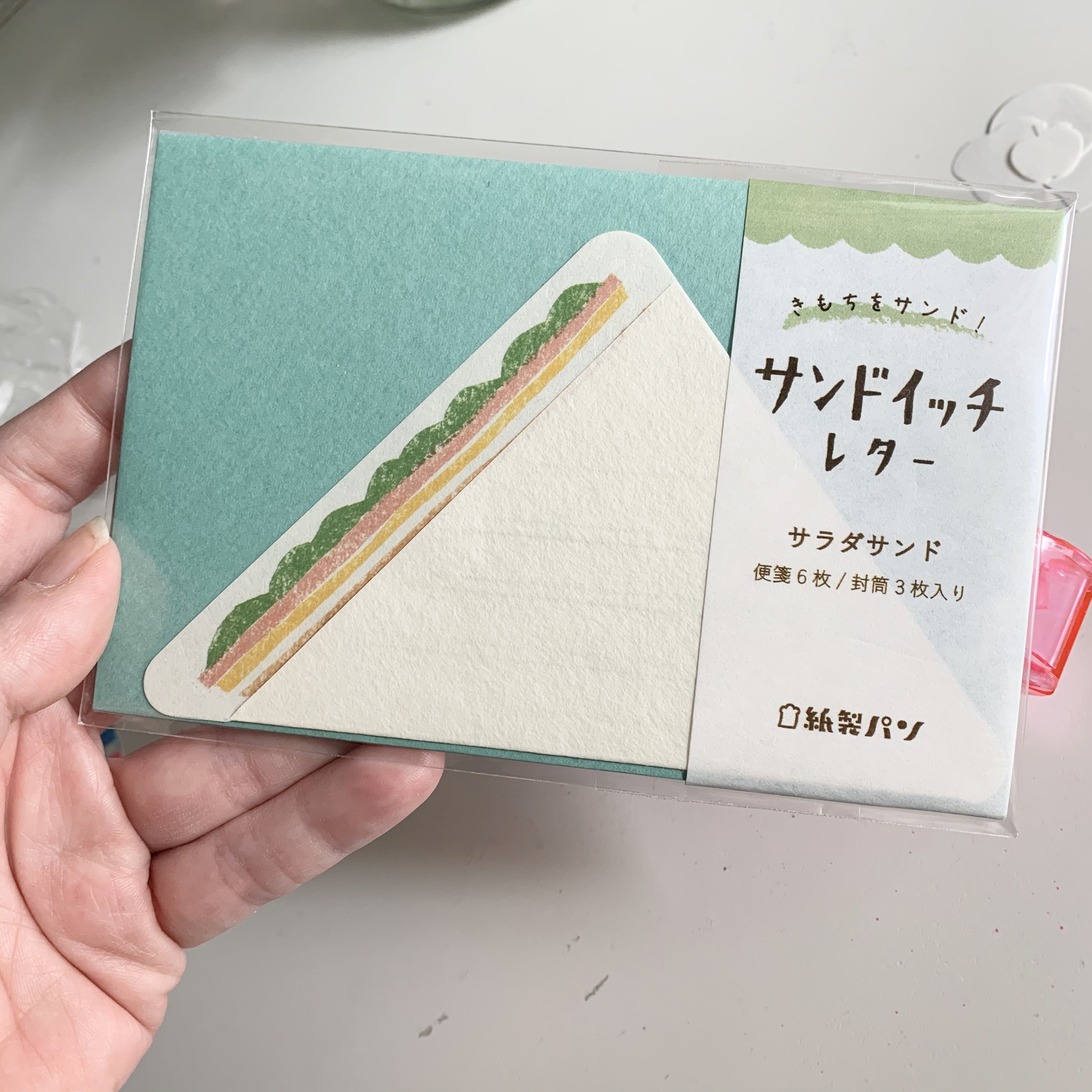
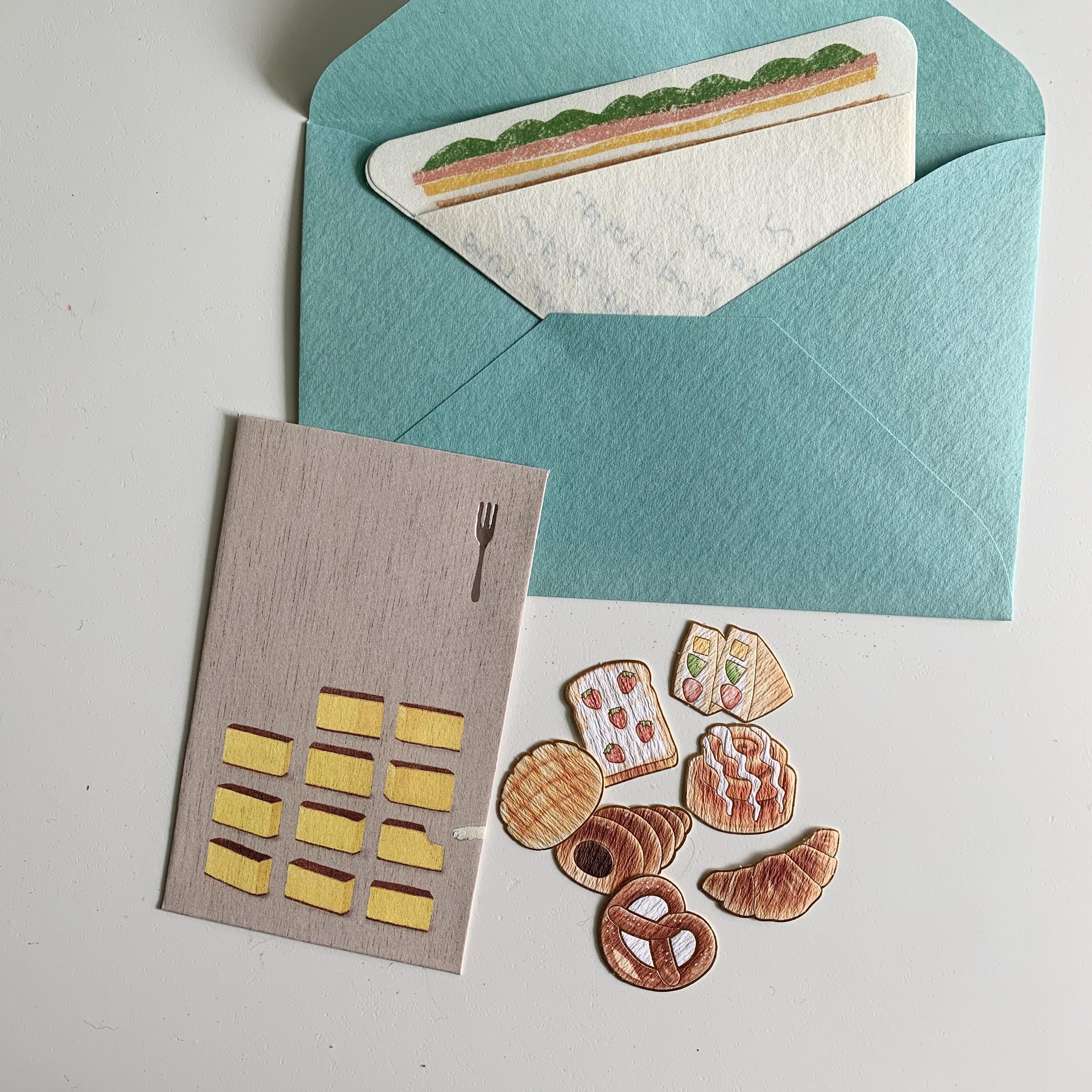
I ate a lot of sandwiches in Japan during our last visit. Sandwiches in Japan are among my favorite things. (This should be a #JDIB post…I need to look through my pictures.) To commemorate the many sandwiches, I bought this “sando” letter set while we were in Okinawa.
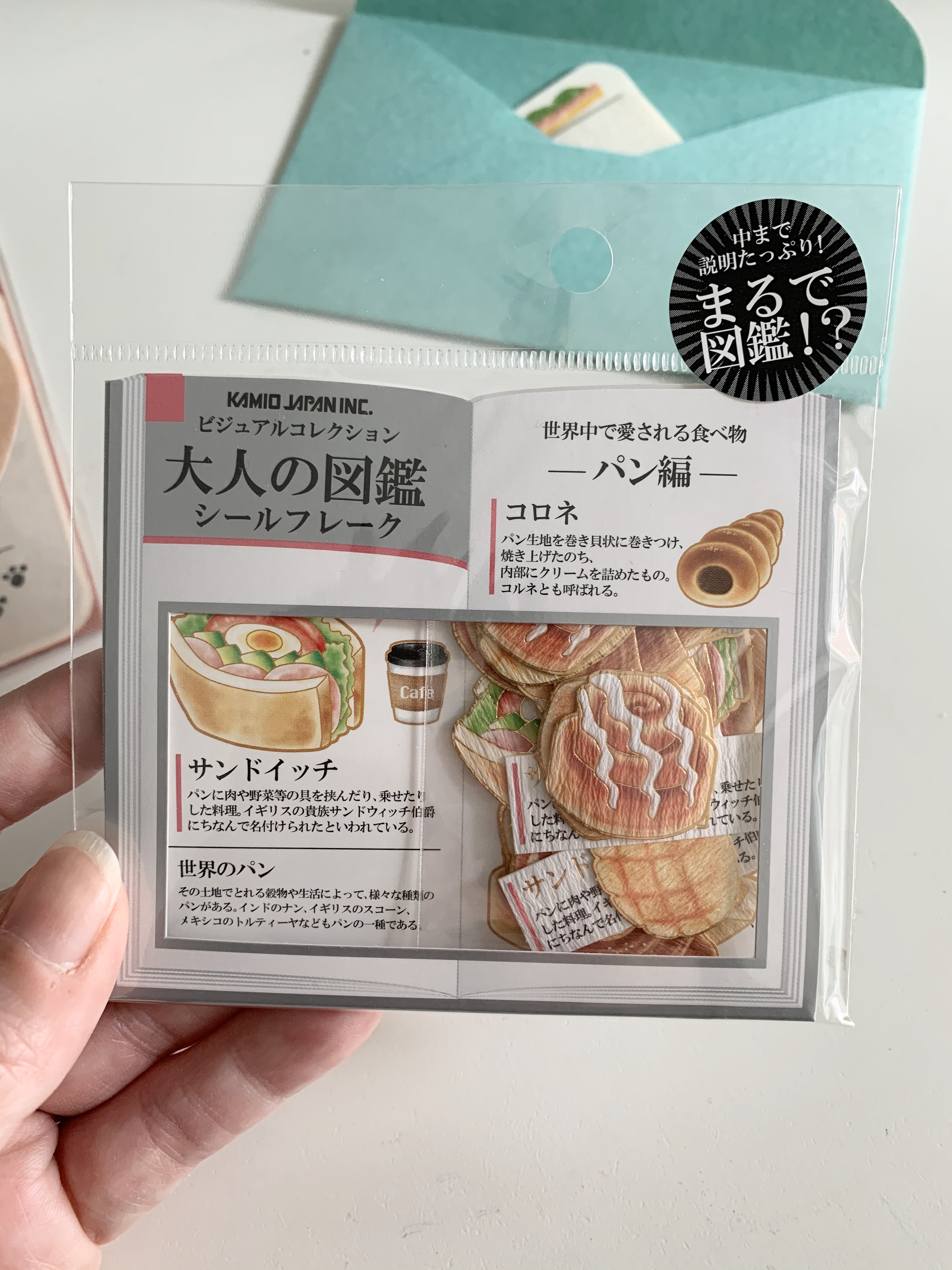
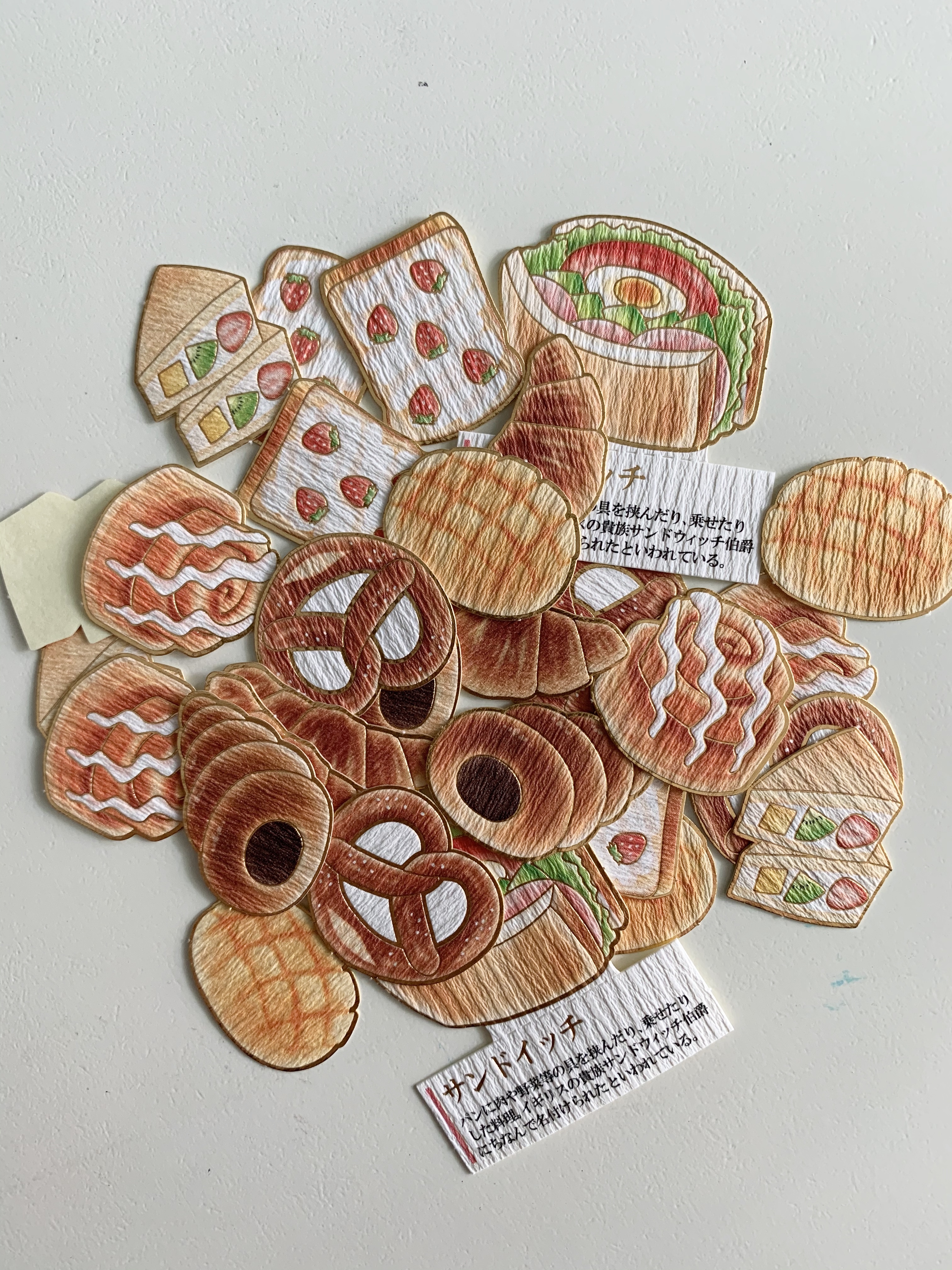
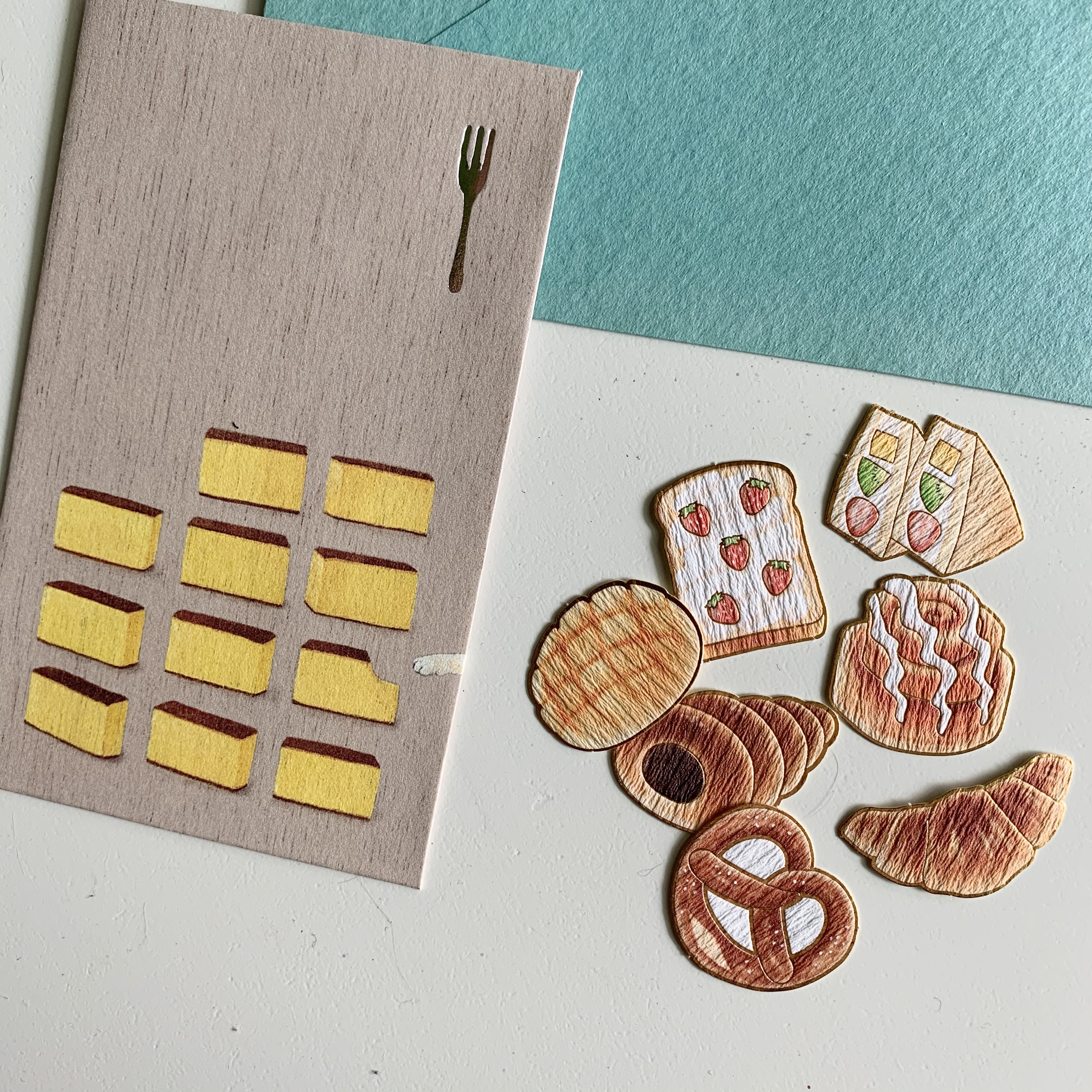
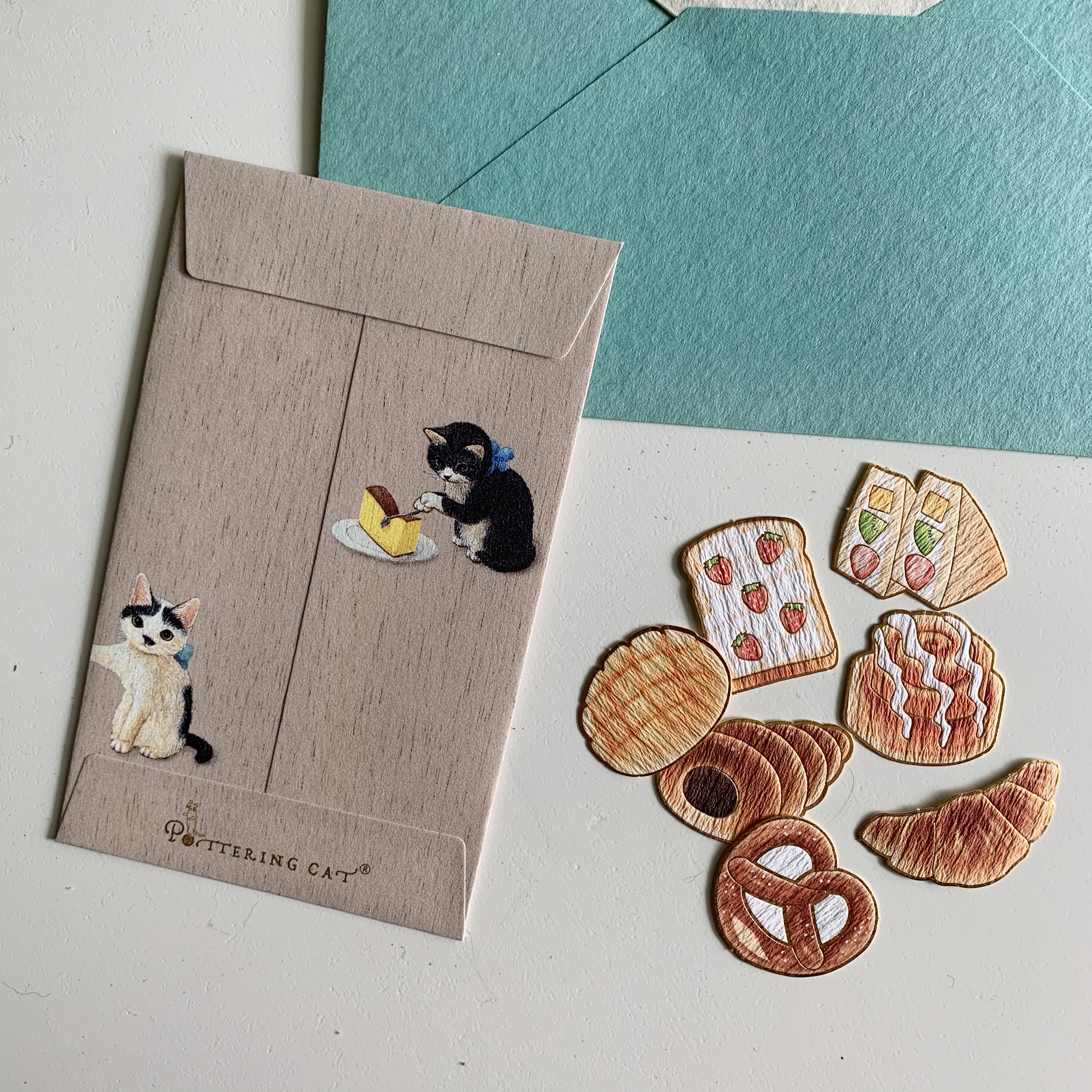
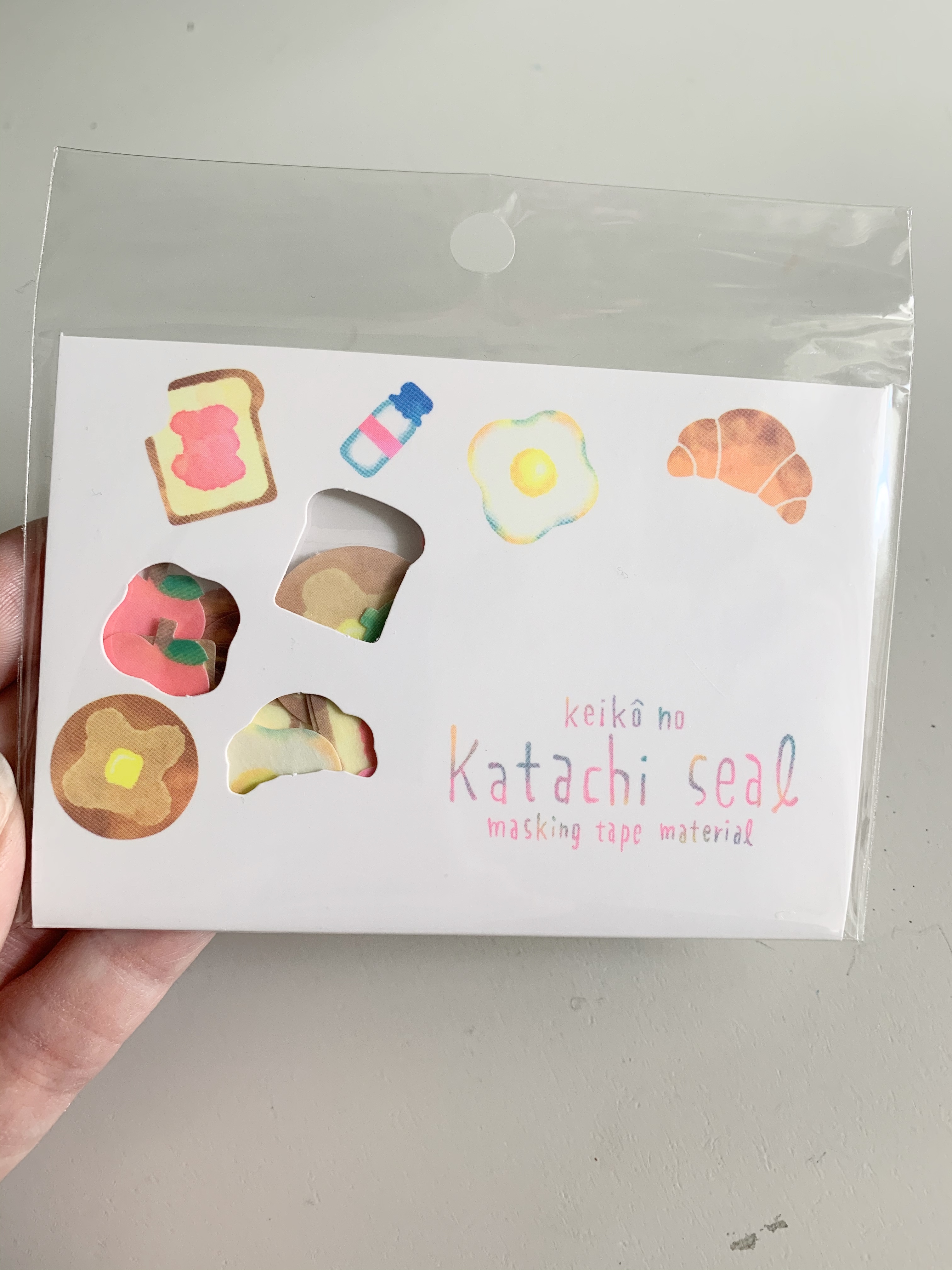
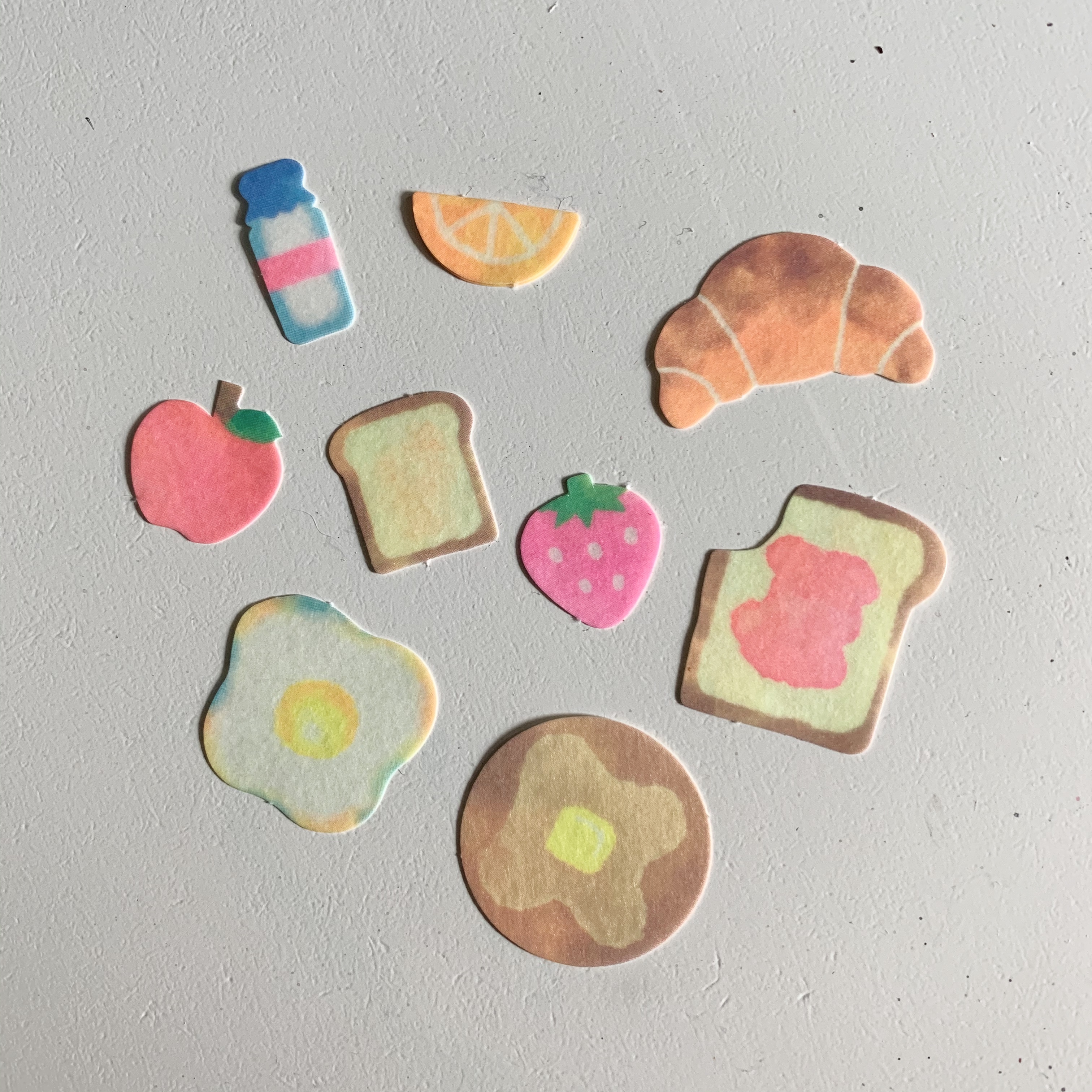
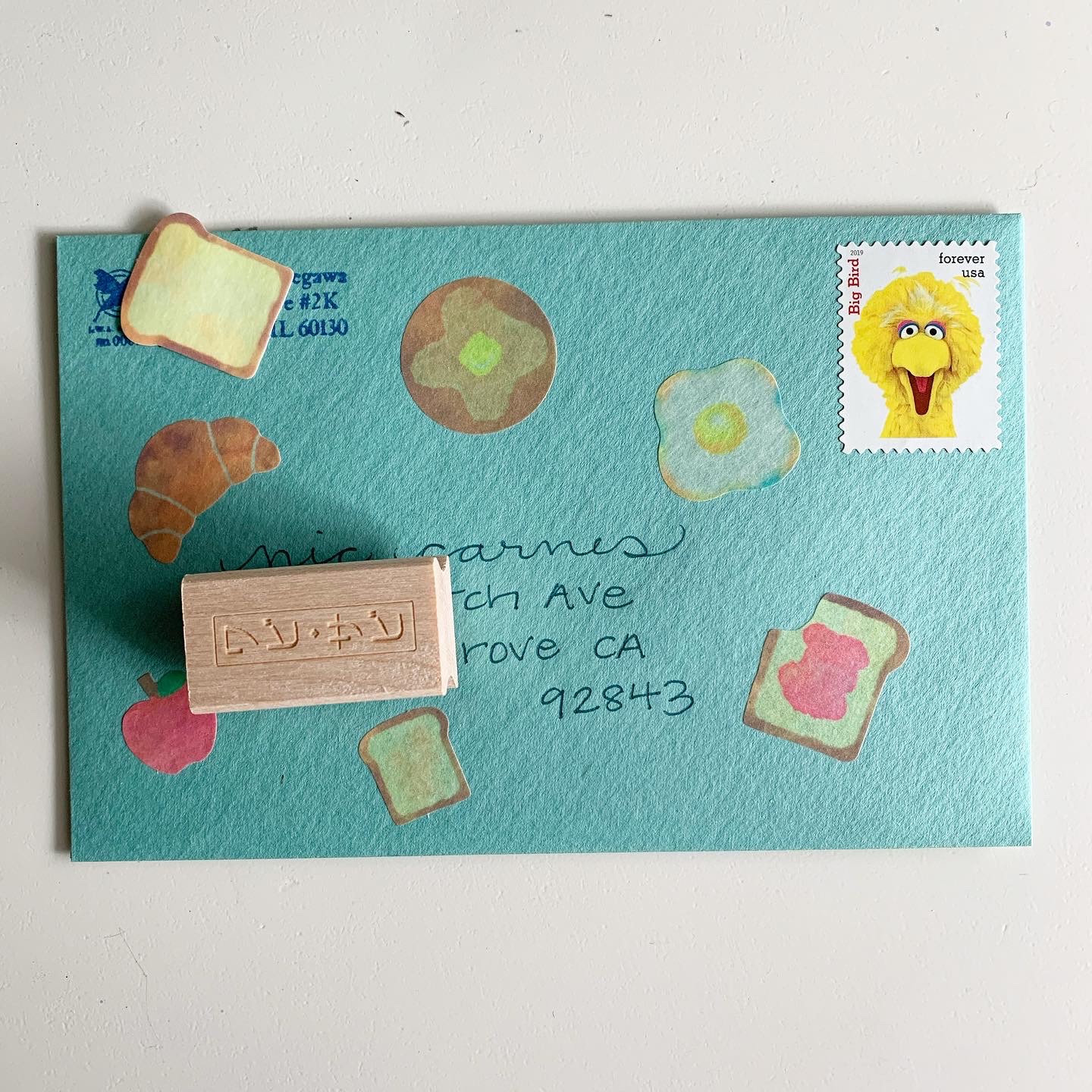
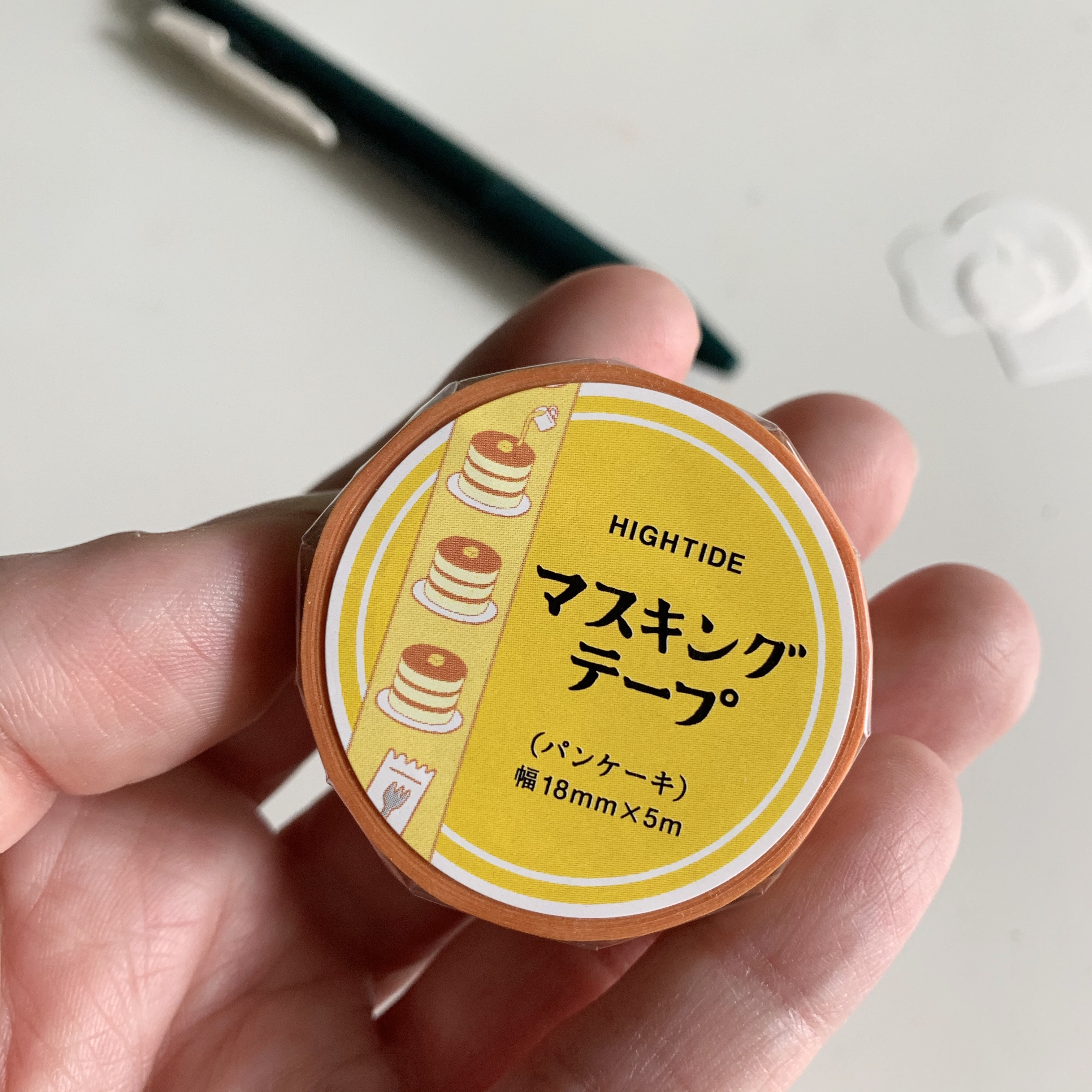
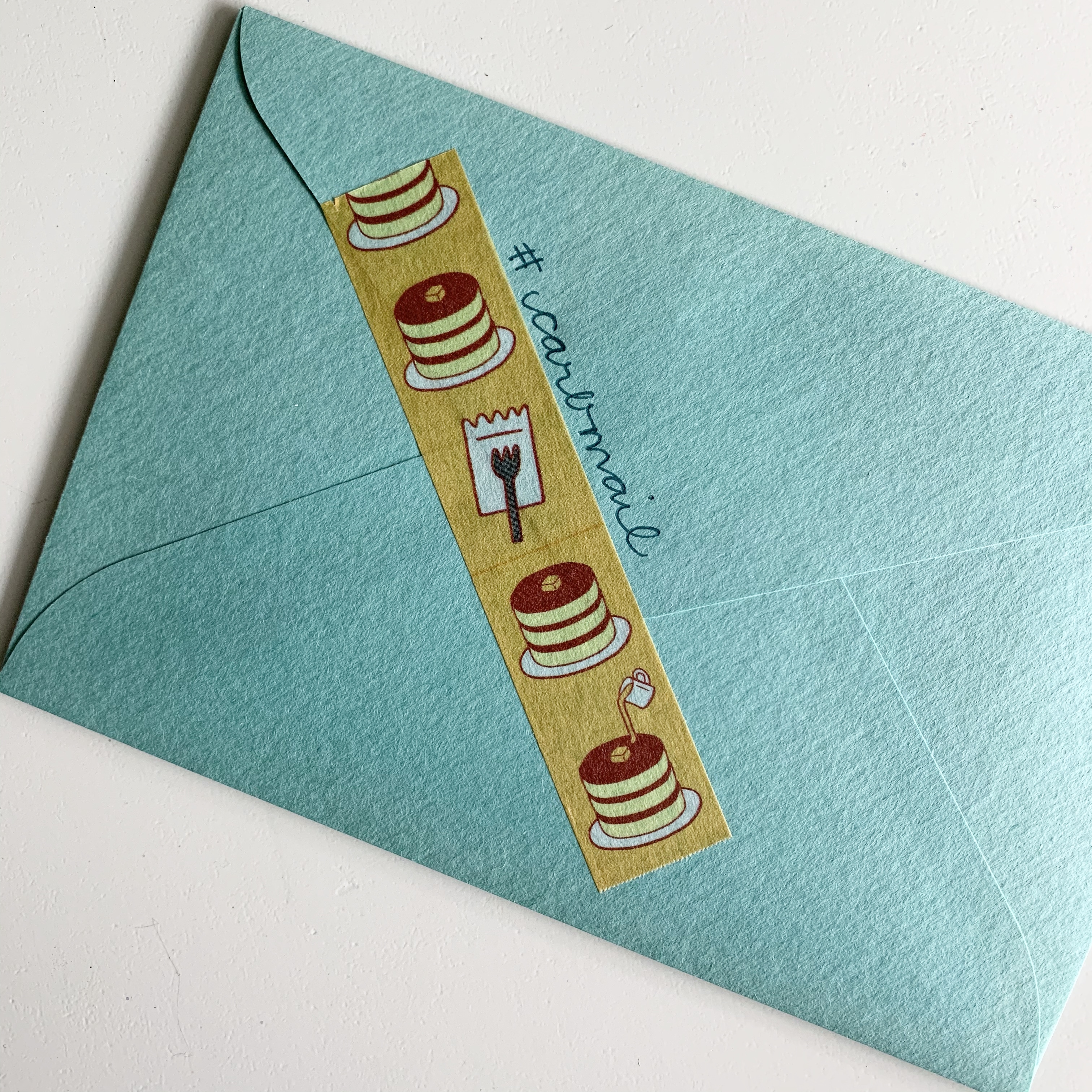
Last week on Instagram, Assembly of Text did a little challenge for writing a letter about your relationship with bread. My pen pal, Nic, and I had a little online chat about the challenge but I decided to write her a bread love letter, too. Then I remembered that I have a little collection of bread stickers to share. I bought these at Loft a couple years ago and found them tucked away in my Japan hoard drawer. They have a really nice texture and really pretty, soft illustrations of Japanese bakery items, including strawberry bread, which I regret to say I’ve never tried.Aren’t they so cute and carby? I had these little cats with cakes envelopes so I figured they are on-theme enough. The silver foil fork and the tiny paw reaching for the cake slay me. The sandwich letter set isn’t made for a verbose letter, but it was enough room to tell Nic all about my love of sandwiches in Japan. Also found in my Japanese hoard drawer…these washi bread stickers! They’re made of washi, so they have a really pretty transparency. It’s hard to tell from my pictures, but the colors are almost neon, which makes the browns of the bread much more fun. I used these to decorate the envelope.Then I remembered this Japanese pancake washi tape I bought in Tokyo that would fit in with the carb theme. I stuck a little piece on the envelope flap and wrote #carbmail on the envelope, though I really like #breadmail better.
This was a fun little morning activity that made me look through my stash to see what could fit. It also reminded me (yet again) that not every letter needs to be long and in detail about my day or about staying home or pandemic fears. As a matter of fact, it was a nice break NOT to talk about the weirdness of now.
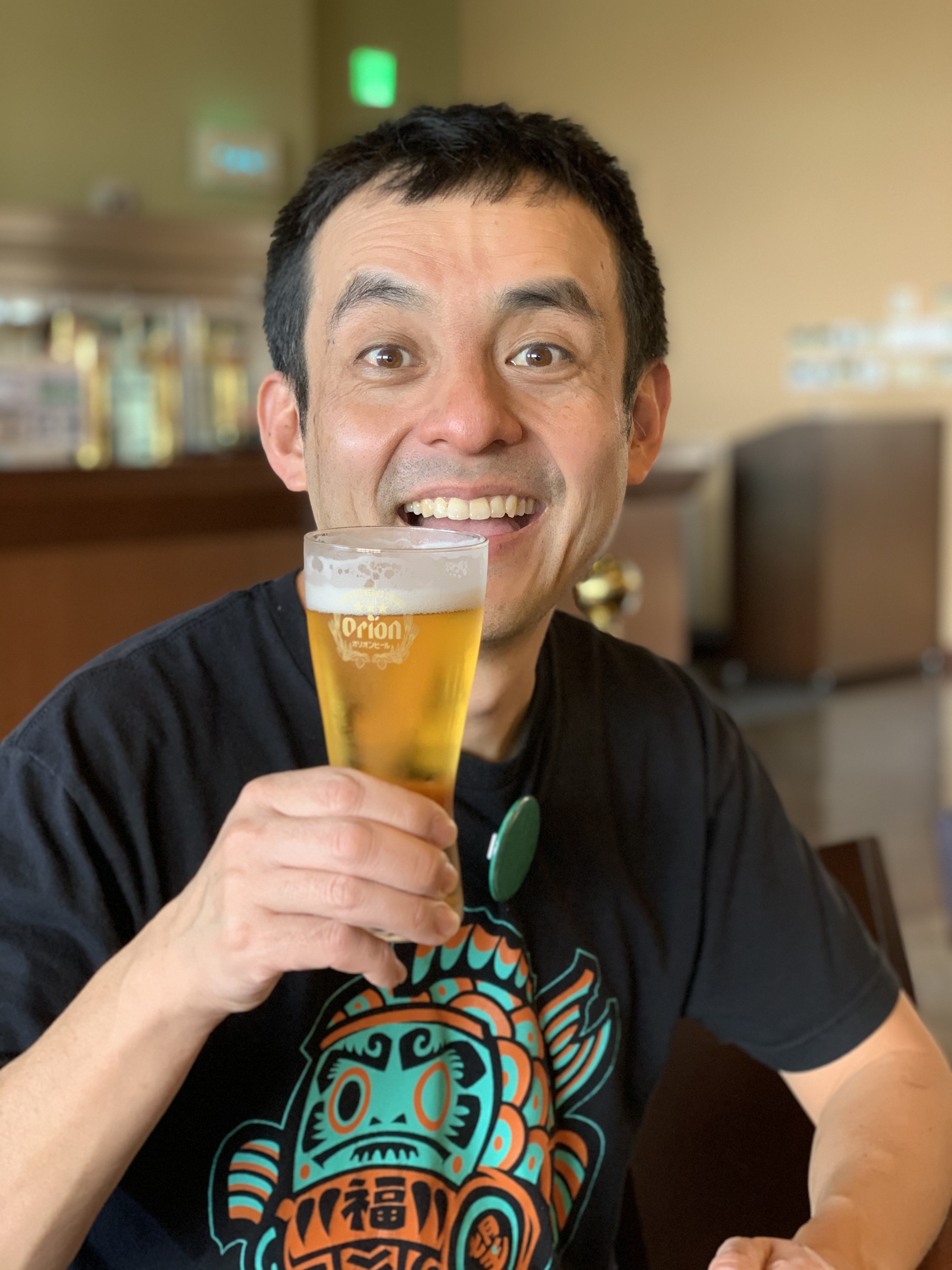
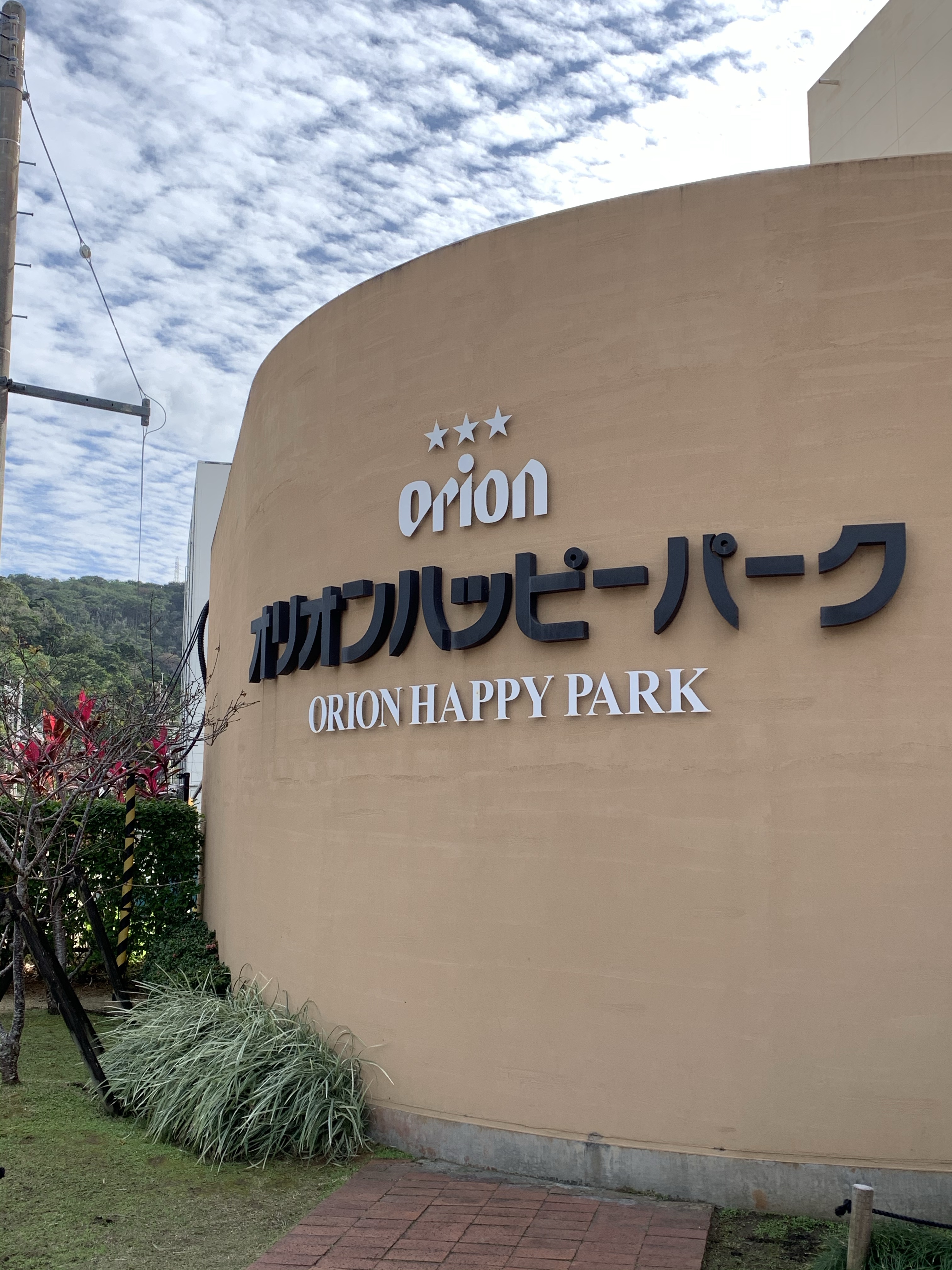
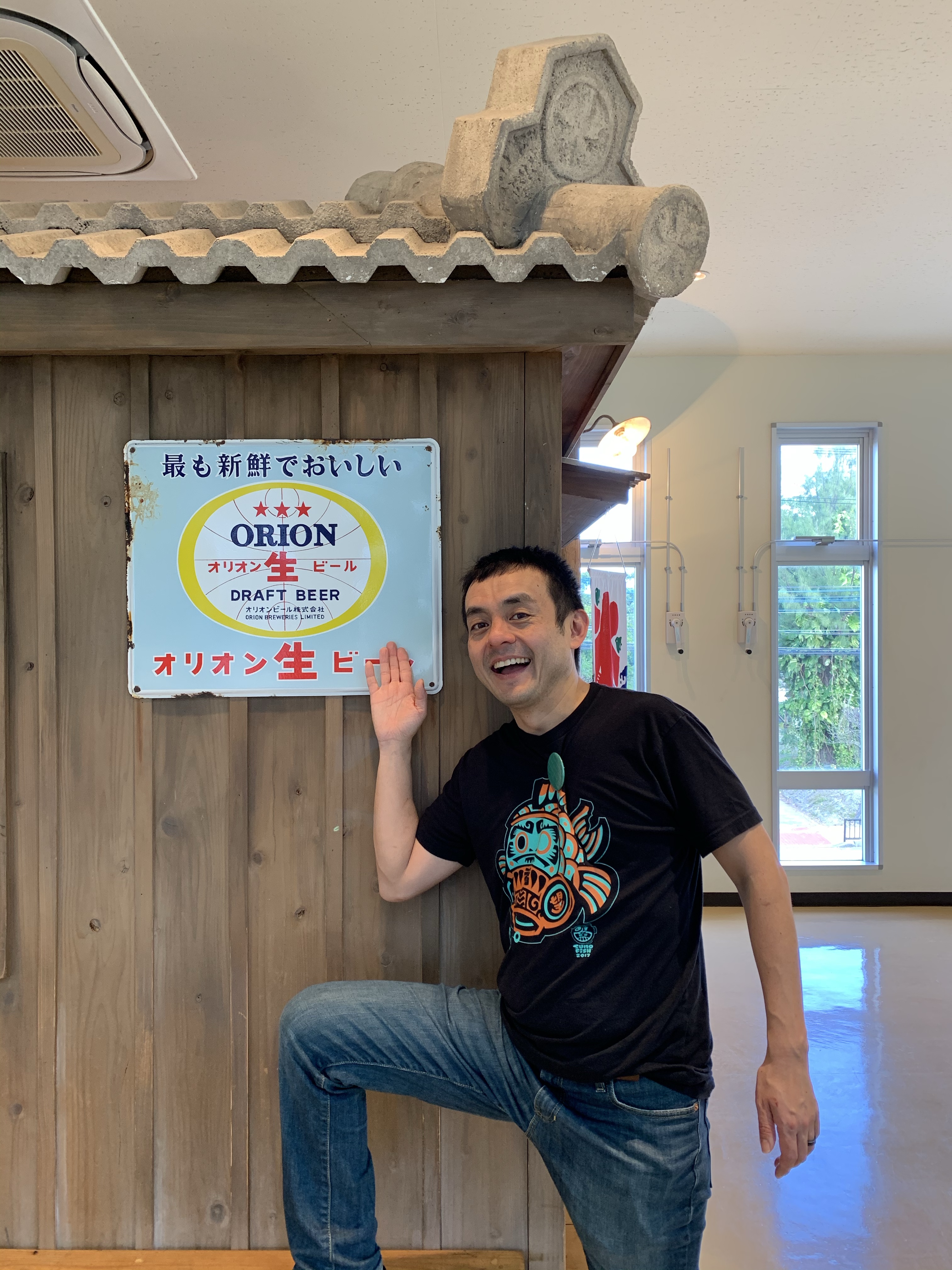
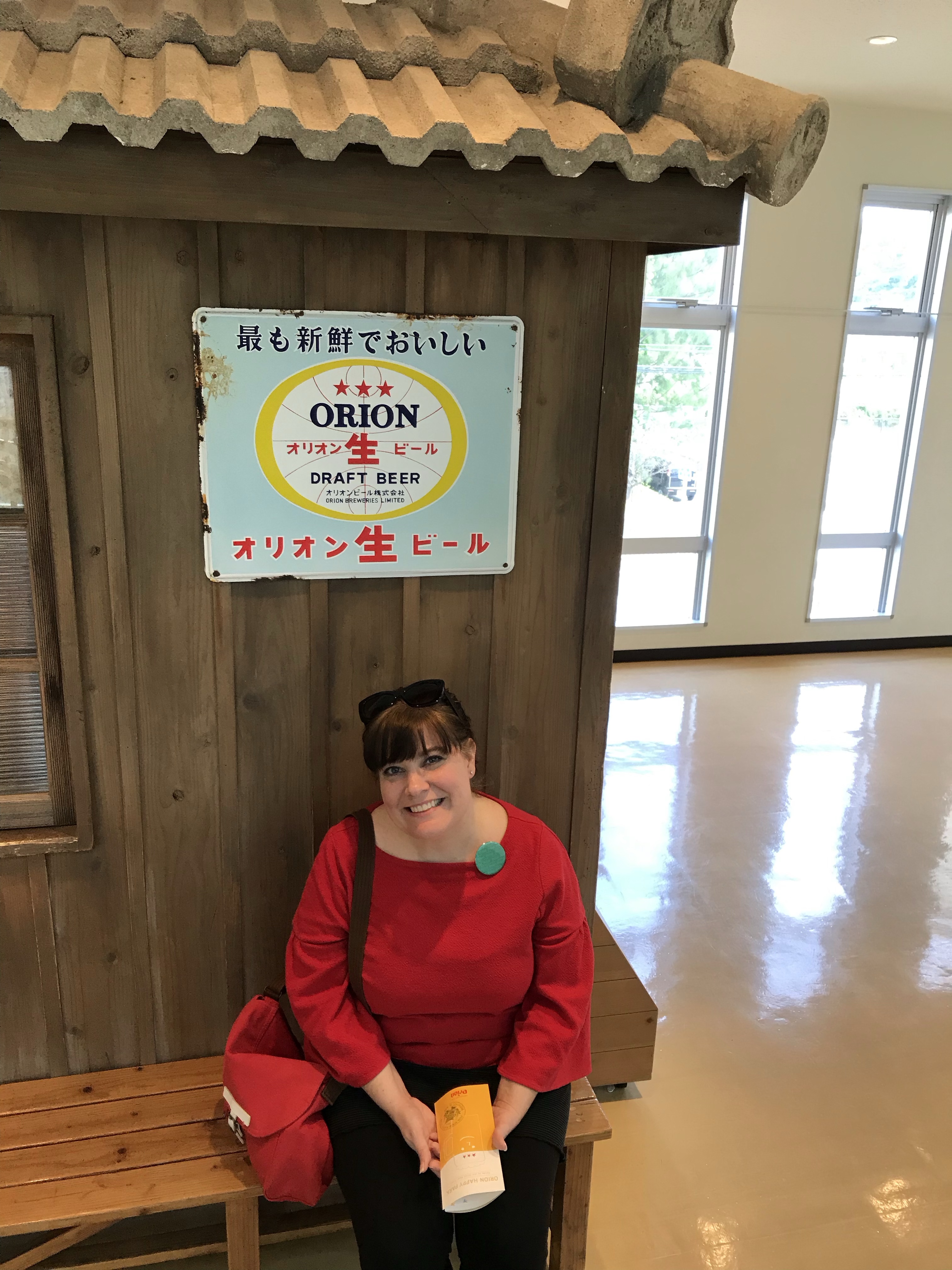
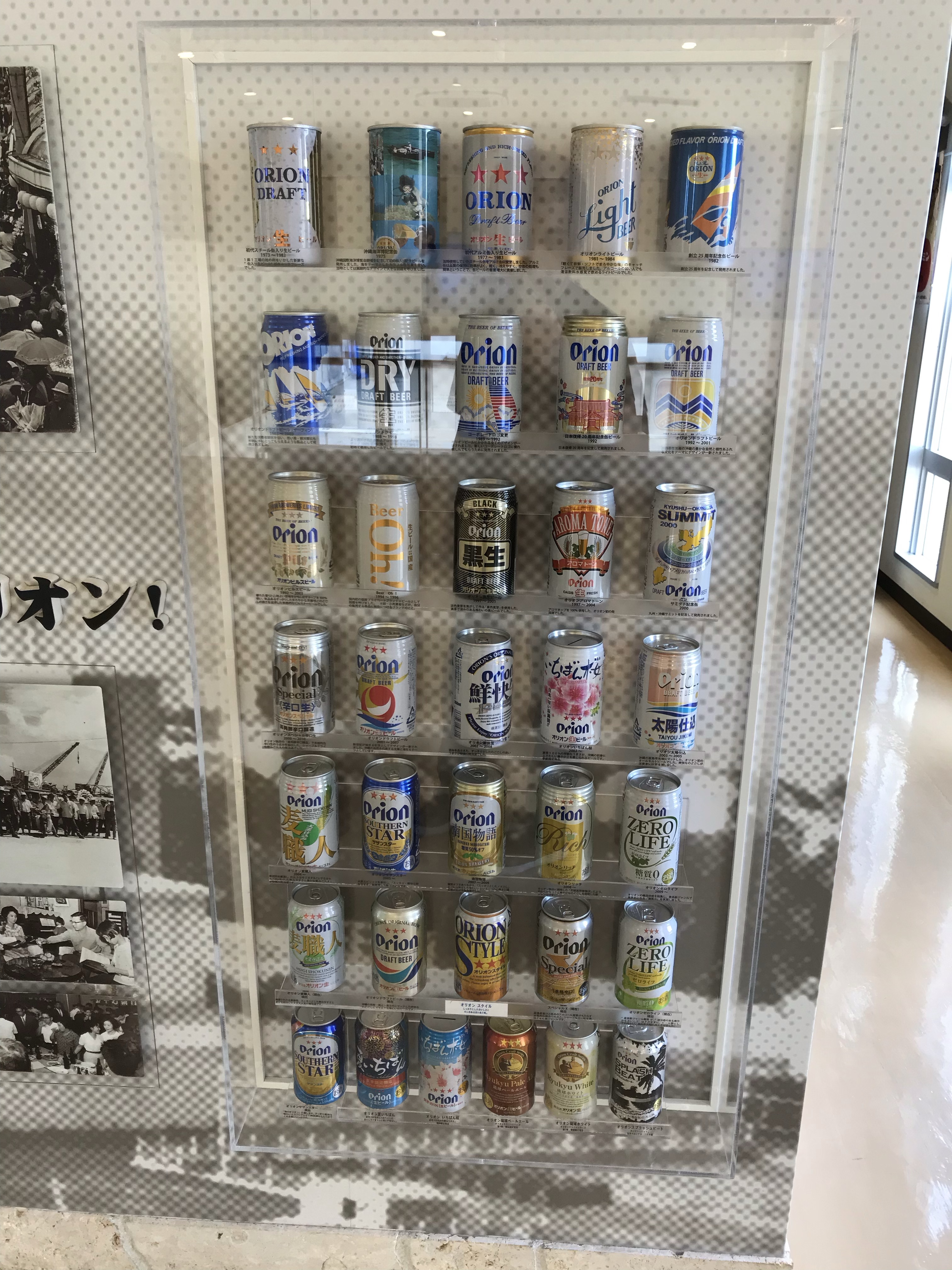
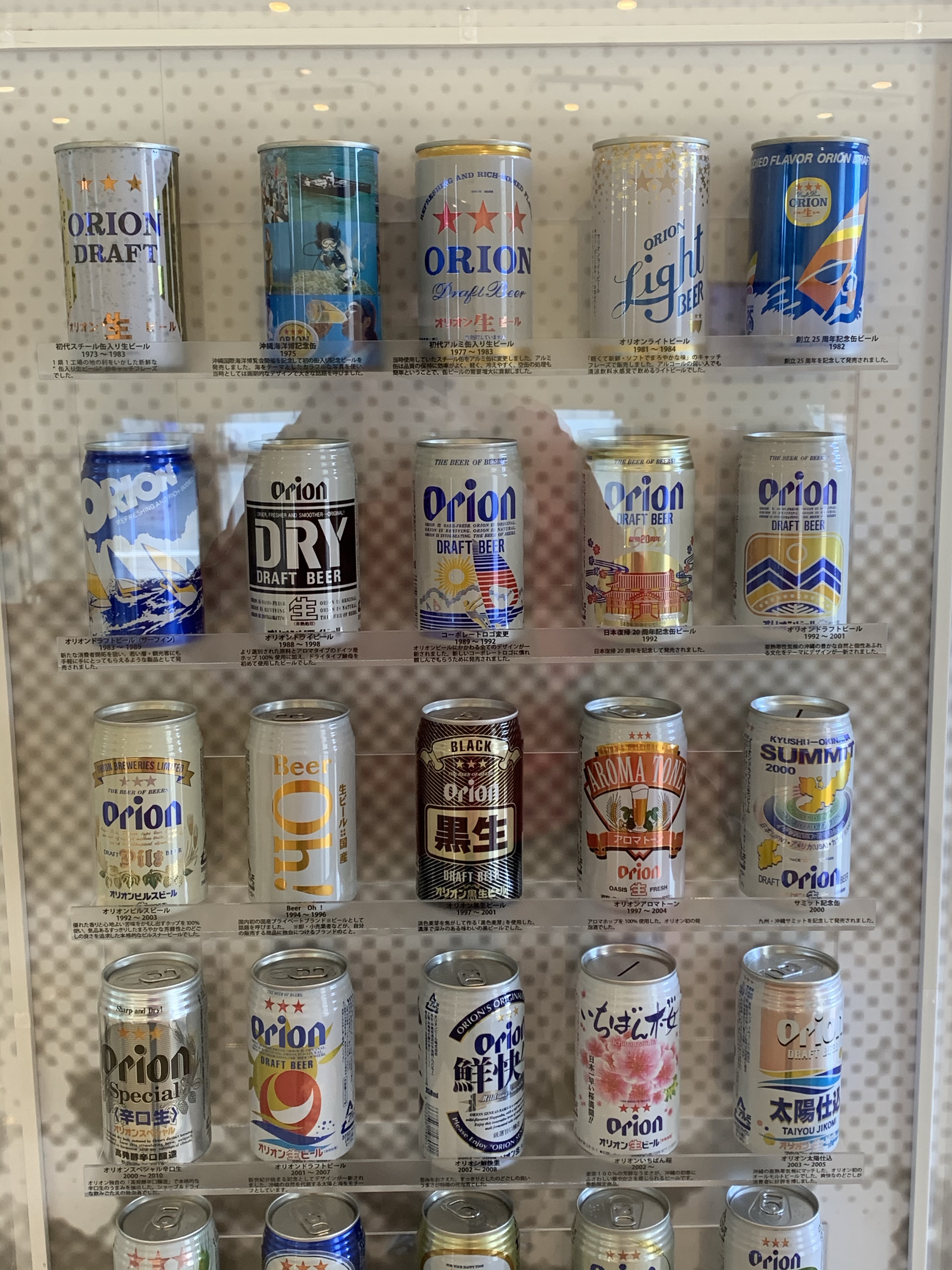
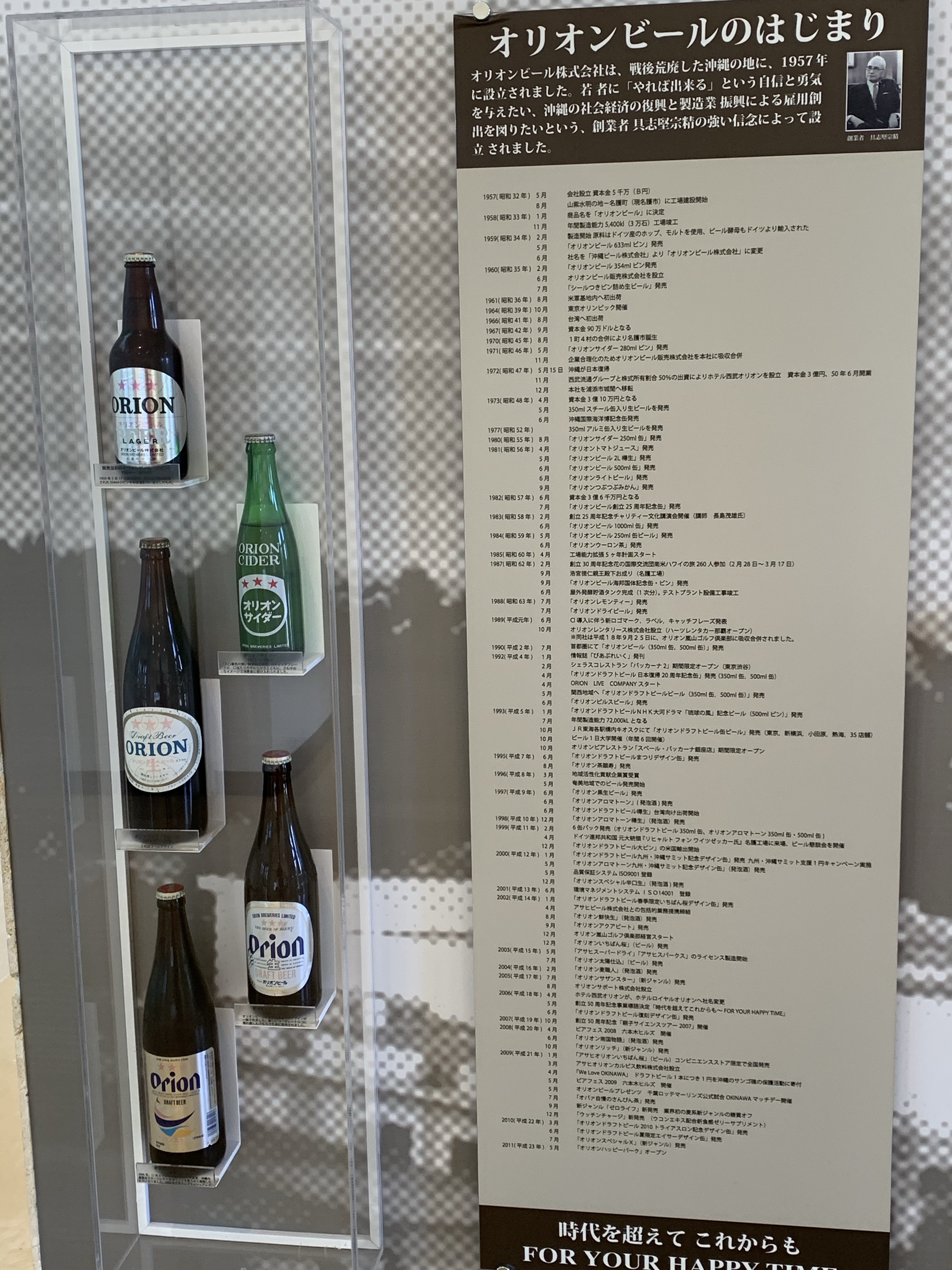
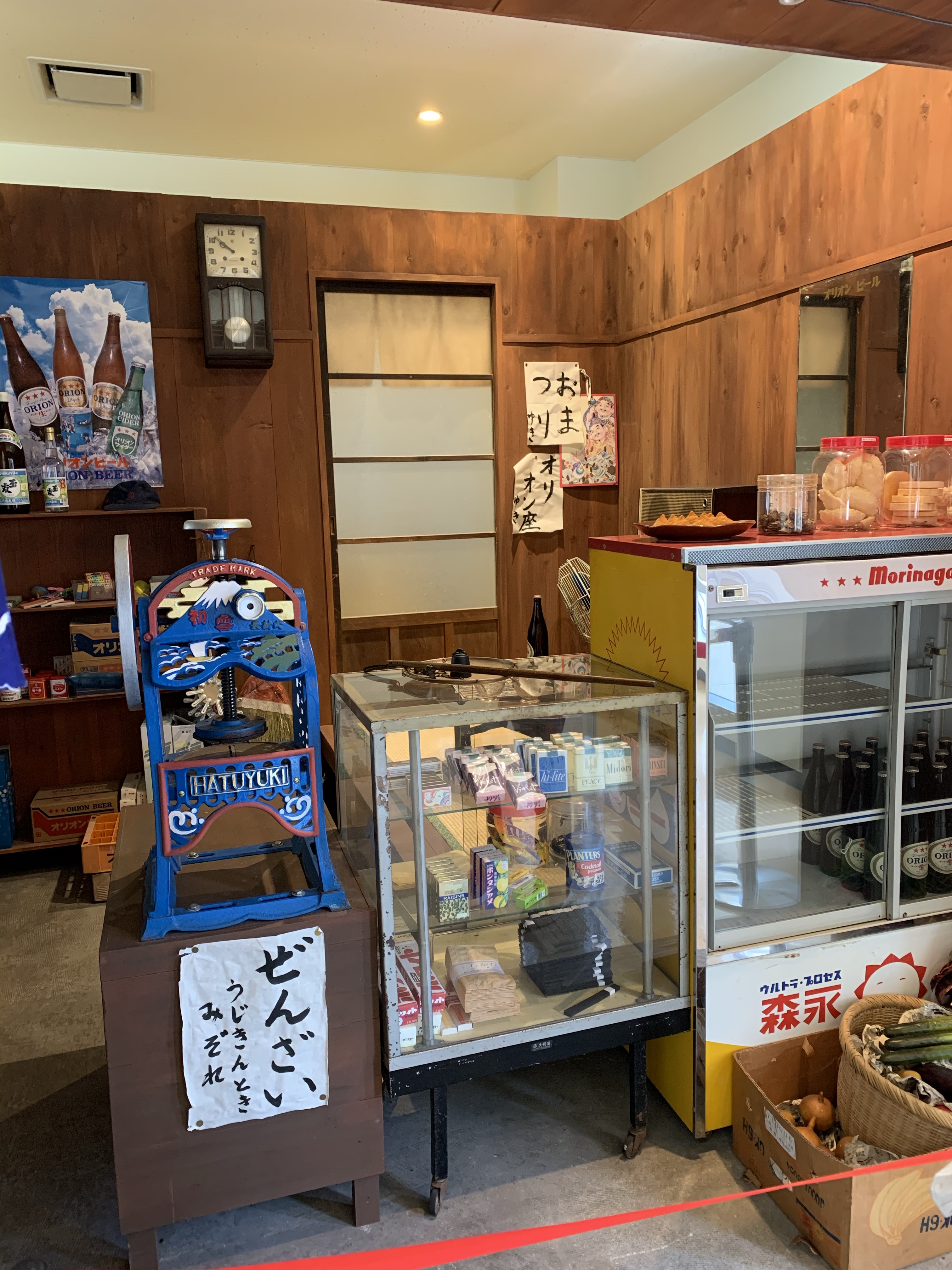
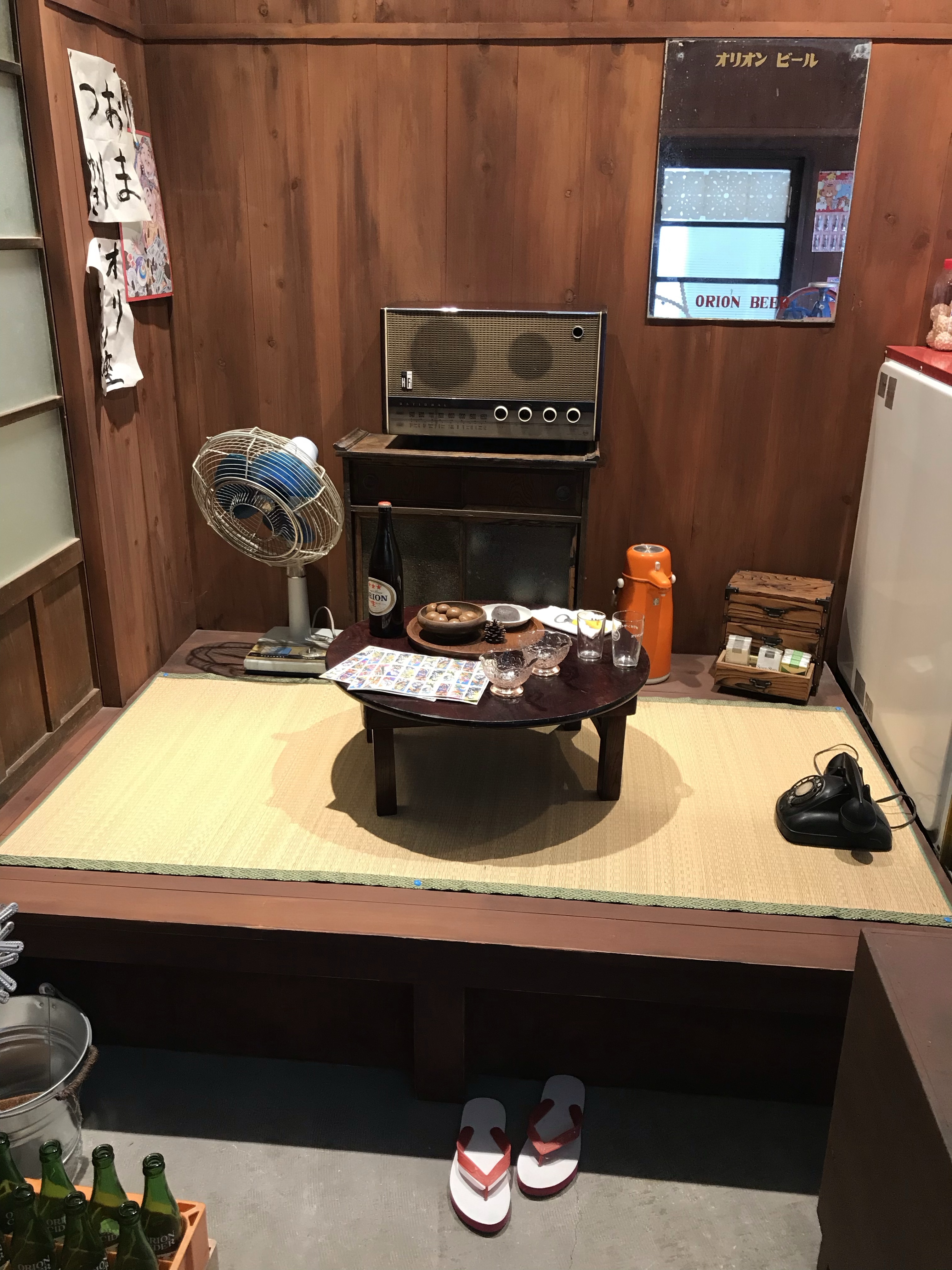
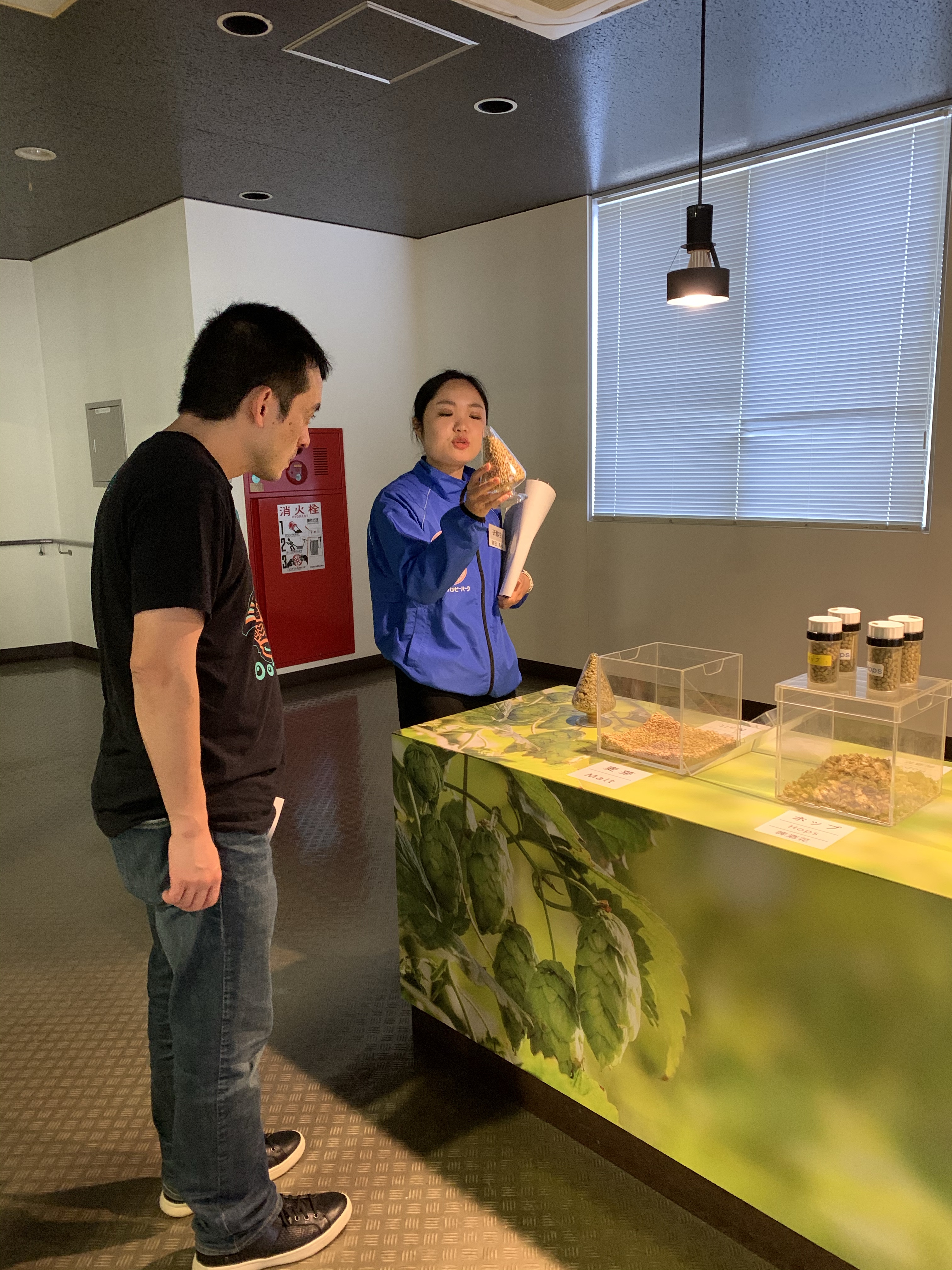
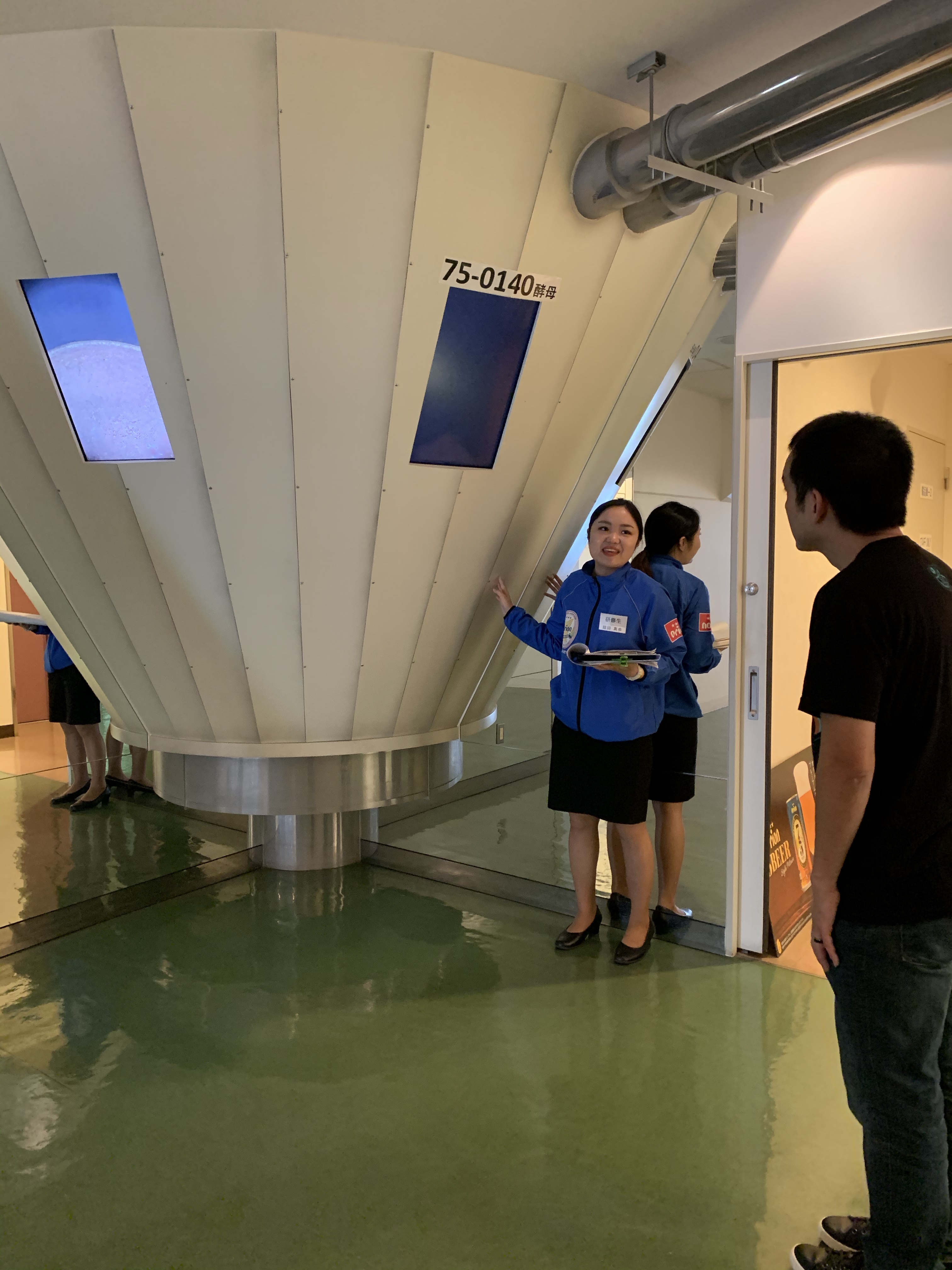
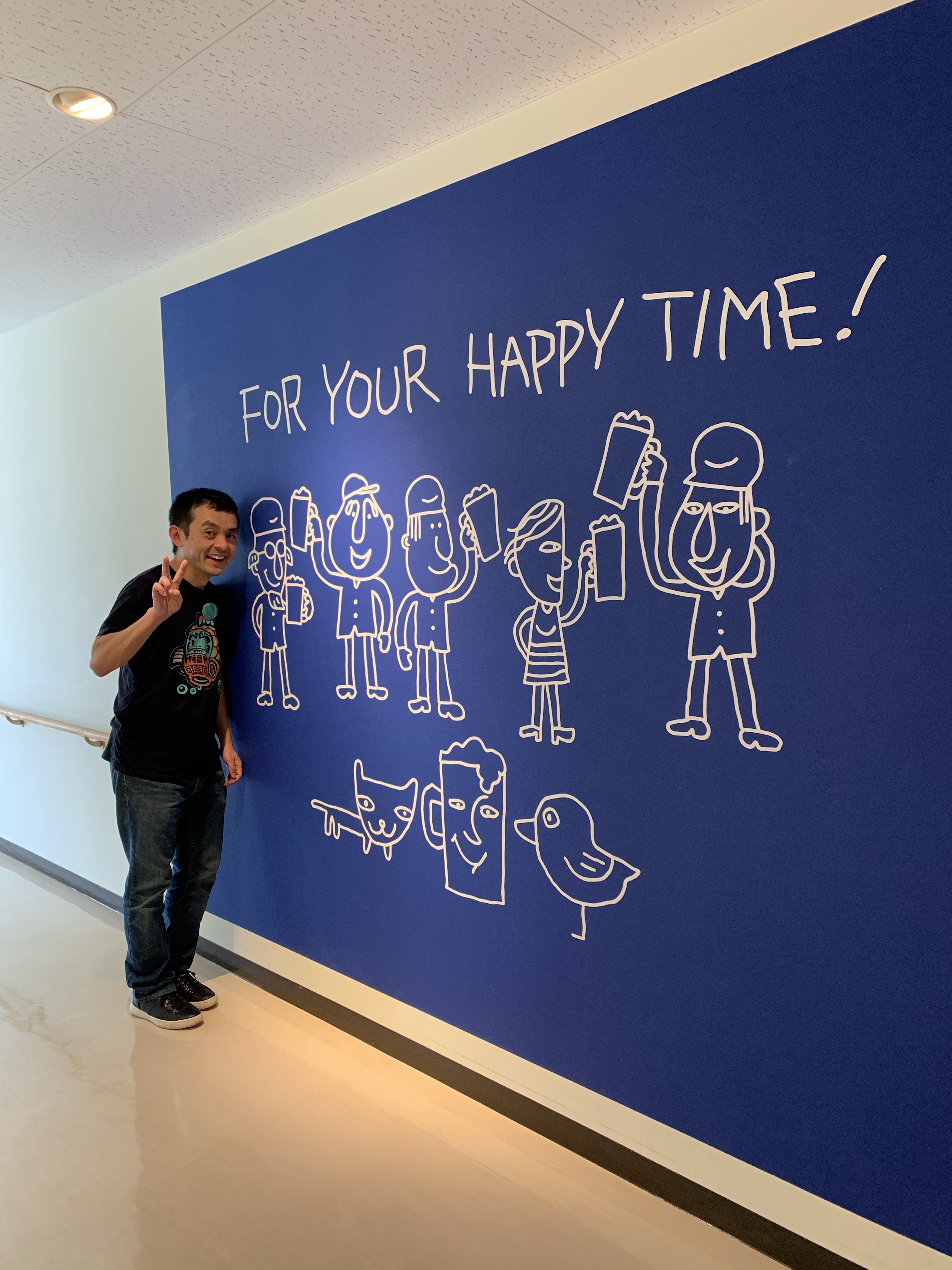
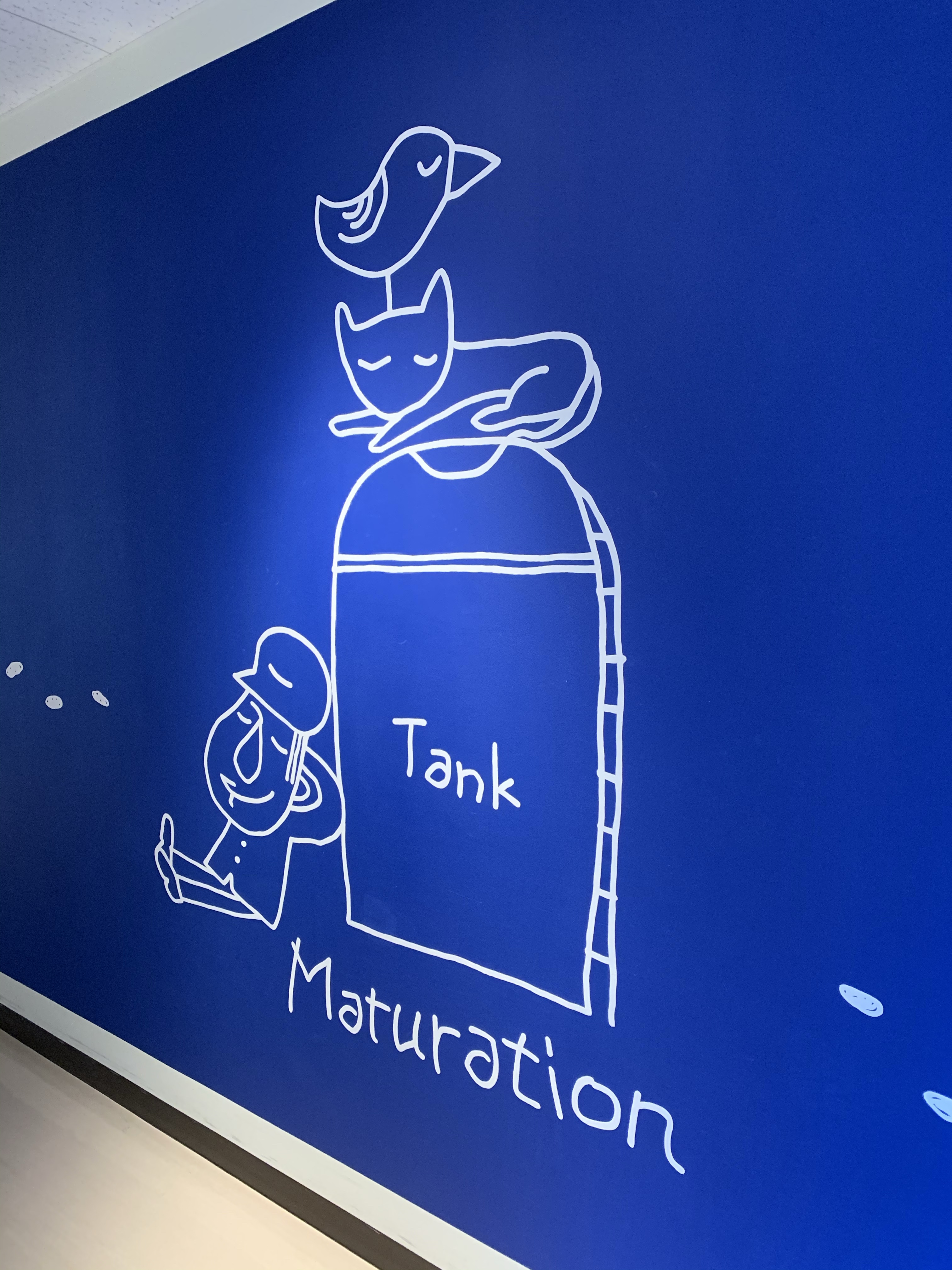
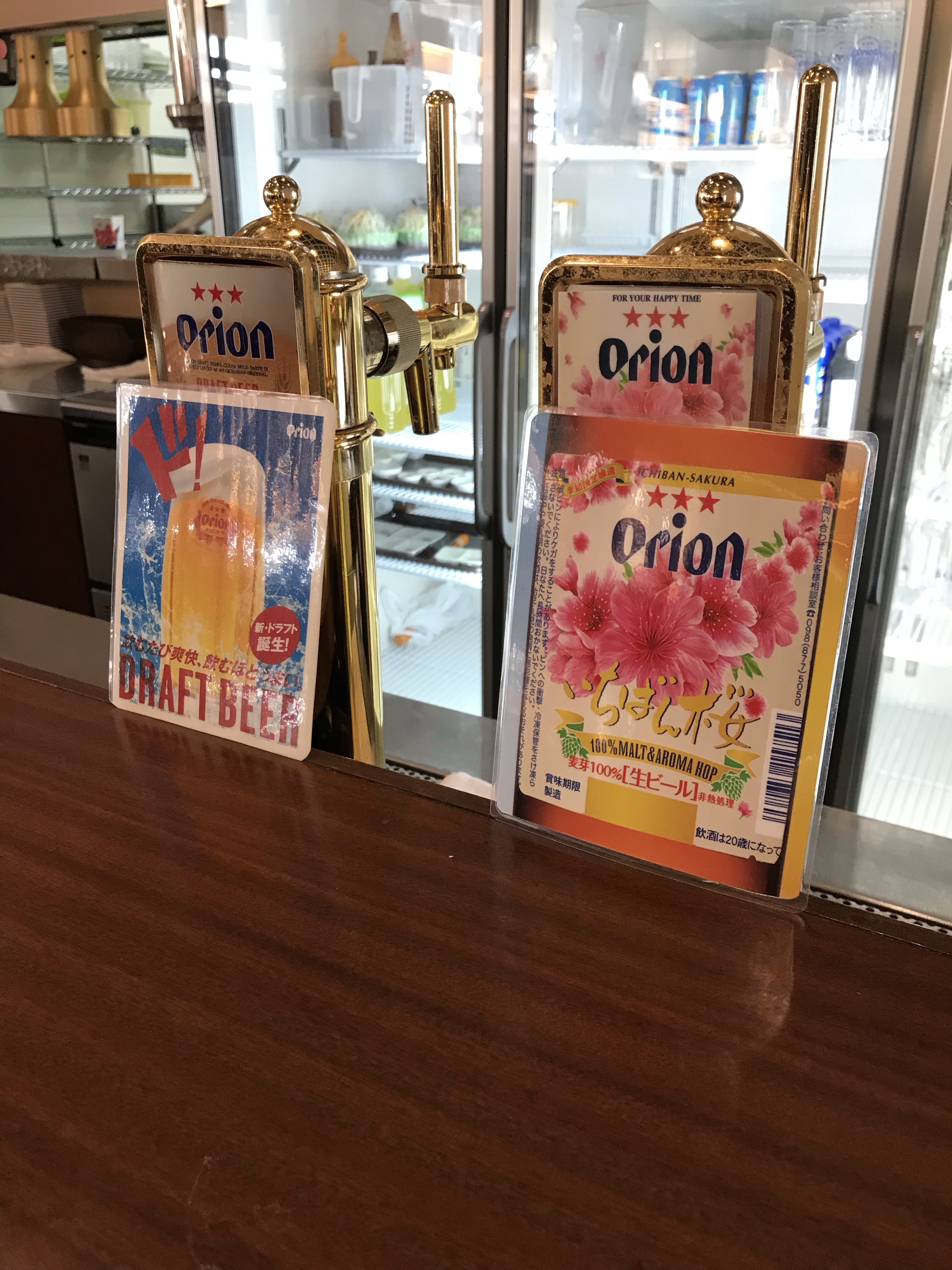
This day was the highlight of Naoto’s trip, can you tell? It’s called Orion Happy Park for a reason! We were scheduled for the first tour of the day and we totally lucked out–we were the only ones on our tour! We felt so fortunate, as the next tour was packed. Before going on the tour, we spent some time in the little Orion museum. I love looking at old packaging, so it was neat to see how the Orion cans and bottles have changed over the years. There is nothing better than a retro label–I especially loved the cherry blossom editions. We started by learning about the grains used in Orion beer. Naoto was a very involved student, asking a lot of questions of our personal tour guide.
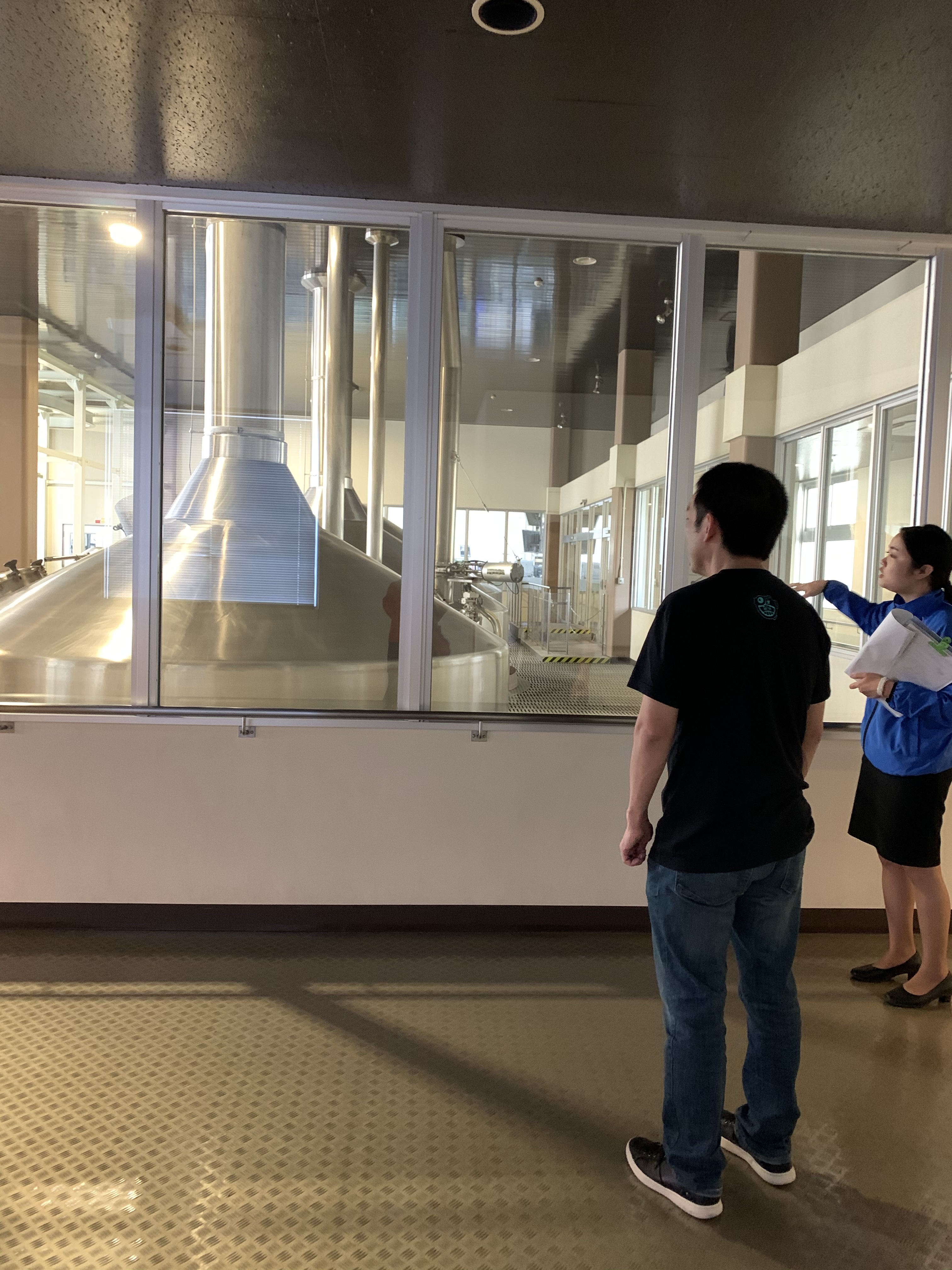
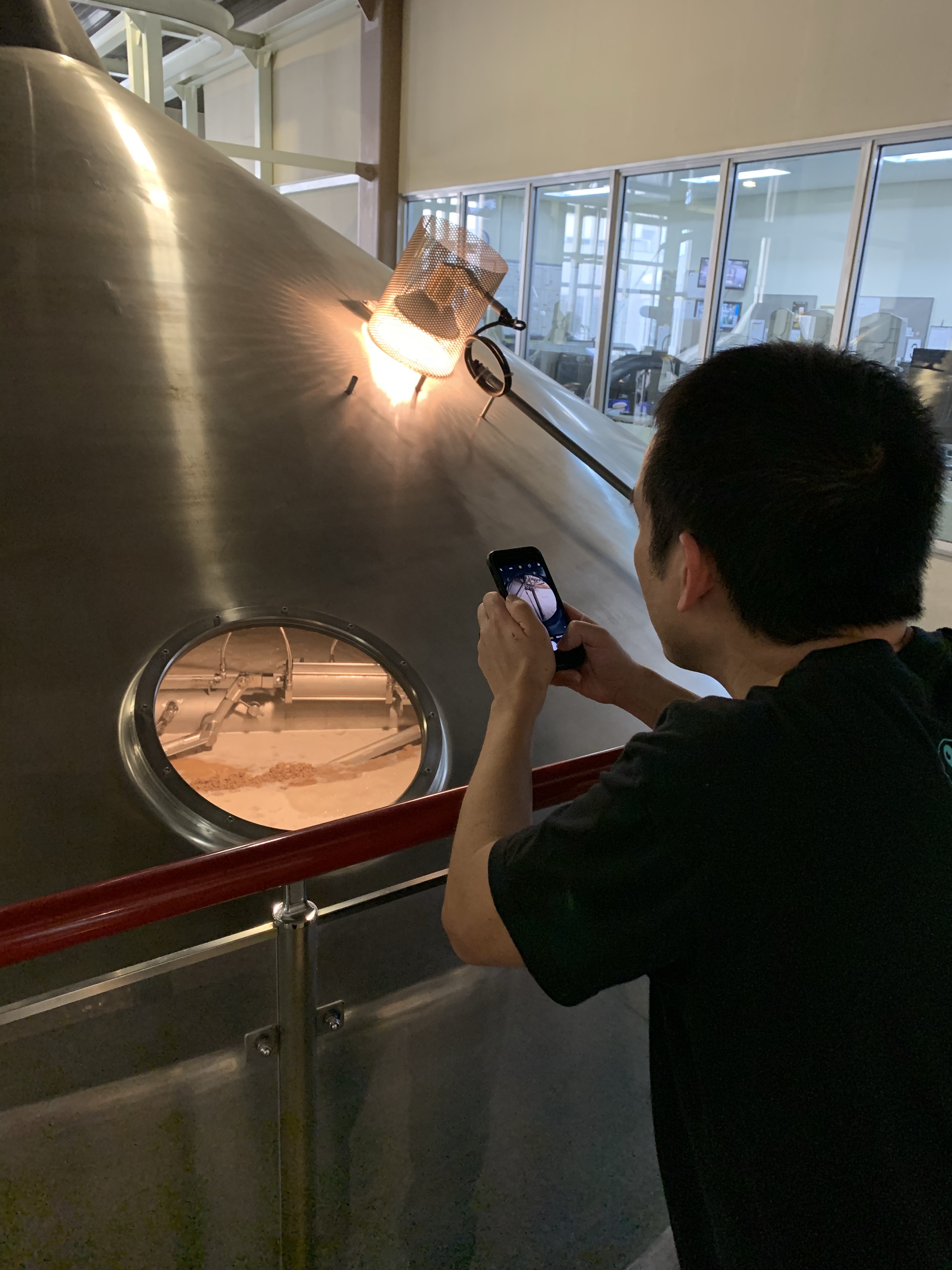
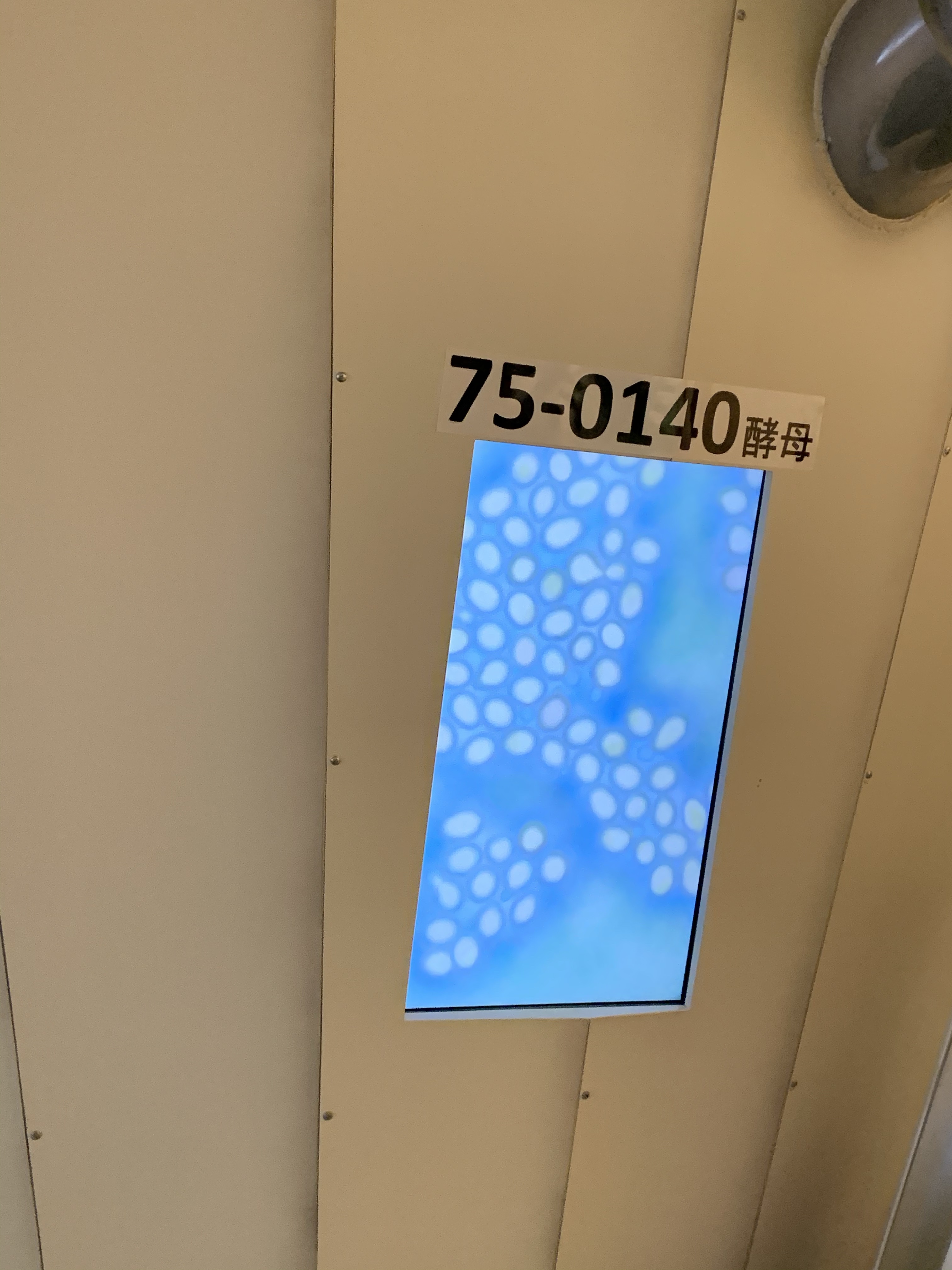
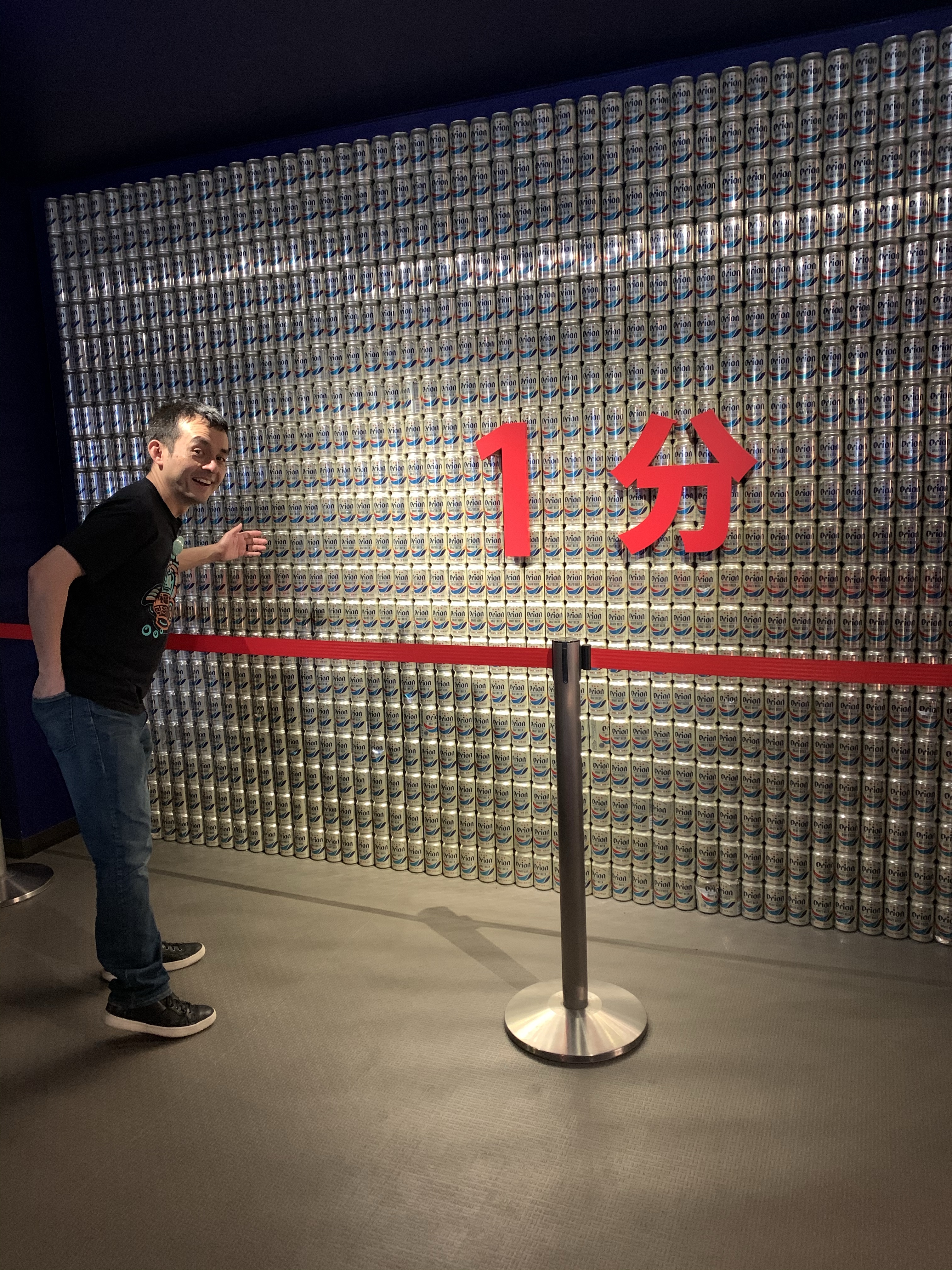
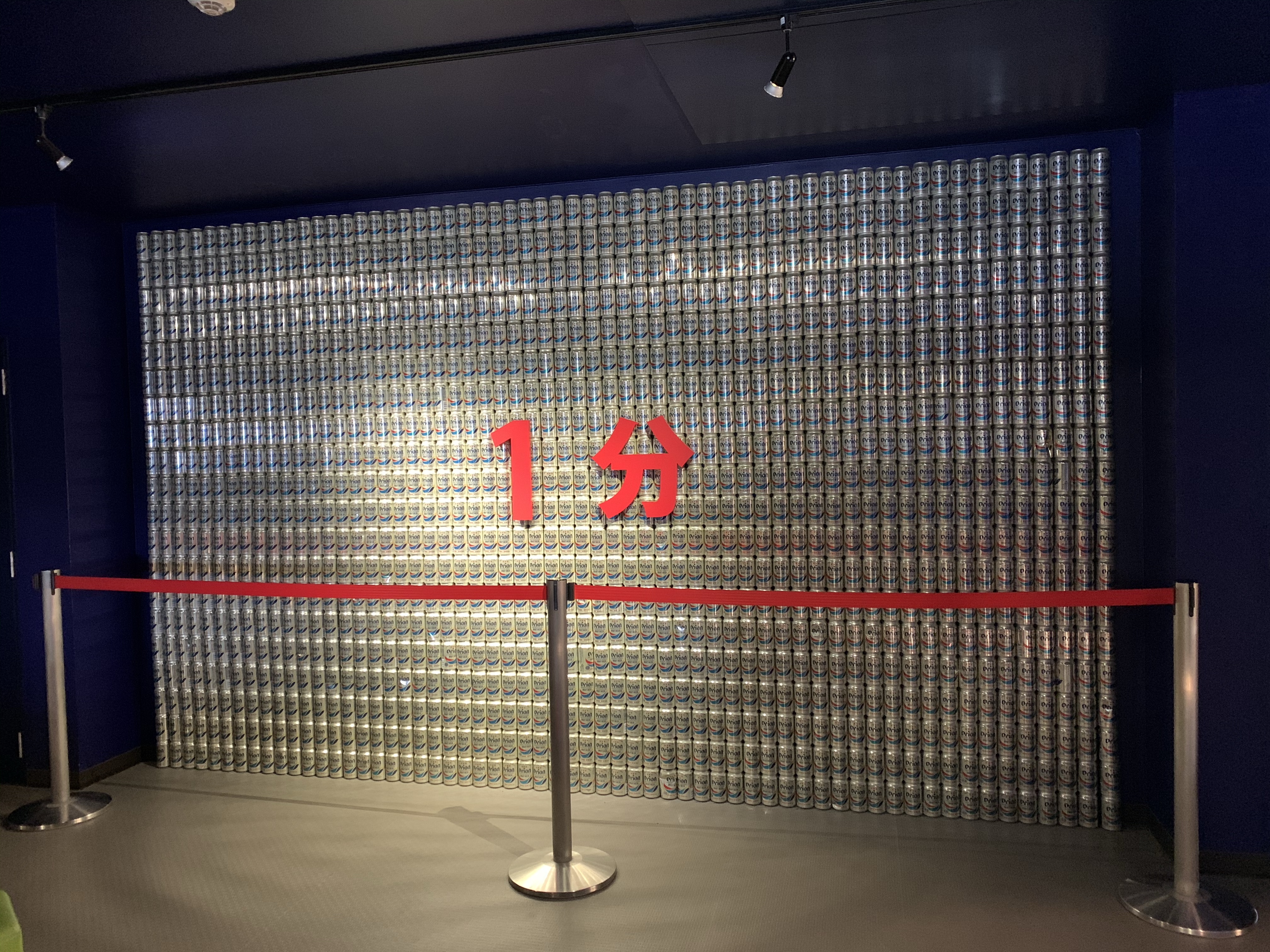
We learned a little bit about the science behind the brewing process, like when the mixture actually becomes alcohol. This display shows how many cans Orion fills in one minute. Isn’t that crazy?!
The bottling and canning processes were so interesting. I’ve been on a few brewery tours and I always love watching the bottles get filled and topped and labeled.
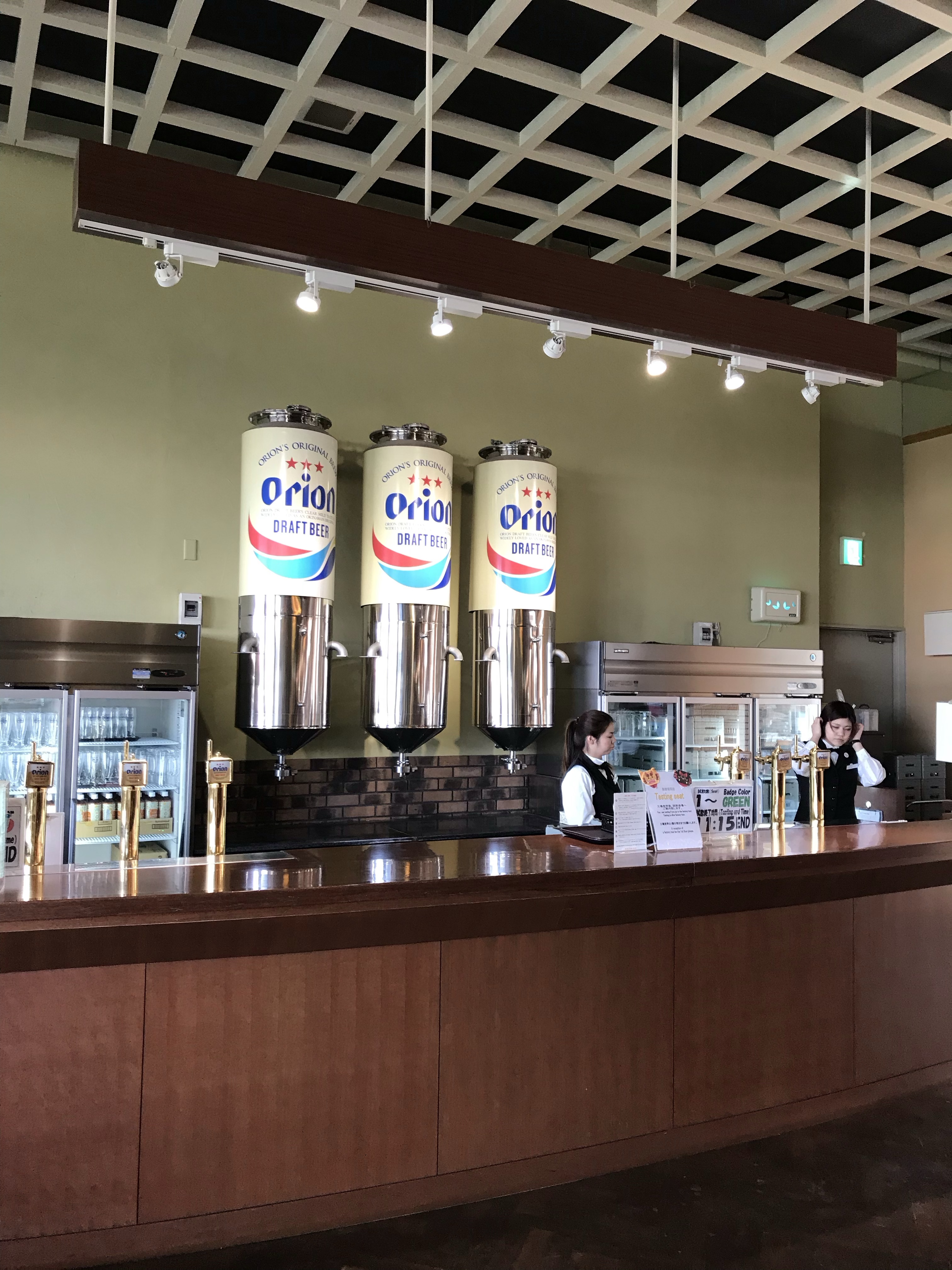
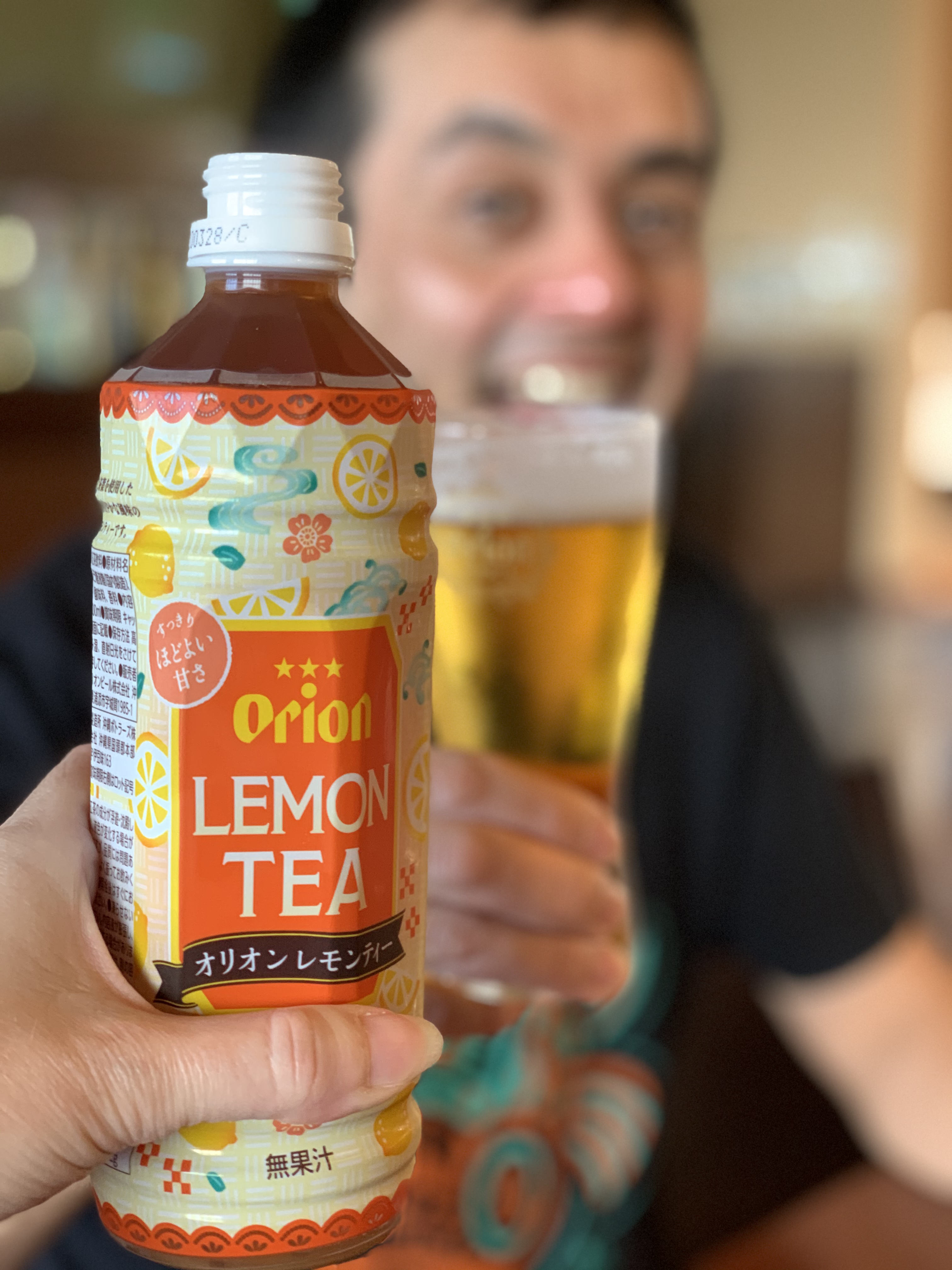
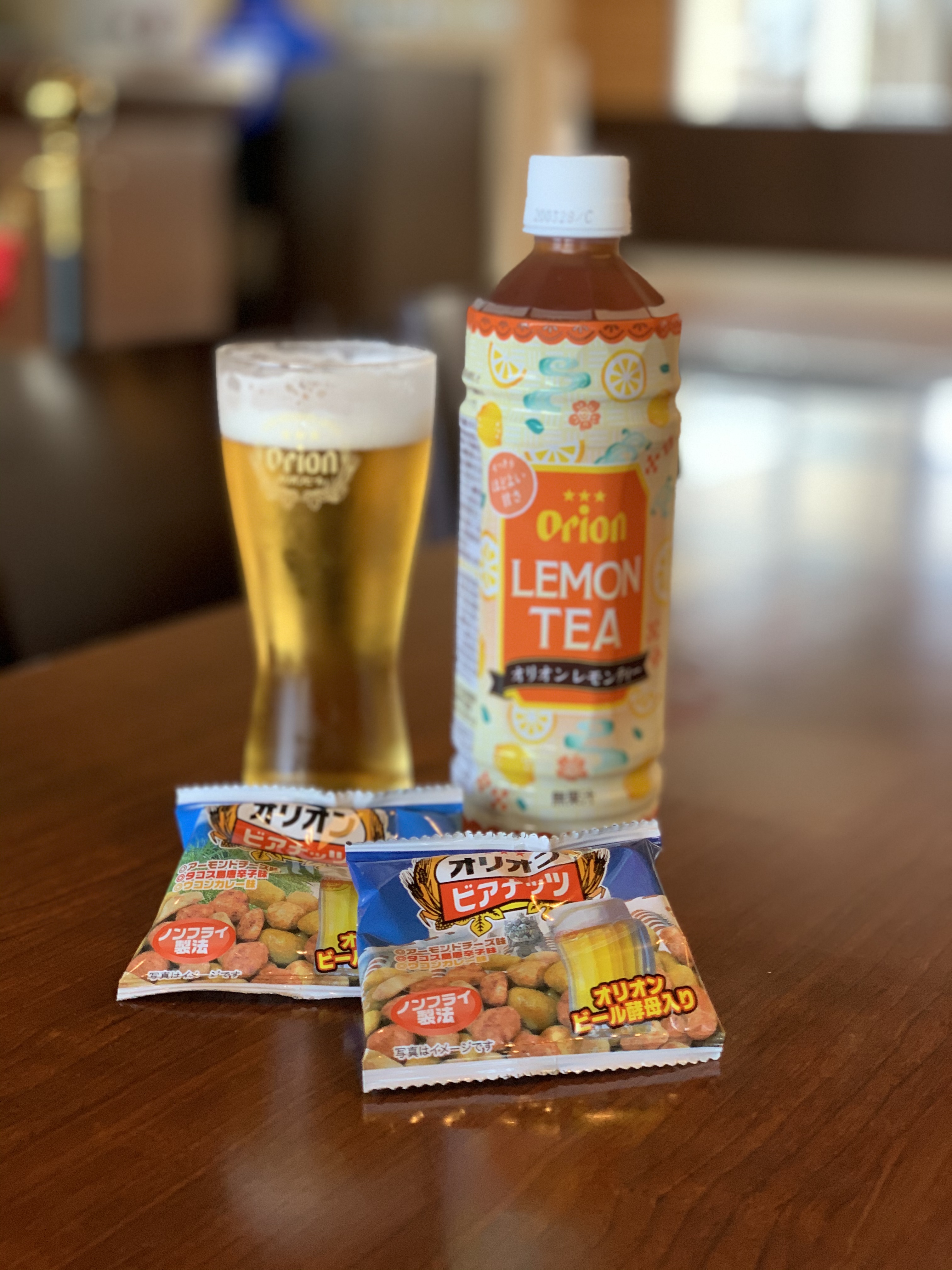
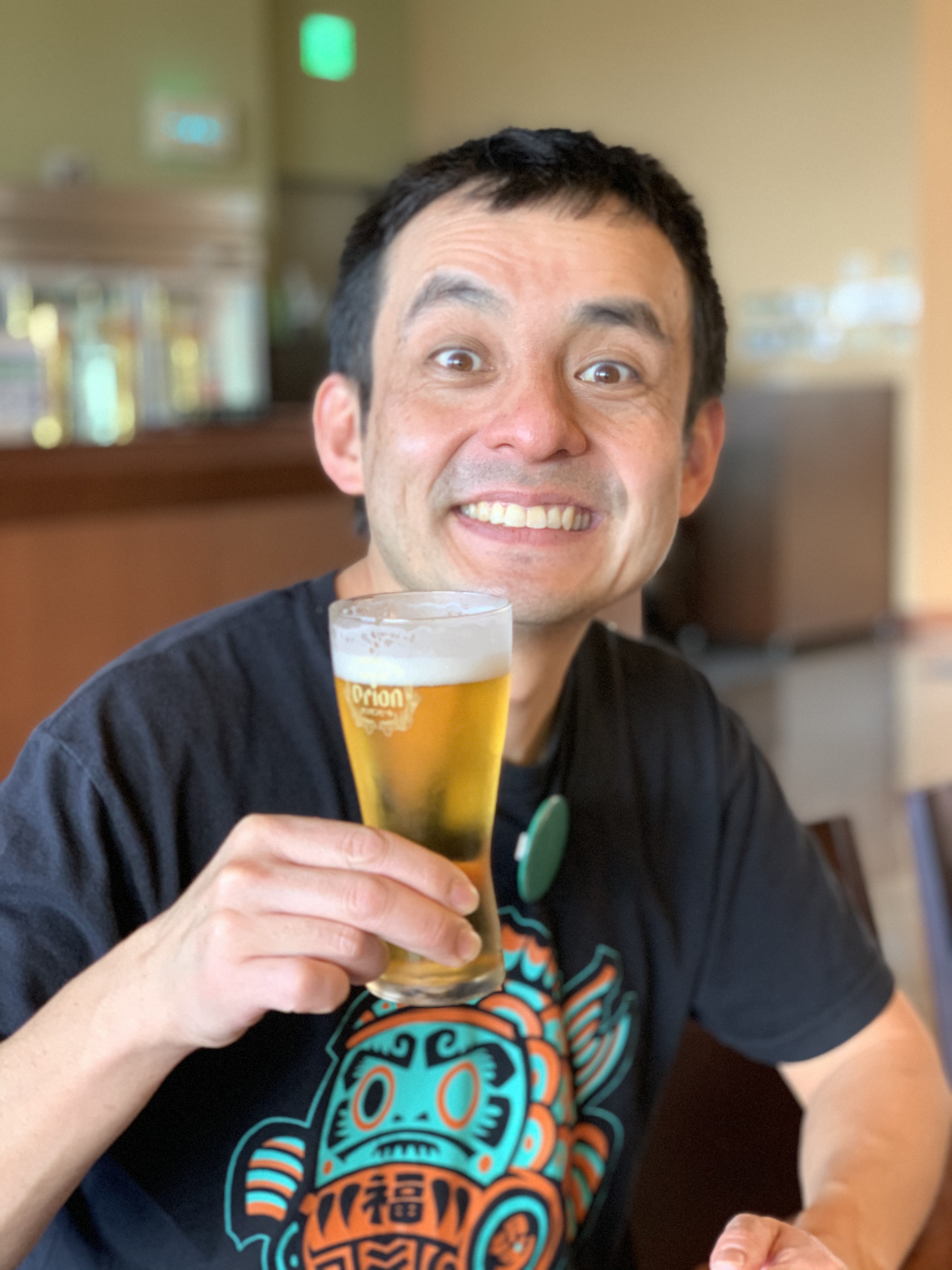
This part made me so happy and also felt so Japan. The floor of the factory is blue, like the ocean. The crane is pink, the color of coral. And the walls are painted the color of the sand. The factory celebrates Okinawa in every way. After the tour, we were able to go to the tasting room to enjoy a sample. I don’t drink beer, but they had a delicious bottled tea.Oh and the ORION SNACKS!! It’s peanuts and rice crackery things covered in a mix of almond cheese, turmeric, curry, chili, onion, and garlic powders, paprika, pepper, soy sauce, beer yeast, sugar. They are so crunchy and good. I’m not a huge curry person, but these are just a perfect little drinking snack. We bought a big bag of them in the little snack-sized portions like you see above. We’re almost done with them and we’ve been looking for more here in the US to no avail. Sigh…guess we’ll have to go back to Japan someday for more. I think Naoto would toast to that!
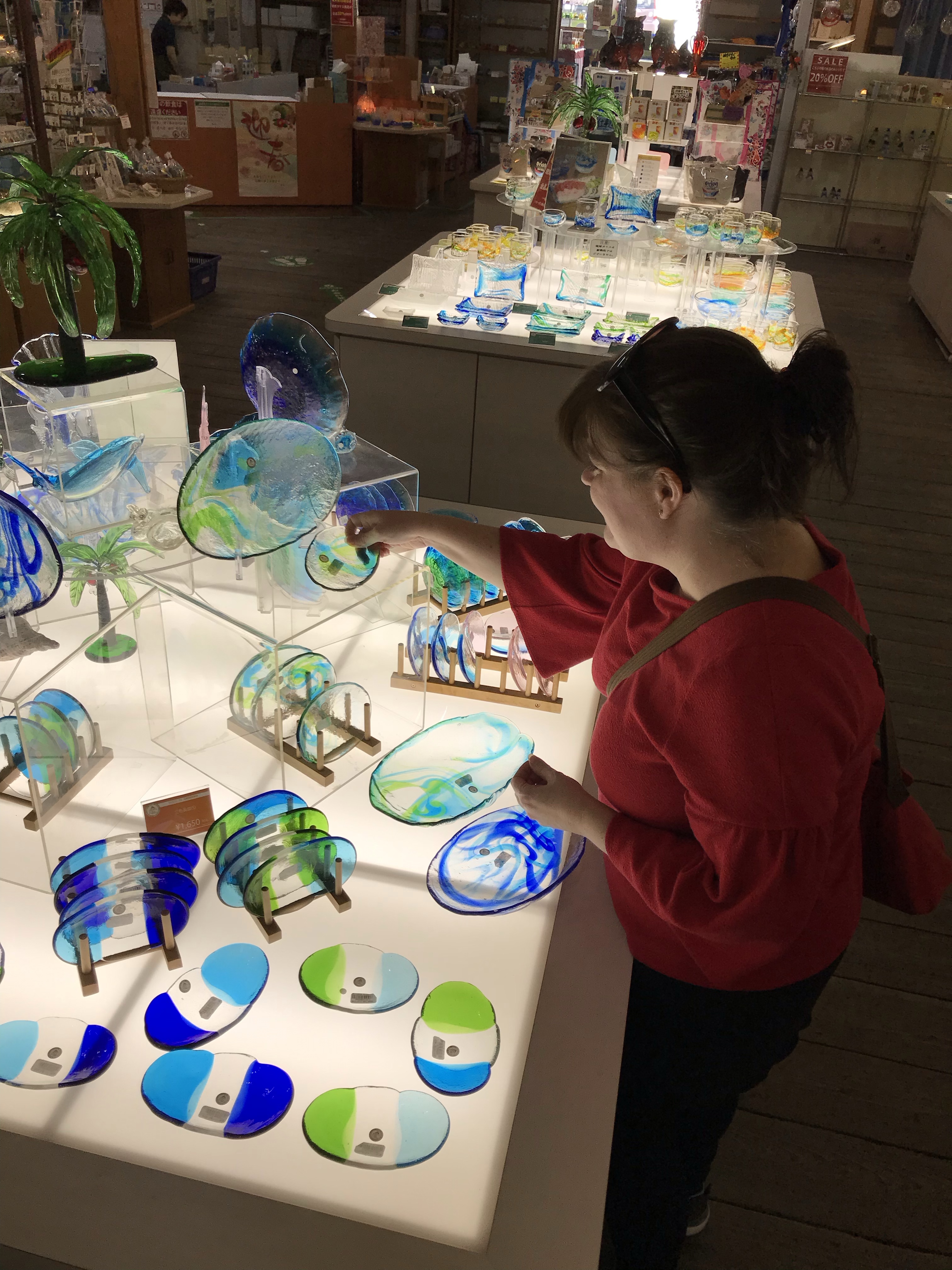
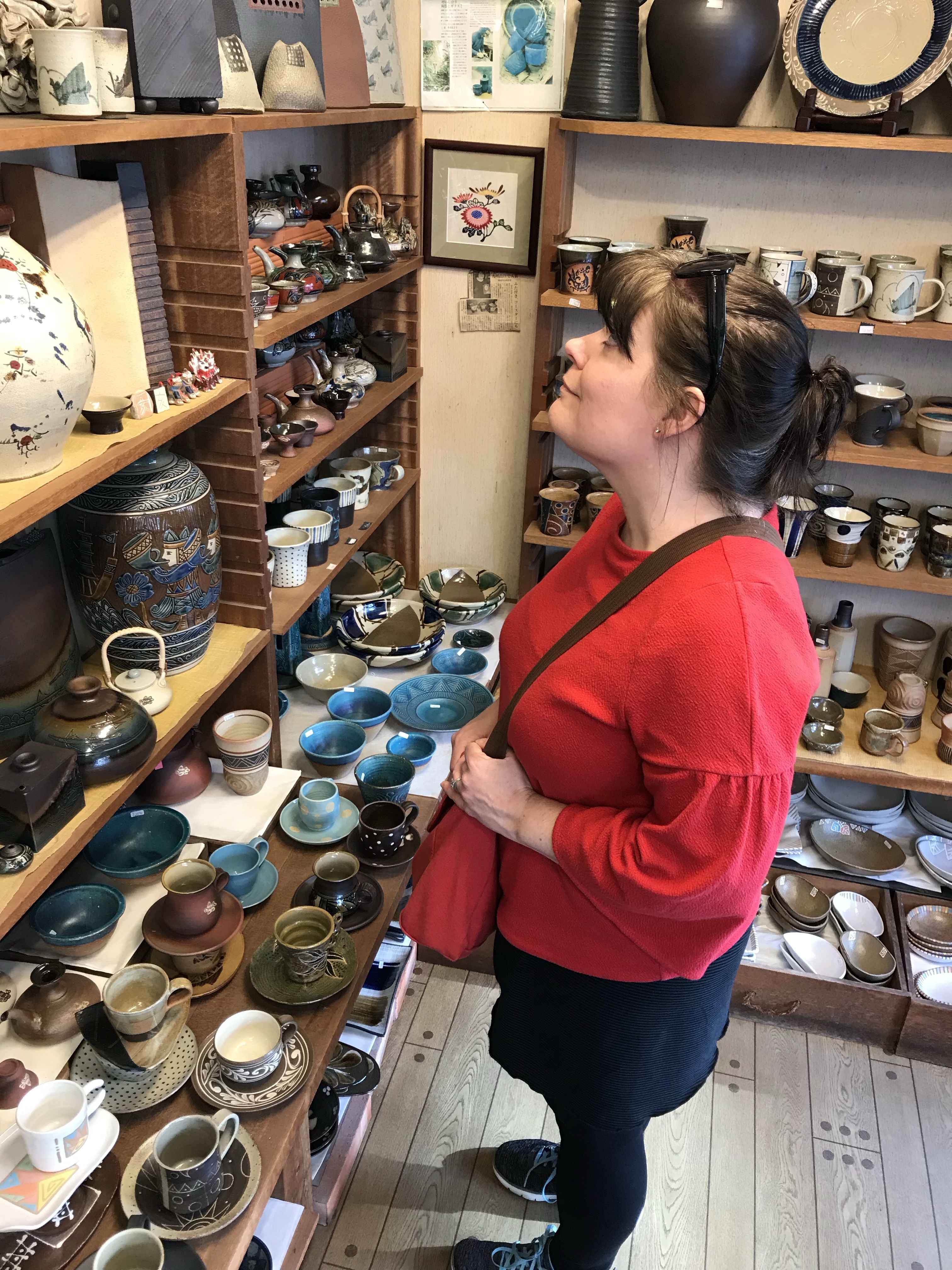
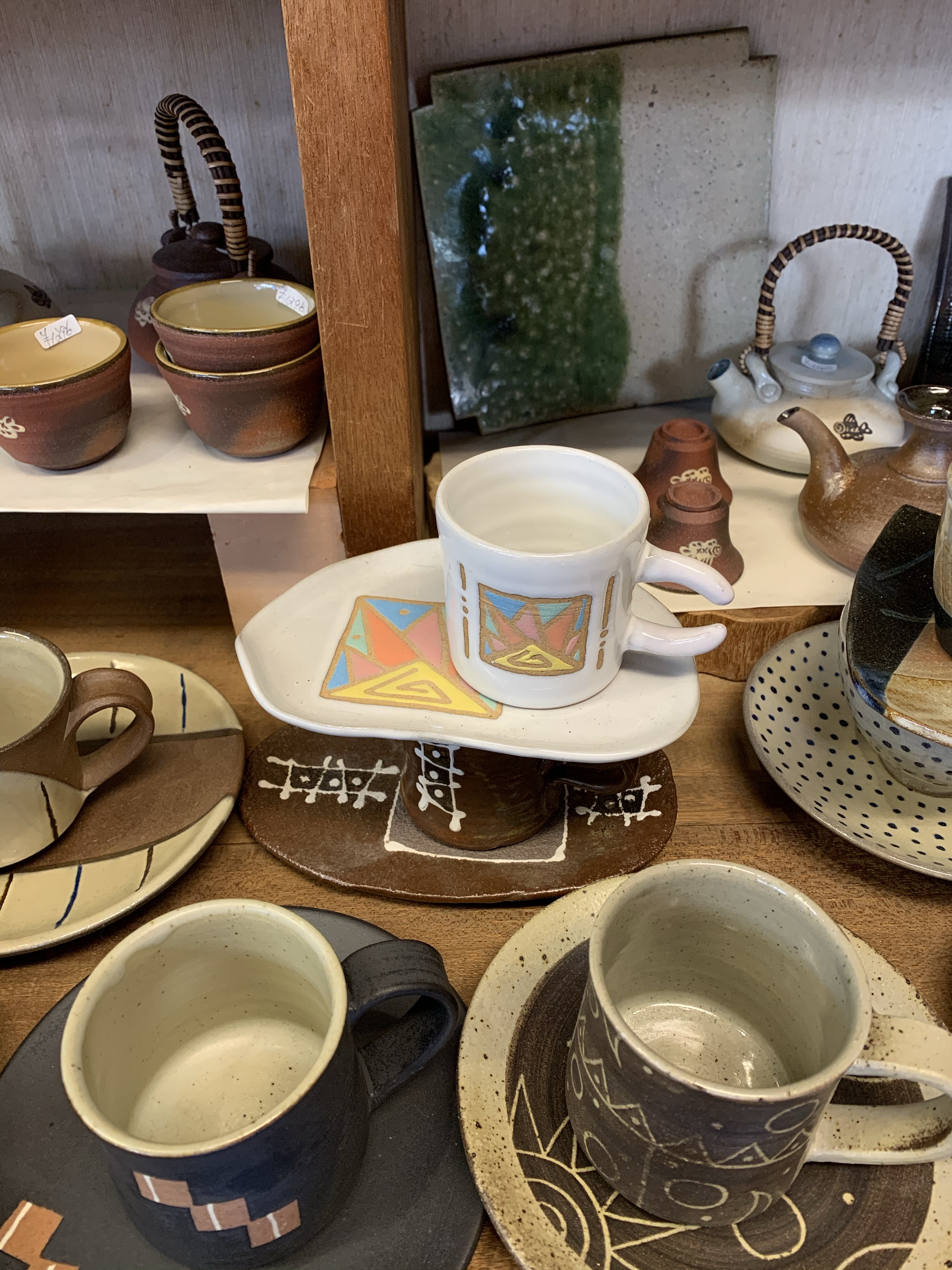
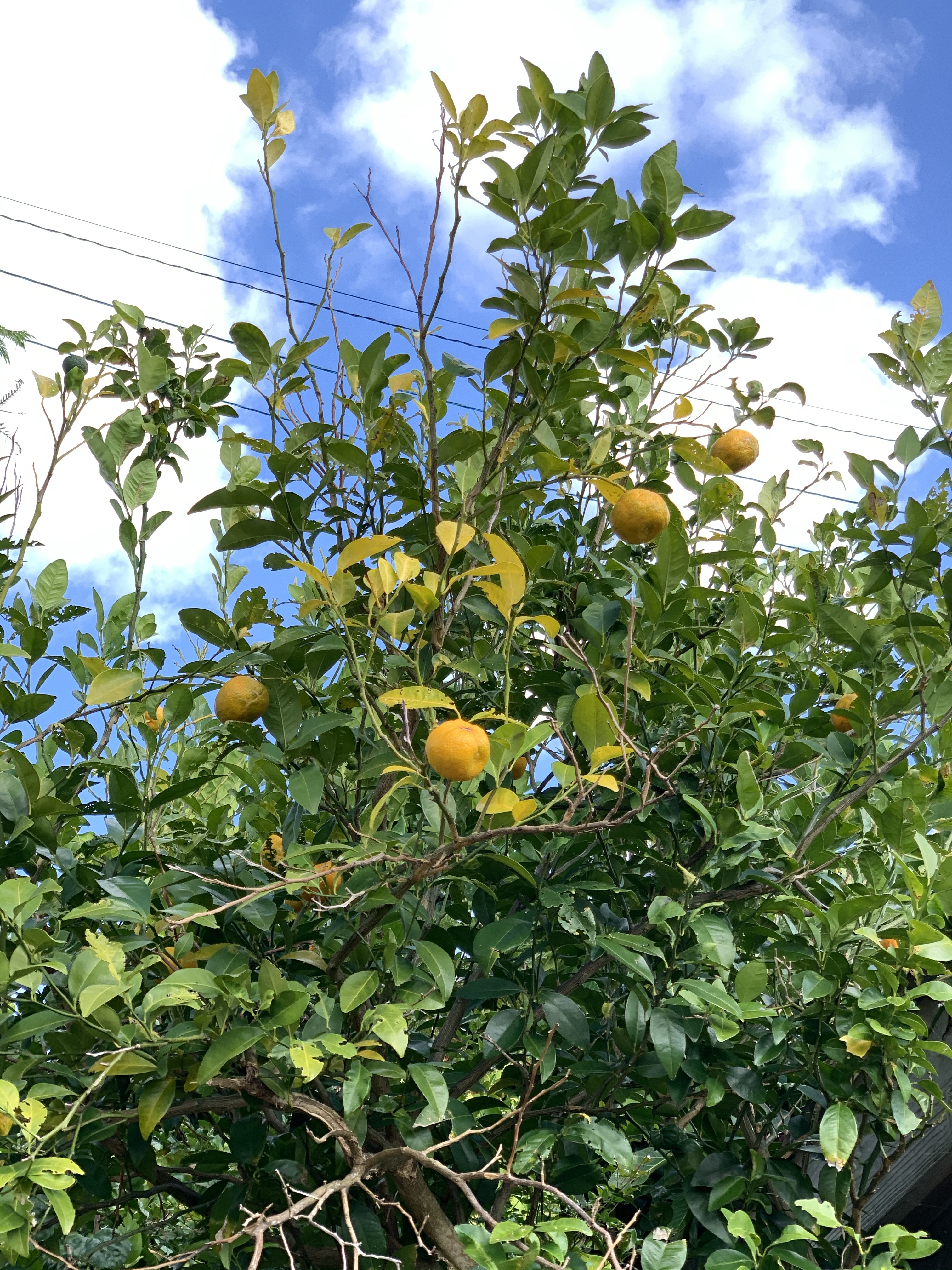
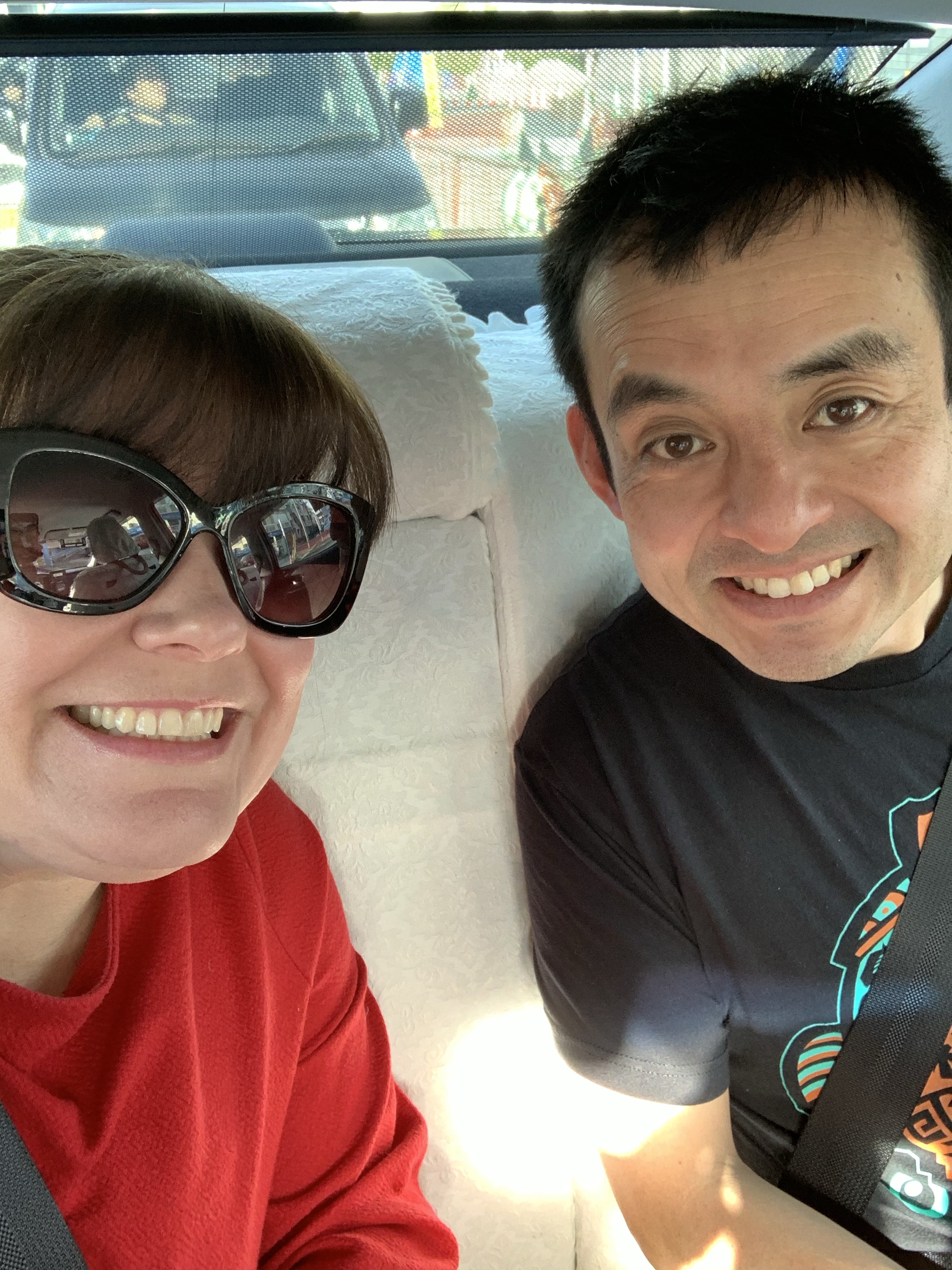
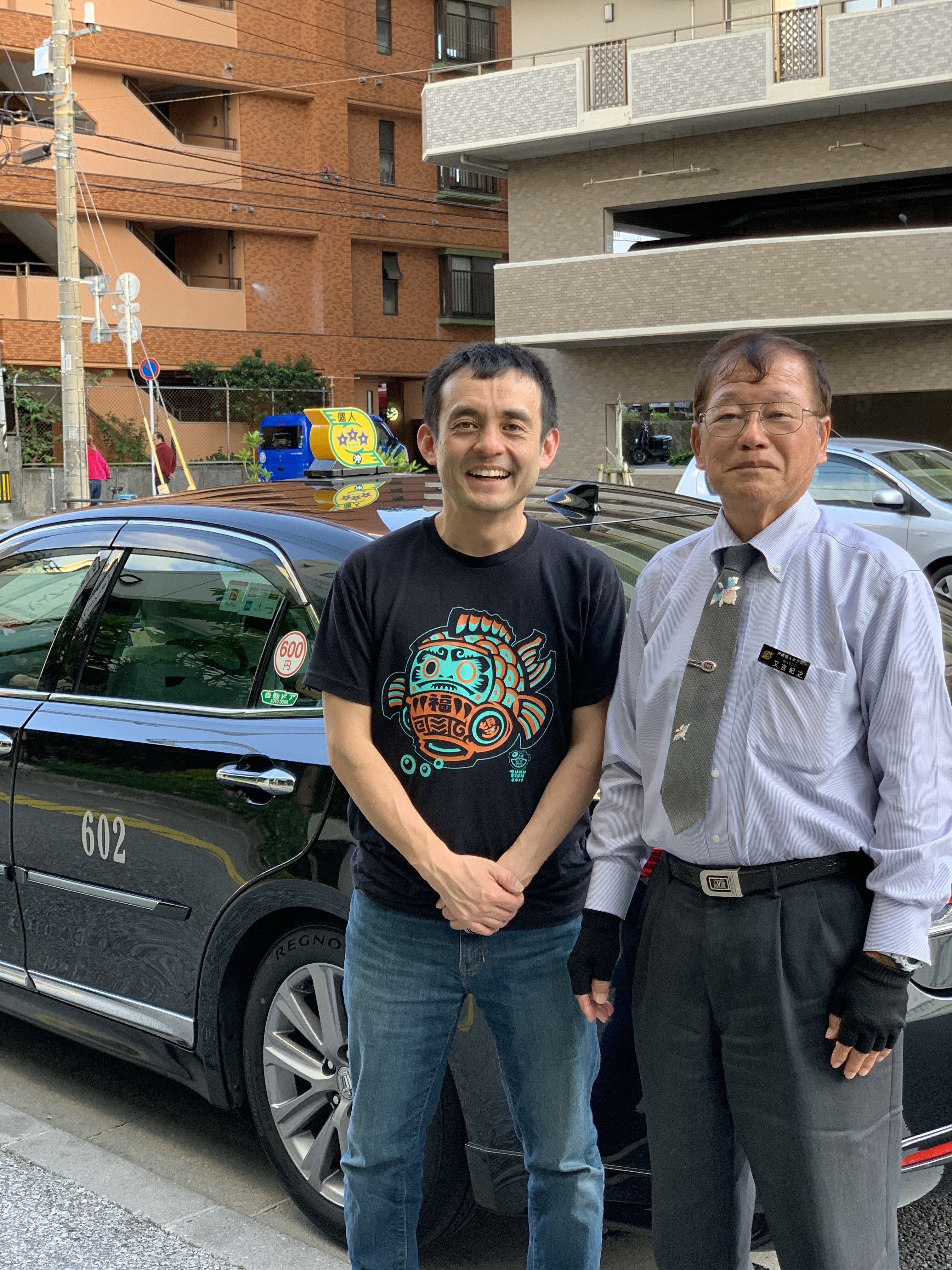
To enjoy the island of Okinawa, you really need a car, but neither of us were interested in driving so Naoto hired a driver, Matayoshi-San, to drive us around to our Orion brewery tour and to see some other sites on the island. We spent the morning at Orion, which will get its own post because I took a ton of pictures and videos for Naoto. Okinawa is known for Orion beer, salt, glass, and pottery (among other things.) We stopped at a glass shop where they were blowing glass on site. I spent way too long choosing a single dish to bring home. Everything was so beautiful. Okinawan pottery is also really different from some of the other pottery in Japan. The designs and the shapes were so great.Matayoshi-san picked us a couple of shikuwasa which we enjoyed in our hotel room in some sparkling water. What a treat!
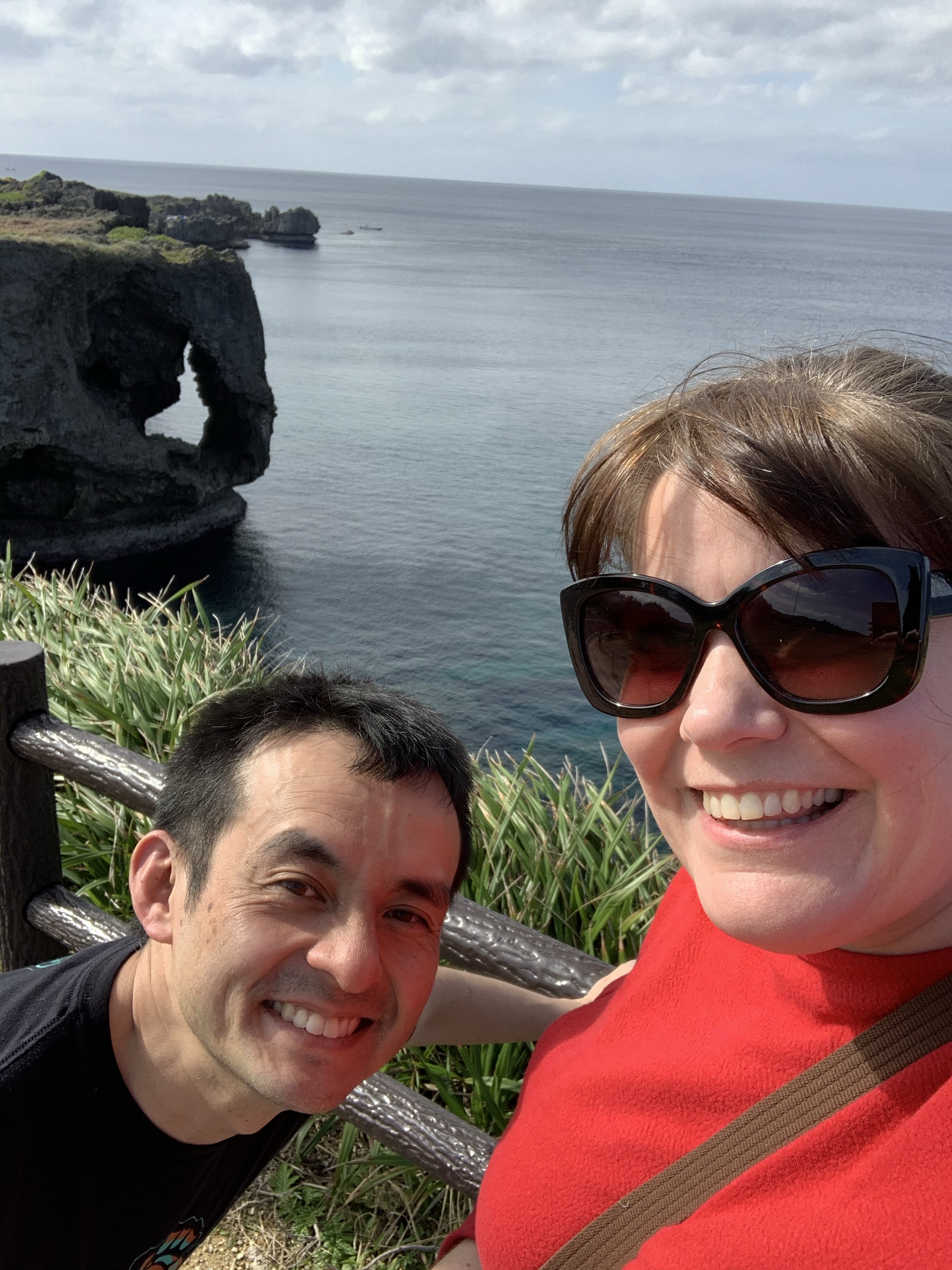
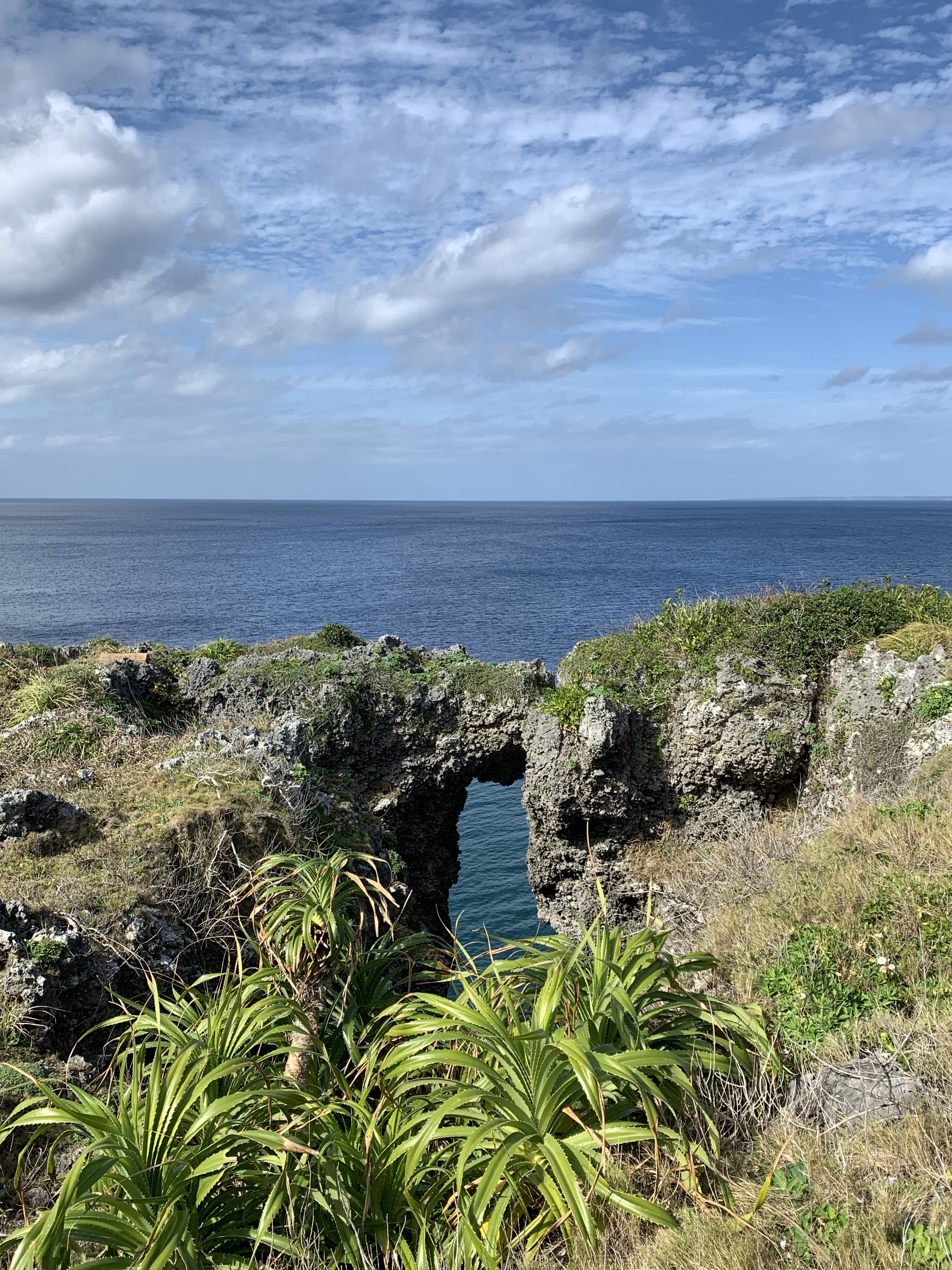
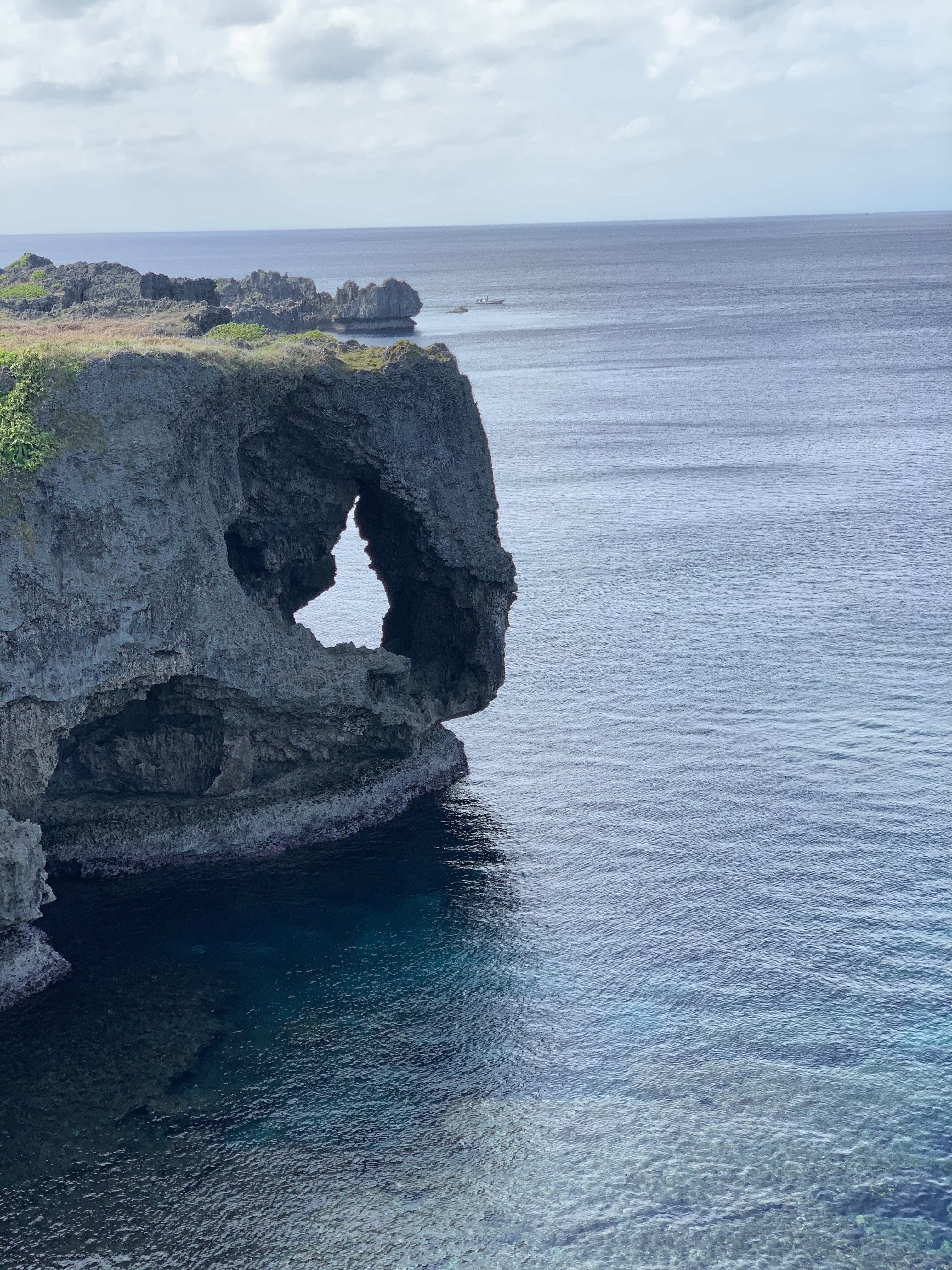
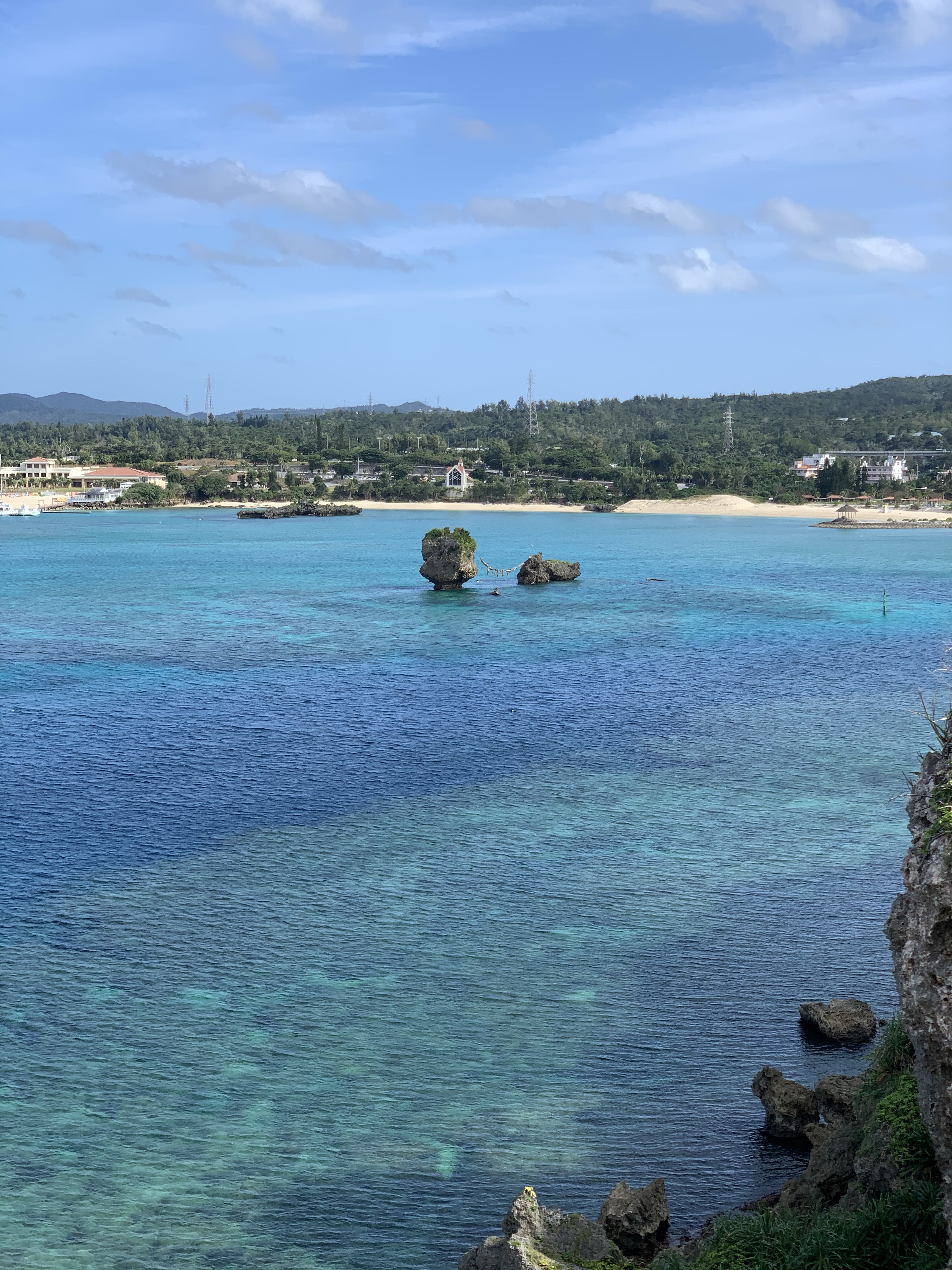
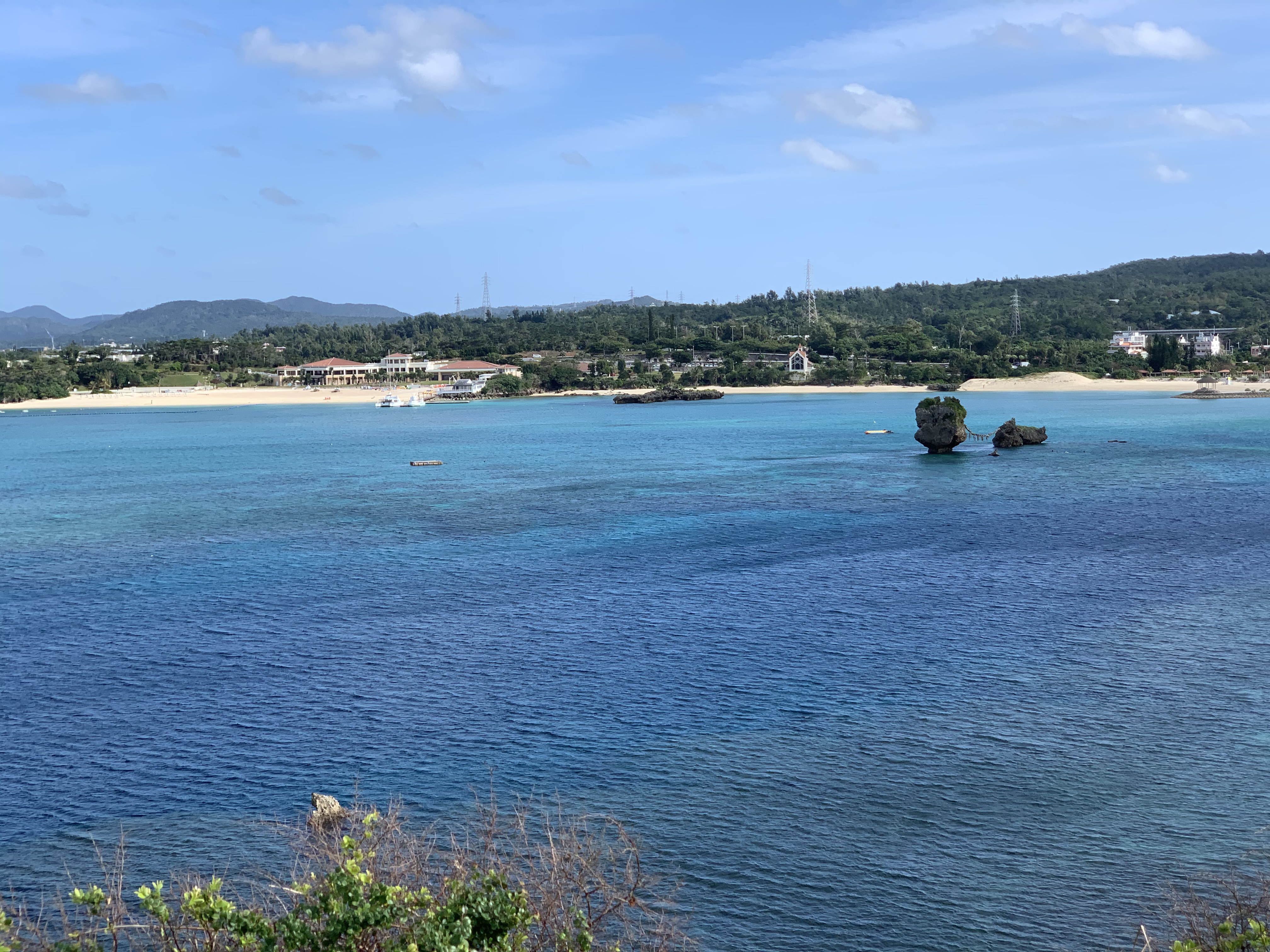
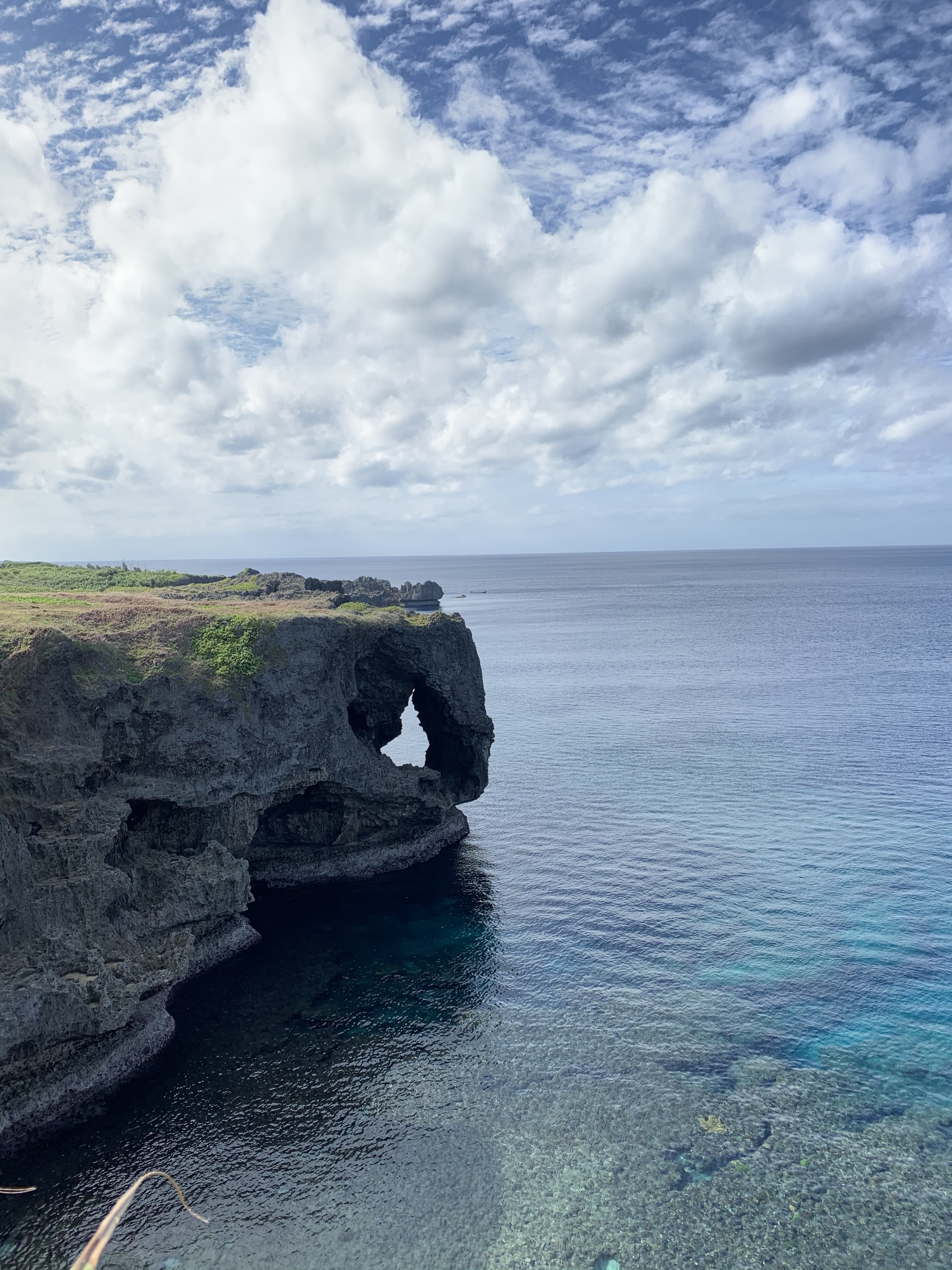
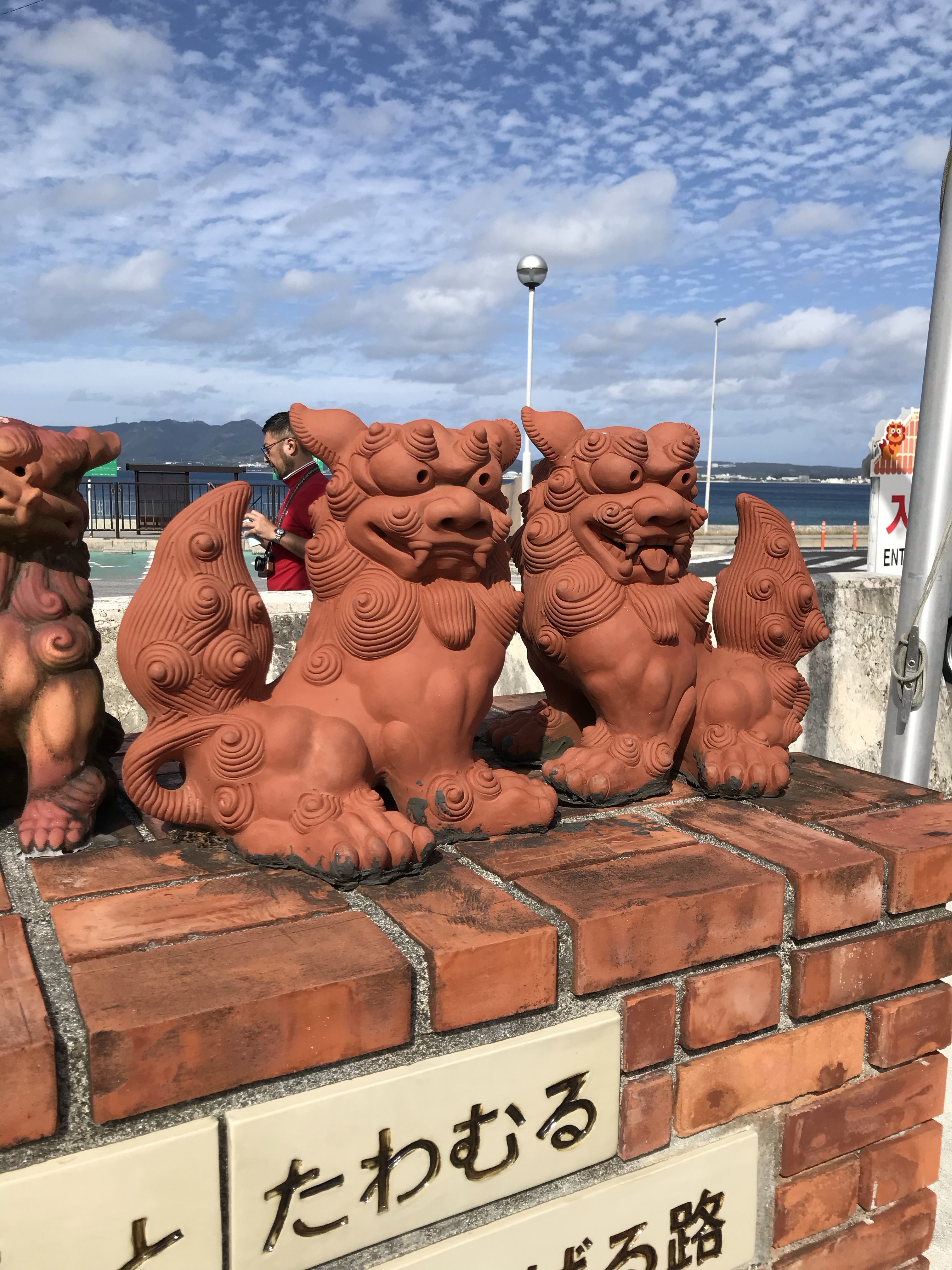
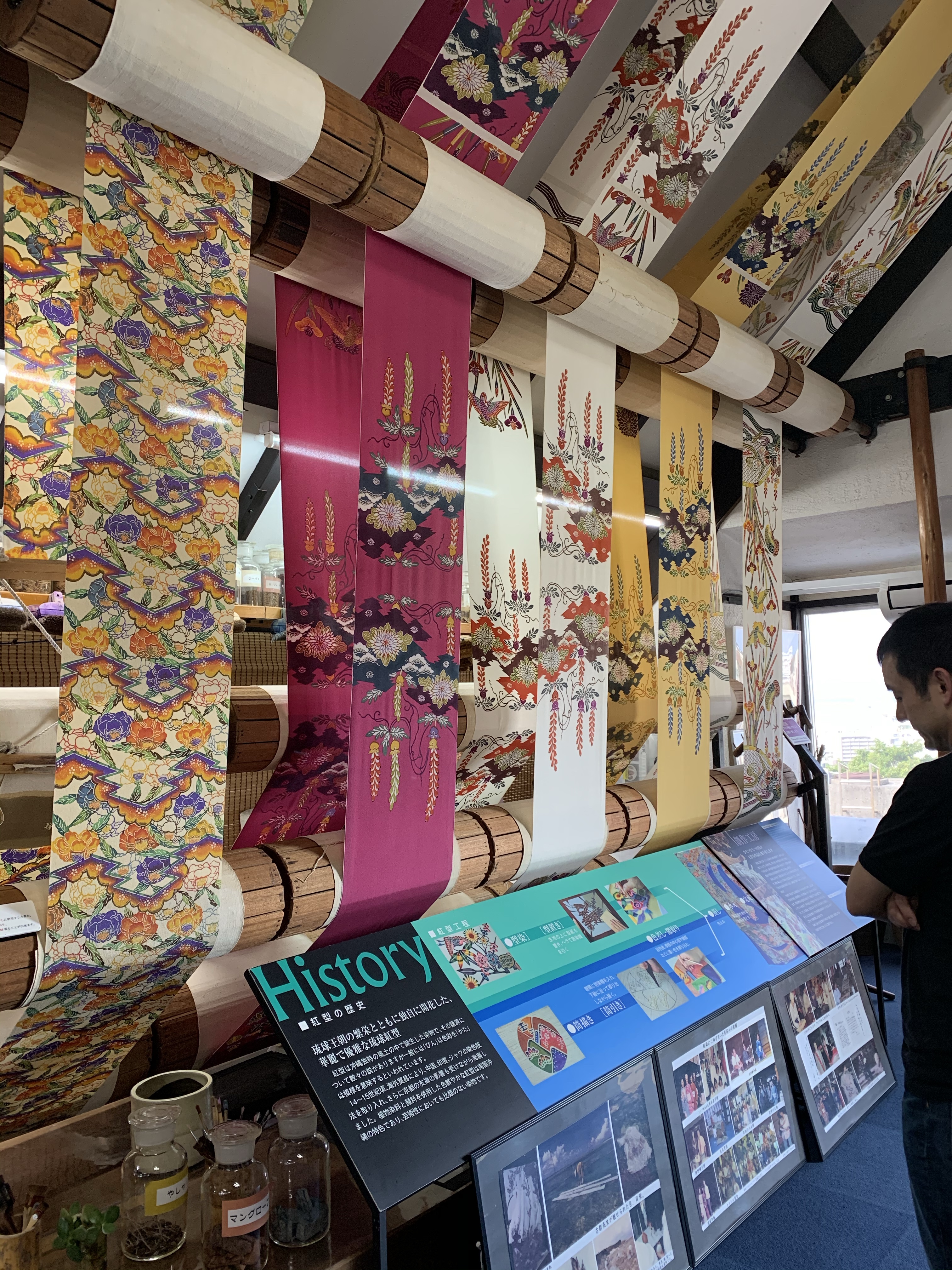
Aside from the Orion tour, the best part of the day was visiting the sea and breathing in some fresh ocean air. These craggly rocks were formed over centuries of wear and it was such a perfect day weather-wise for enjoying the views. All over Okinawa, you will find Shisa, usually in pairs. They are meant to protect the home or business–one keeping in the good, the other keeping out the bad. We weren’t tempted to buy one for our own home, but it’s a really popular souvenir. In the middle of the day, we stopped at a roadside stand for sata andagi, Okinawan donuts. They were fresh and delicious! (You know how I love a donut!)We also stopped at an artisan shop where they hand paint fabric for obi (the sash for kimono) and other accessories. Everything was so gorgeous and the amount of work that went into each inch of fabric was incredible! Naoto really enjoyed Matayoshi-San’s humor and his stories about the island. It was fun spending the day with a local and being carted around like a celebrity!
 kimberly ah