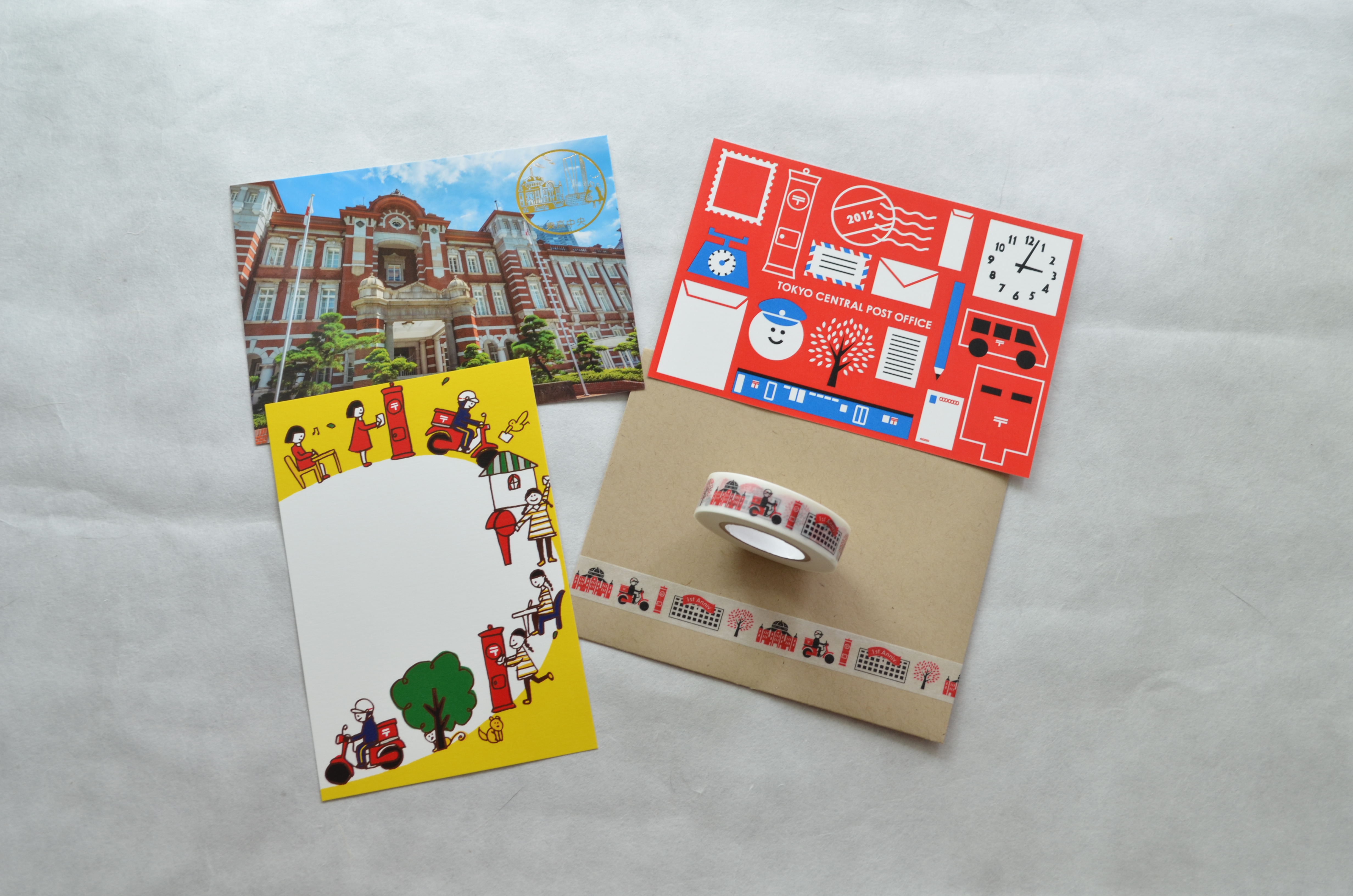
 One of my favorite places to shop in Tokyo is the post office. Or, I should say, the many post offices. Of course, my favorite was our “local” PO but it was fun to get out to other locations to see the different offerings. The postcards and washi tape above are from the Tokyo Central Post Office located near Tokyo Station and inside the Kitte shopping and dining center. (Kitte is Japanese for postage stamp.) Jess took us there and smiled as we walked into the post office. She knew it would be a hit. (Thanks, Jess!)
 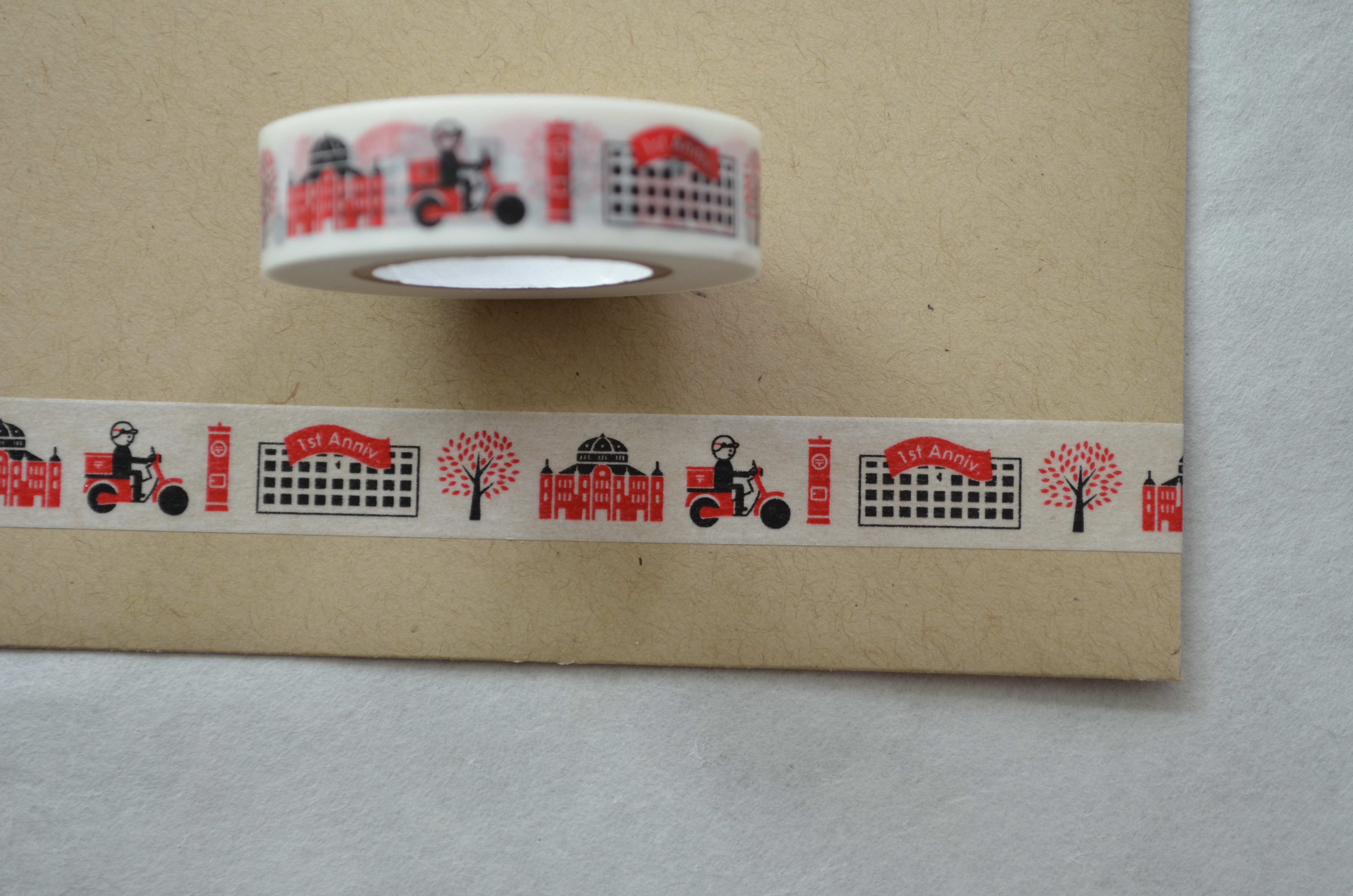 The Kitte had special washi tape made for its first anniversary. I couldn’t resist.
 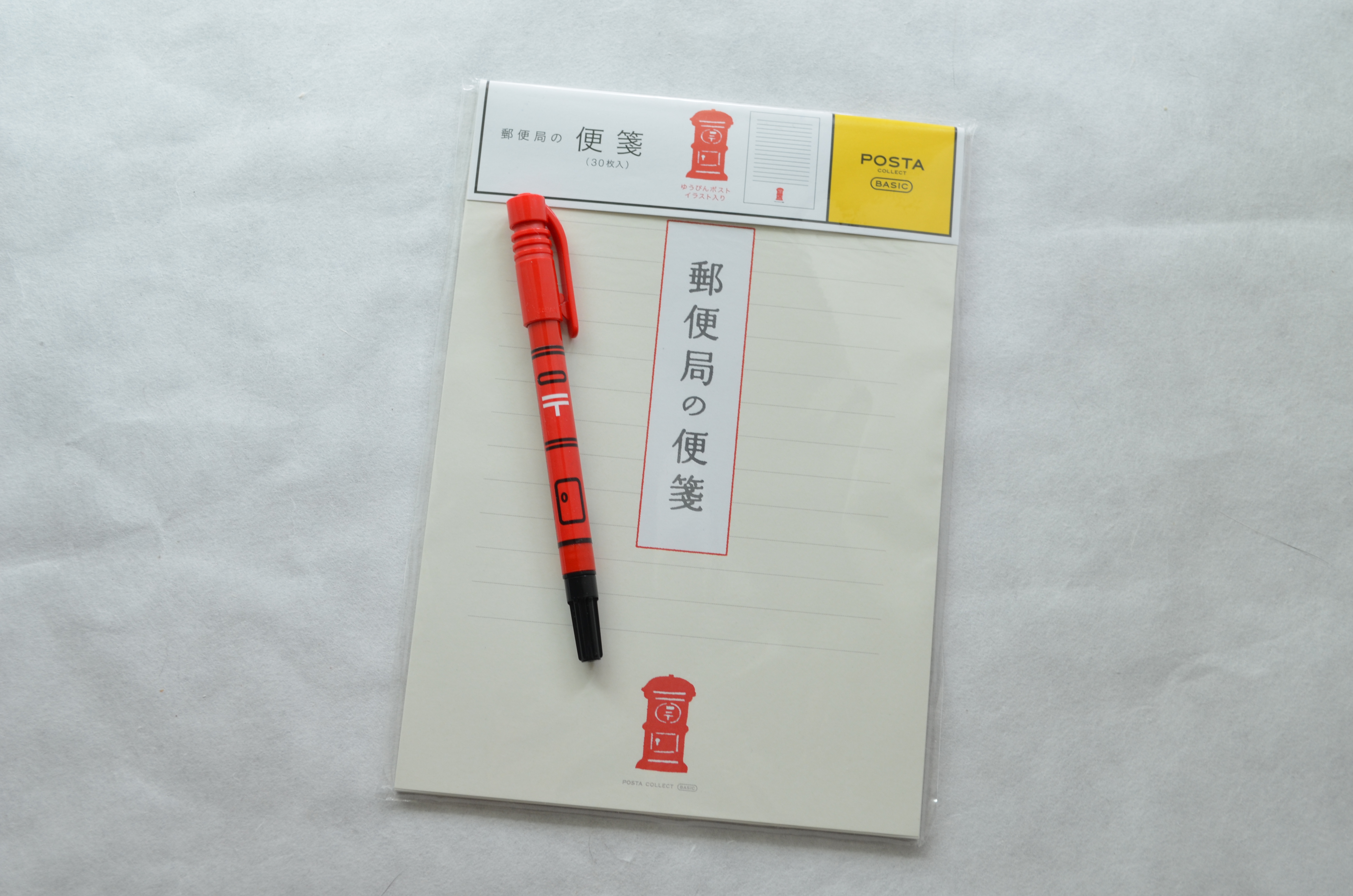 I also picked out some Posta Collect mailbox letter paper and a pen. It reminded me of the glue stick from last year. Anything that has that classic red mailbox on it is pretty much a guaranteed purchase.
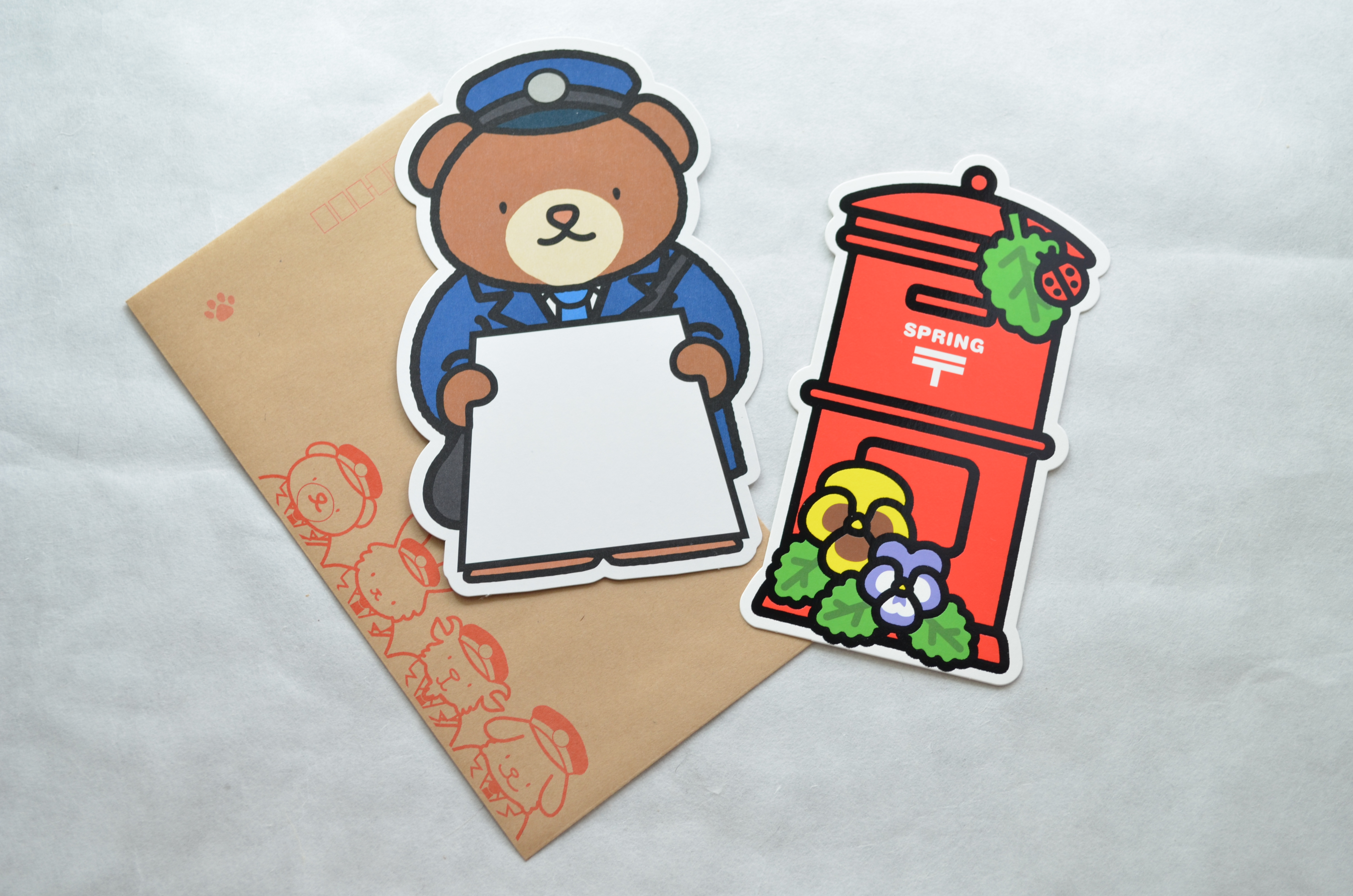 I loved the spring mailbox postcard and the big postal bear ready to deliver a big message.
 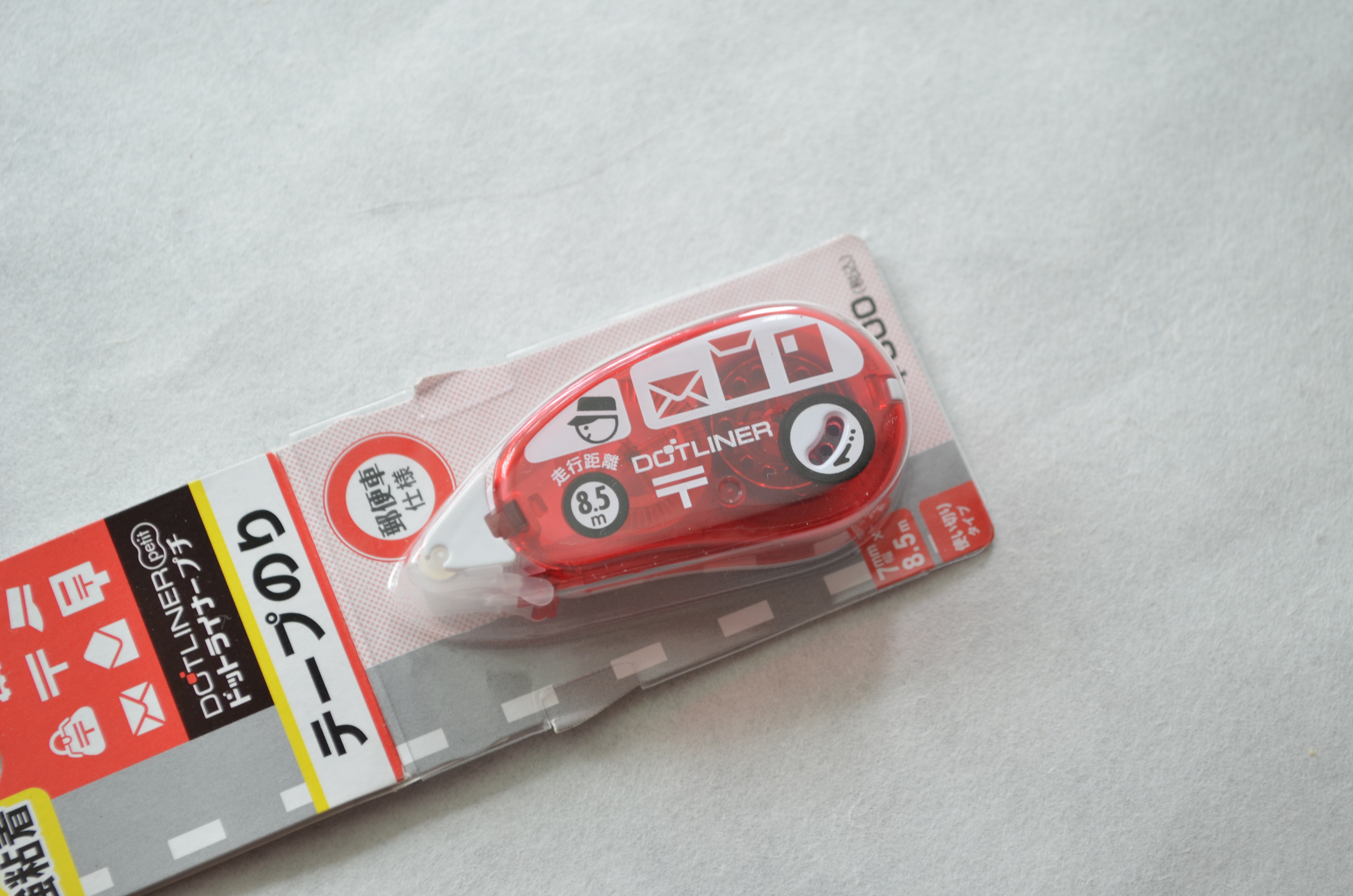 And this tiny tape runner is the perfect size for traveling and it’s shaped like a mail truck!
 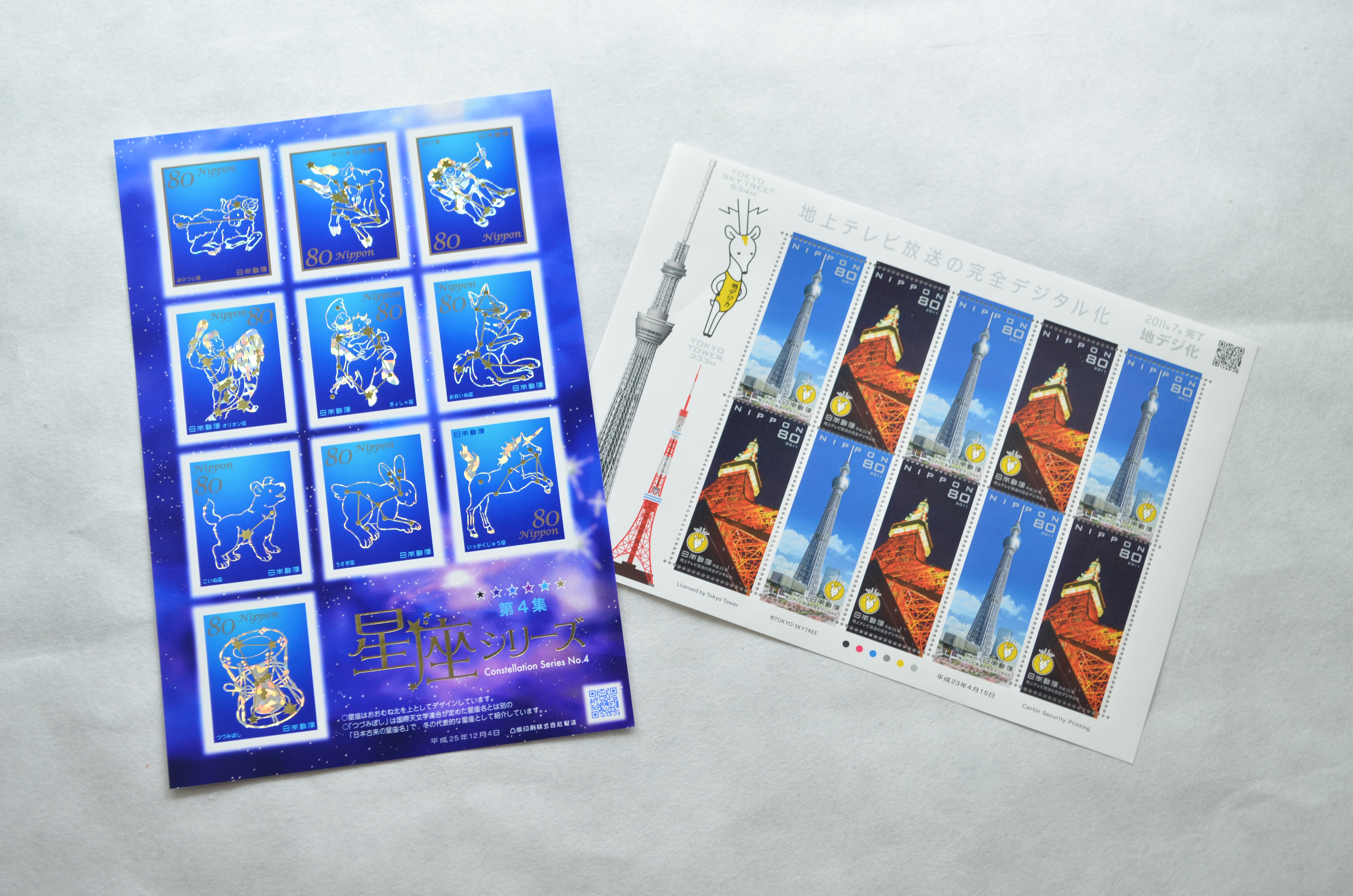 I bought the fourth set of constellation stamps and my brother-in-law, Norio gave me the other set. It’s Tokyo Skytree and Tokyo Tower.
 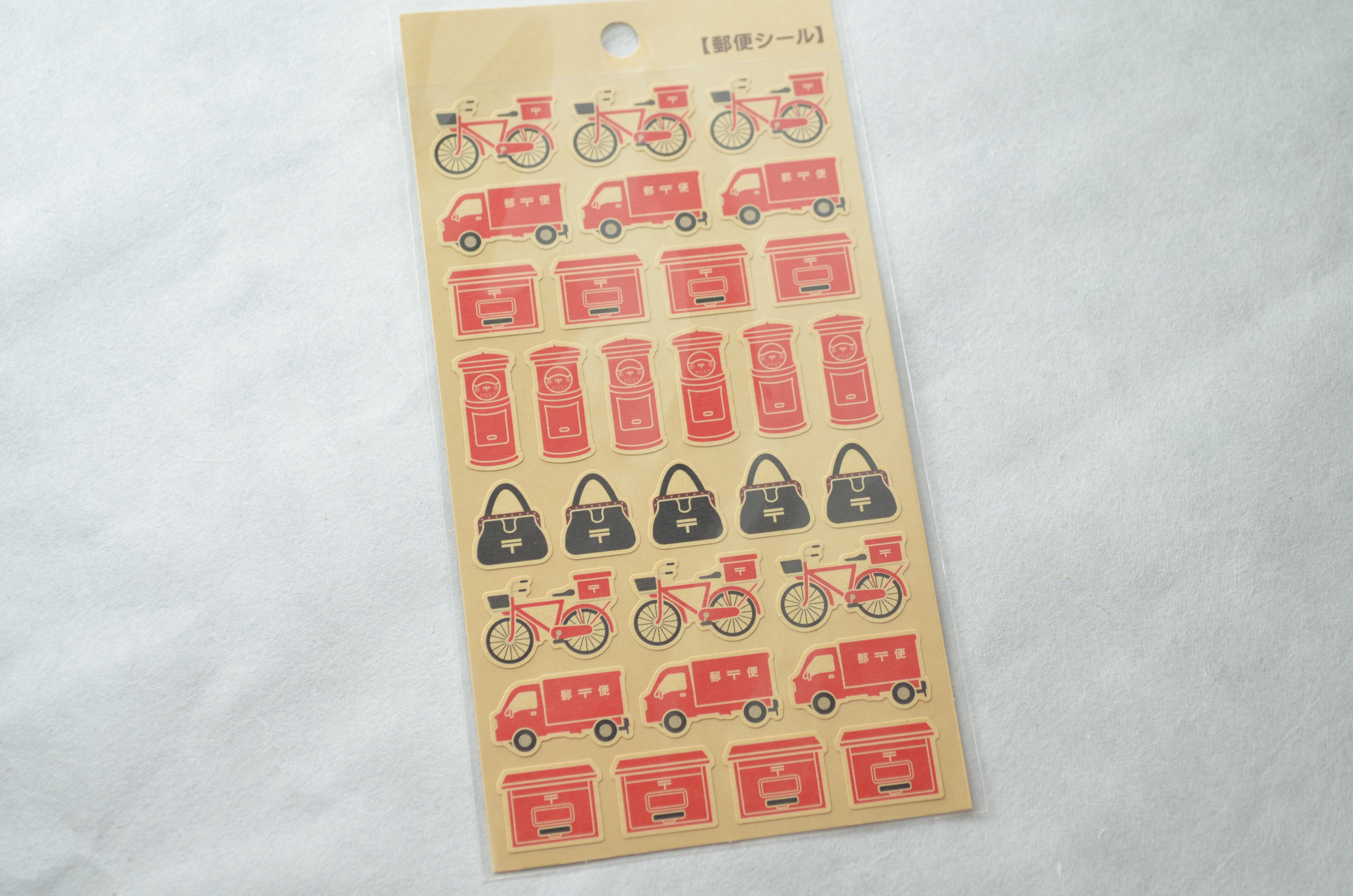 Norio also gave me these post office stickers. The bike, the mail truck, the mailboxes, the mail bags…they were the best gift ever. I love that Japan has so many postal treats.
 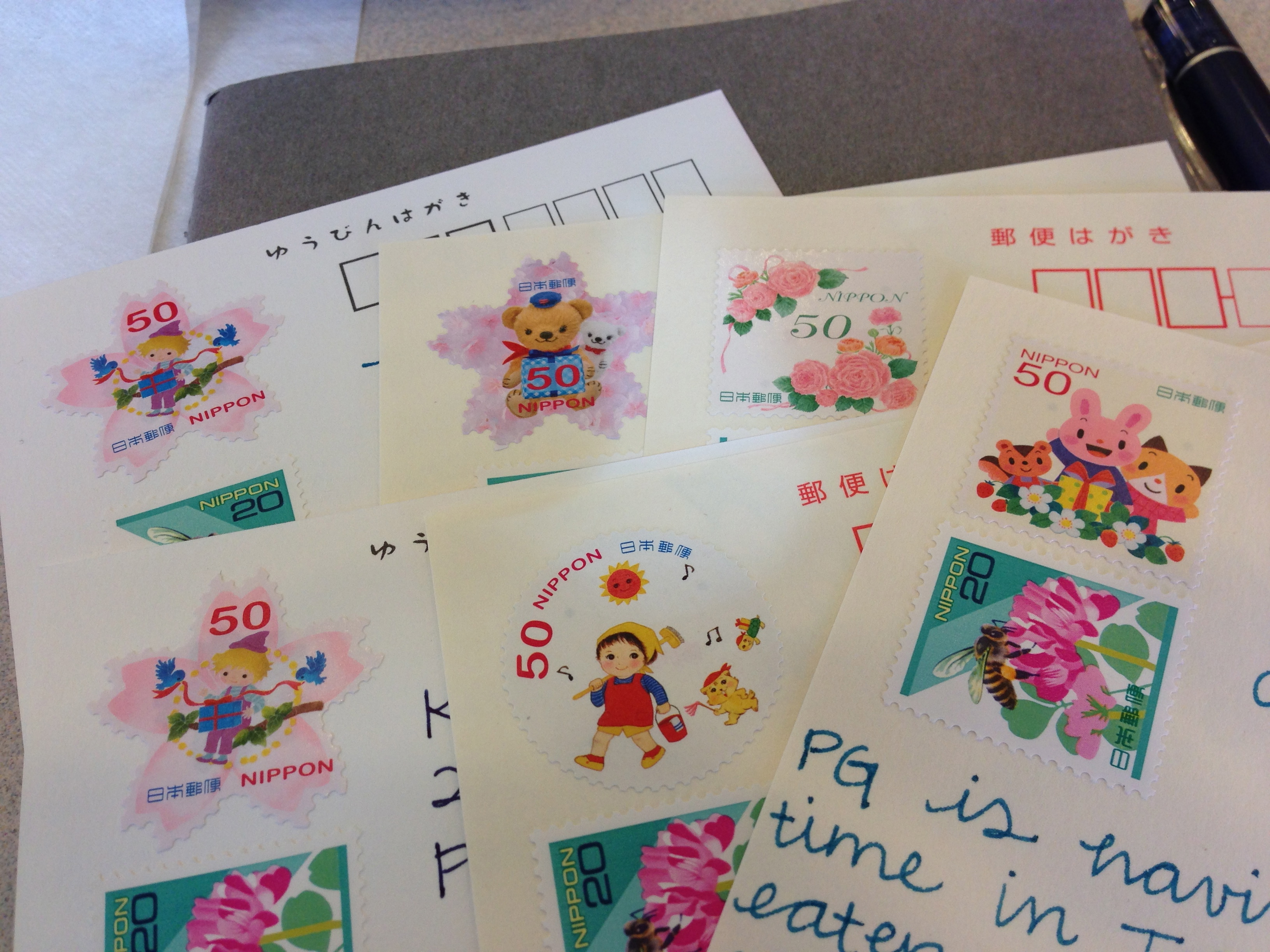 I sent out so many postcards using the spring stamps (shown above). Japan really embraces unique shapes in their postage stamps, this time using round and sakura shaped stamps.
 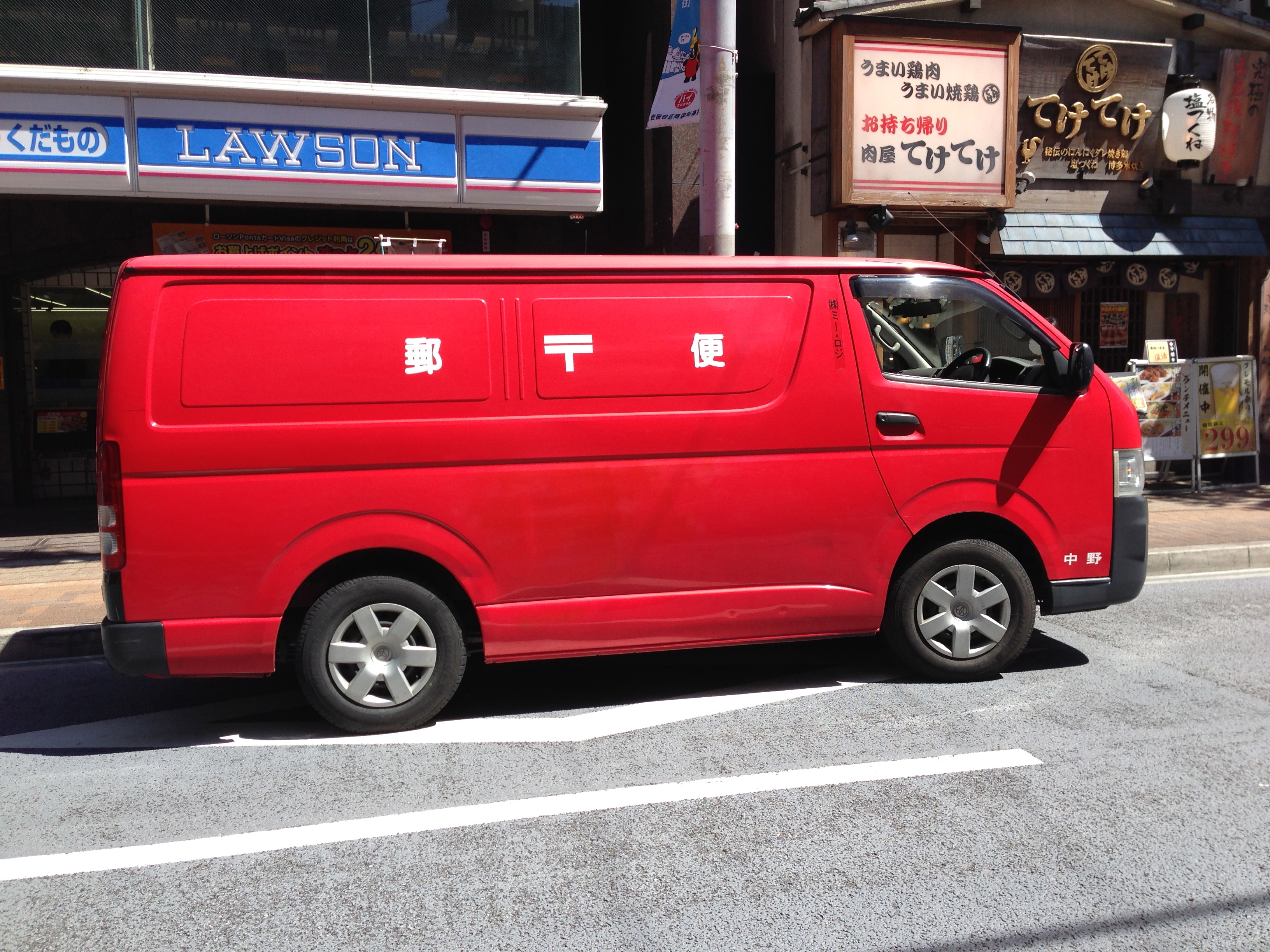 This fancy mail van was delivering packages to our hotel and Lawson’s convenience store.
 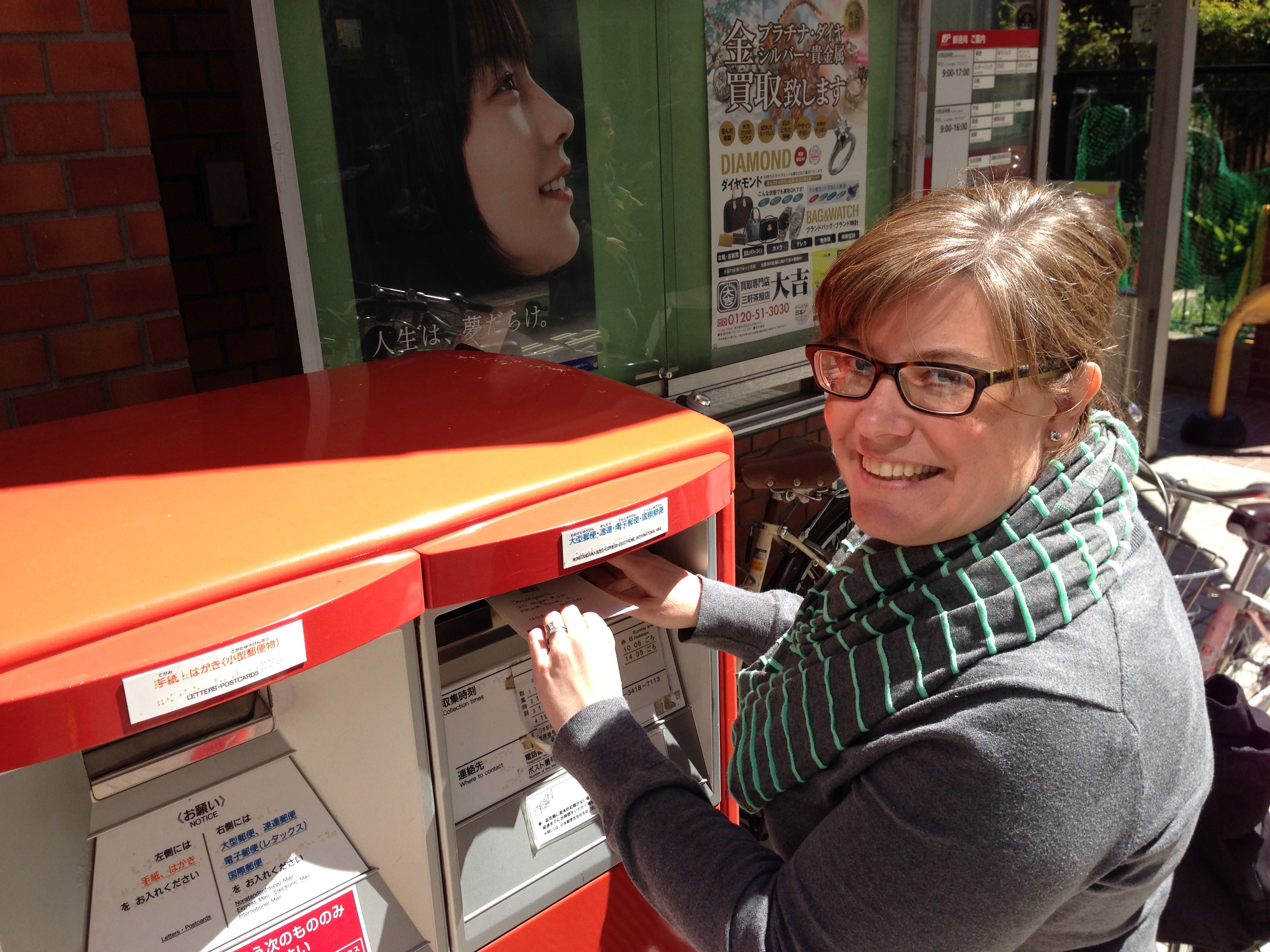 Yay for good mail and good mail treasures!
kimberly ah
kimberly at home
Category Archives: Office Supplies
All Caught Up On Mail
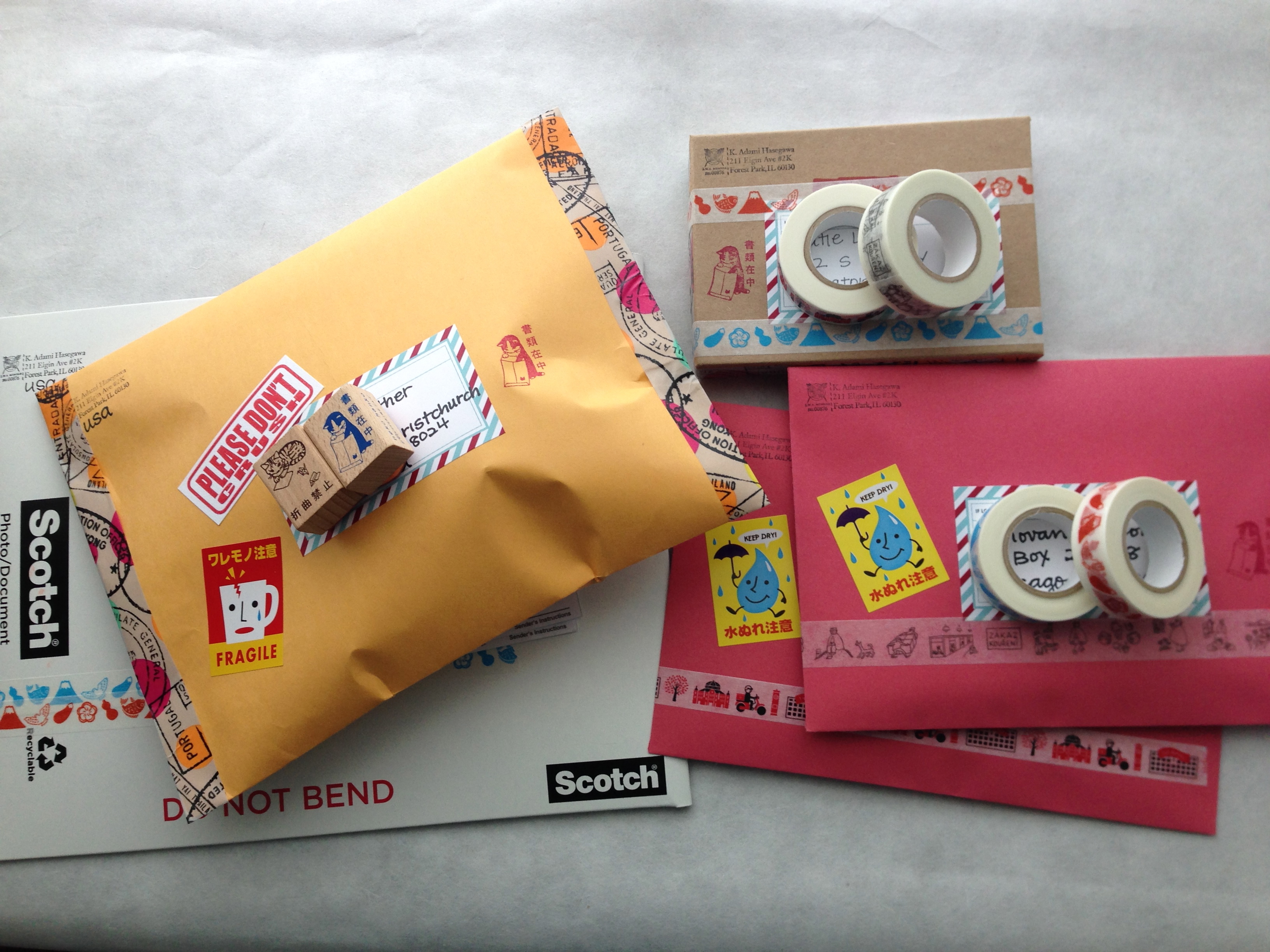 As of today, I am all caught up with my mail. If there was an open entry in my Letter Ledger, it was filled. This never happens. I’ve totally blown my resolution to return mail within one week of receiving it. But now that my inbox is empty, I feel like I can reset and have another try at responding more quickly.
I also took some time last week to finally pack up and send off some Japanese treats (of the stationery, snack and hand towel varieties) for friends far and near. I had a great time decorating the packages with some stamps, stickers and washi tape I picked up during my trip. 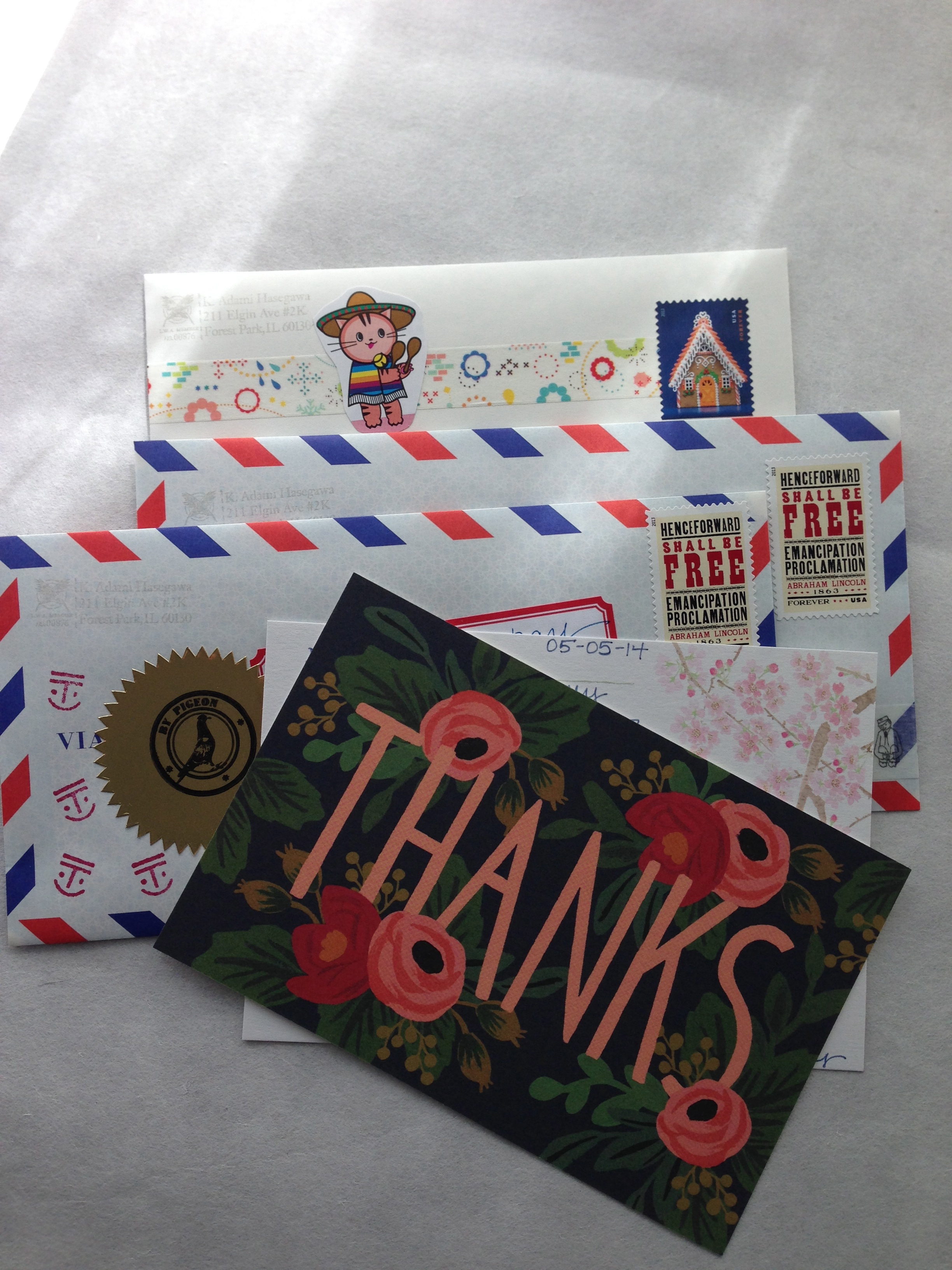 For the most part, I kept my mail art simple with washi tapes and random bits of paper and stickers.
 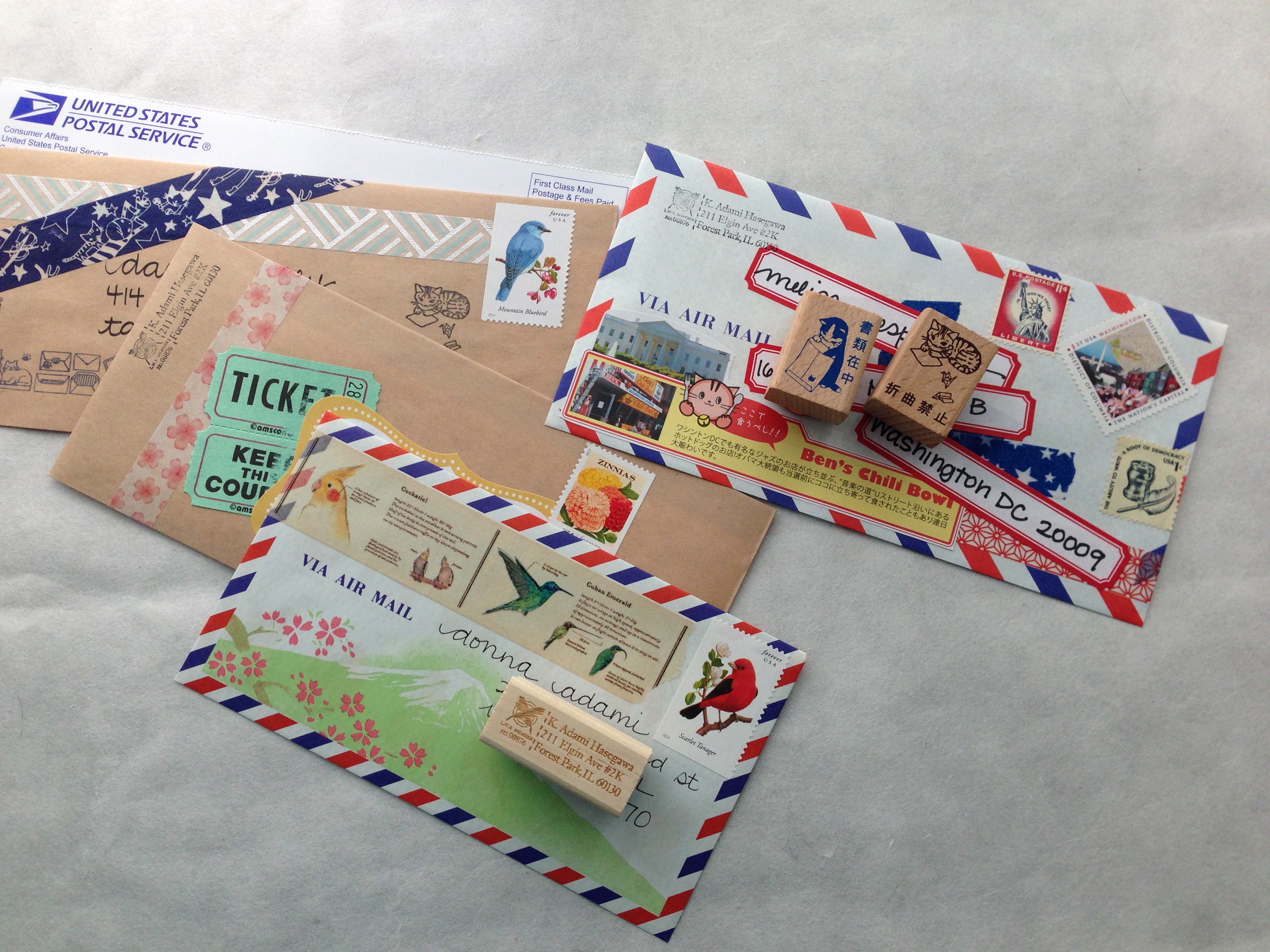 Of course, now that I’m all caught up on mail, I’m behind on laundry, sweeping the floors and reading for book club this weekend. One thing at a time, right?
April & May Paper Parcels
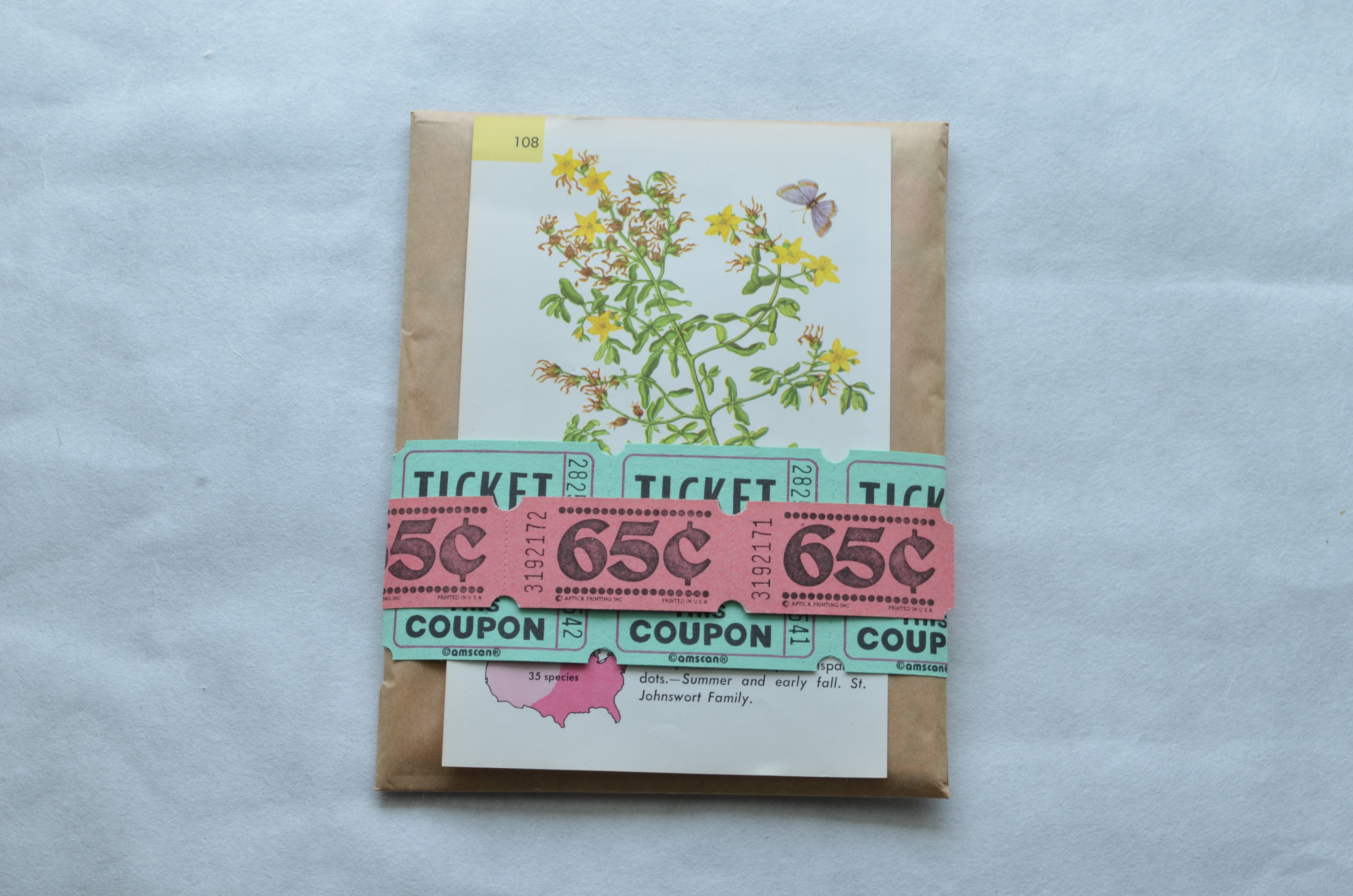 I fell off the wagon of sharing my Saturday Morning Vintage monthly paper parcels from my Christmas gift subscription. I’m determined to continue to catch up on sharing, because every month is a delight in my mailbox. So today, I’m sharing April & May and I will go back to February & March soon.
When I get my paper parcel and take it out of the mailing envelope, it always looks like a gift, so pretty and perfectly packaged. I leave it on my desk for a few days to savor it for a little longer, until I just can’t wait to see what’s inside. You can see April’s “gift wrapped” paper parcel above…the theme was Spring and it was one of my favorites so far. 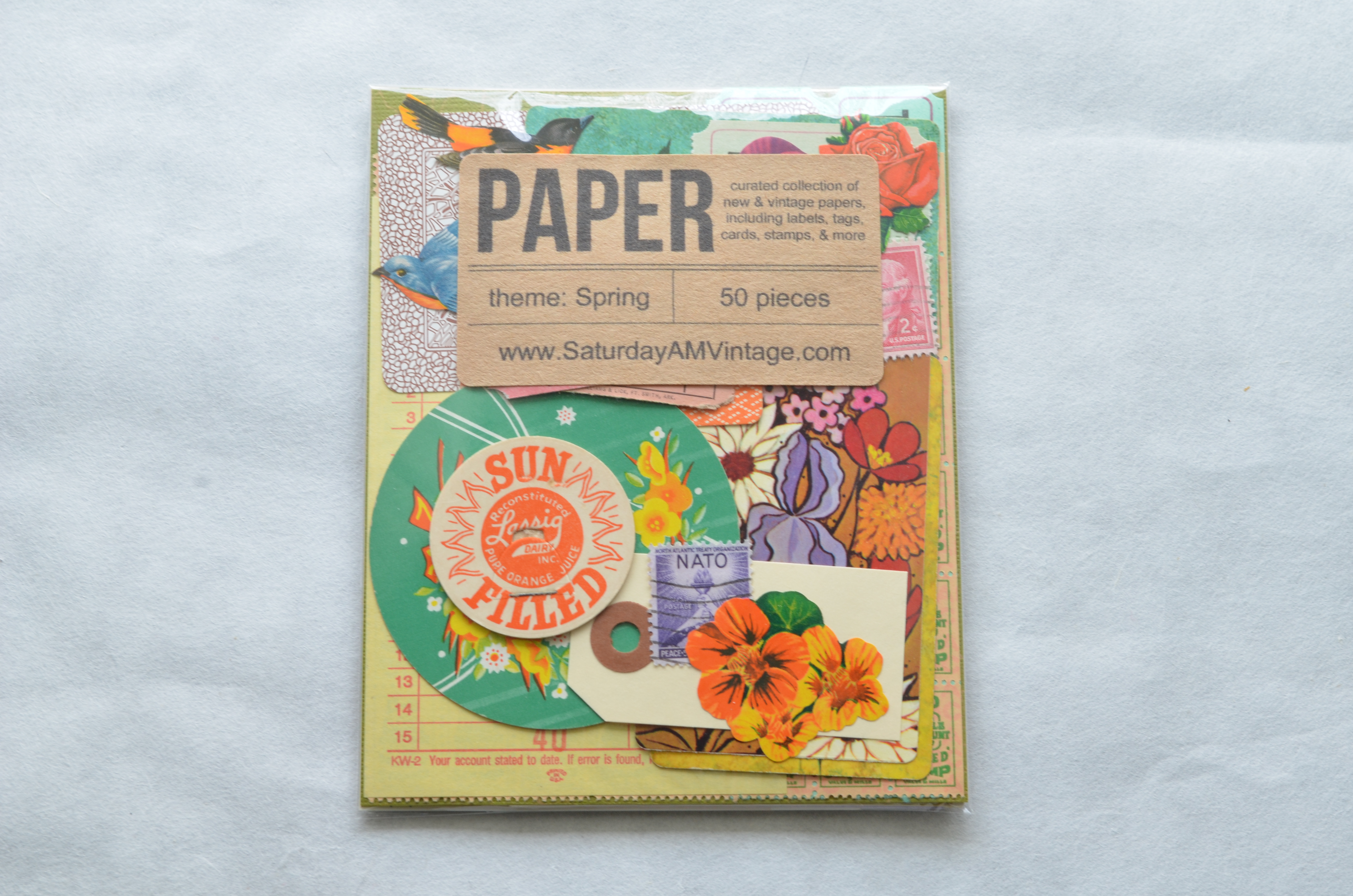 I don’t know how Xenia gets all the little bits to stay in place, but they always look so pleasing in the cellophane envelope. I especially love how the birds are peeking out from behind the label.
 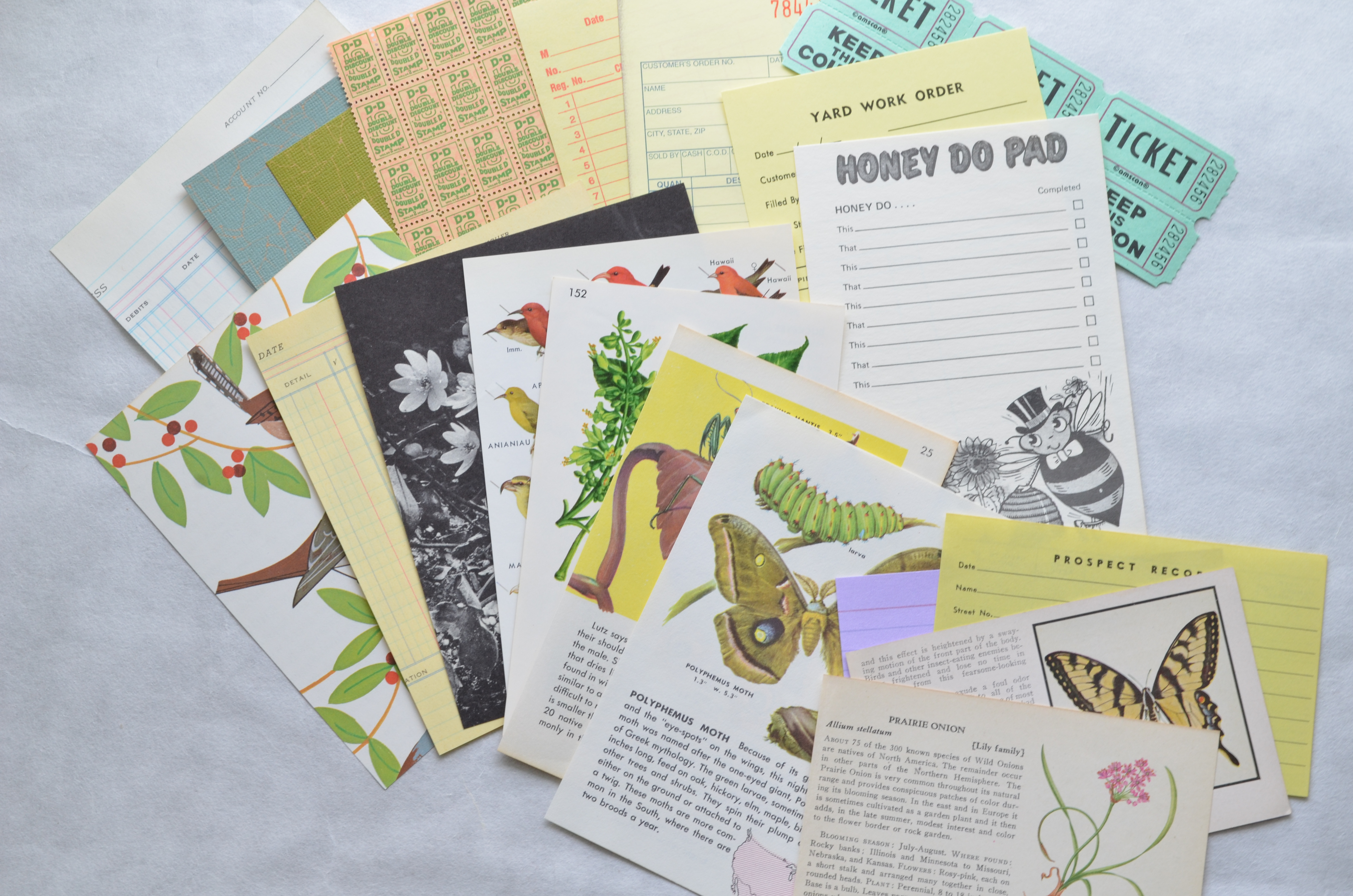 I am planning to use most of this paper pack for yet-to-be-created garden journal to document our first year of gardening last year. I want to blend the pictures and notes I took of Plot #6 into a pretty mini-book. These larger pieces of old nature journals are going to be perfect background and filler pages. I love the old “Honey Do Pad” and the Yard Work order form. What unique finds!
 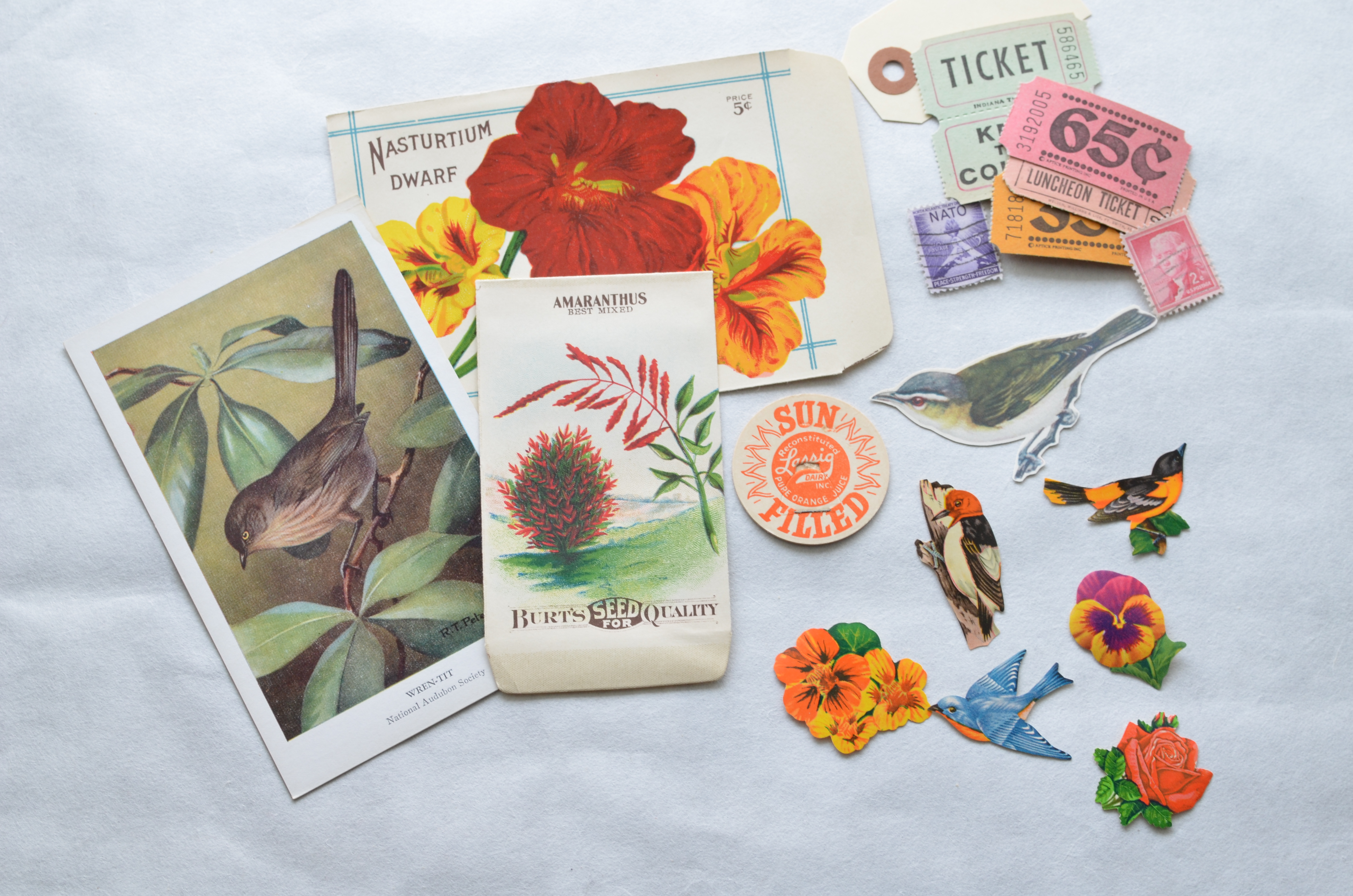 The old seed packets are so lovely and I love the vintage bird information card, but I have to say the vintage Dennison flower and bird labels (bottom right) are the big treasures here. They are die cut and embossed and their colors are so vibrant, it’s hard for them not to steal the show!
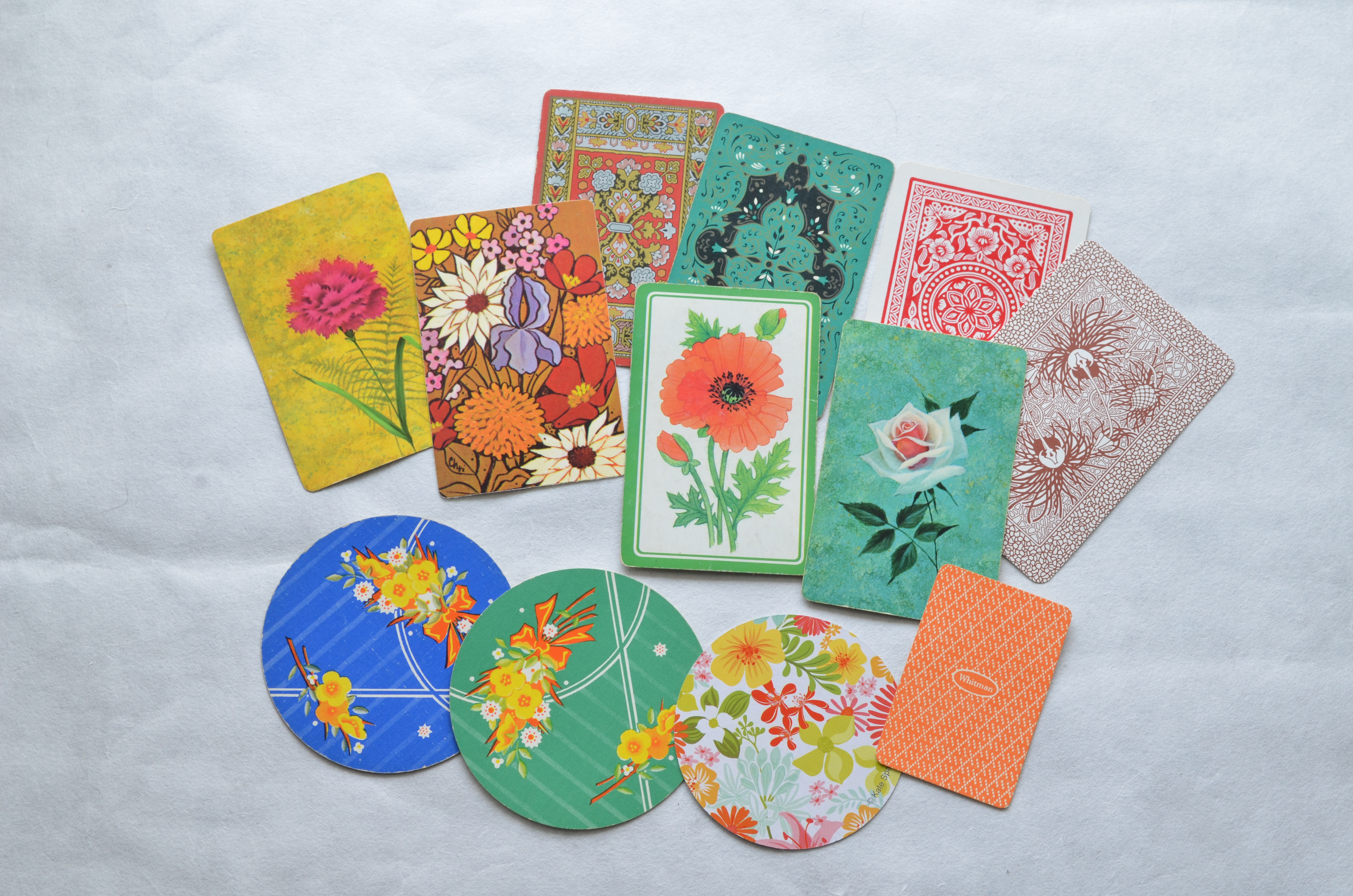 I would love to see Xenia’s entire playing card collection because all of the paper packs have a few enclosed and each one is fabulous. She really outdid herself with the floral playing cards though. Can’t you just imagine a 1950s ladies bridge club playing with those pretty round cards?
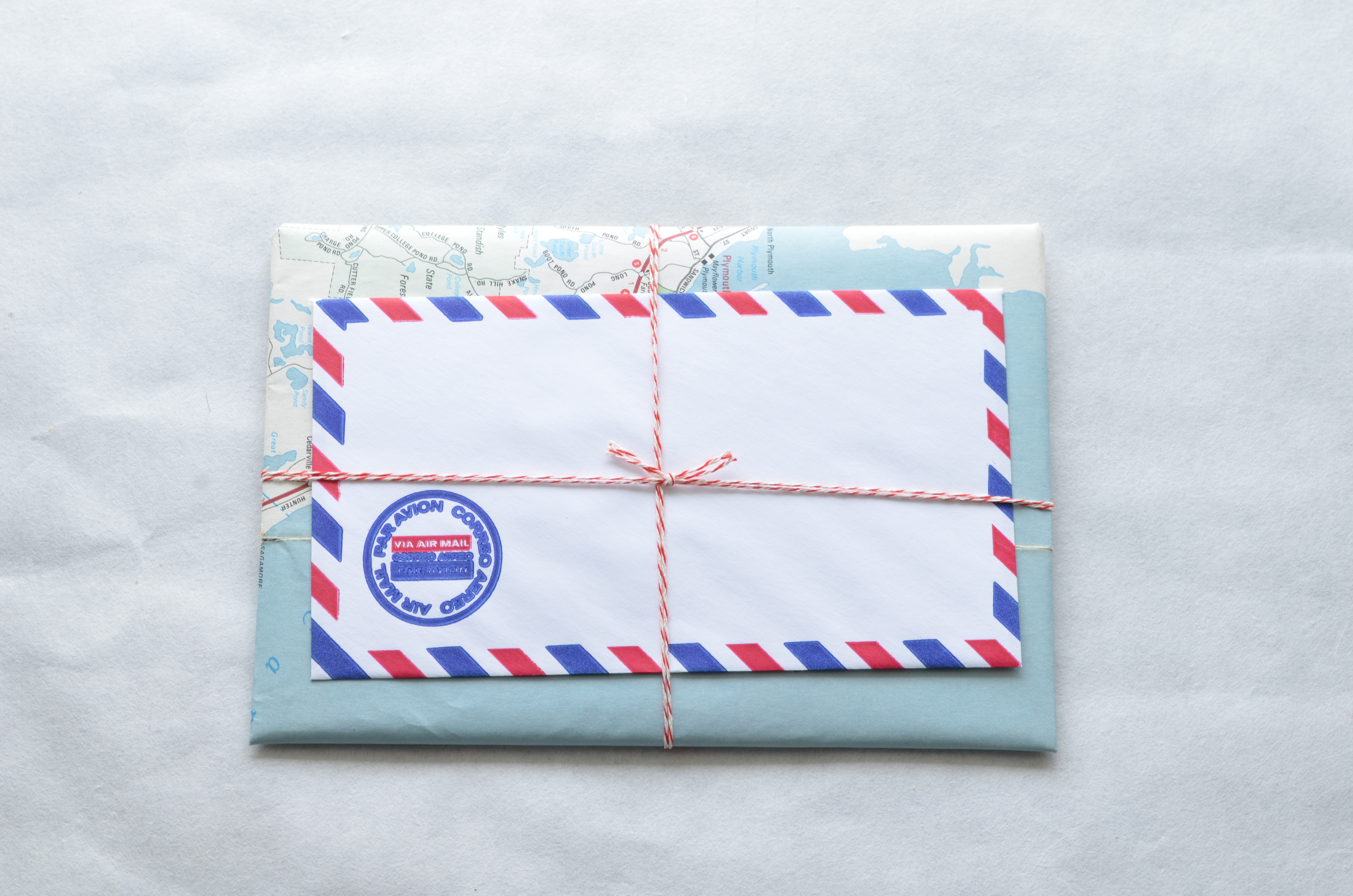 May’s paper parcel theme was Travel. It was gift wrapped in an old map and tied up with an air mail envelope. I’ve been using up a lot of my air mail envelopes lately. I can’t get enough of those red and blue stripes!
 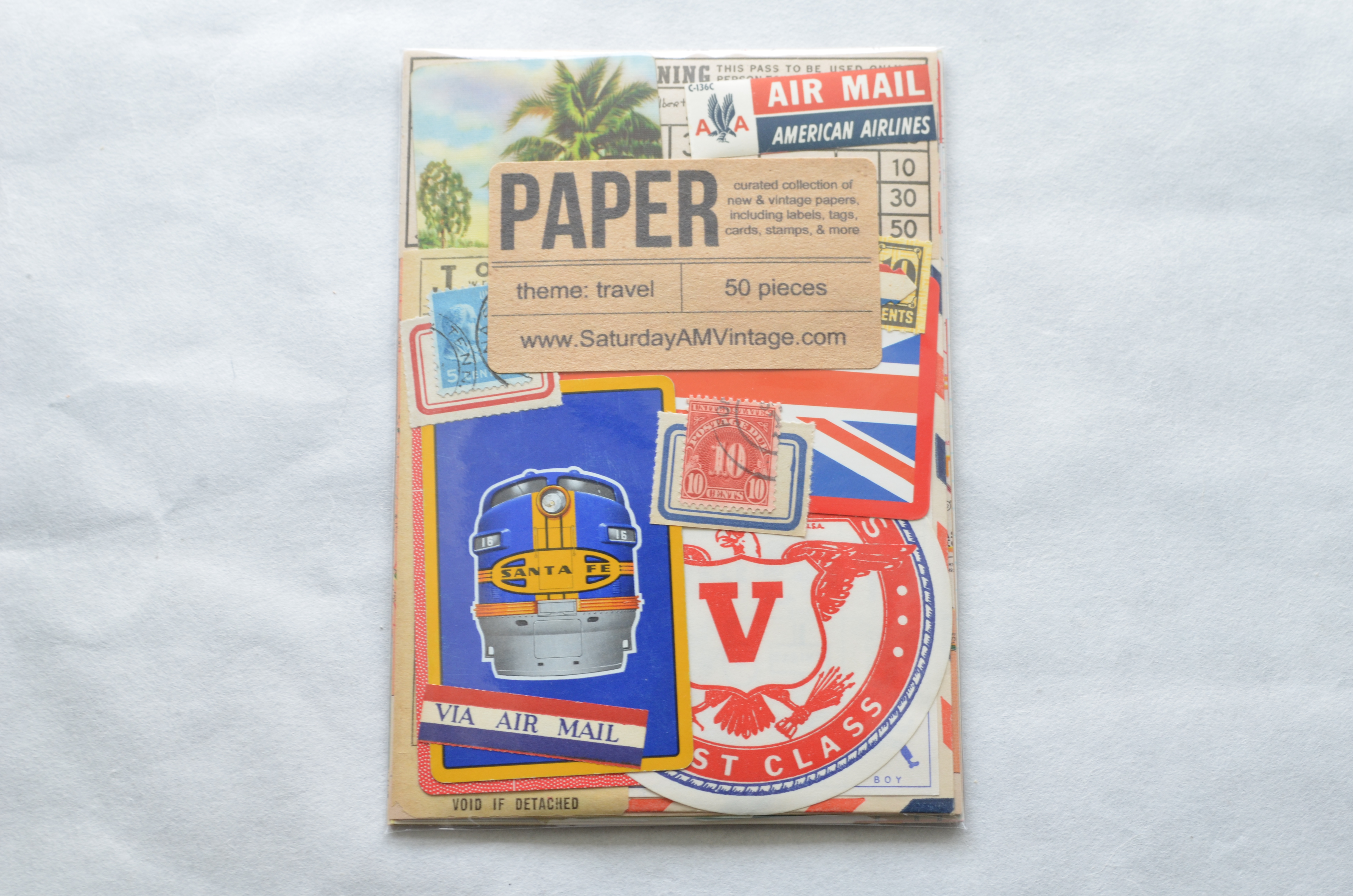 Again, everything was wonderfully displayed in the cellophane…
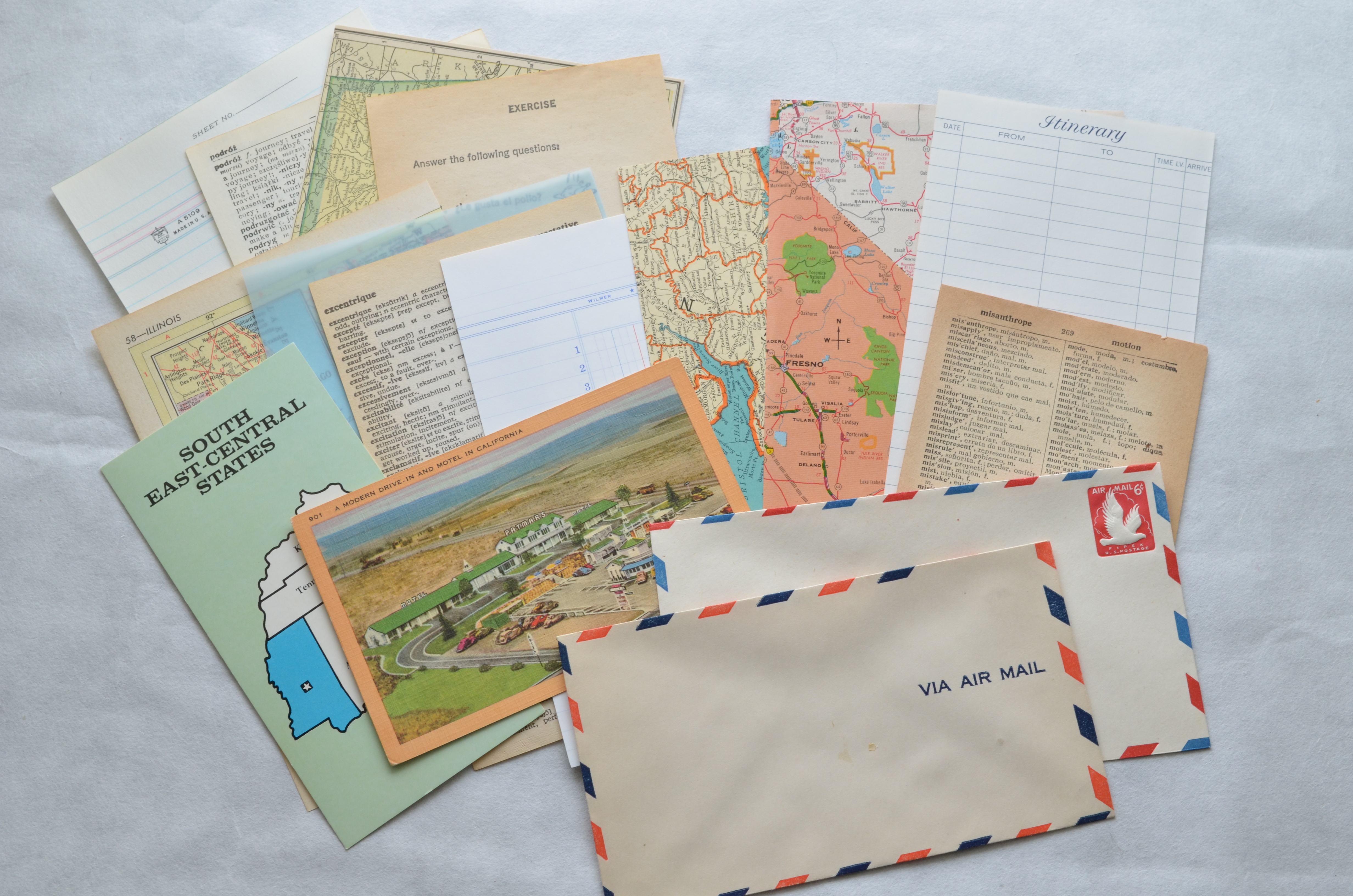 In the bigger pieces, there were old maps, dictionary pages, postcards, travel cards and vintage air mail envelopes (one with 6 cents of postage printed on it!)
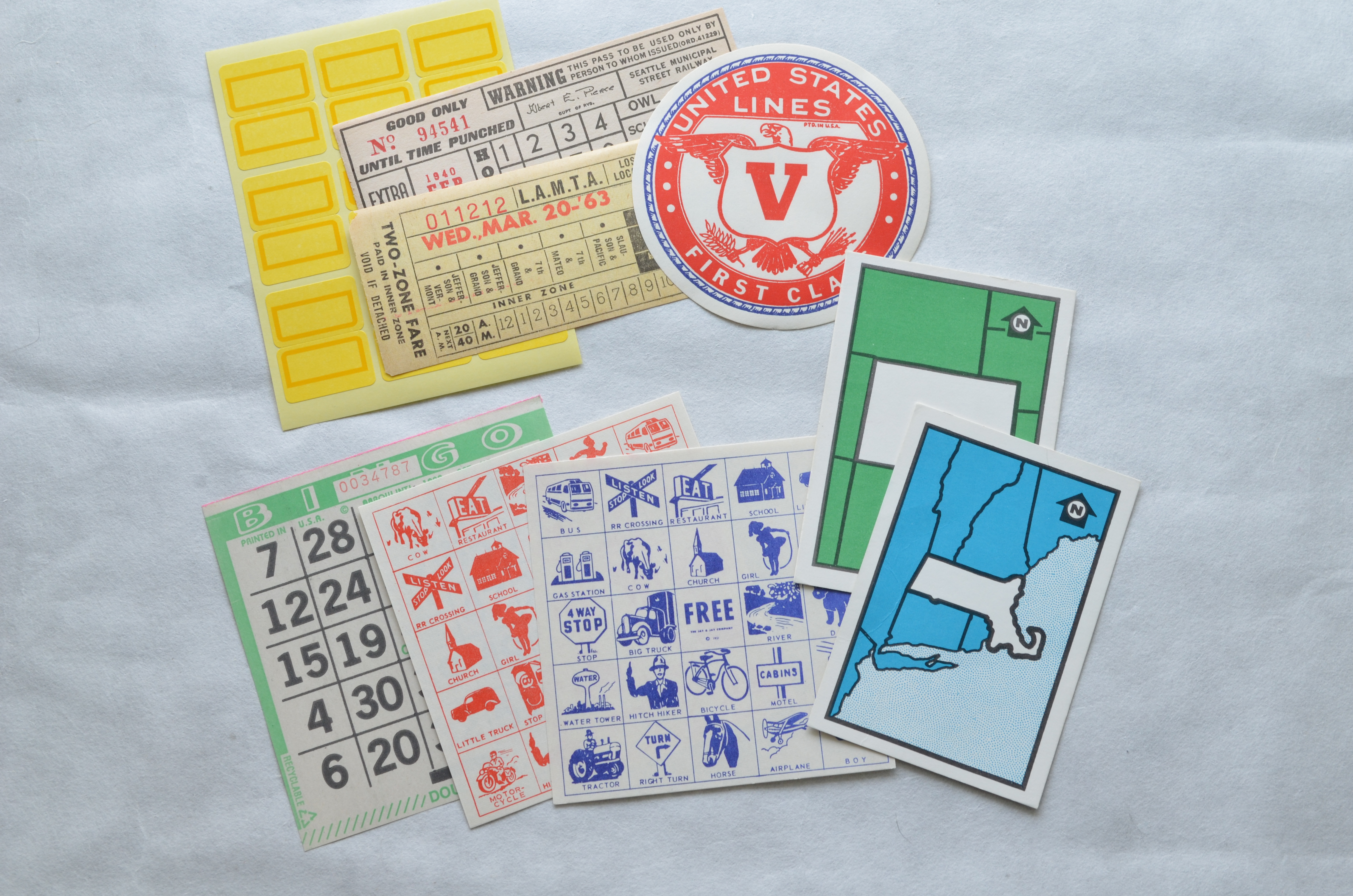 There were old train tickets and a lot of travel game pieces. I love those travel bingo cards (center bottom). My favorite piece from this month’s packet is the round “United States Lines” sticker.
 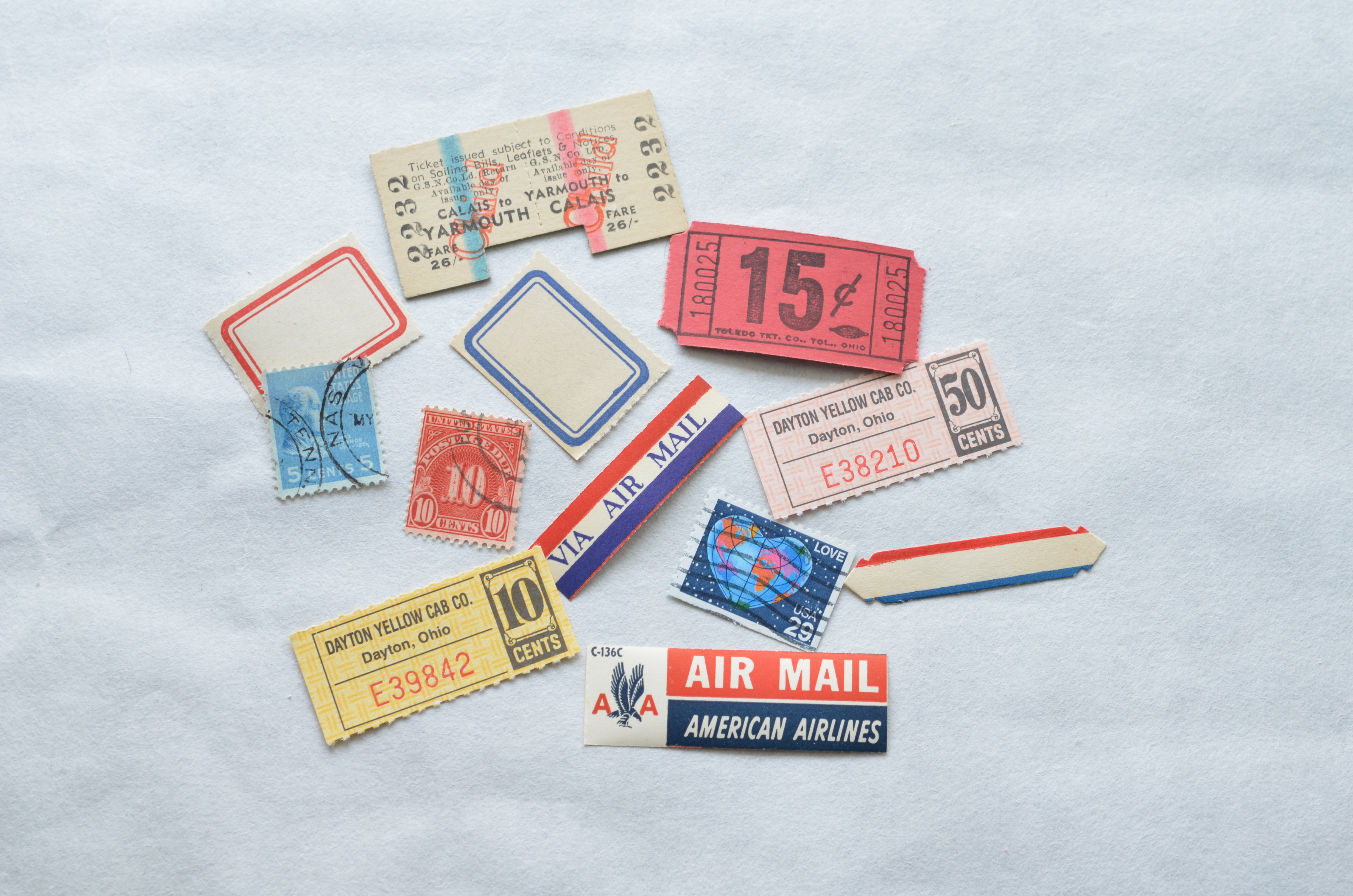 The little bits include taxi tickets, stamps, more Dennison labels and a fabulous American Airlines air mail label.
 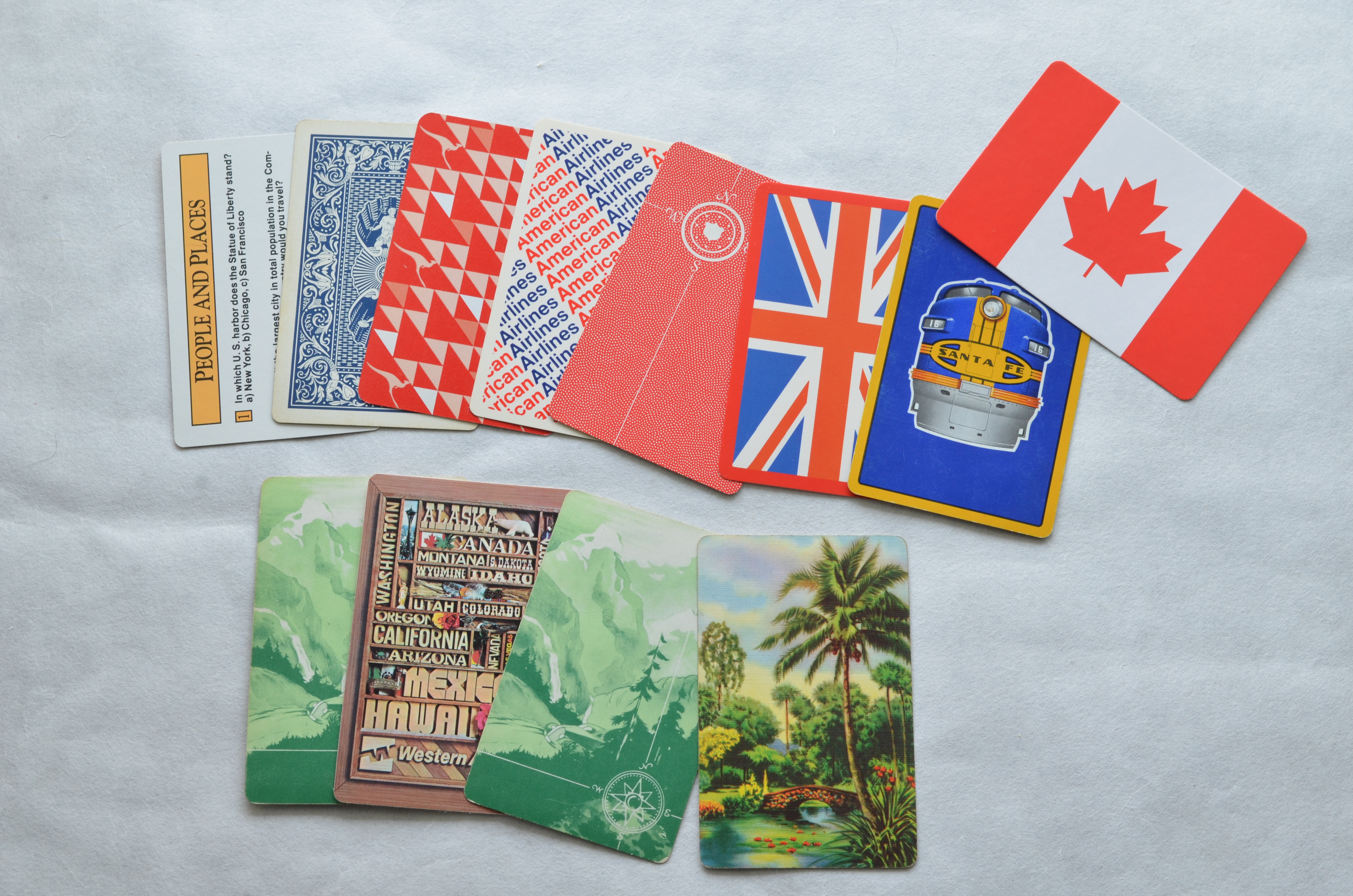 And the playing cards!! American Airlines, England, Canada, Santa Fe…so many good ones.
Next month is the last month for my subscription, but Naoto already promised me a Paper Parcel anniversary gift so I’m looking forward to getting treats in my mailbox for the rest of the year!
For more information on the Saturday Morning Vintage Paper Parcels, go here.
Have a good weekend!
Spending the Yen 3: Sakura Stationery
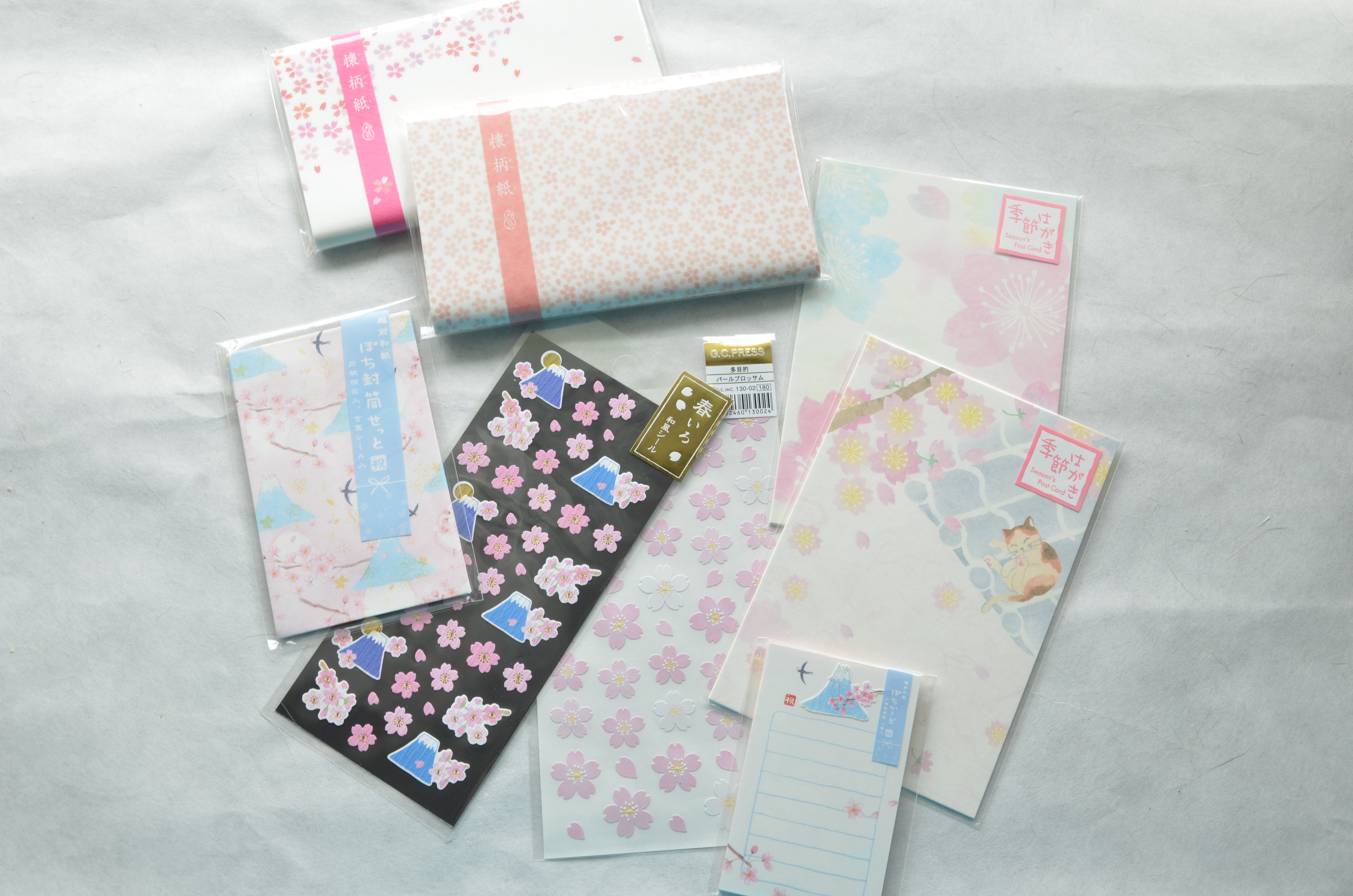 It was hard to resist the pull of the sakura in Japan this time of year. I got swept up in sakura season mainly because I’m a sucker for that pretty pink flower, but also because things in Japan are merchandised so well…stores really get into their themes, especially when the spring flower emerges. Poor Naoto, every time he saw the pink displays, he knew we were going to linger in the store just a few minutes longer.
Other than the sakura postcards I sent from Japan, I came home with some extra postcards, stickers, tiny cards and envelopes and kaishi papers (the two folded stacks at the top of the picture). Kaishi papers are traditionally used as table decorations or mats for sweets served at tea ceremonies. I bought some Mt. Fuji kaishi papers during our last trip and have been using them as stationery. That’s my plan for the sakura ones too. 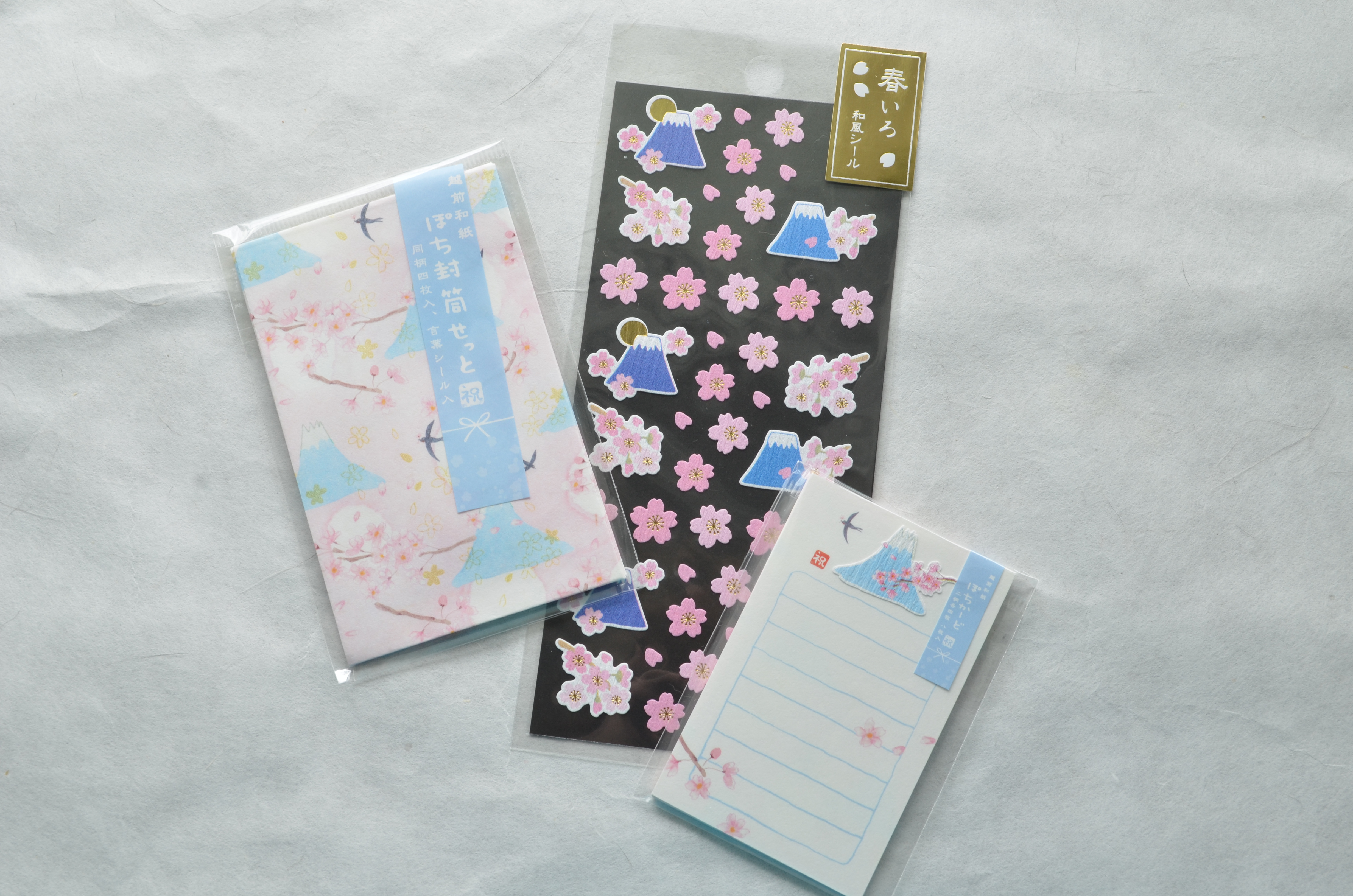 The tiny cards and envelopes are my favorites, even though they aren’t very practical. And the Mt. Fuji sakura stickers have a lovely texture and gold foil accents.
 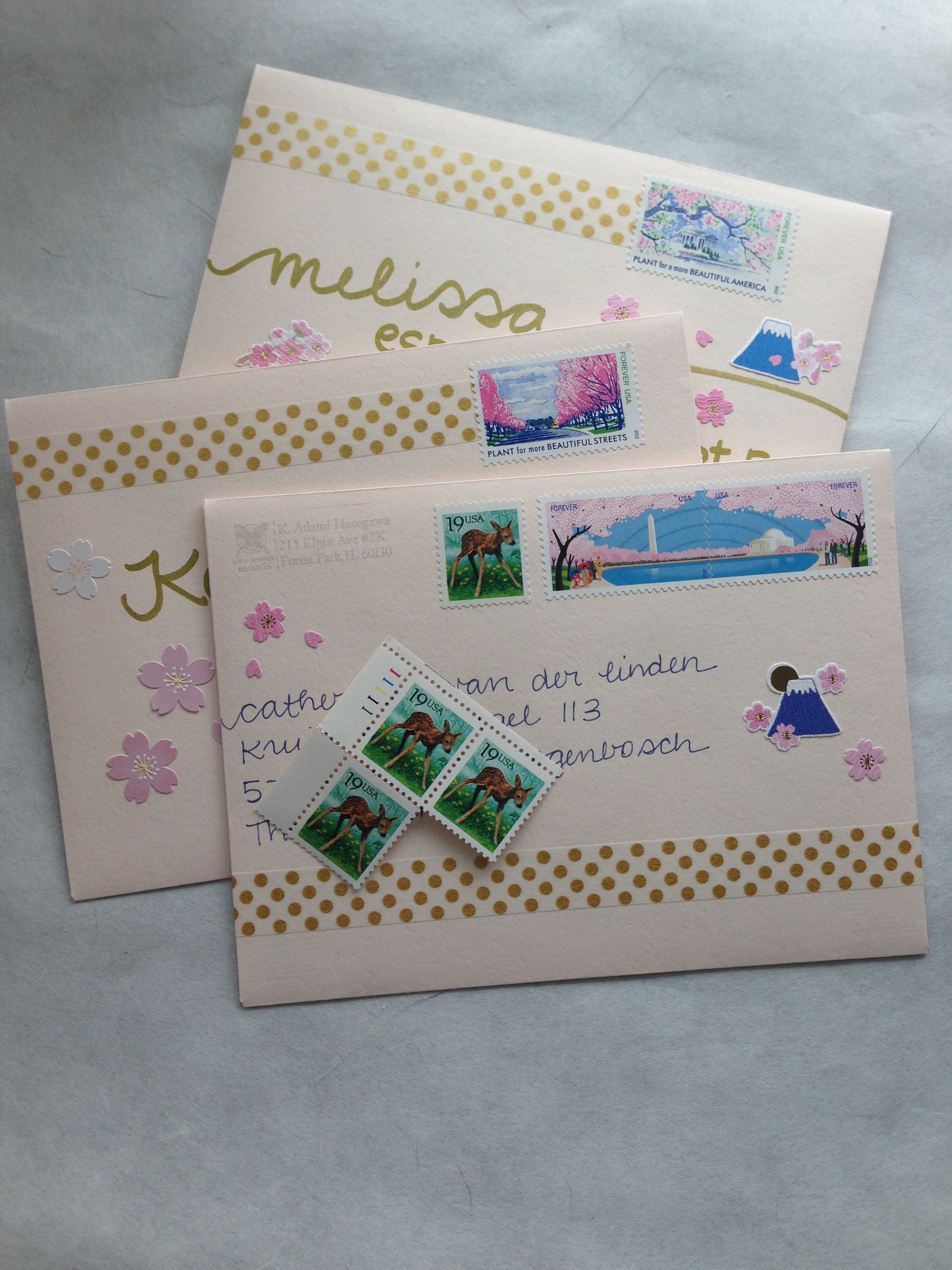 Sakura season might be over, but I’m having fun using my sakura stationery here at home. It is definitely early spring here (though it’s cold again, after our beautiful day Sunday) so sending flowery mail just feels right.
Oh hey…this is my 400th post!
Spending the Yen 2: Inkan
 I have many favorite purchases from my trip to Tokyo, so I’m reviving the (defunct) Spending the Yen series.
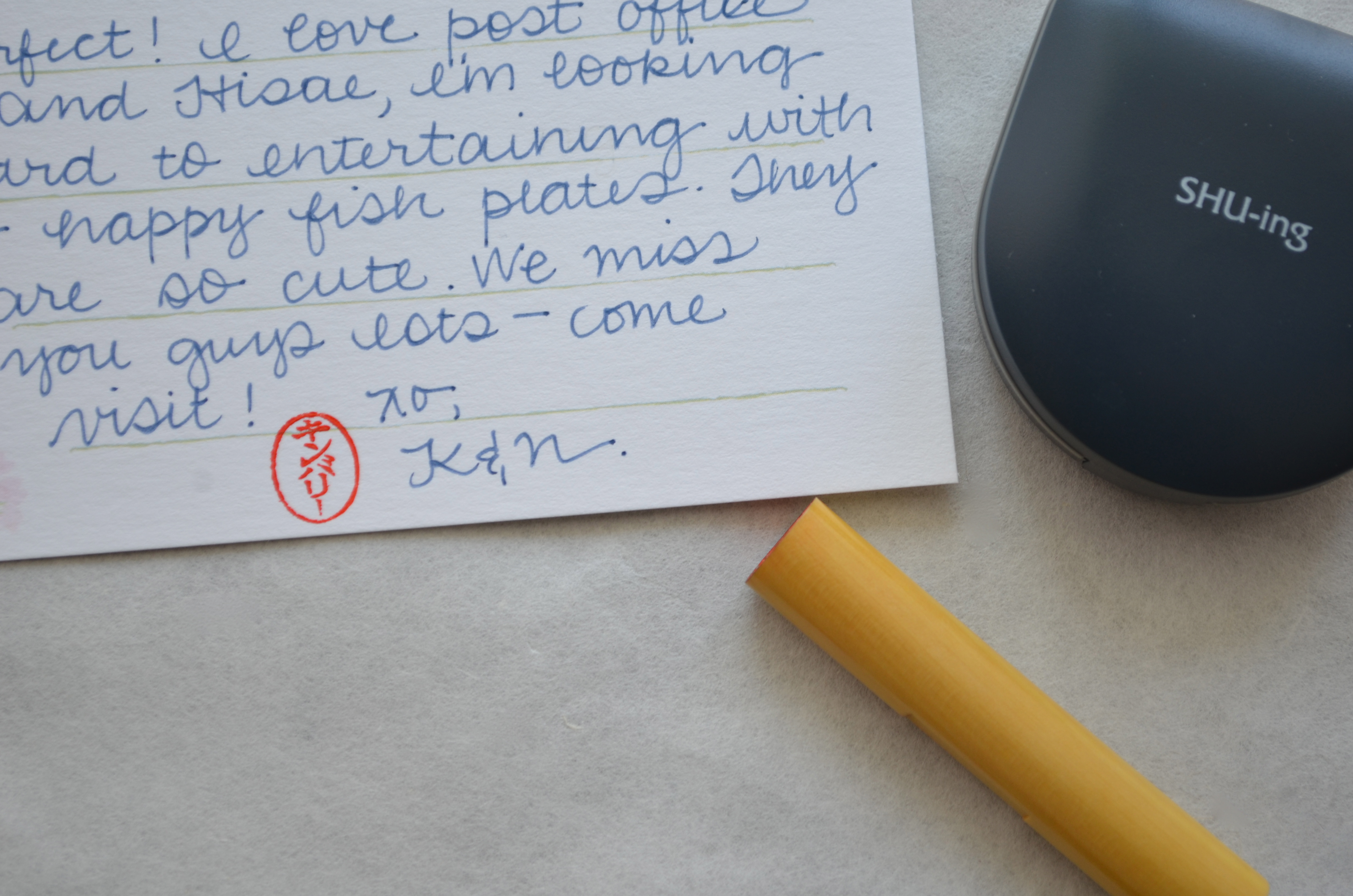
On this trip, I bought a custom-made inkan. An inkan is an official stamp used in Japan (and other Asian countries) to sign important documents and contracts. Now, I know I’m not living in Japan or signing anything important here at home, but I wanted one as a fun way to sign letters.
Because it had to be custom-made, we knew going in that we had to order it at the beginning of our trip. We planned to go to Itoya to order it because we had browsed their selection last September and we had seen some inexpensive, decent styles. But as luck would have it, we got to buy it at a tiny inkan shop near Naoto’s mom’s neighborhood! We happened upon the shop while waiting for Naoto’s sister to join us before visiting their mom. The shop owner was wonderful to work with, explaining the choices of materials and the process of making the inkan…I love shopping with small businesses!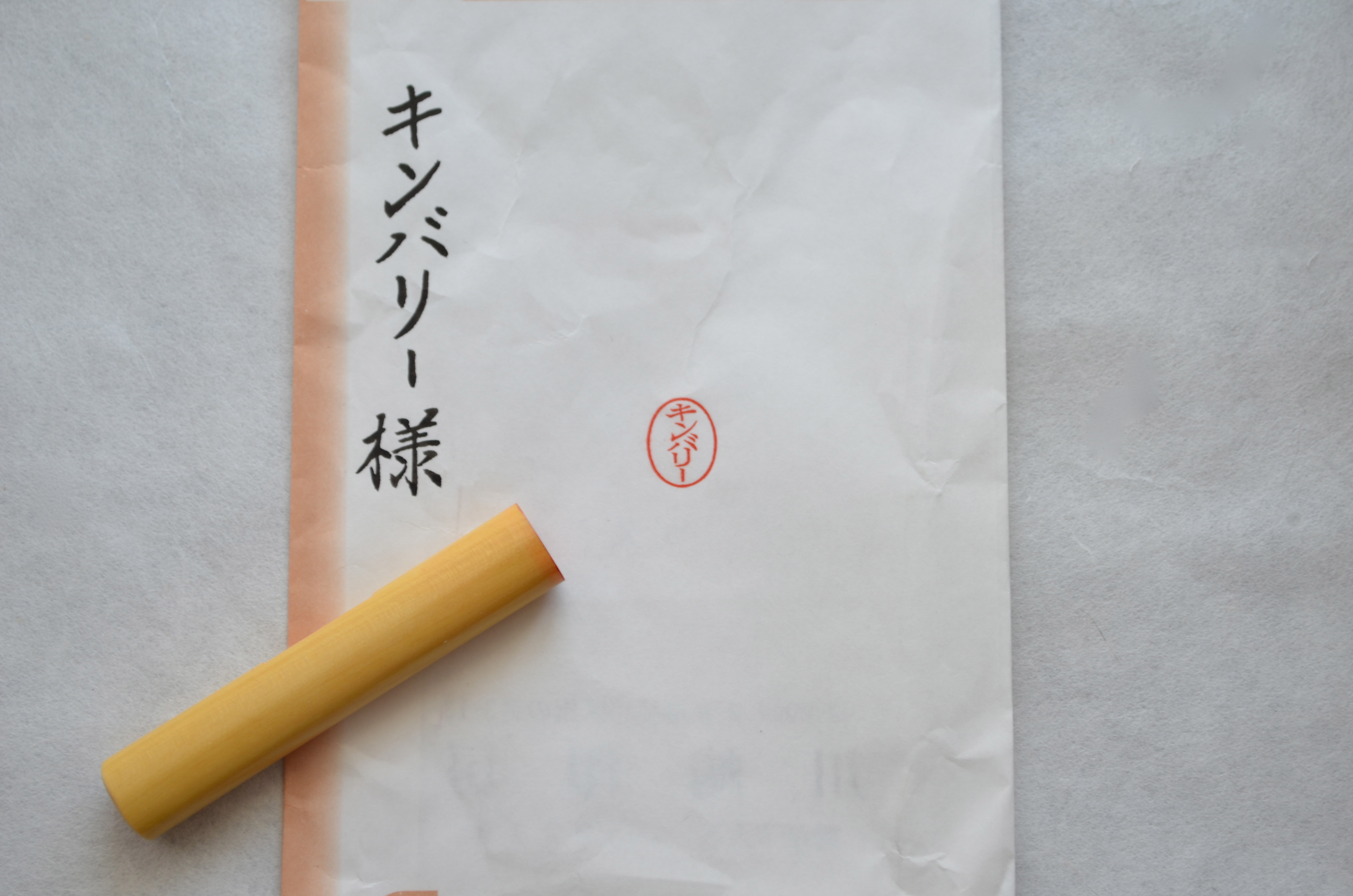 I chose Japanese cedar because it was budget-friendly and natural. A really special inkan can costs hundreds of dollars. I didn’t need anything that serious.The characters that “spell” Kimberly are delicately carved out of the wood. The stamped image is about a half inch tall and I love that it’s oval. (My name is too long for a round stamp.) We picked up the stamp a week later and it was packaged (complete with a little ink pad and case) in the bag you see above. Along the side, the shop owner wrote “Miss Kimberly”.
 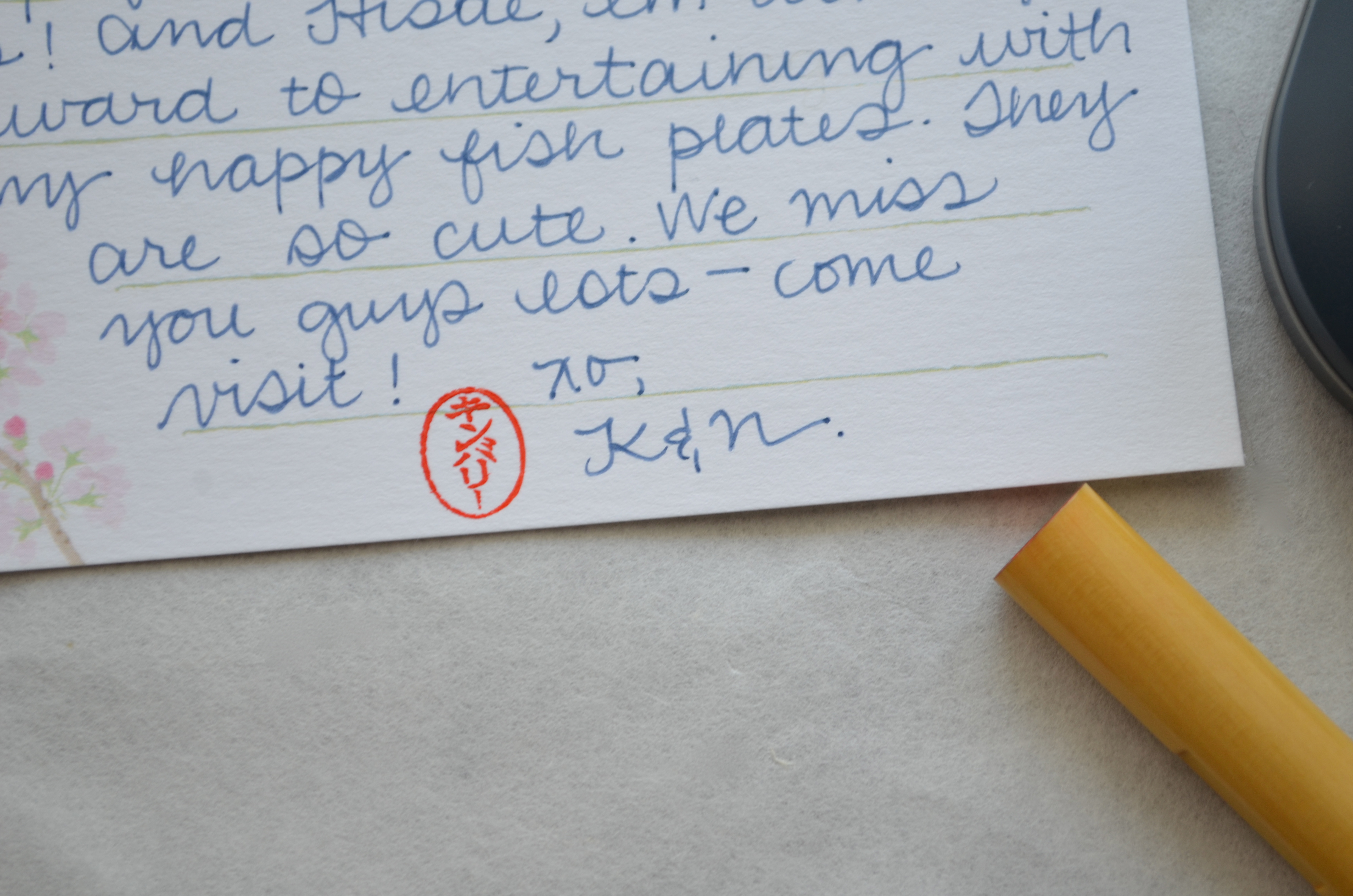 I wrote a couple of thank yous and Easter cards last week and used my inkan to sign them. Official, right?
The Four Treasures: Ink Stone
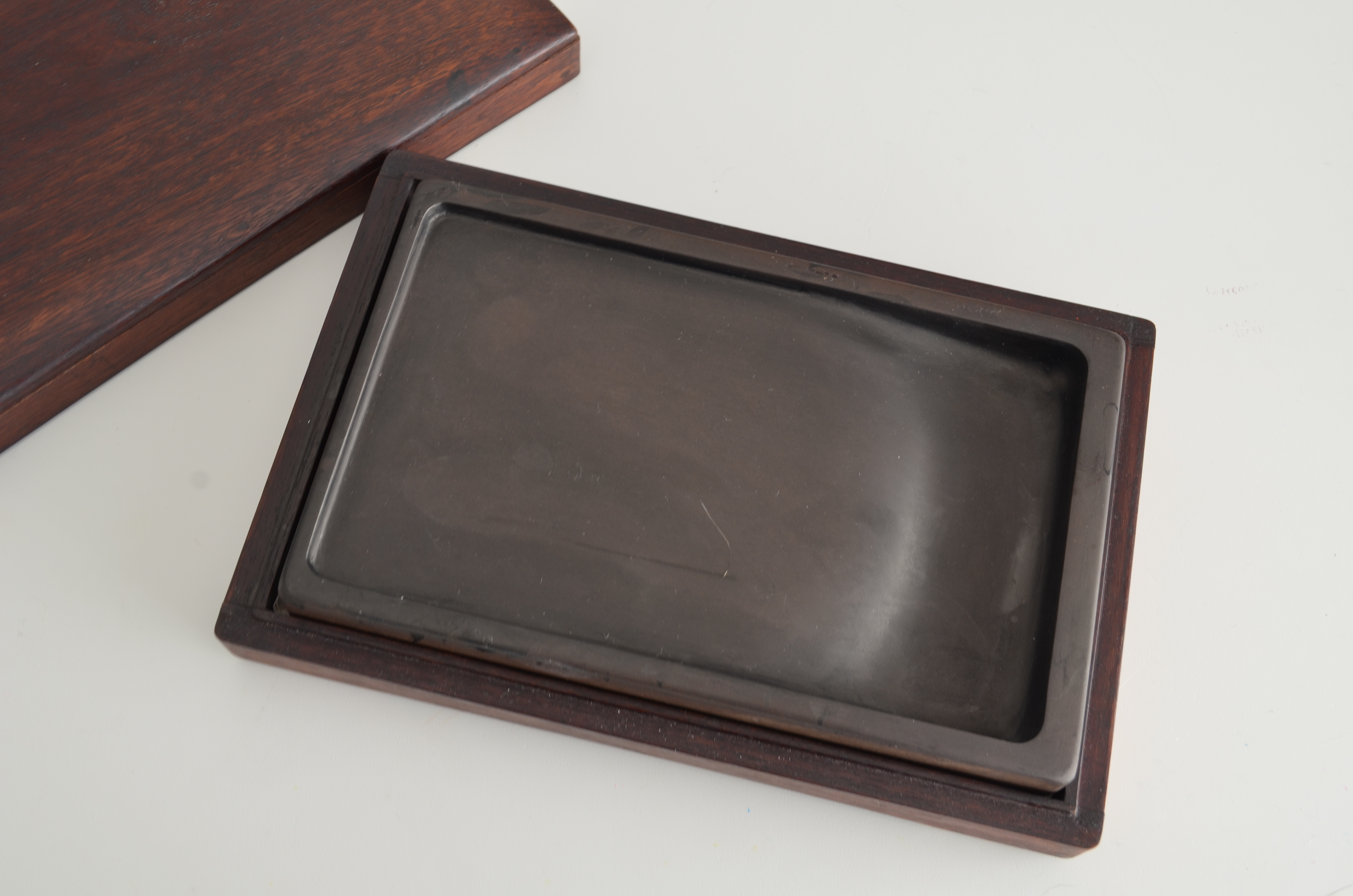 The last of the four treasures is the ink stone. Handmade from slate, ink stones are smooth, very heavy and made to last forever. The ink stone is designed for ink making in batches. There is a raised part that slopes downward into a well. Ink is mixed at the top and pushed down into the well.
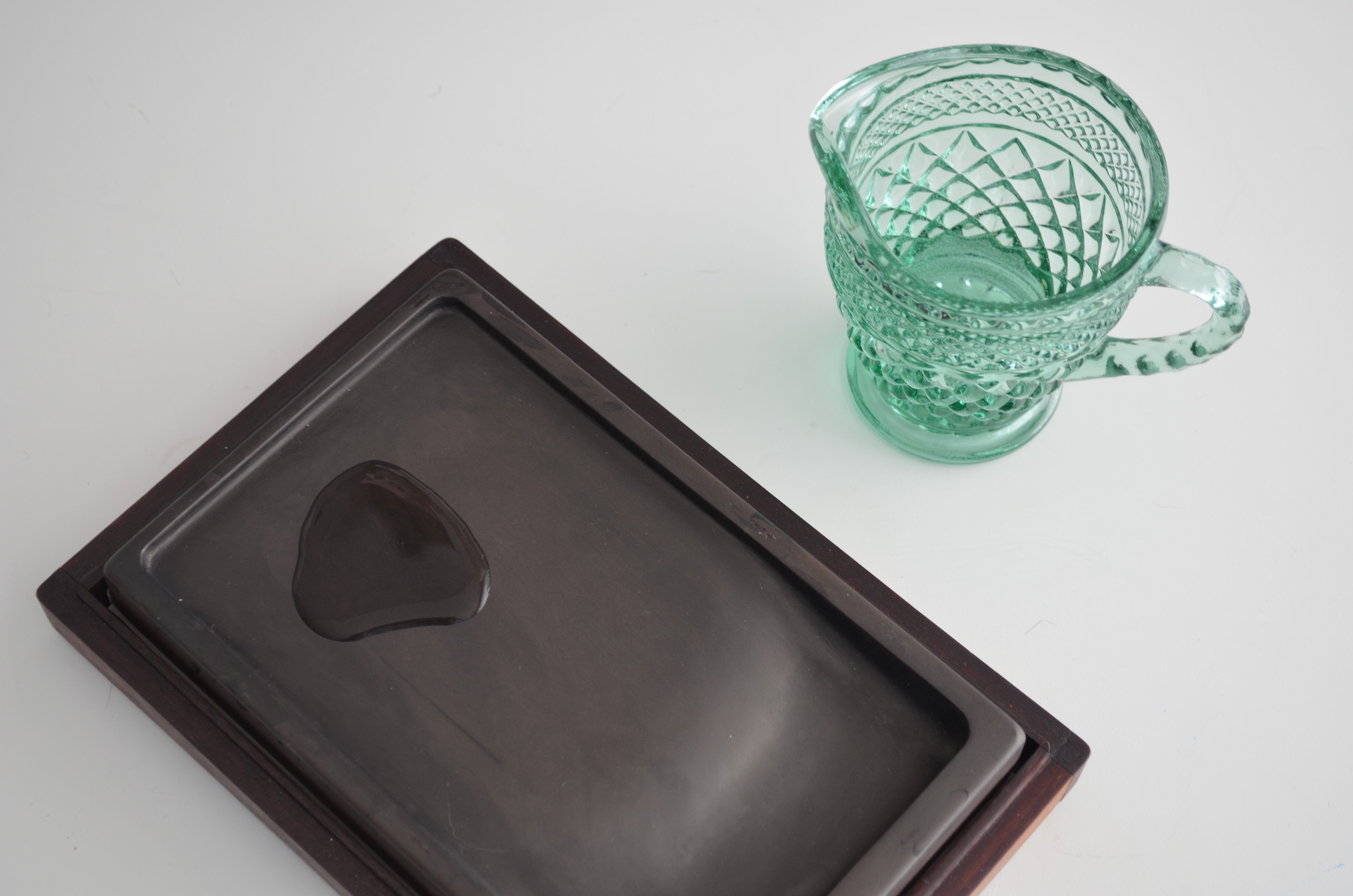 To make the ink, you start with a bit of water at the top of the stone.
 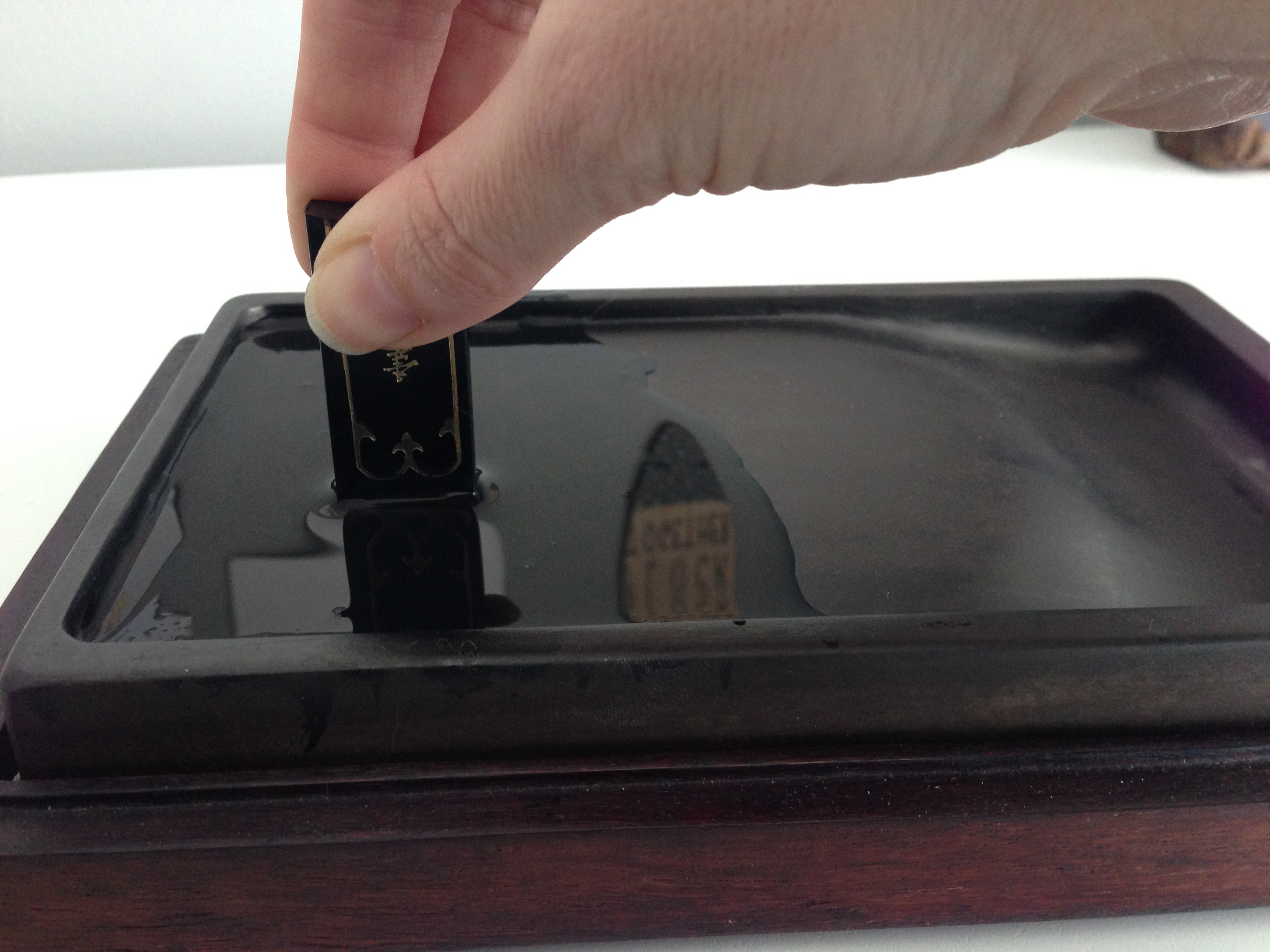 Then, place the ink stick in the water and “grind” the ink. Grinding the ink is a slow, meditative act. Passing the smooth ink stick across the smooth ink stone is soothing and repetitive. The earthy scent of the ink permeates the air. It’s extremely relaxing and calming. This slow preparation allows the mind and the body to become centered and ready to write.
 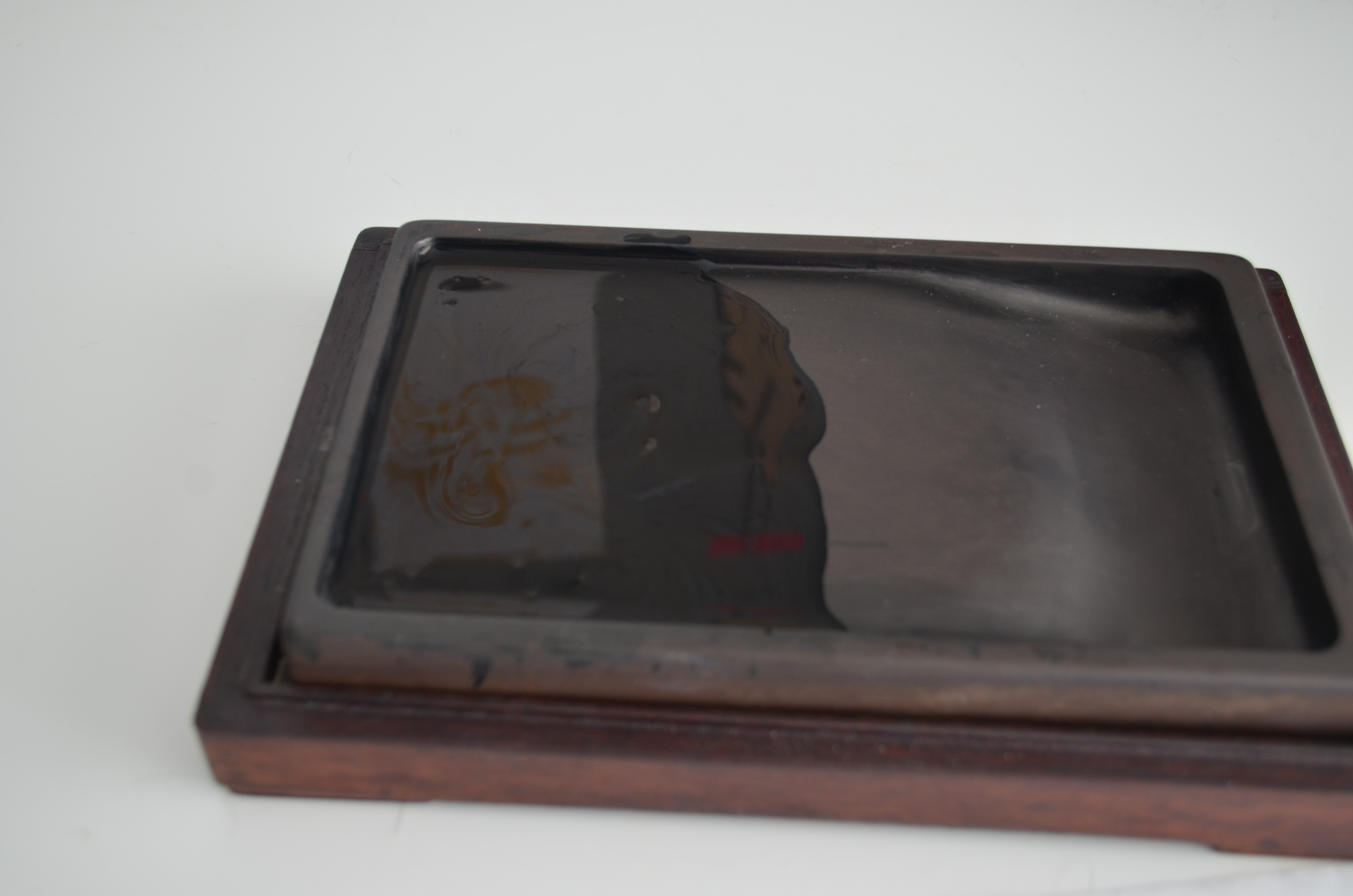 It takes a lot of time and experience to know when the ink is ready. (Our ink was not the right consistency when we had our practice session. You can tell it wasn’t mixed long enough because it was gray and a bit watery. We need more practice!)
When the first small batch of ink is ready, you push it down (using the end of the ink stick) into the well of the ink stone. Then, add a bit more water to the top of the ink stone and continue mixing more with your ink stick. Repeat this process until you have enough for your project. 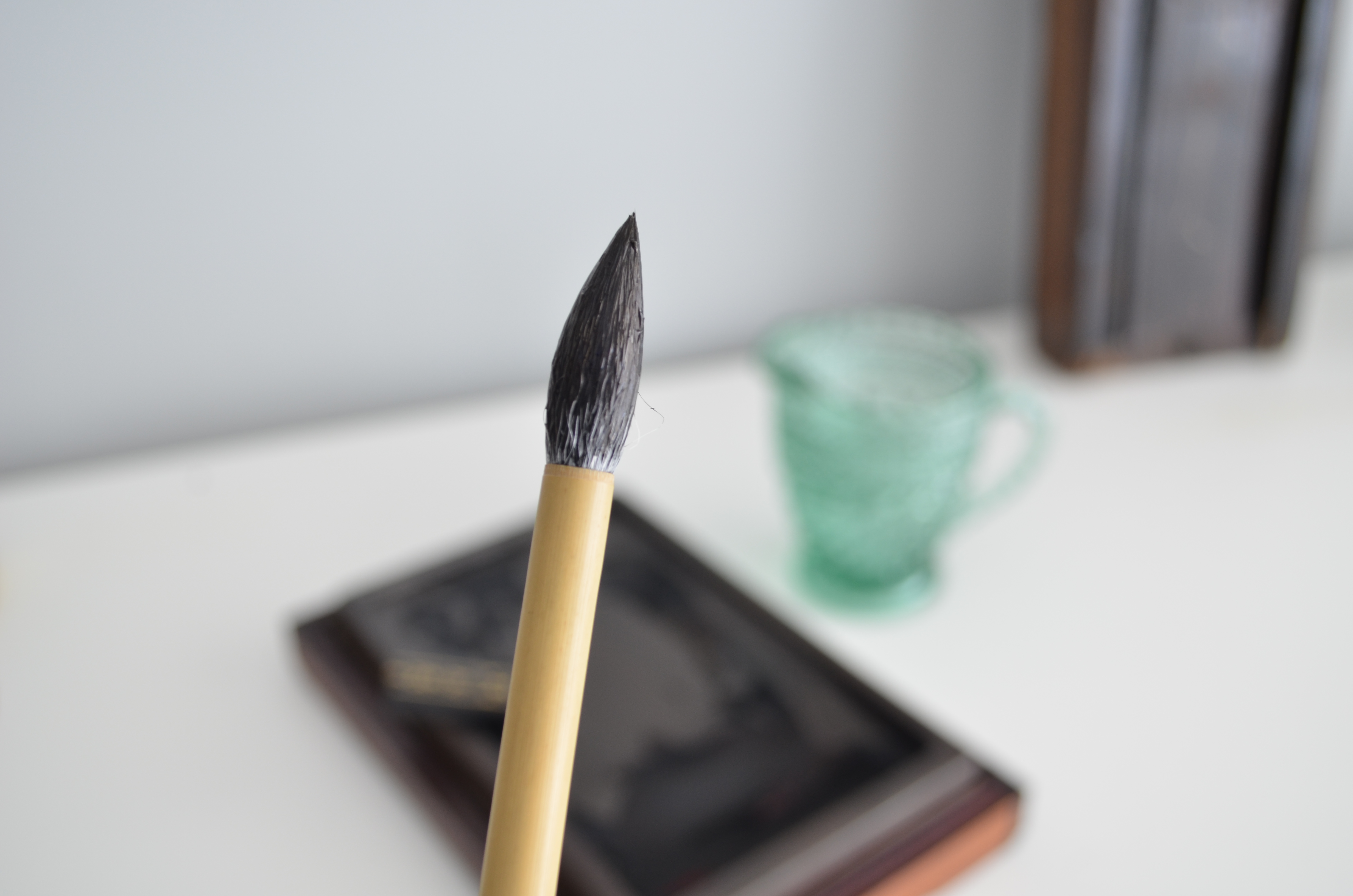 If the ink is prepared correctly, it will be a deep black with a light, almost oily sheen and it will be slightly thicker than water. I’m no expert, but I could feel the difference between our hastily mixed ink last week and this ink, which I ground ten times longer. You really can’t take shortcuts.
 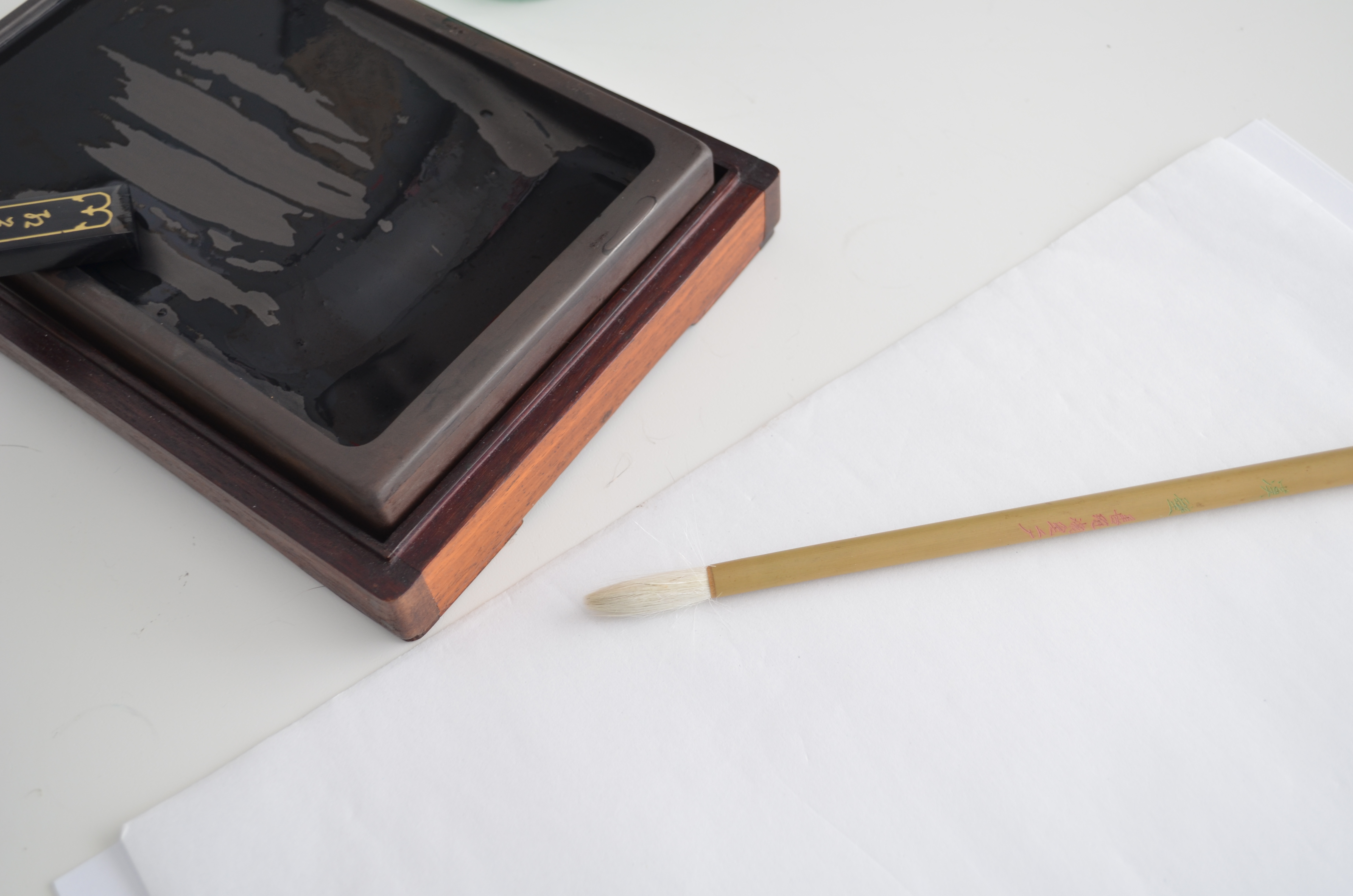 I have a small ink stone that I bought for my class, but the ink stone pictured today is from Naoto’s aunt’s collection. It is six by nine inches large and it is heavy. (We carried it all over Japan on the train after his mom gave it to us. Actually, I should say Naoto carried at all over Japan.) Because it is in such a lovely wooden box, I keep it on the table in the living room. But I have to admit it is much more fun to actually use the ink stone. Hopefully when I get back from Japan I will be a little bit more skilled at using these family treasures.
The Four Treasures: Ink
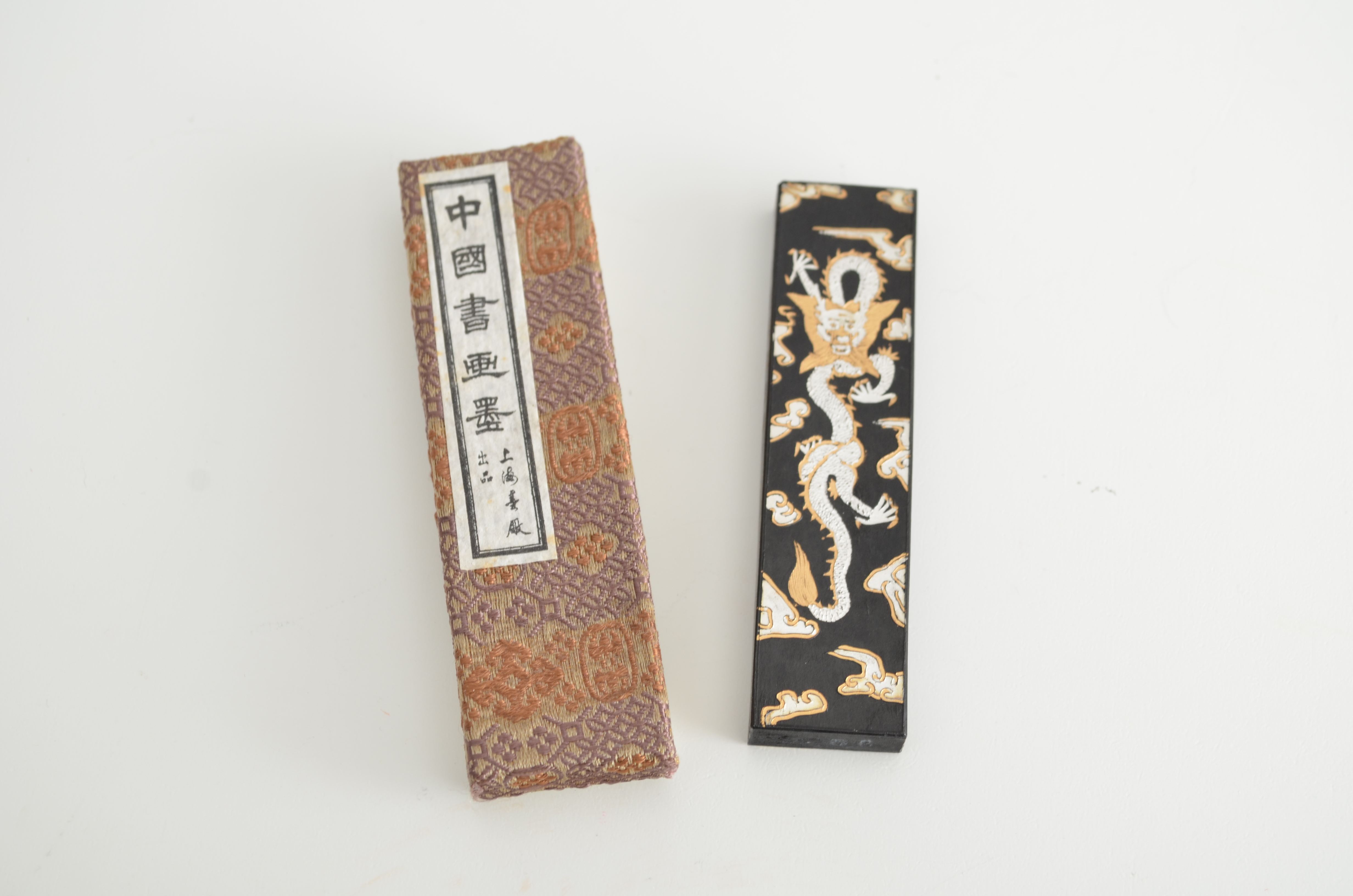 The third treasure is ink. Traditionally, ink is ground from an ink stick before each calligraphy session. The stick (shown above on the right) is mixed with water and ground on an ink stone (spoiler alert: that’s the fourth treasure and I’ll be talking about it on Monday). Just like paper, the ink stick is made from natural materials. Pine branches are burned with natural oils and the soot is blended by hand with animal bone glue and made into the ink sticks. The kneading of the soot and glue requires great strength and the process has been handed down through generations. The sticks are dried and aged, then polished and decorated, like the one you see above. It is a slow process and, just like with paper, the seasons play a role in the creation of the ink. The humidity and temperature are critical to the drying and aging processes.
 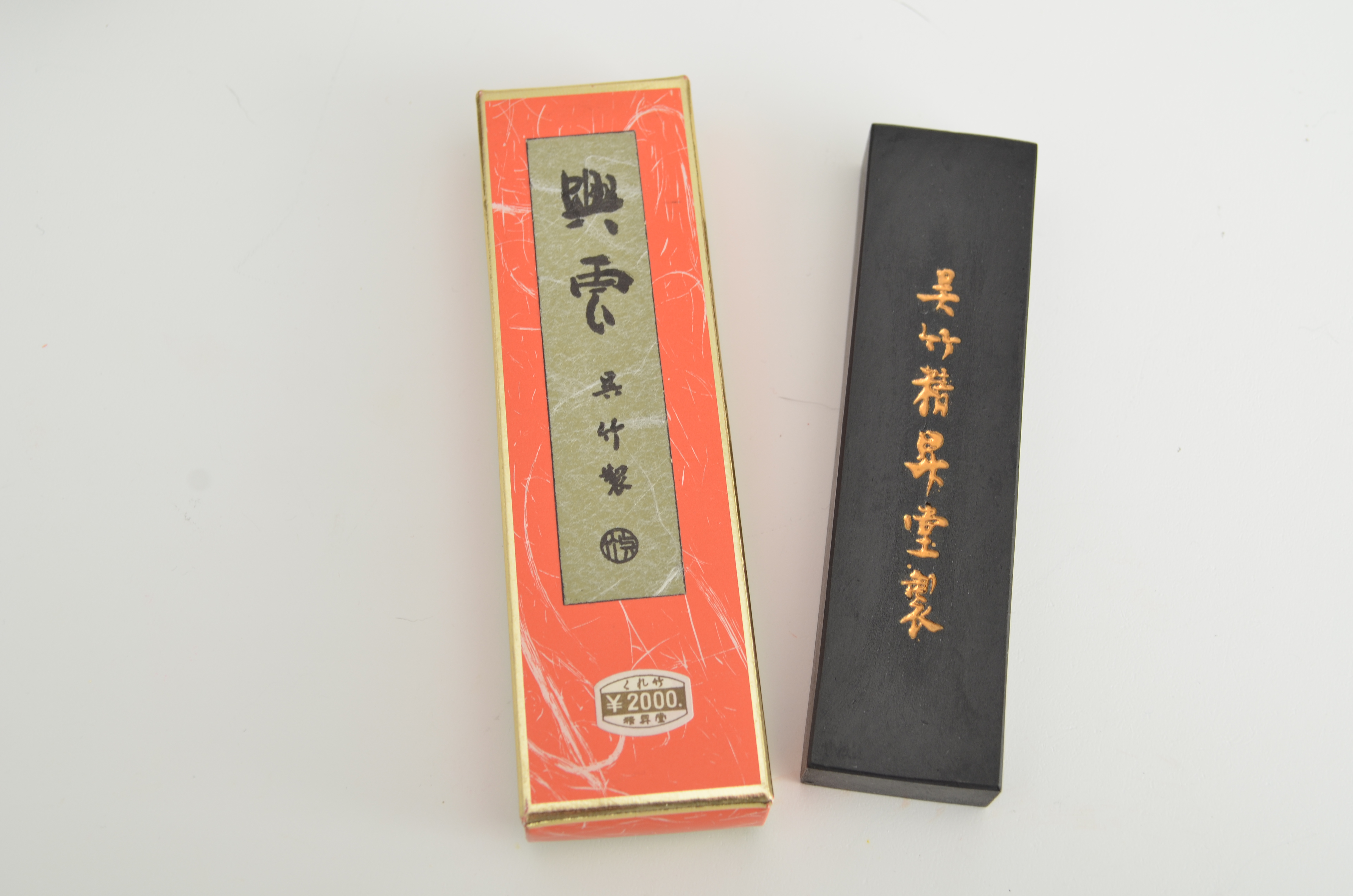 The ink sticks have a very earthy scent. They remind me of spring when the earth thaws and you can smell the soil again. I’ll talk more on Monday about grinding the ink stick and making the ink.
 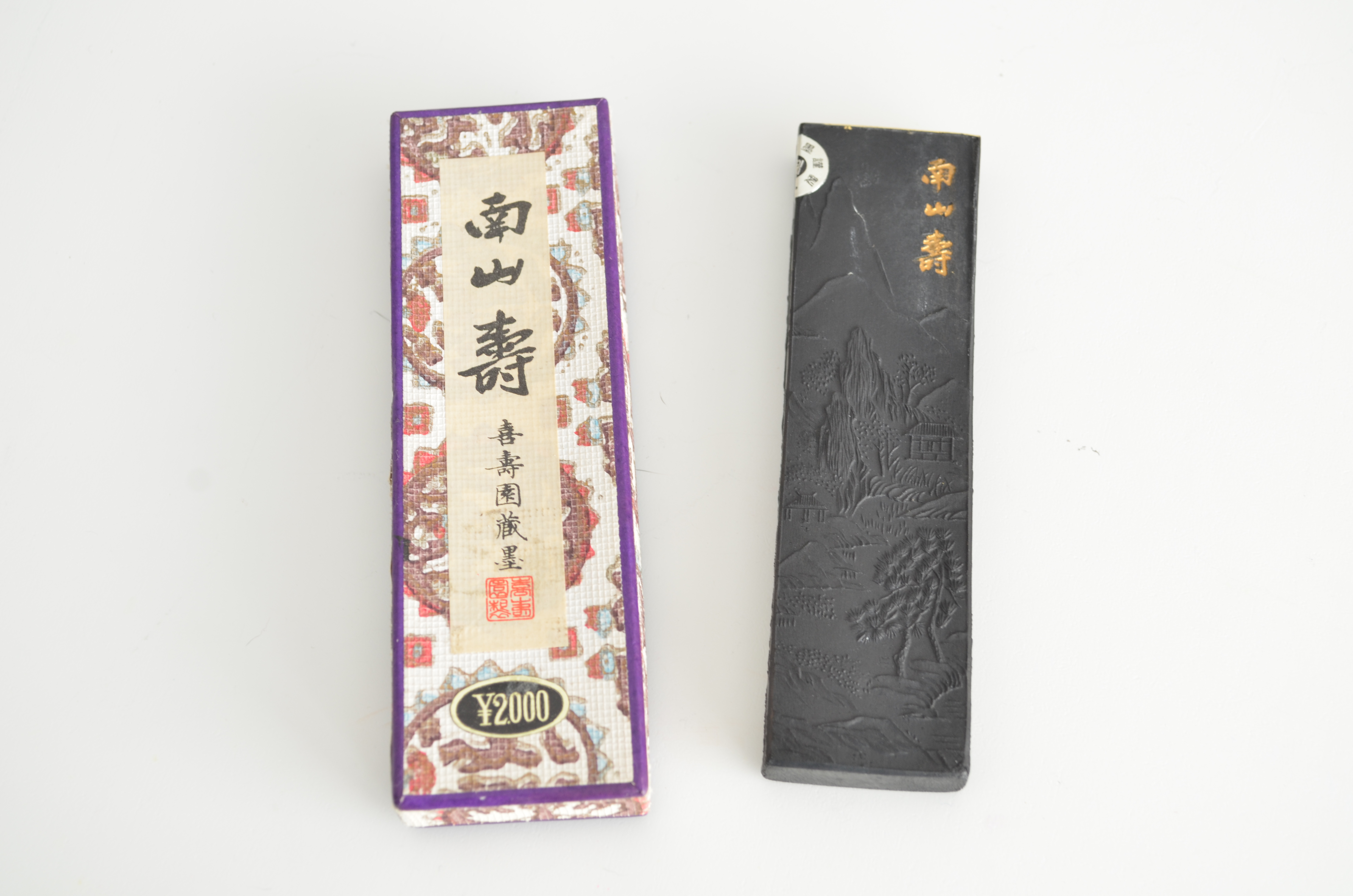 All of the ink sticks I’m sharing on today’s post are from Naoto’s aunt’s collection. I do not believe any of them have been used. (I’ve been using an ink stick I picked up at Blick’s when I took the art class.) The one above is my absolute favorite. There is a gorgeous scene on both sides.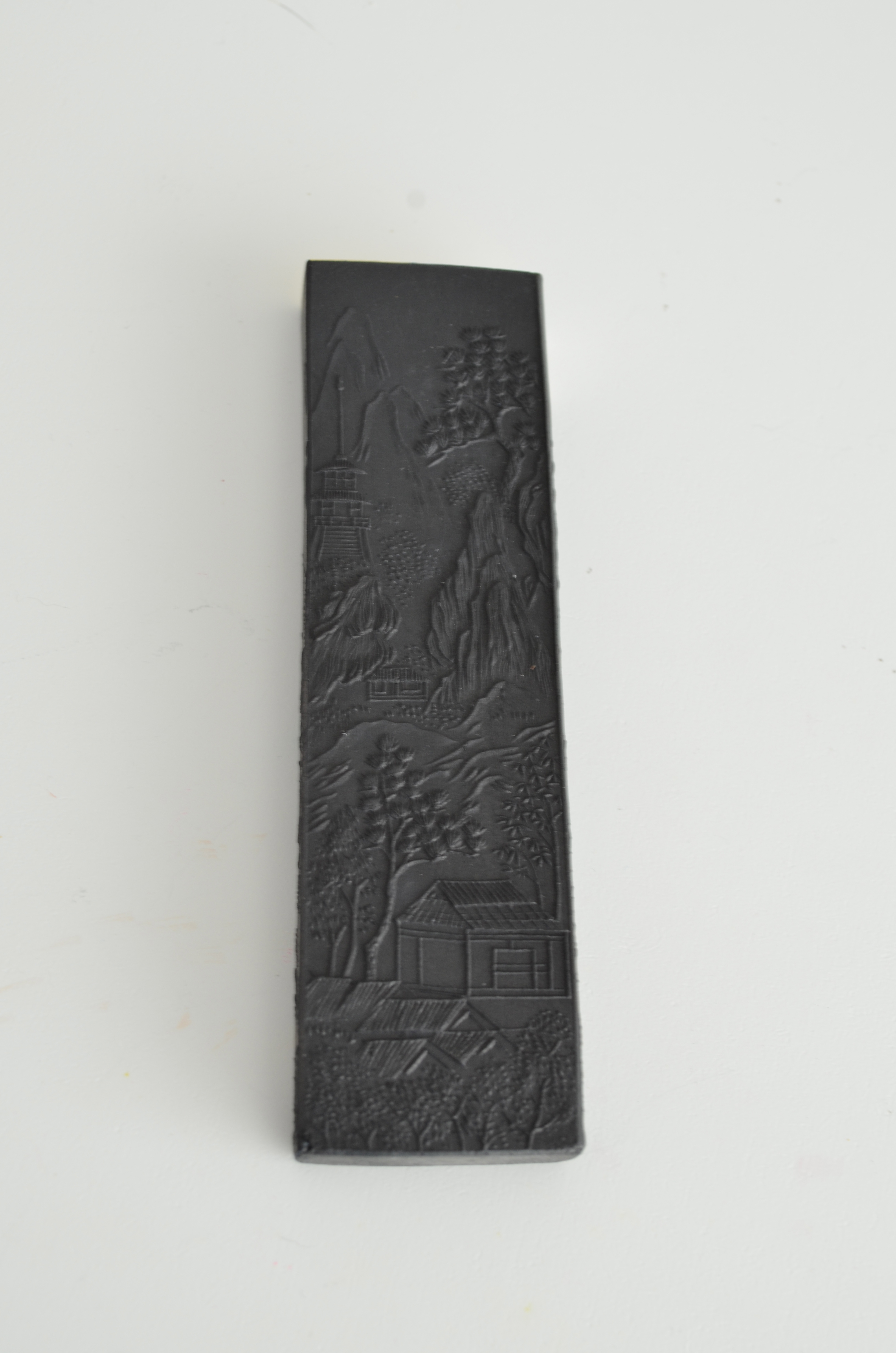
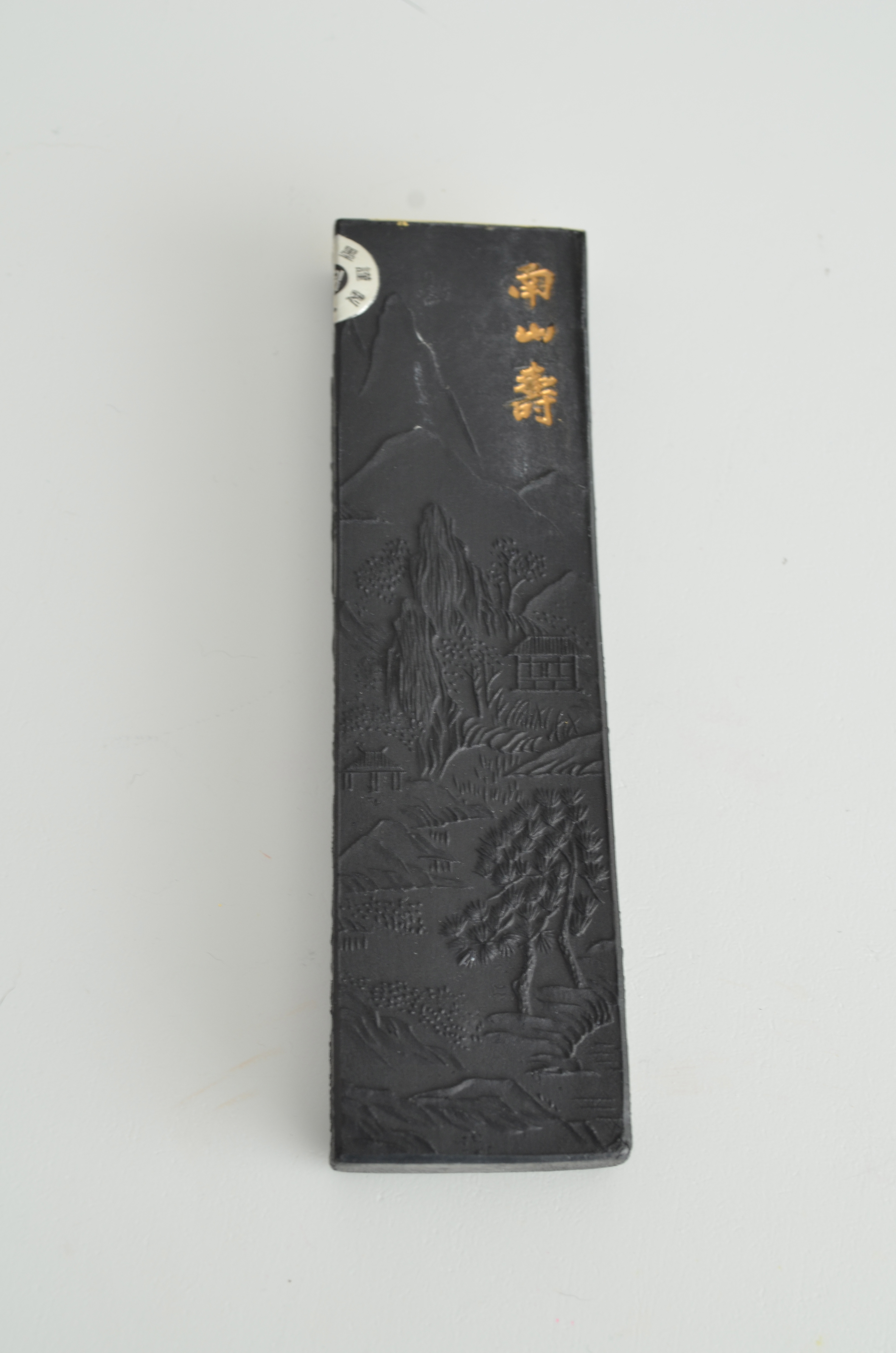 I really want to display that one in our home somehow. It seems like a shame to leave it in the closet it its box… I would like to use the ink stick in the middle to see how it compares with my current ink stick.
You can also buy bottled ink for sumi-e painting and calligraphy. The bottled ink is convenient because you don’t have to make your own ink every time you want to write. It is also more consistent since the bottlers are using a “recipe” that you could never perfect by grinding your own ink at home. However, by buying bottled ink, you lose some of the sheen and nuance that come from the ink stick. And, as I’ll talk more about on Monday, there is a mental preparation that comes only from grinding the ink. Sometimes it pays to take the long road.
The Four Treasures: Paper
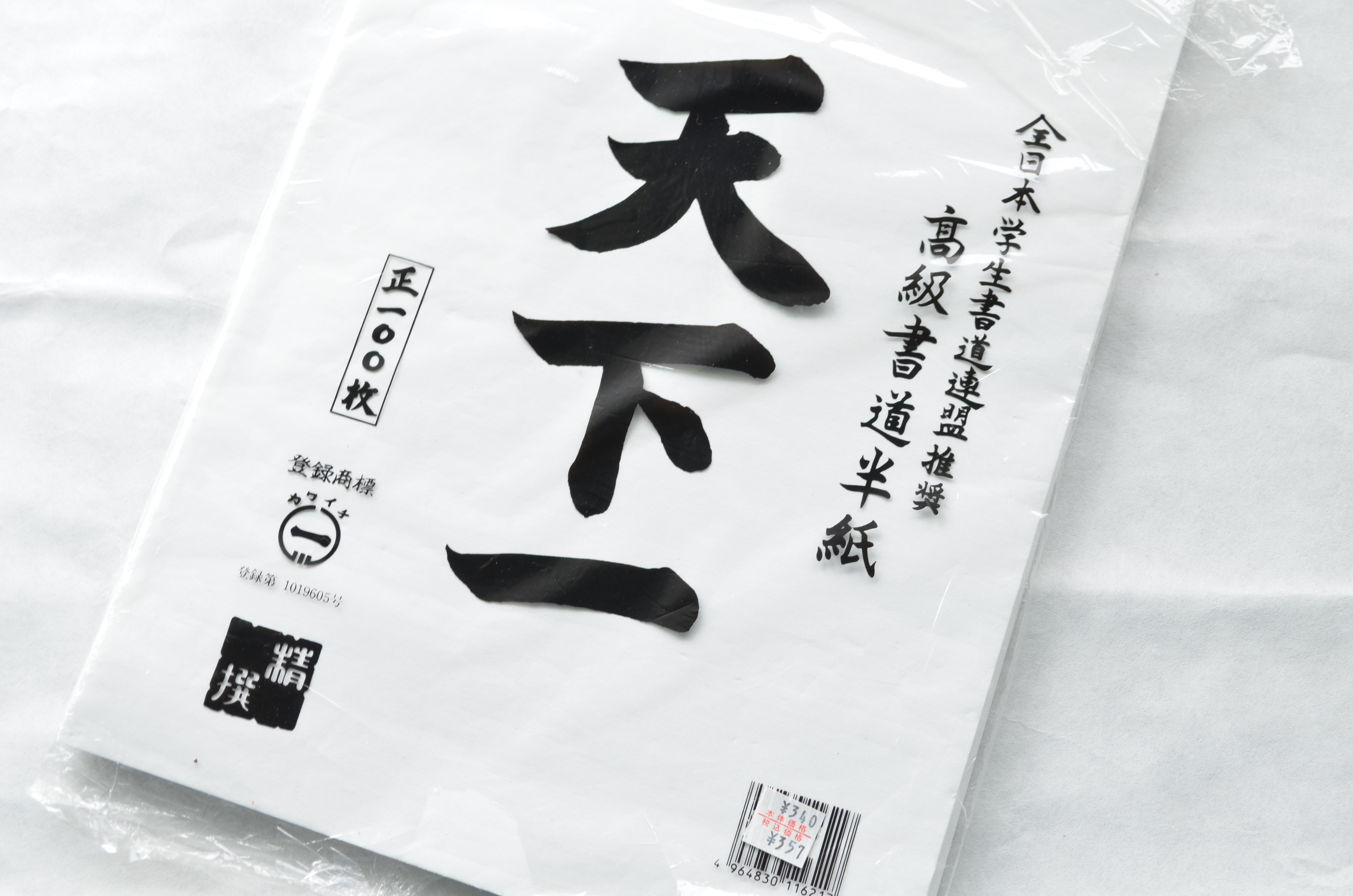 Most calligraphy paper is made from mulberry, though some are made with gampi or mitsumata (both Japanese bushes). Paper makers use the seasons to guide their making because temperature and humidity affect the fibers of the paper, which in turn affects the way the ink absorbs into the paper. I love that the process is so reliant upon nature…
Since paper is natural and doesn’t last forever, it adds a bit of wabi-sabi, beauty in impermanence and imperfection, to the practice of calligraphy.
This paper is from Naoto’s aunt’s collection. It is washi paper, but it is not so precious that it needs to be saved for special occasions. When we did our calligraphy practice last week, we used plain printer paper (just because we have an endless supply of that and no printer). Once I got a little bit better, I tried writing on the washi…the brush moves more beautifully and the ink absorbs much differently than on printer paper.
Update: Naoto found a calligraphy class in Tokyo for me! I am so excited! Hopefully I will have a follow-up to the Four Treasures series soon!
The Four Treasures: Brushes
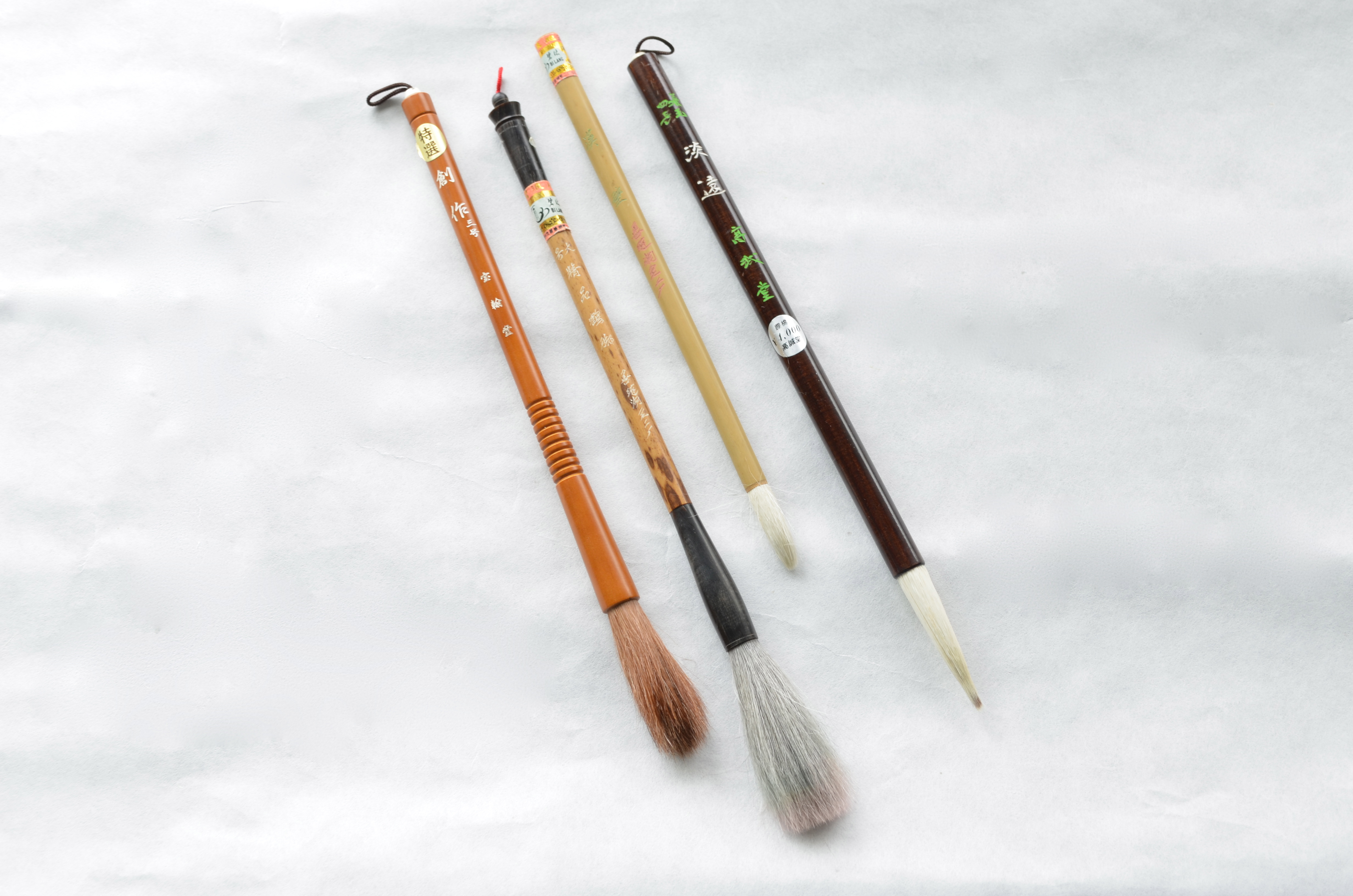 The first and most important of the “four treasures” of calligraphy is the brush. The brush is an extension of the calligrapher. It is said that the writing comes from the calligrapher’s soul, rather than from the stroke of the brush. I think this is a crazy beautiful sentiment, even though, from looking at my brushstrokes, you can tell my soul is intensely nervous and unsure about calligraphy. A calligraphy brush is held much higher on the handle than a “normal” paintbrush. The thinking behind this is that the calligrapher isn’t controlling the brush, but kind of letting the image or the strokes come from within. So much about Japanese calligraphy and sumi-e is about centering the inner self and being at peace and not having control. I think this is why I find it so beautiful yet so frustrating. (I like control.)
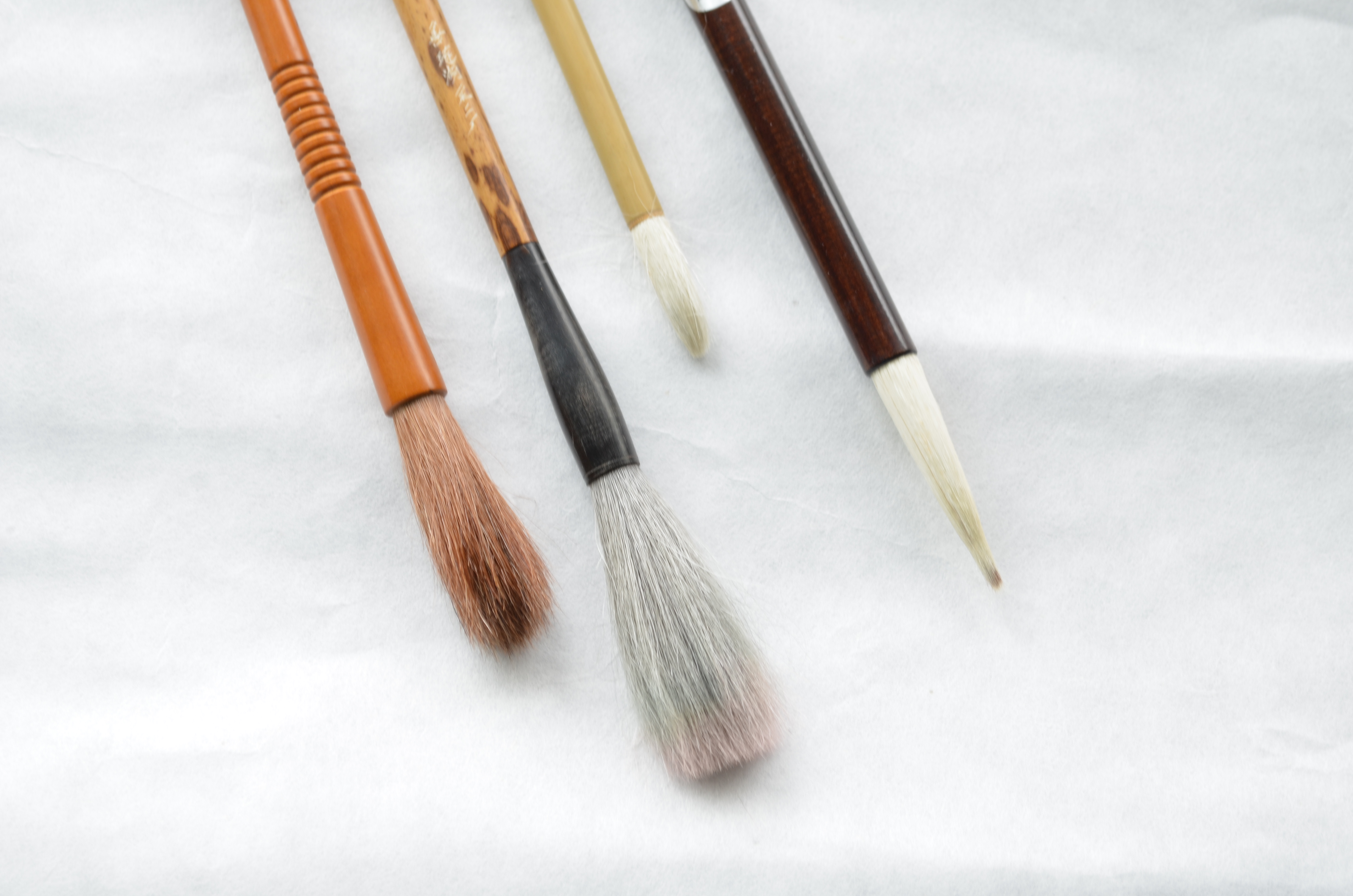 Naoto’s mom gave us several brushes from his aunt’s collection. Some of them are very worn…the ones with bushy bristles aren’t really useful anymore because to do calligraphy well, the brush ends need to come to a nice point. I still use the bushy brushes to do color washes when I’m playing around with watercolors. (Although, I’ve recently learned a calligraphy brush should never be used with anything but calligraphy ink because the bristles are chosen and made to work with those specific inks. Other inks can spoil the bristles. But, since these particular brushes are no longer useful in the calligraphy world, I think it’s nice to use them for something else.)
 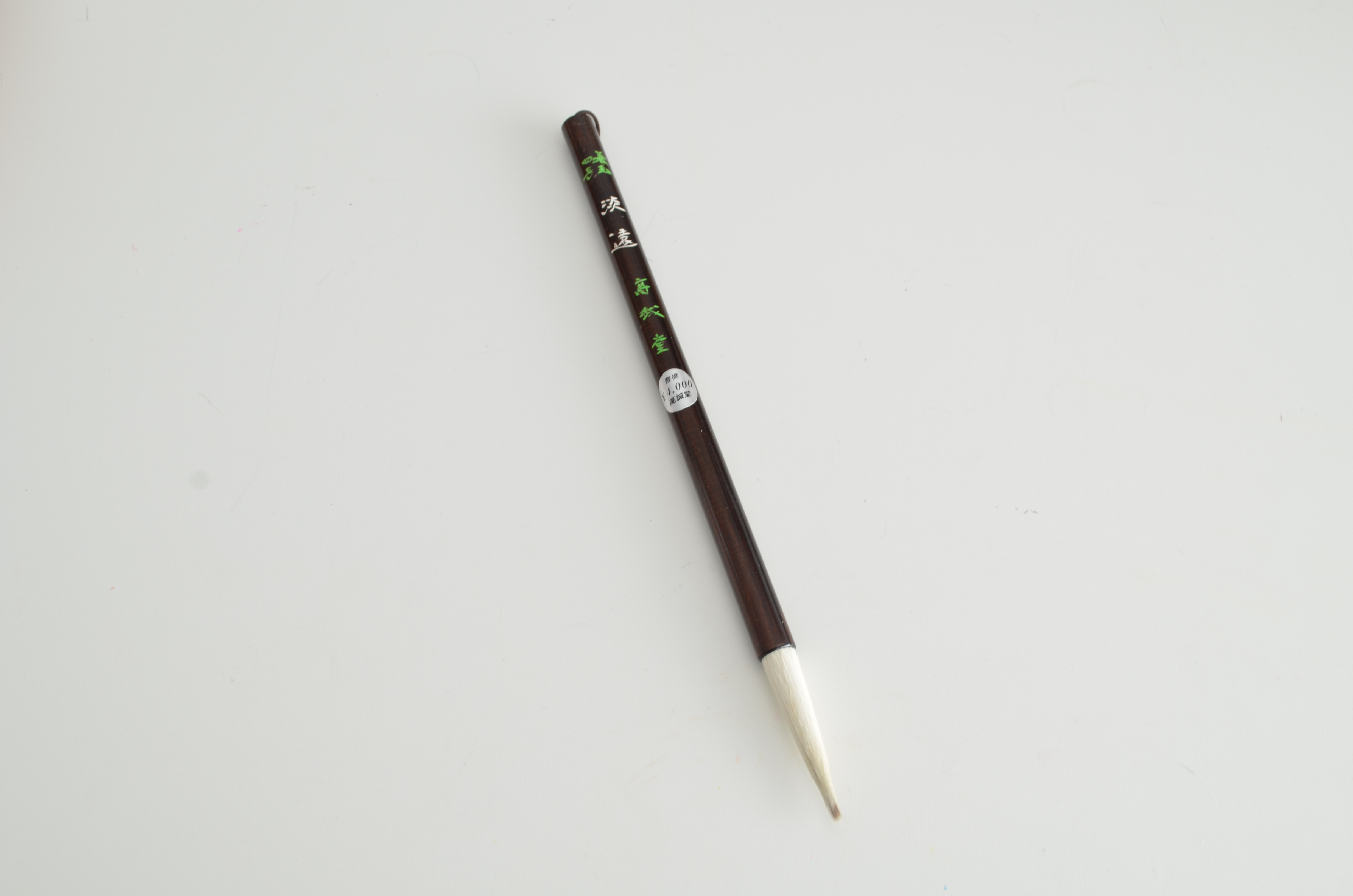 This particular brush is my favorite. I love its dark wooden handle. It’s a lovely brush that has never been used. Naoto discouraged me from using it (he and I both suffer from a fear of using lovely things) until now. I’ve been doing some research on how to prepare a new brush and how to care for a brush properly so I can make sure this one can be used for a long time. Once I feel properly informed and responsible, I’ll start using it.
Family Calligraphy Tools
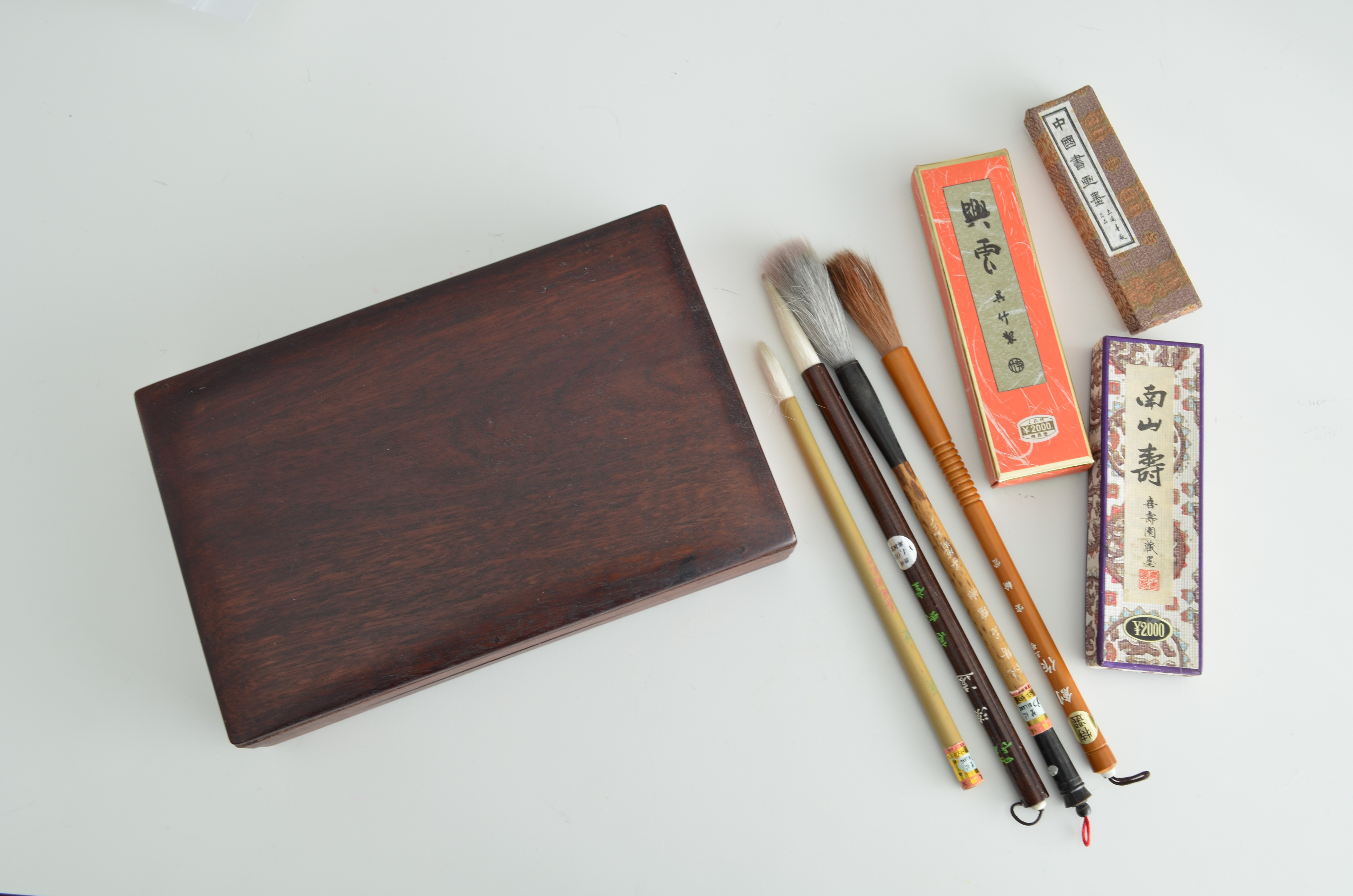 The first time we went to Japan together, Naoto told his mom that I’d taken an art class and was introduced to sumi-e painting. Sumi-e is “ink wash painting” using only black ink and simple brush strokes. The goal is to interpret an object with the fewest strokes possible. For example, you wouldn’t draw a cat and include all of its fur and whiskers and stripes and claws. You would convey the feeling of the cat, maybe its shape and its curiosity (perked ears for example). When I first learned about sumi-e, I was really excited. I am terrible at drawing, so I thought it would be easy to do these simple line paintings of things… Oh no…not easy at all. “Capturing the essence” is majorly difficult and controlling the brush to get variations in the depth color in the black ink is frustratingly challenging. But it’s fun to try…
Back to my mother-in-law…when Naoto told her about my sumi-e painting, she went into her closet and brought out the supplies pictured above. Her sister had been a calligraphy teacher and she left all of her calligraphy tools in her care. Sumi-e and calligraphy use similar tools and so Naoto’s mom gave them to me. I feel honored and humbled to have these tools in my possession…I know I will never be able to use them to their potential, but again, I can try…
The basic calligraphy tools are known as the “four treasures” (paper, inkstone, ink and brush). For the rest of the week, I will be sharing more about these tools and what makes them so special.
 kimberly ah