Category Archives: gardening

Plot #6: The Growing I’ve Missed

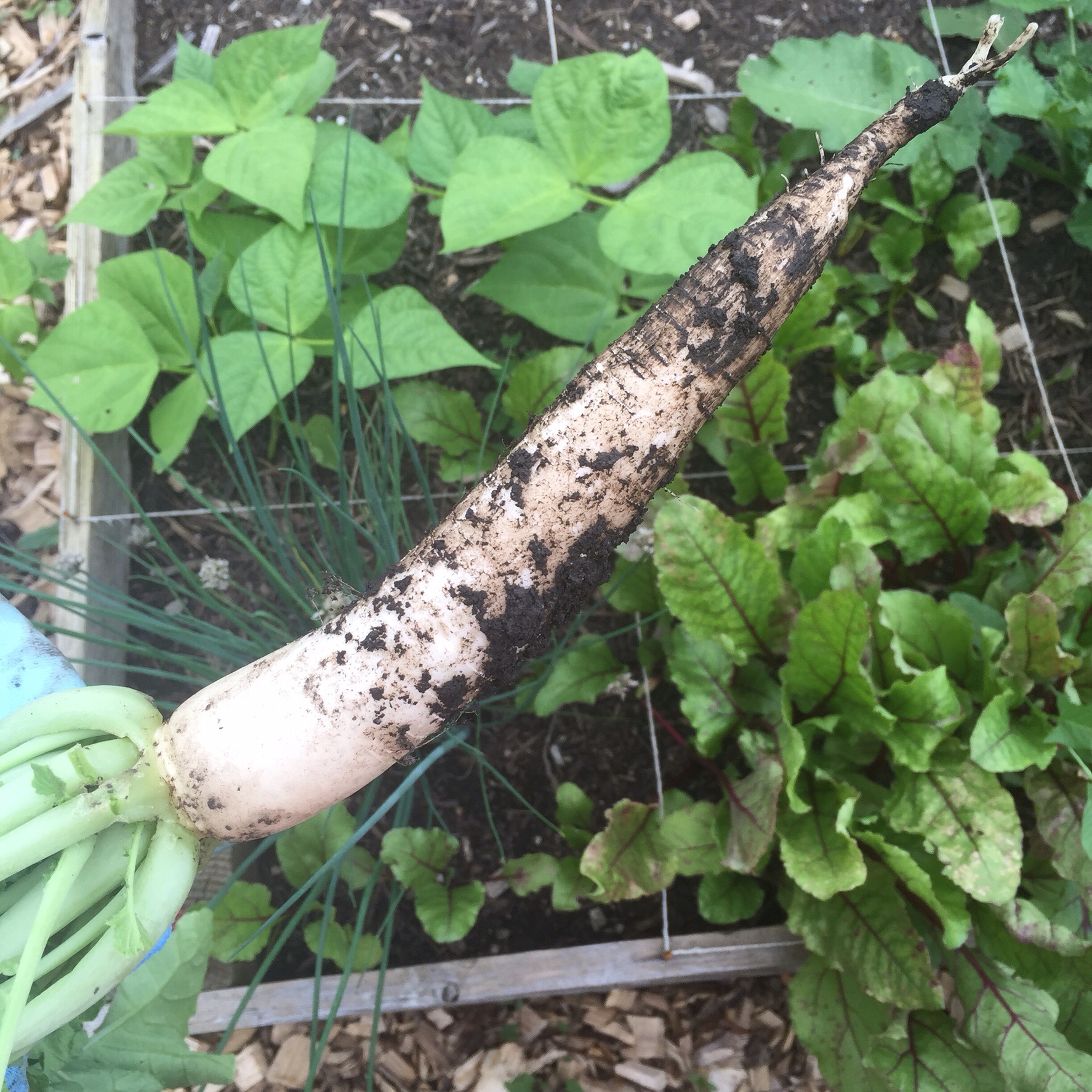
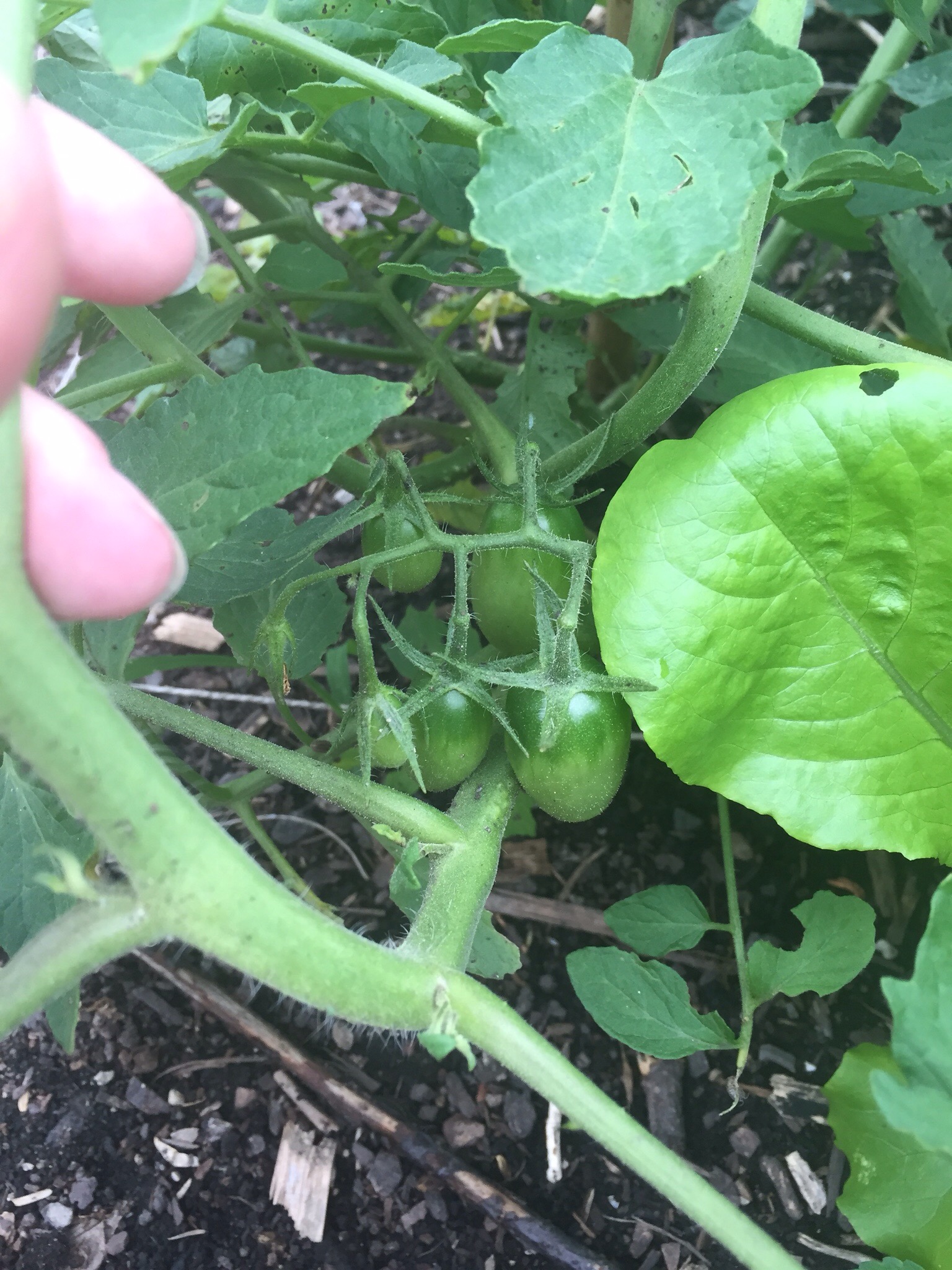
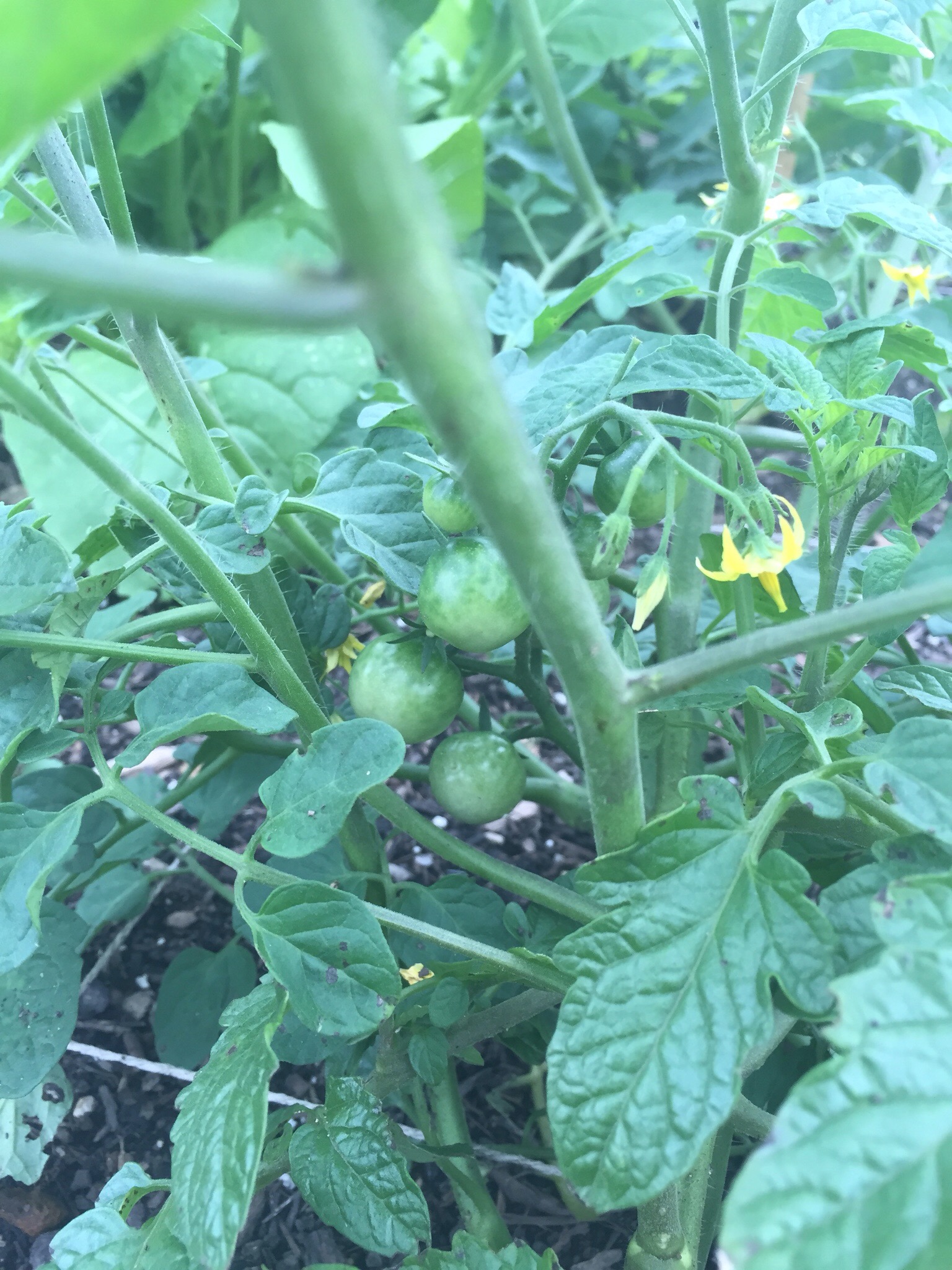
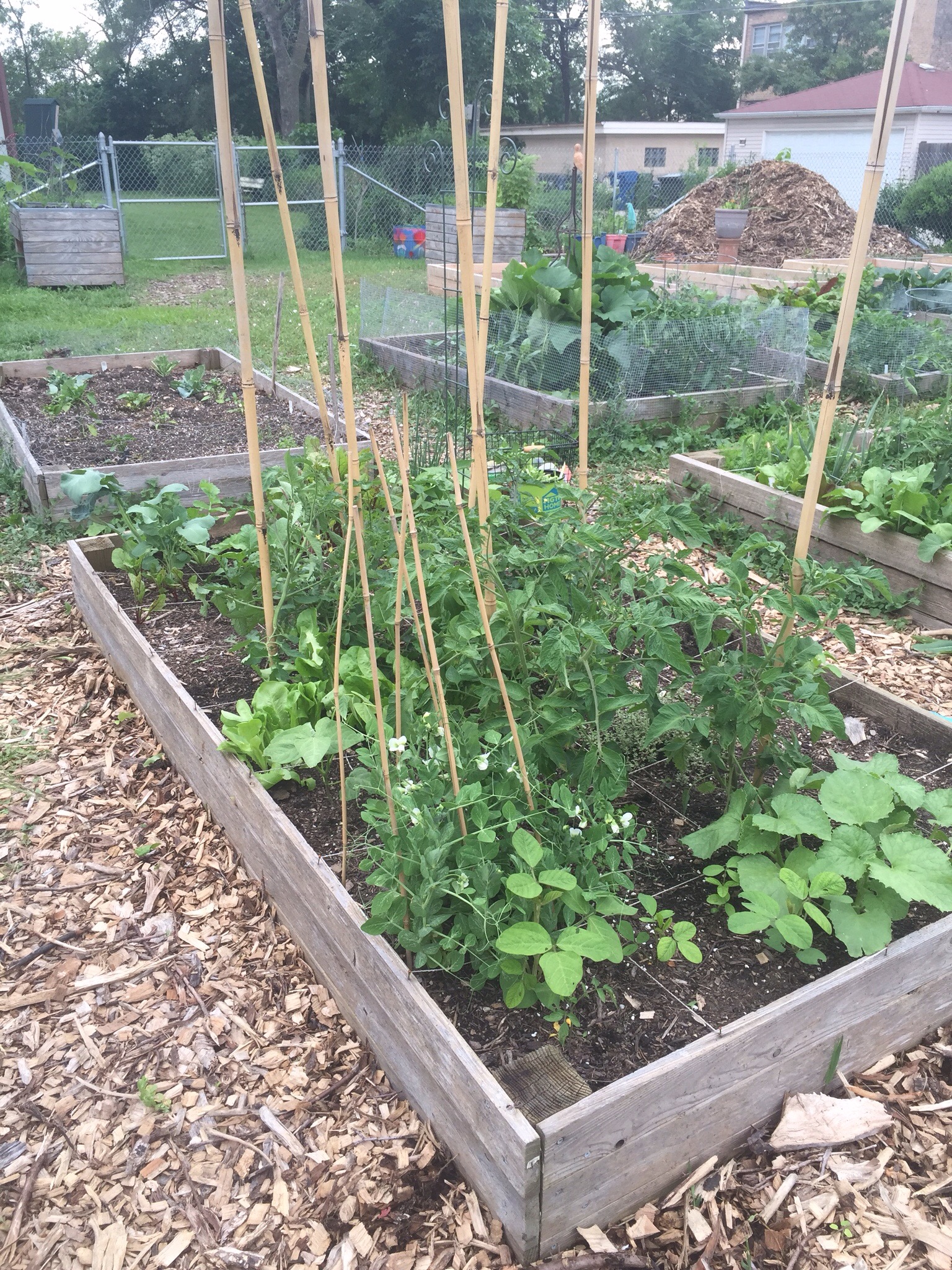
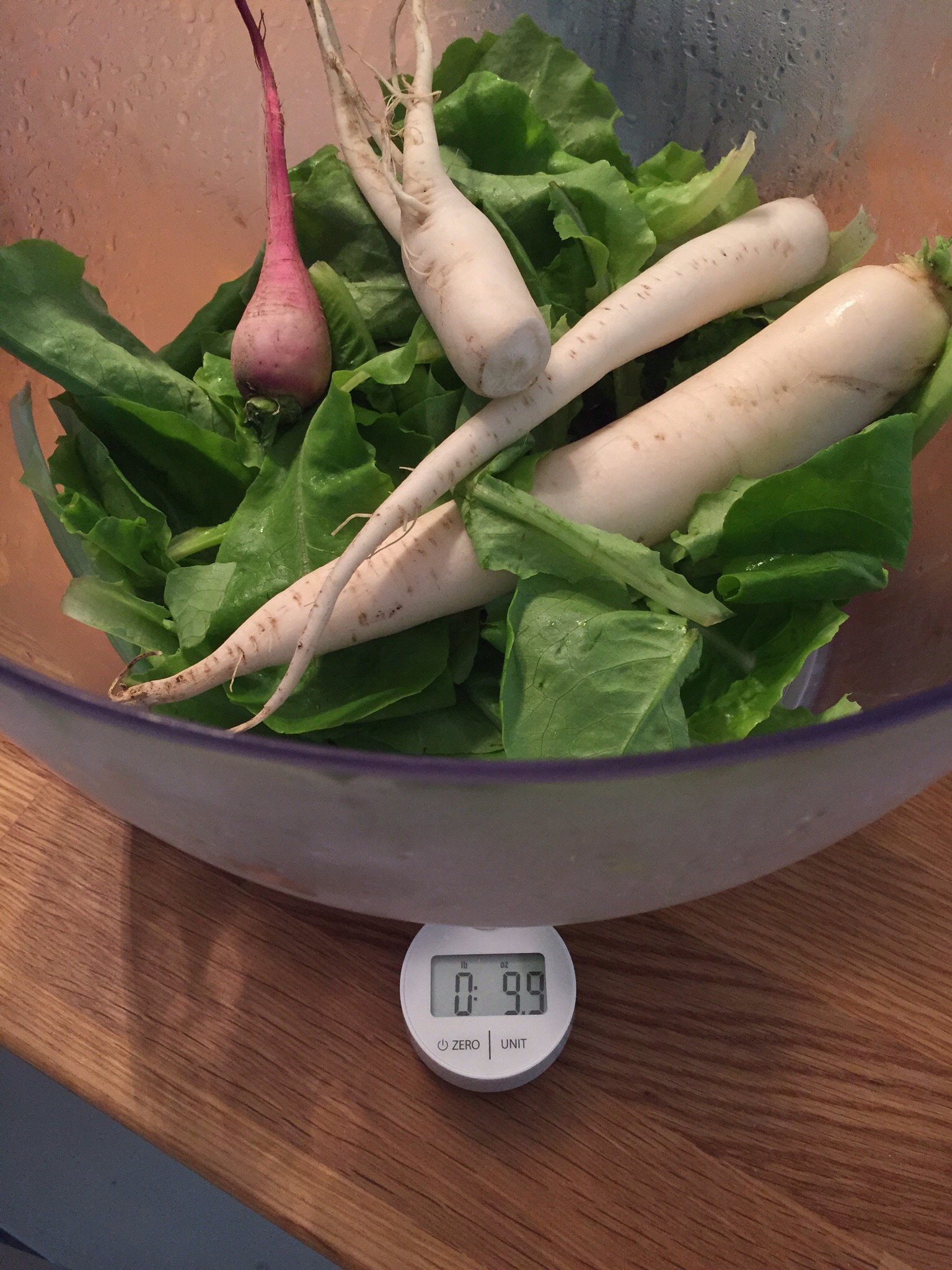
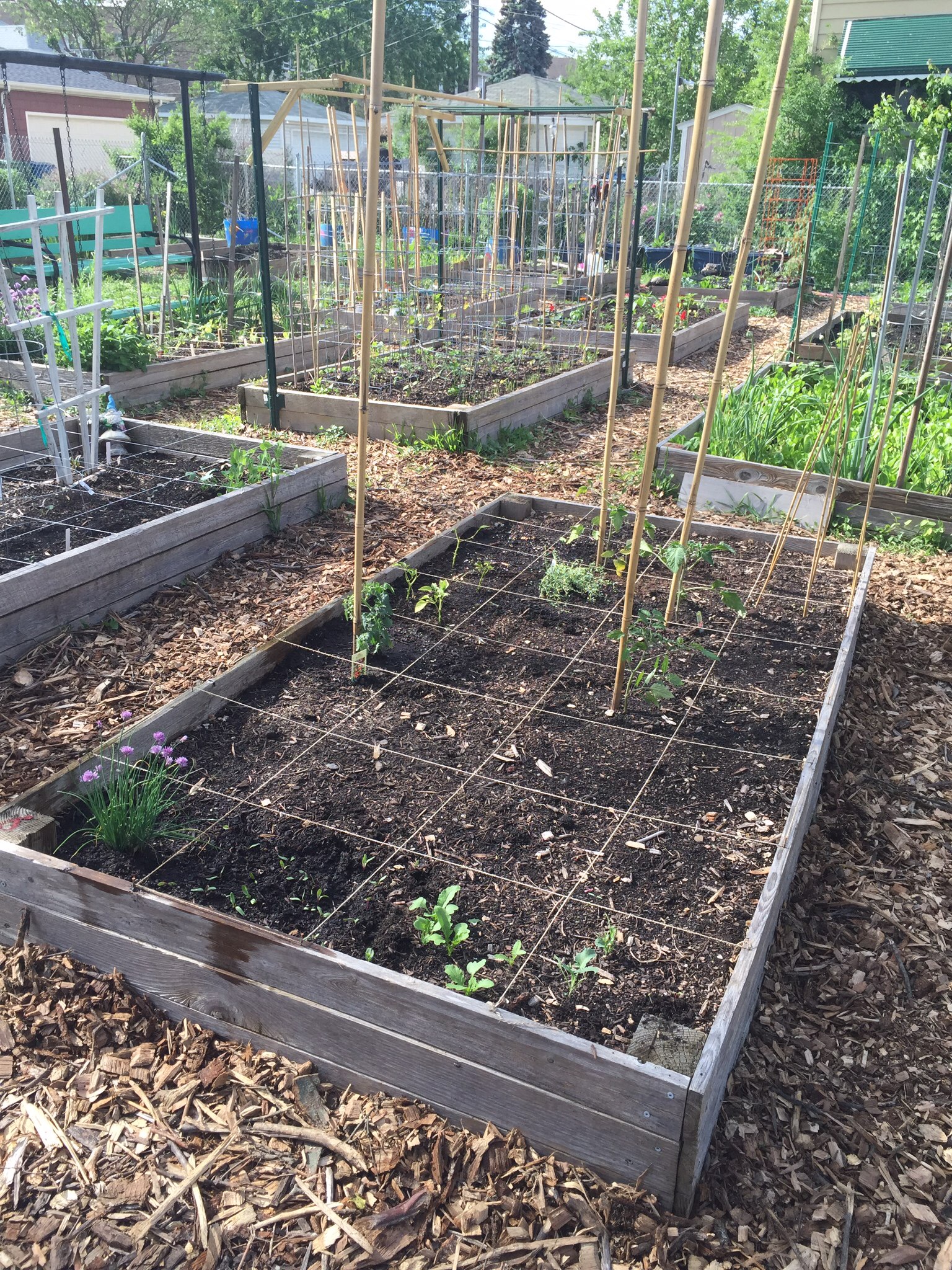
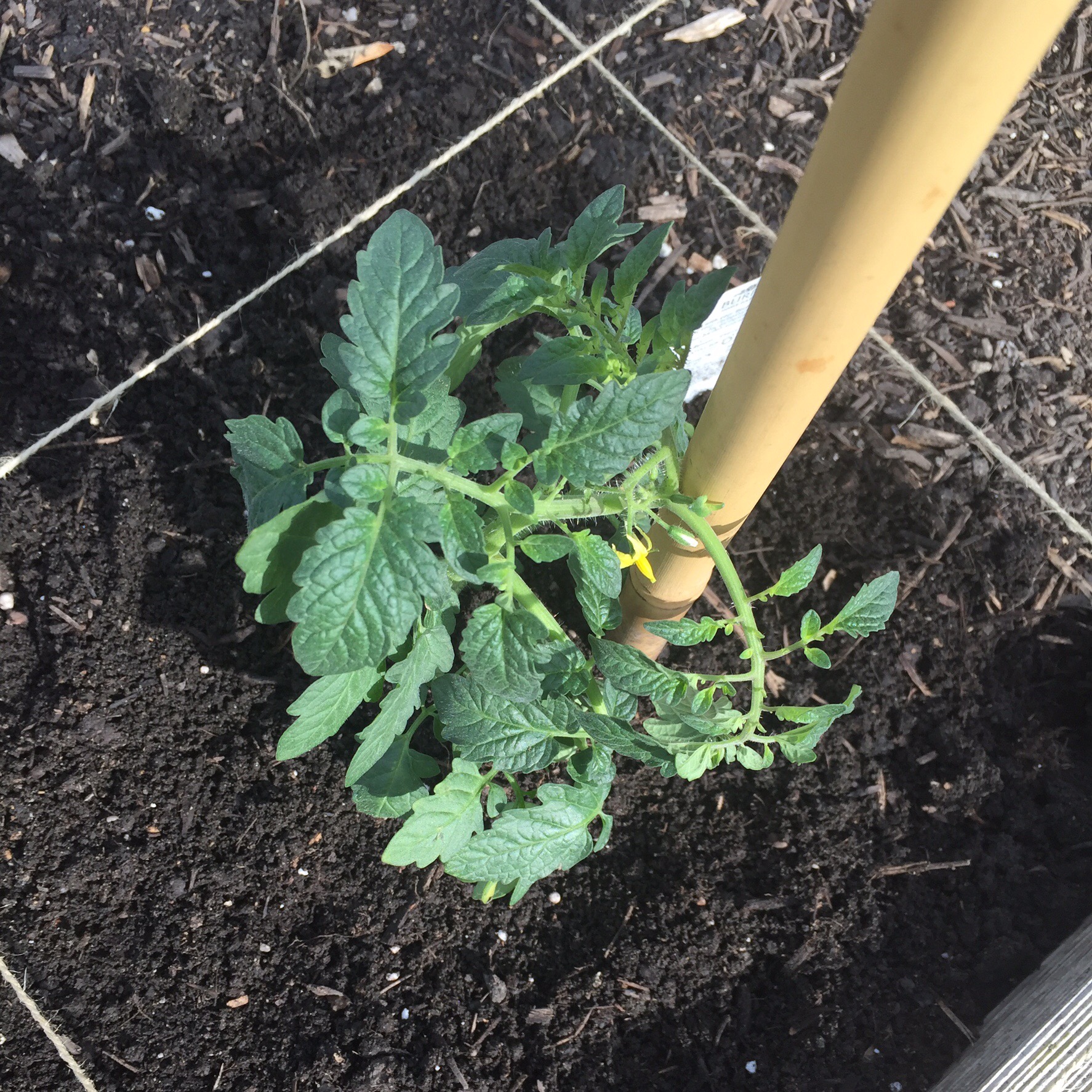
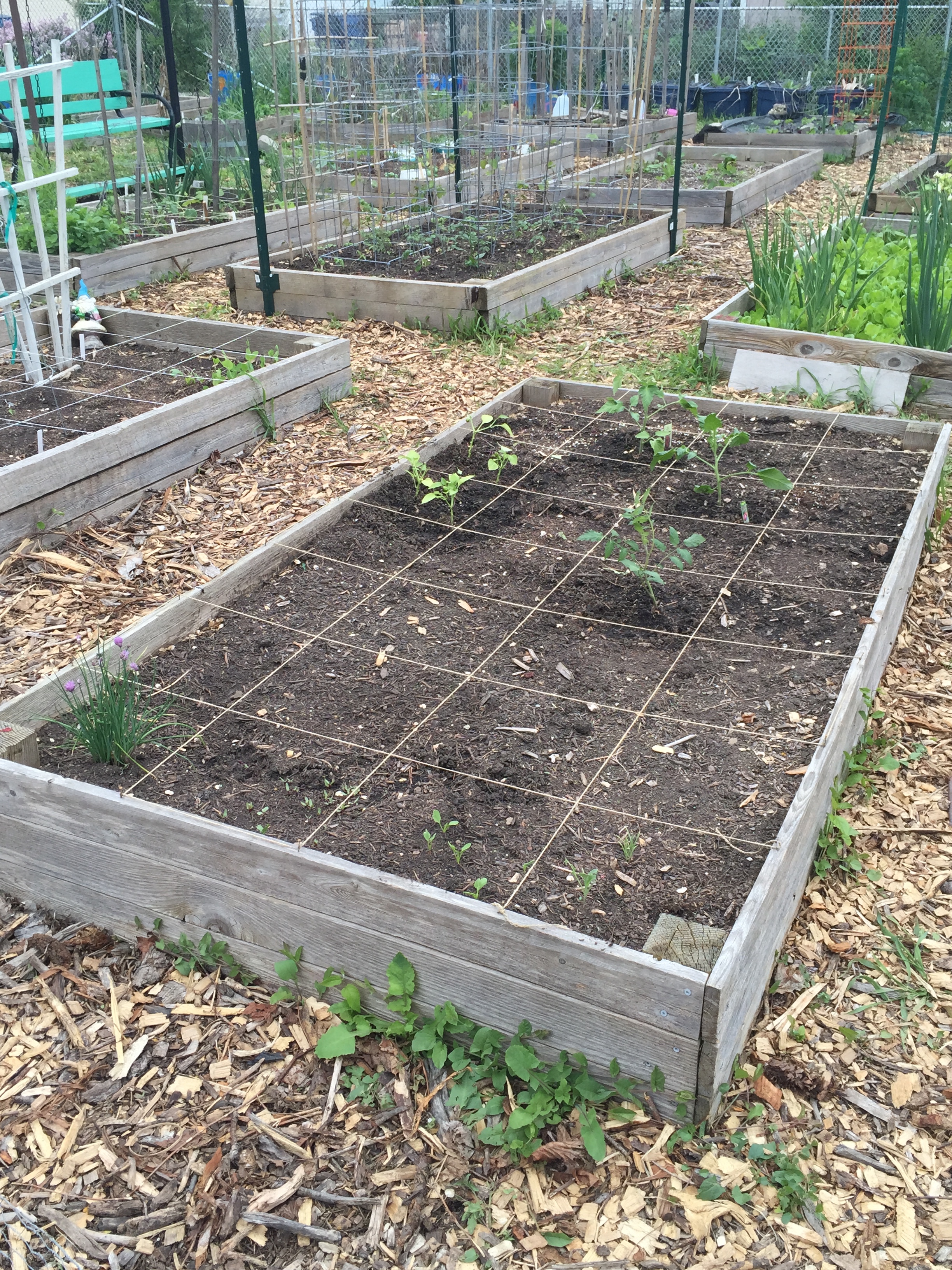
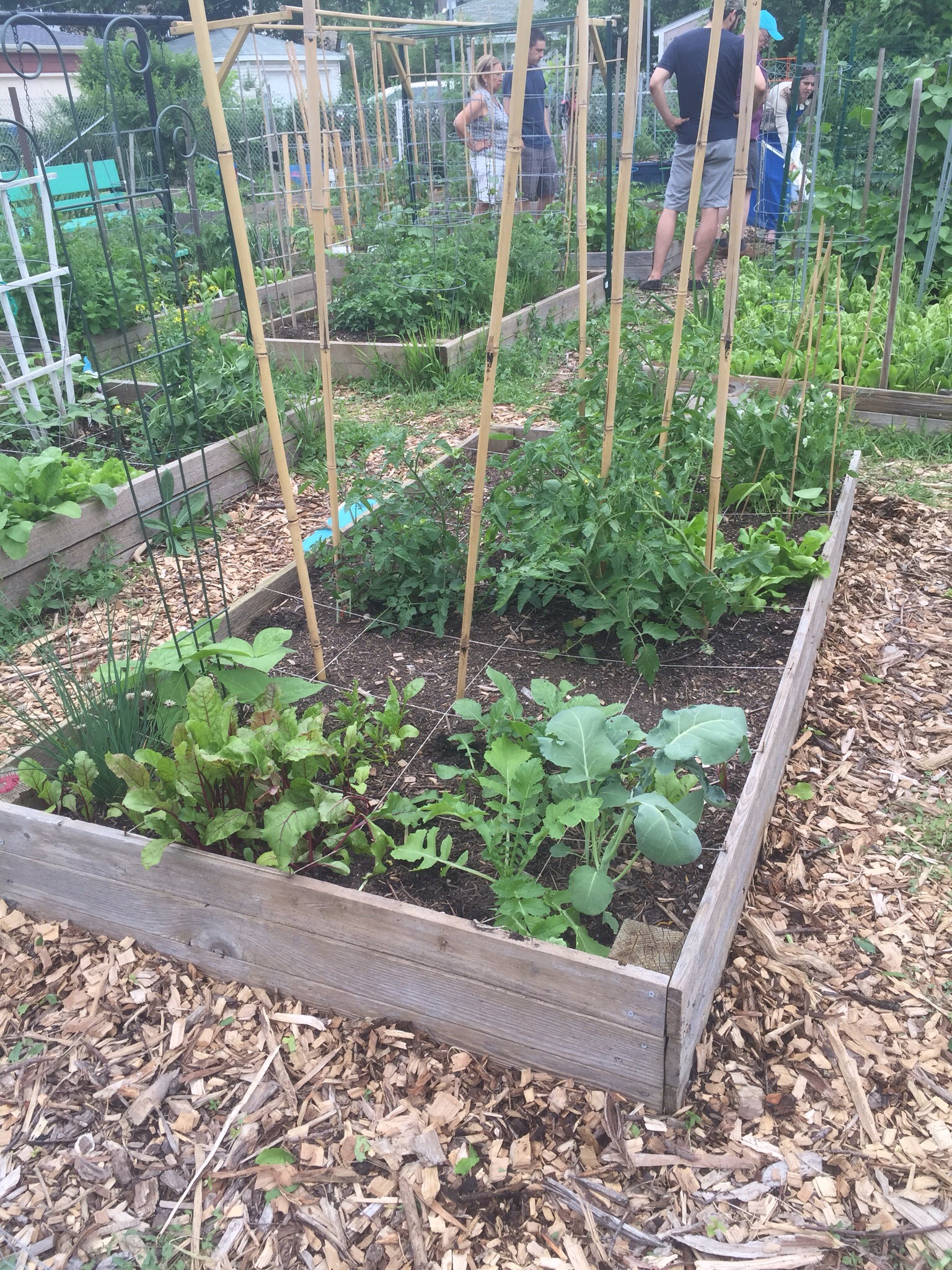
plot 6 looking north, june 2015We came home from Japan and it was more than a week before we made it to see the garden! I know that sounds crazy, but I was deep in the fog of jet lag and any time I was awake, it seemed to be raining. When we finally made it over, we were amazed at how big our plants had grown. We even had a few things to harvest! Pictured above is the plot (looking north). You can see that I never did fill those four square feet I had left. But the good news is, I have two tomato seedlings on my balcony that have grown like gangbusters and will be transplanted this weekend. daikon, plot 6We finally thinned our daikon enough for them to grow into respectably-sized vegetables! I was only able to harvest two, but the others are growing nicely in their square. None of the beets were ready though, much to my disappointment. first tomatoes, plot 6 first tomatoes, plot 6Our Juliet has some nice green tomatoes and the Sweet 100 has some, too! plot 6 looking south, june 2015On the north end of the garden, the peas are going crazy and I have four edamame plants, a crazy square of cucumber plants (too many for one square!), and two volunteer tomatoes (to be transplanted soon). I reserved one square for a loofah plant that I started on the balcony. It’s looking good, but I’ve read that loofah aren’t good as transplants. I’m going to try it anyway and hope for the best. first harvest 2015, plot 6

One of my goals this growing season is to weigh our harvests so at the end of the season we can get an idea of how many pounds of produce we are eating from our garden. This was our first harvest: lots of komatsuna lettuce and some radishes.

It feels good to be back in the garden again!

Tagged , , , , ,

Heavenly Hydrangeas

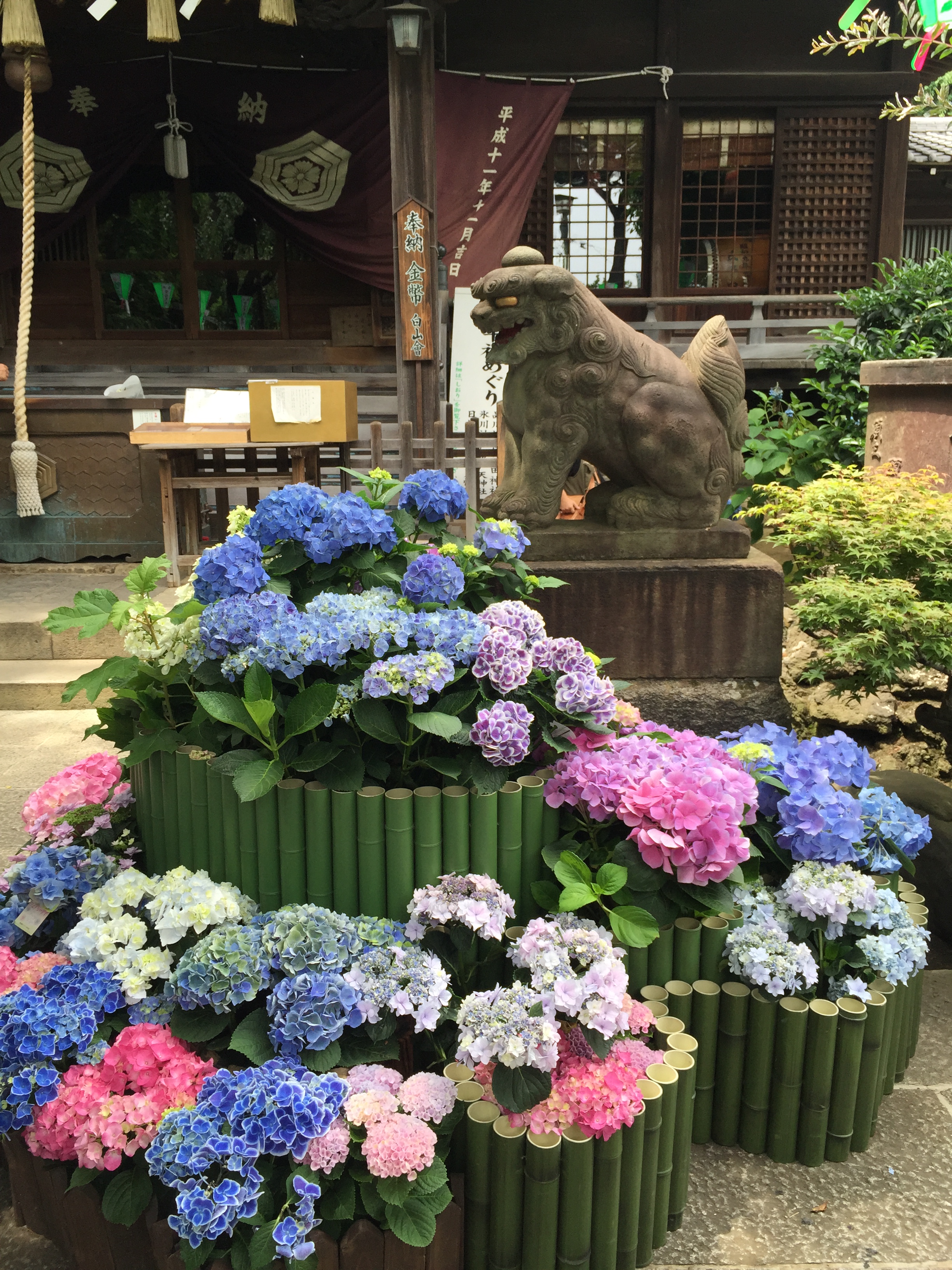
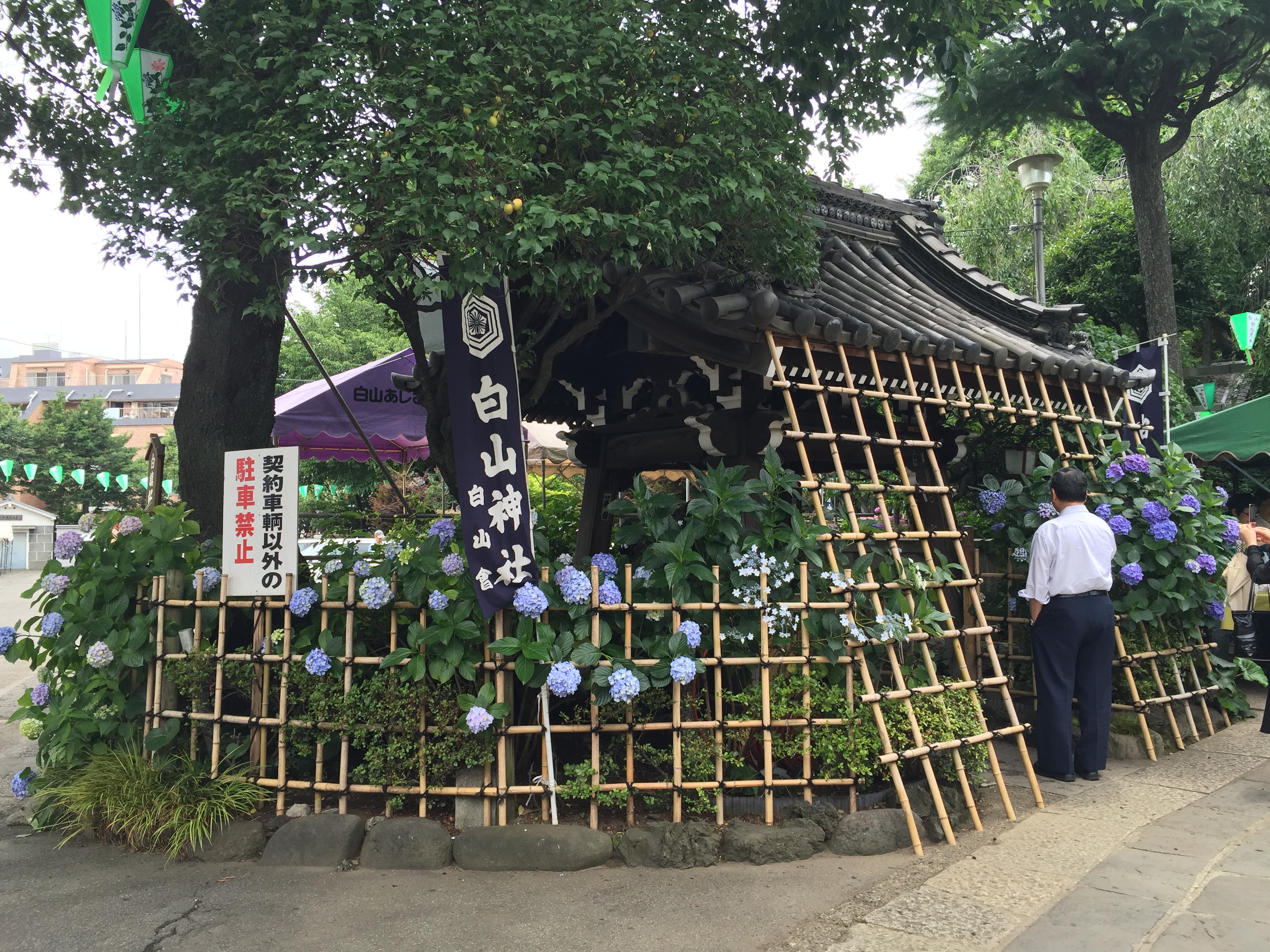
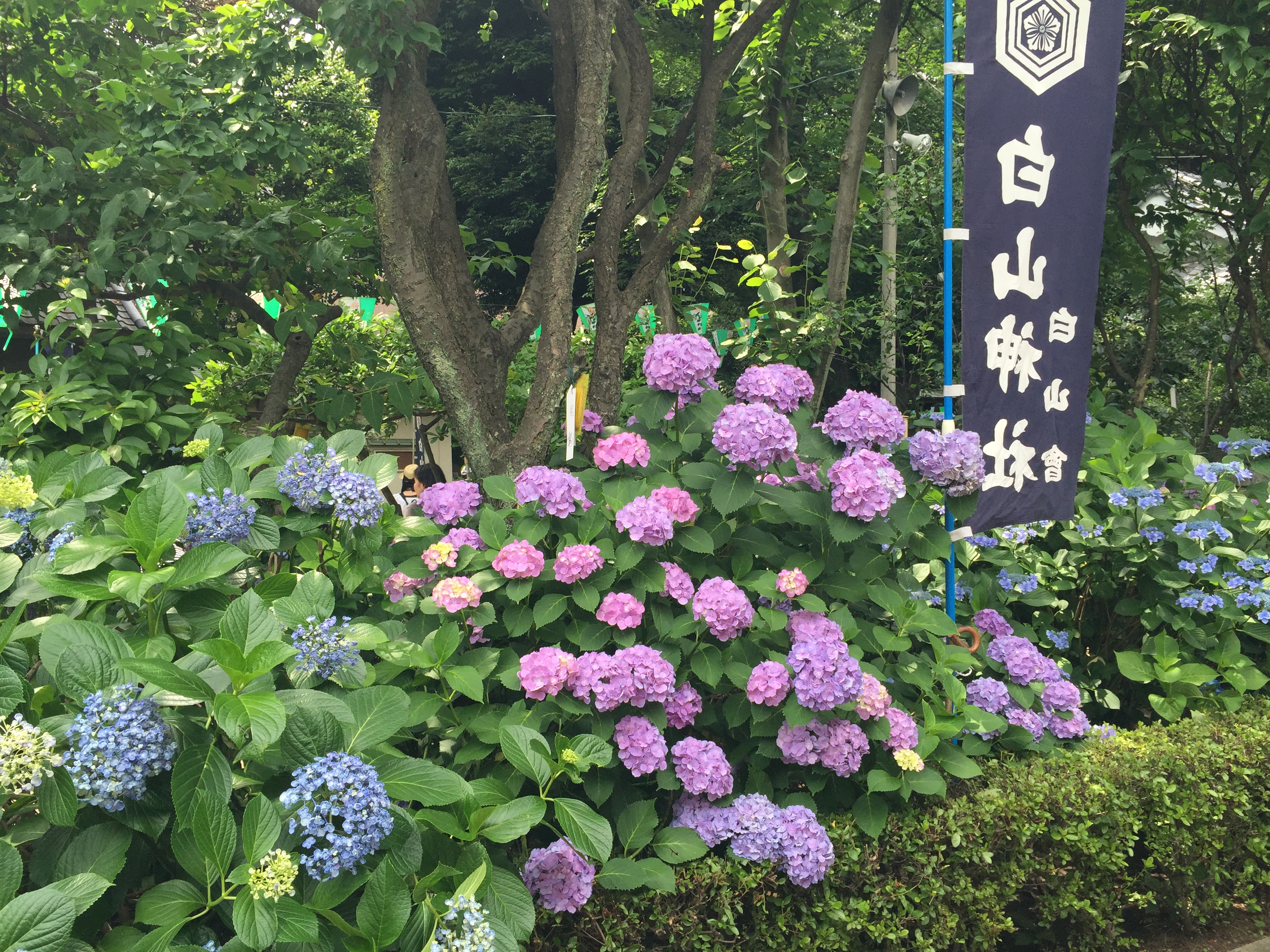
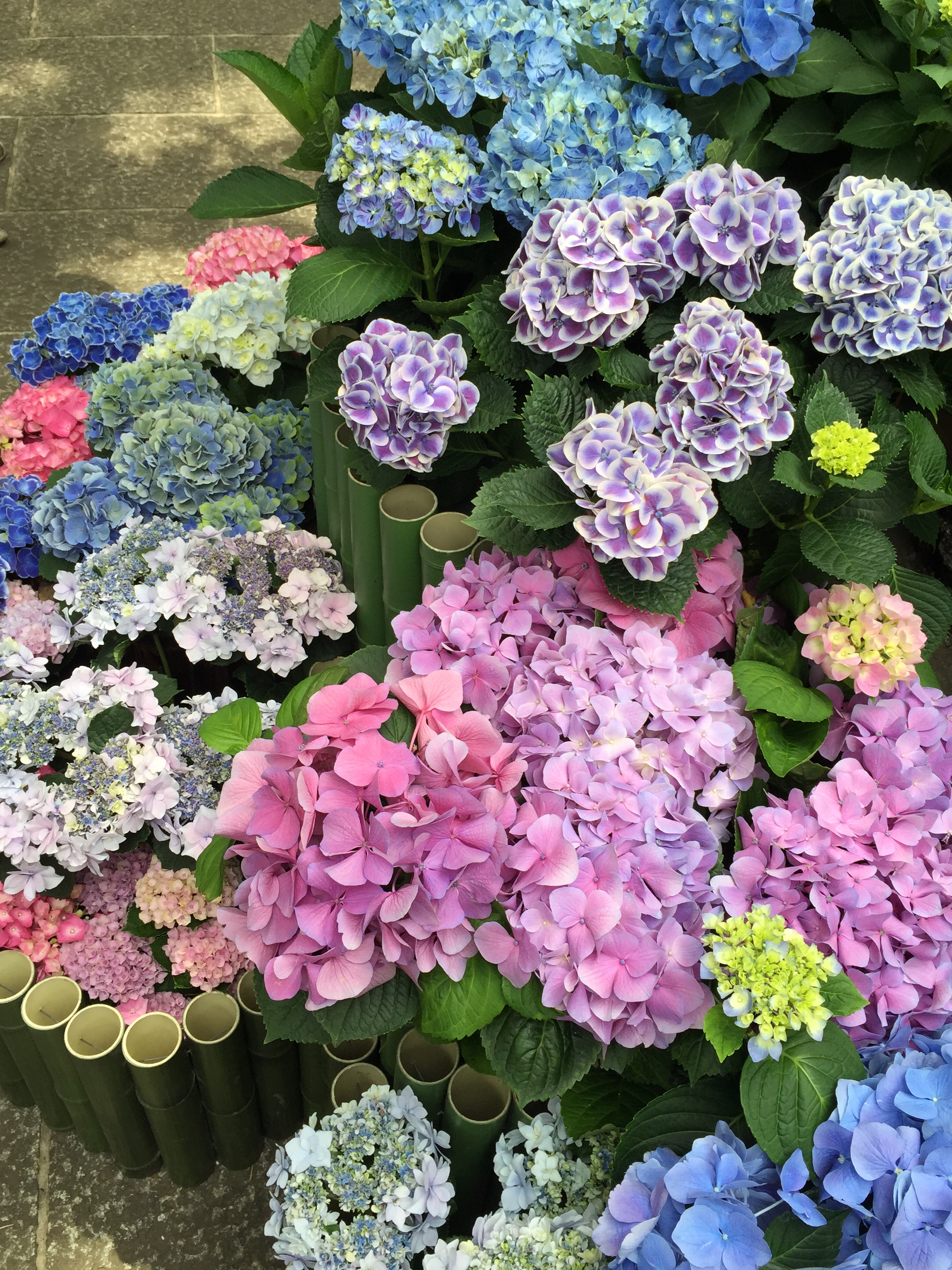
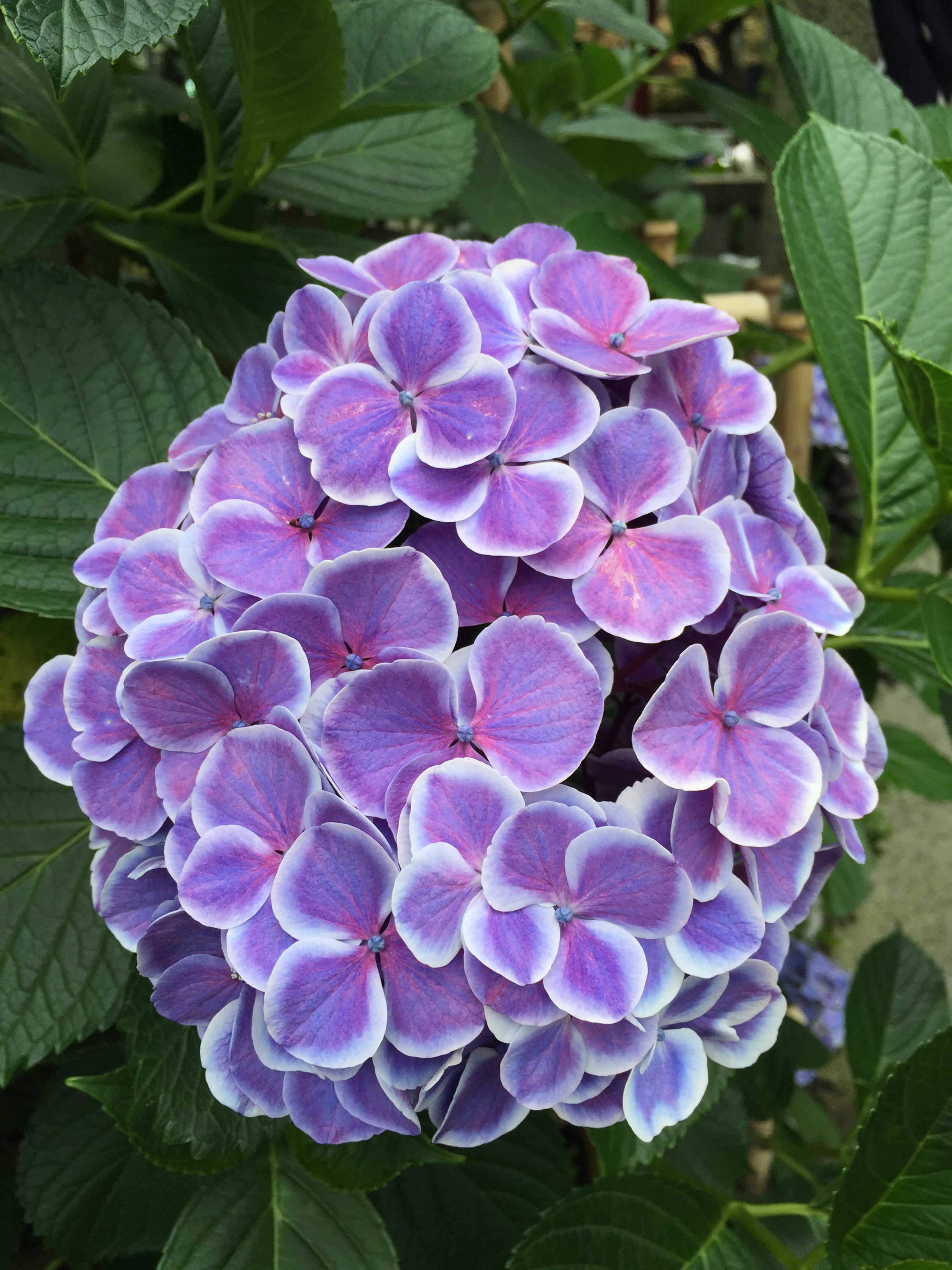
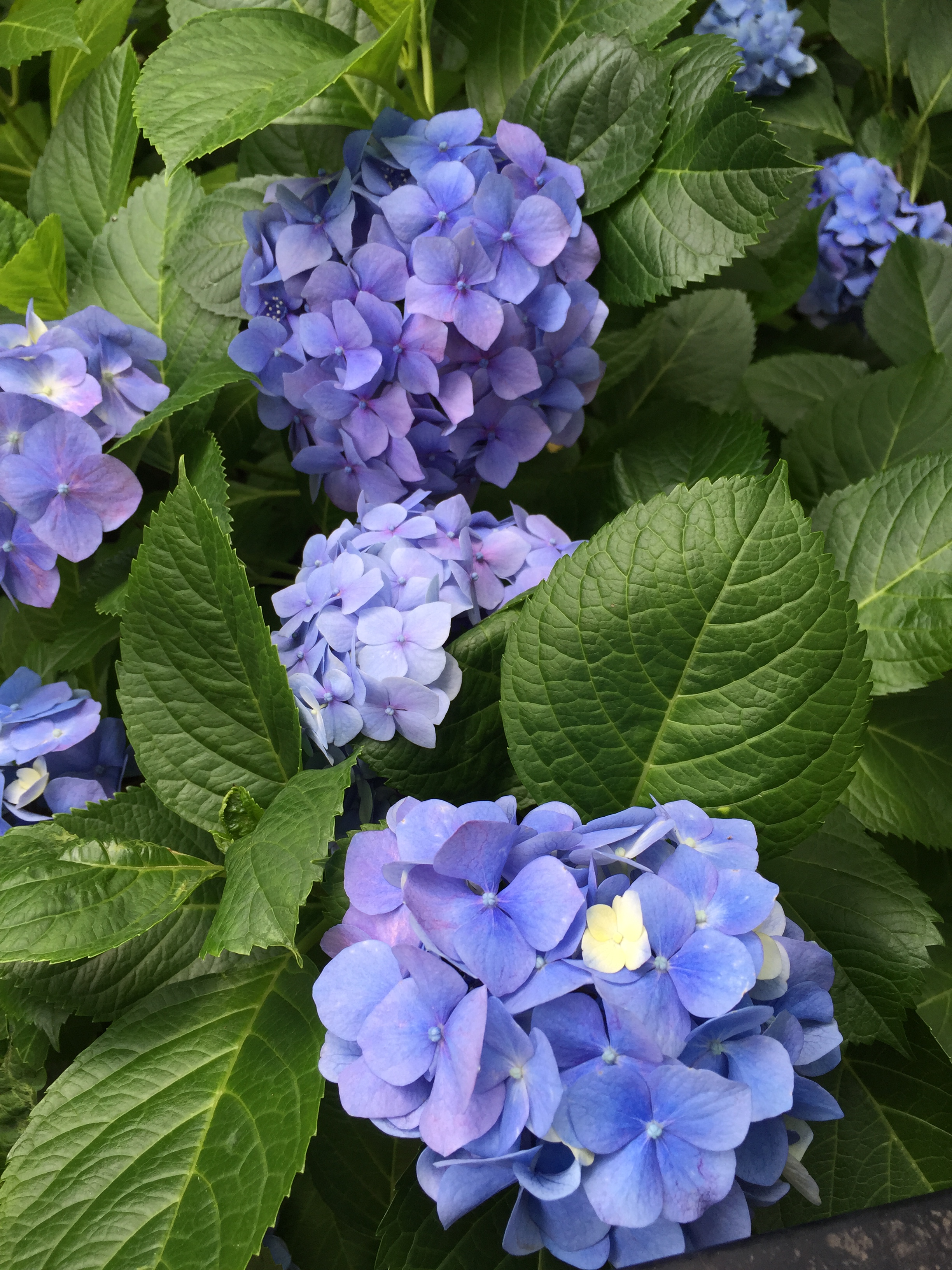
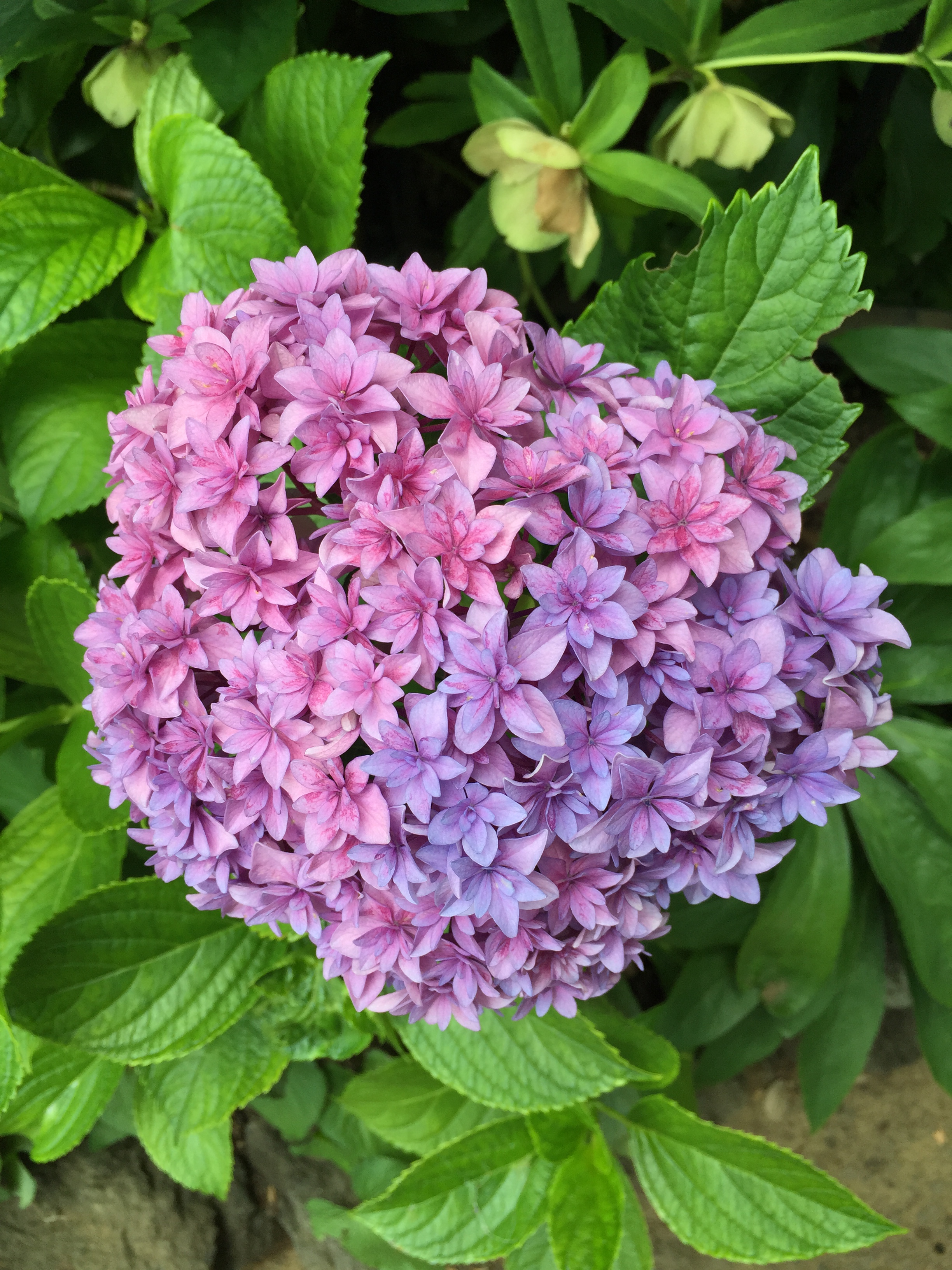
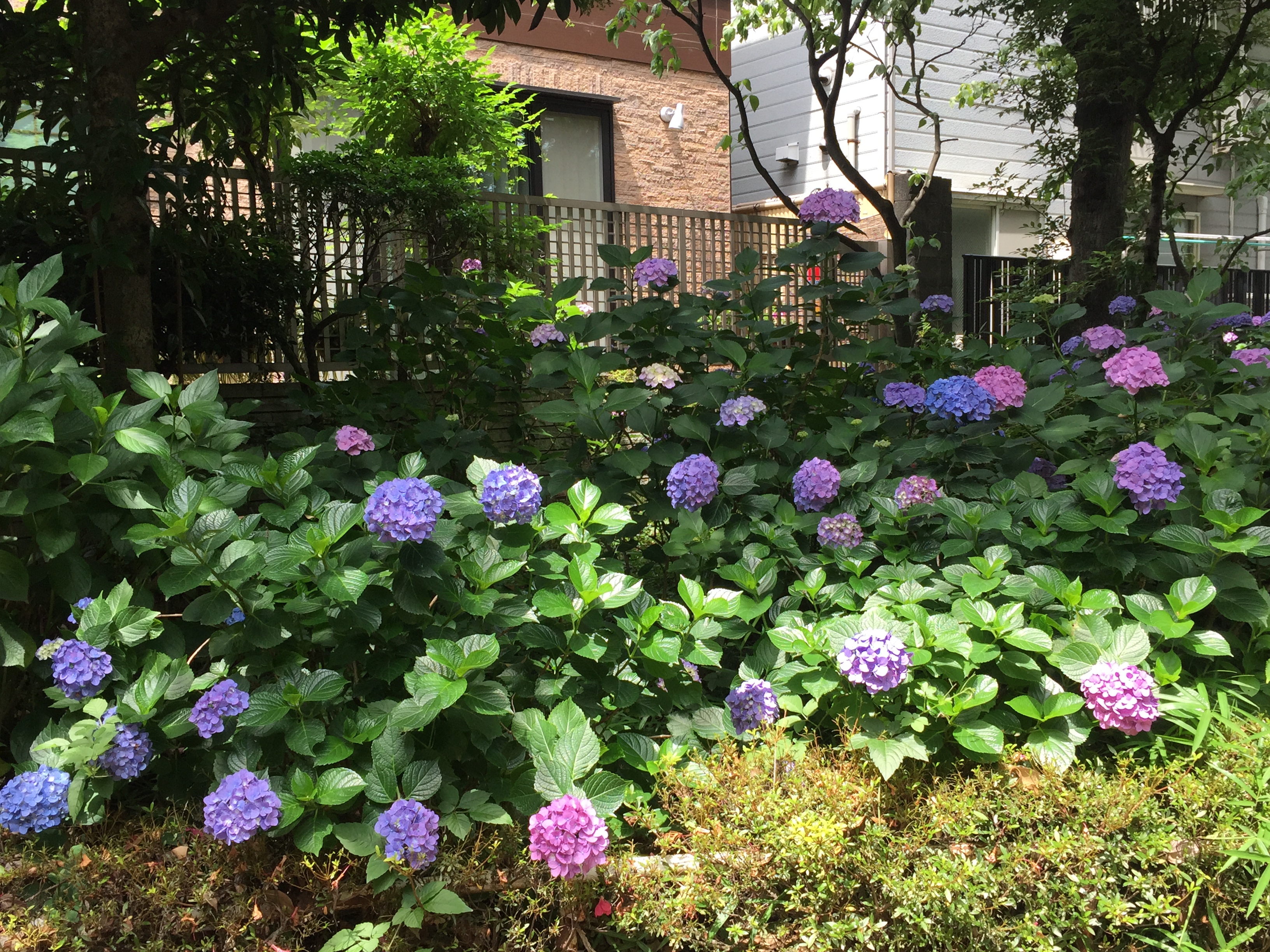
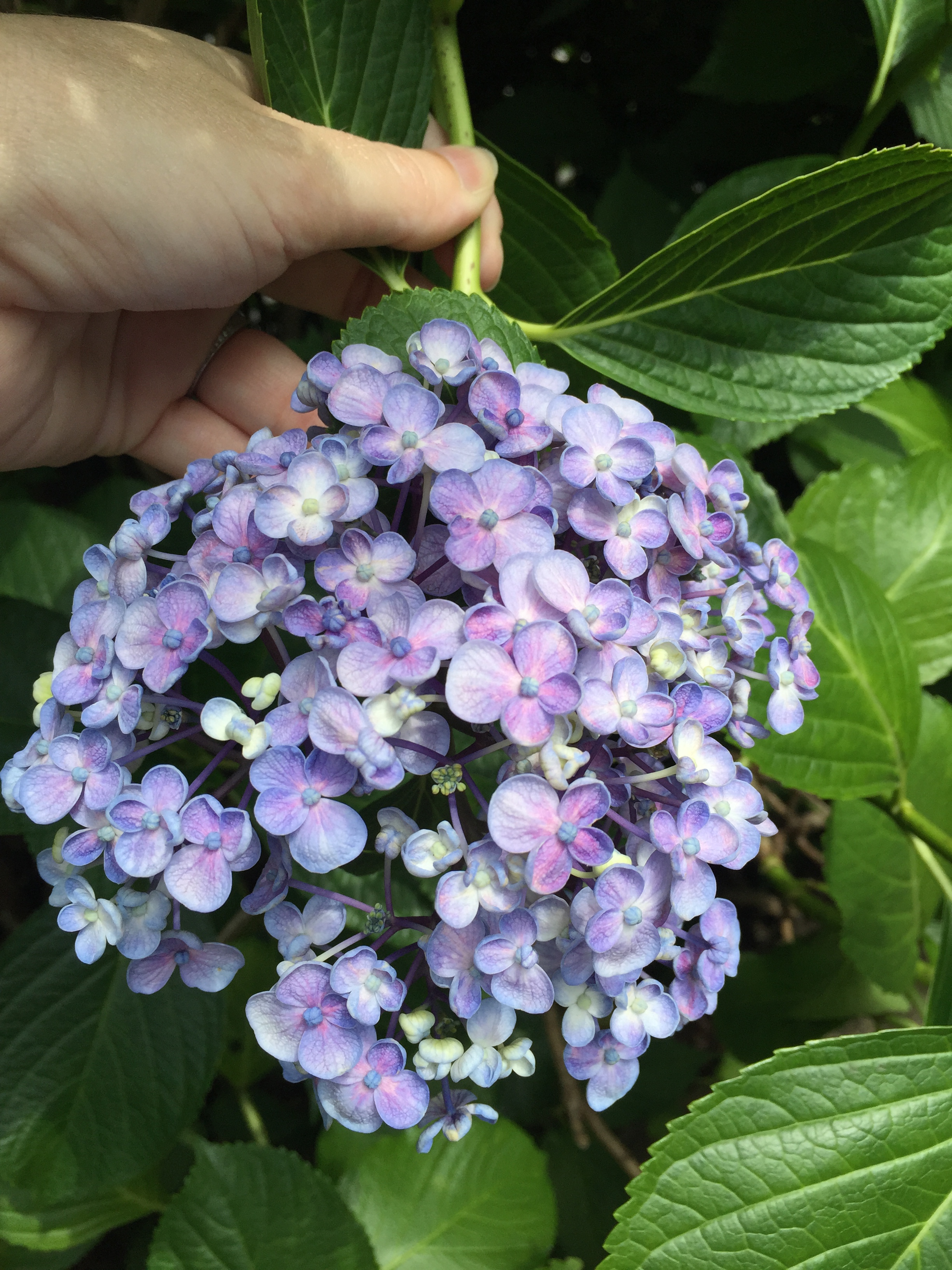
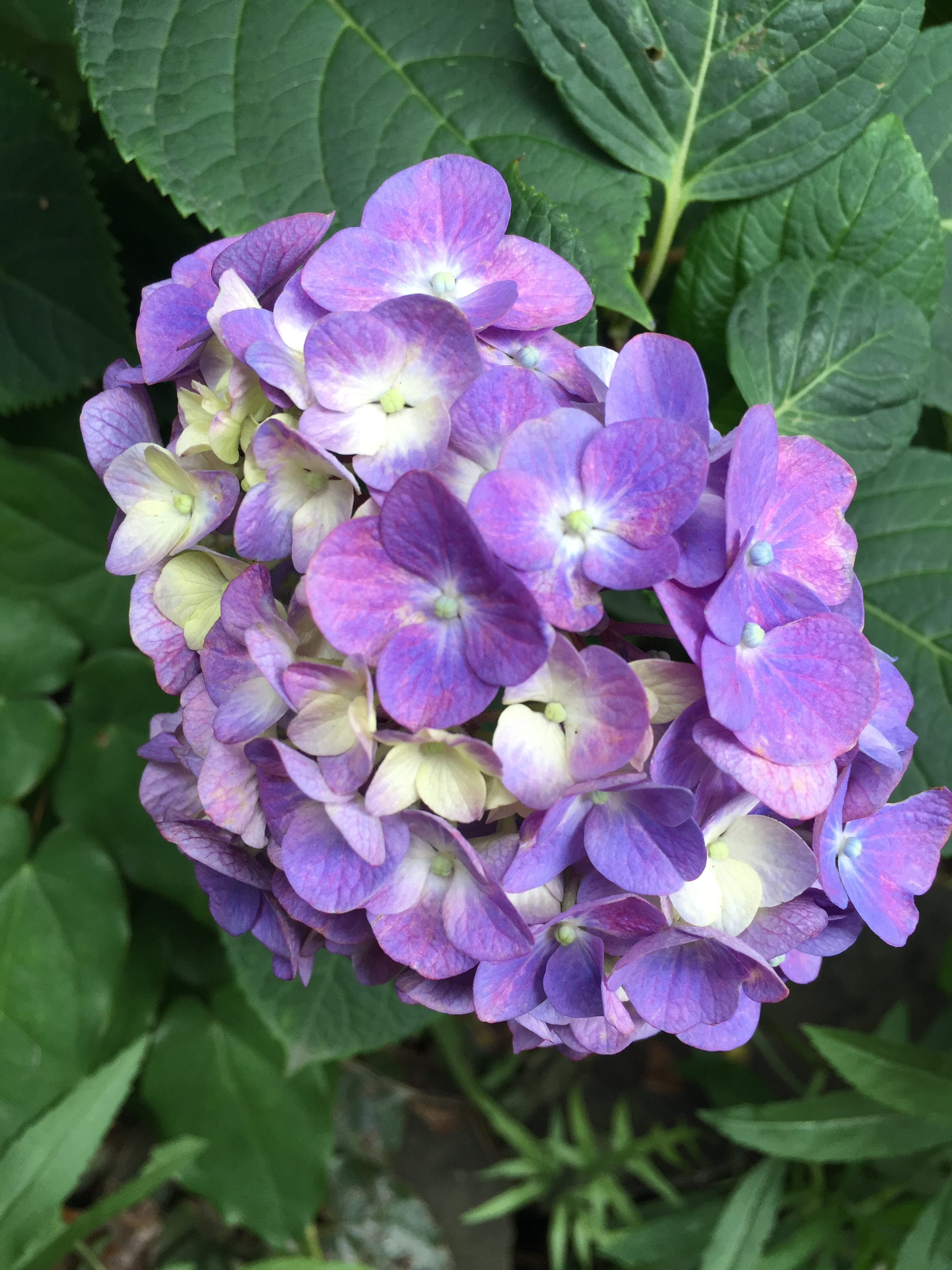
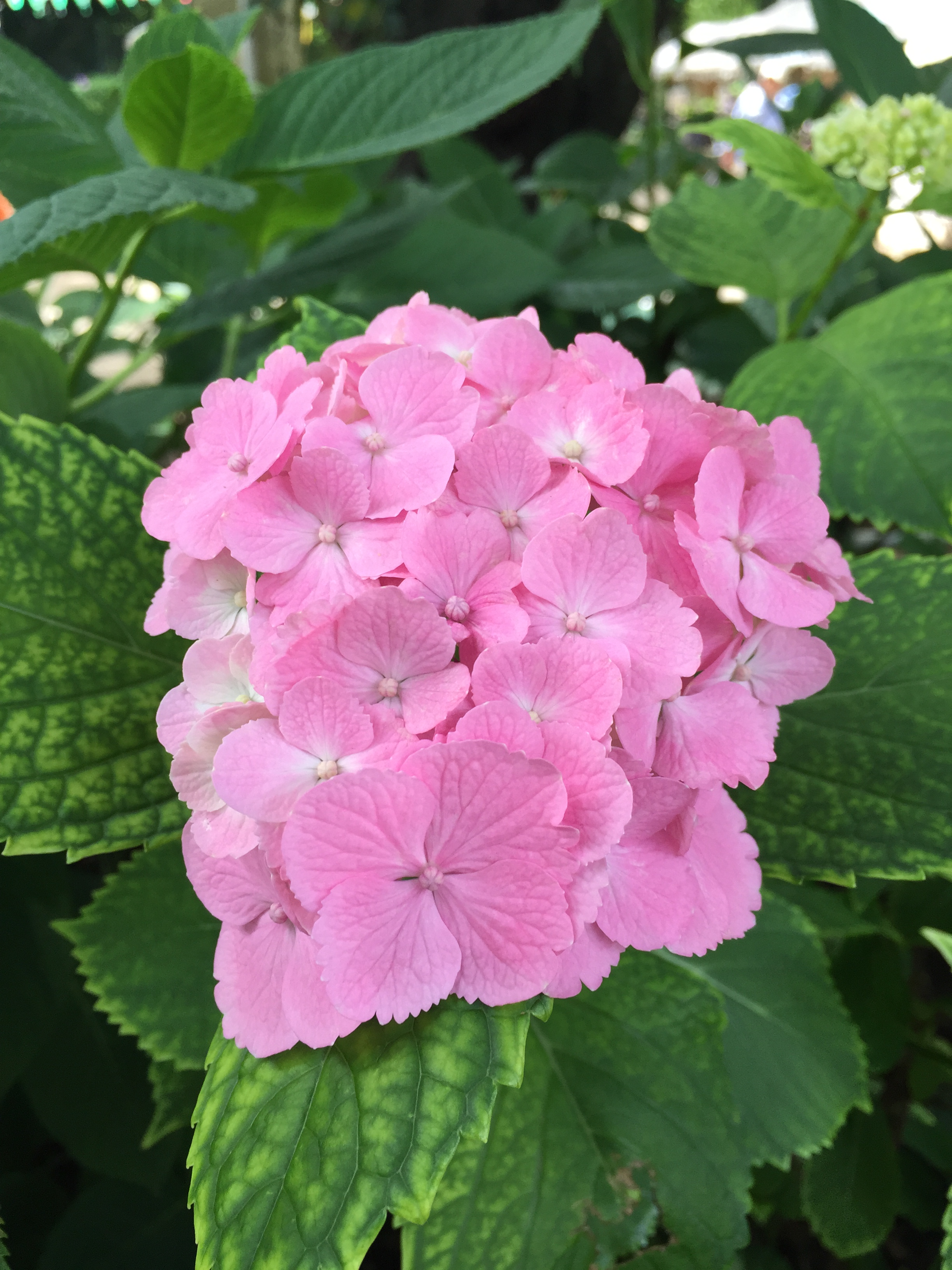
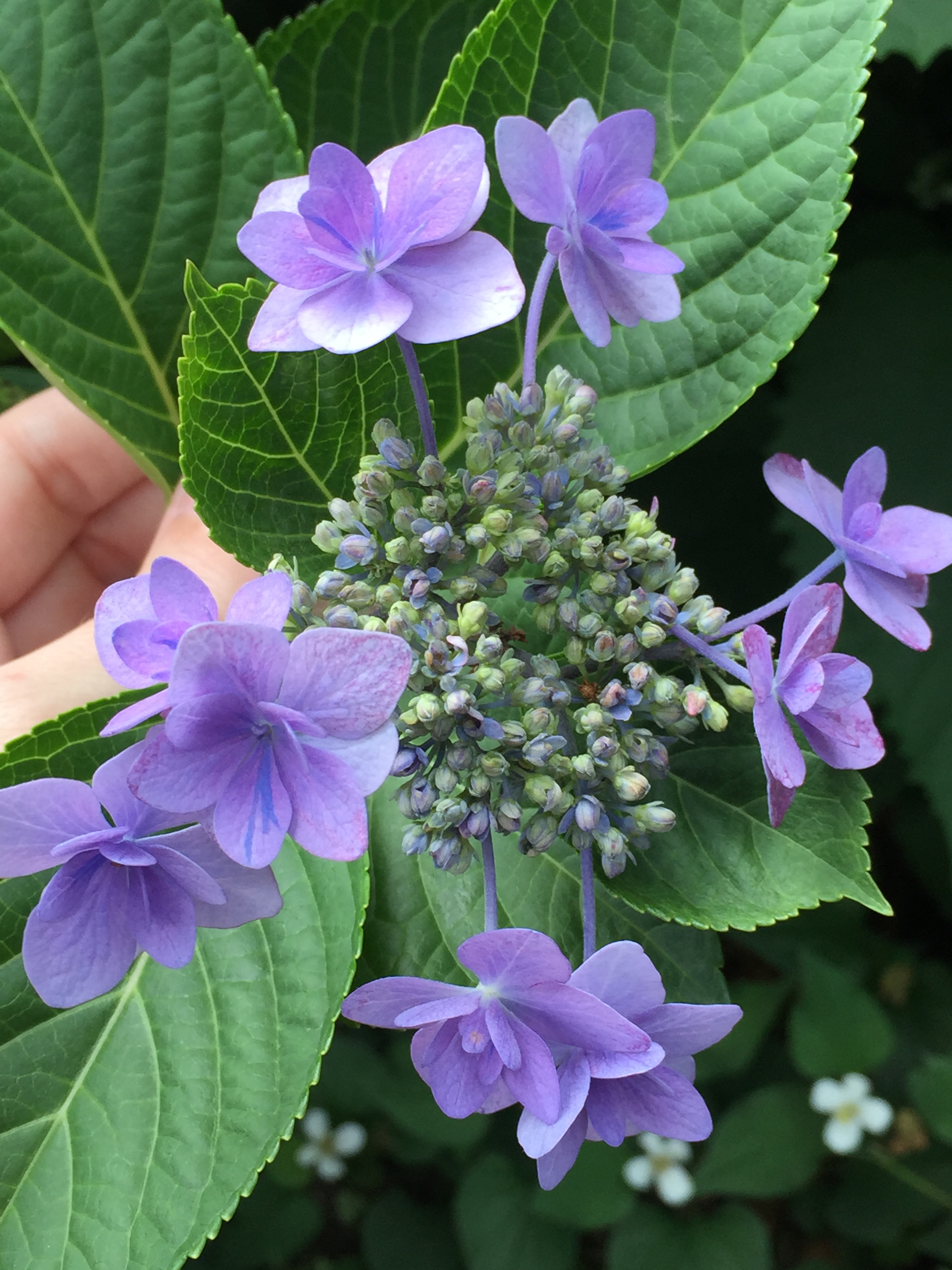
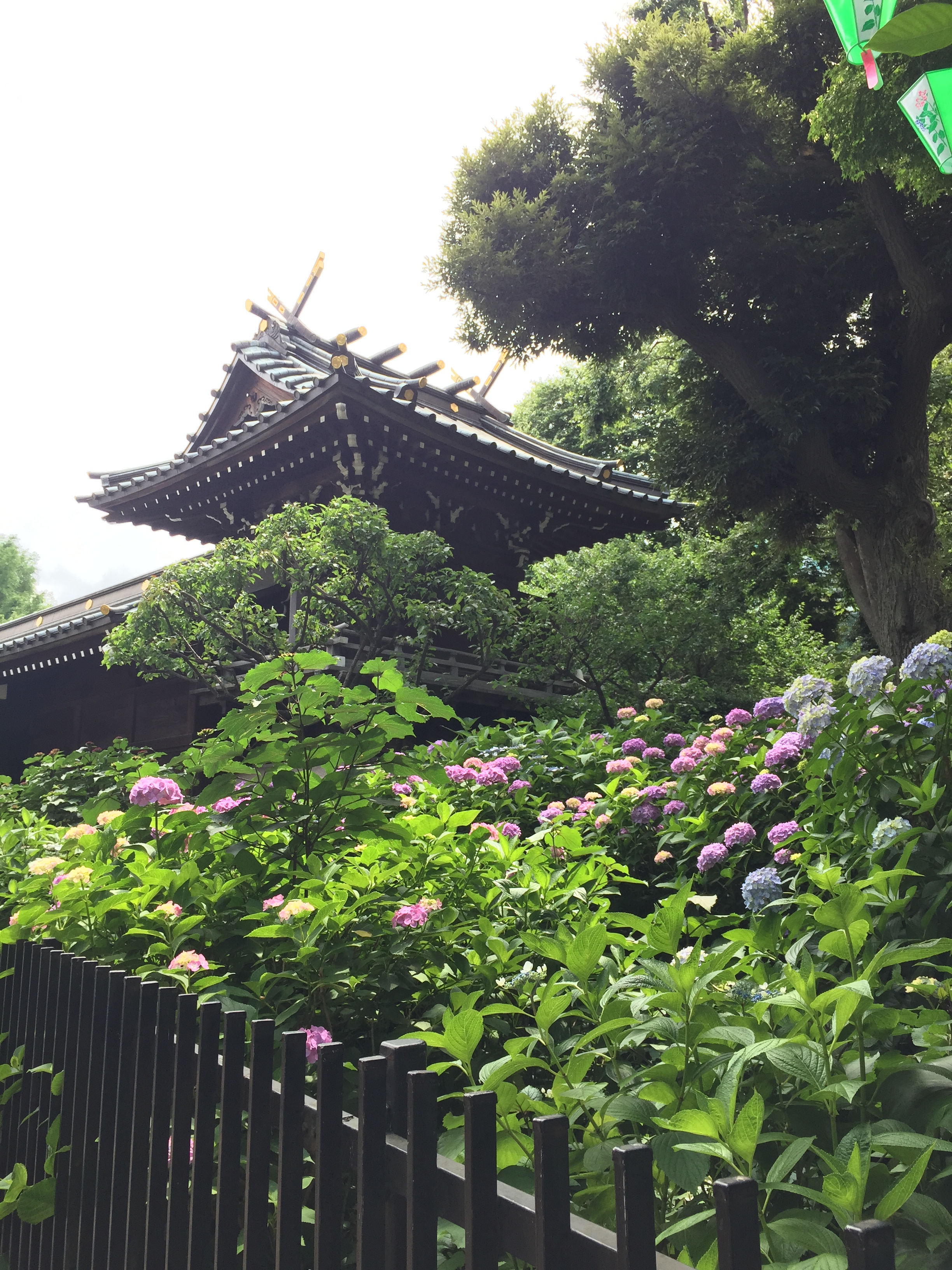
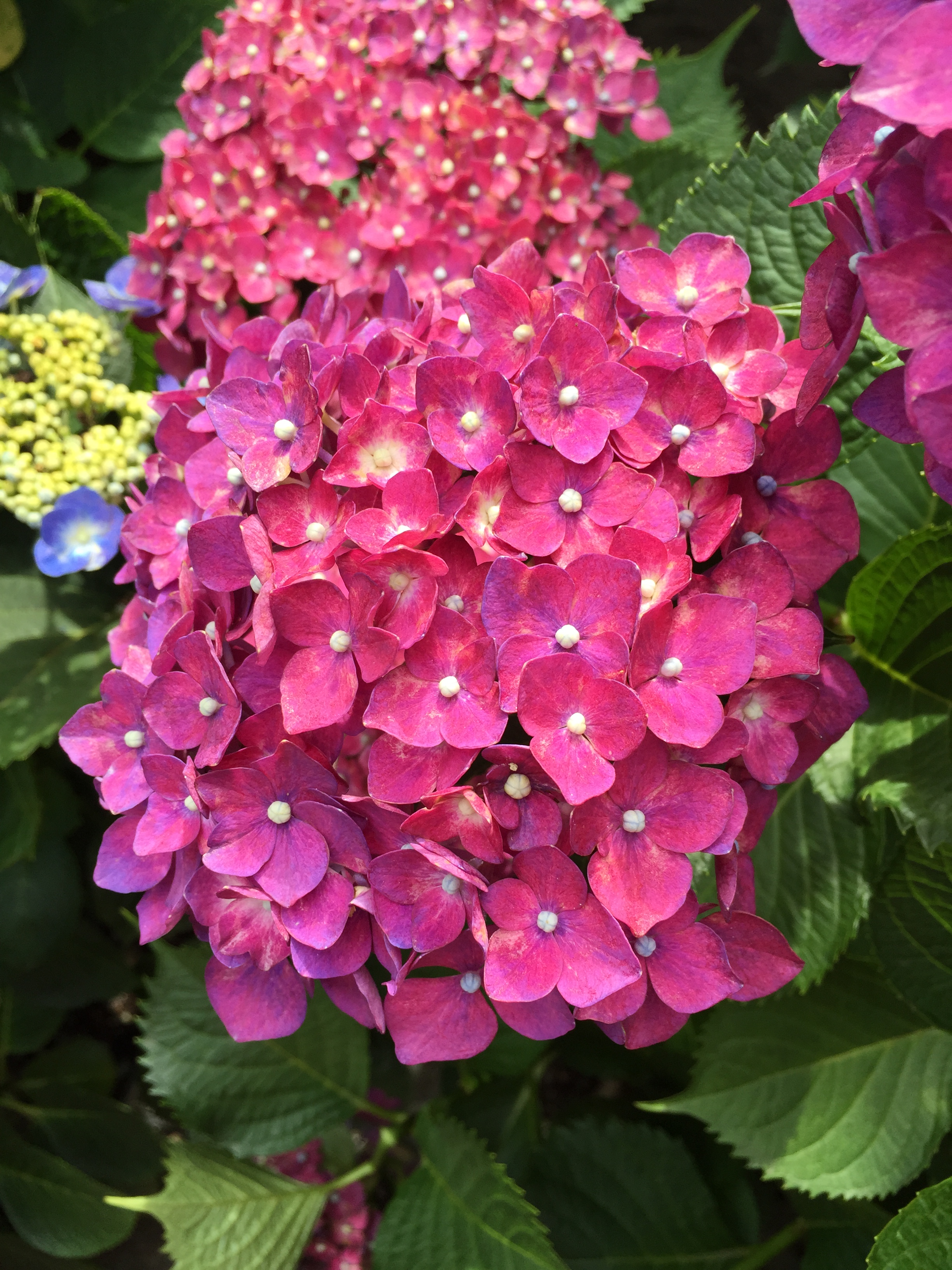
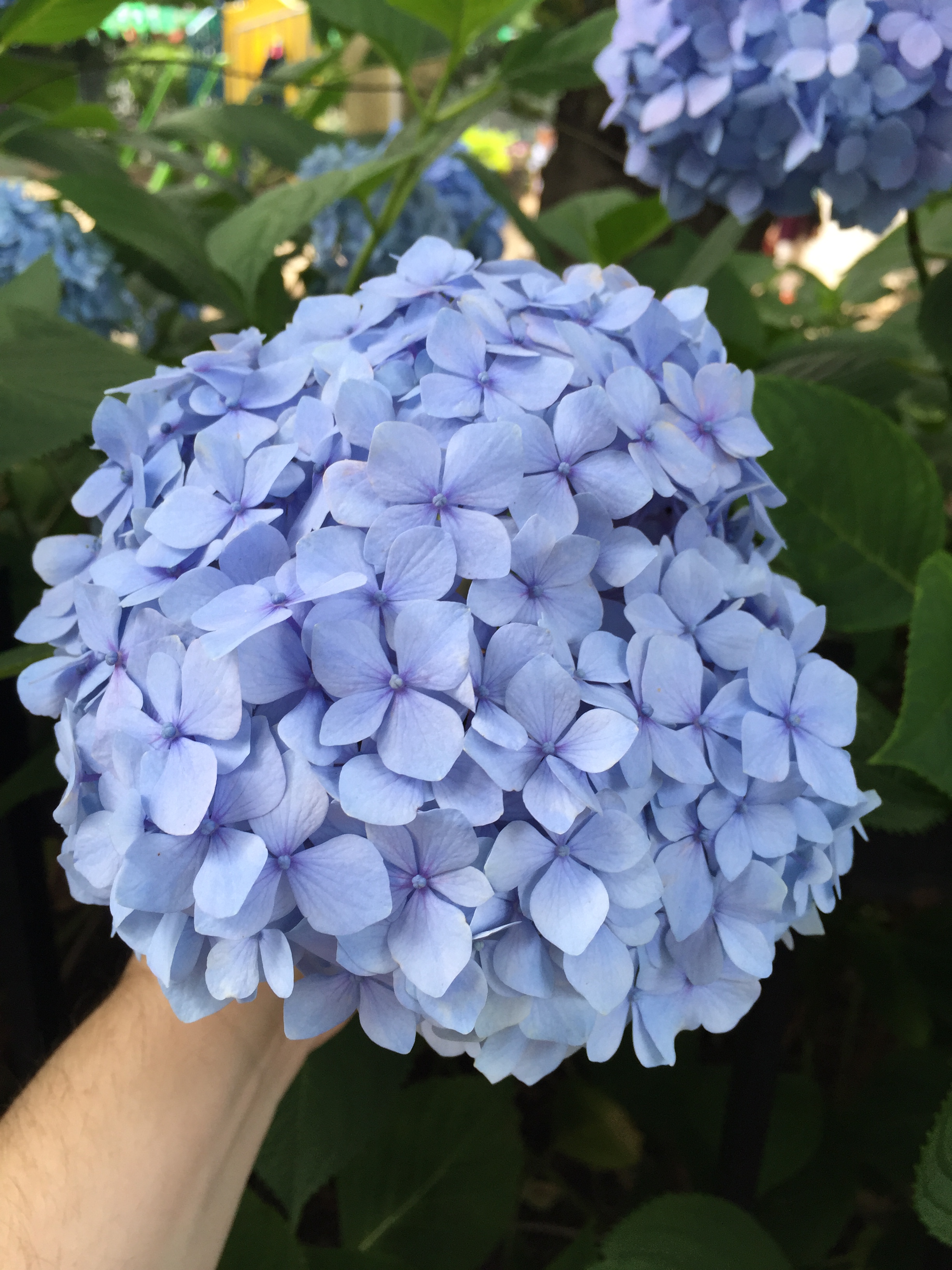
Bunkyo Hydrangea Festival, Hakusan Jinja ShrineSeriously…if you can go to Japan in late May/early June, GO! Like I mentioned yesterday, hydrangea season has stolen my heart. Those gorgeous shades of blue and pink and purple, the different varieties and shapes of the blooms…breathtaking.

Our friend Jess, who lives in Tokyo with her husband and son (you may remember her from our Tokyo Cook Out), gave us so many ideas of places to see and things to do. I really think she missed her calling as a tour guide/travel agent. It was her idea to see a few gardens while we were in Japan this year…and none of them disappointed! Bunkyo Hydrangea Festival, Hakusan Jinja ShrineWe met up with Jess last Monday at the Bunkyo Hydrangea Festival at the Hakusan Jinja Shrine. Bunkyo hosts five flower festivals throughout the year and now it is my personal goal to see each one. The Hakusan Shrine is the home of over 3000 hydrangea plants! I am not sure I captured each one, but I sure tried. Bunkyo Hydrangea Festival, Hakusan Jinja Shrine Bunkyo Hydrangea Festival, Hakusan Jinja Shrine Bunkyo Hydrangea Festival, Hakusan Jinja Shrine Bunkyo Hydrangea Festival, Hakusan Jinja Shrine Bunkyo Hydrangea Festival, Hakusan Jinja Shrine Bunkyo Hydrangea Festival, Hakusan Jinja ShrineBunkyo Hydrangea Festival, Hakusan Jinja Shrine Bunkyo Hydrangea Festival, Hakusan Jinja Shrine Bunkyo Hydrangea Festival, Hakusan Jinja Shrine Bunkyo Hydrangea Festival, Hakusan Jinja Shrine Bunkyo Hydrangea Festival, Hakusan Jinja Shrine Bunkyo Hydrangea Festival, Hakusan Jinja Shrine Bunkyo Hydrangea Festival, Hakusan Jinja ShrineHave you ever seen so many varieties all in one place? I’ve been dreaming of a hydrangea garden of my own ever since…maybe someday!

Tagged , , , ,

Plot #6: Still Planting 


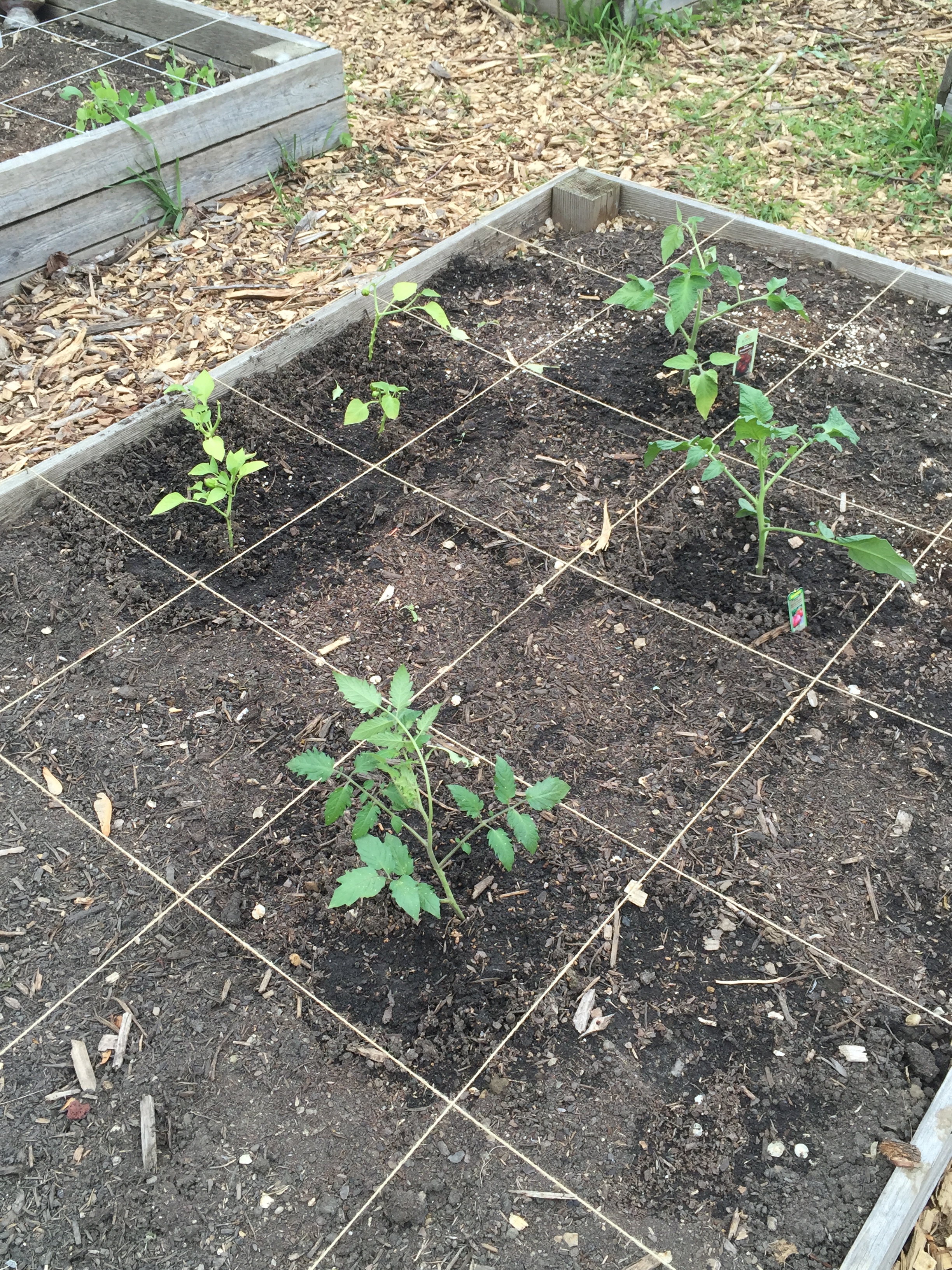
Naoto and I spent some time in the garden on Memorial Day. It rained a lot in the morning but by afternoon it was pretty good gardening weather. I love working in the dirt after it rains. Weeds come out like buttah, transplants nestle easily into the moist soil, and best of all, I don’t have to drag the hose out.   I gave up on both of my tomatoes that I’d started from seed and attempted to transplant. (I have a couple more seedlings on the balcony…we’ll see if they ever get big enough to move over.) Since I “only” had three tomato plants, I impulsively bought a Sweet 100 Cherry Tomato plant over the weekend. I’m excited to see the vines dripping with tiny tomatoes. (Hopefully.) 

I also planted a thyme plant and some basil and dill seeds. And that’s all for now. I still have four squares that are empty! I wanted to buy some golden beets, but I didn’t see and seeds at the garden shop this weekend. Hopefully I’ll have some time to make use of those four feet before the tomatoes take over! 

A huge thanks to Laura for watering our plot while we are gone! 

Plot #6: Planting, Transplanting, and More Planning

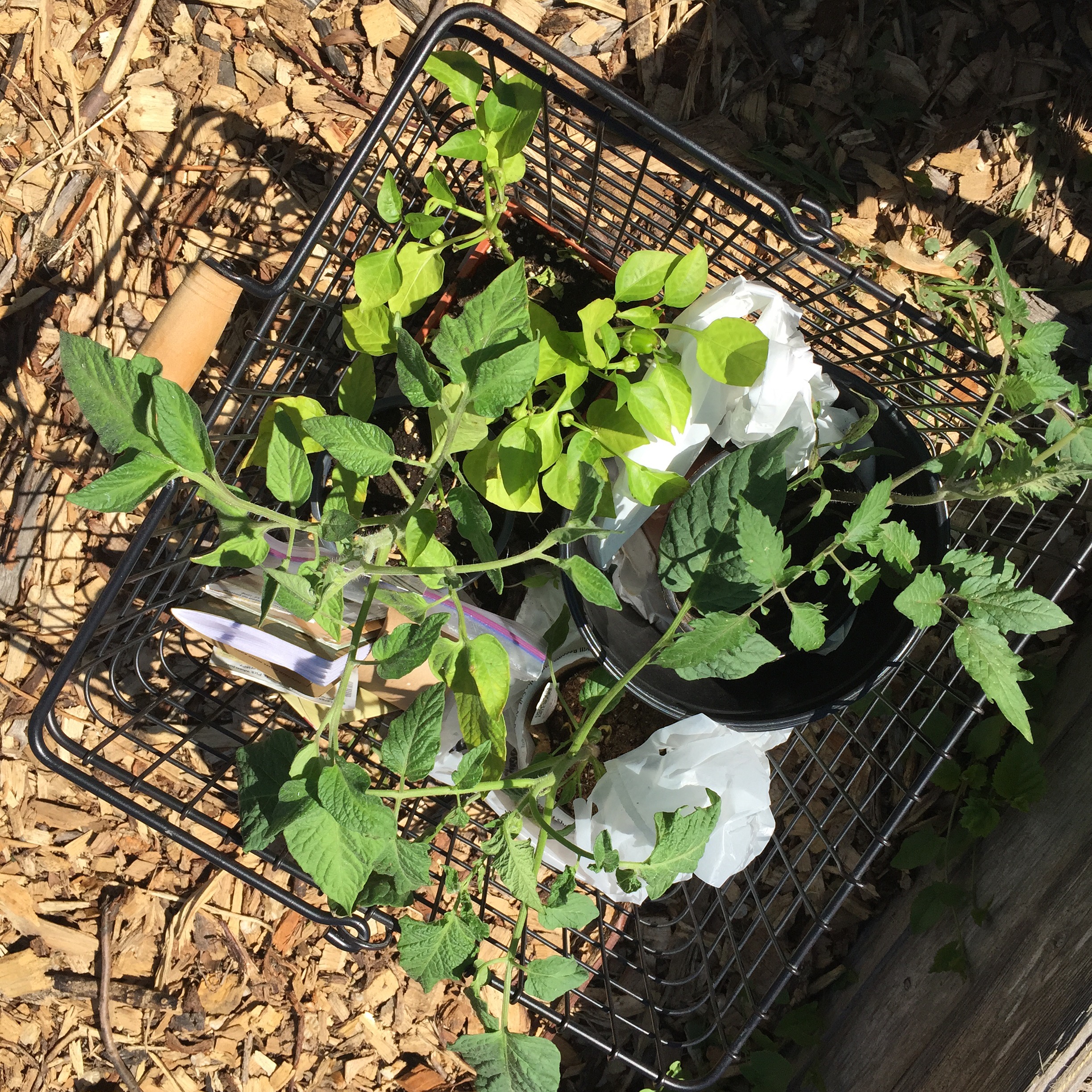
basket of plants for the garden, plot #6Monday was a stellar day for gardening. It was sunny, in the seventies…really just perfect. I spent over four hours at the garden, planning and planting and chatting with Mr. Brownthumb and Laura and meeting new-to-me gardeners. I have part of our plot planted, but I still have quite a bit of room to play with, so I’m planning to get a few more things in the ground this weekend.

Last week, I met up with my parents for plant shopping. I ended up buying a Pink Brandywine and a Red Brandywine (tomatoes) and a six-pack of Pinot Noir peppers. (I gave two to my dad and kept the other four.) My dad gave me a Juliet tomato and in March I started some Isis Candy Shop Cherry Tomatoes (Thanks, Danielle!) and Kellogg’s Breakfast tomatoes from seed. My seedlings are so tiny though, that I doubt they will amount to anything. (Seriously…they are so small, it’s hard not to mistake them for a weed!) I don’t think I get enough sun and warmth for growing tomatoes from seed, but I have a few more tiny plants left that I’m going to try to nurture into larger transplants.plot #6, 5/25/15, community gardenI also planted some edamame, cucumber, peas, limas, bush beans, butter crunch lettuce, and komatsuna lettuce seeds. And I still technically have twelve squares left to fill! I know that my tomatoes will grow beyond their allotted squares, so I have to plan for that, but I really do have plenty more space to grow more root vegetables, lettuces, and maybe some herbs. plot #6, 5/25/15, community gardenThe start of the growing season really is the best, isn’t it? (At least until the harvest comes!)

Tagged , , , ,

Plot #6: The Planting Begins

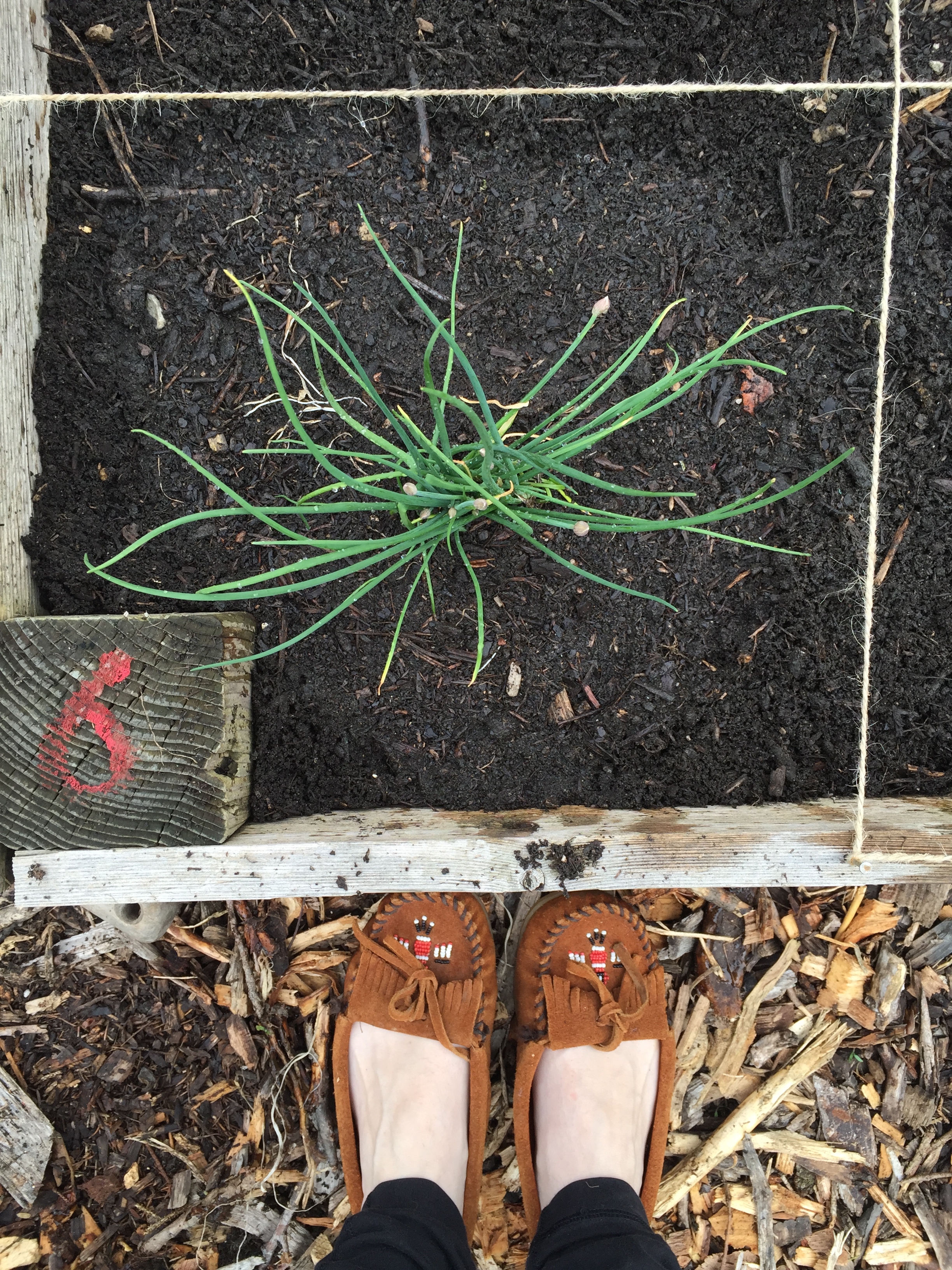
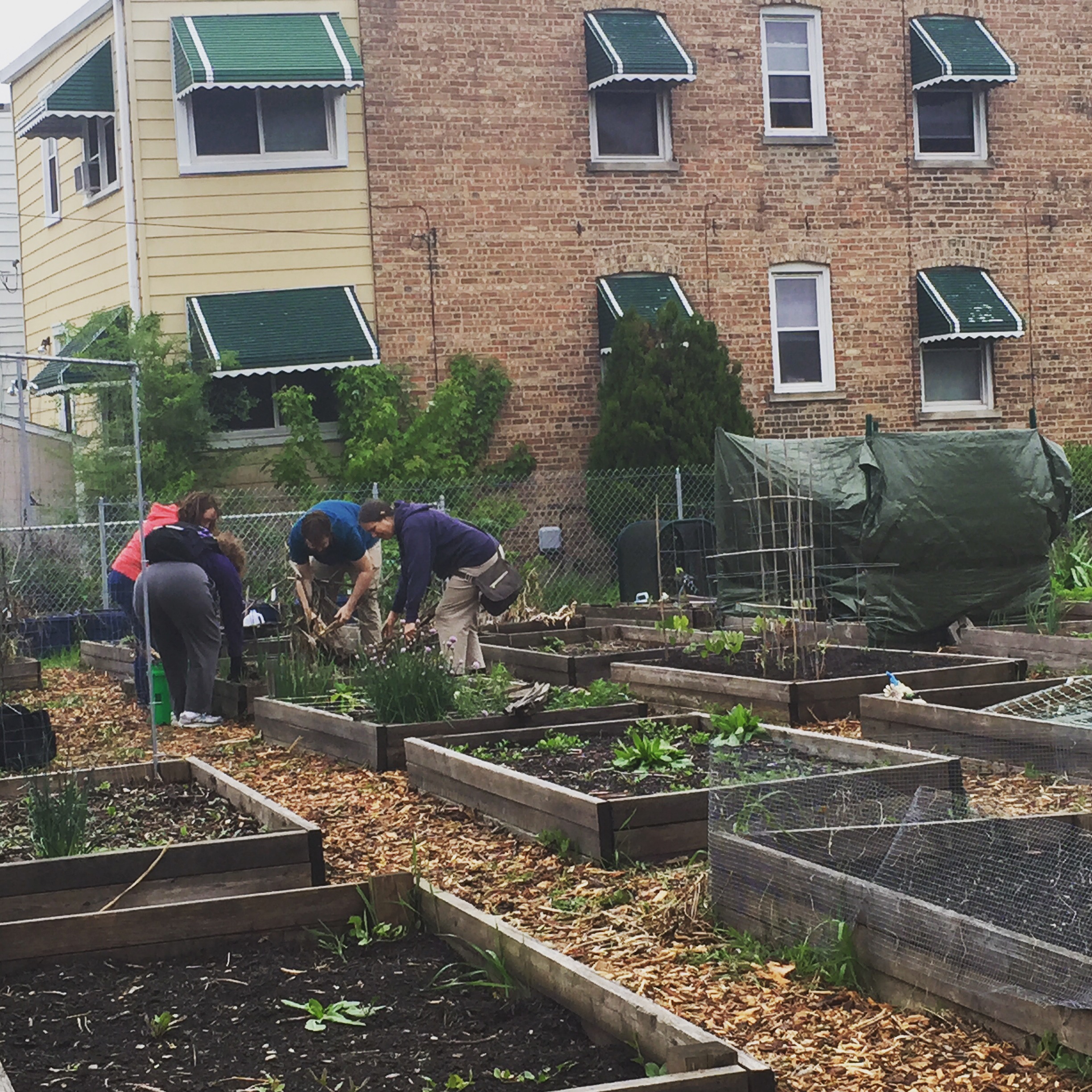
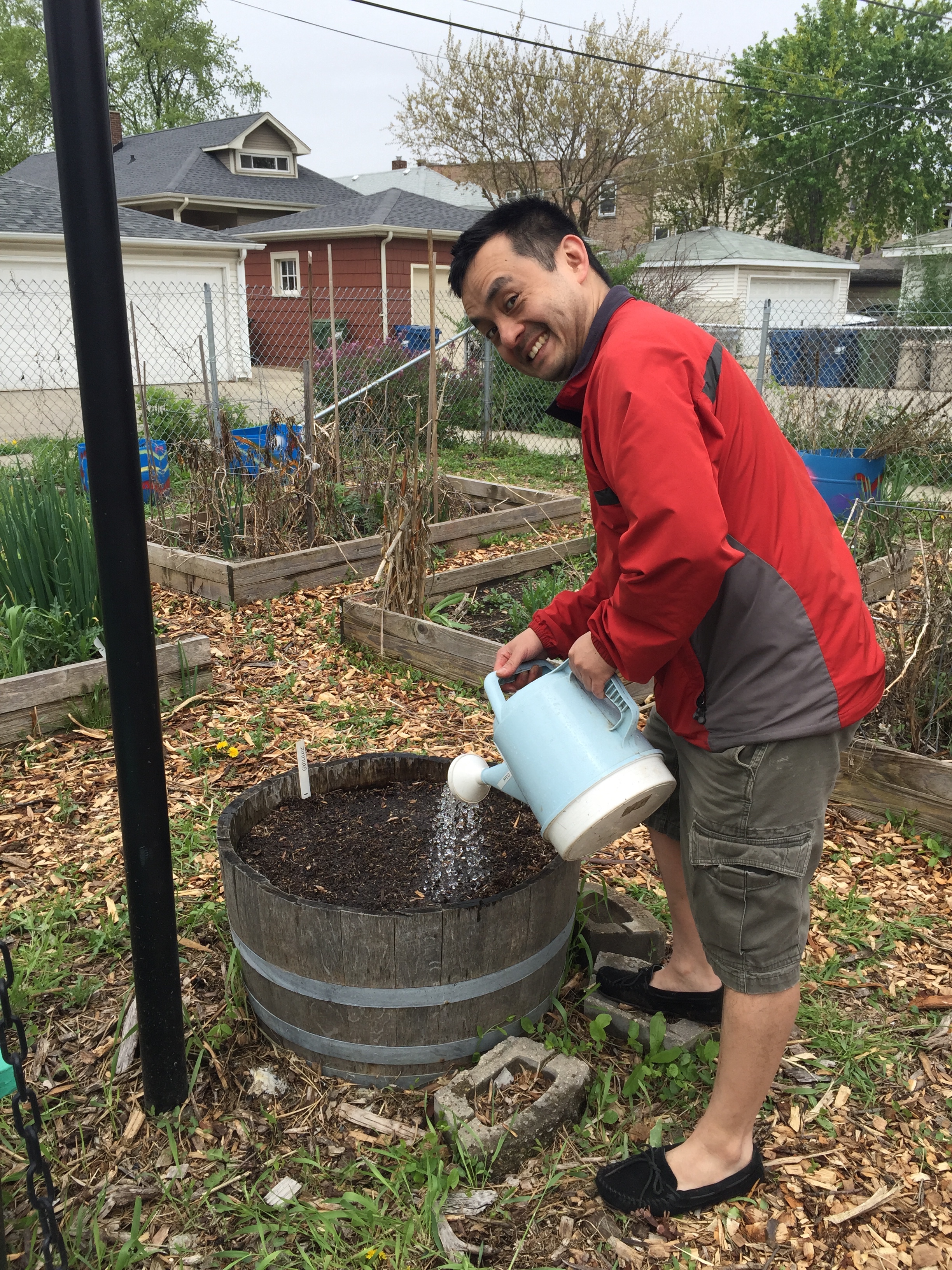
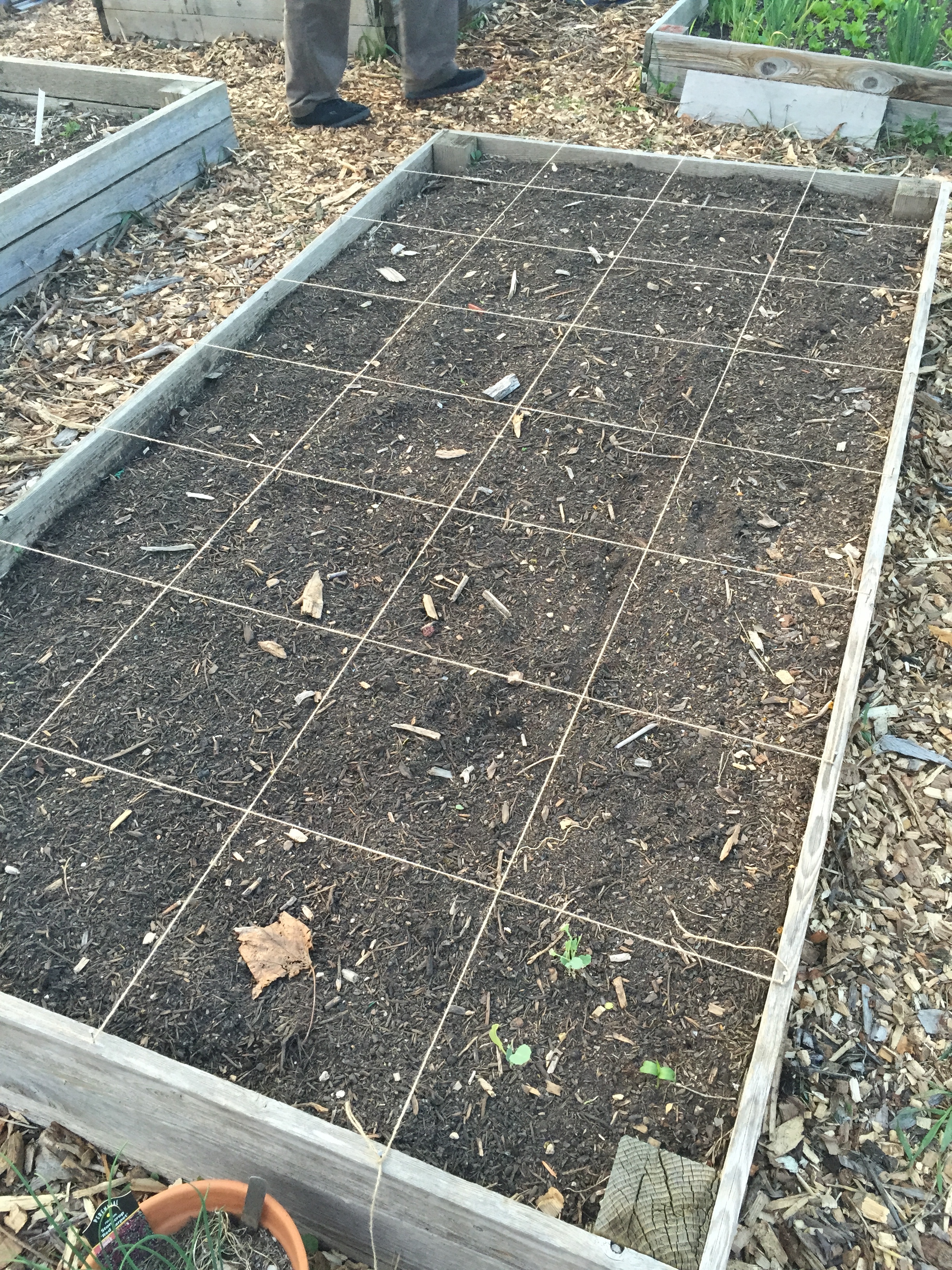
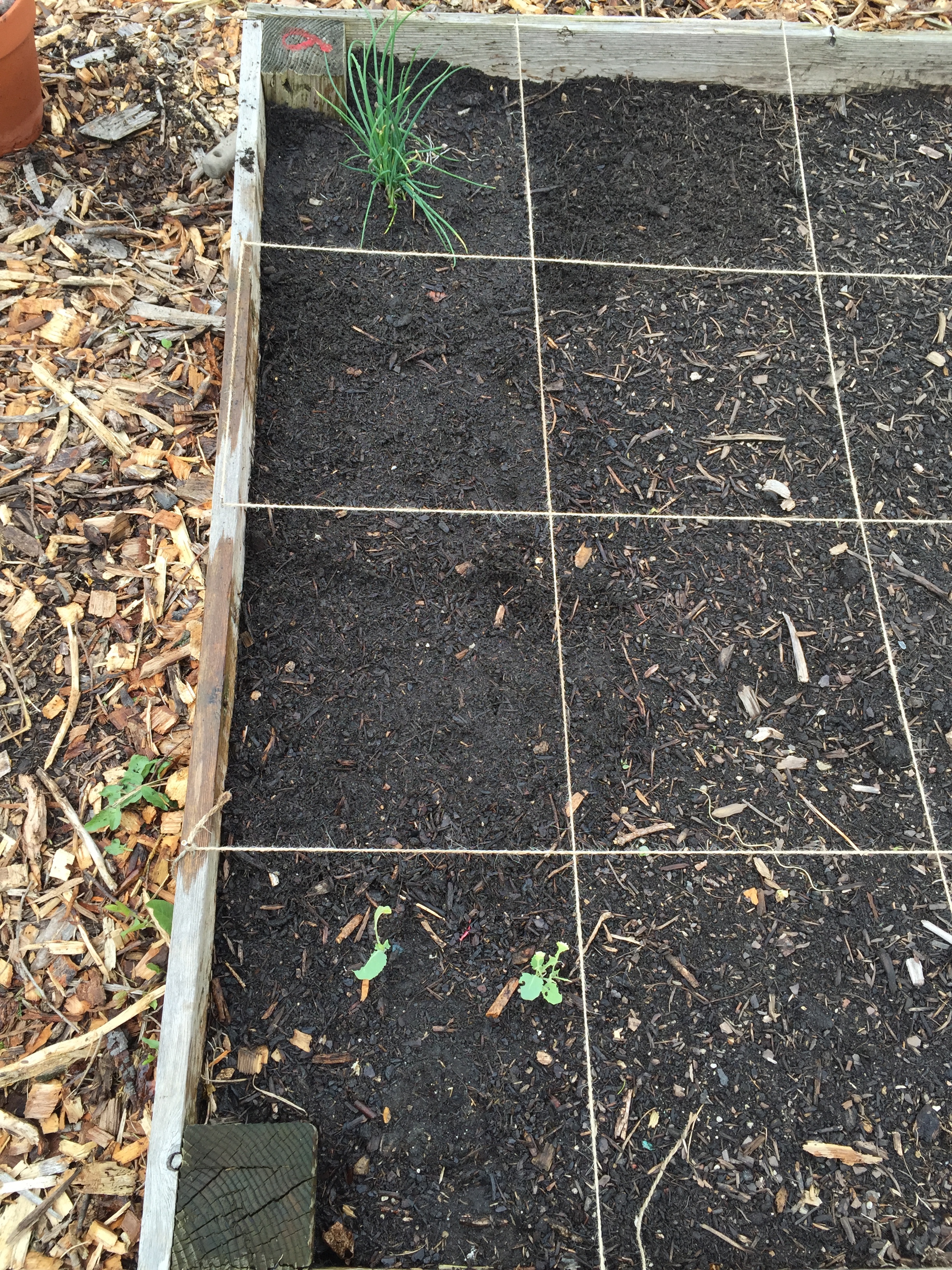
chives, plot #6, community garden, forest park community gardenOn Saturday, we had our official “Garden Kick-Off 2015”. We served coffee and donuts at the garden and new and returning gardeners came to check out their plots and get started on the planting season. It was very cold (and I was sorely underdressed) but the rain held off and we had a productive morning cleaning up around the garden and giving mini orientations to new gardeners. community gardening, clearing plots, Forest Park Community GardenIt was the most people I’ve seen at the garden at once in a long time, especially since last year I hardly saw anyone. watering zinnias, forest park community gardenI planted some flowers in a general community garden planter (two kinds of zinnias and alysum) and Naoto dug out a space on the hill for pumpkin and loofah growing. It was a good working day at the garden, but there is still a lot more to do in the coming weeks. prepping for square foot gardeningOn Thursday, Laura and I prepped our plots for square foot gardening. Although I am not going to do by-the-book square foot gardening, (I am not using the special soil mix and the tomatoes I plant will never only need one square foot!) I wanted to try the grid to help me plan the garden better and get more variety out of our plot. I just hammered nails in every foot along the side of our garden bed and used string to mark the grid. The string won’t last very long, but it should stay through the planting season to assist with organization. beginning square foot gardening, plot 6, community gardenSo far, we’ve transplanted the chive that we inherited in our plot (I dug it out in 2013 and it’s been languishing on the balcony in a too-small pot ever since. I decided we have room for it in our garden again.), transplanted some winter-sown broccoli (too many for 1 square foot—oops!), and planted beets and daikon. Four squares down, twenty-eight more to go! It’s been rainy the past couple of days, but this week I will be going back to plant some more once I have drawn out a plan for the rest of those squares!

Have you been planting anything lately?

Tagged , , , ,

Plot #6: Gardening Begins!

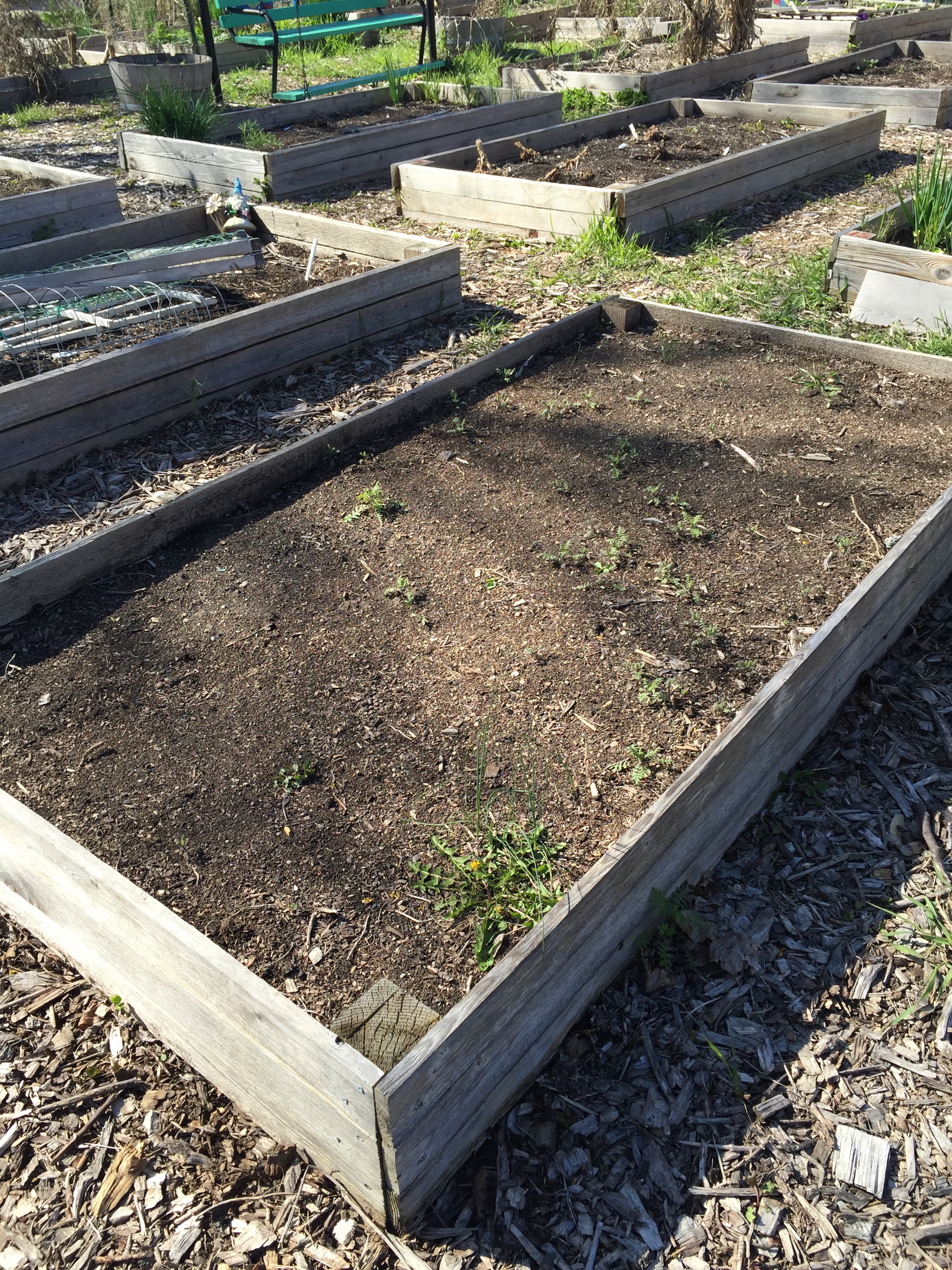
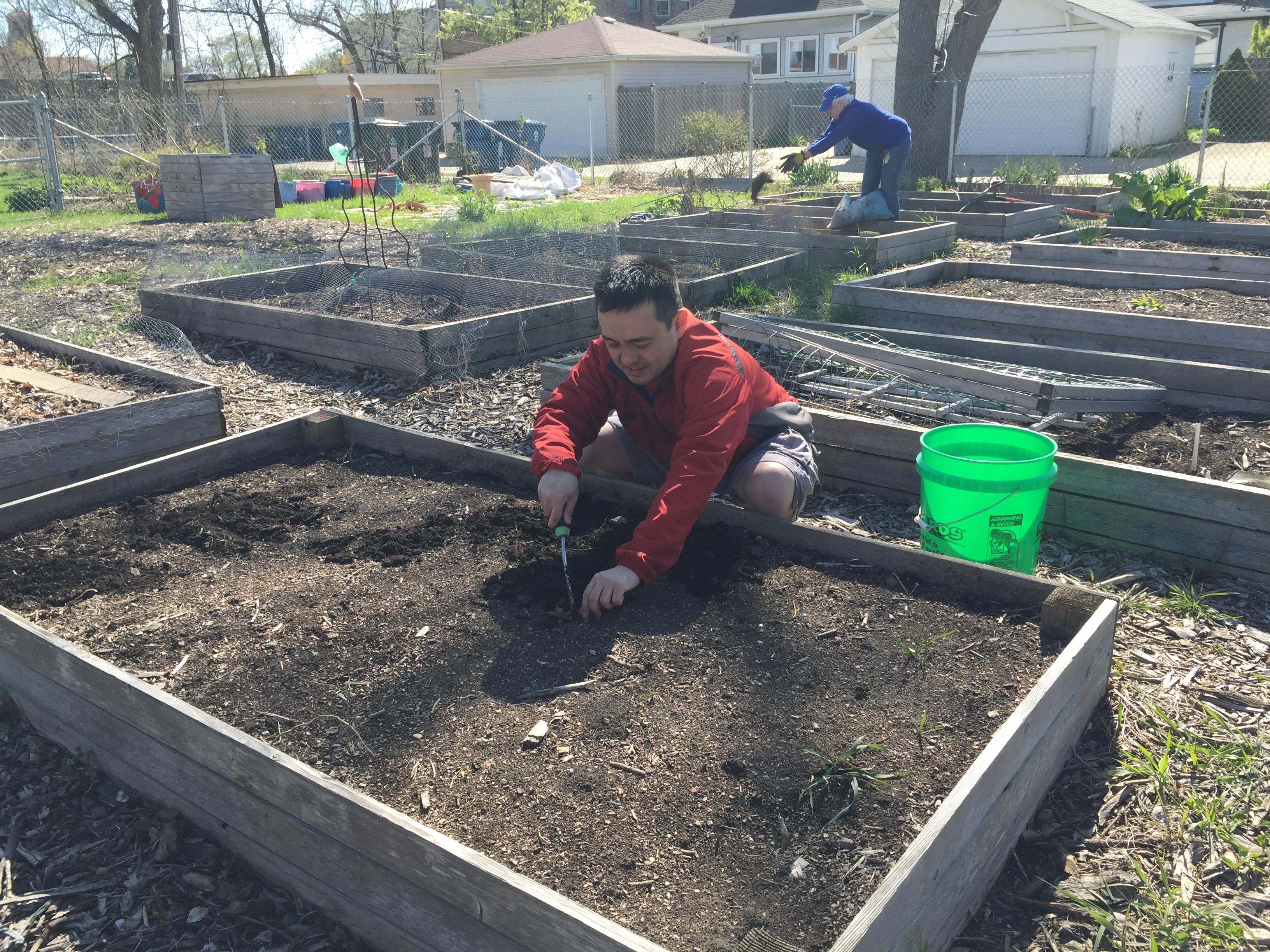
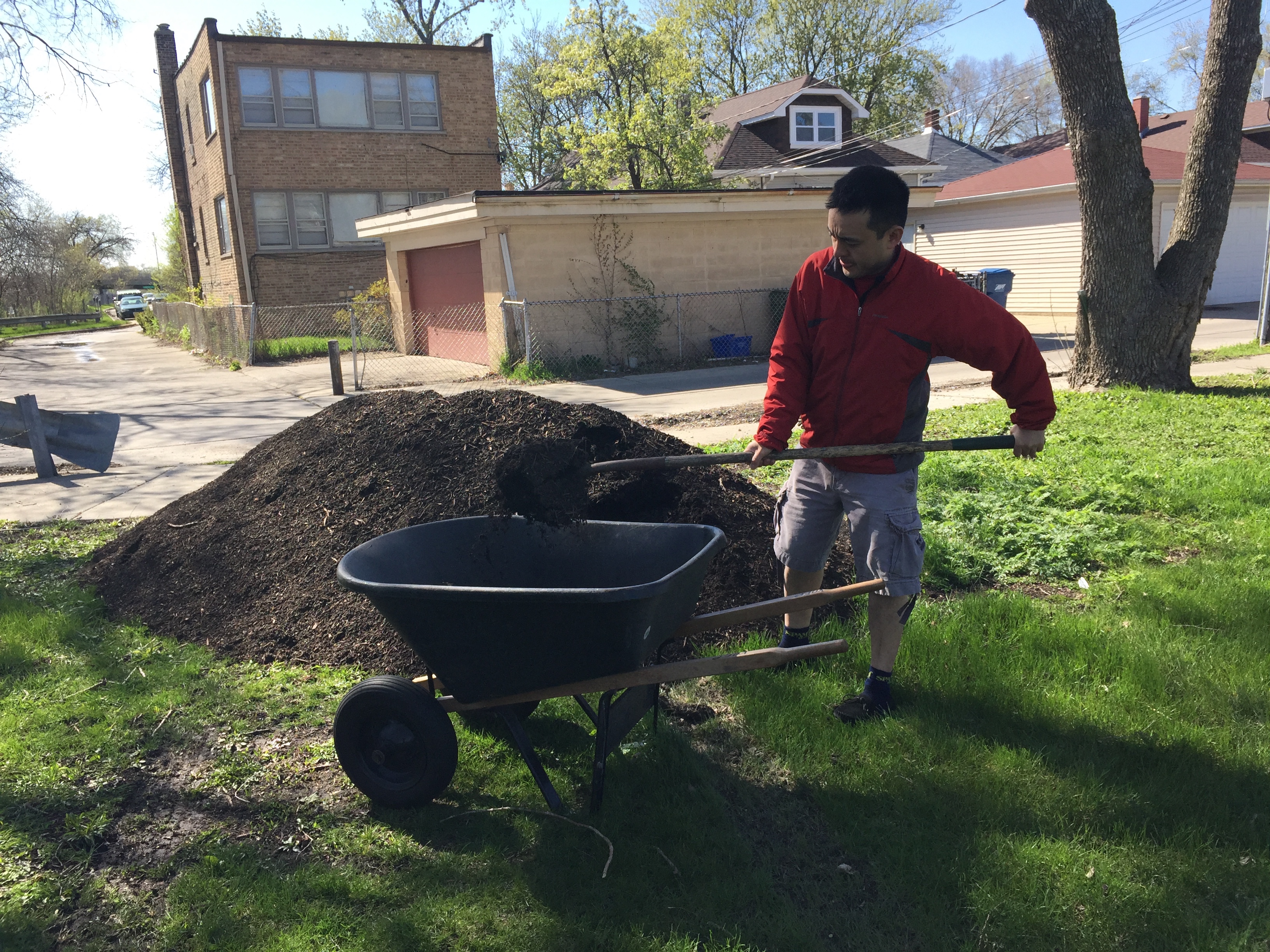
plot #6, forest park community garden, pre-preparationNaoto and I went to the garden for the first time this season on Sunday. We were pleased to find very few weeds in our plot! The soil preparation has gotten so much easier each year. (Here is what it looked like when we inherited the plot.) plot #6, forest park community garden,weedingBecause it rained on Saturday, weeding was super-easy. (And no, Naoto did not do it alone. I jumped in after this picture was taken!) plot #6, forest park community garden, mulchingAfter loosening the soil (not turning it!), we laid down another layer of fresh mulch and called it a day. I was planning to plant some daikon, beets, and bok choi but the water at the garden wasn’t turned on yet, so I suppose planting will have to wait a little longer.

How is your garden growing?

Tagged , , , , , ,

Victory Gardening Series at Lisle Library

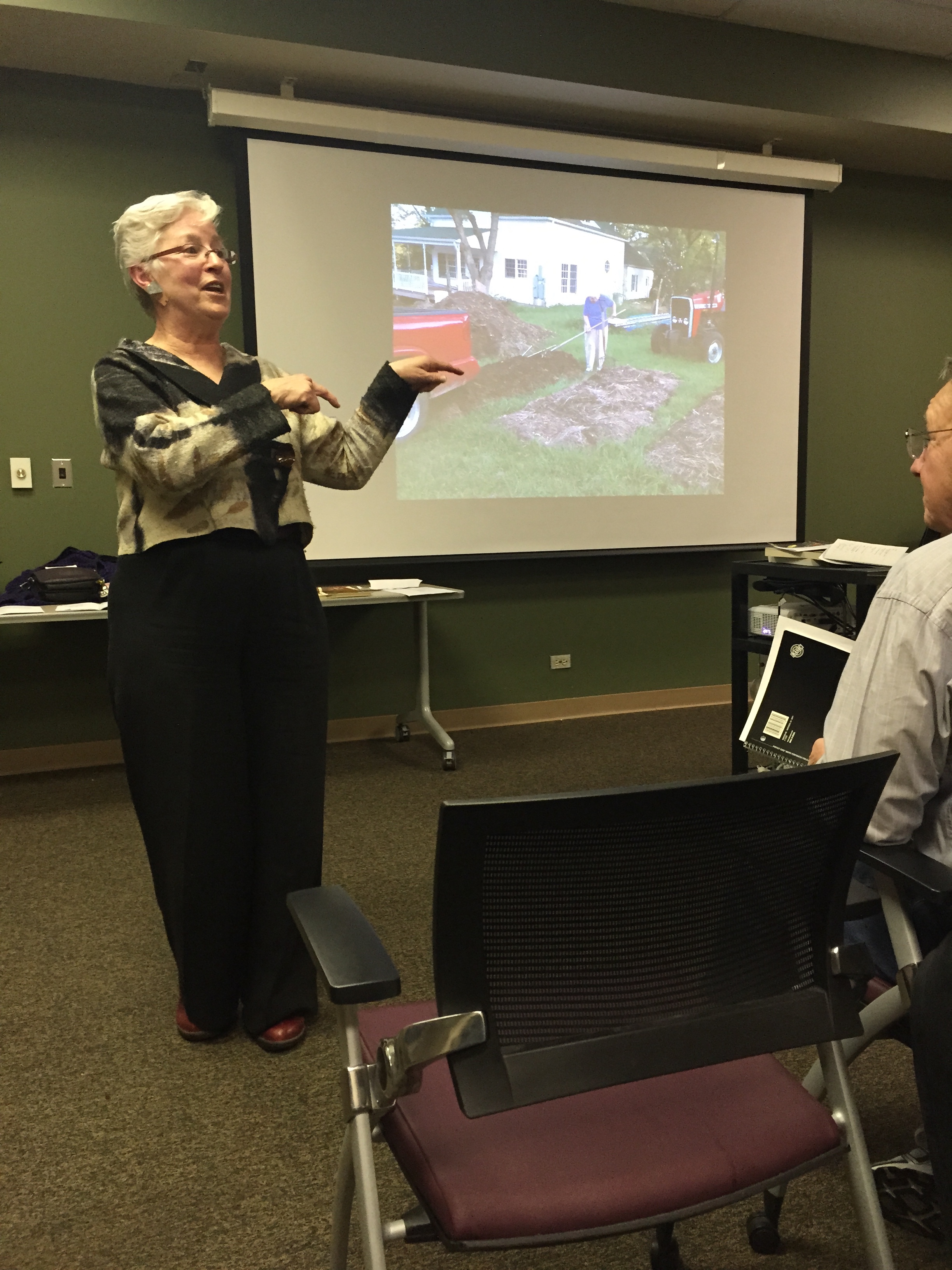
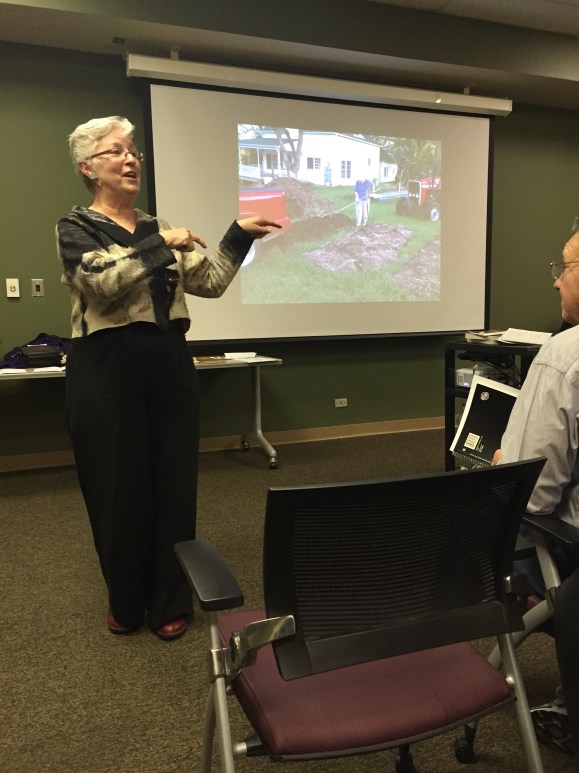
Victory Gardening, Lisle Library,  Barb OttolinoLast Monday, my garden-friend, Laura and I went to a gardening workshop at Lisle Library. They are hosting a summer-long series, Gardening for Victory, that will cover aspects of gardening from soil preparation to planting and pest control. The series is led by Master Gardener Barbara Ottolino. Our session was titled Planning for Victory: Site, Sun, Soil, Bed, and Crop Selection. Ottolino shared a lot of tips for making gardening easier (less work, less time) and a little more interesting.

Ottolino is very enthusiastic about gardening and making gardens work for people, both in terms of saving time and maximizing the amount of produce you can harvest from your space. She shared a ton of tips and answered questions from the audience at the end. I left with a lot of takeaways for our garden plot this spring and some ideas for our balcony garden too.

For new gardeners choosing a site for a garden, she recommends drawing a simple map of your land, including your house, trees, fences, etc. Mark where you’d like to place your garden. Over the course of a day, record the sunlight shining on your land. Draw yellow stripes on the map at 9AM, red stripes at noon, and orange stripes at 3PM. Where you have the most overlapping colors is going to be the best place for your vegetable garden. But don’t count out the other places with fewer stripes! You could plant shade tolerant vegetables and flowers in those places. Ottolino recommends using what you have and not feeling stuck having your garden in one plot…spread things out over your property if that’s what you need to do.

Ottolino recommends alternating your plantings of lettuce and carrots in the same row or area. (Lettuce, carrot, lettuce, carrot…) Because of their roots (carrot roots are longer and deeper than lettuce roots) and their tops (carrots have way less going on above the soil than bushy lettuce), neither plant is competing with the other above or below ground. It’s a good way to maximize your produce haul in a smaller garden. She also recommended staggered sowing. Rather than throwing all of your radish seeds in at once, plant a few at a time over a week or more. This way you can enjoy radishes for a longer period of time and don’t have an overload of radishes at once.

Some of her tips seem to be geared for older gardeners. She recommends a specific type of lettuce for its ease of harvesting. (Salanova, because it grows into tiny heads that just need to be plucked out of the ground. You could harvest it from a wheelchair, if necessary.) She recommends a broad fork because it is easy to use, even without a lot of strength, and it loosens the soil instead of turning the soil. That brings me to her biggest tip…

She does not recommend turning or tilling your soil. Loosening, yes. Turning, no. This was groundbreaking news to me because I grew up in a home where every spring my father would go out and till the garden. Naoto and I turn fresh mulch into our garden plot every spring. Ottolino recommends layering your dried leaves and fresh grass clippings on your garden plot in the fall and then just planting in the spring. She says this way, you’re not dragging your compost out to the compost bin and then out to your garden…this is the perfect one step, no fuss solution for someone who might not have the strength to do a lot of hauling. (Not to say she’s against composting…this is just another way of looking at things.) Ottolino successfully gardened at her old home in Missouri in hard clay soil. She did this by making her garden beds with layers of manure, straw, dried leaves, and grass clippings. This method is covered extensively in the book Lasagna Gardening by Patricia Lanza.

In addition to her experience as a Master Gardener, most of Ottolino’s tips and philosophies derive from two specific books:  How to Grow More Vegetables by John Jeavons and The New Organic Grower by Eliot Coleman. I am looking forward to checking out those books at the library soon. In the meantime, I really need to pop down to our garden plot and get started! The mulch just arrived and it’s time to transplant some of my winter sowing seedlings and to plant some beets and radishes! It’s been so cold here this week that it’s hard to imagine summer is just around the corner!

If you’re in Chicagoland and are interested in attending the next program in the Victory Gardening Series, you can sign up here.
Tagged , , ,

Seed Swap 2015

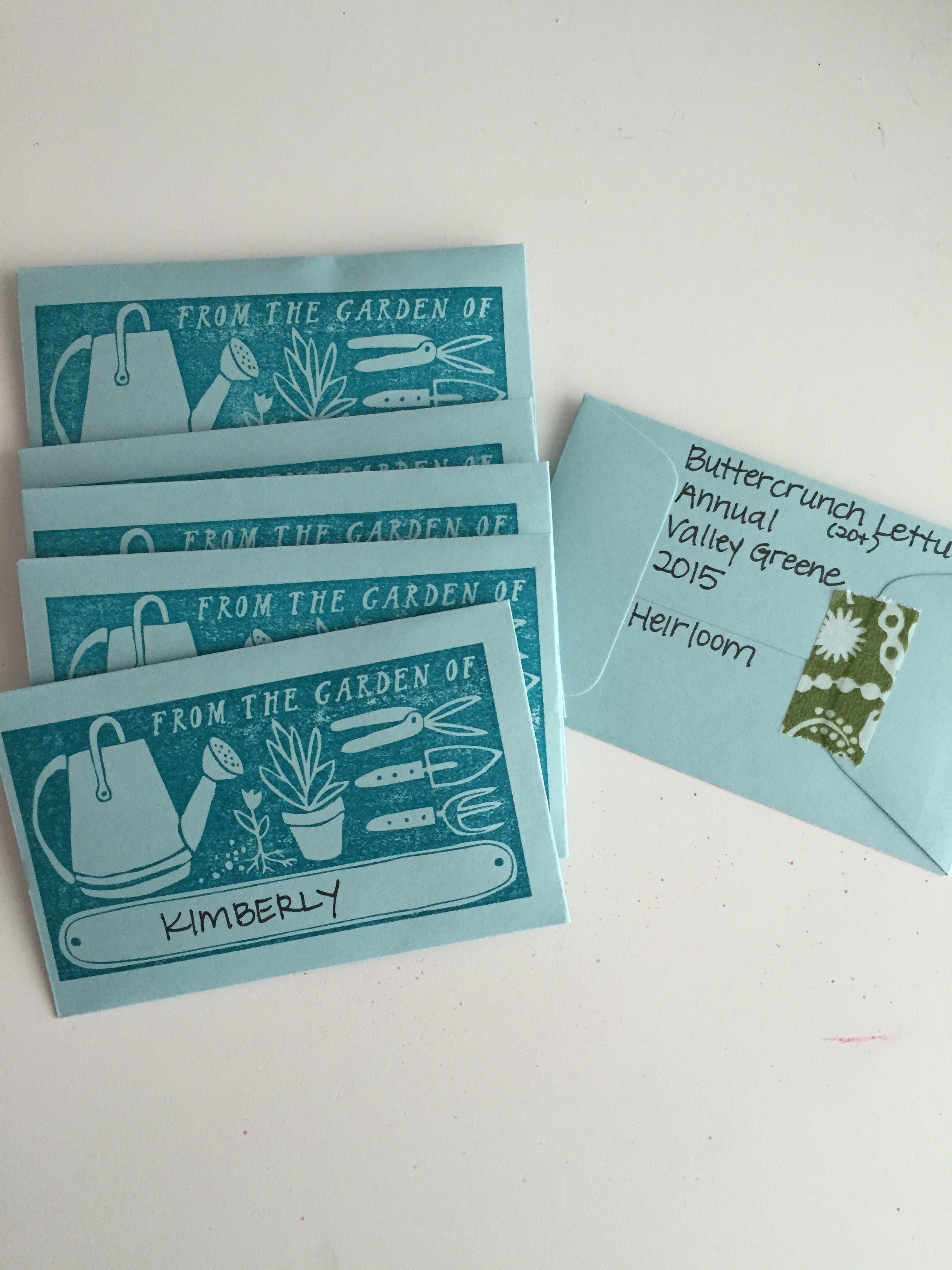
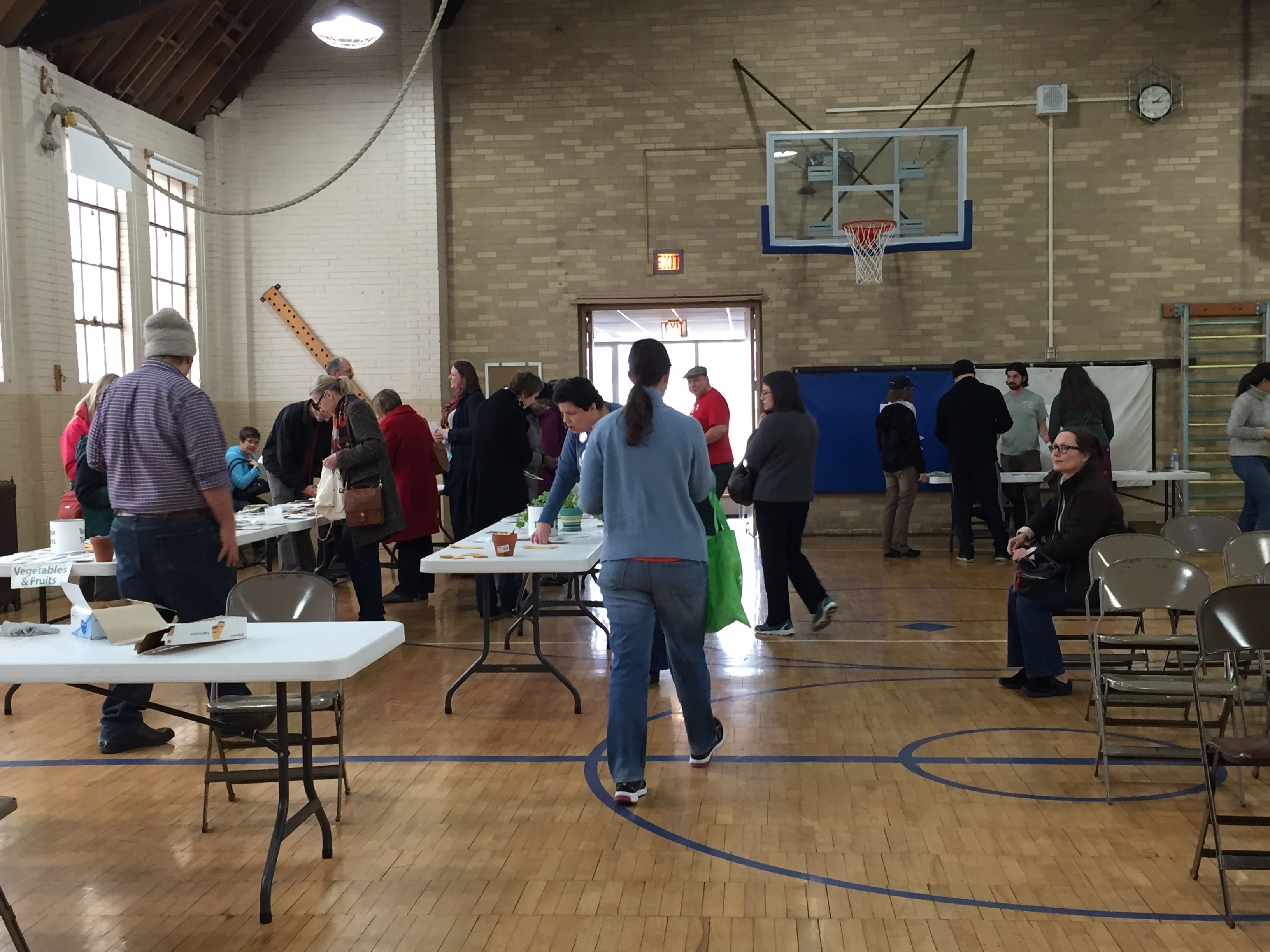
Yellow Owl Workshop garden stamp kitOn Sunday the Forest Park Community Garden hosted their fifth annual Seed Swap. Have you ever been to a seed swap? It was my first time, so everything was new and exciting for me. Basically, you bring packets of seeds to the swap–either something you no longer want to plant, or something you have in excess–and trade them with other gardeners’ seeds. It’s a perfect concept for city gardeners and community gardeners who do not have the space to plant an entire packet of seeds in their tiny plots. forest park community garden seed swapThe swap was held in a school gym, plenty of space to allow for milling around, browsing seeds, and chatting with fellow gardeners. LaManda Joy from the Peterson Garden Project and The Yarden gave a presentation about gardening, her experience as a home gardener, and starting a community garden. The Lisle Seed Library was also there sharing seeds and information about their library’s programs for gardeners.

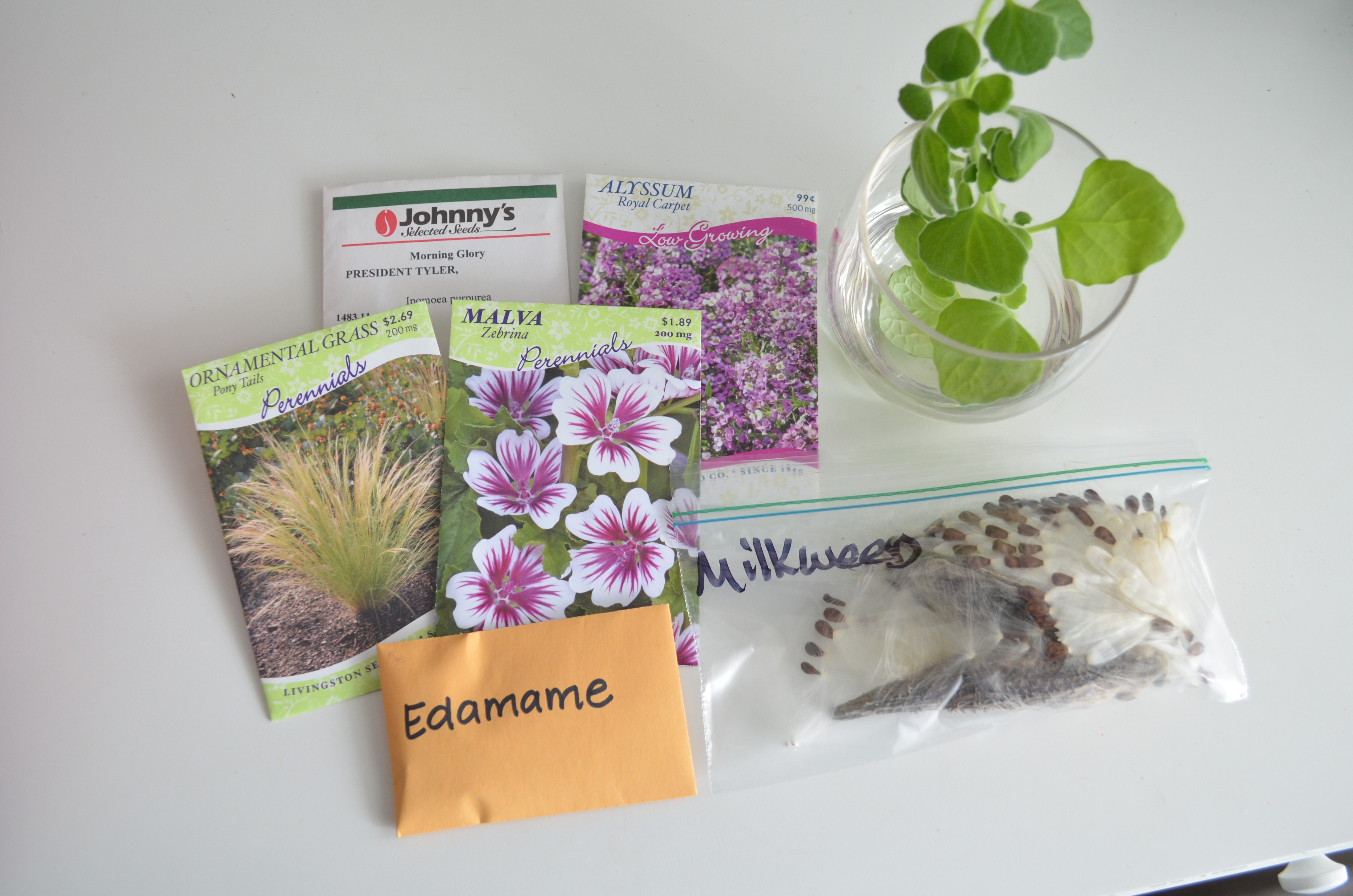
I brought six packets of seeds to swap (pictured at the top)–lettuce, broccoli, loofah, eggplant, beets, and snow peas. I made my packets from baby envelopes that I had on hand, my favorite Yellow Owl Workshop garden stamp kit, and a little bit of washi tape. (They *may* have been crafty overkill, but I didn’t care.) forest park community garden seed swapI came home with edamame, milkweed, malva, alyssum, morning glories, ornamental grass and a clipping from an oregano plant. I worked registration at the swap, so I missed out on seeing the wide variety of vegetable seeds, but I was kind of more into the flower seeds anyway. I wanted some perennials to plant on the balcony and some edamame to try in our plot this year, so I came home a happy camper.

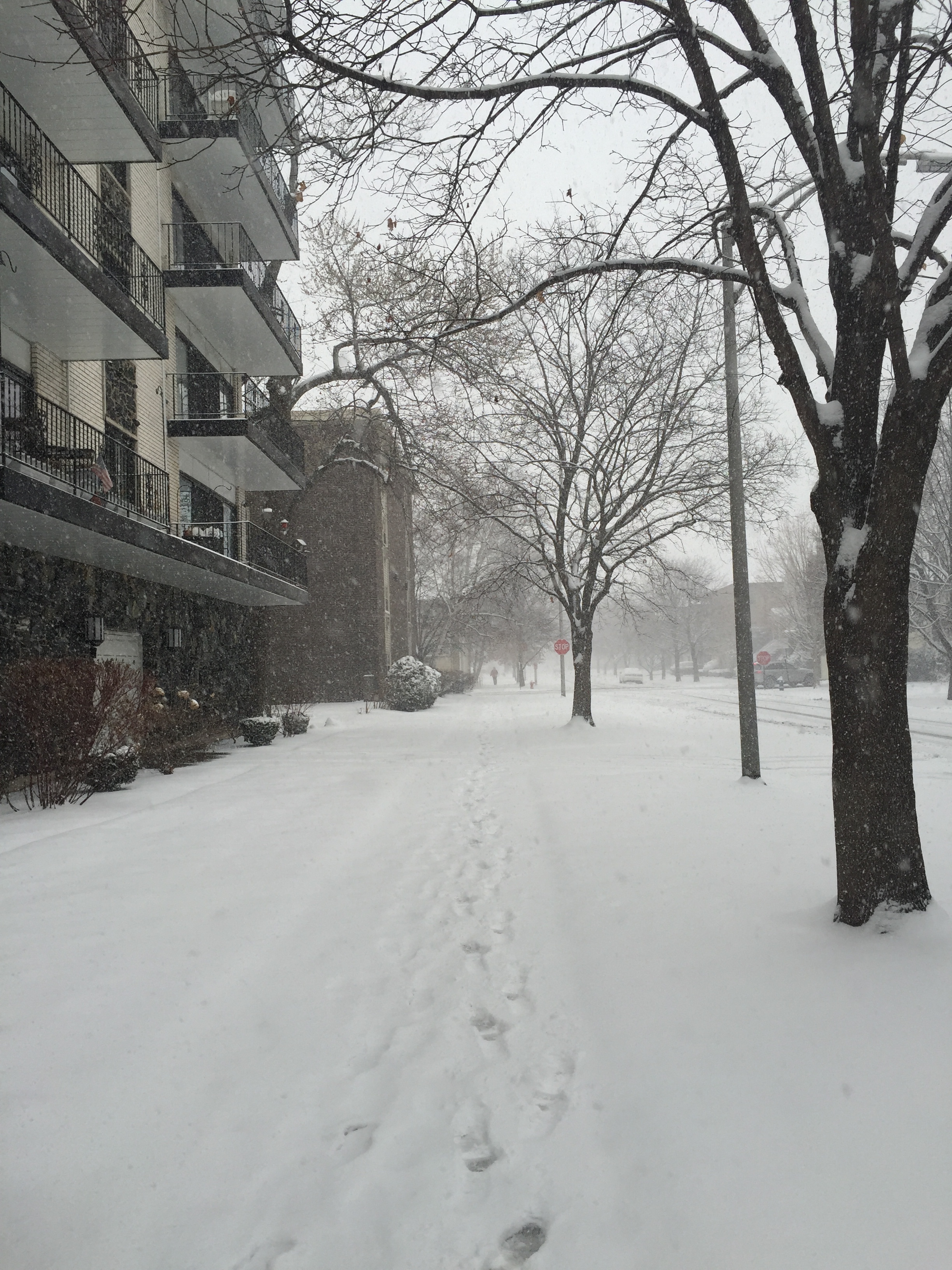
spring in chicago, snow march 23Speaking of gardening, this was the scene when I left for work on Monday morning. Forest Park got about seven inches of snow…I hope it was good for my winter sowing project!! I’m working on planting some more this week. Spring gardens are just around the corner, right?

Tagged , , , , , ,

Community Gardening at the Forest Park St. Patrick’s Day Parade

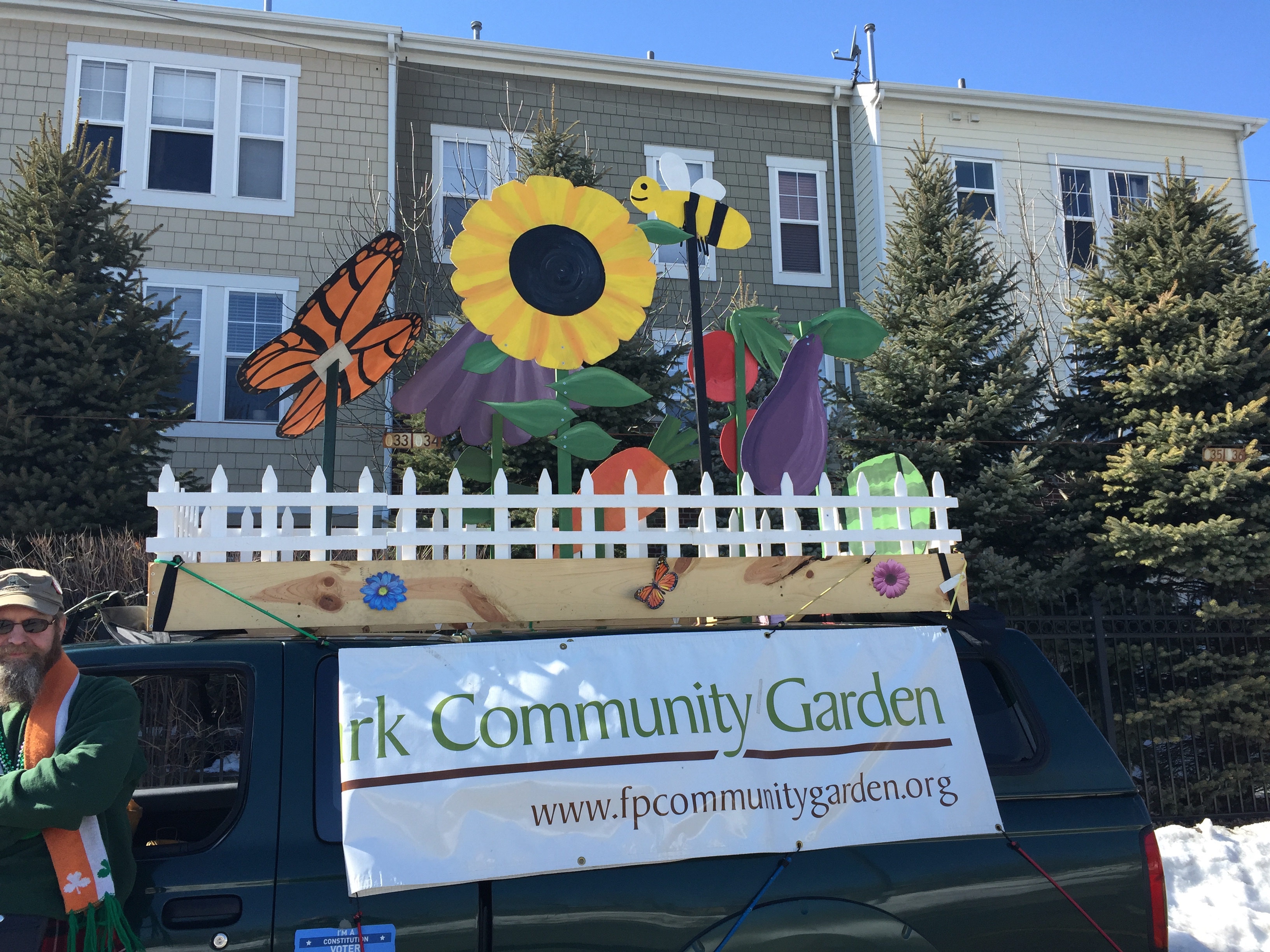
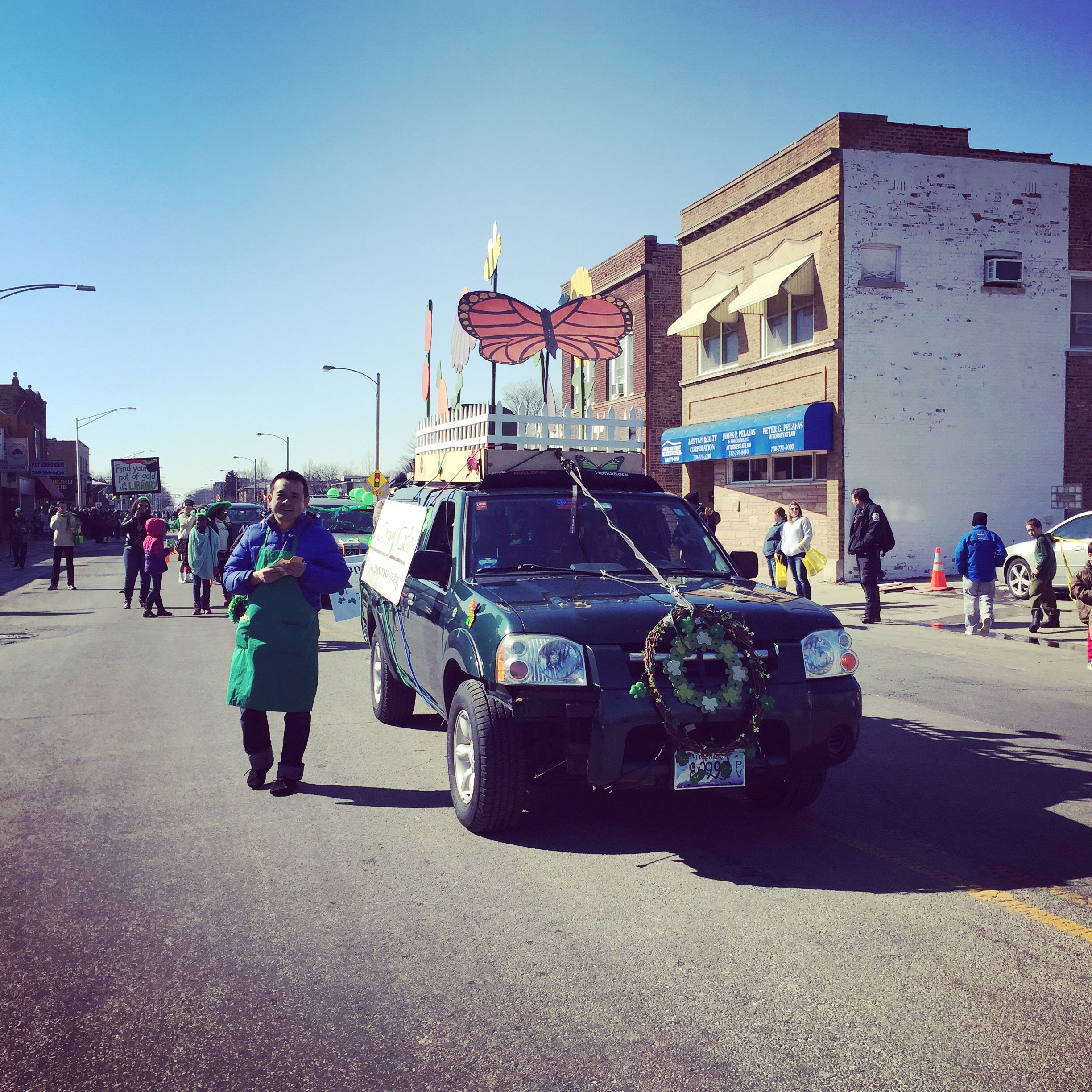
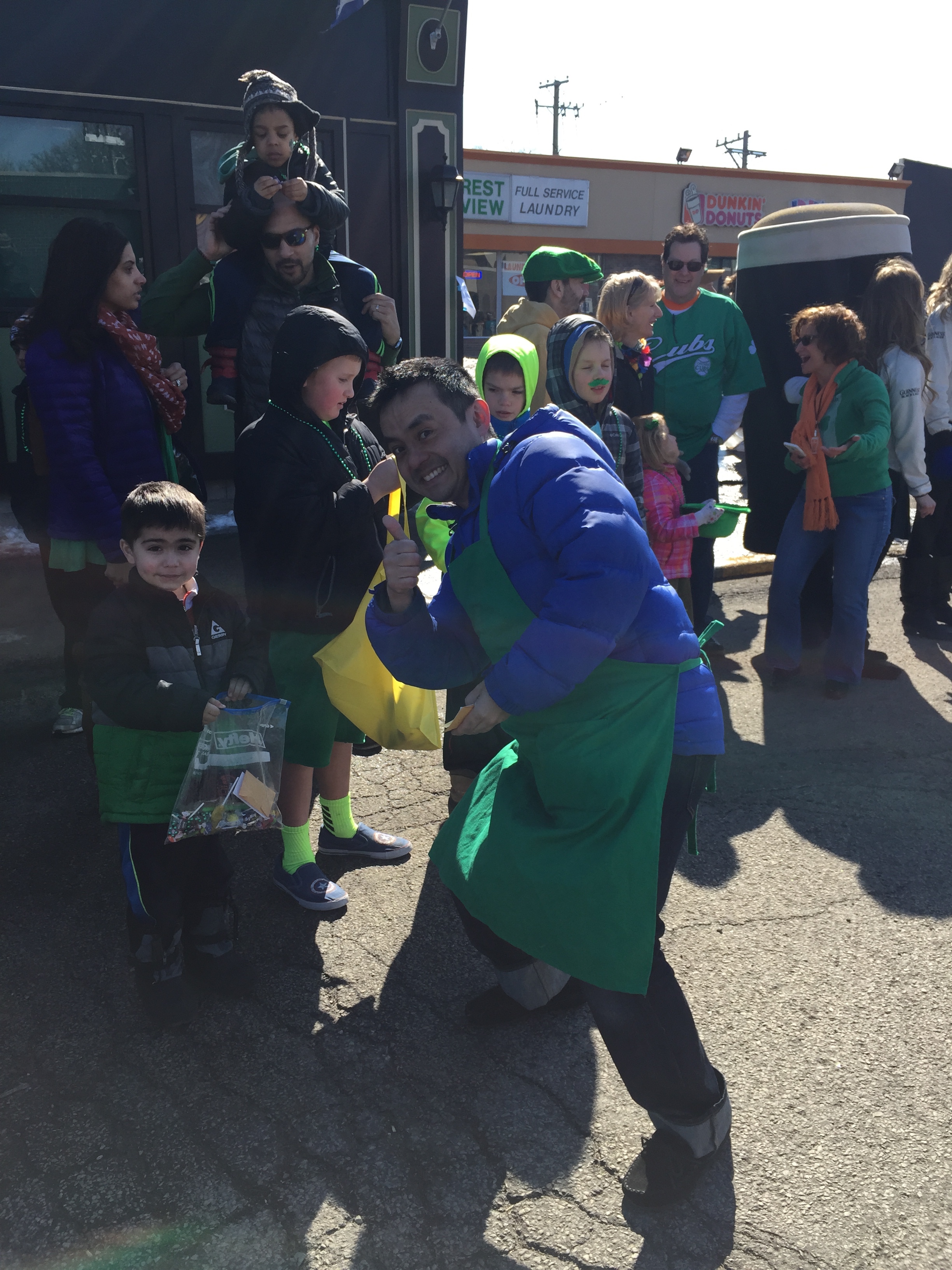
Forest Park St. Patrick's Day ParadeOn Saturday, Naoto and I walked in the Forest Park St. Patrick’s Day Parade with the Forest Park Community Garden float. We haven’t been to the parade in a couple of years and I have to say, it was loads more fun walking in the parade than it was watching. Our float, pictured above, was a garden plot in full bloom…isn’t it charming? Forest Park St. Patrick's Day ParadeSix of us walked alongside the float and passed out little packets of sugar snap pea seeds. At first I was a little nervous about handing out non-candy treats to a bunch of drunk people and sugar-hungry kids, but it turned out most people–especially kids–were excited when they heard we were handing out seeds. People briefly shared that they had gardens or were excited to try gardening…it was really heart-warming to see so many hopeful gardeners in our community! The time passed quickly…it felt like we were rushing around handing out seeds and all of a sudden I looked up and we were at the end.Forest Park St. Patrick's Day Parade Naoto was especially popular along the parade route because people always remember him from Trader Joe’s…he even got a kiss from a customer! He was such a great ambassador for the garden (and for Trader Joe’s!) Forest Park St. Patrick's Day ParadeBy the end of the parade, we all handed out a thousand packets of seeds with little information cards about the garden and our upcoming Seed Swap (March 22, 2-4PM!) It was a bright and beautiful day…perfect for a hometown parade!

Tagged , , , ,

Plot #6: Winter Sowing Experiment

winter sowingI started gardening this week!! Back in December, Peggy (who seriously should be a contributor to my blog since she provides me with so much blog fodder!) sent me this blog post from A Garden for the House about winter sowing. Neither of us had tried it before but we both found the idea intriguing. I always feel like it’s late summer before all of my balcony flowers are really in bloom and by then, it’s sometimes too hot and busy to enjoy them. And last year, I had my best balcony garden but I also spent more than I normally do on flowers because I was addicted to having a lush, full garden. (I didn’t break the bank or anything…it was just more than usual.) Hopefully, if this winter sowing thing works, I can get a jump start on gardening, and I can start more things from inexpensive seeds instead of buying a lot of full-grown potted plants this year.

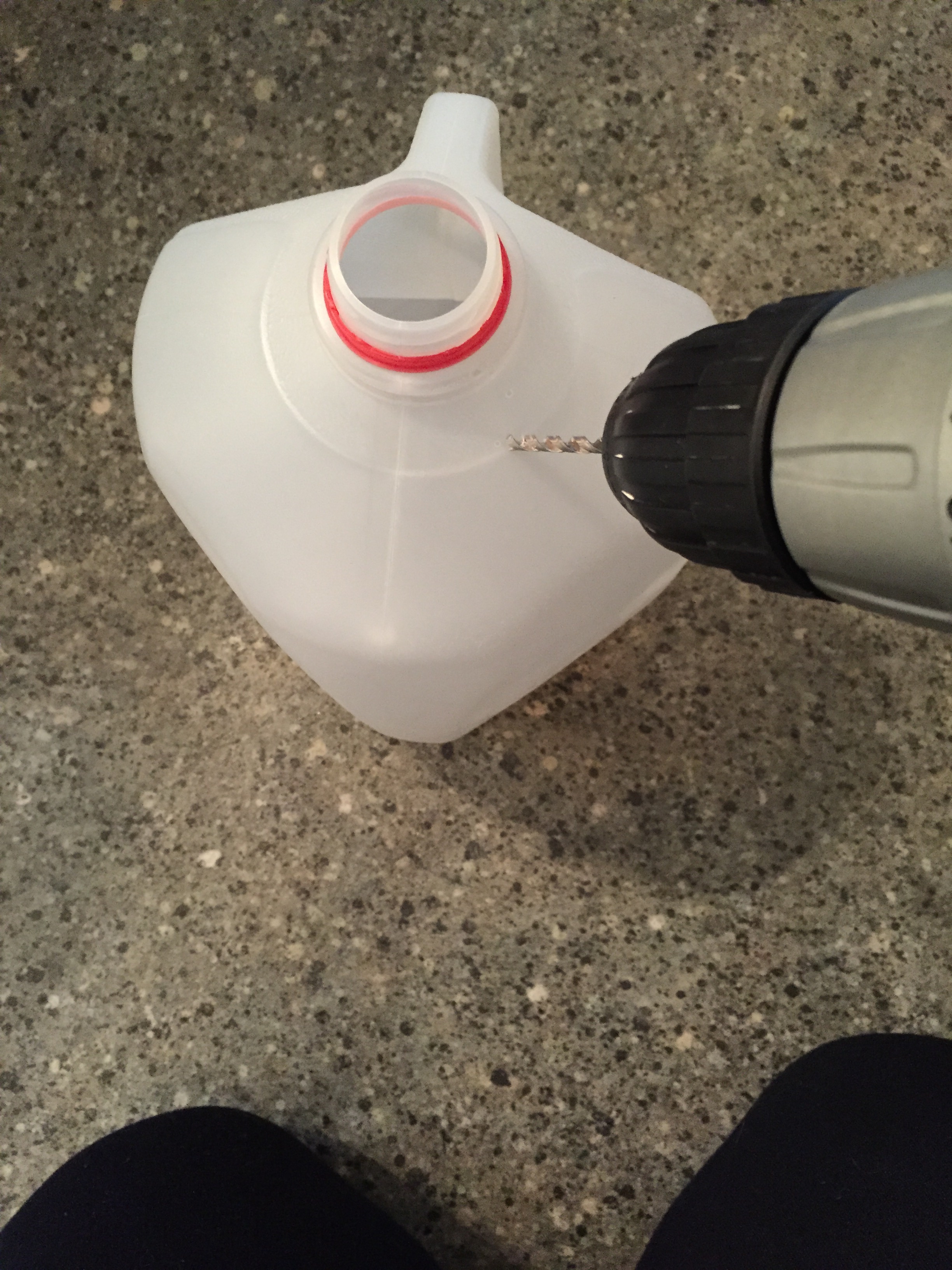
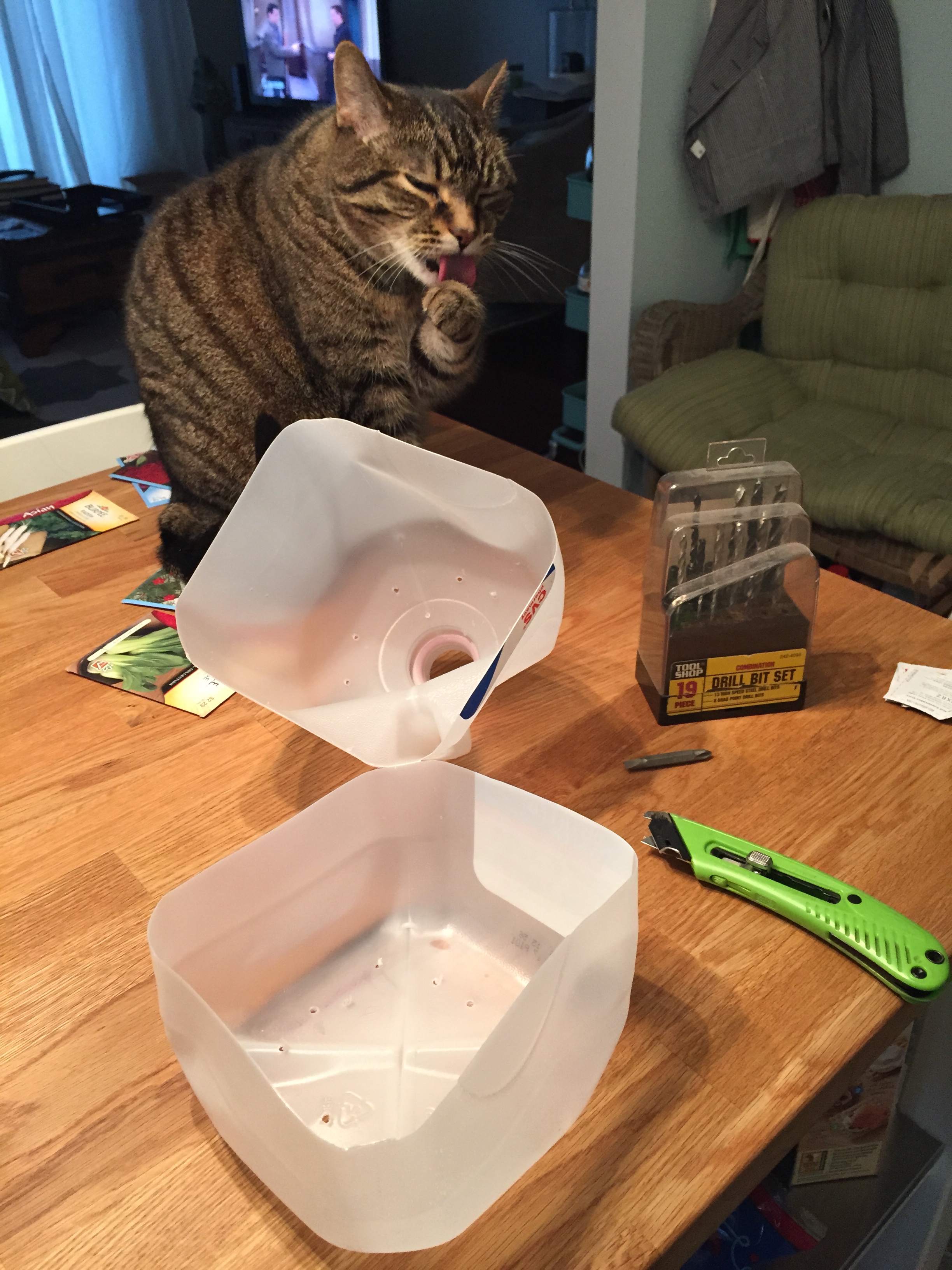
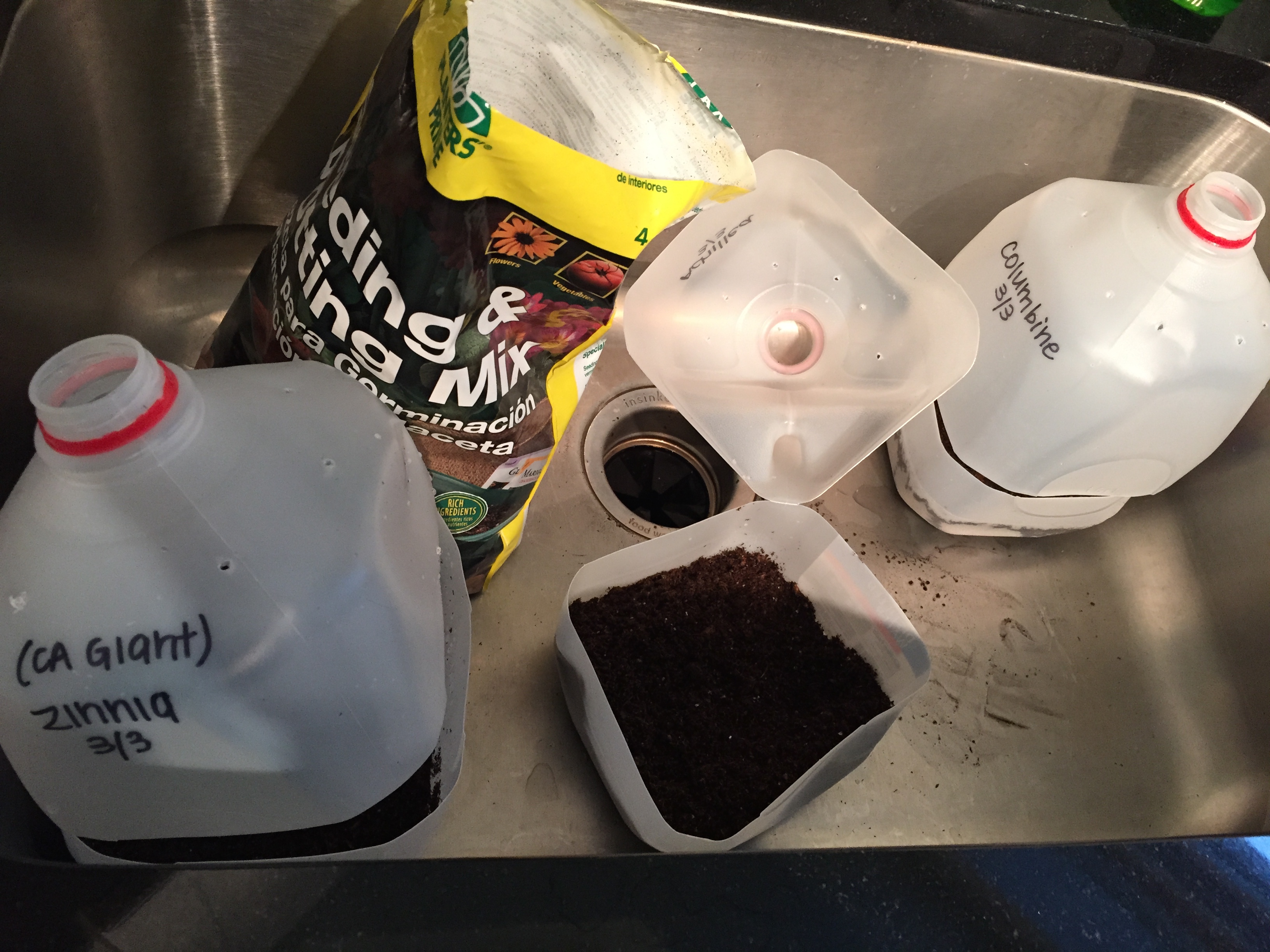
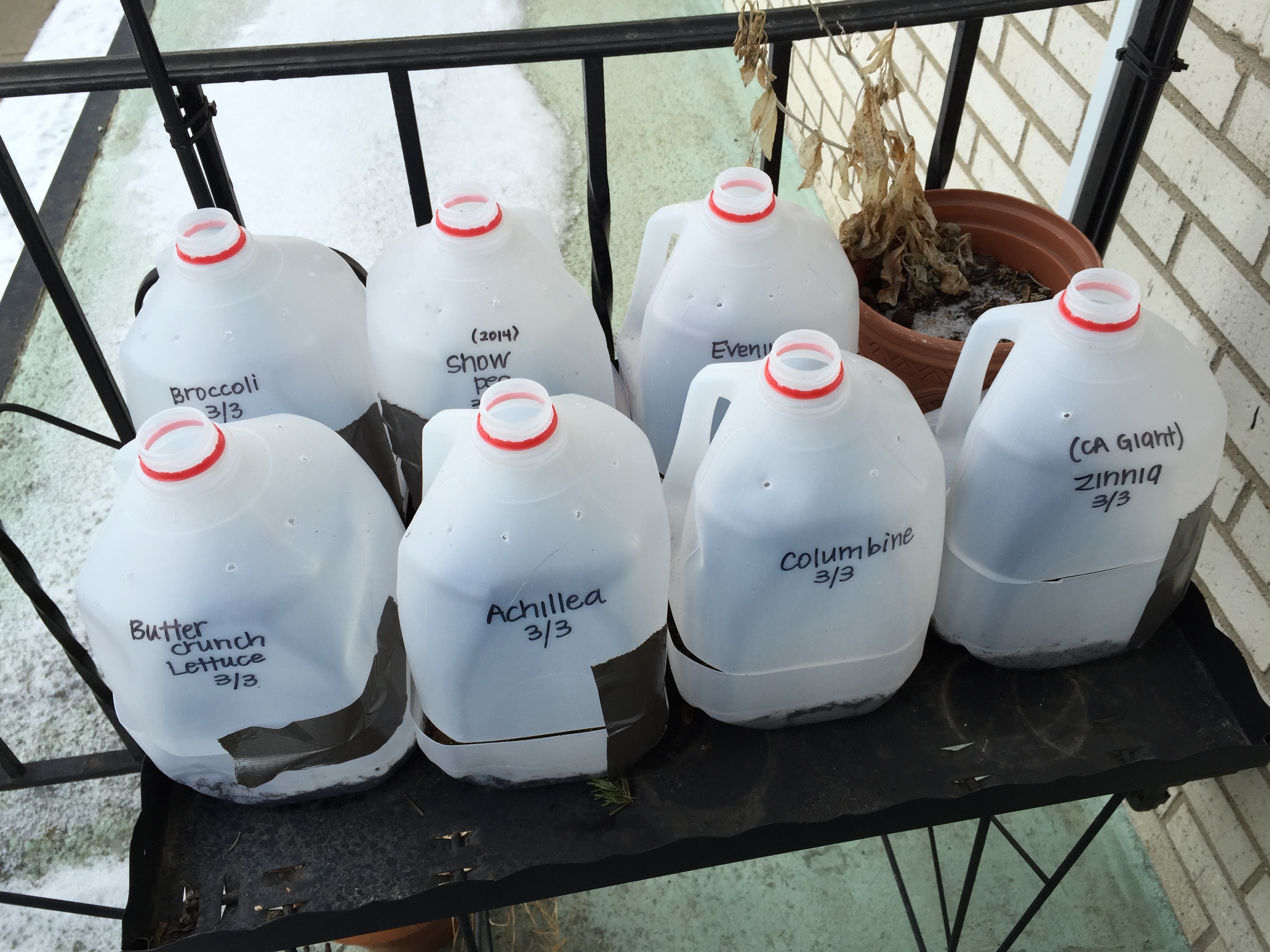
Winter sowing involves planting certain types of seeds in winter and keeping them outdoors in little protective “greenhouses”. Depending on your zone, you can plant perennial and hardy annuals as early as January. I waited until Tuesday (March 3) to start planting, so I planted some tender annuals, too. This blog post tells more about what you can plant when. winter sowing, seedsI worked on my winter sowing in my kitchen on Tuesday afternoon. For my greenhouses, I used distilled water jugs that I’ve been collecting all winter. (Naoto has been very suspicious of this “garbage collection”.) I drilled ventilation holes in the top and drainage holes in the bottom of each one.winter sowingThen I cut around the middle of the jug, leaving a little hinge underneath the handle. (Presley decided to take a bath while this was happening.) winter sowingI worked in my kitchen sink, filling each jug with a few inches of soil. Then I soaked the soil with running water and let the water drain out into the sink. After that I planted my seeds, one type per jug, labeling as I worked.

I only made it through seven jugs before I ran out of soil, but I’m hoping to run out today and buy more so I can finish the job this week. So far, I’ve planted broccoli, snow peas and lettuce in preparation for our community garden plot. And I’ve planted Evening Primrose, Columbine, Zinnias, and Achillea for the balcony. I have at least ten more potential seed packets waiting for winter sowing, depending on how adventurous I feel.

I put all of my seeds outside on the balcony. (I’m hoping my neighbors do not complain about the unsightly water jugs…condo living is challenging sometimes.) The seeds are sharing a table with my perennial sedum for now (which looks dead in the top picture, but I promise it’s just resting). That table gets the most sunlight and it gets snowed and rained on, so I figured the seeds will have the best chance there. For now, I wait…the hardest part of gardening!

Tagged , , , , , , ,